
Personality in Focus
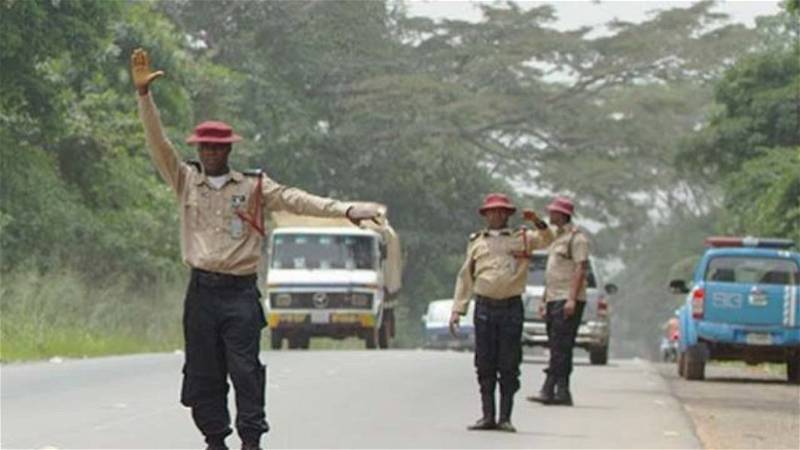
Yuletide: FRSC Declares Operation Zero Tolerance, Puts Modalities in Place to Checkmate Gridlock, Crashes

- /home/rhoncare/pointblank.ng/wp-content/plugins/mvp-social-buttons/mvp-social-buttons.php on line 27
https://pointblank.ng/wp-content/uploads/2024/06/FRSC.jpg&description=Yuletide: FRSC Declares Operation Zero Tolerance, Puts Modalities in Place to Checkmate Gridlock, Crashes', 'pinterestShare', 'width=750,height=350'); return false;" title="Pin This Post">
- Share
- Tweet /home/rhoncare/pointblank.ng/wp-content/plugins/mvp-social-buttons/mvp-social-buttons.php on line 69
https://pointblank.ng/wp-content/uploads/2024/06/FRSC.jpg&description=Yuletide: FRSC Declares Operation Zero Tolerance, Puts Modalities in Place to Checkmate Gridlock, Crashes', 'pinterestShare', 'width=750,height=350'); return false;" title="Pin This Post">
As part of efforts to combat traffic gridlock, and eliminate road traffic crashes, injuries and fatalities this end of the year, the Federal Road Safety Corps (FRSC) has deployed it’s entire workforce, including Special Marshals to the highways to ensure hitch free movement as commuters travel from one destination to another across the nation.
The Corps, according to a statement signed by the Public Education Officer, Assistant Corps Marshal Olusegun Ogungbemide, and made available to the National Association of Online Security News Publishers (NAOSNP), achieved this through effective and efficient distribution of logistics and operational materials nationwide. This logistics include the deployment of 157 administrative vehicles, 754 patrol vehicles, 143 ambulances, and 48 tow trucks. This is in addition to deployment of radar guns to check speed violations, setting out 16 traffic control camps on different routes, as well as man 53 critical routes nationwide.
The Corps Marshal, Shehu Mohammed who authorised the deployment also directed Commanding Officers to ensure 24 hours observatory along high volume traffic/gridlock prone areas, full mobilization of 23 Help Areas, adequate utilisation of 59 Emergency Ambulance (Zebra) Points, full mobilization of Road Side (RTC) Clinics, and 24/7 broadcast on National Traffic Radio 107.1 FM.
The 2024 Operation Zero Tolerance commenced on 15 December 2024 to span through to 15 January 2025.
The operation which is programmed to run in shifts as follows 0600hrs – 1400hrs, 1400HRS – 2000hrs, 2000hrs – 2200hrs, and Night Rescue teams on standby at all operational Commands is billed to cover the following critical corridors; Sokoto-Tambuwal-Jega-Birnin Kebbi corridor, Katsina-Kano-Wudil-Dutse-Azare-Potiskum corridor, Kaduna-Saminaka-Jos corridor, Abuja-Kaduna-Kano corridor, Okene-Ogori-Isua-Owo corridor, Makurdi-Otukpo-Obollo Afor-9th Mile corridor, Asaba-Abraka-Ughelli-Warri corridor, Ibadan-Ogere-Sagamu corridor, Sagamu-Mowe-Lagos corridor, amongst others.
Explaining some of the reasons for the year’s early and holistic approach to safer roads, the Corps Marshal said that the Corps has observed that a key characteristics of the period over the years is an upsurge in traffic volume, excessive speed, Overloading of vehicles with goods, animals and persons, impatience by motorists who may not have adequately planned their journeys, or motorists managing mechanically deficient vehicles to and fro their travel destinations.
According to him, the above mentioned are known to be the major causes of chaos and indiscipline among all classes of road users, leading to crashes, fatalities, loss of properties as well as traffic congestion/gridlocks.
The operation which compliments the ongoing ember months aggressive sensitisation, will cover the broad areas of traffic control/decongestion, Public enlightenment, Enforcement, prompt response to crash victims, route lining among others.
The Corps Marshal emphasised that the enforcement is aimed at checkmating Excessive speed, Overloading, Dangerous Driving/Overtaking, Lane indiscipline/Route violation, Road Obstructions, Use of Phone while Driving, Overloading Violation, Seatbelt/Child restraint Use Violations, Passengers’ Manifest Violations, Mechanically Deficient Vehicles, Latching and Twist-Locks Violations.
In addition to the foregoing, the Corps Marshal also directed massive constitution of Mobile Courts across the Nation.
The directive also mandates the Commanding Officers to ensure effective collaboration with Military Units, the Nigeria Police Force (NPF), Nigeria Security and Civil Defence Corps (NSCDC), Directorate of State Services (DSS), NGO Ambulance Service Providers, National Network on Emergency Road Services (NNERS) and the Federal Roads Maintenance Agency (FERMA).
The Corps Marshal further stated that the operatives will be charged with the responsibility of identifying alternative routes to assist motorists during gridlocks, and give notification of traffic distressed areas for intervention. As such, he called on the motoring public to download the FRSC Mobile Application for real time reporting and update on traffic situations, utilise all FRSC social media handles (facebook.com//frscnigeria,Instagram.com//frscnigeria, twitter.com//frscnigeria, and in case of emergency, call the 122 toll free number as well as the National Traffic Radio live lines: 08052997848 and 09139600107 which are available means to reach FRSC to report Traffic situations anywhere in the Country. The public can as well reach the situation room on 07054005754 and 07054005712 respectively.


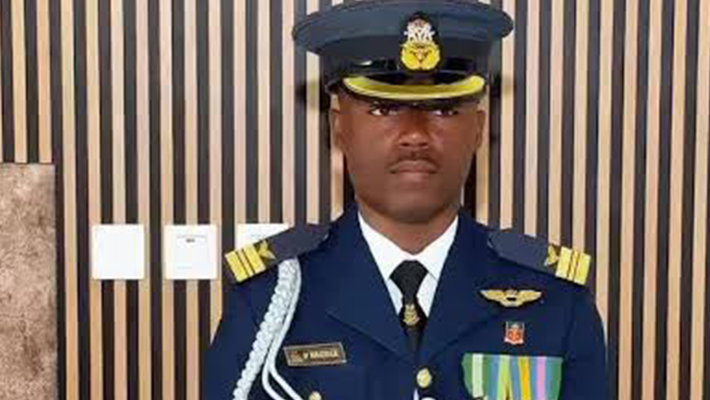
Abia State governor, Alex Otti, and Senator representing Abia North, Orji Uzor Kalu, have expressed sadness over the death of Abia-born Squadron Leader Ahamefule Aham Man-Ugwueje, one of the pilots of the Nigerian Air Force ATR-42 aircraft, NAF 931, which crashed in Igbokoda, Ondo State, on Monday.
Governor Otti, in a statement by his Special Adviser on Media and Publicity, Ferdinand Ekeoma, described Squadron Leader Man-Ugwueje’s death and those of other military personnel aboard the Nigerian Air Force plane as painful and devastating.
“This accident is both painful and devastating, because it has brought untold sorrow and anguish to the victims’ families, their friends and loved ones, the Nigerian Air Force, and the nation at large.”
Governor Otti regretted that Squadron Leader Man-Ugwueje perished in the air disaster barely two weeks after he wedded his beloved wife, Flight Lieutenant Damilola Adekunle, in Abuja, a sad development he said has robbed the couple of the opportunity of spending their lives together as husband and wife.
The governor, on behalf of his family, the government and people of Abia State, commiserated with the families of the victims, the people of Umuahia where Squadron Leader Man-Ugwueje hailed from, the Nigerian Air Force and the Federal Government of Nigeria, and prays for the peaceful repose of their souls in God’s bosom.
In his own message, Senator Kalu commiserated with the Nigerian Air Force over the loss of the Air Force personnel and others in the Ondo plane crash.
The former governor of Abia State, while expressing sadness over the loss, extended his heartfelt sympathy to the Chief of the Air Staff, Air Marshal Sunday Kelvin Aneke, the entire Nigerian Air Force and the families of those who lost their lives in the tragic incident.Describing the incident as painful and heartbreaking, Kalu said the death of personnel who devoted themselves to the service of the country is a huge loss to the Nigerian Air Force and the nation.
“I extend my heartfelt sympathy to the Chief of the Air Staff, Air Marshal Sunday Kelvin Aneke, and the entire Nigerian Air Force over this painful loss.
“My thoughts and prayers are especially with the families who have lost their loved ones. Losing men and women who dedicated themselves to serving and protecting our country is indeed a tragedy for all Nigerians.
“At this difficult moment, I pray that God comforts their families, colleagues and loved ones, and gives them the strength to bear this irreparable loss.
“May the souls of the departed rest in peace,” Kalu said.
He urged the Nigerian Air Force to remain strong in the face of the tragedy, noting that the sacrifices of its personnel in the service of the country would always be remembered.
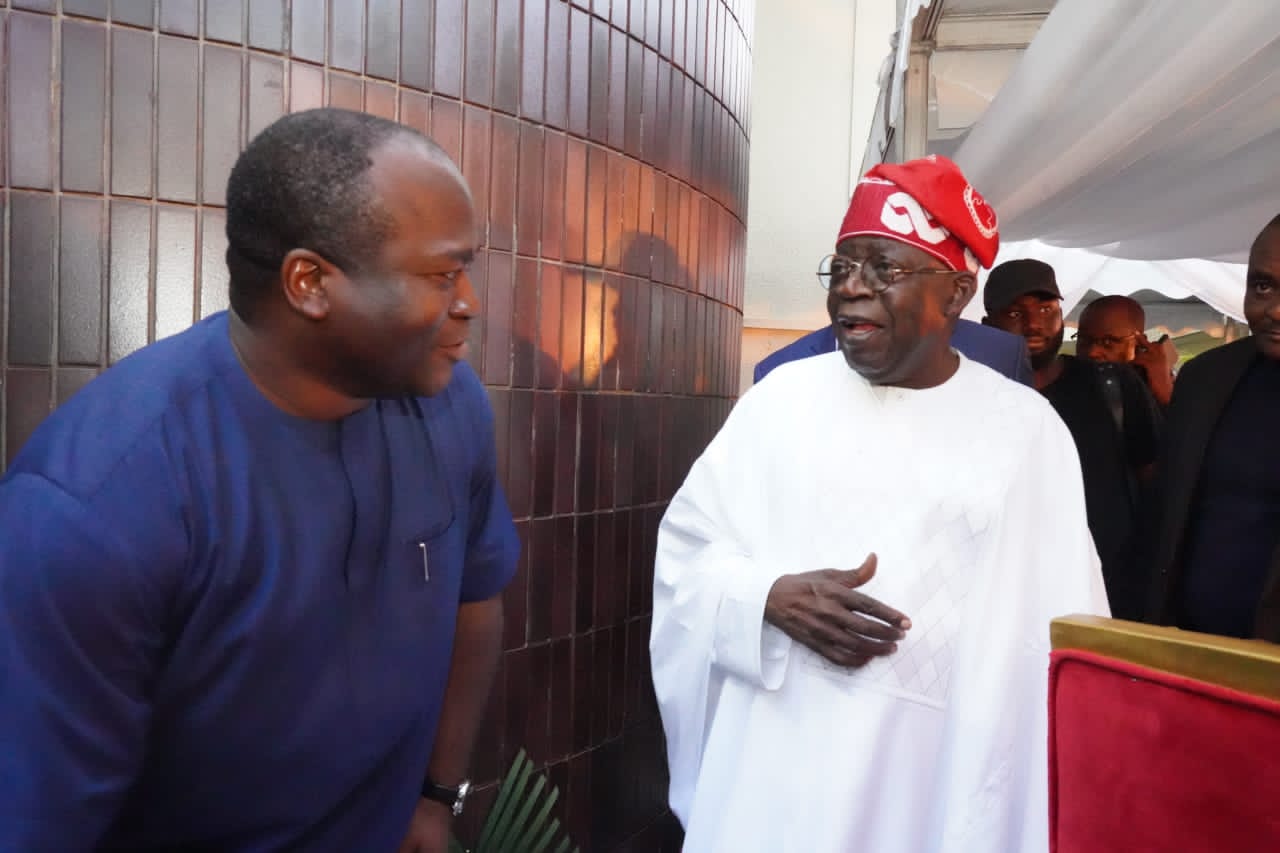
President Bola Tinubu has sent warm greetings to the Executive Secretary/CEO of the Lagos State Security Trust Fund (LSSTF) Dr. Ayodele Ogunsan, on the occasion of his 50th birthday on October 6, 2026.
In a statement released by the Special Adviser to the President (Information and Strategy), Bayo Onanuga, the President indicated acknowledged Dr. Ogunsan’s commitment to institution-building and promoting partnerships among government, the private sector, and other stakeholders to advance security and development.
Tinubu also commended the celebrant for his dedication to serving Lagos State and his contributions toward strengthening the security architecture, public safety, and public confidence through the Lagos State Security Trust Fund.
Before becoming the Executive Secretary/CEO, Dr. Ogunsan served on the Board of Trustees of the LSSTF. He has held other significant responsibilities in the security and community-safety space, including as Chairman of the Police Campaign Against Cultism and Other Vices (POCACOV), Lagos State, and Patron of the Police Community Relations Committee (PCRC).
The President noted that under Dr. Ogunsan’s leadership, the Trust Fund has continued to play an important role in supporting security agencies with critical equipment, infrastructure and other resources necessary to enhance their effectiveness in protecting lives and property.
“As you mark this significant milestone, I urge you to sustain your dedication to the security and progress of Lagos State and Nigeria. I wish you many more years of good health, wisdom and fulfilment, as well as continued success in your service to humanity and our nation,” the President charged.

The Governor of Lagos State, Mr. Babajide Sanwo-Olu, has congratulated the Executive Secretary and Chief Executive Officer of the Lagos State Security Trust Fund (LSSTF), Dr. Ayodele Ogunsan, on his 50th birthday.
Governor Sanwo-Olu, in a statement issued on Monday by his Special Adviser on Media and Publicity, Mr Gboyega Akosile, described Ogunsan, an entrepreneur and security expert, as a seasoned administrator and a dedicated, passionate public official.
The Governor praised Ogunsan for his transformational leadership and dedication, which have significantly impacted the Lagos State Security Trust Fund (LSSTF) since he assumed office as Executive Secretary and Chief Executive Officer in October 2025.
He said: “On behalf of my family, the government, and the people of Lagos State, I congratulate the Executive Secretary and Chief Executive Officer of the Lagos State Security Trust Fund, Dr. Ayo Ogunsan, on his 50th birthday.
“Dr. Ogunsan is a seasoned administrator who has used his knowledge and experience to bring about transformation in the security sector through the Lagos State Security Trust Fund.
“I commend Dr. Ogunsan for his leadership and commitment in different capacities. He has contributed positively towards the improvement of security as Chairman of the Police Campaign Against Cultism and Other Vices (POCACOV) in Lagos State, Patron of the Police Community Relations Committee (PCRC), member of the Board of Trustees, and now Executive Secretary and Chief Executive Officer of LSSTF.
“As Dr Ayo Ogunsan celebrates his Golden Jubilee, I pray that the Almighty God continues to bestow upon him wisdom and knowledge to steer the ship of the Lagos State Security Trust Fund and render more service to humanity and our dear Lagos State.”


