
Business
Zenith Bank Grows Gross Earnings by 24% to N945.5bn in 2022

- /home/rhoncare/pointblank.ng/wp-content/plugins/mvp-social-buttons/mvp-social-buttons.php on line 27
https://pointblank.ng/wp-content/uploads/2022/03/Zenith-Bank-1024x587-1.jpg&description=Zenith Bank Grows Gross Earnings by 24% to N945.5bn in 2022', 'pinterestShare', 'width=750,height=350'); return false;" title="Pin This Post">
- Share
- Tweet /home/rhoncare/pointblank.ng/wp-content/plugins/mvp-social-buttons/mvp-social-buttons.php on line 69
https://pointblank.ng/wp-content/uploads/2022/03/Zenith-Bank-1024x587-1.jpg&description=Zenith Bank Grows Gross Earnings by 24% to N945.5bn in 2022', 'pinterestShare', 'width=750,height=350'); return false;" title="Pin This Post">
Zenith Bank Plc has announced its audited results for the year ending 31 December, 2022, achieving an impressive double-digit growth of 24% in gross earnings from NGN765.6 billion reported in the previous year to NGN945.5 billion in 2022. This is despite the persistent challenging macroeconomic environment and headwinds.
According to the audited financial results for the 2022 financial year presented to the Nigerian Exchange (NGX), the double-digit growth in gross earnings was driven by a 26% year-on-year (YoY) growth in interest income from NGN427.6 billion to N540.2 billion and a 23%year-on-year (YoY) growth in non-interest income from NGN309 billion to NGN381 billion. Profit before tax also grew by 2% from NGN280.4 billion to NGN284.7 billion in the current year. The increase in profit before tax was due to the significant growth in all the income lines.
Impairments grew by 107% from NGN59.9 billion to NGN124.2 billion, while interest expense grew 63% YoY from N106.8 billion to N173.5 billion, respectively. The impairment growth, which also resulted in an increase in the cost of risk (from 1.9% in 2021 to 3.3% in the current year), was due to the impact of Ghana’s sovereign debt restructuring programme. The growth in interest expense increased the cost of funds from 1.5% in 2021 to 1.9% in 2022 due to hikes in interest rates globally.
Customer deposits increased by 39%, growing from NGN6.47 trillion in the previous year to NGN8.98 trillion in the current year. The growth in customer deposits came from all products and deposit segments (corporate and retail), thus consolidating the bank’s market leadership and indicating customers’ trust.
The continued elevated yield environment positively impacted the bank’s Net-Interest- Margin (NIM), which grew from 6.7% to 7.2% due to an effective repricing of interest- bearing assets. Operating expenses grew by 17% YoY, but growth remains below the inflation rate. Total assets increased by 30%, growing from NGN9.45 trillion in 2021 to NGN12.29 trillion, mainly driven by growth in customer deposits. With the steady and continued recovery in economic activities, the Group prudently grew its gross loans by 20%, from NGN3.5 trillion in 2021 to NGN4.1 trillion in 2022, which increased the Non-Performing Loan (NPL) ratio modestly from 4.2% to 4.3% YoY. The capital adequacy ratio decreased from 21% to 19%, while the liquidity ratio improved from 71.2% to 75%. Both prudential ratios are well above regulatory thresholds.
In 2023, the Group intends to expand its frontiers as it also reorganises into a holding company structure, adding new verticals to its businesses and growing in all its chosen markets, both locally and internationally.
As a testament to its commitment to shareholders, the bank has announced a proposed final dividend payout of N2.90 per share, bringing the total dividend to N3.20 per share.
In recognition of its track record of excellent performances, Zenith Bank was recognised as the Number One Bank in Nigeria by Tier-1 Capital, for the 13th consecutive year, in the 2022 Top 1000 World Banks Ranking published by The Banker Magazine; Bank of the Year (Nigeria) in The Banker’s Bank of the Year Awards 2020 and 2022; Best Bank in Nigeria, for three consecutive years from 2020 to 2022, in the Global Finance World’s Best Banks Awards; Best Commercial Bank, Nigeria 2021 and 2022 in the World Finance Banking Awards; Best Corporate Governance Bank, Nigeria in the World Finance Corporate Governance Awards 2022; Best in Corporate Governance’ Financial Services’ Africa, for three consecutive years from 2020 to 2022, by the Ethical Boardroom; Best Commercial Bank, Nigeria and Best Innovation In Retail Banking, Nigeria in the International Banker 2022 Banking Awards.
Also, the bank emerged as the Most Valuable Banking Brand in Nigeria in the Banker Magazine Top 500 Banking Brands 2020 and 2021, and Retail Bank of the year, for three consecutive years from 2020 to 2022, at the BusinessDay Banks and Other Financial Institutions (BAFI) Awards. Similarly, Zenith Bank was named as Bank of the Decade (People’s Choice) at the ThisDay Awards 2020, Most Innovative Bank of the Year 2019 by Tribune Newspaper, Bank of the Year 2020 by Independent Newspaper, Bank of the Year 2021 by Champion Newspaper, Bank of the Year 2022 by New Telegraph Newspaper, and Most Responsible Organisation in Africa 2021 by SERAS Awards.


Business
Access Bank, Fifth Chukker, UNICEF Partner to Expand Educational Opportunities for Vulnerable Children

The transformative power of collective action in expanding access to education took centre stage in London as Access Bank UK, Fifth Chukker, UNICEF and the Kaduna State Government reaffirmed their shared commitment to creating brighter futures for Nigeria’s most vulnerable children.
Hosted by Access Bank UK, Access UK Polo Day celebrated more than 15 years of impact driven by a shared vision to expand educational opportunities for underserved children. What began as a modest initiative has evolved into one of Africa’s most impactful education programmes, with the Access Bank Fifth Chukker School in Kaduna State and its associated interventions positively impacting more than 14,000 children across underserved communities in Northern Nigeria.
At the heart of this transformation is the Access Bank Fifth Chukker School, where investments in educational infrastructure, learning resources and student support have created lasting opportunities for thousands of children. Between 2018 and 2026 alone, the school recorded 2,538 graduates, with female pupils accounting for more than 54 per cent of the total, underscoring the programme’s contribution to advancing girls’ education and promoting inclusive access to learning.
More than 1,000 pupils benefit from the school’s internationally recognised foundational learning programme each year, contributing to improved literacy and numeracy outcomes and a reported 15 per cent increase in learning performance. Students continue to secure admission into leading secondary schools, while teachers receive ongoing professional development and digital learning support. Enhanced infrastructural facilities and expanded learning resources have further strengthened the overall learning environment, helping to sustain the programme’s long-term impact.
This year’s event reinforced a compelling message: Every pledge should lead to a classroom, every classroom should empower a child, and every child should have the opportunity to shape a brighter future.
Speaking at the event, the Managing Director and Chief Executive Officer of Access Bank Plc, Roosevelt Ogbonna, reflected on the remarkable growth of the initiative and the unwavering commitment of its supporters.
“What began as a dream to transform the lives of 100 children has grown into a movement that has positively impacted more than 14,000 young people. We want to return next year talking about 28,000 children. Education remains the greatest leveller, giving every child a genuine opportunity to realise their potential and contribute meaningfully to society.”
Ogbonna expressed appreciation to donors and partners whose support has sustained the initiative, noting that investment in education creates lasting intergenerational impact.
Kaduna State Governor Uba Sani described education as one of the most valuable investments any society can make. He praised the longstanding alliance between Access Bank, Fifth Chukker and UNICEF, noting that it has restored hope and opportunity to thousands of children from underserved communities.
Highlighting Kaduna State’s ongoing education reforms, the Governor revealed that approximately 300,000 out-of-school children had been returned to classrooms over the past year through partnerships with organisations including UNICEF and other development partners. He also announced plans to construct an additional 120 classrooms at the Fifth Chukker Access Bank UNICEF School, enabling even more children to access quality education.
“What we are doing here is about humanity. By giving children access to quality education, we are empowering them to dream, to lead and to build a better future for themselves and their communities.”
Governor Sani also paid tribute to the late Herbert Wigwe, acknowledging his vision, leadership and enduring commitment to improving educational outcomes for underserved populations.
For Aigboje Aig-Imoukhuede, Chairman of Access Holdings, the true success of the initiative is reflected in the lives being transformed.
“The most meaningful measure of success is not the number of buildings we construct, but the opportunities we create. Every child who receives an education, every young person who discovers their potential, and every community strengthened through learning represents the lasting impact of this partnership. Together, we are proving that when purpose meets collaboration, we can create opportunities that change lives for generations.”
Welcoming guests, Jamie Simmonds, Chief Executive Officer of The Access Bank UK, described the gathering as polo with purpose, a celebration not only of sport but of a shared mission to create opportunity through education. He highlighted the institution’s commitment to supporting initiatives that deliver sustainable social impact and broaden access to learning for underserved children.
The event concluded with a renewed commitment from all stakeholders to deepen investment in education as a catalyst for national development and social progress. The Access Bank Fifth Chukker School continues to demonstrate the impact of sustained collaboration among the private sector, government and development partners, delivering measurable outcomes for vulnerable children in Northern Nigeria.
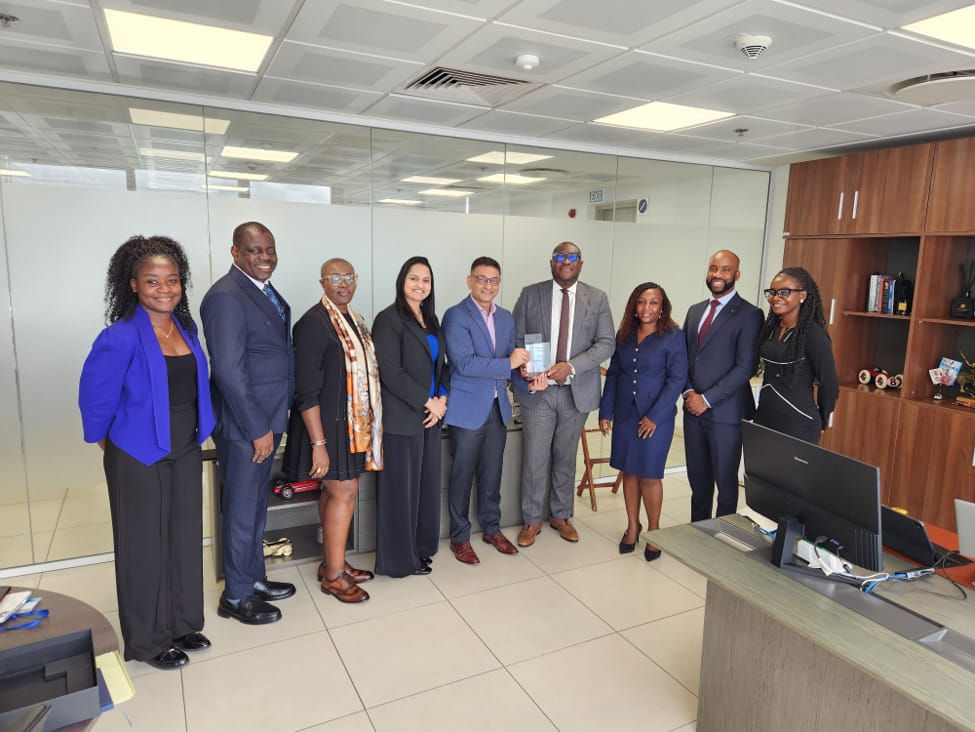
Ecobank Nigeria, a subsidiary of the leading pan-African financial services group Ecobank Group, has been awarded the Client Excellence Award by Deutsche Bank in recognition of its outstanding performance, operational excellence, and commitment to delivering superior Institutional Cash and Trade Finance services.
The award recognises Ecobank Nigeria’s consistent achievement of high standards in transaction processing, service delivery, operational efficiency, and collaboration within the global trade finance ecosystem. It further reinforces the Bank’s position as a leading financial institution providing innovative financial solutions that support corporates, financial institutions, and businesses engaged in domestic and international trade.
Receiving the award on behalf of Ecobank Nigeria, Segun Anjorin, Coverage Head, Corporate and Investment Bank, Ecobank Nigeria, expressed appreciation to Deutsche Bank for the recognition, noting that the award reflects the Bank’s unwavering commitment to excellence, innovation, and customer-centric service delivery.
“We are honoured to receive the Deutsche Bank Client Excellence Award. This recognition is a testament to our commitment to delivering seamless and innovative solutions that enable our clients to thrive in an increasingly interconnected global marketplace.”
“At Ecobank Nigeria, we remain focused on leveraging our extensive pan-African network, digital capabilities, and strategic partnerships to facilitate trade, improve transaction efficiency, and support economic growth across Nigeria and the African continent. We value our longstanding relationship with Deutsche Bank and look forward to further strengthening our collaboration in the years ahead,” Anjorin said.
Commenting on the award, Anand Jha, Managing Director, Global Head of TFFI and Regional Head, Trade & Lending, Middle East and Africa (MEA), Deutsche Bank, commended Ecobank Nigeria for its exceptional service standards and operational excellence.
“The Client Excellence Award recognises institutions that consistently demonstrate outstanding quality, efficiency, and reliability in transaction banking operations. Ecobank Nigeria distinguished itself through its commitment to excellence, strong operational controls, and customer-focused service delivery that has created measurable value for clients and counterparties alike.”
“We are pleased to recognise Ecobank Nigeria’s achievements and appreciate the strong partnership we have built over the years. We look forward to continuing our collaboration in supporting trade, payments, and financial flows that drive economic development across Africa and beyond,” Jha said.
The recognition underscores Ecobank Nigeria’s continued investment in world-class banking solutions and reinforces its role as a trusted financial partner for businesses seeking efficient cash management, trade finance, and cross-border banking services. It also highlights the Bank’s commitment to supporting economic development by facilitating seamless trade and financial transactions across Africa and the global marketplace.
About Ecobank Nigeria
Ecobank Nigeria is a member of the Ecobank Group, the leading pan-African banking institution with operations in 33 African countries and international offices in London, Paris, Beijing, and Dubai. With over 220 branches, more than 36,000 agency banking locations, and robust digital platforms, Ecobank delivers accessible, affordable, and instant banking services. The Bank is strategically positioned to support pan-African trade, particularly under the African Continental Free Trade Area (AfCFTA).
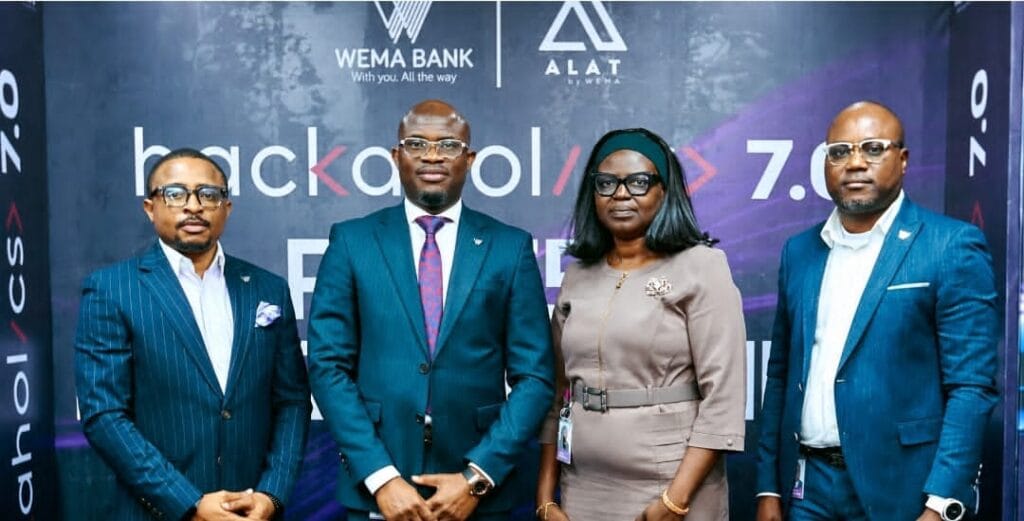
Nigeria’s oldest indigenous national bank, most innovative and pioneer of Africa’s first fully digital bank, ALAT, Wema Bank, on Wednesday, announced the 7th edition of its flagship innovation initiative, Hackaholics.
Launched in 2019, Hackaholics is Wema Bank’s youth and tech-focused initiative designed to serve as a platform for young Africans with creative, game changing, tech-driven ideas and products, to bring their ideas to life. Since its launch, Hackaholics has discovered thousands of groundbreaking solutions, supported over 10,000 startups, engaged 50,000 participants, developed over 100 solutions from scratch and disbursed $500,000,000 in grant prizes to dozens of winners whose remarkable solutions have earned a top spot in the past 6 editions. With the launch of Hackaholics 7.0, Wema Bank is set to execute the biggest Hackaholics edition yet.
Themed “Powering Possibilities”, Hackaholics 7.0 will kick off with an open call for applications, calling on all young Africans with creative tech-driven solutions across any of the 7 verticals: Financial Inclusion, Healthcare, Digital Transformation, Education, Sustainability, Social Impact and Future of Work. Each application is to be made via the portal at hackaholics.wemabank.com, under one of three tracks: The Startup Pitch Competition, Hackathon and the newly introduced Social Impact track.
Following the application window, Hackaholics 7.0 will then proceed on a national tour which will touch 10 pitch centres across the six geopolitical zones of Nigeria. Each pitch centre will serve as a hub for innovators within the region to pitch their creative solutions and get the opportunity to secure the top spot in their pitch centre, and ultimately, proceed to the grand finale where the winners of Hackaholics 7.0 will be announced.
Speaking on the inspiration behind Hackaholics’ exceptional seven-year journey, Wema Bank’s MD/CEO, Moruf Oseni, reiterated the Bank’s commitment to powering innovation, empowering youth and promoting economic growth in Africa.
“At Wema Bank, we believe that institutions have a responsibility that extends beyond providing commercial services. We have a responsibility to create meaningful opportunities, provide the right resources, enable innovation to thrive, and support the ecosystems that will shape today’s youth as well as tomorrow’s economy. This sense of responsibility is what has driven the evolution of Hackaholics from inception till date. With Hackaholics, we have, and we are investing in the next generation of innovators, inspiring innovation that will impact lives, strengthening Nigeria’s innovation ecosystem and giving youth a platform to make meaningful use of their creativity; and the numbers continue to speak volumes,” Oseni said.
While performing the function of declaring the application window open, Tajudeen Bakare, Wema Bank’s Divisional Executive, Business Support, noted that “As we launch Hackaholics 7.0 today, we are opening up a new phase of opportunities for more Nigerian youth to challenge themselves, explore their creativity and become startup founders. I encourage every young Nigerian with a passion for innovation to leverage the opportunity that we have carefully curated through Hackaholics and get ahead of the curve in today’s dynamic work landscape. Together, we can continue to build an ecosystem where innovation flourishes, opportunities expand, and young people are empowered to create solutions that shape the future”.
Hackaholics 7.0 is free, and open to any Nigerian youth who has innovative ideas and solutions to pitch. Interested startups and innovators can apply at hackaholics.wemabank.com. All updates on the Hackaholics 7.0 journey will be made available on the Bank’s website @wemabank.com as well as its social media platforms @wemabank and @alat_ng.


