Business
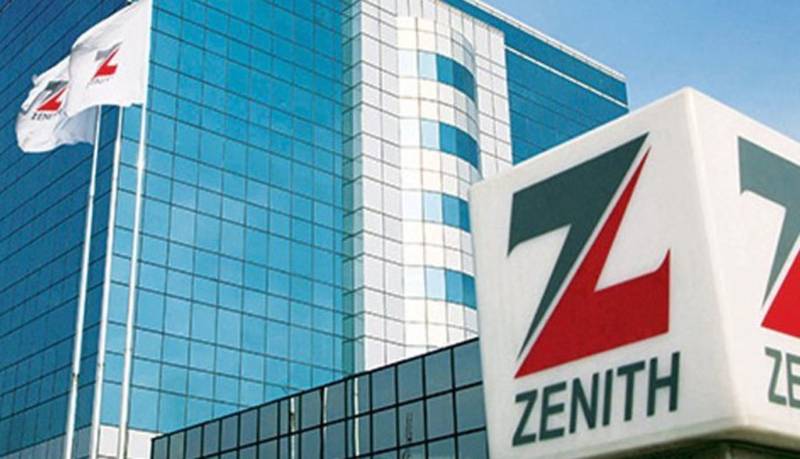
Zenith Bank Named Most Sustainable Bank in Nigeria

- /home/rhoncare/pointblank.ng/wp-content/plugins/mvp-social-buttons/mvp-social-buttons.php on line 27
https://pointblank.ng/wp-content/uploads/2022/03/Zenith-Bank-1024x587-1.jpg&description=Zenith Bank Named Most Sustainable Bank in Nigeria', 'pinterestShare', 'width=750,height=350'); return false;" title="Pin This Post">
- Share
- Tweet /home/rhoncare/pointblank.ng/wp-content/plugins/mvp-social-buttons/mvp-social-buttons.php on line 69
https://pointblank.ng/wp-content/uploads/2022/03/Zenith-Bank-1024x587-1.jpg&description=Zenith Bank Named Most Sustainable Bank in Nigeria', 'pinterestShare', 'width=750,height=350'); return false;" title="Pin This Post">
Zenith Bank Plc has been named the “Most Sustainable Bank, Nigeria” in the International Banker 2024 Banking Awards, retaining the title for the second consecutive year.
The International Banker Awards strive to recognise the most worthy financial institutions around the world – those not just doing their jobs well but exceptionally well – those operating at the industry’s cutting edge and setting new performance levels to which others will aspire. The Awards focused on various criteria, including the provision of much-needed capital for economic growth, cutting-edge innovation to enhance security and efficiency, commitment to sustainability and ESG principles, as well as intelligent investing to maximise profits and shareholder value.
Published by Finance Publishing Limited, the International Banker Magazine, United Kingdom, is a leading global source of authoritative analysis and opinion on banking, finance and world affairs. Its influence, integrity, accuracy and objective opinion have earned it global recognition.
Commenting on the award, the Group Managing Director/Chief Executive Officer of Zenith Bank, Dame (Dr) Adaora Umeoji, OON, said: “We are deeply honoured to be recognised as the Most Sustainable Bank in Nigeria for the second time in a row. This prestigious award underscores our steadfast commitment to sustainability and reinforces our belief that responsible banking is essential for long-term success and societal impact.”
She dedicated the award to the Founder and Chairman of Zenith Bank Plc, Dr Jim Ovia, CFR. She lauded the Bank’s stakeholders for their commitment and unwavering support in ensuring that Zenith remains a highly successful institution.
She said, “This remarkable achievement is a testament to the visionary and impactful leadership of our Founder and Chairman, Dr Jim Ovia, CFR. His exceptional foresight and dedication have been the cornerstone of our success. His ability to inspire and guide with strategic acumen has been instrumental in steering Zenith Bank to new heights. Along with the strategic guidance of our esteemed Board members, the unwavering commitment of our ever-diligent staff, and the steadfast support of our loyal customers, Dr Ovia’s leadership has been pivotal in transforming our sustainability initiatives into a reality. We owe this success to his relentless pursuit of excellence and his deep-seated commitment to redefining the banking landscape in Nigeria.”
This recognition reaffirms Zenith Bank’s position as a trailblazer in sustainable banking practices, setting a benchmark for excellence within the Nigerian banking industry and beyond.
The Bank has been a leader in monitoring and reporting sustainability impact. Since becoming the first Bank in Africa to publish a stand-alone sustainability report following the GRI Standards: Core Option in 2016, Zenith Bank has consistently published assured stand-alone sustainability reports. The Bank is one of the few institutions in Nigeria that tracks its carbon emissions using a certified tool built on the internationally recognised Greenhouse Gas (GHG), Protocol.
Zenith Bank is deeply committed to environmental, social, and governance (ESG) values, subscribing to the Triple Bottom Line principle, which encompasses People, Planet, and Profit. As a leading financial institution that services various sectors of the economy, the Bank considers Environmental and Social (E&S) risk management critical to its sustainability strategy.
Zenith Bank’s track record of excellent performance has continued to earn the brand numerous awards, including being recognised as Best Bank in Nigeria for the fourth time in five years, from 2020 to 2022 and in 2024, in the Global Finance World’s Best Banks Awards; the Best Bank for Digital Solutions in Nigeria in the Euromoney Awards 2023; being listed in the World Finance Top 100 Global Companies in 2023; being recognised as the Number One Bank in Nigeria by Tier-1 Capital for the 14th consecutive year in the 2023 Top 1000 World Banks Ranking published by The Banker Magazine; Best Commercial Bank, Nigeria, for three consecutive years from 2021 to 2023 in the World Finance Banking Awards; Best Corporate Governance Bank, Nigeria in the World Finance Corporate Governance Awards 2022 and 2023; Bank of the Year (Nigeria) in The Banker’s Bank of the Year Awards 2020 and 2022; Best in Corporate Governance Financial Services Africa for four successive years from 2020 to 2023 by the Ethical Boardroom; Most Sustainable Bank, Nigeria in the International Banker 2023 Banking Awards; Best Commercial Bank, Nigeria and Best Innovation in Retail Banking, Nigeria in the International Banker 2022 Banking Awards.
Additionally, the Bank emerged as the Most Valuable Banking Brand in Nigeria in the Banker Magazine Top 500 Banking Brands 2020 and 2021; Bank of the Year 2023 and Retail Bank of the Year for three consecutive years from 2020 to 2022 at the BusinessDay Banks and Other Financial Institutions (BAFI) Awards. Similarly, Zenith Bank was named Bank of the Decade (People’s Choice) at the ThisDay Awards 2020, Bank of the Year 2021 by Champion Newspaper, Bank of the Year 2022 by New Telegraph Newspaper, and Most Responsible Organisation in Africa 2021 by SERAS.



While conversations about the future of retail increasingly focus on supermarkets, shopping malls and online shopping platforms, millions of African consumers continue to rely on a more familiar and accessible business: the neighbourhood shop.
From small provision stores and corner shops to kiosks and informal retailers, these businesses remain an important part of everyday commerce, connecting communities to essential household products. However, behind their convenience lies a supply chain challenge that often limits their growth.
For many small retailers, sourcing products, managing inventory and securing enough working capital to keep their shelves stocked can be difficult. Fragmented distribution networks, multiple intermediaries and limited access to financing often make it harder for them to compete and expand.
Technology is beginning to offer a different possibility.
Digital platforms can simplify the way neighbourhood retailers purchase goods by connecting them more directly with manufacturers and distributors. They can streamline ordering, improve product availability and make inventory management more efficient.
Access to financial technology can further strengthen these businesses by helping eligible retailers secure the working capital required to replenish stock, respond to customer demand and grow sustainably.
One Nigerian technology company working to address these challenges is TradeDepot, which is using digital innovation to connect small retailers with manufacturers and distributors.
By making product sourcing and distribution more efficient, the company is helping to address some of the longstanding barriers facing small businesses in Africa’s retail sector.
However, scaling technology-driven solutions across a fragmented retail market requires more than innovation. It also demands significant investment.
This is where development finance and venture capital become important.
Through Boost Africa, the European Investment Bank (EIB) invested in Partech Africa Fund, a venture capital fund that subsequently backed TradeDepot. The investment illustrates how development finance can reach innovative African businesses through investment funds, providing capital to companies working to solve real economic challenges.
Boost Africa is a joint initiative of the European Investment Bank and the African Development Bank, with support from the European Union. The initiative supports African businesses and strengthens the continent’s entrepreneurial ecosystem by improving access to finance and opportunities for growth.
The wider significance of this investment goes beyond the technology platform itself. Strengthening neighbourhood retailers can contribute to more efficient supply chains, support small business growth and improve access to everyday consumer goods across communities.
For Africa, where small retailers remain central to local economies, the opportunity is substantial.
The future of retail may not necessarily involve replacing traditional neighbourhood shops with large supermarkets or online marketplaces. Instead, it could depend on equipping these existing businesses with better technology, stronger distribution networks and improved access to finance.
Ultimately, transforming retail may begin with something as familiar as the shop around the corner.
Boost Africa: From Capital to Impact.
Watch how TradeDepot is bringing commerce closer to communities through technology and investment

Ever wondered how the products on your neighbourhood shop shelves get there? Behind everyday purchases is a supply chain that can be costly, complex and inefficient, particularly for small retailers.
Nigerian technology company TradeDepot is changing this process by using technology to connect small retailers with manufacturers and distributors, making it easier for shop owners to order and receive the goods they need.
But transforming retail distribution takes more than an innovative idea. It requires investment to build, expand and scale.
Through Boost Africa, the European Investment Bank (EIB), alongside the African Development Bank and with support from the European Union, is helping strengthen the financing ecosystem for innovative African businesses.
One example is the EIB’s investment in Partech Africa Fund, which subsequently backed TradeDepot, helping channel capital into a Nigerian business working to improve how goods move from suppliers to neighbourhood shops.
The impact goes beyond technology. More efficient distribution can help small retailers access inventory, strengthen connections between manufacturers and suppliers, and bring commerce closer to the communities they serve.
Ultimately, TradeDepot’s story demonstrates how investment can go beyond funding to support stronger businesses, more efficient markets and opportunities for small retailers.
Boost Africa: From Capital to Impact.
Watch how TradeDepot is bringing commerce closer to communities.
▶ https://www.youtube.com/watch?v=zw9t2asF9Pc
Business
Beyond University Degrees: How ChipMango is Preparing African Engineers for Global Tech Industry

A university degree is a starting point, but practical industry experience can make all the difference.
Nigerian technology company ChipMango is bridging the gap through specialised semiconductor training and real-world chip design and verification projects, preparing African engineers for opportunities in the global technology industry.
Through Boost Africa, the EIB, AfDB and EU are strengthening the investment ecosystem supporting innovative African businesses.
Watch the video to discover how ChipMango is connecting engineering talent to real industry opportunities.
Watch the video: