
Headlines
A Full Text of President Buhari’s Responses to Bloomberg’s Interview Questions


- /home/rhoncare/pointblank.ng/wp-content/plugins/mvp-social-buttons/mvp-social-buttons.php on line 27
https://pointblank.ng/wp-content/uploads/2021/09/Buhari-UN-1000x600.jpg&description=A Full Text of President Buhari’s Responses to Bloomberg’s Interview Questions', 'pinterestShare', 'width=750,height=350'); return false;" title="Pin This Post">
- Share
- Tweet /home/rhoncare/pointblank.ng/wp-content/plugins/mvp-social-buttons/mvp-social-buttons.php on line 69
https://pointblank.ng/wp-content/uploads/2021/09/Buhari-UN-1000x600.jpg&description=A Full Text of President Buhari’s Responses to Bloomberg’s Interview Questions', 'pinterestShare', 'width=750,height=350'); return false;" title="Pin This Post">
Below is the full, unedited text of President Muhammadu Buhari’s written responses to questions posed by Bloomberg News:
Q1. You campaigned for office with a pledge to fight corruption, secure the country and fix the economy. How would you rate your performance in fulfilling those pledges during your eight years in office? Why has insecurity been so hard to tackle? Are you making headway?
A: We leave Nigeria in a far better place than we found it. Corruption is less hidden for Nigerians feel empowered to report it without fear, while money is returned; terrorists no longer hold any territory in Nigeria, and their leaders are deceased; and vast infrastructure development sets the country on course for sustainable and equitable growth.
Security
In 2015, Boko Haram held territory the size of Belgium within the borders of Nigeria. Today they are close to extinct as a military force. The leader of ISWAP was eliminated by a Nigerian Airforce airstrike in March. The jets acquired from the US and intelligence shared by British were not provided to previous administrations and stand as testament to renewed trust re-built between Nigeria and our traditional western allies under my government.
We urge those same international partners to take additional steps costing them nothing, by proscribing another group – IPOB – as a terrorist organization. Their leadership enjoys safe haven in the West, broadcasting hate speech into Nigeria from London, spending millions lobbying members of the US Congress, and freely using international financial networks to arm agitators on the ground. This must stop.
My administration is the only in Nigeria’s history to implement a solution to decades-long herder-farmer conflicts, exacerbated by desertification and demographic growth. The National Livestock Transformation Plan, putting ranching at its core, is the only way to deplete the competition for resources at the core of the clashes. Governors from some individual states have sought to play politics where ranches have been established; but where they have been disputes have dramatically reduced.
Economy
How prescient our policies for boosting domestic production have become!
For years we have been criticised by the likes of the FT, the Economist, and others for supposedly mistaken attempts to de-globalise and re-localize food production and boost manufacturing. Now with the war in Ukraine breaking global food supply chains “Davos Man” is in retreat as the energy crisis makes countries everywhere think again about energy independence and security.
We have spent our two terms investing heavily in national road, rail, and transport infrastructure set to unleash growth, connect communities, and lessen inequality. This is structural transformation. It may not show on standard economic metrics now, but the results will be apparent in good time.
Corruption
Starting with our Whistleblowing Policy enacted in my first year in office hundreds of millions in stolen funds have been returned within Nigeria.
Working with our international partners, hundreds of millions of various currencies have been returned from abroad – primarily from the UK, US, and Switzerland – and used as social and welfare funds distributed directly to the poorest during the Covid pandemic and the provision of long-delayed infrastructure-roads, bridges, rail, and power.
As an illustration, Monetary recoveries (January-December) 2021 show that more N152 billion has been recovered. Dollar recoveries for the year amount to over USD 386 million; GBP, more than 1.1 million; Euro, about 157,000; Saudi Riyals about 1.7 million some more in Digital and other currencies.
Those partners refused to return these monies held for decades to previous Nigerian administrations in the certainty they would simply be re-stolen. They changed their approach with us because they knew my administration could be trusted.
Q2. Food inflation has risen by double digits since 2015, despite the government’s efforts to boost agricultural production. Why has your administration battled to counter pricing pressures? What will it take for Nigeria to achieve food security? How concerned are you about food shortages in Nigeria and the broader region, given the drought that it is currently experiencing?
A: We can only imagine what food inflation would be today had we not initiated organized programmes to boost domestic production. And still, we do not grow enough domestically.
Initiatives such as the Nigeria Anchor Borrower’s programme, helping farmers compete against artificially lowered imports has boosted rice production to 9 million metric tonnes in 2021 from around 5.4 million metric tonnes in 2015. Even in the years of drought, rice production outstripped pre-2015 levels. Imports have fallen to near zero. We are making progress.
Against these advances international trade remains rigged against food security in Africa. The EU’s policies in particular (see: It’s time for a new economic deal between the EU and Africa) are all rhetoric of open trade – yet their Common Agricultural Policy subsidy programmes and export of those subsidized goods create dependence, undermine Africa’s self-sufficiency, and cause food poverty and starvation.
If only out of enlightened self-interest the West – and particularly Europe – must step up. The moral if not economic case for doing so is unarguable. Do nothing, and more migrants from across the Sahel will attempt dangerous journeys to reach Europe.
Q3. Nigeria continues to confront electricity shortages, and your government has faced calls to modernize the grid, or make the sector economical for stakeholders up and down the chain. Do you think you have done enough to address the nation’s energy shortfall? What else needs to be done?
A: First, we need for more input. Our legislative framework has been a drag. The landmark PIA (see later answers) will bolster input, raise capital, and bring transparency to the system.
On grid modernization, there are hundreds of ongoing projects and initiatives attracting funding from investors. Take my Presidential Power Initiative (PPI), a government-to-government initiative between the Governments of Nigeria and Germany, with Siemens AG, to upgrade the electricity grid with a $2 billion investment.
Once signed into law the constitutional amendment bill – recently voted through parliament – will allow state governments to generate and transmit their own electricity, further facilitating investor participation in our market and enabling states and local businesses to transmit excess supply to the grid.
We are also decentralizing the national grid through renewable driven mini-grids. The $550 million Nigeria Electrification Project has deployed more than 20,000 Standalone Solar Systems (SHS), as well as Solar Hybrid mini-grids in over 250 locations.
Q4. The IMF and World Bank and many leading economists have urged you for years to remove the fuel subsidy and to unify the exchange rate. Why have you not heeded such calls?
A: Most western countries are today implementing fuel subsidies. Why would we remove ours now? What is good for the goose is good for the gander!
What our western allies are learning the hard way is what looks good on paper and the human consequences are two different things. My government set in motion plans to remove the subsidy late last year. After further consultation with stakeholders, and as events unfolded this year, such a move became increasingly untenable. Boosting internal production for refined products shall also help. Capacity is due to step up markedly later this year and next, as private players and modular refineries (Dangote Refinery, BUA Group Refinery, Waltersmith Refinery) come on board.
The exchange rate is still susceptible to external shocks that can suddenly and severely affect Nigerian citizens. As we step up domestic production – both in fuel (enabled by PIA) and food (agricultural policies) – the inflationary threat shall diminish, and we can move toward unification.
Q5. The sharp rise in borrowing since 2015 has left the country now spending almost all of its revenue servicing debt. What will that level of debt servicing costs mean for the country going forward? Do you think you have done enough to try and bring debt under control?
A:A narrow focus on debt misses the point. What it fills is Nigeria’s longstanding infrastructure deficit by constructing a foundation for sustainable growth – spreading opportunity to ensure no part of the country is left behind, which has led to insecurity in the past.
Our infrastructure developments have been the most ambitious since Nigeria’s independence. Over 800 federal roads are being constructed or undergoing rehabilitation and 650km of rail line have been laid, helping alleviate food inflation pressures, given most food is produced in the north.
Had the infrastructure gap not been filled it will only grow, become more costly to repair what little we have while lacking more on infrastructure on which to build growth, negatively impacting progress towards UN Sustainable Development Goals.
Q6. Nigeria has one of the lowest tax-to-revenues ratios in the world. Is there more your administration could have done to boost tax collection?
A: Though we have the largest economy in Africa, it is true that translating that wealth into revenue generation is challenging.
We raised VAT in 2020, and the IMF wanted us to raise it further, but this is a complex issue that cannot be addressed by tax hikes alone. Around 80% of Nigerians work in the so-called informal economy – a situation exacerbated by the pandemic. It is difficult to tax the informally employed, and no country has yet found an adequate solution.
Still, we are striving to find one, including the roll out of a national ID card which has grown from 7 million in 2015 to between 90-100 million today – including a tax code and, at the same time combined with access to various government services.
In 2016 I launched the Presidential Enabling Business Environment Council (PEBEC), making Nigeria an easier place to start and grow a business. PEBEC’s policies, as with our national ID card rollout help integrate the informal sector.
We also work closely with ECOWAS to implement initiatives like the Support Programme for Tax Transition in West Africa (PATF), improving the management of domestic taxation and ensuring better coordination of taxation in the ECOWAS and West African Economic and Monetary Union (WAEMU) regions.
Q7. You serve as oil minister in addition to president. Why has the country’s crude production been slumping, with Nigeria unable to meet its OPEC quota for almost a year despite elevated prices? What are you doing to bolster output?
A: Four years ago, we unveiled plans for a new gas pipeline connecting Nigeria to Europe. Last week (2nd June) – in record time – the Nigerian National Petroleum Company (NNPC) entered into an agreement with the Economic Community of West African States (ECOWAS) for its construction.
Concurrently on 1st July the NNPC will become a Limited Liability Company and be subject to more robust auditing and commercial disclosure obligations. It will help stimulate investment and boost transparency, where corruption has deterred the former and stymied the latter. My administration is the first to pass this landmark reform our oil and gas sector, after two decades of predecessors’ failure to do so – no doubt due to vested interests.
Criminality and terrorism in oil-producing regions hamper production, and it would help if our western allies designated IPOB as a terrorist group, given their complicity in damage to pipelines and infrastructure.
We have invested in our security forces, including the $1 billion military deal with the U.S. for the acquisition of A-29 Super Tucano aircraft. These efforts are making an impact: wells that had to be closed due to criminality have now re-opened. With these efforts, OPEC has raised our quota for next month.
Q8. What is Nigeria doing to take advantage of the gas supply crisis in Europe? How fast do you think Nigeria will be in a position to fill in on some of the European demand?
A: We need long term partnership not inconsistency and contradiction on green energy policy from the UK and European Union. Investment is hampered by their broad-brush moratorium on overseas gas projects, while at home the same projects are classified as green. It does not help their energy security, it does not help Nigeria’s economy, and it does not help the environment. It is a hypocrisy that must end.
To change, the UK and EU countries should invest in our planned 4000 km pipeline to bring Nigerian gas – the largest reserves in Africa – via Morocco, then onto Europe.
Q9. Are you concerned about the debate around the central bank’s independence following the governor showing interest in running for president? How are you going to resolve that?
A: The CBN governor is appointed by the President. But this appointment is subject to confirmation by the Nigerian Senate. Ultimately, it will be for the CBN’s board of directors to determine whether a CBN governor’s actions have fallen foul of the laws in place to ensure he can most effectively carry out his duties.
But there is a subtext to the accusations. Because the governor follows a model outside of the economic orthodoxy, he is labelled political. But the orthodoxy has proved wrong time and again.
Instead, the governor is following an alternative economic model that puts people at the heart of policy. Nigeria should be free to choose its development model and how to construct our economy, so it functions for Nigerians.
Q10. Do you plan to endorse a candidate for president? If so, who?
A: Yes. I will endorse the APC candidate for president.
Q11. You have suggested that members of the Commonwealth, who are due to meet in Rwanda next month, cooperate more closely on matters of defense and security. What do you have in mind?
A: African nations make up the largest contingent of Commonwealth members. There is no reason why one of the world’s foremost arms manufacturers should not sell more widely to this club – a group of allies. If they don’t get them from Britain, they shall necessarily get them from elsewhere. This only creates a mosaic of different systems across Commonwealth members on the continent.
Instead, we should aspire to interoperability, which would have a material impact the ground. Commonwealth members in Africa often find themselves in the same missions. Operating with the same hardware and systems, collaborating troops would be more effective. Such collaboration could also open doors to deeper intelligence sharing.
I also believe the club can be used far more effectively as a voting bloc at intergovernmental bodies to deliver outcomes for the whole of the Commonwealth – and individual members when they ask for backing on matters from the rest of the group on issues of importance to them. The Non-Aligned Movement present common voting positions, and they have far less in common than Commonwealth members. Why would we not try to do this?
We can also do far more to reduce barriers to trade between members. When the UK remained in the EU that was less possible; now with the Commonwealth’s largest economy able to strike trade deals of its own, much has changed. The UK’s move to become the first country to sign a deal with the AfCFTA is an obvious example.
Q12. Are you concerned that people accused of blasphemy still get stoned to death on the streets in northern Nigeria? What do these long-standing religious divisions mean for Nigeria’s future?
A: No person has the right to take the law into his or her own hands.
Christianity and Islam, our two Great Faiths and their Great Books have far more in common than they have apart. Nigeria has a long tradition of tolerance that we must draw on, and we must strive to find common ground.
What comes out of this tragedy is to cherish what we share, while at the same time respect our differences.


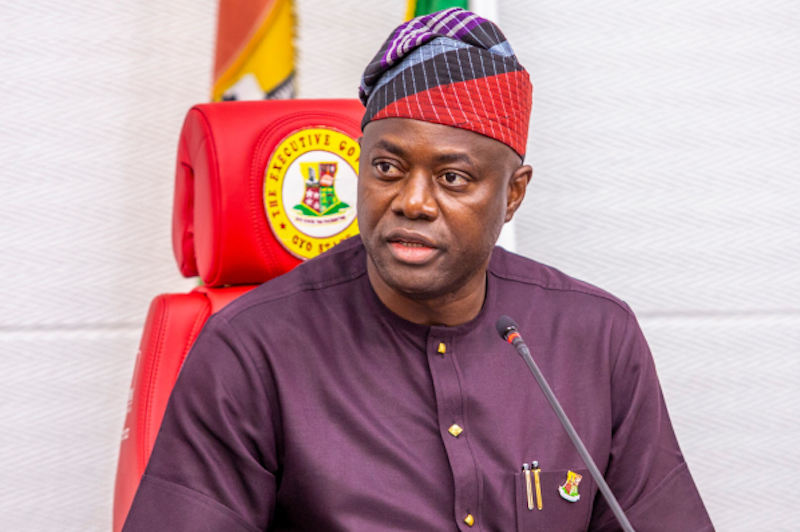
The Allied Peoples Movement (APM) presidential candidate, Seyi Makinde, on Thursday, criticised President Bola Tinubu’s “Emi Lokan” slogan ahead of the 2027 presidential election.
Makinde said Nigerians do not need “turn-by-turn nepotism”, arguing that voters should be free to decide who becomes the country’s next president in 2027.
The Oyo State governor spoke during the APM’s town hall meeting in Akure, Ondo State.
Makinde asked: “How can someone say ‘Eemi lokan’ in a country like Nigeria? You were given the opportunity. If you recall the 1999 presidential election, the South-West voted massively for Baba Olu Falae, but the rest of Nigerians voted for Baba Obasanjo. So, this is not an issue that only the South-West can resolve; it is an issue we must address collectively as Nigerians.
“We do not want ‘turn-by-turn nepotism’, nor do we want a situation where people say, ‘I will vote for projects because it is my turn’. You will not finish those projects, and when it becomes someone else’s turn, they will do the same thing. We will end up with a Nigeria where we cannot get value for the resources belonging to Nigerians.
“The Reset Nigeria agenda is about building a country where infrastructure development supports economic growth and addresses the concerns of young people and women.
“Once we fix our economy, no zone will be left behind, and no demographic group will be left behind.”
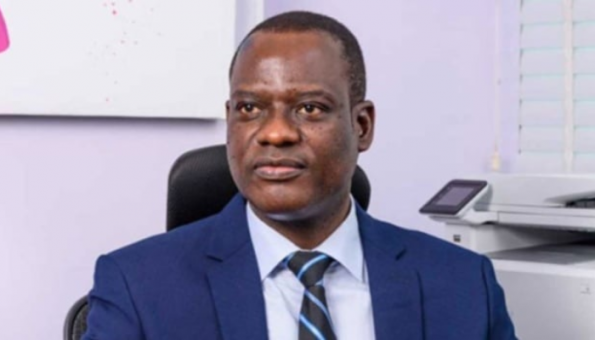
Minister of Finance and Coordinating Minister of the Economy, Taiwo Oyedele, has denied saying the Federal government will introduce a fuel tax when the economy stabilises and income levels improve.
In a post on X on Tuesday, Oyedele said his remarks during an interview with ARISE News was misrepresented, insisting that a “fuel tax is not on the table.”
However, during the interview with Rotus Odiri, ARISE News Business Correspondent, on the sidelines of the 2026 International Monetary Fund and World Bank annual meetings in Bangkok, Thailand, Oyedele said the tax would come when income levels improve enough for Nigerians to accommodate it.
He said taxes account for between 20 and 80 percent of pump prices in some countries, while many African countries impose between six and 10 different taxes on fuel products.
He said introducing fuel tax while petrol was still subsidised would have been counterproductive because government would effectively be paying the tax itself.
According to him, imposing the tax immediately after removal of petrol subsidy would be insensitive to Nigerians.
“The objective should be that instead of trying to suppress prices, which hasn’t worked for us, it hasn’t worked for any country in the world, not one. Instead of trying to suppress prices, think about how to grow income faster than prices rise,” Oyedele said.
“That’s how you bring prosperity and grow the middle class and that is exactly what we are doing as led by Mr. President himself.
“At the appropriate time, when the economy has stabilizes and income level will be able to accommodate it, those taxes will come. Not because we want to impose taxes,” he added.
In his Tuesday post, the minister reiterated that introducing a fuel tax at this time would be insensitive following removal of petrol subsidy, describing reports that government will introduce the levy when the economy stabilises as “fake news.”
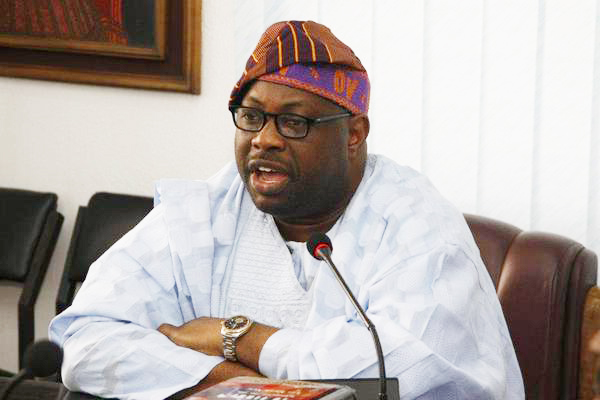
A chieftain of the African Democratic Congress (ADC), and Deputy Director of the Presidential Campaign Council, Chief Dele Momodu, has described former Vice-President Atiku Abubakar as the most nationally formidable and experienced among the leading contenders for the 2027 presidential election.
Momodu said Atiku’s experience at the national level distinguishes him from President Bola Tinubu and former Anambra State Governor, Peter Obi.
He stated this on Wednesday during an interview on Eagle 102.5 FM, Ilese-Ijebu, in Abeokuta.
“If you look at the antecedents of the three major candidates, between Atiku Abubakar and Peter Obi, you will see that Atiku is the most experienced. He has managed our country at the highest level,” he said.
Momodu traced Atiku’s political journey to the 1992 Social Democratic Party (SDP), presidential primary where he contested against late MKO Abiola and stepped down for him.
He said Atiku accepted the outcome without crisis even after he was not picked as Abiola’s running mate, describing it as a mark of true democratic temperament.
“He is the only one who started from around 1992, contested the SDP primary against Abiola and stepped down with uncommon equanimity. He did not make any noise,” Momodu said.
He noted that Atiku was among the founders of the Peoples Democratic Party, PDP, and served as Vice-President from 1999 to 2007.
Comparing Atiku with Obi, Momodu argued that while Obi’s best was demonstrated in Anambra, Atiku’s was at the presidency level managing the national economy.
“Peter Obi has tried his best in Anambra, while Atiku’s best is at the level of vice president controlling the economy of Nigeria. The difference is clear. He has matured in experience and exposure,” he said.
Momodu also said President Tinubu’s experience was largely limited to Lagos.
“What I’m trying to say is that Tinubu’s experience was limited to Lagos, and that is why when he became president, he thought Nigeria was Lagos. And he has found out now that Nigeria is not Lagos,” he said.
He argued that the current economic hardship under the present administration did not show prosperity, insisting Atiku remained better positioned to lead the country.
“Well, we are yet to see that prosperity, and if yesterday would determine today and tomorrow, it is obvious that Tinubu should retire now and let someone else do it,” Momodu added.
DailyPost


