
Metro
Agent of Peace: Zone 2, AIG Fayoade and the Spectacular Carol, Thanksgiving Service That Melted Hearts


- /home/rhoncare/pointblank.ng/wp-content/plugins/mvp-social-buttons/mvp-social-buttons.php on line 27
https://pointblank.ng/wp-content/uploads/2024/12/IMG-20241215-WA0001-1000x600.jpg&description=Agent of Peace: Zone 2, AIG Fayoade and the Spectacular Carol, Thanksgiving Service That Melted Hearts', 'pinterestShare', 'width=750,height=350'); return false;" title="Pin This Post">
- Share
- Tweet /home/rhoncare/pointblank.ng/wp-content/plugins/mvp-social-buttons/mvp-social-buttons.php on line 69
https://pointblank.ng/wp-content/uploads/2024/12/IMG-20241215-WA0001-1000x600.jpg&description=Agent of Peace: Zone 2, AIG Fayoade and the Spectacular Carol, Thanksgiving Service That Melted Hearts', 'pinterestShare', 'width=750,height=350'); return false;" title="Pin This Post">
Known for his penchant for creating firsts, the Assistant Inspector-General of Police in charge of Zone 2, comprising Lagos and Ogun states, AIG Adegoke Fayoade, has hailed the Nigeria Police Force for its steadfastness in the sustained fight against crime and criminality, saying the Police will remain agent of peace in the society.

AIG Fayoade made the remarks while addressing a crowd of attendants at the maiden Christmas Carol/End of the Year Celebration, with the theme, Police: Agent of Peace to the World, in honour of the dutiful men and officers of Zone 2 of the Nigerian Police, which the National Association of Online Security News Publishers (NAOSNP) attended.
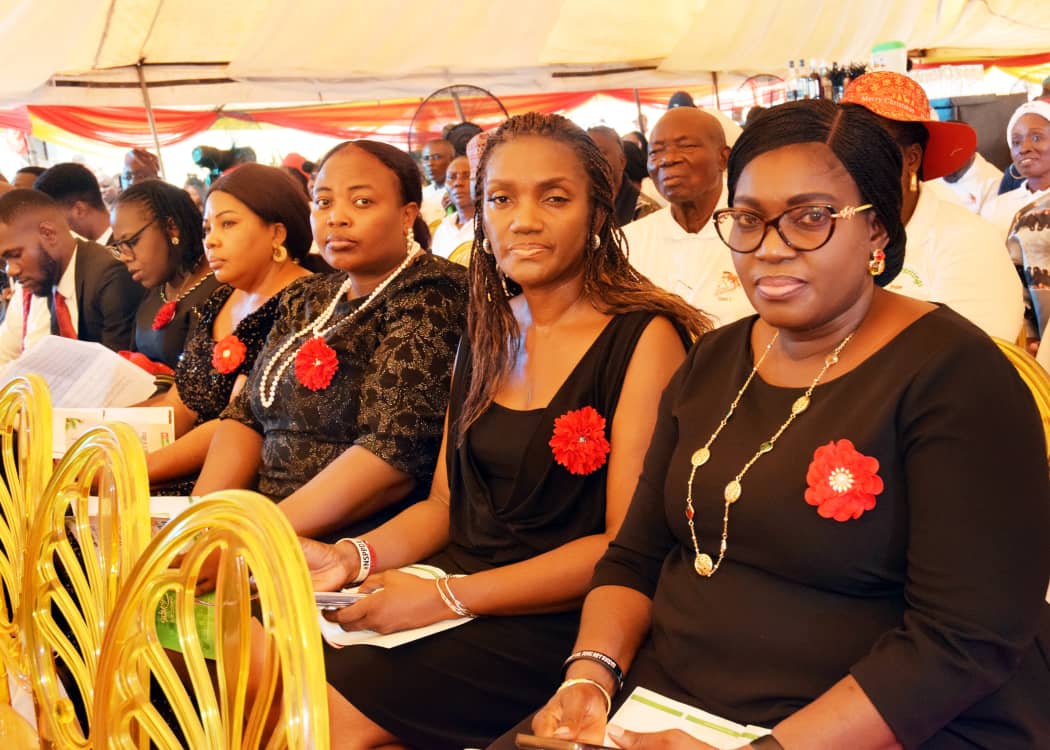
The event, which had in attendance representatives of the various arms of security apparatuses including the Nigerian Army, Navy, Airforce, Department of State Security (DSS), Federal Road Safety Corps (FRSC), Nigerian Customs Service, and Immigration, kickstarted with a heartfelt opening prayer by CSP (Rev Father) Paul Ogbo before the ebullient Police Band led the guests of notable dignitaries through the recitation of the National Anthem, and heartwarming praise and worship session that everyone on their toes, singing, praising and dancing on to the Lord for His goodness all through the year.

Thereafter, AIG Fayoade, who has been praised for his dexterity in policing, intelligence and goal getting abilities, delivered a welcome speech that centered on praises for policemen for jobs well done.
While emphasizing on the need to be proactive, even in peace time, the AIG acknowledged every attendee, with special emphasis to his wife, who is also the Chairperson of Police Officers Wives Association (POWA), Zone 2 branch, Mrs Adenike Fayoade, and kickstarted an avalanche of Bible readings, praise melodies and medley.
“As police officers, we are not just enforcers of the law; we are also called to be agents of peace in our communities.
“This season reminds us of the essence of peace, goodwill, and gratitude.”
The first Bible reading was taken from the book of Isaiah 9: 1-6 by AIG Fayoade while Brigadier-General Igbokwe, who represented the General Officer Commanding 81 Divsion took the second Bible reading from the book of Luke 2: 15-20.

The third and fourth bible readings were taken by the representative of Flag Officer Commanding, Western Naval Command and representative of the AOC from the books of Luke 26: 1-14 and Matthew 1: 18-25 respectively.
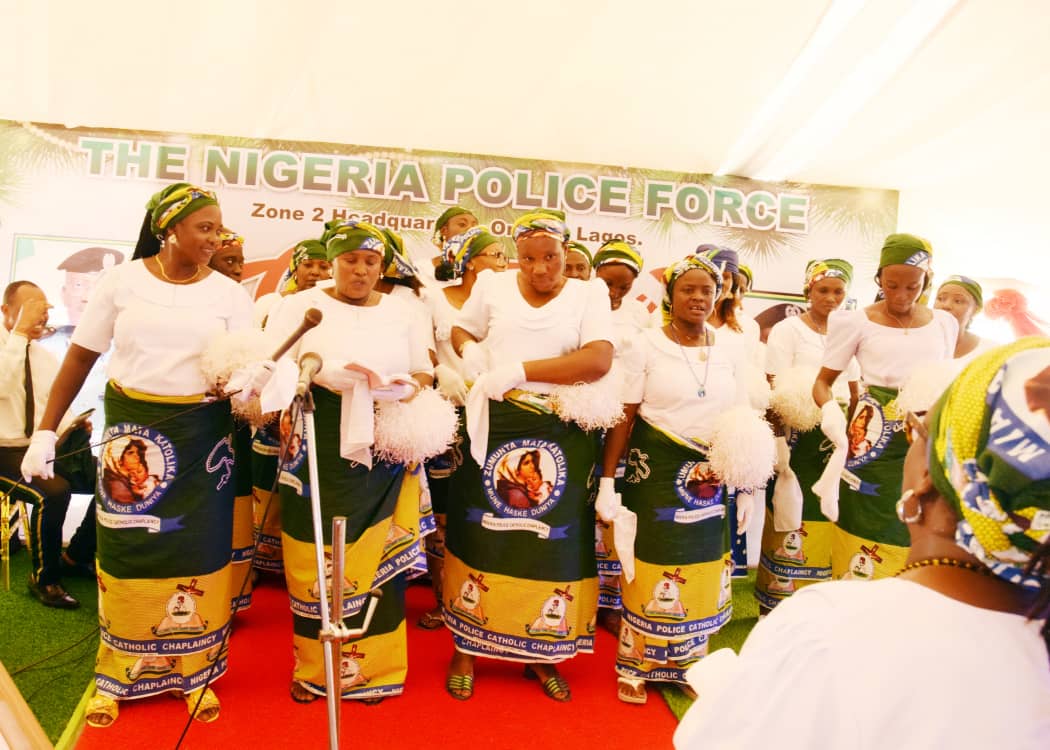
Thereafter, the guest minister, Reverend Ben Eragbai exhorted the congregation on the theme ‘favour’ opening the floodgates of Carol songs from invited choirs including Nigerian Airforce Chaplaincy Choir, Zumunta MataPolice Chaplaincy Choir, Nigerian Army Chaplaincy Choir, Zone 2 Chaplaincy Choir, Nigerian Navy Chaplaincy Choir, Our Saviour’s Church Choir, and Lagos State Command Chaplaincy Choir.

It was altogether a moment of soul lifting exercise and exchange of pleasantries, love and camaraderie among the rank and files of the Police for a year of fulfillment, health and most importantly, life.
Speaking to NAOSNP on the sidelines, the elated AIG appreciated his staff for their efforts in putting together the Carol, the first of its kind in the history of the Zone.
“We have created a first in the positive repositioning of appreciative tendencies, and I’m sure a lit of our colleagues and others will follow suit.
“I thank the governors of Lagos and Ogun states for their support in our policing duties as well senior and junior officers of this Zone including CSP Tijani Taofiq; they have all been wonderful,” he said.
In his vote of thanks, DCP Martin Nwogoh, lauded the royal fathers, especially the white cap Chiefs that represented the Oba of Lagos, Rilwan Akiotu, members of the security agencies and the general public, who trooped out enmasse to make the day a success.
“Expect a much more bigger celebration in the coming year,” he concluded.

CSP (Ven) Tope Ojamo said the closing, bring to a close the first ever Carol and end of the year party of the Zone 2 Police Command.


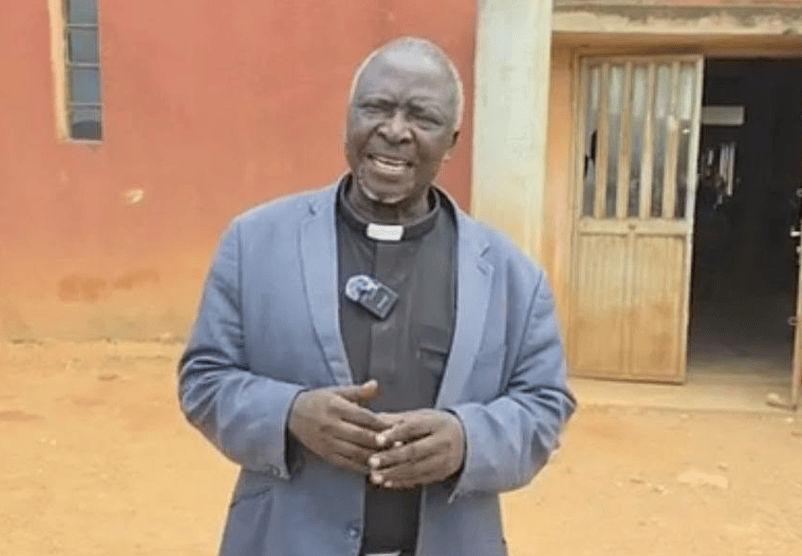
The Regional Chairman of Church of Christ in Nations (COCIN), Barkin Ladi Local Government Area of Plateau State, Rev. Ezekiel Dachomo, has denied reports that he prayed for the re-election of President Bola Tinubu and Vice President Kashim Shettima in the 2027 presidential election.
Dachomo, who is currently in Israel on what he described as his first International Christian Advocacy Tour, said his visit was aimed at drawing the attention of world leaders to the plight of Christians in Plateau.
The cleric made the clarification in a social media post on Monday night following reports that he had prayed for the success of the All Progressives Congress (APC) presidential ticket and expressed support for the Muslim-Muslim ticket.
Dachomo said his earlier post, in which he prayed for Nigeria, had been misconstrued as an endorsement of Tinubu and Shettima ahead of the 2027 election.
According to him, there was nowhere in the post where he prayed for the President and Vice-President to win the election.
“People are trying to frame me, saying I prayed for a Muslim-Muslim ticket. But I did not, and I will never pray for a Muslim-Muslim ticket because Nigeria belongs to both Muslims and Christians,” he said.
Dachomo said his prayers were for the well-being and success of Nigeria and its citizens, irrespective of their religious affiliations.
“I pray for both Muslims and Christians in Nigeria. I pray for Nigeria to succeed. If you truly want to come to God, come with a clean heart,” he added.
The cleric further stated, “I did not pray for President Tinubu and Vice President Shettima to win in 2027. My prayers have always been for Nigeria to succeed.”
Dachomo’s clarification came amid reactions to his ongoing advocacy tour in Israel, where he is seeking international attention to security challenges and what he described as the persecution of Christians in Plateau.

Ahead of the 2027 election, the House of Representatives Committee on Electoral Matters has urged the Independent National Electoral Commission (INEC) to disqualify candidates whose names are not contained in political party registers, as stipulated by the Electoral Act 2026.
In a statement on Tuesday, the Chairman of the committee, Bayo Balogun, drew the commission’s attention to a Supreme Court ruling on Sections 77(5), 77(6) and 77(7) and called for their full enforcement across all political parties.
Balogun, a member of the All Progressives Congress, APC, said that pending legal proceedings concerning the interpretation, constitutionality and enforceability of the sections had been resolved by virtue of the Supreme Court judgment.
The lawmaker recalled that the Supreme Court, on September 24, 2026, restored the provisions after setting aside the Court of Appeal judgment that had declared them unconstitutional.
According to him, the apex court held that the provisions were not inconsistent with the 1999 Constitution.
Balogun explained that Section 77(5) provides that only members whose names are contained in the membership register submitted to INEC are eligible to vote or be voted for at party primaries, congresses and conventions.
He said that Section 77(6) requires political parties to use the register submitted to the electoral umpire for such exercises.
Balogun urged INEC to proceed without further delay to enforce Sections 77(4) to 77(6) in the administration and monitoring of political parties and their electoral activities.
He further urged the commission to audit the membership registers and candidates submitted by political parties to establish whether the names of the candidates are contained in the registers earlier submitted to INEC in compliance with Section 77(5).
“This will be a litmus test for the commission – any culpable political party and candidates should be disqualified.
“Diligent enforcement of the provision would help prevent disputes and reduce the volume of litigation that could arise from alleged irregularities or non-compliance with Sections 77(4) to 77(6) of the Electoral Act,” Balogun said.
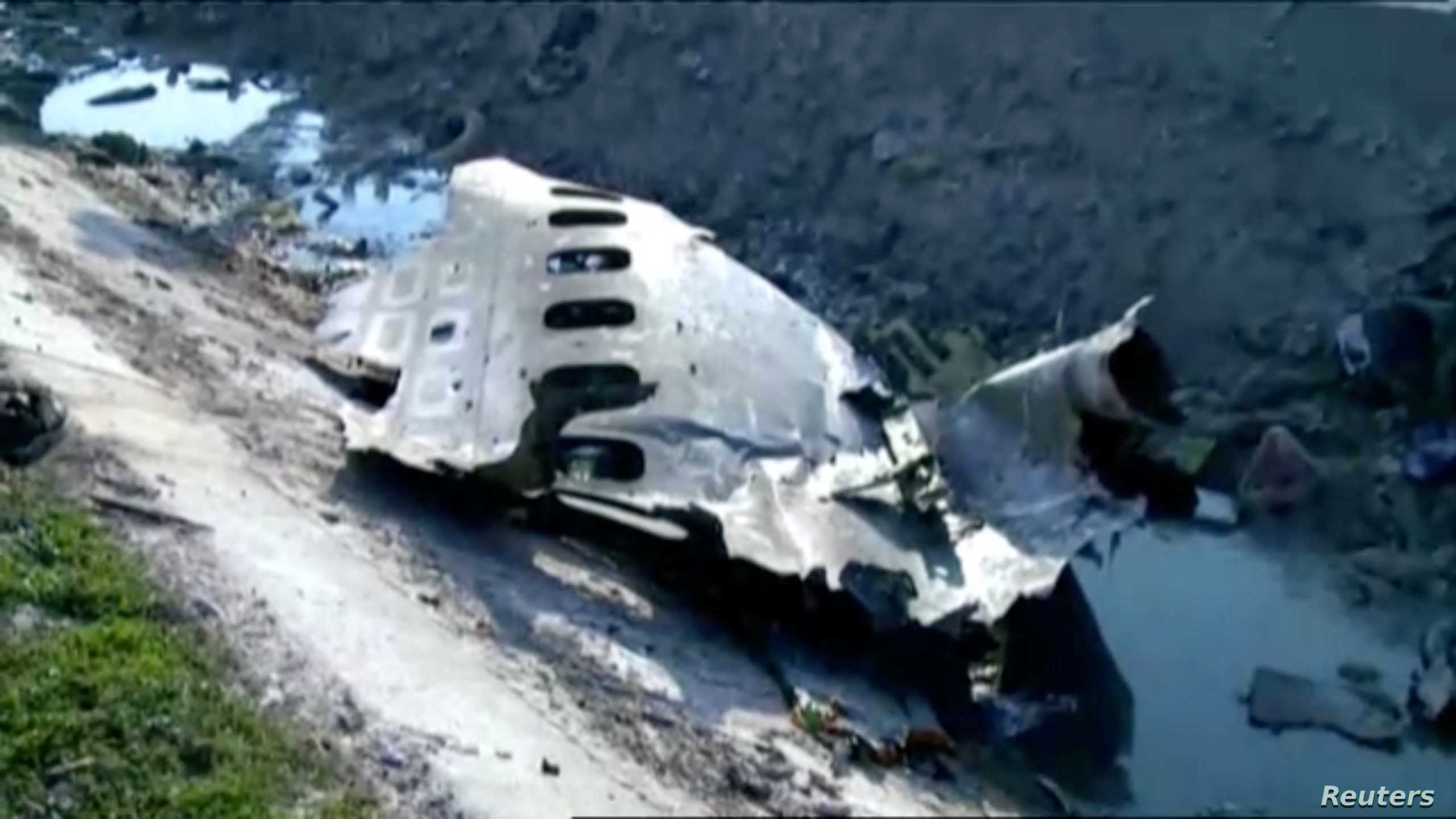
An helicopter crashed into a swamp near Naval Base in Igbokoda, the headquarters of Ilaje Local Government Area of Ondo State, on Monday.
The incident occurred at about 11.00a.m during heavy down pour, throwing the coastal community into panic.
The number of people on board of the helicopter was yet to be officially confirmed, while the condition of possible survivors cannot be confirmed.
Confirming the incident, Maurice Oripenaiye, the Chairman of the local government, told the News Agency of Nigeria (NAN) in a telephone interview that he could not ascertain the number of the victims.
Oripenaye also said he was yet to ascertain the identity of the crashed helicopter and the passengers.
“It happened during the heavy rainfall at about 11.00a.m. I cannot confirm the number of the people on board. I have deployed some youths to the area for rescue purpose,” he told NAN.
Similarly, the Police Command in Ondo State while confirming the crash, said details surrounding the incident were still emerging.
The command in a statement by its spokesperson, Abayomi Jimoh, a deputy superintendent of police, in Akure, said efforts were ongoing to establish the full circumstances surrounding the crash.
“The command urges members of the public, particularly residents of Igbokoda and adjoining communities, to remain calm and refrain from circulating unverified information.
“The public will be duly informed as soon as further credible information becomes available,” it stated.
(NAN)


