
Metro
Alleged N1.3bn Fraud: Court Sets Feb 27 to Arraign Obanikoro’s Son, Others


Justice Ambrose Lewis-Allagoa of the Federal High Court in Lagos has scheduled February 27 for the arraignment of Gbolahan Obanikoro, the son of Senator Musiliu Obanikoro, and four other individuals over alleged conspiracy, obtaining by false pretenses, and involvement in a N1,356,057,330.43 billion fraud.
Others to be arraigned alongside Obanikoro are: Adejare Adegbenro, 51; Balmoral International Limited; M.O.B. Integrated Limited; and DDSS International Company Limited.
Justice Lewis-Allagoa set the date on Friday after the defendants failed to appear for their scheduled arraignment.
The Inspector General of Police, through the Special Fraud Unit (PSFU) in Ikoyi, Lagos, has accused all the defendants of conspiring between May and September 2013 to fraudulently obtain the sum of N1,356,057,330.43 from Access Bank Plc (formerly Diamond Bank). They allegedly misrepresented themselves to the bank’s staff and officers, claiming they were involved in the business of importing cars from Dubai for sale in Nigeria, and that the money was needed to finance the importation of a set of brand-new cars for resale.
The defendants are also accused of converting, transferring, retaining, or taking possession of the funds, knowing or having reason to know that such funds were proceeds of unlawful activity. Additionally, they are alleged to have unlawfully converted the sum of N1 billion belonging to the bank for personal use.
At the hearing on Friday, prosecutor M.Y. Bello informed the court that the matter was scheduled for the arraignment of all defendants. However, he requested a new date to allow all the defendants to appear in court and take their pleas.
Counsel for the defendants, Joshua A., explained that his clients were not in the country. He added that only the companies named in the charge had been served with the charge sheet. He assured the court that all defendants would be present at the next adjourned date to take their pleas.
In light of these submissions, Justice Lewis-Allagoa adjourned the matter to February 27 for the arraignment of all the defendants.
The five-count charge against the defendants reads: “That you, Adejare Adegbenro, Gbolahan Obanikoro, Balmoral International Limited, M.O.B. Integrated Limited, DDSS International Company Ltd, and other directors of the companies (now at large), between May and September 2013 in Lagos, with intent to defraud, conspired to commit felony, specifically obtaining money by false pretenses, and thereby committed an offense contrary to Section 8(i)(a) and punishable under Section 1(3) of the Advance Fee Fraud and Other Fraud-Related Offenses Act, No. 14 of 2006.
“That you, Adejare Adegbenro, Gbolahan Obanikoro, Balmoral International Limited, M.O.B. Integrated Limited, DDSS International Company Ltd, and other directors of the companies (now at large), between May and September 2013 in Lagos, with intent to defraud, obtained the sum of N1,356,057,330.43 (One Billion, Three Hundred Fifty-Six Million, Fifty-Seven Thousand, Three Hundred Thirty Naira, Forty-Three Kobo) from Diamond Bank (now Access Bank Plc) by falsely representing through its staff and officers that you and your companies were in the business of importing cars from Dubai for sale in Nigeria. Based on this false representation, the bank released the money as a loan, which you then diverted to your personal use. This action is contrary to Section 1(i)(a) of the Advance Fee Fraud and Other Fraud-Related Offenses Act, No. 14 of 2006 and punishable under Section 1(3) of the same Act.
“That you, Adejare Adegbenro, Gbolahan Obanikoro, Balmoral International Limited, M.O.B. Integrated Limited, DDSS International Company Ltd, and other directors of the companies (now at large), between May and September 2013, in Lagos, directly or indirectly converted, transferred, retained, or took possession or control of N1,356,057,330.43 (One Billion, Three Hundred Fifty-Six Million, Fifty-Seven Thousand, Three Hundred Thirty Naira, Forty-Three Kobo) belonging to Diamond Bank (now Access Bank Plc), knowing or having reason to know that such funds were proceeds of an unlawful act. This action is contrary to Section 18(2)(b) and (d) and punishable under Section 18(3) of the Money Laundering (Prevention and Prohibition) Act, 2022.
“That you, Adejare Adegbenro, Gbolahan Obanikoro, Balmoral International Limited, M.O.B. Integrated Limited, DDSS International Company Ltd, and other directors of the companies (now at large), sometime in May 2019 in Lagos, with intent to defraud, obtained the sum of N1,000,000,000.00 (One Billion Naira) from Diamond Bank (now Access Bank Plc) by falsely representing through its staff and officers that you and your company, DDSS International Company, were in the business of importing cars from Dubai for sale in Nigeria. The bank released the money to you as a loan, which you subsequently diverted to the account of another company, Balmoral International Limited, to disguise the true origin of the funds. This action is contrary to Section 1(i)(a) of the Advance Fee Fraud and Other Fraud-Related Offenses Act, No. 14 of 2006 and punishable under Section 1(3) of the same Act.
“That you, Adejare Adegbenro, Gbolahan Obanikoro, Balmoral International Limited, M.O.B. Integrated Limited, DDSS International Company Ltd, and other directors of the companies (now at large), sometime in May 2019, in Lagos, directly or indirectly converted, transferred, retained, or took possession or control of N1,000,000,000.00 (One Billion Naira) belonging to Diamond Bank (now Access Bank Plc), knowing or having reason to know that such funds were proceeds of an unlawful act. This action is contrary to Section 18(2)(b) and (d) and punishable under Section 18(3) of the Money Laundering (Prevention and Prohibition) Act, 2022.”


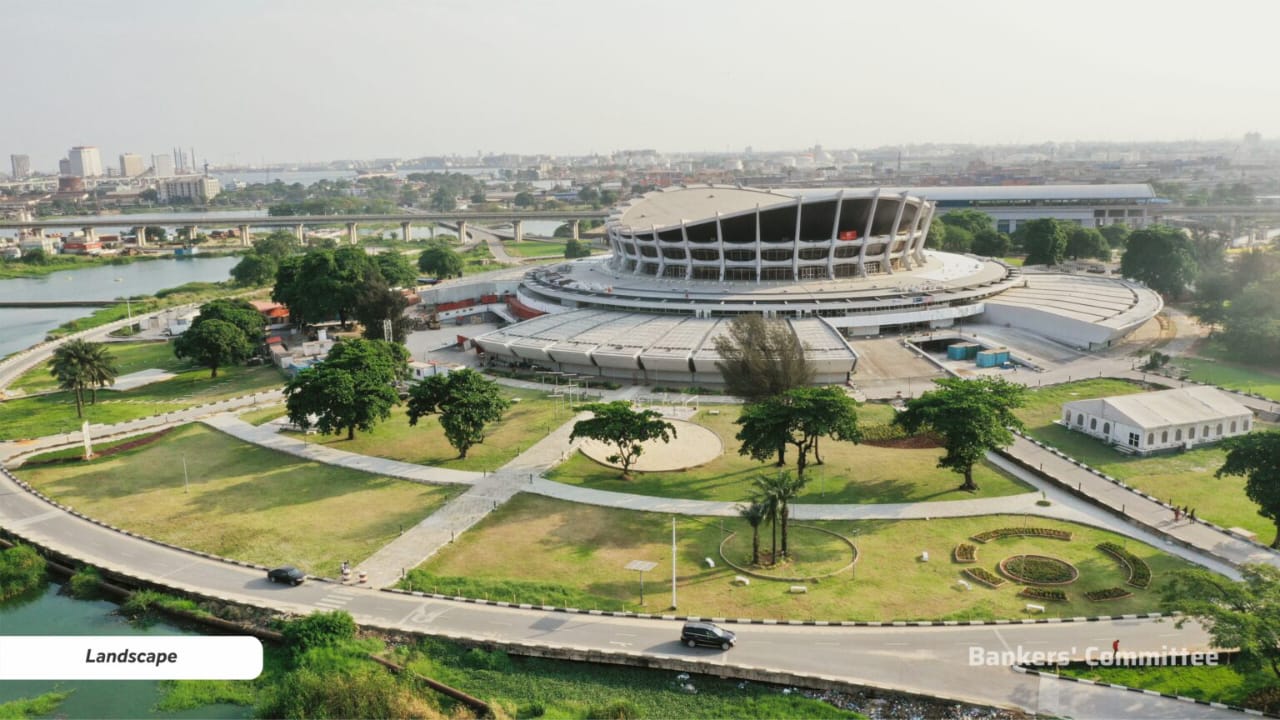
When the National Theatre Lagos first opened ahead of FESTAC ’77, an architectural marvel, a symbol of the cultural soul of a nation ready to introduce its artistic brilliance to the world. Modelled after the Varna Palace of Culture and Sports in Bulgaria and constructed between 1973 and 1976, the National Theatre was designed as an emblem of Nigeria’s ambition to be Africa’s cultural capital. Its 5,000-seat main hall, festival arena, exhibition spaces, and state-of-the-art acoustics made it one of the most sophisticated performance complexes on the continent.
Throughout the 1970s and 1980s, the Theatre became home to Nigeria’s most iconic productions, from Hubert Ogunde’s epic plays to international dance festivals, orchestral performances, film premieres, and global conferences. It was a beacon for African creativity, a place where culture, identity, music, and storytelling came alive. But by the early 2000s, the Theatre, though heavy with cultural memory, had fallen into disrepair. Years of inadequate maintenance, stalled concession agreements, and structural depreciation left the building struggling to meet modern technical and creative demands. The symbol of national pride had become a shadow of its past promise.
Recognising the scale of cultural loss and the opportunity embedded within it, the Bankers’ Committee, with Access Bank playing a pivotal role, initiated the largest cultural infrastructure revitalisation project in contemporary Nigeria. The decision was both strategic and patriotic: Nigeria’s creative industry, now contributing significantly to GDP through film, fashion, music, design, cultural tourism, and digital content, urgently needed a modern, centralised hub that could support global-standard production and creative entrepreneurship. Reviving the National Theatre would not only restore a national icon but also stimulate job creation, attract international collaborations, and reposition Lagos as a premier African creative economy hub.
The renewal of the National Theatre is therefore more than a restoration project; it is a necessary economic intervention, a cultural renaissance, and a visionary step toward building a more inclusive and future-ready Nigeria. And for Access Bank, supporting this transformation is a natural continuation of a long, deliberate commitment to art, culture, and creative empowerment.
Access Bank’s Legacy of Championing the Creative Economy
Well before Nigeria’s creative industry gained global recognition, Access Bank had positioned itself as a cultural investor and ecosystem builder. For over a decade, the Bank has supported transformational initiatives across music, visual arts, fashion, film, sustainability, and youth development.
Access Bank has helped spotlight emerging and established African artists on a global stage through partnerships and collaborations with platforms like ART X. The annual fair, now one of Africa’s most influential contemporary art events, has benefitted immensely from the Bank’s commitment to nurturing young talent, commissioning bold projects, and providing a meeting point for creators, collectors, and global art enthusiasts.
In film and entertainment, Access Bank has backed festivals, documentaries, youth-focused storytelling, and creative incubators, recognising that Nigeria’s cultural exports are among its most powerful global assets. Across literature, community theatre, design, and public art, the Access brand remains synonymous with innovation, creativity, and cultural elevation. The revival of the National Theatre is thus an extension of this commitment.
A Cultural Renaissance Rooted in National Development
The National Theatre project is designed as a two-phase undertaking. Phase One, already significantly advanced, focuses on restoring the original theatre structure. This includes upgrading the main stage, cinema halls, exhibition spaces, lighting systems, acoustics, seating, ventilation, and accessibility infrastructure. The goal is to return the iconic building to world-class functionality while preserving its historic architecture.
Phase Two introduces a modern Creative Industries Park, a multi-purpose development designed to house film production studios, music recording labs, fashion houses, IT and gaming centers, photography studios, coworking spaces, and training academies. This innovation hub is expected to host thousands of young creators annually, enabling them to produce, learn, collaborate, and scale ideas into globally competitive businesses.
With Access Bank’s involvement through the Bankers’ Committee, the project has attracted international partnerships, institutional investors, technical specialists, and creative collaborators. It is poised to become one of the most significant cultural and economic catalysts in West Africa.
In a world where creative exports have become a major source of national influence, from Nollywood films to Afrobeats, digital arts to global fashion, infrastructure is destiny. Nigeria’s young creators generate some of the world’s most consumed cultural content, yet the ecosystem has lacked the physical and institutional support systems needed to harness that potential fully.
The revitalised National Theatre is therefore a launchpad for Nigeria’s next creative era.
With Access Bank’s long-standing commitment to empowering Africa’s creative industries, the revival blends heritage with innovation, history with ambition, and art with economic development.
From art fairs to creative hubs, sustainability initiatives to youth empowerment, Access Bank continues to champion platforms that inspire, educate, and elevate communities across the country.
By supporting the transformation of the National Theatre, the Bank has once again placed itself at the heart of Nigeria’s cultural renewal, bridging past and future, preserving heritage, and building an ecosystem where creativity can thrive without limits.
Metro
Aare Emmanuelking Hails Akarigbo, Abiodun on 2025 Remo Day, Canvasses Sustained Cultural Progress
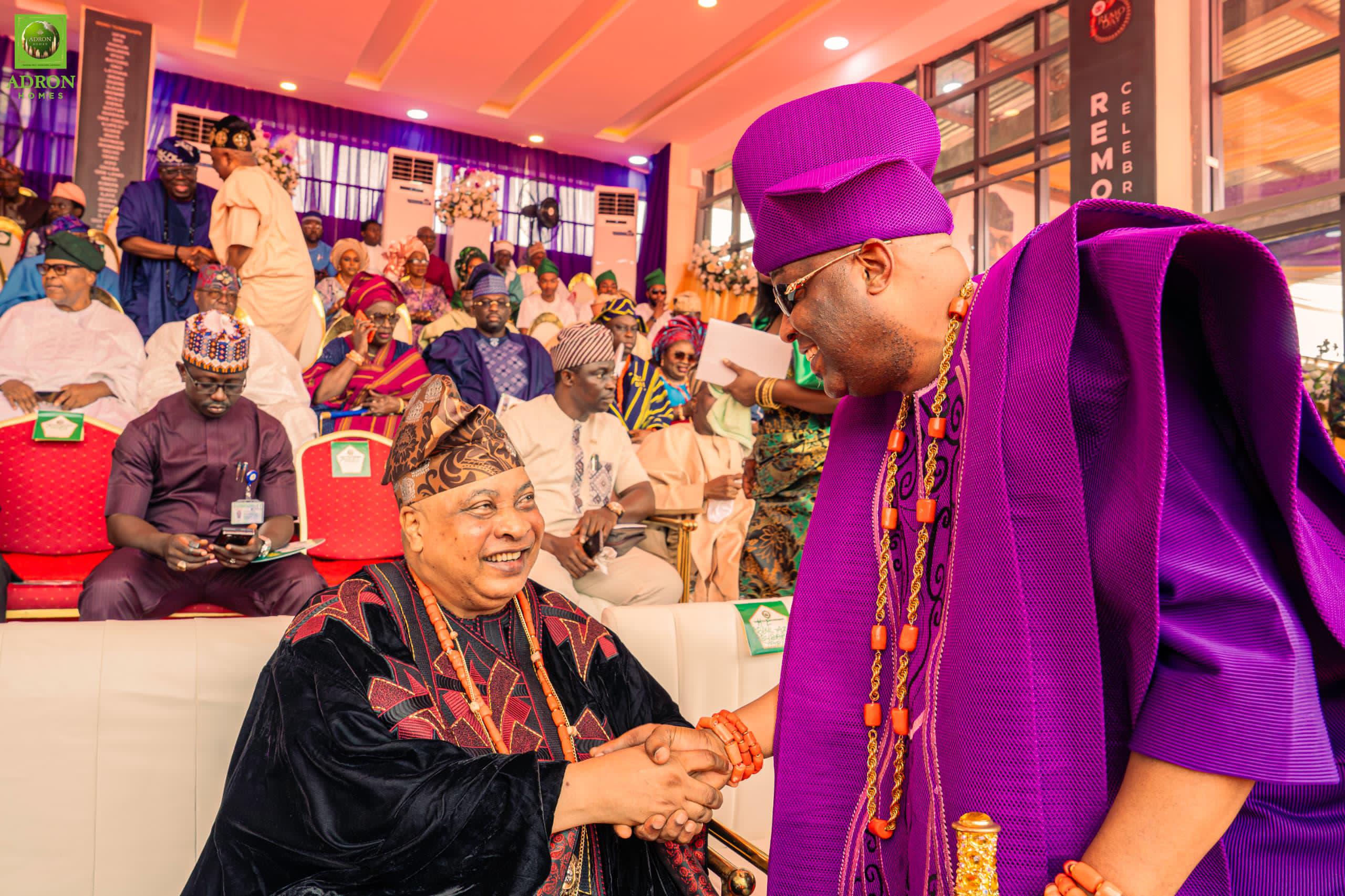
The Otun Akile of Remoland and Chief Executive Officer of Adron Group, Sir Aare Adetola Emmanuelking, KOF, has extended formal felicitations to the Akarigbo and Paramount Ruler of Remoland, His Royal Majesty, Oba (Dr.) Babatunde Adewale Ajayi, and all sons and daughters of Remoland on the occasion of the 2nd Remo Day Celebration, described the event as a significant affirmation of Remo heritage, unity, and progress.
In a goodwill message to mark the celebration, Aare Emmanuelking noted that Remo Day reflects the resilience, cultural pride, and collective aspiration of the Remo people, whose unity continues to drive sustainable growth and communal advancement.
He commended His Royal Majesty for his visionary leadership and praised the traditional institution’s stabilising role in promoting peace, cultural continuity, and good governance across Remoland.
Aare Emmanuelking also acknowledged the presence of the Executive Governor of Ogun State at the celebration, describing it as a demonstration of solidarity with the Remo people. He saluted the Governor’s purposeful leadership and commitment to good governance, noting the positive impact of his administration’s development policies across the state.
According to him, Remo Day transcends ceremony, serving as a symbolic homecoming that honours the sacrifices of the forebears while strengthening unity and shared responsibility for development.
He further applauded the contributions of Remo indigenes at home and in the diaspora, whose enterprise and collaboration continue to position Remoland as a centre of economic vitality and social harmony.
“As a proud son of Remoland, I am inspired by the unity and sense of purpose that define our people,” he stated, adding that the celebration should further deepen cohesion and accelerate sustainable development.
On behalf of his family, the Board of Directors, and the Management of Adron Group, he wished His Royal Majesty and all Remo sons and daughters a successful and memorable Remo Day celebration.
He concluded with prayers for the continued peace, prosperity, and development of Remoland and Ogun State, reaffirming his loyalty and commitment to the land and its people.

By Tolulope A. Adegoke PhD
“In an age of ceaseless disruption, the wisest pause is to acknowledge the Unchanging Hand—the divine grace that guides our progress, steadies our systems, and writes our story of possibilities with a wisdom no trend can outpace.” – Tolulope A. Adegoke, PhD
We are living through an age of acceleration. Technological advancements, from generative artificial intelligence to biotechnology, are not just evolving; they are fundamentally rewriting the rules of human enterprise on a near-daily basis. Concurrently, the global community faces layered, systemic challenges—climate volatility, geopolitical fragmentation, economic precarity, and a pervasive sense of institutional distrust. This relentless churn of innovation and crisis can foster a worldview dominated by pure mechanistic cause and effect, where outcomes are seen solely as the result of data-driven strategy, relentless hustle, or fortunate access to capital.
Yet, within the complex tapestry of human progress—across personal biographies, corporate histories, and the annals of nations—there persists a recurring, almost whispered, narrative. It speaks of moments that defy straightforward analysis: the serendipitous encounter that alters a career trajectory, the breakthrough insight that arrives after all logical solutions are exhausted, the organizational resilience that emerges from a crisis in ways no risk-management model predicted, or the diplomatic breakthrough that occurs against all odds when conflict seemed inevitable. For millennia, across diverse faiths and philosophies, this dimension of experience has been attributed to a higher guiding force—often termed the Hand of God. It represents the divine interaction where diligent human effort intersects with transcendent grace, producing outcomes that feel orchestrated, purposeful, and imbued with a meaning beyond mere happenstance.
In our contemporary context, recognizing this force is not an act of intellectual retreat. On the contrary, it is an exercise in profound clarity and emotional intelligence. It provides the essential counterbalance to the hubris of absolute human control and the anxiety bred by uncertainty. It compels us to a vital, transformative pause—a sacred interval for introspection on our core values, retrospection on the journey thus far, and a heartfelt posture of gratitude for the grace that navigates our collective voyage through these uncharted waters. This pause is not an empty space; it is the fertile ground from which wiser action, more sustainable leadership, and deeper hope can grow.
For the Individual: Cultivating Purpose in an Age of Digital Determinism
The modern professional landscape is increasingly mediated by algorithms that curate opportunities, assess productivity, and even suggest career paths. Personal worth is often unconsciously tied to metrics of digital engagement and visible output, leading to a quiet epidemic of burnout and existential doubt. In this environment, the most meaningful developments frequently occur outside these digital parameters.
Consider the pattern: a sudden redundancy, initially a devastating blow, becomes the forced catalyst for launching a purpose-driven venture that aligns with a long-held passion. A chance conversation during a delayed flight leads to a mentorship that shapes a leader’s ethical compass for decades. A period of enforced stillness, perhaps due to illness or family need, creates the mental space for a creative or spiritual insight that reorganizes one’s entire life priorities. These are not merely random events; to the perceptive heart, they bear the hallmark of intentional guidance.
The ancient wisdom of Proverbs 19:21 observes, “Many are the plans in a person’s heart, but it is the Lord’s purpose that prevails.” This is not a dismissal of ambition or strategic planning. Rather, it is an invitation to hold our plans with open hands. It suggests that our detailed life maps are subject to benevolent divine cartography that can see beyond our immediate horizon. The practice of pausing to acknowledge this reality does several things: it replaces anxiety with a sense of guided adventure, it converts envy of others’ paths into contentment with one’s own unique journey, and it fosters a humility that makes us lifelong learners. Gratitude, in this personal realm, is the conscious acknowledgment that our skills, opportunities, and even our recoveries from failure are gifts to be stewarded, not just assets we have self-manufactured.
For the Organization: Building Legacy in an Era of Stakeholder Capitalism
The 21st-century corporation operates under a blinding spotlight. Stakeholders—including employees, customers, investors, and communities—now demand authentic purpose, ethical transparency, and demonstrable social and environmental stewardship alongside financial performance. This shift from shareholder primacy to stakeholder capitalism represents a profound change in the rules of engagement.
In this new paradigm, principles often relegated to “corporate social responsibility” documents are now central to long-term viability. Organizations that operate with integrity—prioritizing fair wages, sustainable sourcing, and genuine community partnership—often experience a form of capital that cannot be listed on a balance sheet: the capital of trust. This trust manifests as customer loyalty during a misstep, employee advocacy in competitive talent markets, and investor patience during necessary transitions. While these outcomes can be analyzed through the lens of sociology or economics, many faith-informed leaders perceive the outworking of a timeless principle.
The Psalmist notes, “The Lord’s blessing brings wealth, without painful toil for it” (Proverbs 10:22). This is not a promise of effortless profit, but a profound observation that sustainable abundance is often tied to alignment with divine principles of justice, honesty, and generosity. When a company avoids a lucrative but unethical deal, it may be protected from future scandal. When it invests in employee well-being, it cultivates innovation and dedication that drives organic growth. The guiding hand here is seen in the provision of wisdom for complex decisions, the fostering of a cohesive culture amid diversity, and the unexpected market opportunities that align with a company’s core values. The necessary corporate pause involves leadership teams reflecting not only on key performance indicators but on their foundational ethos. Gratitude is expressed by acknowledging that success is a collaborative endeavor with a moral dimension and by reinvesting prosperity into the common good.
For the Nation and the Global Community: Steering the Ship of State with Moral Navigation
The arena of geopolitics and national governance is perhaps where the illusion of pure human control is most dangerous and most easily dispelled. Leaders wield immense power, yet they are constantly confronted by the limits of that power—facing natural disasters, global economic tides, and the unpredictable currents of human history. The rise and fall of empires, the sudden emergence of peace movements, and the avoidance of global catastrophes often contain elements that baffle historians and political scientists.
Instances where conflict is de-escalated through a last-minute change of heart, where scientific collaboration across rival nations yields a solution to a shared threat like a pandemic, or where a society makes a collective turn toward justice and reconciliation after generations of oppression—these moments carry a weight of significance that suggests more than shrewd political calculus. They hint at a moral fabric to history itself.
The prophet Jeremiah, addressing a nation in turmoil, conveyed this divine perspective: “For I know the plans I have for you… plans to give you hope and a future” (Jeremiah 29:11). This promise, made in a context of exile and despair, underscores a foundational belief: that the ultimate trajectory of a people is held within a providential narrative of hope and redemption. National pauses for thanksgiving, days of reflection, or calls for collective prayer are not merely ceremonial. They are acts of humility that can reorient a society’s focus from fear and division to shared destiny and mutual responsibility. Gratitude on this scale is a powerful antidote to nationalistic arrogance. It reminds a citizenry of its blessings, fosters a spirit of stewardship over its resources, and cultivates a posture of compassion toward other nations and future generations.
Synthesis: Gratitude as the Foundational Posture for a Future of Meaning
Ultimately, to perceive and acknowledge the guiding hand of God is to choose a narrative of profound hope and partnership. It liberates us from the exhausting burden of believing we are the sole authors of our fate. It protects our souls from the corrosive effects of pride in success and despair in failure. This awareness transforms gratitude from a fleeting emotion into a disciplined posture—a foundational lens through which we view our past, engage our present, and anticipate our future.
This posture of gratitude is eminently practical. It makes individuals more resilient and adaptable leaders. It fosters corporate cultures of ethical innovation and long-term thinking. It encourages nations to pursue policies of justice, peace, and environmental care. In a world intoxicated by speed and disruption, the deliberate, heartfelt pause to say “thank you” may be the most strategic and humanizing act available to us. It grounds our frenetic activity in meaning, connects our personal struggles to a larger story of grace, and equips us to build a future that is not only smarter or richer, but wiser and more deeply human. We pause, we recognize, we give thanks—and from that place of humble acknowledgment, we find the clarity and courage to move forward.
When the world moves faster than our understanding, true wisdom is found in the sacred pause: to recognize the Guiding Hand that has written our story of progress, to give thanks for the grace in our journey, and to find courage for the path ahead.
Dr. Tolulope Adeseye Adegoke is by God’s grace a distinguished scholar-practitioner specializing in the intersection of African security, governance, strategic leadership and effective management. His expertise is built on a robust academic foundation—with a PhD, MA, and BA in History and International Studies focused on West African conflicts, terrorism, and regional diplomacy—complemented by high-level professional credentials as a Distinguished Fellow Certified Management Consultant and a Fellow Certified Human Resource Management Professional. He can be reached via: tolulopeadegoke01@gmail.com


