Connect with us

Headlines

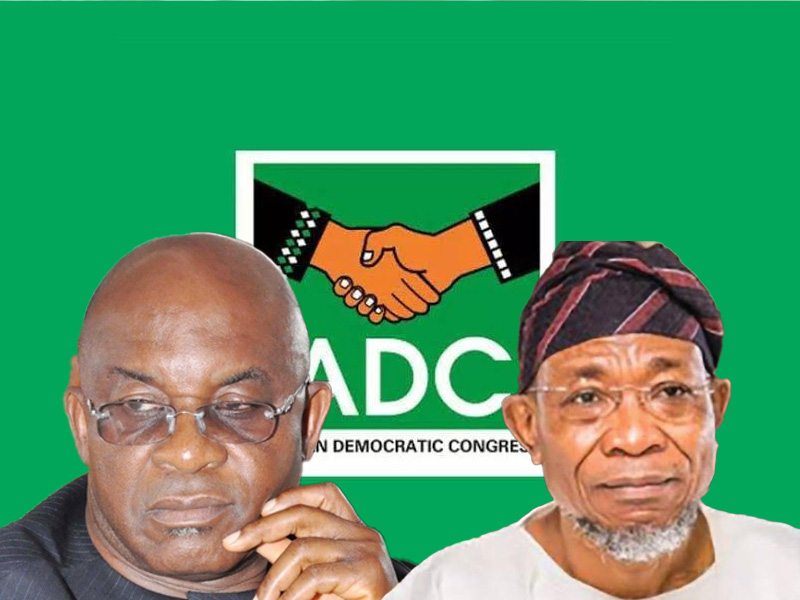
Appeal Court Bars David Mark-led EXCO from Parading Self As ADC Leaders

Published

on

The Court of Appeal sitting in Abuja on Monday affirmed the judgment restraining the Independent National Electoral Commission (INEC) from recognising or participating in any state congresses organised by committees appointed by the Senator David Mark-led caretaker leadership of the African Democratic Congress (ADC).

The appellate court decision was a split of two-to-one.

A three-member panel of the appellate court, in a lead verdict delivered by Justice Okon Abang, said it found no reason to set aside the restraining order the Federal High Court in Abuja had issued against the Mark-led ADC on April 29.

It further upheld the order of trial Justice Joyce Abdulmalik, which restrained the Mark-led executives from interfering with the tenure and functions of the party’s elected state executives.

The appellate court concurred that responsibility for conducting state congresses of political parties rests with elected state executive committees, not with the national leadership.

While Justices Abang and Donatus Okorowo gave the majority verdict barring the electoral body from acknowledging the outcome of congresses held by the Mark-led leadership of the ADC, the head of the appellate court’s panel, Justice Abba Mohammed, gave a dissenting judgment.

In his minority decision, Justice Mohammed held that the case that precipitated the restraining order bordered on a non-justiciable internal affair of a political party.

He held that the trial court was wrong to have assumed jurisdiction to entertain the matter.

Meanwhile, the Court of Appeal judgment may jeopardise the presidential candidacies of former Vice President Atiku Abubakar and other candidates who emerged through the national congress organised by the Mark-led faction of the ADC, ahead of the 2027 general elections.

It will be recalled that the High Court had, in its judgment, held that the four-year tenure of the ADC’s State Working Committees and State Executive Committees remained valid and subsisting, pending the conduct of properly constituted congresses and the convocation of a national convention.

The judgment followed a suit marked FHC/ABJ/CS/581/2026, lodged before the court by aggrieved members of the ADC.

Those behind the suit are Don Norman Obinna, Johnny Tovie Derek, Obah C. Ehigiator, Hon. Olona Yinka, Dr. Charles Idowu Omideji, Samuel Pam Gyang, and Obianyo Patrick, who told the court that they sued for themselves and on behalf of all State Chairmen and State Executive Committees of the African Democratic Congress (ADC).

Listed as defendants in the matter are the ADC; Sen. David Mark; Sen. Patricia Akwashiki; Mallam Bolaji Abdullahi; Ogbeni Rauf Aregbesola; and Prof. Oserheimen Osunbor (sued on behalf of the Caretaker/Interim National Working Committee); and INEC.

The plaintiffs had, among other things, challenged the decision of the Senator Mark-led leadership of the ADC to constitute committees for the purpose of conducting state congresses.

They challenged the validity of appointments made by the Mark-led caretaker committee, arguing that planned state congresses slated for April 2026, if conducted under the supervision of the said caretaker committee, would constitute a gross violation of the party’s constitution.

It was further the position of the plaintiffs that only duly elected party organs recognised under the party’s constitution possess the power to conduct congresses.

While agreeing with the plaintiffs, Justice Abdulmalik held that neither the 1999 Constitution, as amended, nor the Constitution of the ADC empowered the caretaker/interim National Working Committee led by Senator Mark to appoint committees for the purpose of conducting state congresses.

The court held that the claims brought before it by the plaintiffs were valid and deserving of judicial consideration, citing an alleged breach of constitutional and statutory provisions.

It held that Section 223 of the 1999 Constitution, as amended, mandates political parties to conduct periodic elections based on democratic principles, adding that Article 23 of the ADC Constitution also provides that national and state officers shall hold office for a maximum of two terms spanning eight years.

Justice Abdulmalik stressed that although courts are generally reluctant to interfere in the domestic affairs of political parties, they nonetheless intervene where there is a clear allegation of violation of constitutional or statutory provisions. Political commentary articles

She held that evidence before the court established that the tenure of the state executive committees of the ADC remained valid and must be allowed to run its full course without interference.

The court stressed that only those elected structures have the authority to organise state congresses, and it accordingly nullified any process initiated by the Senator Mark-led caretaker leadership.

Earlier, the court dismissed a preliminary objection filed by the defendants challenging the competence of the suit and the court’s jurisdiction to entertain it.

It held that the subject matter of the plaintiffs’ action pertained to the affairs of INEC and therefore fell within the jurisdiction of the Federal High Court under Section 251 of the 1999 Constitution, as amended.

The court also waved aside the defendants’ contention that the plaintiffs failed to exhaust internal dispute resolution mechanisms before instituting the action.

It held that the plaintiffs had the requisite locus standi (legal right) to file the suit.

The appellate court, while upholding the restraining order, said it had a duty to intervene so as to “prevent anarchy and ensure the survival of democracy in Nigeria.”

It cited a recent Supreme Court judgment in the leadership crisis rocking the Peoples Democratic Party (PDP) to hold that the ADC case could not be classified as a domestic affair of a political party.

“Once a complaint before the court is anchored on a constitutional infraction, the shield of internal affairs drops and the veil is lifted for judicial intervention,” Justice Abang added in the majority judgment.

Consequently, the panel dismissed the appeal marked CA/ABJ/CV/608/2026, which the ADC lodged in order to set aside the high court judgment.

It held that congresses and the national convention conducted by the Mark-led ADC amounted to a nullity as they were held in disobedience to a subsisting order that the High Court made on April 14.

Having resolved the case against the ADC, the appellate court awarded a cost of N10million against the party.

Shortly after the judgment, the ADC, which was represented by its National Welfare Secretary, Mr Nkem Ukandu, said the party would take the case before the Supreme Court.

Continue Reading
Advertisement


Click to comment

Leave a Reply

Your email address will not be published. Required fields are marked *

Headlines

Trump Claims US Now in Total Control of Strait of Hormuz

Published

on

United States President, Donald Trump, says his country is now in “total control” of the Strait of Hormuz amid ongoing tensions with Iran over the reopening of the strategic waterway.

Trump made the claim while speaking to reporters at Joint Base Andrews, saying the situation with Iran was progressing well despite continued disagreements between both countries.

“Iran is going fine – going just absolutely fine. We totally control the Strait of Hormuz. We have control over it; nobody else, only us. Our navy is unbelievable, and things going great for our country,” Trump told reporters at Joint Base Andrews.

“I don’t trust Iran. I’m the last person to trust Iran; they’ve lied to me constantly. We have total control over the Hormuz Strait right now; they don’t have control,” he added.

The claim comes as the United States and Iran continue to exchange demands over the reopening of the Strait of Hormuz, casting further uncertainty over negotiations aimed at ending their five-month conflict.

Although the US has confirmed its involvement in the talks, Iran maintains that it is negotiating directly only with Oman. Tehran has also proposed that the future management of the strategic waterway be shared with Oman.

The Strait of Hormuz is a critical global energy route, with about one-fifth of the world’s oil and liquefied natural gas supplies passing through it before the US-Israel war with Iran began at the end of February.

On Monday, Trump said he would seek compensation from Iran for deaths and injuries associated with conflicts and attacks spanning several decades.

His position followed Iran’s demands for reparations over the war last week, as Tehran said it would not reopen the strait until Washington addresses its political and  economic conditions.

Continue Reading

Headlines

ADC Rejects ICPC Report on PFIPC, Queries N1.3bn Budget Allocation to Fake Agency

Published

on

The African Democratic Congress (ADC) has rejected the interim report of the Independent Corrupt Practices and Other Related Offences Commission (ICPC) on the controversial Presidential Foreign Investment Promotion Council (PFIPC), arguing that the findings leave some of the biggest questions surrounding the scandal unanswered.

The opposition party said the report appeared to focus more on limiting political fallout than establishing how a purported  government agency allegedly gained access to official institutions, occupied  government office space and received other forms of state recognition despite questions over its legal status.

The ADC’s position was contained in a statement issued on Saturday by its National Publicity Secretary, Bolaji Abdullahi.

The controversy surrounding the PFIPC has intensified in recent weeks following allegations that the organisation operated as a government agency despite questions over its establishment, with its purported Director-General, Adeniyi Adeyemi, facing scrutiny from law enforcement agencies and lawmakers.

The party said the ICPC’s interim findings had failed to provide satisfactory explanations for how the organisation allegedly secured office accommodation within the Federal Secretariat, attracted civil servants, obtained official recognition and appeared in the 2026 federal budget with a reported allocation of N1.3 billion.

The ADC recalled that it had previously opposed President Bola Tinubu’s decision to assign the investigation to the ICPC, insisting that an independent panel would have been better positioned to investigate the matter without questions about institutional proximity.

According to the opposition party, the interim nature of the ICPC report made it even more difficult to understand why the commission appeared to be pointing responsibility towards Adeyemi while simultaneously maintaining that its investigation was still ongoing.

“The report is not only predictable, it appears more concerned with exonerating government officials rather than providing clear answers to the serious questions that the scandal has raised,” the party said.

The ADC argued that the controversy could not simply be dismissed as an administrative failure.

It maintained that if the PFIPC was indeed established through fraudulent representations, there were still important questions about how those representations allegedly passed through several layers of government without being detected.

“A forgery may explain the first door that was opened. It cannot explain why every subsequent door appears to have opened as well,” the party said.

For the ADC, the central issue is not simply whether Adeyemi allegedly forged documents or misrepresented himself.

The party wants investigators to establish how an organisation whose legitimacy is now being questioned could allegedly secure office accommodation, civil servants, official vehicles and other institutional support.

It argued that such developments would ordinarily require interaction with multiple government departments and officials.

The party therefore questioned whether the alleged activities were facilitated by negligence, institutional failure or possible complicity within government.

The ADC also raised concerns over reports that the ICPC had identified two other allegedly fictitious organisations linked to Adeyemi.

Rather than viewing that development as evidence of an isolated individual operation, the party said it should prompt investigators to widen the scope of their inquiry.

One of the most significant issues raised by the opposition party was the reported N1.3 billion allocation to the PFIPC in the 2026 Appropriation Act.

The ADC argued that a provision of that magnitude should have generated a clear paper trail involving budget submissions, reviews, approvals and verification.

“Budgetary provisions do not materialise by accident,” the party said.

It consequently demanded to know who proposed the allocation, which government officials processed it and who verified the existence and legitimacy of the purported agency before the provision was included in the federal budget.

The party noted that the House of Representatives had already begun its own investigation into how the PFIPC allegedly found its way into the federal budget.

According to the ADC, the legislative inquiry could provide an opportunity to establish whether the budget allocation resulted from deliberate manipulation, administrative negligence or failures within the government’s budgetary verification system.

The opposition party also criticised the reported recommendation that Adeyemi be prosecuted.

It argued that the ICPC’s decision to single out the purported PFIPC director-general appeared premature if, as the commission itself indicated, its investigation remained ongoing.

“If all that the commission had to present was a preliminary report, why not simply present it as a confidential brief to the President instead of making a public drama of it?” the ADC asked.

The party said the investigation should not be structured around finding a convenient individual to blame but should instead establish everyone who may have played a role in allowing the alleged operation to continue.

The ADC described the controversy as a national embarrassment and called on the ICPC to release the full interim report rather than only selected findings.

It also demanded that any public officials whose actions or negligence enabled the purported agency to operate be identified and investigated.

The party stressed that anyone found culpable should face appropriate sanctions after due process.

“What has happened is a national disgrace in the full glare of the entire world. No serious  government should be satisfied with identifying one culprit for prosecution,” the party said.

The ADC maintained that Nigerians were not asking investigators to manufacture suspects or reach predetermined conclusions.

Rather, it said, the investigation should follow the evidence wherever it leads — including into government offices if necessary.

At the heart of the controversy, according to the opposition party, is a simple question: if the PFIPC is not a legitimate  government agency, how did it allegedly get so far inside the machinery of government without multiple officials noticing?

That, the ADC argued, is the question the ongoing investigations must ultimately answer.

Continue Reading

Headlines

Atiku Raises Alarm over ‘Mysterious’ Credit into Private Bank Account

Published

on

Former Vice President and African Democratic Congress (ADC) Presidential Candidate, Atiku Abubakar, has raised concerns over what he described as a suspicious and unauthorised payment into one of his private bank accounts.

In a statement issued on Friday by his Senior Special Assistant on Public Communication, Phrank Shaibu, Atiku said the transfer originated from an individual or entity unknown to him and carried the narration, “Contribution Electioneering Campaign.”

According to the statement, neither Atiku nor his campaign solicited, authorised or had any knowledge of the payment.

The former Vice President said the account was strictly private and its details were not in the public domain, raising concerns about how the information could have been obtained.

“How did unknown persons obtain the confidential banking details of a private citizen?”

Atiku said the incident raised broader concerns about the security of Nigerians’ financial information, particularly if the private banking details of a former Vice President and presidential candidate could allegedly be accessed without his consent.

“If the private banking information of a former Vice President and a leading presidential candidate can be accessed and deployed for reasons yet unknown, then no Nigerian’s financial privacy is safe.”

He further expressed concern that the alleged disclosure could have involved individuals with privileged access to confidential information.

According to him, if such access is established, it could expose account holders to criminal elements, including kidnappers, terrorists, bandits and fraudsters.

The former Vice President also called the attention of Nigerians and security agencies to the incident, describing it as part of what he termed a series of “suspicious activities” ahead of the 2027 general elections.

“We therefore put the Nigerian public and the security agencies on notice about this latest incident in a litany of suspicious activities leading up to next year’s general elections.”

Atiku also alleged that the incident could be part of an attempt to damage his reputation as political activities intensify ahead of the elections.

He urged Nigerians not to be distracted by what he described as “tired tactics” aimed at character assassination.

“Such desperate antics have failed before and will fail again.”

The ADC presidential candidate said he remained focused on his political agenda and his stated commitment to providing solutions to the country’s challenges.

“The Waziri Adamawa remains focused on offering Nigerians credible leadership and practical solutions to the nation’s challenges.”

Continue Reading