
Headlines
Atiku Faults Tinubu’s Aggressive Domestic Borrowing Amid N7.98tr Oil Windfall

- /home/rhoncare/pointblank.ng/wp-content/plugins/mvp-social-buttons/mvp-social-buttons.php on line 27
https://pointblank.ng/wp-content/uploads/2019/04/Atiku.jpg&description=Atiku Faults Tinubu’s Aggressive Domestic Borrowing Amid N7.98tr Oil Windfall', 'pinterestShare', 'width=750,height=350'); return false;" title="Pin This Post">
- Share
- Tweet /home/rhoncare/pointblank.ng/wp-content/plugins/mvp-social-buttons/mvp-social-buttons.php on line 69
https://pointblank.ng/wp-content/uploads/2019/04/Atiku.jpg&description=Atiku Faults Tinubu’s Aggressive Domestic Borrowing Amid N7.98tr Oil Windfall', 'pinterestShare', 'width=750,height=350'); return false;" title="Pin This Post">
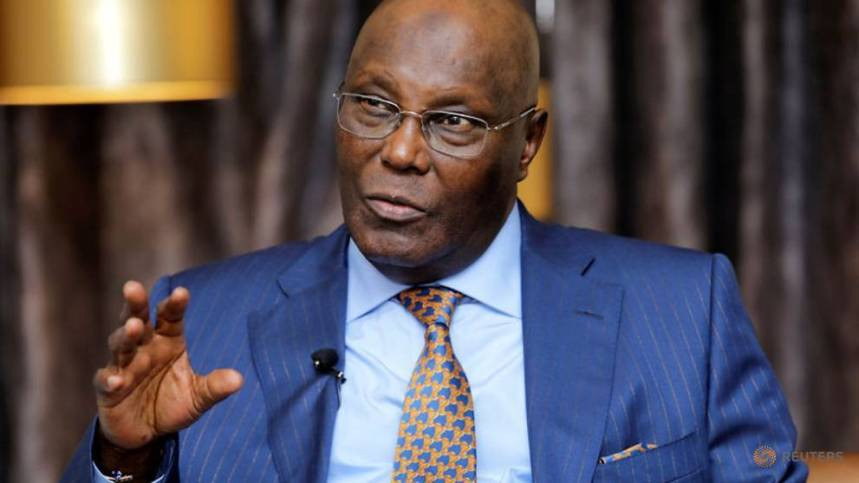
Former Vice President Atiku Abubakar has faulted President Bola Tinubu’s aggressive domestic borrowing, questioning why the administration continued to pile up debts despite an estimated $7.98 trillion windfall from high international crude oil prices.
He also alleged that the President’s administration had finally arrived at a policy direction he first advocated more than two decades ago, after spending nearly three years worsening Nigeria’s electricity crisis through poor planning and misplaced priorities.
In a statement by his Senior Special Assistant on Public Communication, Phrank Shaibu, Atiku, who is the presidential candidate of African Democratic Congress, ADC, described the administration’s economic management as contradictory, opaque and bereft of fiscal discipline.
He noted that the federal government had already raised about ¦ 5 trillion from the domestic bond market in the first half of 2026, almost 80 per cent of the total amount borrowed during the corresponding period in 2025.
According to him, such borrowing will only make sense if government revenues have collapsed. “The exact opposite is the case,” he said.
The former vice president pointed out that while the 2026 Appropriation Act benchmarked crude oil at $64.84 per barrel, the average price of Brent crude, the benchmark for Nigerian oil, had remained around $92 per barrel between March 1 and July 14, with Nigerian crude typically trading at a premium above Brent.
“This naturally raises two unavoidable questions. First, why is a government enjoying such an extraordinary oil windfall borrowing at almost twice last year’s pace as though the nation were in financial distress? Second, where is the money?” He queried.
Atiku explained that the gap between the budget benchmark and prevailing oil prices amounted to an additional $27.15 on every barrel of crude sold, translating to an estimated $42.7 million in additional daily revenue at an average production of 1.5 million barrels per day.
Over the 135-day period under review, he put this at approximately $5.76 billion, or about $7.98 trillion.
He recalled that previous administrations maintained clear mechanisms for warehousing and reporting excess crude earnings through the Sovereign Wealth Fund and other established fiscal buffers.
Atiku further lamented that despite the oil windfall and the removal of fuel subsidy, millions of Nigerians continued to face worsening hardship, citing recent United Nations findings that about 80 per cent of Nigerians could not afford a decent meal each day, while infrastructure continued to deteriorate, despite promises that subsidy savings would be invested in roads, healthcare, education and other critical sectors.
He said an ADC administration under his leadership, would pursue a different approach, with every kobo earned above the budget oil benchmark transparently accounted for and managed under a rules-based fiscal framework, and excess revenues deployed to reduce the nation’s debt burden, strengthen fiscal buffers, and invest in infrastructure, education, healthcare, and agriculture.
“Nigerians deserve answers. They deserve accountability. Above all, they deserve a government that manages national wealth in the public interest, not one that presides over unprecedented opacity while asking future generations to repay debts incurred in the midst of plenty,” Atiku said.
In another breath, Atiku said the Tinubu administration has adopted the policy he advocated 21 years ago to address the country’s worsening power crisis.
He said the recent admission by the minister of power that Nigeria could no longer depend solely on large, centralised power plants amounted to a belated endorsement of the decentralised electricity generation model he championed over 20 years ago.
“It should not take a government three years in office to discover what was obvious more than two decades ago,” Atiku said, lamenting that instead of pursuing bold structural reforms from the outset, the Tinubu administration chose to increase electricity tariffs, while leaving Nigerians in deeper darkness.
“A government that thinks before it acts would have fixed the system before asking citizens to pay more. Unfortunately, this administration has done the exact opposite, raising tariffs first and only now beginning to think about the reforms required to justify those increases,” he said.
Atiku recalled that during his tenure as vice president, he consistently urged former President Olusegun Obasanjo to decentralise electricity generation by harnessing Nigeria’s diverse energy resources, including hydroelectric dams, solar, gas and other viable sources.
He said; “This has been my position for over two decades. When President Obasanjo established the Power Sector Reform Committee based primarily on gas-fired generation, I was appointed chairman.
“However, because I fundamentally disagreed with the policy direction, I declined to preside over the committee. I believed then, as I do now, that Nigeria’s electricity future lay in a diversified and decentralised energy mix, not an overdependence on a single source.”
He added that billions of dollars contributed by the federal, state and local governments were committed to that approach, yet the expected results never materialised, noting that contracts were awarded and huge sums paid upfront, while much of the promised work was never done.
Atiku recalled that the National Assembly subsequently investigated the power sector reforms and held Obasanjo accountable for the outcome, but noted that he was never invited by the investigators because he had declined to chair the committee despite being formally appointed.
“Nigeria does not suffer from a shortage of ideas. It suffers from a shortage of leaders willing to act on the right ideas at the right time. It is never too late to embrace the right policy, but Nigerians should never have had to pay the price for a government that spent three years learning what should have guided its actions from day one,” he added.


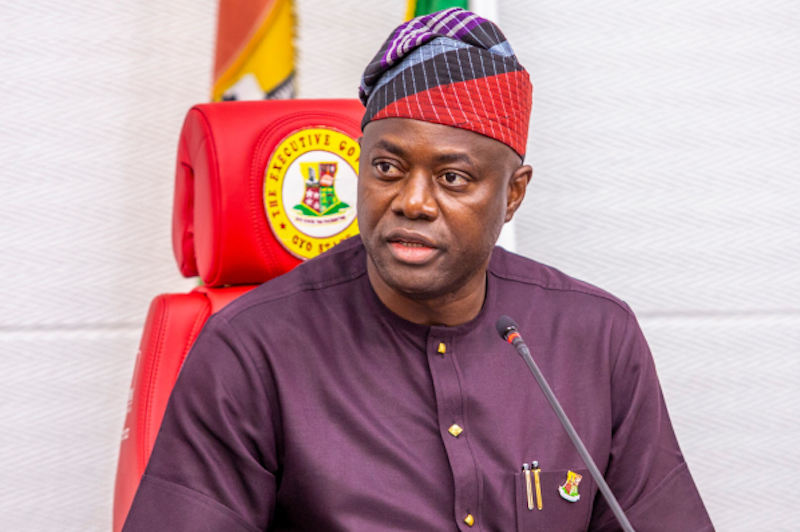
The Allied Peoples Movement (APM) presidential candidate, Seyi Makinde, on Thursday, criticised President Bola Tinubu’s “Emi Lokan” slogan ahead of the 2027 presidential election.
Makinde said Nigerians do not need “turn-by-turn nepotism”, arguing that voters should be free to decide who becomes the country’s next president in 2027.
The Oyo State governor spoke during the APM’s town hall meeting in Akure, Ondo State.
Makinde asked: “How can someone say ‘Eemi lokan’ in a country like Nigeria? You were given the opportunity. If you recall the 1999 presidential election, the South-West voted massively for Baba Olu Falae, but the rest of Nigerians voted for Baba Obasanjo. So, this is not an issue that only the South-West can resolve; it is an issue we must address collectively as Nigerians.
“We do not want ‘turn-by-turn nepotism’, nor do we want a situation where people say, ‘I will vote for projects because it is my turn’. You will not finish those projects, and when it becomes someone else’s turn, they will do the same thing. We will end up with a Nigeria where we cannot get value for the resources belonging to Nigerians.
“The Reset Nigeria agenda is about building a country where infrastructure development supports economic growth and addresses the concerns of young people and women.
“Once we fix our economy, no zone will be left behind, and no demographic group will be left behind.”
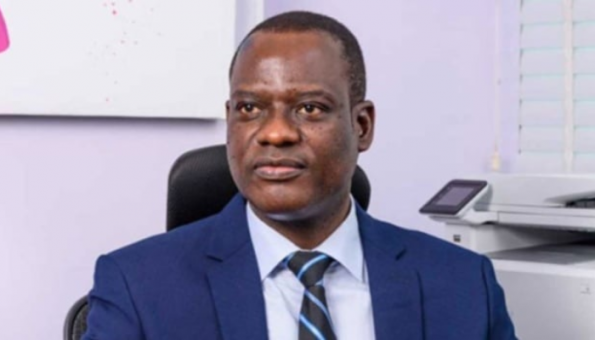
Minister of Finance and Coordinating Minister of the Economy, Taiwo Oyedele, has denied saying the Federal government will introduce a fuel tax when the economy stabilises and income levels improve.
In a post on X on Tuesday, Oyedele said his remarks during an interview with ARISE News was misrepresented, insisting that a “fuel tax is not on the table.”
However, during the interview with Rotus Odiri, ARISE News Business Correspondent, on the sidelines of the 2026 International Monetary Fund and World Bank annual meetings in Bangkok, Thailand, Oyedele said the tax would come when income levels improve enough for Nigerians to accommodate it.
He said taxes account for between 20 and 80 percent of pump prices in some countries, while many African countries impose between six and 10 different taxes on fuel products.
He said introducing fuel tax while petrol was still subsidised would have been counterproductive because government would effectively be paying the tax itself.
According to him, imposing the tax immediately after removal of petrol subsidy would be insensitive to Nigerians.
“The objective should be that instead of trying to suppress prices, which hasn’t worked for us, it hasn’t worked for any country in the world, not one. Instead of trying to suppress prices, think about how to grow income faster than prices rise,” Oyedele said.
“That’s how you bring prosperity and grow the middle class and that is exactly what we are doing as led by Mr. President himself.
“At the appropriate time, when the economy has stabilizes and income level will be able to accommodate it, those taxes will come. Not because we want to impose taxes,” he added.
In his Tuesday post, the minister reiterated that introducing a fuel tax at this time would be insensitive following removal of petrol subsidy, describing reports that government will introduce the levy when the economy stabilises as “fake news.”
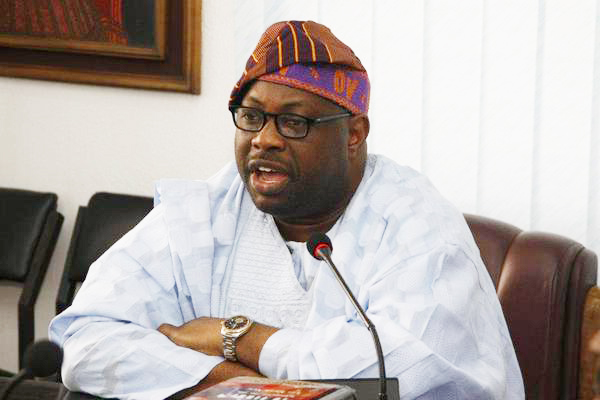
A chieftain of the African Democratic Congress (ADC), and Deputy Director of the Presidential Campaign Council, Chief Dele Momodu, has described former Vice-President Atiku Abubakar as the most nationally formidable and experienced among the leading contenders for the 2027 presidential election.
Momodu said Atiku’s experience at the national level distinguishes him from President Bola Tinubu and former Anambra State Governor, Peter Obi.
He stated this on Wednesday during an interview on Eagle 102.5 FM, Ilese-Ijebu, in Abeokuta.
“If you look at the antecedents of the three major candidates, between Atiku Abubakar and Peter Obi, you will see that Atiku is the most experienced. He has managed our country at the highest level,” he said.
Momodu traced Atiku’s political journey to the 1992 Social Democratic Party (SDP), presidential primary where he contested against late MKO Abiola and stepped down for him.
He said Atiku accepted the outcome without crisis even after he was not picked as Abiola’s running mate, describing it as a mark of true democratic temperament.
“He is the only one who started from around 1992, contested the SDP primary against Abiola and stepped down with uncommon equanimity. He did not make any noise,” Momodu said.
He noted that Atiku was among the founders of the Peoples Democratic Party, PDP, and served as Vice-President from 1999 to 2007.
Comparing Atiku with Obi, Momodu argued that while Obi’s best was demonstrated in Anambra, Atiku’s was at the presidency level managing the national economy.
“Peter Obi has tried his best in Anambra, while Atiku’s best is at the level of vice president controlling the economy of Nigeria. The difference is clear. He has matured in experience and exposure,” he said.
Momodu also said President Tinubu’s experience was largely limited to Lagos.
“What I’m trying to say is that Tinubu’s experience was limited to Lagos, and that is why when he became president, he thought Nigeria was Lagos. And he has found out now that Nigeria is not Lagos,” he said.
He argued that the current economic hardship under the present administration did not show prosperity, insisting Atiku remained better positioned to lead the country.
“Well, we are yet to see that prosperity, and if yesterday would determine today and tomorrow, it is obvious that Tinubu should retire now and let someone else do it,” Momodu added.
DailyPost


