
Metro
Be Intentional! Specialize and Engage the Power of Influence in 2022


- /home/rhoncare/pointblank.ng/wp-content/plugins/mvp-social-buttons/mvp-social-buttons.php on line 27
https://pointblank.ng/wp-content/uploads/2019/09/Adegoke-1000x600.jpg&description=Be Intentional! Specialize and Engage the Power of Influence in 2022', 'pinterestShare', 'width=750,height=350'); return false;" title="Pin This Post">
- Share
- Tweet /home/rhoncare/pointblank.ng/wp-content/plugins/mvp-social-buttons/mvp-social-buttons.php on line 69
https://pointblank.ng/wp-content/uploads/2019/09/Adegoke-1000x600.jpg&description=Be Intentional! Specialize and Engage the Power of Influence in 2022', 'pinterestShare', 'width=750,height=350'); return false;" title="Pin This Post">
By Tolulope A. Adegoke
What do you do? You have got to add something to that which make you unique. It is called, carving a niche for yourself. What are you into? What are you selling? Is it real estate? You had better asked God by prayer to give you a revelation that would make your company a rare one. Are you a lawyer? Ask God for a real revelation about legal services…become specialized! The Angel said about Jesus Christ: “His name shall be called Jesus, for He shall save people from sin.” That’s simply specialization. He would have only one job, He was named what His job is. That means, His area of specialization is “salvation”. That’s why Christ was so successful while on Earth, He stayed with His focus.
You were created with the seed of influence on the inside. The seed is in you, and that’s the gift from God Almighty, The Maker. You will never get your greatness from EDUCATION! Education cannot give you a seed, but can only refine the seed you have on the inside. That’s why it is important to know and understand your, so that you can take the right education.
Your seed is in you, already. Every one of you reading this article right now were born with a unique seed. Some people may not believe this, and that why I have got to prove to you that Trees never take their fruits to the market. I have never seen a Mango or Apple tree run you down to give you its fruits or seeds. The Mango or Apple tree simply bring forth its fruits, and the market comes to the tree for harvest.
As at 2007, My Mentor of Blessed Memory, Dr. Myles Monroe said, he had over 700 invitations to speak from different countries of the world for the year 2008. These people went looking for him on a little Island, miles wide, because he refined a seed in several ways and terms, by reading voraciously, listening to tapes and CDs of Masters in his areas of interests and calling, and ends up using theirs better than they had it. But some people might end up saying, I am not going to live like him, but that’s your personal issue, but why not learn from Masters who had lived, who are living and who would still live, and then make it better than they did it.
Whatever made great men to be what they were or are today, were learned from other Masters or professionals who had lived, but the way by which they release it is under their individual unique gifts. That’s why you must break your ego per time to consistently learn from others, listen to relevant tapes and CDs, read books and articles in your areas of interests and callings, because your ‘tree’ alone will never make a forest! Your little knowledge alone can’t give your wishes a ‘kingdom’ of its own in this generation. Above all things, you must learn to sit at the feet of Masters directly or indirectly. Closely or from afar by studying their beings via their deeds, books, tapes or CDs, write-ups and results or influence! Drop your ego! it won’t take you farther than you are; learn to live on the shoulders of giants to become relevant all through generations. It doesn’t matter being like them, what matter most is knowing what they know or knew so that you can know better. And, truly, this, is the authentic meaning of the principal thing called UNDERSTANDING – you must firstly stay under, learn under and earn under a Master or a giant before you can be trusted enough to stand on their shoulders to be greater than them, in all things, and among all beings (it is called a track-record). Listen to top minds in your areas of calling and harden not your heart – give entrance to the teachings that comes from them to you. Listen and absorb these teachings and make it sound like yours in your own unique ways according to the anointing or gifting which are embedded in you! this is called research – that is, searching deep into what had been searched, before. Then the world would pay you to hear it over and over again. And while you watch films or programmes on the Cable TVs, great men are busy studying, listening to tapes and CDs. Be kind to yourself enough not to be trapped by TV programmes and other irrelevant ideals that doesn’t edify your spirit man nor favour your course or beings or purpose. Reconstruct yourself with the right light of knowledge – you must know relevant things in this current age, so as to have an edge for ages to come. You can’t release what you have not eaten, you cannot give what you don’t have! Be true to yourself, be wise, not just for yourself, but also for those that are dying for the seeds or gift that you carry, which you have carelessly or ignorantly failed or refused to refine and release. Permit me to say that Cable TV is a ‘thief’, it steals your time and controls your emotion. You have got to manage that remote control of yours, otherwise, it will manage your life!
Refine your fruits, and people would come searching for you… you will be found! The year 2022 is the year of power, influence and double celebrations. If you are going to influence, you have got to find your gift, and those who need it would come and find you. For instance, when you want Mango or Apple, you got to locate the trees which carries them. How then does an Apple or Mango tree become one? Paul in the Bible says, “forget about the former things, you have got to forget about some things and some people”. Don’t be emotional about your destiny, but be intentional! One of the major secrets is found in the Book of Genesis 1:26-28. God created you in His Own Image, and said unto you:
i. Be Fruitful
ii. Multiply
iii. Replenish
iv. Subdue, and have dominion over all the earth.
i. God said, Be Fruitful! He never said be seed-ful! He knew He had already deposited the seeds in you, when He formed you. It is impossible to be fruitful unless you have seeds in you. it is seeds that brings forth fruits. The word ‘fruitful’ in the Hebrew word means to be productive. It doesn’t mean to have babies, alone. To produce means to be fruitful. To produce comes from life. The factories, manufacturing companies, shopping malls are mostly relevant because of their productivities from their production department, without it, all other department are dead areas. If you eat those nylon packs, cans, they will only kill you. it is the seeds which are packaged in those cans and bags that gives life. To be fruitful is the first ACT of God! That means, you must produce something after your kind, based on the seeds that you carry within you. It is a command to fulfil as human beings.
ii. Multiply – This means that, you have to reproduce what you produce.
iii. Replenish means to distribute your fruits or gifts. Don’t keep them to yourself.
iv. Subdue – this means to dominate the areas of your gifts.
Bill Gate, is a worthy exemplar in this context. He followed these procedures so effectively, which caused the entire government of America to come against him to break up his company. Bill Gate produced a fruit called the Microsoft Software, then he multiplied it, later distributed it, by replenishment, until he was able to subdue the market and control all systems to the point that the Congress had to call him to break the company. No one could have such power over America or the world. He became a dominated spirit. He dominated the world of software. He followed God’s plan for mankind. Whoever dominates, influences. Inside of you is a fruit trapped in the seed that you carry, and that seed must bring forth the tree carrying your fruits, then, you are charged to multiply your fruits, so that it can be distributed, then you can subdue your area of gifting. Here’s when you become known for something. You have become a brand of the seed that you carry to influencing your world!
As stated by the late Dr. Myles Monroe, “please ‘die’ after you are known for something!” To ‘die’ in this context means Self-discipline which requires isolation and processes in order to manifest!
What are you known for? You have got a lot of work to do, if you haven’t found purpose. When you hear the name Michael Jordan, what come to your mind? Basket-Ball! Tiger Woods is known for Golf! Lionel Messi and Cristiano Ronaldo are known for Football, the late Dr. Myles Monroe was known for “Purpose Driving Life”, infact he was awarded in America with a trophy labelled Mr. purpose! Oprah Winferey is known for Talk Shows! Please, kindly as yourself, what am you known for? Please work on something, so hard and so smart in the year 2022, such that it becomes your name or identity! That’s simply your assignment. You will never find a Mango tree trying to produce Apple! They stay with their seeds. They produce after their kind. It stays with its germ, and germinates what it is. Human are the only creatures that brings forth all kind of things, anybody know what to pick from them. They are one thing today, and something else tomorrow. What exactly do you do? What exactly are you good at, such that you effortlessly command dominion in that area? Develop it! That’s your calling.
The keys to bearing fruits in this generation are:
i. The Seed must first be in the right environment. In the year 2022, choose your association wisely!
ii. Isolation: If you desire to become great, then you must practice the law of isolation. Isolate or separate yourself from friends that are wired to end your destiny! For a seed to become a tree, it must first be taken away from the earth and hidden under the ground. When they ask you, where have you been? Tell them, you have been studying! How come you no longer go to parties? Tell them, you have been listening to relevant tapes and CDs that develops the king in you to manifest in your areas of purpose on earth. Isolation aide germination. Every single seed must die for it to germinate. To ‘die’ means self –discipline. You die to friends, old habits, old association, old club life – cut them off! To develop yourself, you must be intentional, not emotional! A seed will not become a tree until it dies! Many people are poison, please beware! Help your destiny to move with those that carry the value that your destiny need to function and develop or manifest with! Light beget light! Follow after your cravings! If you are stupid, don’t follow stupid people. Don’t roll with the kind of people you will never deem fit to hire to grow higher! In 2022, you have got to change some of your friends.
iii. Germinate – every seed must germinate. This means that, you must motivate yourself from a source. You have got to find people who motivates you, that makes you to germinate, go to seminars that would improve that which you carry. Read books that would fine-tune your essence. You have got to be around people that helps you to germinate, those that would influence you to dream big and become bigger! Don’t move with scared people – people who are scared to dare big things. Run away from those that look down on the qualities on the virtues that you carry!
iv. You have got to Water the Seed – This means that you constantly develop a program to manage your development. That means, you must join organizations that improves the quality of your being, put yourself on a reading program. Discipline yourself to read at least two books, a month. You have got to water yourself to keep flourishing!
v. Fertilizer – this means that you have to refine and refresh your program to constantly grow yourself. Some people are poison. You do not need poison, you do not need pollution! What you need are refiners, boosters. May God give us wisdom to discern and stop keeping bad company. Bad company isn’t limited to those that smokes or drink, but those that subtracts from you and divides you! Move with those that adds to your values and multiply the grace that you carry!
vi. You need Sunshine. If you must develop this fruit tree, you need special networking. That means, you get to network with organizations and people who become your light. This is the specialty of the Holy Spirit. Jesus Christ, our Saviour, God Almighty, Our Father in Heaven, and good friends in the Body of Christ and professional people who can lead you to higher ground. You need to network with people who can get you to where you need to get to. Your networks determine your net-worth. This year 2022, review your network, and see if your net is working.
vii. Pruning – Many don’t like this. If you must develop the fruits, there must be pruning. Pruning means, you have got to cut off some people, ideals, practices, habits, situations and opportunities which are liable to cut off your destiny! You have got to manage people, time and situations in your life. You can outgrow your friends, and when this happens, it’s time to leave. Always know when to leave people. When you start growing and your friend aren’t then, you become a misfit. Be careful! Run!
viii. Time – When you put a seed into the ground, it takes time for it to germinate. You can’t force it to grow. If you must maximize the year 2022 as your best year you have got to use your time wisely. Don’t rush growth! You have got to accept the processes. The processes are necessary for the purpose to be fulfilled. Process takes time and it requires patience! You can’t rush success, but you can guarantee it.
ix. Patience – when you start working with a tree, you plant a seed, and you have got to be patient. When you put a seed in a cup or into the ground, it takes its required time to grow, so, you have just got to be patient with the process of fulfilling purpose. Do you really know why many aren’t really growing? No patience! Great men are very patient people; they don’t emerge into greatness without having gone through the required processes without the instrumentality and practicality of patience. This is why there is so much crime rate in many part of the world today. People want instant success. They don’t want to work to pay for a CD player, they want to break into your house and get it, instantly. It is called CRIME! There is no other beautiful word to describe it. Crime is crime and those involved in its act are criminals. They don’t want to save and put money in the bank, rather, they want to just rob the bank. Delayed gratification? No! they can’t handle it. Take your time to complete the processes in school. Don’t quit! Hang on there, go for it! Attend that evening school. All trees need patience. One thing about trees is that, when it grows up to become big, it can withstand a whole lot of pressure because of its firm root which took time to sprout. Its stands there… because of patience.
I have taught you tonight, right into 2022… why? Because God has bought you over with a new attitude to Manifest, just as He intended for you.
Thank you all for reading.



By Tolulope A. Adegoke
“A truce can be signed in an afternoon; peace must be lived for a lifetime. Between the silence of guns and the awakening of memory lies the only ground on which nations may learn to stand together—not because they have forgotten, but because they have finally chosen to remember honestly.” – Tolulope A. Adegoke, PhD
Introduction: The Gap Between Two Kinds of “Ending”
On the stage of contemporary international politics, one recurring phenomenon deserves deep reflection: conflicting parties frequently announce “ceasefires,” “truces,” or “peace agreements,” yet lasting peace often remains elusive. This gap between “ending” and “peace” constitutes one of the most profound political paradoxes of our time. A truce is the silence of guns, while truth is the awakening of memory. The former can be achieved by a single declaration within hours; the latter requires years, even generations, of honest reckoning. The choices contemporary leaders make in navigating this paradox not only determine whether a conflict truly ends, but also shape whether future generations move toward reconciliation or slide back into a new cycle of violence.
This essay seeks to examine, from an unbiased perspective, the tension between “truce” and “truth” in contemporary world political leadership, to analyze its structural dilemmas, and to explore a way forward that does not inflict further harm.
I. The Nature of Truce: From “Pause” to “Transaction”
To understand the limitations of contemporary truces, one must first clarify their legal and political character. In international diplomatic practice, there is an essential distinction between a “joint statement” and a “peace agreement.” A joint statement typically expresses a common position or intention; its content is broad and flexible, without enforcement mechanisms or punitive provisions. A peace agreement, by contrast, is a formally binding document that stipulates clear rights and obligations and includes verification and implementation mechanisms. The border ceasefire document signed by Thailand and Cambodia in Malaysia in 2025 was a “joint statement” rather than a “peace agreement”—it was a “first step,” not the end of the conflict.
This distinction is crucial because it reveals a core feature of contemporary truces: a truce is often a “transaction,” not a “resolution.” Take the 2025 ceasefire in Gaza as an example. The core of the agreement was “hostages for prisoners” and the withdrawal of Israeli forces to a line that had not yet been clearly delineated. The ceasefire took effect on paper, but the postwar governance structure of Gaza, the armed status of Hamas, and the prospect of Palestinian statehood—these fundamental questions “remained to be decided.” As analysts have pointed out, this was more like “yet another temporary pause in a war that began in 1948.”
The Trump administration’s diplomatic maneuvers in the Middle East and on Ukraine pushed this “transactional truce” to its extreme. Its pattern can be summarized as follows: escalate threats to an “apocalyptic” level, force the other side to negotiate under pressure, and then accept a narrow exchange at the last moment—safe passage through the Strait of Hormuz for a two-week ceasefire, mutual non-attack on energy infrastructure for verbal assurances. The efficiency of this approach is real, but its costs are equally real: when every crisis is framed as a moment of “civilizational survival,” credibility gradually erodes. The next threat no longer sounds like a warning, but rather like a rerun.
II. The Absence of Truth: Why Truces Fail to Endure
If a truce is merely a pause in violence, why is it so difficult to transform into lasting peace? The answer lies in an insight that has been repeatedly verified yet repeatedly ignored: peace does not reside in documents; it resides in people.
In statements before the Security Council, the United Nations Secretary-General has pointed out clearly that conflicting parties can agree to cease hostilities, can initiate reconstruction processes, and can even form joint governments. But “without including a broad and diverse range of voices in every step of this process—without bringing everyone along—any peace will be short-lived.” Long-accumulated grievances, inequalities, distrust, and social divisions do not automatically disappear when the fighting stops. They can easily reignite, and may worsen if the people and groups yearning for change do not see their needs and visions addressed.
This judgment is supported by empirical research. Studies of transitional justice processes in Uganda, Haiti, and other countries show that formal transitional justice mechanisms established without a foundation of “mutual recognition” often fail to bridge social fractures—partly because their agendas are hijacked by divisive politics, and partly because such “false starts” are in fact more harmful than doing nothing at all. In other words, a truce without preparation for truth may be worse than no truce at all.
The ceasefire experience along the Lebanon-Israel border offers another sobering case. When the ceasefire agreement took effect, the parties held vastly different understandings of its content: Trump claimed the agreement covered Israel and Hezbollah, while Netanyahu insisted that the Lebanon front was not within its scope. This “each side telling its own story” meant that the ceasefire was “flawed from the outset.” Even if the agreement holds, it merely freezes the conflict rather than resolving it.
III. The Tension Between Truth and Justice: A Difficult Balance
If truth is a necessary condition for lasting peace, then the relationship between truth and justice constitutes one of the most intractable problems in contemporary peace-building. Human rights advocates argue that perpetrators of war crimes and serious human rights violations must be held accountable and punished to prevent further violence. Conflict resolution practitioners, meanwhile, worry that condemning perpetrators of violence may reinforce social divisions and make the healing process more difficult.
This tension exists at every stage of conflict, not only after a peace agreement is signed. South Africa’s Truth and Reconciliation Commission provides a widely studied example. The Commission was mandated to investigate human rights violations committed under apartheid and—this was its most controversial aspect—to grant amnesty to perpetrators who fully disclosed their crimes. For many South Africans, this was a high price paid in the name of truth. Critics pointed out that the focus on individual acts of violence obscured the structural evils of the apartheid system, while the government’s lack of willingness to prosecute after amnesty further aggravated perceptions of impunity.
The South African experience reveals a deeper dilemma: truth itself is not neutral. Who defines truth? Whose suffering is recorded, and whose is forgotten? The narrative of reconciliation is often dominated by political elites, while the everyday experiences of ordinary victims may be marginalized. In Kenya, the Truth, Justice and Reconciliation Commission established after the 2007 election violence was itself led by figures accused of involvement in political violence, and its recommendations have largely been ignored by those in power. This failure gave rise to alternative civil society efforts: a widows’ dialogue group led by a Kenyan woman brought together women from different ethnic communities to share their experiences of losing partners in the violence. The husbands of these men had once fought and even killed one another, yet these women, through sustained, safe, and context-sensitive dialogue spaces, slowly rebuilt trust between communities.
This grassroots experience points toward a different politics of truth: not grand-national narratives, but everyday, relational, and slow mutual recognition.
IV. Thin Sympathy: A Realist Way Forward
Faced with the tension between truth and justice, and between truce and lasting peace, what path is feasible? Joanna R. Quinn, in her book Thin Sympathy, proposes an approach that deserves serious consideration.
Quinn’s central argument is this: in divided multi-ethnic societies, most citizens know very little about the suffering of other groups, while politicians deliberately deepen the information and emotional divide to exploit social fractures. Under such conditions, demanding “thick sympathy”—that is, deep emotional resonance and active empathetic engagement—is unrealistic. But “thin sympathy” is possible: it means learning about and acknowledging the experiences of others, without requiring deep emotional investment.
Thin sympathy can be cultivated through various means: unstructured contact at the level of daily life; cross-community cultural diplomacy (including art, exhibitions, educational programs, literature, language teaching, broadcasting, and listening with respect); and the creative use of local and national media. The goal of these practices is not to achieve “reconciliation” or “forgiveness” immediately, but to gradually accumulate a foundation of mutual recognition, so that formal transitional justice mechanisms can operate on more solid social ground.
The core insight of this approach is that the success of formal mechanisms depends on informal, everyday-level preparation. Truth commissions, amnesties, and reparations programs can produce only limited results on their own; if there is no basic mutual understanding among members of society, these mechanisms may be politically manipulated or even prove counterproductive.
V. The Colombian Lesson: The Possibility of an Integrated Path
If South Africa represents one attempt to resolve the tension between truth and justice, Colombia offers a more integrated and long-term example.
Colombia’s conflict involved the government, paramilitary groups, guerrillas, organized crime, and drug trafficking cartels, and it lasted for decades. Its peace process did not begin with the signing of the 2016 Havana Agreement; it can be traced back to the 2005 Justice and Peace Law, which dismantled paramilitary groups through reparations, amnesties, and demobilization. Subsequently, the Santos government pushed forward negotiations with the Revolutionary Armed Forces of Colombia (FARC) and established an integrated system comprising a Special Jurisdiction for Peace, a truth commission, a unit for the search for missing persons, land restitution programs, and a victims’ affairs department.
A notable feature of this system is that it sought to balance local concerns with international legal standards (particularly regarding amnesties), while maintaining “genuine local ownership.” International input and expertise proved valuable, but ultimately the driving force of the process came from within Colombia. Through long-term cooperation—often amid serious disagreements—Colombians developed a shared conception of “transformative reconciliation,” including common positions on key justice issues such as amnesty and reparations.
The Colombian experience shows that an integrated path is possible, but it requires time, patience, and institutionalized commitment. It also shows that the balance between truth and justice is not decided once and for all, but is continuously adjusted through ongoing negotiation and adaptation.
VI. Conflict Sensitivity and “Do No Harm”: A Methodology
In discussions of peace-building, one methodological principle that is often overlooked but crucially important is “conflict sensitivity” and the “do no harm” principle. Conflict sensitivity means recognizing the two-way interaction between aid interventions and the conflict context: any action—however well-intentioned—may inadvertently exacerbate conflict dynamics. The goal is to minimize negative impacts and maximize positive contributions.
This principle applies to all contexts and all stages of conflict, regardless of the level of violence, and to all types of humanitarian, conflict resolution, peace-building, and recovery work. Conflict sensitivity requires three key steps: understanding the context (a nuanced grasp of peace and conflict dynamics), identifying interactions (recognizing how interventions may affect or be affected by the conflict context), and adjusting activities (making changes based on that understanding to avoid exacerbating conflict and to enhance peace opportunities).
The significance of this methodology lies in its transformation of “do no harm” from an abstract principle into actionable practice. In the field of peace-building, this means conducting rigorous conflict impact assessments for every intervention—whether diplomatic mediation, humanitarian assistance, or transitional justice mechanisms. A truth commission whose design ignores local social fractures may inadvertently reinforce divisions; a reparations program perceived as favoring one group may provoke new resentment.
VII. The Way Forward: A Long Journey from Truce to Living Together
What, then, should a path toward lasting peace that does not cause further harm look like?
First, face the nature of truce honestly. A truce is necessary, but it is not peace. Confusing a truce with peace is not merely a conceptual muddle; it is a political danger, because it can obscure fundamental problems and allow conflict to ferment in a deeper silence. The Gaza experience shows that a “ceasefire” can simultaneously be a “diplomatic breakthrough” and a state in which “fighting continues.” Acknowledging this complexity is the first step toward genuine resolution.
Second, place truth at the core of the truce, but understand truth in a realistic way. Truth is not a single, state-led narrative, but a multi-layered, relational process that requires time to cultivate. The lesson of South Africa’s Truth and Reconciliation Commission lies both in its success—bringing systemic violence into public view—and in its limitations—failing to adequately address structural injustice. The experiences of Kenya and Colombia point toward alternative paths: grassroots, community-led, slow mutual recognition.
Third, adopt “thin sympathy” as a feasible starting point. Do not expect people in divided societies to develop deep emotional resonance immediately. Instead, create opportunities for different groups to encounter one another in daily life, and accumulate a foundation of mutual recognition through culture, education, media, and dialogue. This “thin” starting point is precisely the preparation required for “thick” reconciliation.
Fourth, institutionalize conflict sensitivity. Any peace-building intervention—from diplomatic agreements to community projects—should undergo rigorous conflict impact assessment. This is not a demand for perfection, but a demand for honesty: acknowledging that even the most well-intentioned actions can produce unintended negative consequences, and establishing mechanisms to identify, monitor, and adjust for those consequences.
Fifth, embrace a long time horizon. Colombia’s integrated path was the product of decades of evolution, not the outcome of a single summit. South Africa’s truth and reconciliation process, though concentrated in 1996–1998, continues to shape and provoke debate to this day. Lasting peace is the work of a generation, not the achievement of a single administration.
Conclusion
The gap between “truce” and “truth” in contemporary world political leadership cannot be bridged by smarter diplomatic or greater coercive power. It is rooted in a deeper recognition: peace is not the silence of guns, but the willingness of people to decide to live together. That willingness cannot be imposed; it can only be cultivated.
For those who lead amid conflict—whether heads of state, international organization officials, or ordinary citizens in communities—the most important quality may not be negotiating skill or mobilizing capacity, but patience: the patience to listen to uncomfortable truths, the patience to wait for trust to grow slowly, and the patience to accept that peace is not a single arrival but a continuous practice.
The call issued by Pope Leo XIV during his 2026 visit to France may be the best summary of this quality: do not yield to the view that war is “inevitable,” but instead “unceasingly promote dialogue and diplomacy to preserve a peaceful society.” This “unarmed, disarmed peace” is precisely where truce and truth ultimately meet.
Dr. Tolulope A. Adegoke, AMBP-UN, is a globally recognized scholar-practitioner and thought leader at the nexus of security, governance, and strategic leadership. His mission is dedicated to advancing ethical governance, strategic human capital development, resilient nation-building, and global peace. He bridges the worlds of academic rigor and practical application, contributing to leadership discourse at the highest levels of policy and practice. He can be reached via: tolulopeadegoke01@gmail.com, globalstageimpacts@gmail.com

Controversial cleric, founder and leader of the INRI Evangelical Spiritual Church, Primate Elijah Ayodele, has said that President Bola Tinubu is sick and will not be able to complete a second term if he wins the 2027 presidential election.
“If Tinubu wins the second time, he will not finish it. I stand by my word, he will not finish it. What happened to Yar’Adua or whatever that will make him not to finish it that will lead to emergency government, make Shettima take over from him might happen,” Mr Ayodele said. “Tinubu will not finish his second term, thus says the Lord of hosts.”
Mr Ayodele claimed he was denied access to Tinubu by those Mr Tinubu surrounded himself with, those who do not want him to hear the truth.
“People surrounding Tinubu don’t want him to hear the truth. They don’t want him to hear people like us. I don’t say prophets should not go again. Let them bring one billion alfas. It is a matter of time. You will all see it. If Tinubu wins a second term, he will not finish it. It is not a curse,” the INRI spiritual leader declared.
The cleric called on the president’s family to rally prayers and not let Mr Tinubu die.
“You are not seeing what I am seeing. Tinubu is not OK. He needs prayers. Wife, children of Tinubu, wake up. Seyi! Help Tinubu. Don’t let your father die,” Mr Ayodele said.
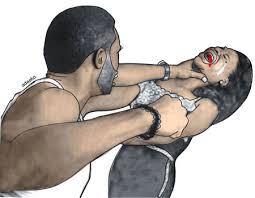
A 30-year-old man identified as Emmanuel Okpara has been arrested in Enugu over the alleged murder of his girlfriend, Chinyere.
The suspect, of Olympic Layout, One-Day, Enugu, allegedly beat his girlfriend to death over argument of who between them infected the other with HIV.
Okpara had allegedly after the murder hidden the remains of the lady in his toilet.
However, his neighbours forced the door to his apartment open and discovered the remains and subsequently alerted the police.
The spokesperson for Enugu Command, SP Daniel Ndukwe, confirmed the incident in a statement on Tuesday.
Ndukwe explained that Chinyere’s surname, age and address had yet to be established.
He stated that the suspect was rescued from an angry mob and detained by police operatives attached to Awkunanaw Division at about 6:30pm on September 21.
He added that “the rescue followed information reaching the police that Okpara had allegedly murdered his girlfriend.
“Preliminary investigation indicates that the suspect allegedly killed the victim on September 19, wrapped her remains in a nylon and locked them inside the toilet of his apartment.
“The offensive odour of the decomposing body subsequently attracted neighbours, who forced the door open and apprehended him before the arrival of the police.
“The remains were evacuated to a mortuary for preservation and autopsy, while efforts are ongoing to trace and notify her relatives,” the statement added.
It further stated that during preliminary interrogation, the suspect confessed to the crime.
Ndukwe explained that the suspect confessed that the incident followed an argument between him and the deceased over allegations of who infected the other with HIV.
He further stated that during the argument, Okpara hit the deceased on the head with a pestle, resulting in her death.
He was alleged to have subsequently wrapped and dumped her remains inside his toilet.
According to Ndukwe, the Commissioner of Police, Mr Mamman Giwa, has ordered the State Criminal Investigation Department (SCID) to conduct a discreet and thorough investigation to establish the circumstances surrounding the incident.
The commissioner directed the SCID to ensure that the suspect was arraigned upon the conclusion of investigations.
He cautioned the public, particularly unsuspecting young women, to inform trusted relatives or friends about their whereabouts and exercise caution about whom they visit or spend time with.
NAN


