
News
IRC Speaks on Allegations of Racism Amid Delay in Its Appeal Against NICN Judgement over Wrongful Termination of Ex-Staff


- /home/rhoncare/pointblank.ng/wp-content/plugins/mvp-social-buttons/mvp-social-buttons.php on line 27
https://pointblank.ng/wp-content/uploads/2020/10/Court.jpg&description=IRC Speaks on Allegations of Racism Amid Delay in Its Appeal Against NICN Judgement over Wrongful Termination of Ex-Staff', 'pinterestShare', 'width=750,height=350'); return false;" title="Pin This Post">
- Share
- Tweet /home/rhoncare/pointblank.ng/wp-content/plugins/mvp-social-buttons/mvp-social-buttons.php on line 69
https://pointblank.ng/wp-content/uploads/2020/10/Court.jpg&description=IRC Speaks on Allegations of Racism Amid Delay in Its Appeal Against NICN Judgement over Wrongful Termination of Ex-Staff', 'pinterestShare', 'width=750,height=350'); return false;" title="Pin This Post">
Despite the repute of the International Rescue Committee (IRC), a global non-governmental body that helps to rebuild people affected by humanitarian crises, there is an allegation that same organisation is built on a mindset of “white supremacy” that perpetuates “racism” against staffers in its workplace.
Reacting to the racism accusations, the IRC’s Senior Human Resource Coordinator, Aamir Fida, however, denied that such culture exist in the organisation.
Fida, who said he had barely spent two years in IRC acknowledged he was aware about a case that was registered against the company prior to his resumption in office.
His words: “..there is no discriminations against anyone regardless of their age, gender, race, status or anything, this is not true at all.
“I don’t know who brought the complaint and I don’t know why he is saying this because we never had such things (racism) before, in our organization there is a very open and very transparent environment and we are responsible to everyone and everyone is leaving on equal level and that is our culture and I don’t know why he saying that because there is no any incident like that.”
“If it is going to be complained about and after an investigation if all the allegations and all the evidence are established and it contravenes our moral conduct, a very strict punishment is given to the perpetrator.”
“I am only just one and half year with the organization I don’t know what happened in that case but I was told that the case was registered against IRC but I don’t know the parties to that case”
This is coming, nearly four years after the International Rescue Committee (IRC) went to the Court of Appeal in Abuja to appeal a judgment by the National Industrial Court of Nigeria (NICN), ordering it to pay its former staff named, Daniel Bassey over discrimination and wrongful termination of his employment contract without following IRC’s international policy standard – there seems to be little or no progress in the matter.
The judgment delivered in 2017 by Justice Edith Agbakoba of NICN in Suit No. NICN/ABJ/102/2015 between Dr. Daniel Etim Bassey (claimant) and International Rescue Committee Nigeria (Defendant) seeking reliefs held that the claimant’s appointment (Bassey) was constructively wrongfully terminated.
Agbakoba ruled that IRC pay Bassey N3,300,000:00 (Three Million, Three Hundred Thousand Naira) being the balance of six (6) months salary due him under fixed term contract which was wrongly terminated.
Following the judgment which was delivered exactly on 13/12/2017 IRC filed an appeal at the Court of Appeal in Suit CA/A/62/2018 but they seem to be reluctant in prosecuting the appeal.
*How Bassey Secured NICN Judgement against IRC*
S.S Mshelia, Counsel to the claimant, had on 24th April, filed for declaration that the abrupt termination of the claimant’s employment contract by the Defendant was without justification, thereby amounting to a breach of contract.
A Declaration that the termination of the Claimant’s employment contract by the Defendant is against IRC Nigerian Country Programme National Staff Employment Policies 2014 thereby amounting to a breach of Contract.
These submissions went through legal tussle for two years and in 2017 Justice Edith Agbakoba of NICN delivered the judgement in favour of the claimant.
*Appellant’s Counsel, Rotimi Denies Delaying Appellate Court Proceedings*
Rotimi Esq. said the matter is in court. “…nobody can drag the matter in court” he said. He added that “if the court fix a day for a matter, the matter will be heard that day.” Rotimi said.
According to Aamir Fida, the Senior Human Resource Coordinator, “IRC has a policy of due process following termination”, which was apparently not applied in this matter. And since 2017, IRC applied to the appellate court for a reversal of the judgement of NICN which favours Dr. Bassey, very insignificant progress has been made. It’s four years now and the respondent believes that the injustice he received by the IRC will not have occurred if he was of a different race and the matter would have reached a rapid conclusion.


The National Chairman of All Progressives Congress (APC), Professor Nentawe Yilwatda, has declared that the North would be the ultimate loser if President Bola Tinubu fails to secure a fresh mandate in the 2027 general elections.
Yilwatda made the remarks on Monday while receiving certain members of the African Democratic Congress (ADC) who defected to the ruling party.
The erstwhile ADC chieftains were led by Princess Aslam Aliyu.
Professor Yilwatda, who listed ongoing and completed road infrastructure projects across states in the region, also noted that the main beneficiaries of the Nigerian Education Loan Fund (NELFund) are from the northern region.
In apparent reference to the vow by the ADC Presidential candidate, Atiku Abubakar, to return fuel subsidy if elected as President, the APC National Chairman equally declared that states in the North benefited more from the removal of the subsidy regime, as he maintained that most states in the region could not pay the salaries of workers and the gratuities of pensioners before Tinubu came to office.
He said: “The same thing they keep on saying, you know, the outside radio stations tell us that they will return the subsidy. I keep on asking, how are they going to return the subsidy?
“You mean they will stop all these road constructions because they want to return the subsidy? Because there will be no money for this construction, all this road again. The gas they are bringing to the north.
“That gas will go with fertilizer. And we in the north, we need those fertilizers. You mean they should stop it? The CNG, they will come with the gas. We make transportation easier for the vulnerable people. Should we stop it?
“The beneficiaries of the student loan, most of them are from the north. We have more and more of them in this part of the country. Should we stop it? And most of our people who can’t afford school fees should go back as wheelbarrow pushers in the villages? Questions are too many. We can’t answer them all here.
“And I can also assure you, among the about 30 states that could not pay salaries in Nigeria, all the states in the north, none could pay salaries. None could pay salaries as of 2023, when President Tinubu took over. So should we say our state now should go back again? They can’t pay salaries, they can’t pay gratuities… increase poverty again in the north. These were some of the factors that were making poverty prevailing in the north and other parts of Nigeria also.”
Earlier in his presentation, Honourable Mohammed Hassan, who spoke on behalf of his other colleagues, pleaded with the APC National Chairman to ensure that they are integrated as members of the APC political family.
“We are not here merely to change the political platform, but to begin a new chapter of service and a great contribution to our people by supporting Baba Tinubu’s Renewable Agenda 2027.
“We respectfully ask the National Chairmanship and the entire leadership to receive us as brothers and partners, to give us the opportunity to contribute and support us as we take this new message back to our people.
“Our commitment remains clear: to support the party, mobilise our people, promote development and services to Nigeria with sincerity and dedication.”

A United States representative, Anna Paulina Luna, has raised the alarm over what she described as the incessant attacks and killings of Christians across different communities in Plateau State by Fulani ethnic militia terrorists and Islamist extremists.
The US lawmaker, who made the allegations in a statement shared on her verified X account on Friday, accused both the state and the federal governments of not doing enough to protect Christians in the state from the regular attacks they suffer when the terrorists descend on the communities.
In a post titled, “What is happening in Nigeria right now?”, the US lawmaker lamented that thousands of Christians in Plateau were facing a mortal threat while security forces had struggled to contain the situation.
“Hundreds of Fulani ethnic militia terrorists descended on Christian communities across Plateau State.
“Thousands of civilians are under mortal threat while the Nigerian Army and security forces struggle to hold the line,” Luna wrote.
According to her, the attacks were preceded by a series of violent incidents targeting Christians and other civilians in the affected communities.
Giving some specifics, Paulina said a pastor and his church secretary were shot dead while they were on their way to church in the days leading up to the latest attacks, while five Christians were attacked in another incident while travelling in a vehicle.
“A pastor and his church secretary were shot dead on their way to church. Five Christians were ambushed in their car.
“A civilian guard was killed outside his own home. A man and his son were beaten and left in critical condition,” the lawmaker said.
The US representative also alleged that security agencies had never taken warnings and security alerts issued before the attacks seriously, questioning why they had not been followed.
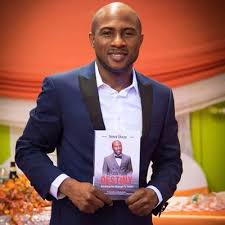
By Henry Ukazu
Dear Destiny Friends,
Last week, we began discussing a grey and near-controversial topic, “pursue passion more than profit”. The topic cannot be exhaustive. Depending on who one is speaking to, different answers and understanding will be received because different things work for different people, and as they say, ‘different strokes for different people’.
It I worthy of note that a family man who is passionate about teaching or working in the non-profit space will be tempted to engage in business to feed his family. But someone with a stable financial background can afford to follow his passion and work as a teacher or in the non-profit space where the pay is not lucrative.
From a practical perspective, I currently work for the New York City Department of Correction as the Legal Coordinator. This is an agency that pays a good salary to the uniformed officers after they work for 51/2 years. In addition to the money they receive, there are countless hours of overtime, which doubles their income depending on how many hours they work. Some call it blood money because they can hardly get the same money in other institutions.
Why am I sharing this information? According to most of the officers; they basically work in the agency because of the money. Most of the officers are of the opinion that they can hardly make such money working in other private or public enterprises. The majority of these officers are not passionate about the job; they are just there to take care of their pressing bills. Some of them even have a timeline: they can work and then resign to start up their business or work in their areas of interest. This goes to tell you that they are trading their passion for profit, which is kind of work if looked at from a particular point of view, but then they are trading their joy and peace.
Let me share another example. In Nigeria, a popular artist, David Adeleke, aka Davido, is one man who followed his passion. This young man came from a wealthy background. He literally left generational wealth to sing. Many thought he was crazy. Davido’s father, billionaire businessman Adedeji Adeleke, initially opposed his music career, but he eventually became fully supportive. Davido’s father went as far as having police shut down shows or arresting people involved when Davido left school in the US to pursue music in Nigeria. Due to his passion for singing, Davido had to fund his early career secretly and rebel against his family’s wishes before breaking through.
Once Davido achieved massive success and proved he could be successful in the industry, his father accepted his path and gave him his blessing. Davido once stated that despite making his own fortune, his billionaire father still surprises him with huge financial gifts, such as wiring him $300,000 after a major performance at the State Farm Arena in Atlanta.
I doubt that Davido would have become this famous if he didn’t follow his passion. Davido can be described as a man whose passion is stronger than power.
I had to share these two perspectives to give clarity on the relativity of passion and profit.
Let’s analyze the concept of passion and profit. If I may ask you, what is passion? What is profit? And what does passion and profit mean to you? According to Cambridge University, passion was defined as a very strong feeling, emotion, or deep enthusiasm for a person, activity, or cause. For example, someone can have a strong emotion or a powerful state of feeling like intense love, excitement, anger, or hatred for something or somebody.
Passion can also be a deep interest or hobby which gives someone a strong liking or enthusiasm for an activity, such as cooking, music, or sports. In romantic cases, it can be a romantic or sexual desire: An intense physical or emotional attraction toward someone. In the spiritual context, it can be understood as the Sufferings of Jesus: Historically and in a religious context, it refers to the suffering and death of Jesus Christ between the Last Supper and the crucifixion (the Passion of Christ).
Profit, on the other hand, is the financial gain that remains when total revenue from an activity or business exceeds the total expenses and costs incurred, according to Investopedia. There are different types of profit:
- Gross Profit: Revenue minus the direct cost of producing goods or services (COGS).
- Operating Profit: Gross profit minus day-to-day operating expenses, excluding interest and taxes.
- Net Profit: The final “bottom line” earnings left after all expenses, taxes, and interest are deducted.
Having given an overview of what passion and profit entail, let’s take a minute to understand the thin line between passion and profit. Just like authority is respected more than power, passion has more influence and is generally respected more than profit. No doubt, it’s good to make a profit in business, but in this context, I am referring to the human resource space or human capacity development
On the surface, people may respect someone for the money one has, but they will value a person who is more passionate about a cause than one who has money but does not believe in the message they are preaching. There’s a saying: human beings are more than money. Just like, it’s better to have a good name than to have money.
People generally follow a leader or someone who they can relate to rather than someone who gives them money but is careless about their feelings. One message I heard countless times from one of my revered mentors regarding my career was to pursue passion over profits. According to him, passion is stronger than power. He likened passion to a scenario where a woman loves a man who has less money compared to a man who has money but does not have the values and vision she represents. According to these sets of ladies, money is good, but love conquers everything because if tomorrow the money travels, the marriage is bound to hit a rock, compared to a scene where a lady loves a man for who he is and what he represents. Even when the money is out, the friendship will still thrive.
According to the opposing schools of thought, while passion is good, it is they also believe that hard work beats talent, especially when talent is not put to good use. So, even if one is passionate about a cause or has a talent that is yet to be developed, if one does not intentionally develop it, it will lie fallow. So, invariably, even if one is passionate about a cause, if they don’t have the strength to work on their passion, it’s advisable for them to focus on making money.
Here is my opinion: even though I subscribe to the position of focusing on or working for passion rather than for money, one must apply wisdom in navigating this tough terrain. One can decide to work for money and gather enough money to fund their passion because, at the end of the day, we all want to be happy, because happiness and fulfilment mean everything
In summary, while it is good to do what works for one and what is readily available, it’s imperatively important for one to strive for excellence and perfection, which can be found in passion.
Henry Ukazu writes from New York. He works with the New York City Department of Correction as the Legal Coordinator. He’s the founder of Gloemi. He’s a Transformative Human Capacity and Mindset coach. He is also a public speaker, youth advocate, creative writer and author of Design Your Destiny- Actualizing Your Birthright to Success, Unleash Your Destiny and The Six Pillars of Success . He can be reached via info@gloemi.com


