
Metro
Benue Massacre, Insecurity: NAOSNP Condemns Attacks, Calls for Proactive Measures in Policing and Intelligence Gathering


- /home/rhoncare/pointblank.ng/wp-content/plugins/mvp-social-buttons/mvp-social-buttons.php on line 27
https://pointblank.ng/wp-content/uploads/2025/06/IMG-20250619-WA0020-1000x600.jpg&description=Benue Massacre, Insecurity: NAOSNP Condemns Attacks, Calls for Proactive Measures in Policing and Intelligence Gathering', 'pinterestShare', 'width=750,height=350'); return false;" title="Pin This Post">
- Share
- Tweet /home/rhoncare/pointblank.ng/wp-content/plugins/mvp-social-buttons/mvp-social-buttons.php on line 69
https://pointblank.ng/wp-content/uploads/2025/06/IMG-20250619-WA0020-1000x600.jpg&description=Benue Massacre, Insecurity: NAOSNP Condemns Attacks, Calls for Proactive Measures in Policing and Intelligence Gathering', 'pinterestShare', 'width=750,height=350'); return false;" title="Pin This Post">
The National Association of Online Security News Publishers (NAOSNP) condemns the increasing Security lapses in the country leading to the unwholesome massacre of Nigerian citizens, some in their sleeps, with special emphasis to the Yelwata killings, in Benue State.
It would be recalled that in the early hours of Friday, June 13, 2025, more than 200 persons were slaughtered by alleged heavily armed herdsmen in Yelwata, a farming community in Guma, Benue State. This mass killing is part of a disturbing wave of targeted violence that has swept across central Nigeria in recent weeks, with Plateau State on the mind.
This latest massacre reportedly follows a string of well coordinated attacks across Benue State.
The Association notes with total dismay that the Security agencies have conscientiously relapsed in their various duties, thereby prompting the preventive killings of Nigerians across the regions.
Much as we applaud the renewed efforts of various agencies in tackling the agelong insurgency that has ravaged the country overtime, we want to put it on record that the best of our security apparatuses has not been enough as lives, in hundreds, have continued to be lost, major security facilities, including army barracks overwhelmed and insurgents barking threats on a daily basis against the Nigerian populace. This situation is no longer acceptable.
A statement signed by the National Public Relations Officer of the Association, Mr. Eric Elezuo, quoted the National President, Comrade Oki Samson as saying that the association is aware of the various governments, both the federal and states’ efforts at providing facilities and equipment to tackle insurgencies, noting however, that the results have been minimal in comparison to the humongous allocation to security in the budget year in and year out.
In the words of President Bola Ahmed Tinubu while presenting the 2015 Budget, “We have laid the foundation for stability. Now, we must build on it. With an unprecedented ₦54.99 trillion budget, we are making the largest-ever investments in critical sectors: National Security – ₦6.11 trillion: The highest defence allocation in Nigeria’s history to secure our nation from threats.” To whom much is given, much is expected, but the reverse seems to have been the case.
While acknowledging the skirmishes of successes, it is worthy of note that they are not enough as Nigerians’ lives are continually worth less than a kobo in the hands of the bandits and herdsmen, who have been alleged to be behind the attacks.
Who are these killers? Where do they live? How do they communicate? Where is the place of intelligence in policing and maintaining our territorial integrity? What is the function of the National Identity Number (NIN) without which no one can own a communication gadget within our borders? Are there saboteurs against our collective will to peaceful coexistence?
These and many more are questions our security operatives must answer if we must have a foreclosure. Human lives should no longer be sacrificed on the alter of ego and vendetta, and then punctuated with the now boring “we condemn”, and the the more boring condolence visits. Nigerians are tired of hearing this slogan from people in whose hands we entrust our lives. It’s obvious the ‘we condemn’ cliche has never brought back lost lives, or stopped other attacks. Time is now to be more proactive in policing and intelligence gathering to nip in the bud actions of those that are gradually making the country a laughing stock in the comity of nations. The functions of our security operatives and elected representatives, whether executive or legislature is not to run to crime scenes for condolence visits, or blurring a well rehearsed ‘we condemn’ cliche. Their function is to protect lives and property.
Recall that in May, Amnesty International reported that at least 30 persons were killed when gunmen attacked travellers in Imo State, just as 20 commuter vehicles and trucks were set ablaze during a “vicious attack” along the Okigwe-Owerri road, and none has yet been arrested or held accountable. The new normal!
We praise the brevity of our soldiers at the frontlines, but until uhuru is achieved, every effort remains vain attempt. It must not be forgotten that many months after the Agatu massacre, no one has been brought to book, and this has continued to feather the ego and boldness of the evil doers.
We agree with Chief of Defence Staff, General Christopher Musa, who said that the Yelwata attack is “one attack too many”, and therefore, call on stakeholders and interest groups; the Military, the Police, the Department of Security Services (DSS), the NSCDC, Nigerian Immigration, Nigeria Customs and Intelligence department, in fact, everyone that dorns a security outfit, to rise to the occasion, and safeguard the lives of Nigerians.
This is not the time for grandstanding. This is not the time for flowery speeches. This is not the time for eye service to impress.
This is the time for national reawakening. This is the time for action. This is the time to rebuild and bring to justice all collaborators. This is the time to heal. This is the time for the Security agencies to rise, and be counted.
This is the time for ENOUGH IS ENOUGH!
E-signed:
Eric Elezuo
National Public Relations Officer
NAOSNP


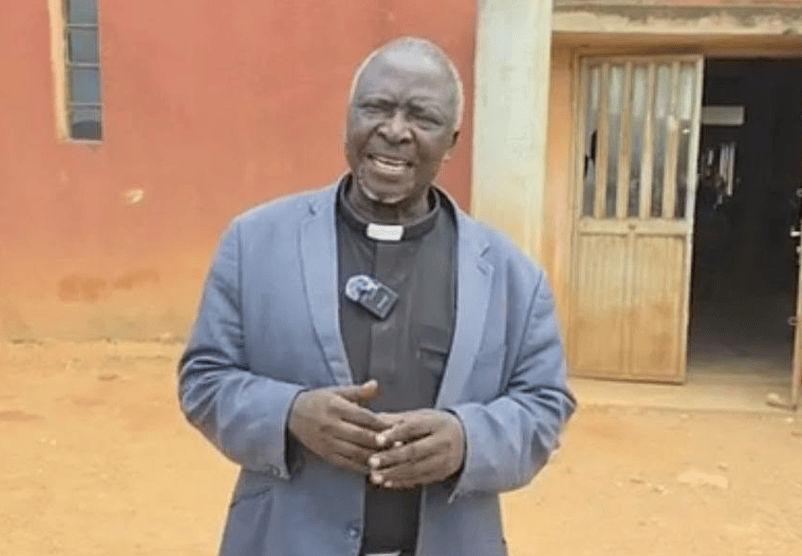
The Regional Chairman of Church of Christ in Nations (COCIN), Barkin Ladi Local Government Area of Plateau State, Rev. Ezekiel Dachomo, has denied reports that he prayed for the re-election of President Bola Tinubu and Vice President Kashim Shettima in the 2027 presidential election.
Dachomo, who is currently in Israel on what he described as his first International Christian Advocacy Tour, said his visit was aimed at drawing the attention of world leaders to the plight of Christians in Plateau.
The cleric made the clarification in a social media post on Monday night following reports that he had prayed for the success of the All Progressives Congress (APC) presidential ticket and expressed support for the Muslim-Muslim ticket.
Dachomo said his earlier post, in which he prayed for Nigeria, had been misconstrued as an endorsement of Tinubu and Shettima ahead of the 2027 election.
According to him, there was nowhere in the post where he prayed for the President and Vice-President to win the election.
“People are trying to frame me, saying I prayed for a Muslim-Muslim ticket. But I did not, and I will never pray for a Muslim-Muslim ticket because Nigeria belongs to both Muslims and Christians,” he said.
Dachomo said his prayers were for the well-being and success of Nigeria and its citizens, irrespective of their religious affiliations.
“I pray for both Muslims and Christians in Nigeria. I pray for Nigeria to succeed. If you truly want to come to God, come with a clean heart,” he added.
The cleric further stated, “I did not pray for President Tinubu and Vice President Shettima to win in 2027. My prayers have always been for Nigeria to succeed.”
Dachomo’s clarification came amid reactions to his ongoing advocacy tour in Israel, where he is seeking international attention to security challenges and what he described as the persecution of Christians in Plateau.

Ahead of the 2027 election, the House of Representatives Committee on Electoral Matters has urged the Independent National Electoral Commission (INEC) to disqualify candidates whose names are not contained in political party registers, as stipulated by the Electoral Act 2026.
In a statement on Tuesday, the Chairman of the committee, Bayo Balogun, drew the commission’s attention to a Supreme Court ruling on Sections 77(5), 77(6) and 77(7) and called for their full enforcement across all political parties.
Balogun, a member of the All Progressives Congress, APC, said that pending legal proceedings concerning the interpretation, constitutionality and enforceability of the sections had been resolved by virtue of the Supreme Court judgment.
The lawmaker recalled that the Supreme Court, on September 24, 2026, restored the provisions after setting aside the Court of Appeal judgment that had declared them unconstitutional.
According to him, the apex court held that the provisions were not inconsistent with the 1999 Constitution.
Balogun explained that Section 77(5) provides that only members whose names are contained in the membership register submitted to INEC are eligible to vote or be voted for at party primaries, congresses and conventions.
He said that Section 77(6) requires political parties to use the register submitted to the electoral umpire for such exercises.
Balogun urged INEC to proceed without further delay to enforce Sections 77(4) to 77(6) in the administration and monitoring of political parties and their electoral activities.
He further urged the commission to audit the membership registers and candidates submitted by political parties to establish whether the names of the candidates are contained in the registers earlier submitted to INEC in compliance with Section 77(5).
“This will be a litmus test for the commission – any culpable political party and candidates should be disqualified.
“Diligent enforcement of the provision would help prevent disputes and reduce the volume of litigation that could arise from alleged irregularities or non-compliance with Sections 77(4) to 77(6) of the Electoral Act,” Balogun said.
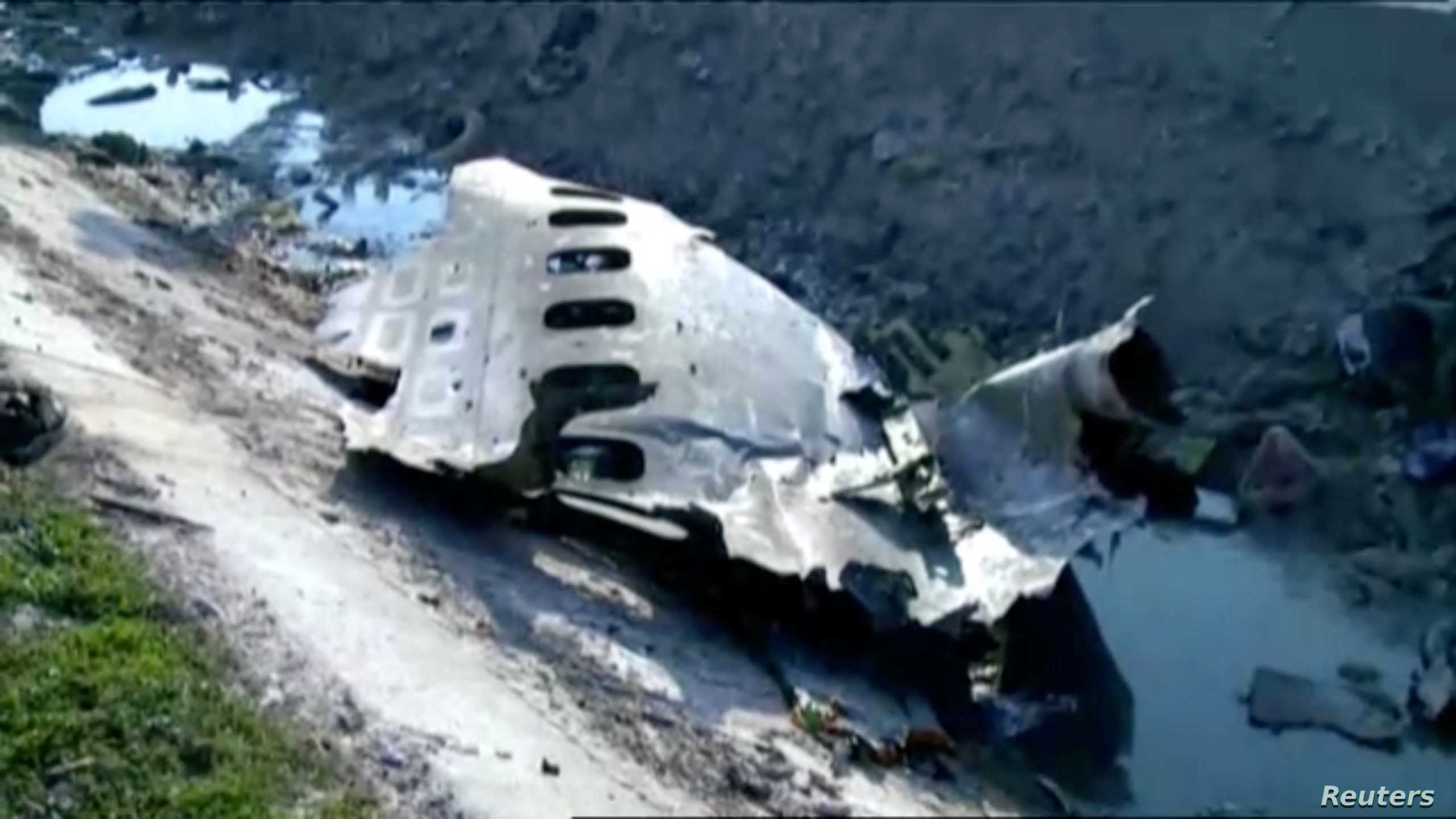
An helicopter crashed into a swamp near Naval Base in Igbokoda, the headquarters of Ilaje Local Government Area of Ondo State, on Monday.
The incident occurred at about 11.00a.m during heavy down pour, throwing the coastal community into panic.
The number of people on board of the helicopter was yet to be officially confirmed, while the condition of possible survivors cannot be confirmed.
Confirming the incident, Maurice Oripenaiye, the Chairman of the local government, told the News Agency of Nigeria (NAN) in a telephone interview that he could not ascertain the number of the victims.
Oripenaye also said he was yet to ascertain the identity of the crashed helicopter and the passengers.
“It happened during the heavy rainfall at about 11.00a.m. I cannot confirm the number of the people on board. I have deployed some youths to the area for rescue purpose,” he told NAN.
Similarly, the Police Command in Ondo State while confirming the crash, said details surrounding the incident were still emerging.
The command in a statement by its spokesperson, Abayomi Jimoh, a deputy superintendent of police, in Akure, said efforts were ongoing to establish the full circumstances surrounding the crash.
“The command urges members of the public, particularly residents of Igbokoda and adjoining communities, to remain calm and refrain from circulating unverified information.
“The public will be duly informed as soon as further credible information becomes available,” it stated.
(NAN)


