
Personality in Focus
Dangote Gets World Bank Appointment, Tasked to Drive Investment, Job Creations in Emerging Economies

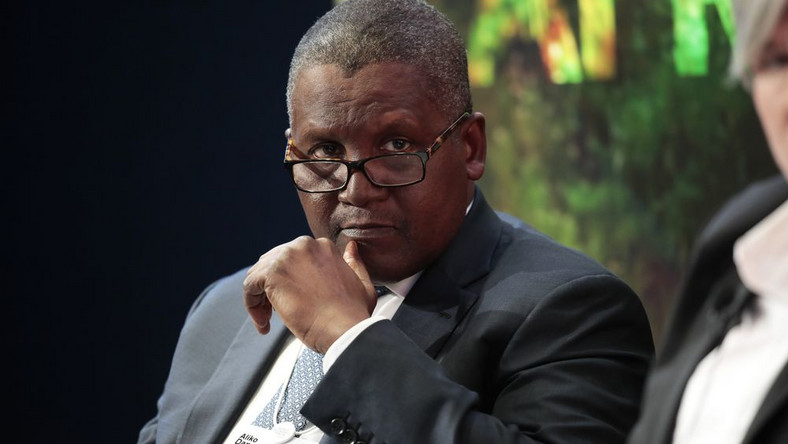
The President and Chief Executive of the Dangote Group, Aliko Dangote, has been appointed to the World Bank’s Private Sector Investment Lab, joining a select group of global business leaders tasked with driving investment and job creation in emerging economies.
In 2023, Mark Carney, the Prime Minister of Canada, co-chaired the Private Sector Investment Lab, which focused on attracting £1 trillion in sustainable investment to support the energy transition in emerging markets.
In a statement confirming his acceptance, Dangote reaffirmed his commitment to fostering sustainable economic growth through private sector-led investment, noting the transformative potential of such initiatives in developing markets.
“I am both honoured and excited to accept my appointment to the World Bank’s Private Sector Investment Lab, dedicated to advancing investment and employment in emerging economies,” the African industrialist said.
“This opportunity aligns with my long-standing commitment to sustainable development and unlocking the potential of developing economies. Drawing inspiration from the remarkable successes of the Asian Tigers, which have demonstrated the power of strategic investment and focused economic policy, I am eager to collaborate with fellow leaders to replicate such outcomes across other regions.”
The World Bank announced Dangote’s appointment on Wednesday as part of a broader expansion of its Private Sector Investment Lab, which now enters a new phase aimed at scaling up solutions to attract private capital and create jobs in the developing world.
Joining Dangote in the elite group are Bill Anderson, CEO of Bayer AG; Sunil Bharti Mittal, Chair of Bharti Enterprises; and Mark Hoplamazian, President and CEO of Hyatt Hotels Corporation.
The World Bank said the expanded membership brings together business leaders with proven track records in generating employment in developing economies—supporting the Bank’s sharpened focus on job creation as a central pillar of global development.
“With the expanded membership, we are mainstreaming this work across our operations and tying it directly to the jobs agenda that is driving our strategy,” said World Bank Group President Ajay Banga. “This isn’t about altruism—it’s about helping the private sector see a path to investments that will deliver returns, and lift people and economies alike. It’s central to our mandate.”
The global bank said that over the last 18 months, the Lab brought together leaders from global financial institutions to identify the most pressing barriers to private sector investment in developing countries and to test actionable solutions.
The statement said that the work had now been consolidated into five priority focus areas that were being integrated across the bank operations, including regulatory and policy certainty.
The Lab’s founding members included senior executives from AXA, BlackRock, HSBC, Macquarie, Mitsubishi UFJ Financial Group, Ninety One, Ping An Group, Royal Philips, Standard Bank, Standard Chartered, Sustainable Energy for All, Tata Sons, Temasek, and Three Cairns Group. The Lab is chaired by Shriti Vadera, Chair of Prudential plc.
The Dangote Group, founded by Aliko Dangote, is the largest conglomerate in West Africa and one of the largest on the African continent. With interests spanning cement, fertiliser, salt, sugar, and oil, the Group employs over 30,000 people and is the largest taxpayer in Nigeria—contributing more in taxes than all of Nigeria’s banks combined. It is also the country’s largest employer after the government.
The $20 billion Dangote Petroleum Refinery & Petrochemicals, the Group’s flagship project, stands as the largest single private investment in Africa.
In addition to his business interests, Dangote leads the Aliko Dangote Foundation (ADF), the largest private foundation in sub-Saharan Africa, with the largest endowment by a single African donor. The Foundation primarily focuses on child nutrition, while also supporting interventions in health, education, empowerment, and disaster relief.


Former Minister of Justice and Attorney-General of the Federation, Abubakar Malami (SAN), has accused the Department of State Services (DSS) of actions he said were aimed at frustrating his constitutional right to fair hearing and effective legal defence.
In a statement signed by his Special Assistant on Media, Mohammed Bello Doka, Malami said the continuous denial of access to his lawyers had impaired his ability to consult, prepare court filings and give instructions to his legal team.
He described the actions of the DSS as a clear frustration of due process.
“This sequence of events clearly suggests a pattern where arrest precedes investigation, with evidence sought after detention, an approach that is a blatant violation of the rule of law and constitutionally guaranteed rights,” the statement said.
“It is deeply troubling that the DSS appears to be adopting a similar practice of arrest, detention, and then evidence gathering.”
Malami recalled that following charges filed against him by the Economic and Financial Crimes Commission (EFCC), the Federal High Court granted him bail.
However, he alleged that the EFCC delayed submitting his international passports to the court for about one week, despite the documents being a key condition for the perfection of bail.
According to him, the delay unnecessarily prolonged his detention and obstructed the execution of a valid court order.
“Immediately after Mr. Malami eventually perfected his bail and was released from Kuje Custodial Centre, he was rearrested by the Department of State Services,” the statement said.
“He was thereafter detained for five days without access to his lawyers or family, and was only allowed to meet his legal team on Friday after prolonged isolation, delays, and grave violations of his fundamental human rights.”
It stressed that bail granted by a court must be respected.
“No agency should be permitted to neutralise judicial orders through coordinated delays, rearrests, or denial of access to legal representation. Such actions undermine the authority of the courts and pose a serious threat to fundamental human rights,” it said.
Malami reaffirmed his readiness to defend himself in court.
“Mr. Malami remains ready to defend himself fully in court and in accordance with the law, and calls on all state institutions to respect court orders, constitutional guarantees, and the rule of law.”
Personality in Focus
Commander Adesoji Speaks on Forest Guard’s Relevance to Nigeria’s Security Strategy

Across Nigeria’s vast forest belts, ungoverned spaces have increasingly become theatres for violent crime, farmer–herder conflicts, illegal grazing, banditry, arms movement, and environmental crimes. These forests are not isolated wildernesses; they are living corridors linking farms, rural settlements, trade routes, sacred sites, and border communities. As conventional security agencies face mounting pressure, Forest Guards are emerging as a critical but often under-examined layer of Nigeria’s internal security architecture, tasked with early warning, terrain control, community intelligence, and conflict prevention in spaces where insecurity often incubates unseen, National Association of Online Security News Publishers, NAOSNP can report.
Forest Guards operate closest to these fault lines. Their effectiveness, however, depends less on force and more on legitimacy. As was repeatedly emphasised at a recent national training in Osun State, forest security succeeds only when authority is exercised lawfully, professionally, and with the consent of the communities that live and work around forest spaces. Without this foundation, security operations risk collapsing into resistance, intelligence failure, and avoidable violence.
It was against this backdrop that the National Forest Guard Training Camp (“Forest Camp”) in Ila-Orangun, Osun State, hosted a set of strategic lectures in January 2026 aimed at redefining how forest security should be practiced in Nigeria. The sessions brought together recruits, rank-and-file operatives, and ward and sector formations from across the country to interrogate a central operational question: how can Forest Guards enforce the law effectively without becoming a source of fear in already vulnerable rural spaces?
The answer, according to the training, lies in a unified doctrine that places lawful authority, disciplined conduct, and community legitimacy at the heart of forest operations.
Delivered in an intensive 2–3 hour integrated format combining classroom instruction, guided discussion, and field-based application, the lectures focused on Ethics and Professional Conduct in Forest Security Operations and Community Engagement, Conflict Resolution, and Trust-Building in Contemporary Forest Policing.
Ethics as Law, Not Preference
Delivering the lectures, the Commander of the Enugu State Forest Guard (ESFG), Dr. Akinbayo O. Olasoji, Deputy Commissioner of Police (Rtd.), framed ethics as a legal obligation rather than a personal choice. He stressed that forest security authority is derived entirely from law and governance frameworks, not from uniforms, weapons, or discretion.
“Ethics in forest security is not a personal value judgment or discretionary behaviour,” he told participants. “It is a binding statutory obligation.”
He anchored this position in existing legal instruments guiding Forest Guard operations, including the Enugu State Forest Guard Law, 2020, the 1999 Constitution (as amended), the Enugu State Prohibition of Open Grazing and Regulation of Cattle Ranching Law, 2021, the Firearms Act, the Administration of Criminal Justice Act, and the Evidence Act, 2011, alongside public service rules and recognised law-enforcement ethics standards. Reinforcing a core operational doctrine of the ESFG, he declared: “Authority exists only within the law.”
BUILDING SECURITY THROUGH TRUST, NOT FEAR
Beyond legality, the lectures placed strong emphasis on community legitimacy as the foundation of effective forest security. Dr. Olasoji reminded operatives that forests are not empty spaces, but environments connected to daily human activity and livelihoods.
“Forests are not isolated zones,” he explained. “They are linked to farms, settlements, markets, footpaths, and sacred sites. That reality makes community partnership a decisive operational factor.”
According to him, the consequences of poor community engagement are immediate and severe. He warned that mistrust leads to intelligence breakdowns, delayed early warning, increased hostility toward operatives, and the escalation of minor disputes into violent confrontations, outcomes that ultimately endanger officers themselves.
In contrast, he argued, trust transforms communities into security partners. As he put it:
“Community engagement is not weakness; it is operational strength. Trust is a force multiplier. When you win the community, you win the forest.”
NON-NEGOTIABLE STANDARDS OF CONDUCT
The sessions translated ethical principles into concrete operational standards applicable to patrols, checkpoints, arrest support, intelligence handling, and inter-agency cooperation. Participants were reminded that public confidence and mission success rise or fall with officer conduct.
Among the non-negotiable standards reinforced were universal human-rights compliance, lawful and proportionate use of force, zero tolerance for torture, brutality, corruption, extortion, or record falsification, strict confidentiality of operational information and informant protection, and political neutrality.
Human-rights compliance, Dr. Olasoji stressed, “applies to everyone, always,” while the use of force must satisfy “lawfulness, necessity, and proportionality.”
Mandatory reporting of misconduct, supported by whistle-protection safeguards, was also emphasised as an institutional duty rather than an individual risk.
DECISION-MAKING UNDER PRESSURE
To strengthen field judgment, the lectures adopted a practical ethical decision model consistent with international enforcement doctrine: L-N-P-A — Legality, Necessity, Proportionality, Accountability.
Operatives were trained to ask four questions before acting: Is it lawful? Is it genuinely required? Is it the minimum reasonable response? Can it be defended openly, in writing, and before lawful authority?
The guiding rule, as repeatedly emphasised, was uncompromising:
“If you cannot defend it, don’t do it.”
EARLY WARNING AND CONFLICT PREVENTION
A major focus of the engagement lecture was early warning and early response. Participants were trained to identify indicators such as rumour patterns, unusual movement along forest corridors, resource-pressure signals linked to farmer–herder tensions, and enforcement-related triggers capable of igniting rapid conflict.
Forest Guards, Dr. Olasoji explained, are not merely enforcers but stabilisers.
“Forest Guards are peace managers,” he noted, “but they must operate strictly within legal limits.”
A standard dispute-management workflow was reinforced: Assess, Stabilise, Separate, Dialogue, Decide (Enforce or Refer), Document, Report, and Follow-up, with clear thresholds for referral to the Police, DSS, courts, and civil authorities.
HIGH-SENSITIVITY ENFORCEMENT: OPEN GRAZING
Given the sensitivity of open-grazing enforcement nationwide, the lectures stressed that operations must remain calm, law-based, non-discriminatory, and free of harassment, extortion, ethnic profiling, or improper impoundment. Ethical professionalism, participants were told, is central to preventing rural instability and escalation in mixed-use forest zones.
TRAINING, ACCOUNTABILITY, AND INSTITUTIONAL RESPONSIBILITY
The sessions employed scenario-based learning, decision drills, and misconduct case studies to ensure practical understanding. Ethics and community-engagement competence were presented as mandatory core requirements, forming part of refresher training and promotion criteria, with completion formally recorded in personnel files.
Responsibility for trust-building was distributed across the command structure, from state and zonal commands to sector, ward, and frontline formations, embedding accountability into institutional culture.
A BROADER NATIONAL LESSON
In one of the most quoted moments of the lectures, Dr. Olasoji told participants:
“A Forest Guard is a trust-bearer, not a power-holder. Uniform and equipment do not create authority; character does. Without integrity, authority collapses.”
Security analysts say the Ila-Orangun engagement underscores a broader national lesson: that sustainable forest security in Nigeria depends less on coercion and more on professionalism, legality, and partnership with communities.
As Nigeria continues to grapple with insecurity across rural and forested regions, the lessons from Ila-Orangun point to a clear conclusion—when Forest Guards operate within the law and with the people, forests shift from being security liabilities to strategic assets in national security management.
Personality in Focus
Nigeria Mourns As Imam Abubakar Abdullahi, Who Sheltered Multiple Christians, Dies at 90
By Eric Elezuo
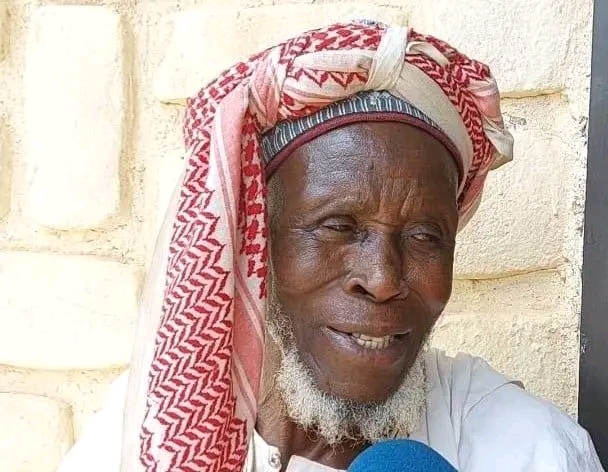
Nigerians are mourning celebrated Muslim cleric, Imam Abdullahi Abubakar, who is reputed for sheltering 262 Christians during the 2018 sectarian attacks in Plateau State.
Abubakar, who held the post of the Chief Imam of Nghar village in the Barkin Ladi local government area of the state, passed away after a brief illness at the age of 92
Confirming his death, one of his sons, Saleh Abubakar, said his father died on Thursday night at the Plateau Specialist Hospital, Jos, 10 days after he was admitted.
Imam Abubakar, who was also a herder, left behind 19 children including 12 boys and 7 girls.
The late Islamic cleric rose to prominence following his extraordinary act of courage on June 23, 2018, when armed assailants attacked several communities in Barkin Ladi LGA, leaving dozens dead.
Following the announcement of his death, Nigerians from all walks of life including Christians, have risen stoutly to eulogise his life and times, crediting greatness, humanity and purposeful living to the nonagenarian.
Leading the long list of mourners, President Bola Tinubu expressed sorrow over the death of the Chief Imam of Nghar village in Barkin Ladi Local Government Area of Plateau State just as Former Vice President Atiku Abubakar and the 2023 presidential candidate of the Labour Party, Peter Obi, have also expressed sadness over his death, describing him as a true hero of humanity.
Tinubu, in a condolence message shared on X by his Special Adviser on Information and Strategy, Bayo Onanuga, described the cleric as an extraordinary religious leader whose life was a powerful testament to faith, courage, and the sanctity of human life.
“At such a time when tribal and religious tendencies seemed to overwhelm reason, Imam Abubakar stood firmly on the side of peace, benevolence, and conscience,” the President said.
He noted that despite the grave danger to his own life, the cleric chose compassion over division and love over hatred.
“Mindless of the enormous risk to his own life, the noble cleric chose humanity over division, love as opposed to hatred, and embrace rather than rejection. His heroic feat underlines the essence of true faith, resonating louder than sermons in a salient message to the world at large,” Tinubu added.
Tinubu urged religious and community leaders across the country to emulate the late Imam’s example by promoting tolerance, mutual respect, and peaceful coexistence.
Atiku, in his message which was also shared on X, said the cleric lived a life that transcended religious divides and affirmed our shared humanity. The former vice president urged Nigerians, particularly religious leaders, to recommit to the ideals the late cleric embodied in inter-faith harmony, mutual respect, and an unwavering defence of the sanctity of every human life.
On his part, Obi described the late Imam as a beacon of light, “reminding us that the core of Islam is peace and the protection of the vulnerable.” He called on Nigerians to embrace love, unity, and peaceful coexistence in honour of the late Islamic cleric, adding that what Imam Abubakar did was exactly the expectations of citizens from their leaders; protect life and property.
In a condolence message, Plateau State Governor, Caleb Mutfwang, said Imam Abubakar’s commitment to interfaith harmony and protection of the vulnerable earned him the respect of Nigerians and the global community.
Mutfwang added that Abubakar’s passing “has left a significant void in Barkin Ladi,” urging residents to uphold the values of compassion, tolerance, and unity that he embodied.
“On behalf of my family, the government, and the people of Plateau State, I extend my deepest condolences to the family and all those mourning the loss,” the governor said. “May Almighty God grant them comfort and strength to bear this painful loss.”
Also expressing heartfelt sympathies, Chairman of the Plateau State chapter of the Miyetti Allah Cattle Breeders Association (MACBAN), Yusuf Babayo, described the death of Imam Abdullahi as painful and a significant loss to the Muslim Ummah.
“It is difficult to get a leader like Imam Abdullahi. He was an elder statesman whose valuable contribution to peace in the state will be greatly missed,” Babayo said.
“He did not discriminate and treated everybody as his own, irrespective of religious differences. The vacuum created by his death cannot be filled by anyone in the state.”
In his reaction on behalf of the Christian Association of Nigeria (CAN), Plateau State Secretary Rev. Simon Julius, described the late Imam as a rare figure whose courage and legacy transcended religious boundaries.
“In every religion, there are good and bad. For us, the late Imam will be remembered for his courage and for saving human lives,” Rev. Julius said. He also sympathised with the Muslim Ummah over the loss and urged individuals to emulate the lifestyle of Imam Abdullahi for the betterment of Plateau State and Nigeria at large.
The Jama’atu Nasril Islam (JNI) Plateau State chapter also expressed shock at his passing, while submitting to the will of Allah SWT. In a statement signed by its Secretary, Dr. Salim Musa Umar, JNI described the late Imam as an exceptional leader who demonstrated compassion during a trying period for his community.
“He was credited with hiding over 200 Christians in his mosque during one of the most devastating ethno-religious conflicts in Plateau State, the statement read.
“On behalf of the chairman and Emir of Wase, JNI extends its condolences to his family, Plateau State, and Nigeria. No doubt, we have lost a rare gem. Humanity will never forget his sacrifices, and history will remember him positively.”
Late Imam Abubakar Abdullahi has since been buried in Nghar village, Barkin Ladi LGA, the Jumma’at Prayer in his honour.
IMAM ABDULLAHI ABUBAKAR IN BRIEF
The Imam was able to save the lives of 262 people, predominantly Christians from the Birom tribe, by sheltering them in his mosque as attackers roamed the villages.
In July 2019, Imam Abdullahi Abubakar received the International Religious Freedom Award from the United States government, which is granted to supporters of religious freedom, together with four other religious leaders from Sudan, Iraq, Brazil, and Cyprus.
In August 2019, President Buhari authorized the inclusion of Imam Abdullahi Abubakar in the membership of the national Ulama committee and was part of an 80-man Ulama committee charged with the responsibility of educating Nigerian pilgrims in Mina during the 2019 Hajj.
Imam Abubakar received many other awards during his lifetime, including US International Religious Freedom Award (2019), Member of the Order of the Federal Republic (MFR) and an Award of Excellence.
He died on January 15, 2026 after a brief illness.


