
Personality in Focus
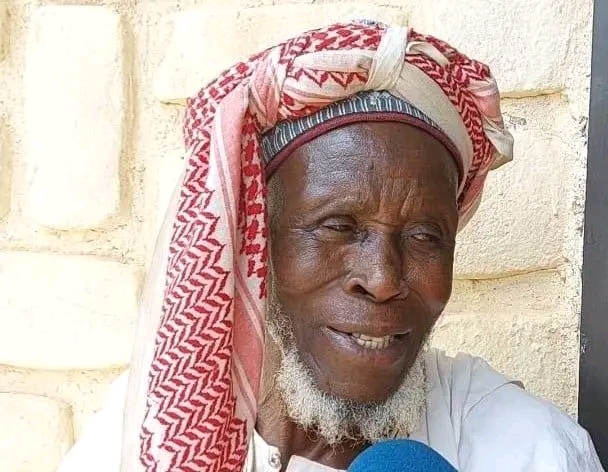
Nigeria Mourns As Imam Abubakar Abdullahi, Who Sheltered Multiple Christians, Dies at 90

- /home/rhoncare/pointblank.ng/wp-content/plugins/mvp-social-buttons/mvp-social-buttons.php on line 27
https://pointblank.ng/wp-content/uploads/2026/01/1768632397635.jpg&description=Nigeria Mourns As Imam Abubakar Abdullahi, Who Sheltered Multiple Christians, Dies at 90', 'pinterestShare', 'width=750,height=350'); return false;" title="Pin This Post">
- Share
- Tweet /home/rhoncare/pointblank.ng/wp-content/plugins/mvp-social-buttons/mvp-social-buttons.php on line 69
https://pointblank.ng/wp-content/uploads/2026/01/1768632397635.jpg&description=Nigeria Mourns As Imam Abubakar Abdullahi, Who Sheltered Multiple Christians, Dies at 90', 'pinterestShare', 'width=750,height=350'); return false;" title="Pin This Post">
By Eric Elezuo
Nigerians are mourning celebrated Muslim cleric, Imam Abdullahi Abubakar, who is reputed for sheltering 262 Christians during the 2018 sectarian attacks in Plateau State.
Abubakar, who held the post of the Chief Imam of Nghar village in the Barkin Ladi local government area of the state, passed away after a brief illness at the age of 92
Confirming his death, one of his sons, Saleh Abubakar, said his father died on Thursday night at the Plateau Specialist Hospital, Jos, 10 days after he was admitted.
Imam Abubakar, who was also a herder, left behind 19 children including 12 boys and 7 girls.
The late Islamic cleric rose to prominence following his extraordinary act of courage on June 23, 2018, when armed assailants attacked several communities in Barkin Ladi LGA, leaving dozens dead.
Following the announcement of his death, Nigerians from all walks of life including Christians, have risen stoutly to eulogise his life and times, crediting greatness, humanity and purposeful living to the nonagenarian.
Leading the long list of mourners, President Bola Tinubu expressed sorrow over the death of the Chief Imam of Nghar village in Barkin Ladi Local Government Area of Plateau State just as Former Vice President Atiku Abubakar and the 2023 presidential candidate of the Labour Party, Peter Obi, have also expressed sadness over his death, describing him as a true hero of humanity.
Tinubu, in a condolence message shared on X by his Special Adviser on Information and Strategy, Bayo Onanuga, described the cleric as an extraordinary religious leader whose life was a powerful testament to faith, courage, and the sanctity of human life.
“At such a time when tribal and religious tendencies seemed to overwhelm reason, Imam Abubakar stood firmly on the side of peace, benevolence, and conscience,” the President said.
He noted that despite the grave danger to his own life, the cleric chose compassion over division and love over hatred.
“Mindless of the enormous risk to his own life, the noble cleric chose humanity over division, love as opposed to hatred, and embrace rather than rejection. His heroic feat underlines the essence of true faith, resonating louder than sermons in a salient message to the world at large,” Tinubu added.
Tinubu urged religious and community leaders across the country to emulate the late Imam’s example by promoting tolerance, mutual respect, and peaceful coexistence.
Atiku, in his message which was also shared on X, said the cleric lived a life that transcended religious divides and affirmed our shared humanity. The former vice president urged Nigerians, particularly religious leaders, to recommit to the ideals the late cleric embodied in inter-faith harmony, mutual respect, and an unwavering defence of the sanctity of every human life.
On his part, Obi described the late Imam as a beacon of light, “reminding us that the core of Islam is peace and the protection of the vulnerable.” He called on Nigerians to embrace love, unity, and peaceful coexistence in honour of the late Islamic cleric, adding that what Imam Abubakar did was exactly the expectations of citizens from their leaders; protect life and property.
In a condolence message, Plateau State Governor, Caleb Mutfwang, said Imam Abubakar’s commitment to interfaith harmony and protection of the vulnerable earned him the respect of Nigerians and the global community.
Mutfwang added that Abubakar’s passing “has left a significant void in Barkin Ladi,” urging residents to uphold the values of compassion, tolerance, and unity that he embodied.
“On behalf of my family, the government, and the people of Plateau State, I extend my deepest condolences to the family and all those mourning the loss,” the governor said. “May Almighty God grant them comfort and strength to bear this painful loss.”
Also expressing heartfelt sympathies, Chairman of the Plateau State chapter of the Miyetti Allah Cattle Breeders Association (MACBAN), Yusuf Babayo, described the death of Imam Abdullahi as painful and a significant loss to the Muslim Ummah.
“It is difficult to get a leader like Imam Abdullahi. He was an elder statesman whose valuable contribution to peace in the state will be greatly missed,” Babayo said.
“He did not discriminate and treated everybody as his own, irrespective of religious differences. The vacuum created by his death cannot be filled by anyone in the state.”
In his reaction on behalf of the Christian Association of Nigeria (CAN), Plateau State Secretary Rev. Simon Julius, described the late Imam as a rare figure whose courage and legacy transcended religious boundaries.
“In every religion, there are good and bad. For us, the late Imam will be remembered for his courage and for saving human lives,” Rev. Julius said. He also sympathised with the Muslim Ummah over the loss and urged individuals to emulate the lifestyle of Imam Abdullahi for the betterment of Plateau State and Nigeria at large.
The Jama’atu Nasril Islam (JNI) Plateau State chapter also expressed shock at his passing, while submitting to the will of Allah SWT. In a statement signed by its Secretary, Dr. Salim Musa Umar, JNI described the late Imam as an exceptional leader who demonstrated compassion during a trying period for his community.
“He was credited with hiding over 200 Christians in his mosque during one of the most devastating ethno-religious conflicts in Plateau State, the statement read.
“On behalf of the chairman and Emir of Wase, JNI extends its condolences to his family, Plateau State, and Nigeria. No doubt, we have lost a rare gem. Humanity will never forget his sacrifices, and history will remember him positively.”
Late Imam Abubakar Abdullahi has since been buried in Nghar village, Barkin Ladi LGA, the Jumma’at Prayer in his honour.
IMAM ABDULLAHI ABUBAKAR IN BRIEF
The Imam was able to save the lives of 262 people, predominantly Christians from the Birom tribe, by sheltering them in his mosque as attackers roamed the villages.
In July 2019, Imam Abdullahi Abubakar received the International Religious Freedom Award from the United States government, which is granted to supporters of religious freedom, together with four other religious leaders from Sudan, Iraq, Brazil, and Cyprus.
In August 2019, President Buhari authorized the inclusion of Imam Abdullahi Abubakar in the membership of the national Ulama committee and was part of an 80-man Ulama committee charged with the responsibility of educating Nigerian pilgrims in Mina during the 2019 Hajj.
Imam Abubakar received many other awards during his lifetime, including US International Religious Freedom Award (2019), Member of the Order of the Federal Republic (MFR) and an Award of Excellence.
He died on January 15, 2026 after a brief illness.


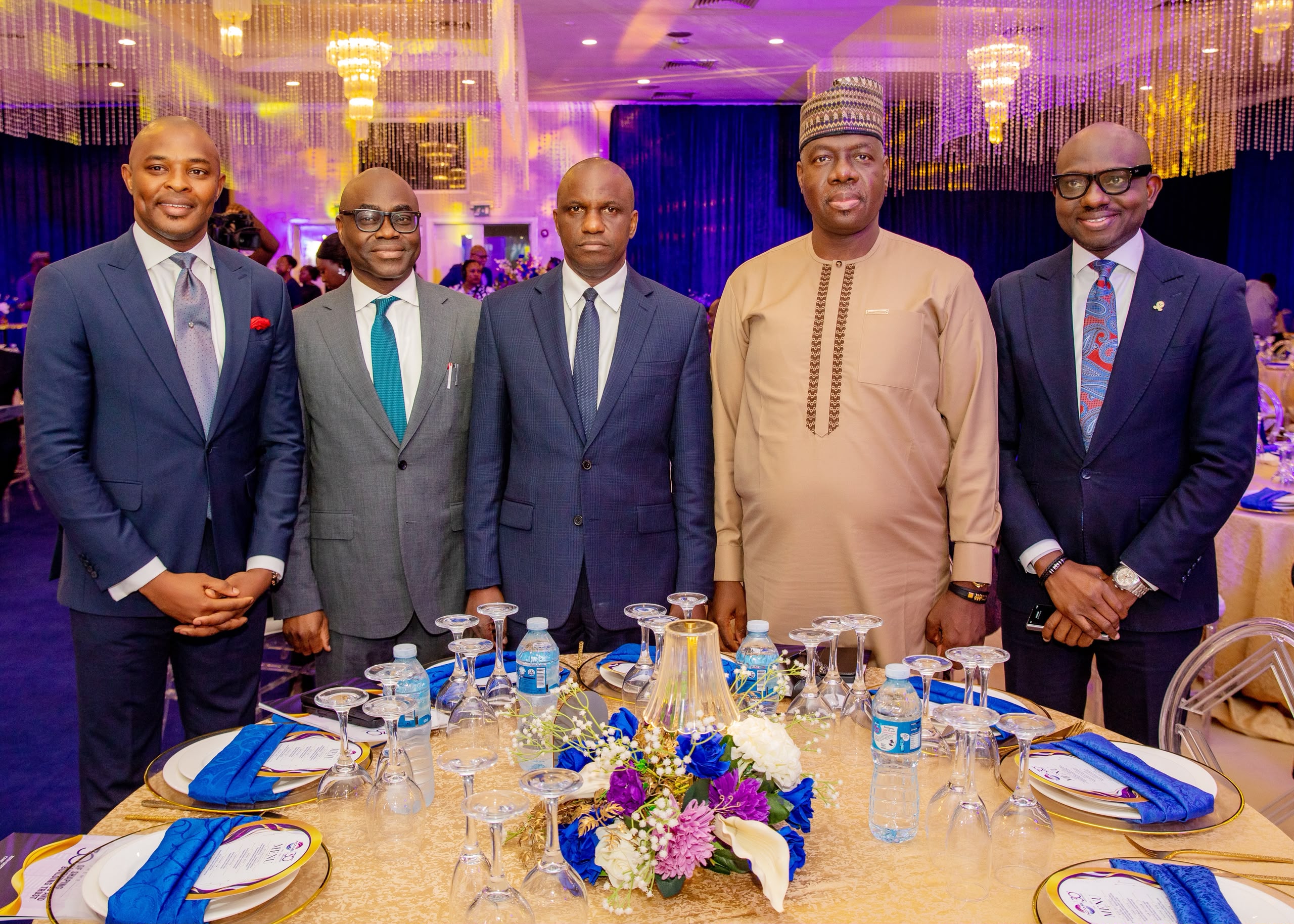
Association of Corporate Communication and Marketing Professionals in Banks (ACAMB) has marked 30 years of shaping narratives and building trust in Nigeria’s banking industry, with regulators and industry leaders calling on communication professionals to make credibility, clarity, Innovation and ethical conduct central to the future of financial services.
The association celebrated the milestone at an anniversary gala night in Lagos on September 30, 2026, bringing together, senior officials of the Central Bank of Nigeria (CBN), the Chartered Institute of Bankers of Nigeria (CIBN), the Nigeria Inter-Bank Settlement System (NIBSS), United Bank for Africa (UBA), Optimus Bank and industry leaders alongside communication and marketing heads, from banks across the country.
Speaking at the event, President of ACAMB, Jide Sipe, said, over three decades, the association has played and continued to play a critical role in helping banks communicate with the public, manage crises and protect institutional reputation.
“For 30 years, our members have stood between the banks and the public they serve. They explain policy, manage crises and protect reputations, often under intense pressure and in real time,” Sipe said.
“We have remained consistent, from gatekeepers to strategic drivers in actualising growth, positive brand perception, aligning business values to customer needs, customer satisfaction and loyalty”
All this have to great extent catalysed the growth trajectory of the financial sector and to that, we feel a sense of pride, worthy of celebration,
He said the association would continue to strengthen the capacity of its members as the communications profession evolves, with greater focus on artificial intelligence, data and digital media, as well as mentorship for young professionals entering the industry.
“Though the tools have changed since 1996, but the mandate remains same. We continue to earn trust, one credible message at a time, and we will guard it with the same discipline for the next 30 years and beyond,” he added.
While giving his address, Chairman of the occasion and 24th President of CIBN, Dele Alabi, described ACAMB’s 30-year journey as a testament to perseverance, professionalism and one that made far reaching impact the financial services industry should be proud of.
Alabi, who also commended Sipe’s leadership and recalled their years together at Ecobank Group, said ACAMB had helped strengthen communication, reputation and trust across the banking sector.
“Thirty years of shaping narratives and building trust reflects ACAMB’s critical role in strengthening communication, enhancing reputation and fostering trust across the financial services industry,” he said.
He urged communication professionals to embrace innovation without compromising ethics, in line with the CIBN’s IMPACT vision, which is built around inclusion, membership, professionalism and ethical conduct, accountability, competences & skills, and technology.
Representing the Deputy Governor of the CBN, Philip Ikeazor, the Acting Director, Corporate Communications and Investor Relations, Hakama Sidi Ali, said the banking industry was moving beyond stabilisation towards broader institutional transformation.
She challenged communication professionals to prioritise clarity over cleverness and to view customers as the ultimate test of the effectiveness and credibility of their communication.
“The credibility you carry into a crisis is built in quiet periods,” she said.
Delivering the keynote address, Managing Director/Chief Executive Officer of NIBSS, Premier Oiwoh, said the growth of digital banking had made trust even more critical, as financial services increasingly moved to mobile and digital platforms.
He noted that NIBSS had built Africa’s first mature instant payment system 15 years ago, adding that the evolution of digital banking had made trust a fundamental requirement for the continued growth of the financial system.
“Banking is all about trust. Without trust, banking cannot stand,” Oiwoh said.
Delivering a goodwill message on behalf of the Group Managing Director/CEO of UBA, Oliver Alawuba, the bank’s Group Head, Marketing and Corporate Communications, Alero Ladipo, commended ACAMB for creating a platform that brings communication professionals together across competing institutions.
“Thirty years is more than a milestone. It is evidence of relevance, resilience and the ability to evolve,” Ladipo said.
She noted that while banks compete in the market, communication professionals have a shared responsibility to strengthen confidence in the banking industry and maintain public trust in the financial system.
“Competition may separate us in the market, but there are moments when the industry must speak with a shared sense of responsibility,” she added.
Managing Director/CEO, Optimus Bank, Ademola Odeyemi, also commended ACAMB for it’s yeoman contributions over the years and shared vision, it has continued to effectively articulate on behalf of the banks, a feat that has helped the financial sector thrive collectively.
The anniversary celebration also featured networking sessions and recognition of professionals who have contributed to the growth of banking communication in Nigeria over the past three decades.
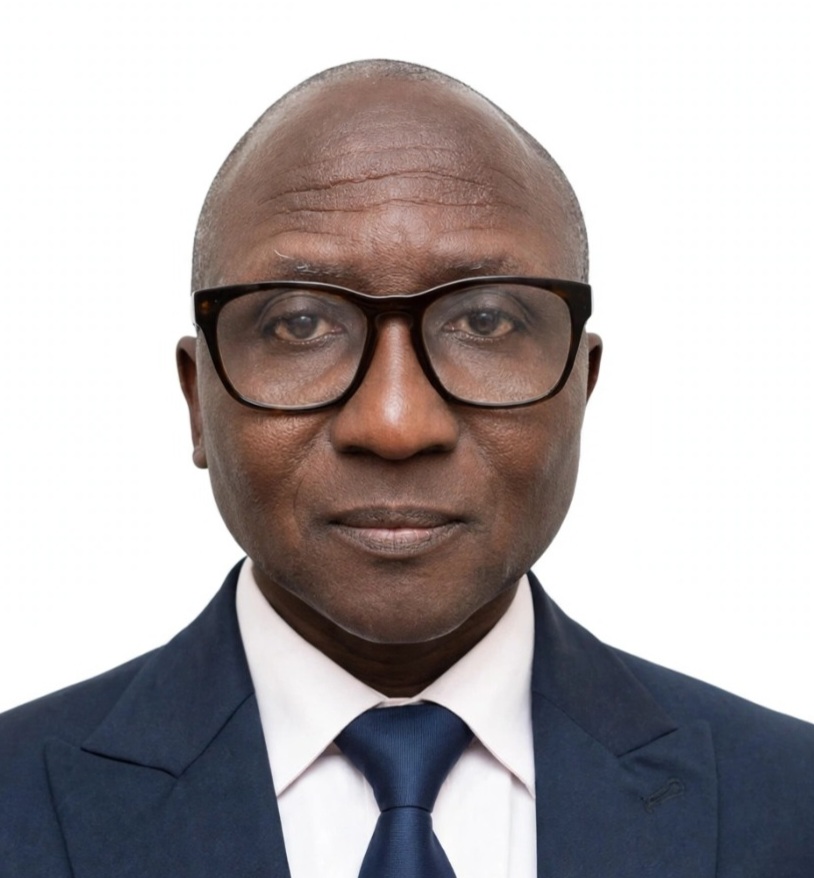
The West African Examinations Council, WAEC, has appointed Dr Amos Josiah Dangut as its new Registrar and Chief Executive Officer.
Dangut served as Head of the Nigeria National Office from October 2023 until September 2026.
In a statement on Thursday by the Head of Public Affairs, WAEC Headquarters, Accra, Demianus G. Ojijeogu, the Council said Dangut, a Nigerian, will serve a five-year tenure from October 2026 to September 2031. He succeeds Alhaji Pateh Bah of The Gambia.
His appointment was ratified by Council, the international governing board of WAEC, at its 74th Annual Meeting held in Accra, Ghana, in March 2026. He assumed office as the 14th Registrar to Council on October 1, 2026.
Born on October 2, 1967, Dangut holds a Bachelor of Agriculture in Animal Production (1991), Master of Science in Animal Science (1994), Doctor of Philosophy in Animal Science (2017), and Master of Education in Administration and Planning (2020).
He began his career in education in 1994 at St. Louis College, Jos, where he served as a WAEC examiner before joining the Council in 1998.
An astute test developer and administrator, he has served in various capacities, including Assistant Registrar, Test Development Division, Ogba, Lagos; Head of Examinations Security and Deputy Branch Controller, Uyo and Bauchi; Branch Controller, Yola; Controller, Post-Examinations Department; Zonal Coordinator, Ikeja; and Deputy Registrar, Head of National Office.
With over two decades of experience, Dangut is noted for leveraging Information and Communications Technology to improve test development, administration and post-test activities.
As Head of National Office, he championed key innovations including the rollout of Computer-Based WASSCE, serialization of question papers and introduction of a Digital Electronic Marking System. He also oversaw the Digital Certificate Portal, WAEC E-Study Platform, Digital Records Archive, and systems for examination logistics and monitoring of examiners.
During his career, he received commendation from the Nigeria Examinations Committee for his handling of examination matters from 2000 to 2006, and an Award for Meritorious Service from the Ondo State Government during his NYSC year.
He has served on the boards of the Nigerian Educational Research and Development Council, NERDC, Joint Universities Preliminary Examinations Board, JUPEB, Joint Admissions and Matriculation Board, JAMB, and Grange Educational Foundation, and represented WAEC at the Joint Consultative Committee on Education and the National Council on Education.
Dangut has publications in international and national journals and has presented papers at several conferences. He is currently the Regional Representative of the West African Sub-region on the Executive Board of the Association for Educational Assessment in Africa, AEAA.
He is a Fellow of the Science Teachers Association of Nigeria, STAN, and member of the Nigeria Institute of Management, NIM.

The former Director-General of the Nigeria Tourism Development Authority (NTDA), Mr. Folarin Coker, and other tourism stakeholders have called for improved Artificial Intelligence regulations and its transformation for sustainable growth in Nigeria’s tourism and travel sector.
The call was in sequel to the recent technical network glitch involving the Nigeria Centre for Disease Control (NCDC) and the Nigeria International Travel Portal (NITP), which disrupted travel operations and left thousands of inbound and outbound passengers stranded at airports worldwide.
The incident, which reportedly prevented passengers from boarding flights bound for Nigeria, has renewed concerns over the country’s reliance on digital systems and highlighted the need for stronger technological infrastructure, effective regulation and improved AI integration to ensure seamless travel operations and enhance the tourism experience.
Speaking on Villa Square, a special segment of Cre8tive 9Ja, a weekly tourism and culture magazine programme hosted by veteran tourism journalist Frank Meke and Bunmi Bade-Adeniji on Mainland 98.3 FM, Lagos, former Director-General of the Nigeria Tourism Development Authority (NTDA), Folarin Coker, said Nigeria should not confuse digitisation with transformation.
“We should not confuse digitisation with transformation. Putting a broken process online is not reform,” Coker said.
He noted that the country’s ambition should be to make travel easier, improve the productivity of tourism businesses and ensure better management of destinations.
Coker said there was a need to deconstruct the existing system and create an ecosystem in which the necessary structures work effectively before AI is deployed to deepen the passenger experience.
According to him, AI can improve various aspects of travel, including the embassy and visa processes, flight bookings, pricing, arrival experiences, transportation and cultural engagement.
“Artificial Intelligence and technology are being mistaken for true development. It is not about another app or website, but about fixing the things that need to be fixed and setting the standards,” he said.
Also speaking, the Managing Director of Global Links Service, Pastor Chinyere Umeasiegbu, said airline operators were often responsible for flight disruptions.
She urged airline operators to address the recurring issue of flight cancellations, stressing the need for sustainable reforms that do not rely solely on Artificial Intelligence.
Umeasiegbu also called for improved communication between airlines and passengers, advising travellers to take screenshots of messages relating to flight delays and submit them to the appropriate authorities when necessary.
Coker further stated that the government must address fundamental infrastructure challenges, including roads and security, while establishing standards for globally competitive hotel services rather than relying on AI as a substitute for broader development.
“A digitally driven tourism agenda is what most people are using. However, we have a gifted cultural expression that can help amplify our tourism agenda, from music, fashion and food to medical tourism,” he said.
He stressed the need for government to make Nigeria’s tourism experience more accessible by providing the necessary infrastructure and ensuring that tourism products and destinations are easily bookable without technological disruptions.
The Director-General of the National Council for Arts and Culture (NCAC), Obi Asika, disclosed that the council had established a Council for Creative Technology and would soon publish a digital roadmap outlining how Artificial Intelligence could be incorporated into the arts and culture sector.
“We need to enrich Artificial Intelligence with the elements of our culture, our history and our content. We need to do this and put the necessary systems in place because, if we don’t, Artificial Intelligence might not be able to see us,” Asika said.
He explained that the concern was partly linked to the data and content used to train AI systems, noting that African and Black tourism and cultural knowledge needed greater representation.
On the role of AI in food tourism and promoting Nigerian cuisine globally, Chef Shine said the technology could be used to properly document and promote the country’s culinary heritage.
“It is important for us to use AI to document our food properly. AI will not take over our food, nor will AI cook the food,” he said.
“This is the best time to discuss the digital agenda and Artificial Intelligence. We need to use AI to document our food and monetise our cuisine,” he added.
Speaking on the use of AI in promoting Nigeria as a tourism destination, travel and tourism journalist Okorie Uhuru said the technology was already transforming the way destinations and tourism products were marketed.
“The old order of doing things, like packaging a destination tour and marketing tourism, has faded because of Artificial Intelligence. AI has helped us market our tourism to a global audience,” he said.
Uhuru urged tourism stakeholders and individuals to adapt to the technology in order to remain competitive.
“As individuals, you have to make an effort to align with AI to sell your tourism product; otherwise, you will be left behind,” he said.
Professor Wasui Babalola called on the government to develop policies that would help translate technological advancement into economic value.
He said the digital transformation process must retain a human element if it is to contribute meaningfully to the development of Nigeria’s tourism sector.
“The knowledge of the digital process should be given with a human element, and that is when our tourism would improve,” Babalola said.
This piece is contributed by Onyeka Ezike


