
News
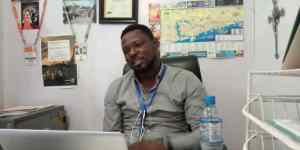
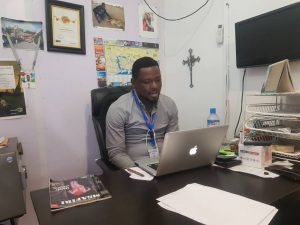
Developing the Young People, Technology and Customer Satisfaction Our Focal Point – Francis Daodu, CEO, 1860 Travels

- /home/rhoncare/pointblank.ng/wp-content/plugins/mvp-social-buttons/mvp-social-buttons.php on line 27
https://pointblank.ng/wp-content/uploads/2019/04/Francis.jpg&description=Developing the Young People, Technology and Customer Satisfaction Our Focal Point – Francis Daodu, CEO, 1860 Travels', 'pinterestShare', 'width=750,height=350'); return false;" title="Pin This Post">
- Share
- Tweet /home/rhoncare/pointblank.ng/wp-content/plugins/mvp-social-buttons/mvp-social-buttons.php on line 69
https://pointblank.ng/wp-content/uploads/2019/04/Francis.jpg&description=Developing the Young People, Technology and Customer Satisfaction Our Focal Point – Francis Daodu, CEO, 1860 Travels', 'pinterestShare', 'width=750,height=350'); return false;" title="Pin This Post">
By Eric Elezuo
The world of tourism is no longer an all comers affair. It is a professional terrain only reserved for the professionals and erudite minds who are potentially endowed to provide first class travel arrangements, and follow it up with the required attention needed for customers to enjoy the best of travelling and holidaying. One of such prolific organisations is 1860 Travels.
In this brief chat, the CEO, Mr. Francis Daodu, revealed the basics of most impressive journeys and why 1860 Travels is the company of choice. Excerpts:
Could you kindly introduce yourself?
My name is Francis Olusina Daodu. I am the Managing Director of 1860 Travels Limited. We are a travel management company, of course registered in Nigeria as a member of National Association of Nigerian Travel Agencies (NANTA) and International Air Transport Association (IATA). We’ve been in business for over five years and we started from ground zero, so to speak, because we started as a non-IATA agency. We have grown through the ranks in the industry.
Can you confidently say you have arrived?
Well, I will not say we have gotten to where we intend to but it’s our resolve to continue to give our best to travellers, both current and prospective customers, and all stakeholders. We will get there.
Did you dabble into the tourism industry or it came about as a passion?
It is pure passion. I did not dabble into the industry. It is passion for travels and more importantly, the fact that that there are a lot of tourism potentials in our country that drove me into the industry. Unfortunately, these are underdeveloped. I deliberately loined the industry to my quota in ensuring that travels and tourism as a business is developed within our country.
However, considering that our country is still growing and not fully developed, we have to look more at the outbound market. It is therefore, the passion to replicate the good things out there in Nigeria that is our driving force. In fact, we should be the best tourism destination in the world; we should be competing among the best destinations in the world. Unfortunately, this is where we have found ourselves, but, of course, we all will continue to put our efforts at ensuring that this is developed in Nigeria.
How does the fact that Nigeria has no national carrier affect your job as a travel agent, both within and out there?
Of course, it has a lot of effects. Firstly, it means that foreign airlines are the ones to determine the fate of our travellers. Whether we like it or not, there is a lot of foreign exchange involved and although the foreign airlines do employ our citizens, it really does not mean that a bulk of their revenue sits here in Nigeria. This is because they are in business and for them to continue to stay afloat, the revenue make must return to where it should go to – their home country. It’s quite unfortunate but that is the situation.
What are those attractive packages that 1860 Travels has today and intends to provide, that distinguishes it from other travel agencies?
One thing that is very peculiar which stands us out in the industry, despite the numerous travel agencies in Nigeria, is that we believe in the development of young people and that’s why we have young people all around us. You know, wherever there are young people a lot of fresh ideas flow. We believe a lot in the application of technology in ensuring that travels and tourism are best served to our market. So, we understand that wherever you have young people, you have technology and where you have 1860 Travels, you have the best of travel technology. More importantly, we are five years in the industry and we continue to grow and we also continue to apply several ingenuous ideas in ensuring that travels and tourism is best served in and within our markets.
What are the challenges that limit your productivity?
Well, as an SME, it is about the same challenges SMEs face in the country. It also takes me back to what I was saying about national carrier. If we had a national carrier or we had domestic airlines operating within the international space, it would be to our advantage first. Most recently, the Akwa Ibom State government launched their own airline fleet, which, whether we like it or not, will benefit benefit the citizens first. So, let us think about that is happening on the national stage – we will be the greatest beneficiaries. These foreign airlines don’t operate in Nigeria alone, so to an extent, they cannot be blamed because their hands are a bit tied. They are not just giving to us – they are giving back, first and foremost to their citizens, then secondarily, citizens of other countries where they operate and thirdly, general full support. And of course, you must know that every business is set out to make profit, and some of them have devoted a certain percentage in ensuring that they get some of these things done, under the CSR factor. So, it is our job and that of those in the media as well, to keep emphasizing the need for a national carrier. It goes a long way; it does not just controls fares in the market, you also have a lot more independent contractors and mostly Nigerians employed. Also, we cannot underestimate the need for more young people enjoying more CSR from such airlines.
Finally, where do you see 1860 Travels five years from now?
When we started, it was from ground zero, like I said, without any special support. We have been patient and visionary enough and hope that in the next five years, we would get to the global stage. 1860 Travels wants to play on a global stage, we don’t just want to be limited within the shores of Nigeria. We want to play and be seen as a big player on the global scene. And everything has been put in place to ensure that it happens. It is our desire and hope to take the gospel of 1860 Travels to other markets around the world.
Thank you very much for your time
Thank you.


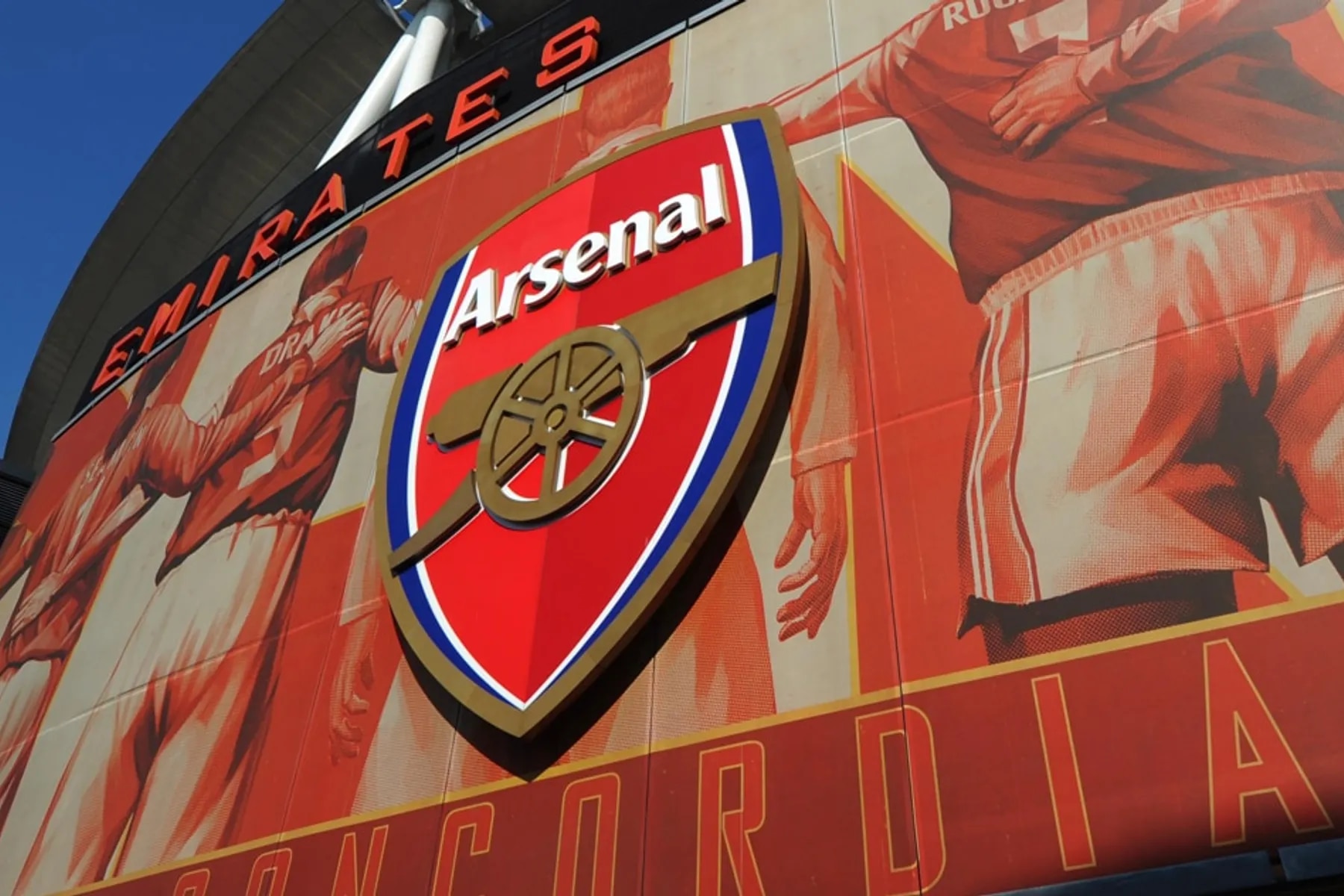
Arsenal Fans Club Nigeria is set to be officially unveiled in Abuja this weekend, as the organisation prepares to strengthen the club’s fan base and promote community development through football.
Amongst the high profile personalities lined up for the unveiling ceremony include, business leaders, celebrities and notable Arsenal supporters like former Gunner, Kanu Nwankwo, former Senate President Bukola Saraki, Emir Sanusi Lamido Sanusi, Senator Dino Melaye amongst others.
The unveiling will form part of a two-day programme beginning on Friday, October 16, with delegates from state and city chapters expected to converge on the nation’s capital for the club’s second Annual General Meeting (AGM).
According to a press release issued on Monday by the organisation, the celebrations will feature sporting activities, a community sanitation initiative and a formal launch event attended by prominent personalities and Arsenal supporters.
National President of Arsenal Fans Club Nigeria, Charles Ojugbana, said the organisation draws inspiration from the achievements of Nigerian-descent footballers, including former Super Eagles striker Kanu Nwankwo and current stars Bukayo Saka, Noni Madueke and Eberechi Eze.
The former General Secretary of the Nigeria Football Association (NFA) said the club aims to improve the football fan experience while expanding support for Arsenal across Nigeria.
Activities scheduled for Saturday include aerobic sessions and a novelty football match before members proceed to Wuse Market for a clean-up campaign.
As part of the outreach, the club plans to donate refuse bins and other sanitation materials to the market’s leadership, in line with its commitment to philanthropy and community development.
Arsenal Fans Club Nigeria operates through a governance structure comprising a Board of Trustees, a National Executive Committee and a General Assembly, which serves as the organisation’s highest decision-making body.
The club also disclosed plans to promote awareness of Down syndrome among children in March 2027, as part of activities to commemorate World Down Syndrome Day.
The programme expresses the organisation’s ambition to extend its activities beyond football fandom to charitable causes and support for vulnerable members of the society.

The Independent National Electoral Commission (INEC) has raised the alarm over a fraudulent publication circulating online concerning governorship candidates in six states ahead of the 2027 general elections.
The commission denied issuing the purported special announcement affecting Zamfara, Gombe, Delta, Plateau, Yobe and Kano states, warning Nigerians against being misled by the document.
In a public notice, INEC described the circulating publication as fake, stressing that it did not originate from the commission.
“The Commission wishes to categorically inform the general public that the publication is FAKE and did not originate from INEC,” the notice stated.
The electoral body urged Nigerians to disregard the publication and avoid sharing it, warning that the circulation of false electoral information could mislead the public.
INEC further clarified that it had not issued any special announcement concerning governorship candidates in the six affected states.
“The Commission further wishes to clarify that any information suggesting that INEC has issued a special announcement concerning governorship candidates in the aforementioned states is false,” it stated.
The commission advised political parties, candidates and members of the public to verify electoral information through its official website, news portal and verified social media accounts.
It also urged Nigerians to remain vigilant against fraudulent publications, particularly as preparations continue for the 2027 elections.
INEC reiterated its commitment to providing accurate electoral information and called on the public to rely exclusively on its official communication channels.

The Minister of Works, David Umahi, has defended the Federal Government’s decision to divert the Ondo section of the Lagos-Calabar Coastal Highway, saying the original route crossed terrain with pits more than 100 metres deep and would have significantly increased construction costs.
The minister said he was aware of petitions accusing him of diverting the route in Ondo State but maintained that the decision was justified.
“I am aware of petitions against me saying I diverted the Ondo section. I welcome that. That is how it is supposed to be because we are serving the public. You are subject to public scrutiny.
“But the important thing is whether you are doing the right thing or the wrong thing. We have no regret for decisions taken in Ondo,” he said.
According to Umahi, the original alignment passed through terrain with pits exceeding 100 metres in depth and lacked suitable sharp sand for up to 300 metres, making construction along the corridor considerably more expensive.
“You want me to pass through a terrain that you have over 100 metres of pits deep, and I have no defined sharp sand to 300 metres, and you expect the cost of one kilometre to be the same cost with a road passing through normal terrain?” he asked.
He said the ministry consequently undertook a detour and redesign to avoid the difficult terrain.
“We had to take a very serious engineering decision by making a detour, redesigning it to avoid such route. We are doing filling of over 10 metres, which is 30 feet plus, with sharp sand, and filling is almost concluded,” the minister said.
The diversion affects Sections 4A and 4B of the coastal highway, covering 67 kilometres, comprising 27 kilometres in Ogun State and about 40 kilometres in Ondo State. The section will terminate around the Ondo-Edo axis.
Providing an update on the wider project, Umahi said Section 1, a 47.47-kilometre stretch from Victoria Island, Lagos, had been completed and was ready for commissioning.
He added that the dual pavement on Section 2, which covers 55 kilometres and terminates at the Lagos-Ogun boundary, would be completed next month.
The minister said the flyovers, overpasses and underpasses on Section 2 had required extensive redesign, particularly around the Dangote Refinery and Lekki Deep Seaport.
He explained that an 86-metre-span bridge, with 43-metre counterforts, had been designed to accommodate refinery trucks and resolve a traffic conflict involving the deep-seaport train, the Dangote tax-credit road and the 25-kilometre Seventh Axial Road linking Epe to the Sagamu Expressway.
“We have redesigned a very beautiful flyover to resolve that conflict,” Umahi said.
At the Calabar end, he said Sections 3A and 3B, covering 65 kilometres, had achieved more than 30 per cent completion.
He added that work was ongoing on Section 5, an 82-kilometre dual carriageway in Akwa Ibom State, alongside an 88-kilometre link from Calabar to Ebidi Beach intended to connect with the Trans-Saharan route.
Umahi also disclosed that Tinubu had directed that the continuation of the coastal highway from Ondo into Edo State should follow the existing East-West Road rather than a new alignment.
Describing the directive as a major development, the minister said the existing road had been constructed without adequate consideration for climate change and rising flood risks.
He cited flooding at Ahoada about two weeks earlier, saying the permanent solution would involve raising sections of the road to protect it from current and projected flood levels.
“The permanent solution is the decision of Mr President to align the continuation through the East-West Road. We now have to raise the road in many locations by two metres to be above present and expected flood levels,” he said.
Source: Vanguard


