
Headlines
Development Commissions: A Veiled Return to Regionalism?

- /home/rhoncare/pointblank.ng/wp-content/plugins/mvp-social-buttons/mvp-social-buttons.php on line 27
https://pointblank.ng/wp-content/uploads/2019/12/Nigeria-2.png&description=Development Commissions: A Veiled Return to Regionalism?', 'pinterestShare', 'width=750,height=350'); return false;" title="Pin This Post">
- Share
- Tweet /home/rhoncare/pointblank.ng/wp-content/plugins/mvp-social-buttons/mvp-social-buttons.php on line 69
https://pointblank.ng/wp-content/uploads/2019/12/Nigeria-2.png&description=Development Commissions: A Veiled Return to Regionalism?', 'pinterestShare', 'width=750,height=350'); return false;" title="Pin This Post">
By Eric Elezuo
In 2000, precisely on June 5, the administration of former President Olusegun Obasanjo created the Niger Delta Development Commission (NDDC) principally to curb the violent unrest prevalent in the Niger Delta areas. This was associated with the formation of diverse militant groups, disruption of oil production, kidnappings and general insecurity.
The Commission, a federal government agency was given the sole mandate of developing the oil-rich Niger Delta region of Nigeria. However, in September 2008, ex-President Umaru Yar’Adua established a Niger Delta Ministry, with the Niger Delta Development Commission to become a parastatal under the ministry. More mandates including to train and educate the youths of the oil rich Niger Delta regions to curb hostilities and militancy, while developing key infrastructure to promote diversification and productivity, were handed the commission.
Though the NDDC has not lived up to expectation as tales of massive financial fraud, internal bickering and abandoned projects litter the nook and crannies of the region, more regions have raised their voices in renewed clamour for regional development commission.
In response, on May 8, 2019, President Muhammadu Buhari bowed to the request of the North East region for a development commission as a result of the devastation the region ha become following years of terror unleashed on it by the Boko Haram insurgents. He inaugurated the Board of the North East Development Commission (NEDC).
The North East Development Commission (NEDC) was established in 2017, after the Bill establishing the Commission was passed by the two legislative chambers. Then, on October 25th, 2017 President Muhammadu Buhari assented to the Bill, then signing it into an Act.
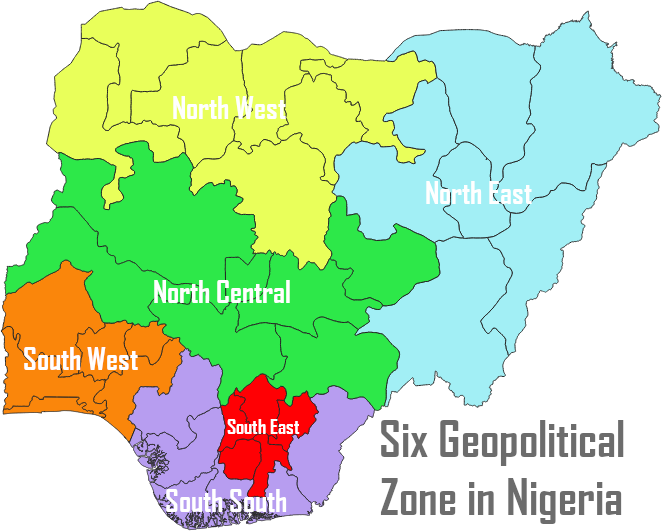
The NEDC is charged with the responsibility to, “among other things, receive and manage funds from allocation of the Federal Account international donors for the settlement, rehabilitation and reconstruction of roads, houses and business premises of victims of insurgency as well as tackling menace of poverty, illiteracy level, ecological problems and any other related environmental or developmental challenges in the North-East states”. The region comprises Adamawa, Bauchi, Borno, Gombe, Taraba, Yobe.
The Act establishing the Commission provides for a Governing Body, comprising of a Chairman; a Managing Director and Chief Executive; three Executive Directors (one from each Member state not being represented by the Chairman of the Board, the Managing Director and the representative of the North-East zone); one person each to represent the six geo-political zones of Nigeria; and one person to represent the Federal Ministry of Finance; and Budget and National Planning.
On January 2019, Buhari nominated candidates to serve as Chairman and members of the Board of the Commission.
On April 9, 2019, the Senate confirmed the appointment of Major-General Paul Tarfa (rtd) as Chairman of the North East Development Commission (NEDC). Others confirmed are:
● Mohammed Goni Alkali — MD/CEO
● Musa Uma Yashi — ED Humanitarian Affairs
● Mohammed Jawa B. — Executive Director, Admin and Finance
● Umar Maiwada Mohammed — Executive Director, Operations
● Hon. David Sabo Kente — Member representing North East zone
● Asamo M. Mohammed — Member representing North West zone
● Benjamin Adeniyi — Member representing Central zone
● Olawale Osun — Member representing South West zone
● Theo Nkechi — Member representing South East
● Bassey Uke — Member representing South South zone
The pressure, which more or less, is coming from the members of the National Assembly, has forced the House of Representatives to establishing development commissions for no fewer than three geopolitical zones including the South-West, South-South and the South-East.
As it stands today, practically all the six geo-political zones of the nation, has submitted Establishment Bills for their various development projects. The House is making the consideration as the Senate is also processing similar bills, except for the North West Development Commission, which couldn’t sustain its tempo, and was dropped.
The proposed commissions, it must be observed are coming on the heels of the Federal Government’s refusal to consider restructuring the country along geographical and political lines. The measure, according to anonymous source, will silently return the country to pre and post independence regional administration, which came to abrupt end with the 1967 Civil War.
Recall that from all the corners, especially the southern part of the country, calls have been made for a devolution of power where power will concentrate more on the regions while the centre will operate weakly. This system, also form the bulk of discussion at the 2014 national Conference convened by former President Goodluck Jonathan. Unfortunately, the fallouts of the gathering are yet to be implemented till date.
History of Recent Bills
The Punch reported that ‘Speaker of the House, Femi Gbajabiamila, and 80 other lawmakers suspected to be members from Yoruba-speaking states, introduced a bill seeking to establish a South-West Development Commission.’ The South-West geopolitical zone has six states, namely Lagos, Ogun, Oyo, Osun, Ondo and Ekiti. The Bill passed the first reading at the plenary on December 11, 2019.
The bill was earlier introduced in November 2019 by former Ogun State Governor, Senator Ibikunle Amosun
Senator Sani Musa had also introduced the North Central Development Commission (Establishment) Bill, 2019. The North-Central is made up of Kwara, Benue, Niger, Plateau, Nasarawa and Kogi states.
On December 17, 2019, the lawmaker representing Mbaitoli/Ikeduru Federal Constituency of Imo State, Mr Henry Nwawuba, introduced the South East Development Commission (Establishment) Bill 2019, which passed the first reading. The South-East zone has five states, namely Anambra, Enugu, Imo, Abia and Ebonyi.
In a twist, another member, Mr Uzoma Nkem-Abonta, on December 18, 2019, added to the drama by introducing the Zonal Development Commission (Establishment) Bill, 2019 which the House has also admitted.
On December 20, 2019, the South South Development Commission (Establishment) Bill 2019 emerged in the House in spite of the already existing NDDC. It was sponsored by the lawmaker representing Andoni/Opobo/Nkoro Federal Constituency of River State, Mr Awaji-Inombek Abiante. In the South-South, there are six states, namely Rivers, Cross River, Akwa Ibom, Delta, Edo and Bayelsa.
While it is believed that the North East and the South East may have a reason to demand development commissions owing to the devastations and marginalisation respectively that have ravaged the regions, other regions may have sought theirs based largely on regional equation and equality.
To boost the back regionalisation agenda of the proposed development commissions, a special move has also been made grant Lagos special status as it was pre and early post independence era. The debate on the bill as sponsored by the lawmaker representing Lagos Central Senatorial District, Oluremi Tinubu, in the 8th Assembly was turned down after the plenary turned into a rowdy session.
Tinubu had pushed for a special status for Lagos, calling for retention of one per cent of Valued Added Tax generated from the state for its development.
Obviously, the regions are seeking opportunity to gradually call the shots in their regions with little or no regards to the Federal Government, especially in terms of controlling mineral resources therein.
The manner the clamour is gaining momentum and considering the source, it will not be long before the statuses sought will be granted, and then the next step…


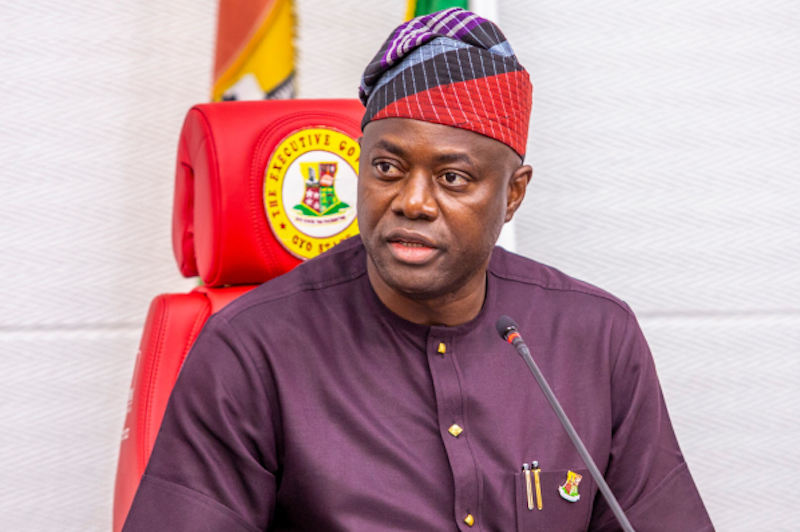
The Allied Peoples Movement (APM) presidential candidate, Seyi Makinde, on Thursday, criticised President Bola Tinubu’s “Emi Lokan” slogan ahead of the 2027 presidential election.
Makinde said Nigerians do not need “turn-by-turn nepotism”, arguing that voters should be free to decide who becomes the country’s next president in 2027.
The Oyo State governor spoke during the APM’s town hall meeting in Akure, Ondo State.
Makinde asked: “How can someone say ‘Eemi lokan’ in a country like Nigeria? You were given the opportunity. If you recall the 1999 presidential election, the South-West voted massively for Baba Olu Falae, but the rest of Nigerians voted for Baba Obasanjo. So, this is not an issue that only the South-West can resolve; it is an issue we must address collectively as Nigerians.
“We do not want ‘turn-by-turn nepotism’, nor do we want a situation where people say, ‘I will vote for projects because it is my turn’. You will not finish those projects, and when it becomes someone else’s turn, they will do the same thing. We will end up with a Nigeria where we cannot get value for the resources belonging to Nigerians.
“The Reset Nigeria agenda is about building a country where infrastructure development supports economic growth and addresses the concerns of young people and women.
“Once we fix our economy, no zone will be left behind, and no demographic group will be left behind.”
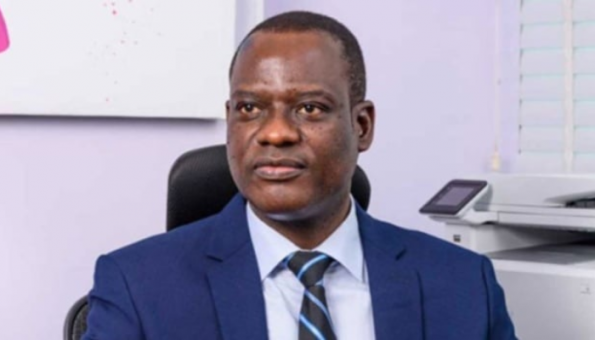
Minister of Finance and Coordinating Minister of the Economy, Taiwo Oyedele, has denied saying the Federal government will introduce a fuel tax when the economy stabilises and income levels improve.
In a post on X on Tuesday, Oyedele said his remarks during an interview with ARISE News was misrepresented, insisting that a “fuel tax is not on the table.”
However, during the interview with Rotus Odiri, ARISE News Business Correspondent, on the sidelines of the 2026 International Monetary Fund and World Bank annual meetings in Bangkok, Thailand, Oyedele said the tax would come when income levels improve enough for Nigerians to accommodate it.
He said taxes account for between 20 and 80 percent of pump prices in some countries, while many African countries impose between six and 10 different taxes on fuel products.
He said introducing fuel tax while petrol was still subsidised would have been counterproductive because government would effectively be paying the tax itself.
According to him, imposing the tax immediately after removal of petrol subsidy would be insensitive to Nigerians.
“The objective should be that instead of trying to suppress prices, which hasn’t worked for us, it hasn’t worked for any country in the world, not one. Instead of trying to suppress prices, think about how to grow income faster than prices rise,” Oyedele said.
“That’s how you bring prosperity and grow the middle class and that is exactly what we are doing as led by Mr. President himself.
“At the appropriate time, when the economy has stabilizes and income level will be able to accommodate it, those taxes will come. Not because we want to impose taxes,” he added.
In his Tuesday post, the minister reiterated that introducing a fuel tax at this time would be insensitive following removal of petrol subsidy, describing reports that government will introduce the levy when the economy stabilises as “fake news.”
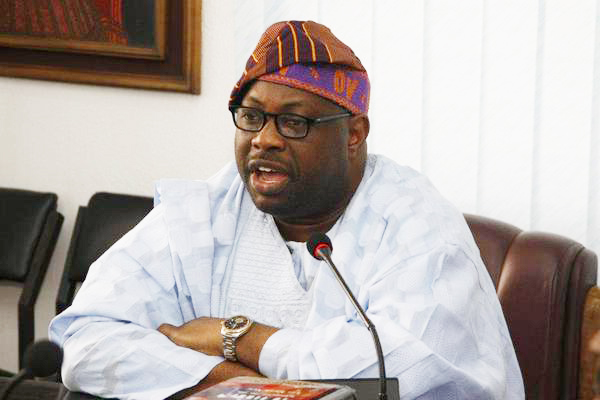
A chieftain of the African Democratic Congress (ADC), and Deputy Director of the Presidential Campaign Council, Chief Dele Momodu, has described former Vice-President Atiku Abubakar as the most nationally formidable and experienced among the leading contenders for the 2027 presidential election.
Momodu said Atiku’s experience at the national level distinguishes him from President Bola Tinubu and former Anambra State Governor, Peter Obi.
He stated this on Wednesday during an interview on Eagle 102.5 FM, Ilese-Ijebu, in Abeokuta.
“If you look at the antecedents of the three major candidates, between Atiku Abubakar and Peter Obi, you will see that Atiku is the most experienced. He has managed our country at the highest level,” he said.
Momodu traced Atiku’s political journey to the 1992 Social Democratic Party (SDP), presidential primary where he contested against late MKO Abiola and stepped down for him.
He said Atiku accepted the outcome without crisis even after he was not picked as Abiola’s running mate, describing it as a mark of true democratic temperament.
“He is the only one who started from around 1992, contested the SDP primary against Abiola and stepped down with uncommon equanimity. He did not make any noise,” Momodu said.
He noted that Atiku was among the founders of the Peoples Democratic Party, PDP, and served as Vice-President from 1999 to 2007.
Comparing Atiku with Obi, Momodu argued that while Obi’s best was demonstrated in Anambra, Atiku’s was at the presidency level managing the national economy.
“Peter Obi has tried his best in Anambra, while Atiku’s best is at the level of vice president controlling the economy of Nigeria. The difference is clear. He has matured in experience and exposure,” he said.
Momodu also said President Tinubu’s experience was largely limited to Lagos.
“What I’m trying to say is that Tinubu’s experience was limited to Lagos, and that is why when he became president, he thought Nigeria was Lagos. And he has found out now that Nigeria is not Lagos,” he said.
He argued that the current economic hardship under the present administration did not show prosperity, insisting Atiku remained better positioned to lead the country.
“Well, we are yet to see that prosperity, and if yesterday would determine today and tomorrow, it is obvious that Tinubu should retire now and let someone else do it,” Momodu added.
DailyPost


