
Headlines
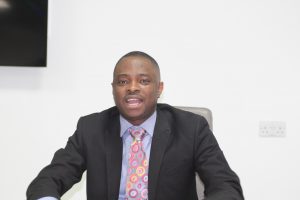
We’re Set for Revolutionary Restructuring of Online Electoral Process – Techpreneur Joel Popoola

- /home/rhoncare/pointblank.ng/wp-content/plugins/mvp-social-buttons/mvp-social-buttons.php on line 27
https://pointblank.ng/wp-content/uploads/2019/04/Popoola.jpg&description=We’re Set for Revolutionary Restructuring of Online Electoral Process – Techpreneur Joel Popoola', 'pinterestShare', 'width=750,height=350'); return false;" title="Pin This Post">
- Share
- Tweet /home/rhoncare/pointblank.ng/wp-content/plugins/mvp-social-buttons/mvp-social-buttons.php on line 69
https://pointblank.ng/wp-content/uploads/2019/04/Popoola.jpg&description=We’re Set for Revolutionary Restructuring of Online Electoral Process – Techpreneur Joel Popoola', 'pinterestShare', 'width=750,height=350'); return false;" title="Pin This Post">
By Eric Elezuo
One man has developed the appropriate app to not only link voters to their representatives, but also curb the origin and spread of fake news in its entirety. He is JOEL OYEYINKA POPOOLA. He told The Boss everything that needs to be known about the app called Rate Your Leader, due for launched in Nigeria in February 2020. Excerpts:
Joel Oyeyinka Popoola, fondly called Joel or Yinka is the Founder of Rate Your Leader Ltd and Aacle Ltd. He grew up in Gbongan, Osun State where he had his primary and post-primary education at St Paul’s Anglican Primary School and later at Gbongan Community High School. He is a British Citizen of Nigerian decent.
He says more about himself:
I studied Accounting with a background in Banking, Finance, and Insurance from The Federal Polytechnic, Ede, Osun State. I also have a Masters degree in Managerial Psychology obtained from Nigeria’s Premier University, the University of Ibadan.
“I later joined the IT world where I have practiced professional software testing consultancy for many uninterrupted and highly productive and eventful years. My earliest career path saw me traversing through two superior financial institutions based in my home country, Nigeria; they are United Bank for Africa (UBA) and the former Intercontinental Bank, which is today a part of the ever-growing Access Bank. These institutions sharpened, shaped and honed my professional skills and grounded me in distinguishing Leadership roles with excellent service delivery in Banking Operations, Branch Start-up and Management, Relationship Management, Business Development, Risk Management, and Information Technology. I am an Advance Member of the Institute of Directors, Great Britain; Associate Member of Rain Cloud, Westminster; Member, London Tech Advocates, and Various Meet Up groups in North East of England.”
His growing up days, like every typical Nigerian child, was eventful and full of adventures. He disclosed that his was a fairly large family where everyone interacted as one big family.
“I grew up in a very big compound in Gbongan with my siblings, cousins, nephews, and nieces, from my mother and father’s families. The beauty of growing up in Gbongan was that we were one big family. My mum was a food vendor with some local schools and because of that, I had many friends who were guaranteed extra food. There were quite a number of challenges though but looking back now, I realize that those challenges were part of my destiny, and they helped to pave the way to where I am now.”
Explaining what aroused his interest into developing the Rate Your Leader app, and what exactly tuned up his interest in leadership and democracy since he has a financial background, Popoola went down memory lane to bring to the present series of brief but important occurrences that is about to change the face of digital democracy.
He narrated: I joined the United Bank for Africa as a corps member in 1999/2000 and around 2001/2002, our then Managing Director, Mallam Abba Kyari (now Chief of Staff to the President) introduced a 360-appraiser system to the Bank, where customers, colleagues, line managers all have a say in your annual performance evaluation. I could remember then that, the junior staff couldn’t be trusted to give feedback on our Director’s performance, hence the question came to my mind, who appraises the Directors, Managing Directors, and our Chairman then was Hakeem Bello-Osagie.
As God would have it, I was privileged to join the Bank’s condolence team to late Justice Atinuke Ige, shortly after Chief Bola Ige was murdered. In the bank’s team were my branch manager, Busola Adebusuyi, Hakeem Bello-Osagie, Arnold Ekpe, (was coming from Eko Transnational to join UBA) Alero Otobo, from Human Capital Management and a host of others. I thought to myself that having these people in Ibadan, would proffer an answer to my question as to who appraises the Directors, and consequently the Chairman of a bank and by extension the governor of a state, a president of a country or who is qualified to appraise them. There and then, the seed of Rate Your Leader was sowed. Getting to the UK was just the icing on the cake, more often than not politicians would send flyers to houses inviting people for surgeries, to join their campaign and all what not. One day, I asked myself, why can’t the politicians reach the residents online real time through a credible platform and allow engagement within their constituencies? This would not only give back the power to the people to hold their leaders accountable, but will also help the leader to know what matters most to the people whose interest they are serving. That was the beginning of the digital democracy project- Rate Your Leader
His deep knowledge of the electoral process of the nation in comparison to what is obtainable elsewhere has propel his thought process, and shaped him towards changing the narrative responsible for the no motion movement in the country’s democracy since 1999?
“There are a series of challenges that are responsible for this slow movement; the major one has to do with the electoral process; there is lack of internal democracy within the political parties. Here, candidates for elective positions mostly emerge as the highest bidders. More often than not, people with deep pockets get a nomination to be the flag bearers of their political parties. I think at the party level, all the party members should be allowed to vote and choose who to represent them at any election. Selecting delegates to vote for presidential candidates, state governorship candidates as over the years, laid the corrupt foundation for vote buying. This has now extended to our polling stations and even booths.
Also, sources of funding elections in Nigeria are shrouded in secrecy. It is the right of every Nigerians to know how much each political party spent in the last election, for example, and who are their contributors/donors. The National Assembly should do the needful in this regard and enact laws that will empower INEC to compel every political party to publish sources of their funding, and the amount raised for any election. This would be the first step in the right direction to effectively fight corruption. This will also kill the new waves of vote-buying and ensure a credible electioneering process at the political party level.
There’s a huge disconnect between our elected representatives, our governors, House of rep members, senators and the people who elected them. No means of reaching them at all, immediately they voted in, they disappear, only to come back after four years canvassing for votes. There are no means of holding them accountable for their campaign promises. In the UK, almost two-thirds of Britons believe the political system is “rigged to the advantage of the rich and powerful” and only half believe they can influence politics. These figures cannot be significantly different if the same research is conducted in Nigeria. There are no popularly known ways of sending direct messages to our elected leaders in Nigeria. No official emails, (the majority of our elected leaders are still using yahoo email, Gmail, or Hotmail for official matters) no official phone numbers, (and where one is provided, you can’t reach them. Your call goes straight to a voicemail or answering machine)
You are the brain behind the now globally rated Rate Your Leader app, which has its base in the United Kingdom. Can you tell us what it entails?
Rate Your Leader is a cutting edge bridge between the elected representatives and their electors, The app will help politicians to listen, connect and engage with the voters within their constituencies, providing them with the tools to Improve their voter reach, Target and broadcast to voters at the touch of a button, Encourage people to register to vote, and Engage directly with voters without fear of abuse. On the flip side, it allows confirmed voters to communicate directly with the elected representatives from their phones or tablets in a way that makes abuse impossible, as well as rating them for responsiveness. It pre-populates for voters their elected representative based on their ward, local council, federal constituency, senatorial district and states after which confirmed voters can directly start a conversation with the elected leaders that serve them, constructively.”
Are there plans to replicate this novel app in Nigeria and other developing countries in order for their democracy to have a facelift?
Yes, we did a pilot in Nigeria earlier this year – January, and we are planning the launching of the app in a few weeks’ time across all the states in Nigeria. We’ll be looking at about 4 other Africa Counties in our first phase of expansion.
As a tech entrepreneur who has an interest in good governance, democracy, and leadership recruitment, what are the challenges you face in the course of preaching this leadership barometer app?
In all honesty, it has not been a very smooth journey – from the conception stage, to the development of the minimum viable product, to onboarding elected representatives and voters, but the crucial point is, I have tremendously enjoyed the support of various organizations and individuals in Nigeria and in the UK. For instance, The Sunderland Software City paid up to 70% for our functional specification cost, Mincoffs Solicitors, The Business Information Units of the Institute of Directors UK, handled almost all our business research, The Rain Cloud Westminster provided opportunity to meet with frontline politicians and Ministers-across the political parties, the Metropolitan Police and Jo Cox Foundation provided useful feedback, the Big Tent Ideas Festival provided the opportunity to pitch at 2019 Big Tent that attracts over 2500 participants across all sectors, The Councillors, MPs, too numerous to mention. Also, in Nigeria, our solicitors, Olawinun Ajayi LP, Chief Dele Momodu, Tolu Ogunlesi, Akin Fadeyi my good friends Riliwan Olawale Yusuf, Bolade Adesokan, Tope Agboola, Moses Adebisi, Funsho Ojo-Kayode, Tony Eluba, Abiola Joshua, my cousins Adesoji Adeyanju, Oladele Adedeji and host of others did a lot to support the pilot in Nigeria
What does the Nigerian system stand to gain if this app is enlisted in the country’s democratic system?
Crucially, as many that have lost faith in their elected representatives have just got their faith rekindled.
Recall that Vice President Yemi Osinbajo sometimes last month, called on news organisations to do more to tackle the “fake news or provocative information” he believes “can cause chaos, civil unrest, war, and even death”. He continued: “I think all of us in the media; social media, print, TV, all of us, should begin to do something serious about fake news before it begins to consume us”. However, I am of a considered opinion that the project’s Rate Your Leader app helps politicians engage with voters in their constituencies, helping them understand what matters most to the people who elected them and build relationships of trust with the electorate. Politicians need to ask themselves why social media provides such fertile soil for dangerous rumours to take root – one of the main reasons is the lack of trust electors have for the elected.
Young Nigerians are more likely to own a Smartphone than they are to vote. That’s why it makes it so important for politicians to use that technology to built relationships of trust with the voters. Fake news of the kind we’ve seen in Nigeria in recent weeks necessitates the public having reliable sources of information they can go to online, and where is a better place to go than directly to their local representatives? Nigeria voters need to know what information they can trust, and also that they can trust their local representatives,
How secured is the app from invasion or disruption, especially by politicians who have perfected means of subverting any electoral system in the country?
It will be extremely difficult for anyone either politician or voter to register multiple accounts on Rate Your Leader, We use one of the most credible platforms to verify all users, unlike most social media giants where you can create thousands (with just email address) accounts.
Do you think the Nigerian electoral system can still get it right, especially when it comes to voting the right people in public offices?
I believe our electoral system can still get it right if it is willing to do so. Our INEC needs to be truly independent and be ready to supervise the political parties’ activities effectively. INEC should query political spending and be interested in how political parties source their funding.
What is your take on the phenomenon of fake news and what impact do you think it will have on democracy, especially in developing countries?
The phenomenon of fake news and its impact on democracy all over the world needs to be nipped in the bud if nations are concerned about their unity and harmony. I urge electors to embrace new technology to ‘take back democracy’ or risk the downside. “From military rule to Africa’s biggest democracy, Nigeria has come this far in my lifetime. But fake news threatens our fledgling democracy. Fake news of fake explosions, fake massacres, fake roads and even a fake President are inimical to our growth as a society. This cannot continue. This goes beyond politics. All parties need to work together to combat a menace that endangers our international reputation and our very democracy. Independent international studies have shown the influence social media misinformation had on our most recent elections. This cannot happen again. We cannot let people be conned. Misinformation is a weapon of mass destruction, which threatens Nigeria’s democracy and we need to come together to combat it.”
How do you intend to get the youths involve in this drive since it has more to do with technology?
The recent presidential election in Africa’s most populous democracy saw the lowest turnout since Nigeria returned to democracy in 1999, with just a third of voters turning up at polling stations. Almost half of young Nigerians now own a Smartphone, with research from analysts Pew showing that 48% of 18-34-year-olds, and 39% of all adults, access the Internet using their mobile telephone. Young Nigerians are more likely to own a Smartphone than they are to vote. For the sake of our democracy, it’s vital that politicians think creatively about how best to use digital technology to reach out to voters, the youngest in particular.
Turnout in Nigerian elections has been decreasing since 2003, and it seems reasonable to speculate that a driving force behind that could be decreasing faith in a political establishment, which looks less and less like the electorate. We would take the news to universities, football pitches, club houses and everywhere we can draw the youth to the platform. In fact, we are set for a revolutionary structuring of voting process, and elector/elected relationship.


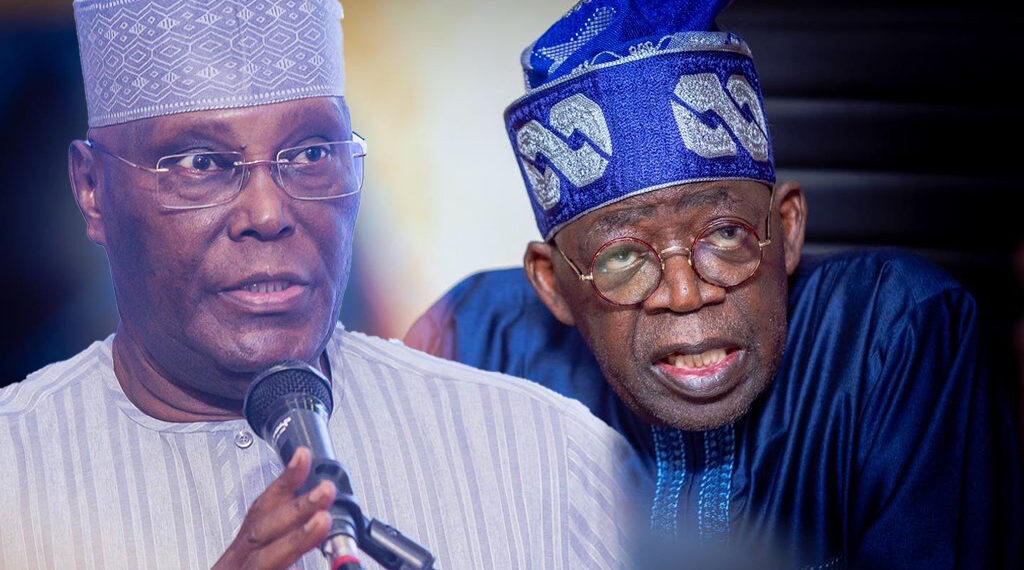
Former Vice President Atiku Abubakar has demanded an explanation from President Bola Tinubu over his third consecutive absence from the United Nations General Assembly (UNGA), questioning whether issues surrounding the President’s history with United States authorities have affected Nigeria’s foreign relations.
His comments followed Sunday’s announcement by the Presidency that Tinubu had mandated Vice President Kashim Shettima to represent him and lead Nigeria’s delegation to the 81st Session of the United Nations General Assembly (UNGA) in New York, United States.
In a statement issued by his Senior Special Assistant on Public Communication, Phrank Shaibu, Atiku, who is the presidential candidate of the African Democratic Congress (ADC), said Tinubu was absent from the 79th UNGA in 2024 and the 80th in 2025, with Shettima representing him on both occasions.
He said Shettima would again lead Nigeria’s delegation to the 81st session in 2026, arguing that the pattern could no longer be dismissed as routine delegation.
“The United Nations General Assembly is one of the world’s most important diplomatic gatherings. It brings together the representatives of the UN’s 193 member states and provides a unique platform for presidents and prime ministers to defend their countries’ interests, negotiate partnerships and shape global decisions on trade, security and development,” Atiku said.
He said while Shettima could represent Nigeria, repeated delegation could not substitute for the President’s personal authority and visibility at a major international diplomatic gathering.
Atiku also argued that UNGA provided opportunities for leaders to hold bilateral meetings, pursue investment and trade partnerships, mobilise development financing and engage on issues affecting their countries.
He said repeated presidential absence could therefore affect Nigeria’s ability to maximise such opportunities, with possible economic implications for the country.
“The cost is eventually transferred to ordinary citizens: fewer investments mean fewer businesses and fewer jobs,” Atiku said.
The former vice president also questioned reports that Nigeria’s Permanent Representative to the United Nations, Jimoh Ibrahim, had secured Tinubu a seat close to United States President Donald Trump at the General Assembly.
“The seat was secured, but the President disappeared,” Atiku said.
He also questioned the reported spending of up to $9 million on American lobbyists by the Tinubu administration, asking why Nigeria would spend millions of dollars on lobbying efforts in the United States while the President repeatedly stayed away from the UN gathering in New York.
“What exactly did Nigerians purchase with that money?” Atiku asked.
Atiku subsequently raised questions about Tinubu’s past legal history in the United States, citing forfeiture proceedings in Case No. 93 C 4483 before the US District Court for the Northern District of Illinois.
According to Atiku, the case involved funds held in accounts in Tinubu’s name and those of associated companies, which the court documents alleged were connected to narcotics trafficking and money laundering.
He said the proceedings eventually resulted in the forfeiture of approximately $460,000 to the United States government.
Atiku said the history had prompted questions about whether it had any connection with Tinubu’s repeated absence from UNGA.
“Nigerians are therefore entitled to ask whether Tinubu’s three consecutive UNGA absences have anything to do with this documented American history,” he said.
However, Atiku said he was not claiming that Tinubu was legally barred from entering the United States.
“We are not asserting that Tinubu is legally prohibited from entering the United States. The Presidency has announced no such restriction,” he said.
He added that if there was no legal, diplomatic, medical or personal impediment to Tinubu’s attendance, the Presidency should explain the decision to stay away from the General Assembly.
Atiku also questioned whether the President’s past US legal controversies had affected Nigeria’s diplomatic engagement with Washington.
“Has one man’s personal history become a burden on Nigeria’s diplomatic engagement?” he asked.
The former vice president further criticised what he described as a contrast between Tinubu’s domestic political posture and his absence from major international diplomatic engagements.
He argued that Nigeria should be more visible at major international forums and questioned the decision to send the Vice President to represent the country for a third consecutive year.
“If there is no impediment, the Presidency must explain this serial absenteeism. If an impediment exists, Nigerians have a right to know,” he said.
“Nigeria is bigger than Bola. Our diplomatic influence, economic interests and international reputation must not be subordinated to Tinubu’s American baggage.
“After committing up to $9 million to American lobbyists, Nigerians deserve more than silence, evasions and another empty presidential seat at the United Nations.
“Mr Bola, your seat was reportedly secured near President Donald Trump. Why did you refuse to occupy it?
“What exactly are you afraid of in America?” Atiku queried.

President Bola Tinubu has ordered a full and transparent investigation into the deaths of suspected illegal miners detained by the Nigeria Security and Civil Defence Corps (NSCDC) following enforcement operations around Lt. Gen. Mohammed Inuwa Wushishi Estate in Minna, Niger State.
The President, in a statement on Friday, said that the government would not tolerate mass deaths arising from official negligence, dereliction of duty, or failure by public officials to protect the lives placed under their care.
President Tinubu said the life of every Nigerian matters and that no citizen should lose his life while in government custody as a result of negligence, abuse, inhumane treatment, or dereliction of duty, describing the development as a grave matter that requires urgent investigation and accountability.
“While the Federal Government would continue to combat illegal mining and other criminal activities across the country, enforcement operations must be conducted strictly within the law and with full respect for the dignity and fundamental rights of every person in custody,” he was quoted as saying in the statement by his Special Adviser on Information and Strategy, Bayo Onanuga.
“The fact that these individuals were suspected of illegal mining does not in any way remove their right to life, dignity and humane treatment while in government custody. Government will not tolerate mass deaths arising from official negligence, dereliction of duty or failure by public officials to protect the lives placed under their care.”
“Where the investigation establishes that any official, through action, abuse or negligence, contributed to these deaths, such an officer must be arrested and prosecuted in accordance with the law. There must be accountability,” the President added.
He directed the relevant authorities to ensure that the investigation is comprehensive, transparent and unhindered, covering the circumstances of the arrests, the condition of the detainees when they were taken into custody, the conditions under which they were detained, the number of people held in the facility, the medical attention provided and the events leading to their deaths.
“The suspension of officers is only an administrative step and must not substitute for a proper determination of criminal responsibility where the evidence warrants prosecution,” the President said.
He directed the Ministry of Interior and the NSCDC leadership to cooperate fully with all relevant investigative authorities and ensure that no officer interferes with the process or attempts to frustrate the establishment of the truth.
President Tinubu extended his condolences to the families of the deceased and prayed for the repose of their souls.
He also appealed for calm among the families and communities affected by the tragedy, assuring them that the Federal Government would pursue the truth and take appropriate action based on credible evidence.
“We must never allow the pursuit of one form of illegality to create another. The government must enforce the law firmly, but it must also obey the law. The sanctity of human life is non-negotiable,” Tinubu added.
The President’s order came after Thursday’s protest linked to the reported deaths of 37 suspected illegal miners while in the custody of the NSCDC, in Minna.
One of the survivors alleged that the suspects were kept in a small room, adding that an unpleasant substance was sprayed before the cell was locked.
Following the unrest, Governor Umaru Bago declared a 24-hour curfew in Minna, the State capital, saying that the curfew takes effect immediately after the Friday Jumu’ah prayers and would remain in force until further notice.
Bago said the government has constituted a committee of inquiry to investigate the circumstances surrounding the deaths.
The governor also announced the suspension of all mining activities across Niger State pending the conclusion of the ongoing investigations.
Similarly, the Ministry of Interior said it had suspended the state commander of the NSCDC.
Headlines
Opeoluwa Sotonwa Foundation Announces 2026 Scholarship Recipients, Expands Legal Education Initiative with New Scholar-Practitioner Award
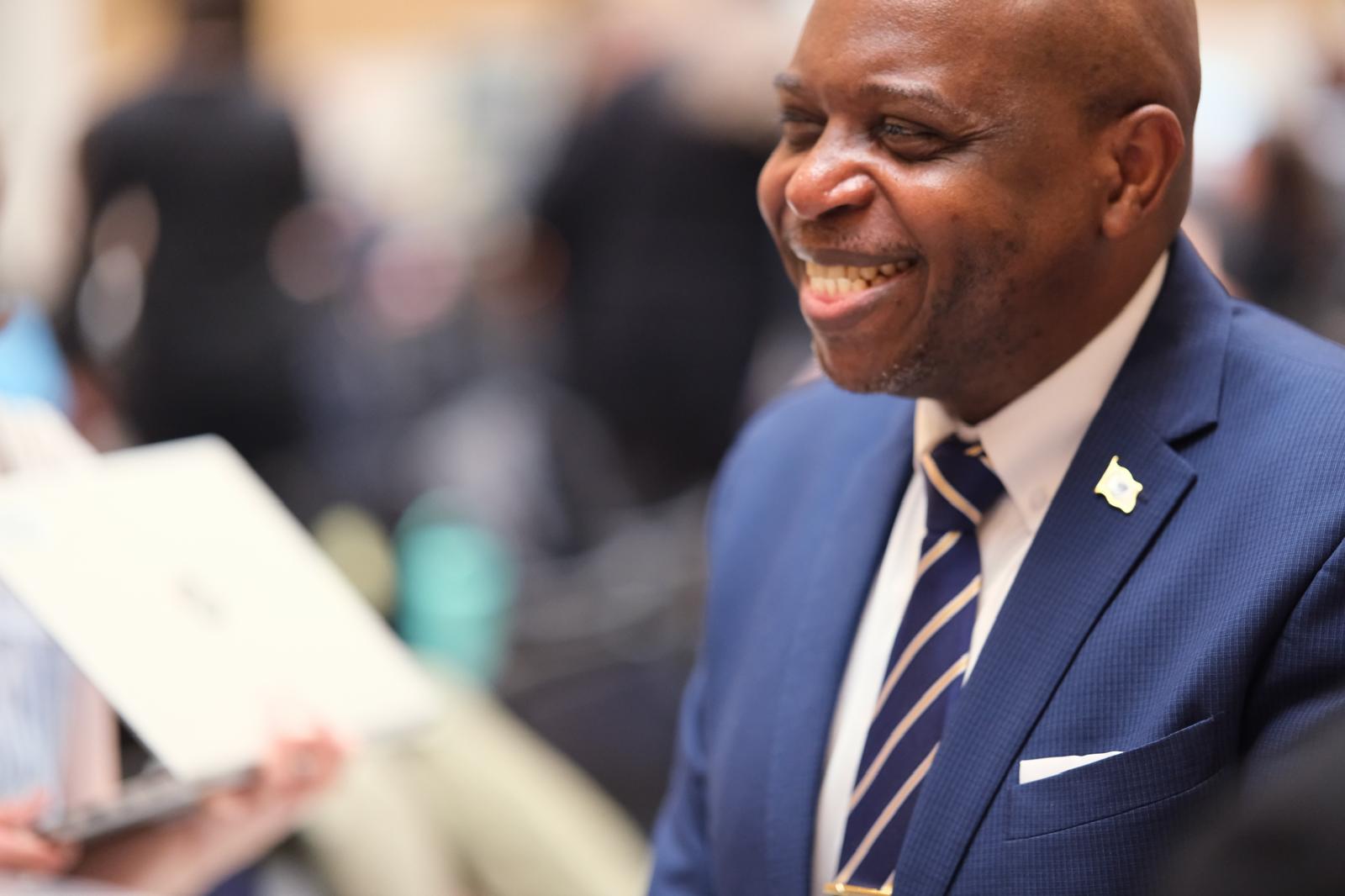
Following the opening of applications from eligible candidates living with disabilities, for scholarships to pursue legal qualifications, the Opeoluwa Sotonwa Foundation (OSF), a not-for-profit organisation, founded by US-based philanthropist, Mr. Opeoluwa Sotonwa, and dedicated to expanding educational opportunity, leadership and inclusion, has announced the recipients of its 2026 scholarships, fellowships and academic awards.
Now in its fourth year, OSF has continued to deepen its investment in Nigeria’s deaf and hard-of-hearing community while expanding pathways for students with disabilities in the legal profession.
The 2026 awards also mark a new milestone with the introduction of the Prof. Konyinsola Ajayi, SAN Scholar-Practitioner Award, supporting a legal practitioner pursuing doctoral studies in Law.
Founded in 2022, OSF is grounded in a simple but enduring conviction: talent is universal, but opportunity is not. The Foundation seeks to close that gap by investing not merely in education, but in people whose knowledge, leadership and service can create opportunities for others.
PROF. KONYINSOLA AJAYI, SAN SCHOLAR-PRACTITIONER AWARD
For the first time, OSF is extending its investment in legal education beyond the undergraduate level through the Prof. Konyinsola Ajayi, SAN Scholar-Practitioner Award.
The new award recognizes a legal practitioner pursuing a Ph.D. in Law, bridging two worlds essential to the future of justice: the practical experience of the legal profession and the rigorous inquiry of advanced legal scholarship.
- Isioma Osakuni — Ph.D. in Law, University of Ibadan — Inaugural Recipient
The establishment of the Scholar-Practitioner Award represents a natural evolution of the Prof. Konyinsola Ajayi, SAN Fellowship. It broadens OSF’s vision from helping students enter the legal profession to supporting practitioners seeking to contribute to its intellectual development through advanced research and scholarship.
PROF. KONYINSOLA AJAYI, SAN FELLOWSHIP
The Prof. Konyinsola Ajayi, SAN Fellowship is OSF’s flagship investment in developing a more inclusive legal profession. Expanded in 2025 to include law students with disabilities beyond the Deaf and hard-of-hearing community, the fellowship recognizes that the pursuit of justice is strengthened when the legal profession reflects the breadth of the society it serves. The recipients are:
- Abubakar Nura — Law, Bayero University Kano
- Amala Njelita — Law, University of Calabar
OPEOLUWA SOTONWA FOUNDATION GENERAL SCHOLARSHIP
The Foundation’s core scholarship program continues OSF’s foundational commitment to Deaf and hard-of-hearing students pursuing higher education across Nigeria. The 2026 scholars represent a broad range of disciplines, from education and computer science to political science, entrepreneurship and the arts. The recipients are:
- Auwalu Mohammed — English Education, Gombe State University
- Wende Terungwa — Special Education/PHE, Federal University of Education Pankshin
- Farida Dalhatu — Political Science, Umar Musa Yar’dua University, Katsina
- Fuhad Abdulrasaq — History and International Studies, University of Ilorin
- Irimiya Samaila — Special Education, University of Calabar
- Amina Nasiru — Entrepreneurship, Kaduna State University
- Abosede Josephine Akilo — Special Education, Federal College of Education in affiliation with University of Ibadan
- Toheeb Olajuwon Balogun — Political Science, Federal College of Education (Special), Oyo
- Mujahid Adamu — Education-English, Sule Lamido University Kafin Hausa
- Inerepamo Maxwell Pounana — Special Education, Ignatius Ajuru University of Education
- Precious Onyinyechi Okonkwo — Special Education, Ignatius Ajuru University of Education
- Nneoma Happiness Agbo — Economic Education, Peaceland College of Education Enugu
- Yusuf Anas — Educational Management, Abdulkadir Kure University, Minna
- Omopariola Opeyemi — Educational Management, Kwara State University
- Akinkunmi Sheriff Akinboade — Fine and Applied Arts, Federal College of Education (Special), Oyo
- Royal Adeh Obi — Special Education/Tourism, University of Calabar
- Oladipupo Emmanuel Adeyeri — Computer Science, Federal College of Education (Special), Oyo
- Bello Abubakar — Islamic Studies, Aminu Salah College of Education
MOST OUTSTANDING SCHOLARS 2026
Introduced in 2025, the Most Outstanding Scholar distinction recognizes one female and one male scholar whose academic achievement, leadership and perseverance distinguish them within the OSF community.
- Mutiyat Oreoluwa Raheem — Microbiology, University of Ilorin — Female Most Outstanding Scholar
- John Nworie Nte — Medicine and Surgery, University of Calabar — Male Most Outstanding Scholar
GRADUATE SCHOLARS
OSF’s commitment does not end with undergraduate education. The Graduate Scholars program supports Deaf and hard-of-hearing scholars advancing into postgraduate study and developing expertise capable of influencing their professions, institutions and communities.
- Godwin Agianpuye — PGD/M.Sc., Computer Science, Wesley University, Ondo
- Auwalu Salisu Ismaila — M.Ed., Special Education, Bayero University, Kano
- Caroline Nwugo Onu — Ph.D., Christian Leadership, The Nigerian Baptist Theological Seminary
VOICES BEYOND SOUND – SOCIAL AND BUSINESS SCHOLARSHIP
Established in partnership with Greg and Annette Hudson, Voices Beyond Sound recognizes Deaf and hard-of-hearing students pursuing studies connected to social and business leadership. First featured in the 2025 awards, the initiative reflects a shared belief that leadership is not defined by how a person communicates, but by the ideas, resilience and impact they bring to society.
- Zulaihatu Sani — Business Administration, Gombe State University
- Qudus Ajiboye — Economics, National Open University of Nigeria
- Taiwo Eneyamire Abdul — Economics, Federal College of Education (Special), Oyo
- Taiwo Hassan Alatilehin — Business Education, University of Ilorin
“Four years into this journey, we are seeing what becomes possible when opportunity meets determination,” said Dr. Opeoluwa Sotonwa, Founder of OSF. “Our scholars are studying medicine, law, education, science, technology, business, the arts and other disciplines. Some are beginning their higher-education journeys; others are advancing into master’s and doctoral study. What connects them is not disability, but possibility. Our responsibility as a Foundation is to ensure that talent is given room to become impact.”
“The introduction of the Prof. Konyinsola Ajayi, SAN Scholar-Practitioner Award is especially meaningful. Justice requires not only lawyers who practice the law, but scholars who interrogate it, strengthen it and help imagine what it can become. By investing across that continuum—from the undergraduate law student to the doctoral scholar-practitioner—we are investing in the future of the profession itself.”
For more information about the Opeoluwa Sotonwa Foundation and its programs, visit www.opeoluwasotonwafoundation.org.
About the Opeoluwa Sotonwa Foundation
Established in 2022, the Opeoluwa Sotonwa Foundation (OSF) is a nonprofit organization dedicated to unlocking educational and leadership opportunities for Nigeria’s Deaf and hard-of-hearing communities while advancing targeted opportunities for students with disabilities. Through scholarships, fellowships, mentorship and advocacy, OSF invests in students and emerging leaders with the potential to transform their professions, communities and society.
The Foundation can be reached via:
Cassandra Sotonwa
Chief Operating Officer
Opeoluwa Sotonwa Foundation
opeoluwasotonwafoundation@gmail.com
The Foundation wishes all recipients a fruitful academic period.


