Connect with us

Headlines

EU President, Ursula Von der Leyen, Condemns Hamas Attack on Israel

Published

on

By Eric Elezuo

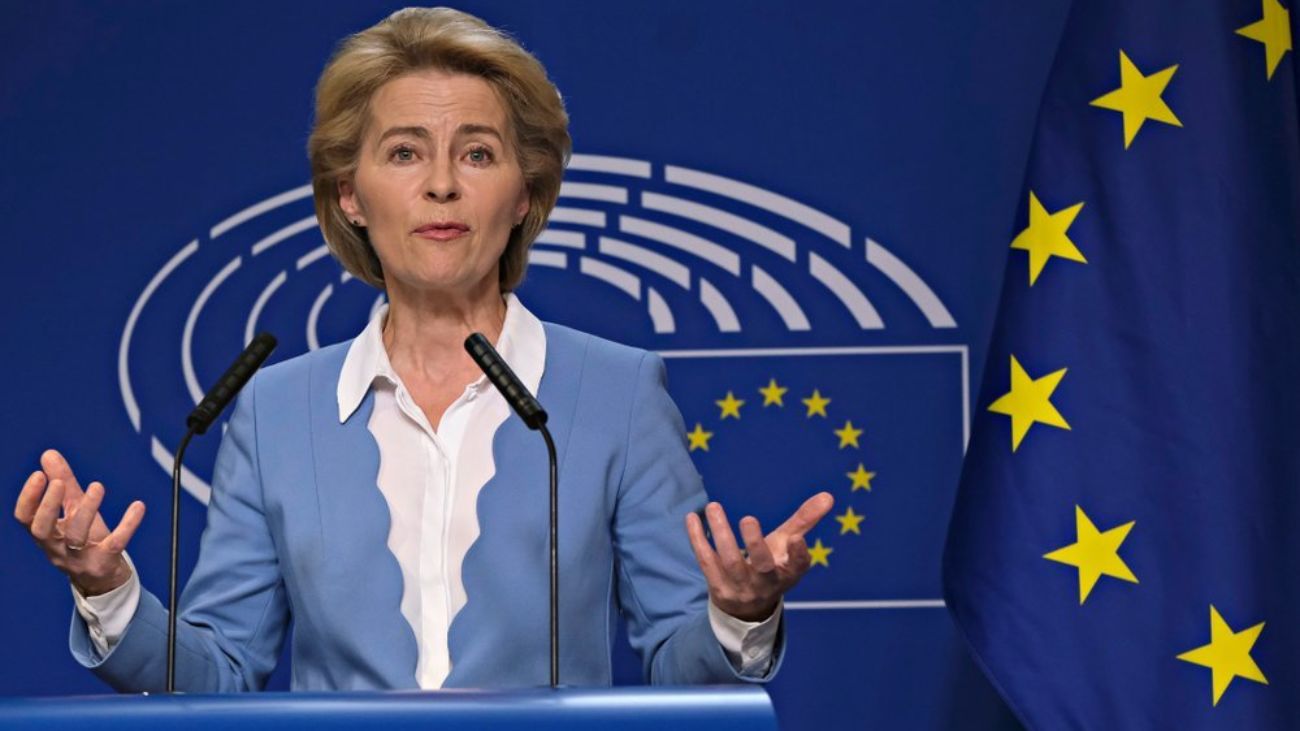
The President of the European Union, Ursula Vin Der Leyen, has condemned the unprovoked attack on Israel by Hamas soldiers on Saturday.

The EU boss voiced her opinion via her verified X account hours after the attacks were reported, warning that Israel has Israel has right to defend itself against such heinous attacks.

“I unequivocally condemn the attack carried out by Hamas terrorists against Israel. It is terrorism in its most despicable form. Israel has the right to defend itself against such heinous attacks,” she said.

Recall that Hamas, a Palestinian Sunni-Islamic fundamentalist, militant, and nationalist organization, early Saturday morning infiltrated Israeli borders, killing and abducting anyone in sight.

The crises between Palestine and Israel are as old as history. Hamas says it is fighting to reclaim occupied territories by Israel since after the ‘6-days’ war in 1947.

In 1973, the Arab world came close to defeating Israel after Egypt and Syria combined to attack Israel in a 10-day war.

Continue Reading
Advertisement


Click to comment

Leave a Reply

Your email address will not be published. Required fields are marked *

Headlines

2027: Atiku Promises to Restore Fuel Subsidy If Elected President

Published

on

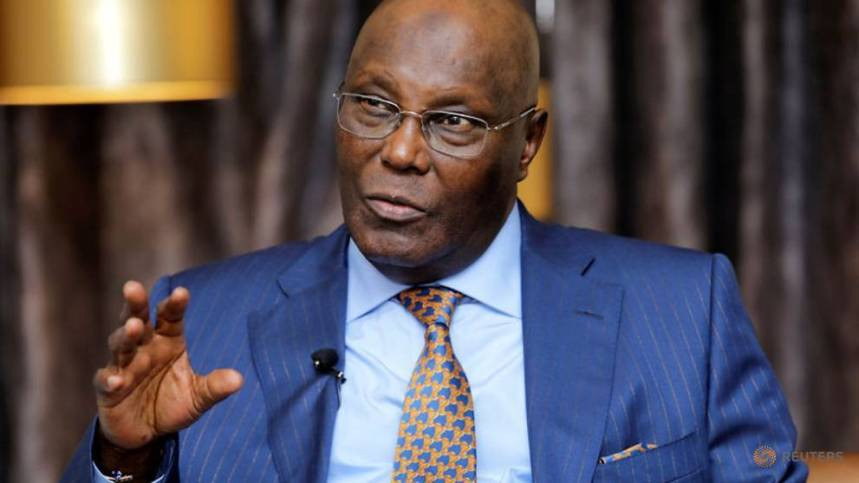
The African Democratic Congress (ADC) presidential candidate, Atiku Abubakar, has promised to restore the petrol subsidy if he wins the 2027 presidential election.

Atiku made the pledge during an interview on Wednesday while questioning the use of funds he said were saved following the removal of the subsidy.

He said the policy could have been beneficial to Nigerians if the savings had been properly accounted for and invested in areas such as poverty reduction and education.

“I did not oppose the removal of the oil subsidy, but where is the money? Where did it go? It was intended to reduce poverty and help children attend school. Where is the money now? It seems they are just stealing it,” Atiku said in Hausa.

“If elected, I will bring back the oil subsidy, and whoever stole the money must refund it.”

The former vice president said he would also consider the removal of the subsidy if the funds generated from the policy were transparently used to address the country’s development challenges.

“The government successfully removed the subsidy, but we do not know where the money went. If they had used the money for development, to solve security problems, for education, and to create opportunities for the youth, it would be different. If elected, I can remove the subsidy and use the money to do all these properly.”

President Bola Tinubu announced the removal of the petrol subsidy during his inaugural address on May 29, 2023, before assuming office.

Continue Reading

Headlines

I’m Not Afraid of Anybody, Cardinal Onaiyekan Replies Presidency

Published

on

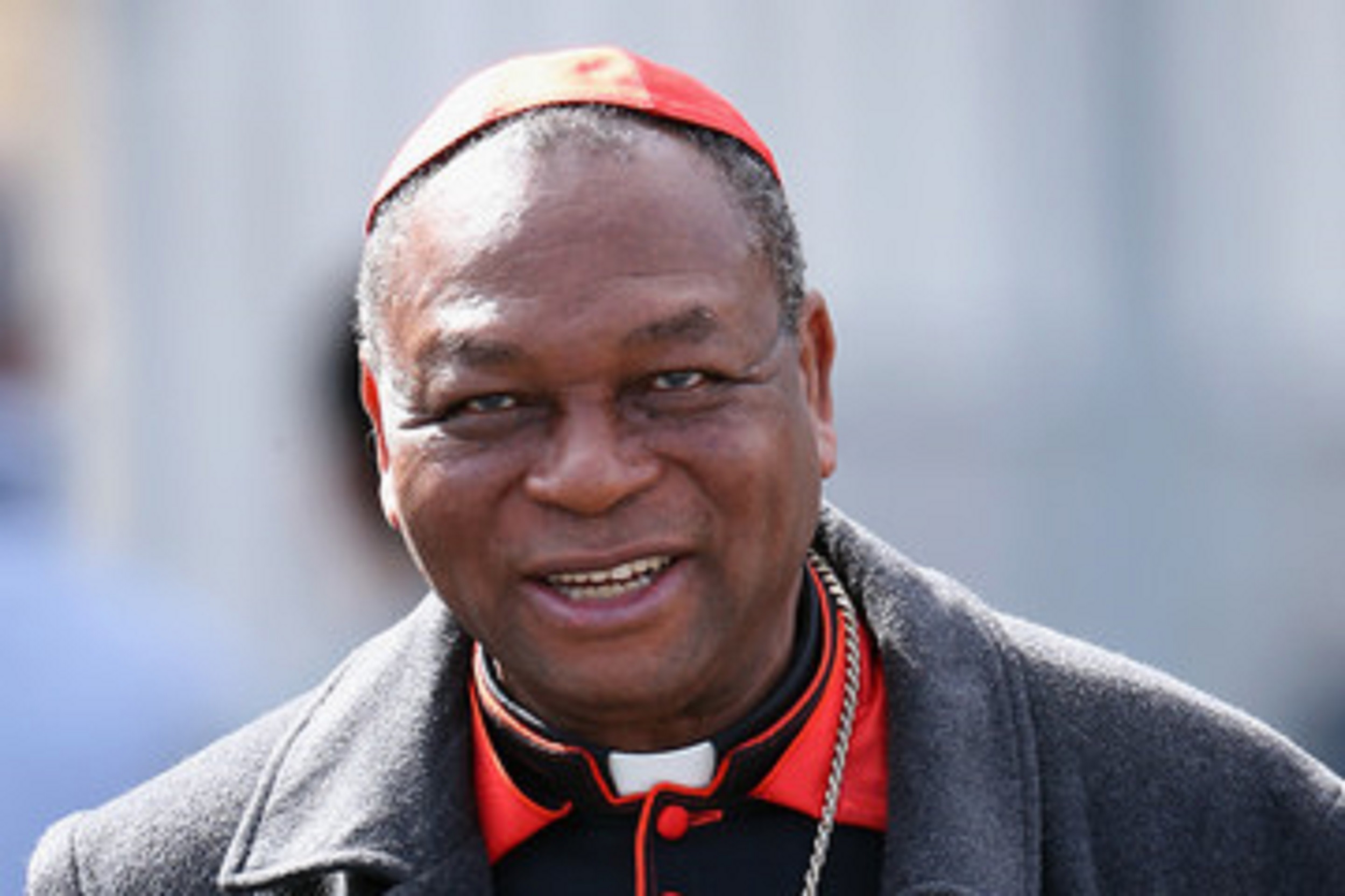
The Catholic Archbishop Emeritus of Abuja, Cardinal John Onaiyekan, has fired back at the Presidency over its criticism of his public account of a meeting between Catholic bishops and President Bola Tinubu, declaring that he did not appear on national television to please the government and was not afraid of anyone.

The 82-year-old cleric said he appeared on Arise News to tell Nigerians what he believed was the truth about the issues discussed during the bishops’ engagement with the President, insisting that neither his age nor criticism from government officials would silence him.

Onaiyekan spoke in a video shared by Symfoni TV on Wednesday, weeks after the Presidency criticised his decision to publicly disclose aspects of the meeting between the Catholic Bishops’ Conference of Nigeria (CBCN) and Tinubu.

“I didn’t go to Arise to please the government, or to just please people, but to tell the truth. That’s all I stand for,” Onaiyekan said.

He also dismissed attacks against him on social media, saying he had no reason to engage those criticising him because other Nigerians had already responded on his behalf.

“I don’t have to respond to those attacking me on social media because other Nigerians have spoken on my behalf,” he said.

The cleric went further, declaring that he was not concerned about the possibility of being embarrassed or intimidated because of his advanced age.

“I cannot be embarrassed. I’m 82 years old; nobody can embarrass me. And I’m not afraid of anybody. Nobody, at this stage now, are they going to arrest me, carry me to where?” he declared.

Senior Special Assistant to President Bola Tinubu on Media and Publicity, Temitope Ajayi, who said his criticism of Cardinal John Onaiyekan was not intended to disrespect the cleric.

The controversy that followed a July 28 meeting between Tinubu and a delegation of the CBCN at the State House, Abuja.

The delegation was led by the CBCN President, Archbishop Matthew Man-Oso Ndagoso of Kaduna, and included Onaiyekan, Cardinal Peter Okpaleke, Bishop Matthew Kukah of Sokoto and other senior Catholic clerics.

During the meeting, the bishops raised a number of issues concerning the state of the nation, including economic hardship, insecurity, democracy, preparations for the 2027 elections, religious freedom and the return of mission schools.

Three days later, Onaiyekan appeared on Arise News and publicly recounted aspects of the engagement while speaking about the concerns expressed by the Catholic leadership over the condition of the country.

His comments subsequently attracted criticism from the Presidency. The President’s Senior Special Assistant on Media and Publicity, Temitope Ajayi, criticised the disclosure of details from the meeting, describing the engagement as a private interaction.

The Presidency’s reaction sparked a debate over the extent to which details of engagements between government and religious leaders should remain confidential, particularly when the discussions concern matters of public interest.

Onaiyekan, however, has maintained that his intervention was neither personal nor intended to embarrass the government. The cleric rejected any suggestion that he had presented a personal opinion during his television appearance.

According to him, the issues he discussed reflected the collective position of the Catholic bishops who participated in the engagement with the President.

“No, mind you, I didn’t talk on my own now. I spoke on behalf of my fellow bishops,” he said.

Onaiyekan disclosed that the bishops had prepared a joint statement containing the issues he subsequently discussed during the television interview.

“We drafted a statement which contained all that I said in the interview. So, all the bishops of Nigeria spoke that way. It was their voice I was echoing,” he stated.

Onaiyekan also emphasised that Catholic bishops remained entitled to speak within their respective dioceses about issues affecting Nigerians.

“I cannot speak on behalf of other religious leaders. Everybody has their own job to do, but many of the other religious leaders have supported us,” Onaiyekan said.

Onaiyekan also broadened his comments beyond the dispute with the Presidency, stressing that the economic difficulties confronting Nigerians could not be dismissed as a disagreement between the government and religious leaders.

He said the widespread poverty and suffering in the country affected everyone.

“When it comes to what is happening to Nigeria, the poverty, the suffering, we are all in the same boat now, abi?” he asked.

The cleric urged Nigerians not to take the country’s remaining space for public criticism and expression for granted.

“And we are still lucky in this Nigeria that we can still talk. We shouldn’t take that for granted. There are many countries in Africa where no bishop dares to talk like we do here,” he said

Meanwhile, Ajayi has sought to draw a line under the controversy, saying his earlier response to Onaiyekan was not intended to disrespect the Catholic cleric or the church.

Ajayi made the clarification during an interview on Arise TV on Thursday, days after criticising Onaiyekan for publicly discussing the details of the closed-door meeting between Tinubu and the CBCN.

The presidential aide said the matter had been resolved and insisted that there was no intention to disparage the respected cleric.

“Well, I think that episode has been closed. Cardinal Onaiyekan is a respected clergy and a statement in his own right,” Ajayi said.

He explained that his intervention was aimed at providing a different interpretation of the account given by the cardinal, rather than questioning his standing in the church or wider society.

“My response to him did not in any way disrespect him or disrespect his standing in the society and the church. He’s one of the leaders of the faith,” Ajayi said, adding that he only sought to offer another perspective on the account of the meeting between the bishops and the President.

“I only tried to provide a different perspective from his own account of the bishop’s encounter with the president, and I think that point has been made. And I think it’s not something we really want to dwell further on,” he said.

Continue Reading

Headlines

Tinubu Orders Recovered Loot, Unclaimed Dividends, ‘Dormant Funds’ Sent to NELFund

Published

on

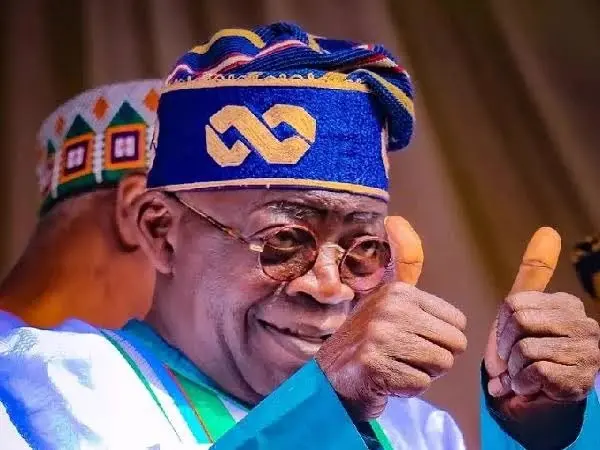
President Bola Tinubu has directed that all cleared and unencumbered looted funds recovered by the Economic and Financial Crimes Commission (EFCC) be channeled to the Nigerian Education Loan Fund (NELFund) to strengthen the financing of tertiary education.

The President also directed that funds in the Unclaimed Dividends Trust Fund and the Dormant Accounts Trust Fund be mobilised for NELFund, subject to compliance with the laws establishing the two funds.

The Minister of Education, Dr. Tunji Alausa, disclosed this on Wednesday while briefing journalists at the State House, Abuja, after the fourth Federal Executive Council (FEC) meeting of the year, presided over by President Tinubu.

Alausa, who described the decisions as a major boost for Nigerian students, clarified that the directive concerning EFCC recoveries applies strictly to liquid funds that have been legally recovered and are no longer subject to litigation.

He stressed that seized properties, assets, or funds still encumbered by court cases would not be transferred to NELFund.

According to him, the President directed the Attorney-General of the Federation and Minister of Justice, Minister of Finance, Ministry of Education, the Debt Management Office and other relevant agencies to work out the legal and operational frameworks for transferring the affected funds.

The Attorney-General, he added, would also work with the EFCC Chairman to identify recovered funds that are legally available for transfer.

“The President was very clear: not seized properties, all recovered looted funds, liquid funds recovered by the EFCC will now be transferred to NELFUND”, the minister said.

Alausa explained that the government would similarly examine the existing legislation governing the Unclaimed Dividends Trust Fund and Dormant Accounts Trust Fund to determine the appropriate legal steps required to make the resources available to NELFund.

He said President Tinubu insisted that only funds free of legal encumbrances would be affected by the directive.

“Every single fund that is still subject to a legal challenge will not be part of the money that will be transferred to NELFUND. The funds that will be transferred will be all cleared funds, unencumbered funds that were looted, funds that legally belonged to Nigeria, to Nigerians,” he said.

The minister said the President considered education one of the most productive uses for recovered public funds, especially as the administration seeks to build the human capital required to drive its ambition of growing Nigeria into a $1 trillion economy.

According to him, the decision is intended to put NELFund on a sustainable financial footing as demand for the student loan scheme continues to expand.

Alausa said more than 1.2 million Nigerian students are currently benefiting from NELFund, adding that the agency has disbursed more than N93 billion as upkeep allowances to students in Federal and State-owned public institutions.

He said more than N250 billion had also been disbursed as institutional fees to public tertiary institutions across the country.

“The education of our children cannot wait; it is of utmost importance to him, and he will do anything and everything to protect the future of every single Nigerian child, every single Nigerian student”, Alausa said of the President.

He described the student loan programme as fulfilment of one of Tinubu’s campaign promises to broaden access to tertiary education irrespective of students’ financial backgrounds.

The minister also addressed complaints about institutions withholding refunds from students who had already paid school fees before NELFund subsequently remitted their institutional charges.

He said the government had established a framework requiring institutions to refund affected students within a stipulated period, saying the widespread difficulties reported during the early stages of the scheme had been resolved.

According to him, any outstanding individual case brought to the ministry’s attention would be investigated.

Meanwhile, the FEC approved an augmentation of about N118.31 billion to complete the long-abandoned National Library of Nigeria headquarters complex in Abuja, as well as about N37 billion to furnish it.

Alausa said the National Library project, which commenced on April 29, 2006 and was originally scheduled for completion within two years, had remained abandoned since work stopped in October 2008.

He said President Tinubu had directed the ministry to mobilise resources to revive the project, including funding sourced through the Tertiary Education Trust Fund (TETFund).

The minister also acknowledged the contribution of First Lady, Senator Oluremi Tinubu, who had requested that gifts for her birthday be directed toward completing the National Library.

According to him, the initiative raised about N25 billion towards the project.

“The council today approved the augmentation of the existing contract for the completion of the construction of the National Library of Nigeria headquarters building complex in Abuja”, he said, adding that the government hoped construction would resume within the next few months.

Alausa said FEC also approved the establishment of the Nigerian Academy for the Gifted and Talented, which would emerge from the transformation of the existing Suleja Academy.

He explained that Suleja Academy was established to identify and nurture exceptionally gifted Nigerian children but had, over the years, operated largely like one of the Federal Government Colleges, preventing it from fully achieving its original mandate.

Under the proposed arrangement, the institution would become an autonomous academy with its own governing structure and diversified funding sources, including federal appropriation, endowments, and gifts.

According to the minister, the academy would identify gifted children across the country and provide an environment in which their abilities could be developed for innovation and national development.

FEC consequently approved the preparation of an executive bill by the Attorney-General of the Federation for transmission to the National Assembly to give legal effect to the transformation.

“We have to look for every single genius in this country and bring them in, nurture them, and let them help create the Nigeria of tomorrow,” Alausa said.

Council also approved the deployment and implementation of an Entrepreneurship, Innovation and Business Incubation Certification programme in selected Nigerian universities.

Alausa described the initiative as a technology-driven programme designed to equip university students with entrepreneurship, innovation, business incubation, enterprise development and digital skills, backed by certification, mentorship and incubation support.

He said the programme, which had already been tested at the University of Lagos, was designed to change the orientation of graduates from merely seeking employment to becoming entrepreneurs, innovators and job creators.

According to him, the programme will begin this year in 14 federal universities before being expanded to other tertiary institutions.

The initial participating institutions are: Ahmadu Bello University, Zaria; Bayero University, Kano; Nnamdi Azikiwe University, Awka; Obafemi Awolowo University, Ile-Ife; University of Abuja; University of Benin; University of Ibadan; University of Ilorin; University of Jos; University of Lagos; University of Maiduguri; University of Nigeria, Nsukka; University of Port Harcourt; and Usmanu Danfodiyo University, Sokoto.

Alausa said the approvals reflected the administration’s determination to position education at the centre of Nigeria’s economic transformation and ensure that young Nigerians acquire both academic knowledge and practical capabilities required to participate in the emerging economy.

He said President Tinubu has given the education ministry a clear mandate to ensure that every Nigerian child has access to education of a quality comparable with standards obtainable elsewhere in the world.

Continue Reading