Personality in Focus
Ex-NTDA DG, Stakeholders Call for Improved Regulations, Transformation of AI


- /home/rhoncare/pointblank.ng/wp-content/plugins/mvp-social-buttons/mvp-social-buttons.php on line 27
https://pointblank.ng/wp-content/uploads/2026/09/IMG-20260925-WA0031-1000x600.jpg&description=Ex-NTDA DG, Stakeholders Call for Improved Regulations, Transformation of AI', 'pinterestShare', 'width=750,height=350'); return false;" title="Pin This Post">
- Share
- Tweet /home/rhoncare/pointblank.ng/wp-content/plugins/mvp-social-buttons/mvp-social-buttons.php on line 69
https://pointblank.ng/wp-content/uploads/2026/09/IMG-20260925-WA0031-1000x600.jpg&description=Ex-NTDA DG, Stakeholders Call for Improved Regulations, Transformation of AI', 'pinterestShare', 'width=750,height=350'); return false;" title="Pin This Post">
The former Director-General of the Nigeria Tourism Development Authority (NTDA), Mr. Folarin Coker, and other tourism stakeholders have called for improved Artificial Intelligence regulations and its transformation for sustainable growth in Nigeria’s tourism and travel sector.
The call was in sequel to the recent technical network glitch involving the Nigeria Centre for Disease Control (NCDC) and the Nigeria International Travel Portal (NITP), which disrupted travel operations and left thousands of inbound and outbound passengers stranded at airports worldwide.
The incident, which reportedly prevented passengers from boarding flights bound for Nigeria, has renewed concerns over the country’s reliance on digital systems and highlighted the need for stronger technological infrastructure, effective regulation and improved AI integration to ensure seamless travel operations and enhance the tourism experience.
Speaking on Villa Square, a special segment of Cre8tive 9Ja, a weekly tourism and culture magazine programme hosted by veteran tourism journalist Frank Meke and Bunmi Bade-Adeniji on Mainland 98.3 FM, Lagos, former Director-General of the Nigeria Tourism Development Authority (NTDA), Folarin Coker, said Nigeria should not confuse digitisation with transformation.
“We should not confuse digitisation with transformation. Putting a broken process online is not reform,” Coker said.
He noted that the country’s ambition should be to make travel easier, improve the productivity of tourism businesses and ensure better management of destinations.
Coker said there was a need to deconstruct the existing system and create an ecosystem in which the necessary structures work effectively before AI is deployed to deepen the passenger experience.
According to him, AI can improve various aspects of travel, including the embassy and visa processes, flight bookings, pricing, arrival experiences, transportation and cultural engagement.
“Artificial Intelligence and technology are being mistaken for true development. It is not about another app or website, but about fixing the things that need to be fixed and setting the standards,” he said.
Also speaking, the Managing Director of Global Links Service, Pastor Chinyere Umeasiegbu, said airline operators were often responsible for flight disruptions.
She urged airline operators to address the recurring issue of flight cancellations, stressing the need for sustainable reforms that do not rely solely on Artificial Intelligence.
Umeasiegbu also called for improved communication between airlines and passengers, advising travellers to take screenshots of messages relating to flight delays and submit them to the appropriate authorities when necessary.
Coker further stated that the government must address fundamental infrastructure challenges, including roads and security, while establishing standards for globally competitive hotel services rather than relying on AI as a substitute for broader development.
“A digitally driven tourism agenda is what most people are using. However, we have a gifted cultural expression that can help amplify our tourism agenda, from music, fashion and food to medical tourism,” he said.
He stressed the need for government to make Nigeria’s tourism experience more accessible by providing the necessary infrastructure and ensuring that tourism products and destinations are easily bookable without technological disruptions.
The Director-General of the National Council for Arts and Culture (NCAC), Obi Asika, disclosed that the council had established a Council for Creative Technology and would soon publish a digital roadmap outlining how Artificial Intelligence could be incorporated into the arts and culture sector.
“We need to enrich Artificial Intelligence with the elements of our culture, our history and our content. We need to do this and put the necessary systems in place because, if we don’t, Artificial Intelligence might not be able to see us,” Asika said.
He explained that the concern was partly linked to the data and content used to train AI systems, noting that African and Black tourism and cultural knowledge needed greater representation.
On the role of AI in food tourism and promoting Nigerian cuisine globally, Chef Shine said the technology could be used to properly document and promote the country’s culinary heritage.
“It is important for us to use AI to document our food properly. AI will not take over our food, nor will AI cook the food,” he said.
“This is the best time to discuss the digital agenda and Artificial Intelligence. We need to use AI to document our food and monetise our cuisine,” he added.
Speaking on the use of AI in promoting Nigeria as a tourism destination, travel and tourism journalist Okorie Uhuru said the technology was already transforming the way destinations and tourism products were marketed.
“The old order of doing things, like packaging a destination tour and marketing tourism, has faded because of Artificial Intelligence. AI has helped us market our tourism to a global audience,” he said.
Uhuru urged tourism stakeholders and individuals to adapt to the technology in order to remain competitive.
“As individuals, you have to make an effort to align with AI to sell your tourism product; otherwise, you will be left behind,” he said.
Professor Wasui Babalola called on the government to develop policies that would help translate technological advancement into economic value.
He said the digital transformation process must retain a human element if it is to contribute meaningfully to the development of Nigeria’s tourism sector.
“The knowledge of the digital process should be given with a human element, and that is when our tourism would improve,” Babalola said.
This piece is contributed by Onyeka Ezike


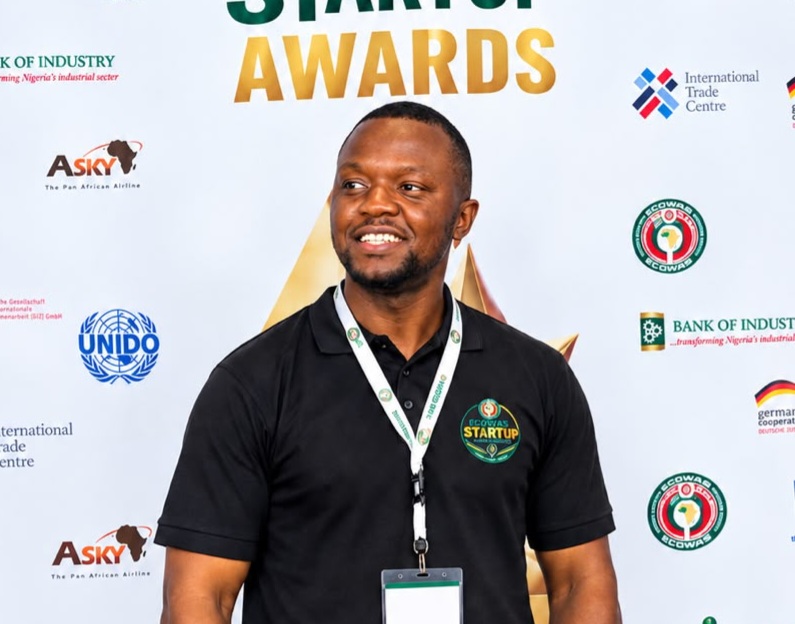
Kardinal Business Travel, a travel technology company with African and global focus, was among 60 startups that pitched at the 2nd edition of the Economic Community of West African States (ECOWAS) Startup Awards, held at the ECOWAS Commission headquarters in Abuja recently.
The company’s Chief Executive Officer and Founder, Cornelius Ugwunwa, presented the company’s case at the three-day event. The awards was part of an ECOWAS initiative to help West African businesses and startups scale through digital transformation, regional integration and sustainable value chains, with the aim of widening access to global markets.
Temitope Kareem, founder of Nigerian healthtech firm HubPharm Africa, won the top prize of $30,000. Senegal’s Gaynako took home $20,000 as first runner-up, while Steve Bah Blesson’s MyOpinion from Côte d’Ivoire won $15,000 as second runner-up.
Speaking during his pitch, Ugwunwa said Africa needs a new system for business travel. He cited a market with $75 billion in inbound travel spending and a strong business travel component in 2025, while travel and tourism as a whole contributed $228 billion to the regional economy.
“When a company sends its employees across Africa for a business engagement, we at Kardinal noticed the challenges of countless inboxes, spreadsheets and emails, mostly after the trip.
Businesses keep asking: How much did we spend? Who did we spend it on? Was it above or below budget? Can we reconcile everything on one platform?” he said.
He described African business travel as a $30 billion market that is largely fragmented and overly dependent on manual processes.
According to him, many businesses lose over $1 billion to manual travel processing and cannot track spending in real time. “That is why Kardinal exists: to solve this entrenched problem,” he said.
Ugwunwa said GoKardinal is an artificial intelligence-driven platform built to track expenses for African businesses. It brings the entire business travel lifecycle (planning, budgeting, booking, financing and expense tracking) onto one platform, in real time.
“GoKardinal is not another travel platform. It is an infrastructure for business travel, powered by AI for expense management,” he said, adding that the idea is to help businesses move without delay from one location to another to do their best work, expand and make profit.
On the company’s performance, he said the platform serves over 51 businesses in Nigeria and across Africa, with estimated weekly profit of $10,000 and gross merchandise value of over $1 million, growing at 65 per cent annually. he added.
He noted that about 80 per cent of African businesses still run their business travel manually, without any form of expense tracking, in a market worth over $30 billion annually. “African business travel is not just travelling for the fun of it.
It is an ecosystem with the potential to generate over $70 billion when digitalised,” Ugwunwa said.

The President of Security Resources & Risk Management Academy, Lagos, Mr. Matthew Ibadin, has charged officers of the Nigerian Armed Forces and allied nations to practice emotional discipline, warning that unmanaged anger remains a greater threat to a Staff Officer than the enemy.
Ibadin, who is also a doctoral researcher at the Nigerian Defence Academy (NDA) and University of Abuja, stated this on Monday while delivering a lecture on “Emotional Discipline Under Pressure and Anger Management for Staff Officers” to participants of Senior Course 48 at the Armed Forces Command and Staff College (AFCSC), Jaji, Kaduna.
The lecture was attended by 436 officers comprising the Nigerian Army, Nigerian Navy, Nigerian Air Force and officers from eight friendly nations.
Describing anger as “a temporary madness that leaves a permanent record,” Ibadin warned officers that “the line between a respected officer and an inmate is thinner than you can imagine.”
“Anger may enter the room, but must never take command,” he said.
The Lion Principle
Illustrating his point with the parable of the lions, Ibadin noted that while both male and female lions roar, the female roars only when necessary and lives 15-18 years compared to 10-12 years for the male.
“She lives longer not because she is weaker, but because she is more disciplined. Many of us have become male lions in uniform – fighting juniors, spouses, traffic, minor disagreements even when no real threat exists. That constant agitation slowly destroys what you have built,” he said.
He therefore charged officers to “be a female lion in strategy and a male lion only when tactically necessary.”
Five Battlefields Where Anger Destroys
Ibadin identified five battlefields where undisciplined anger destroys officers: Health, Home Front, Office and Command, Career and Prison, and Relationships.
On health, he described anger as a silent killer that triggers hypertension, stroke and cardiac arrest, noting that many officers survive the war front but do not survive peacetime.
“At Jaji, your rank commands respect, but at home your rank is irrelevant. If you win at the office and lose at home, you have lost. An officer whose home is under emotional fire cannot think clearly at the command post,” he cautioned.
He warned that signatures appended in anger to operational orders, procurement papers and personnel assessments could lead to Boards of Inquiry, career ruin and mission failure.
He added that 70 percent of inmates in correctional centres for murder never planned to kill, but acted in a moment of unmanaged anger.
Practical Tools
Ibadin introduced practical tools including the 90-Second Rule and the S.T.O.P Protocol – Stop, Take a Breath (4-4-4), Observe, and Proceed with Discipline – for decisions under pressure.
He adopted Aristotle’s five tests for disciplining anger: Right Person, Right Reason, Right Time, Right Degree, and Right Manner.
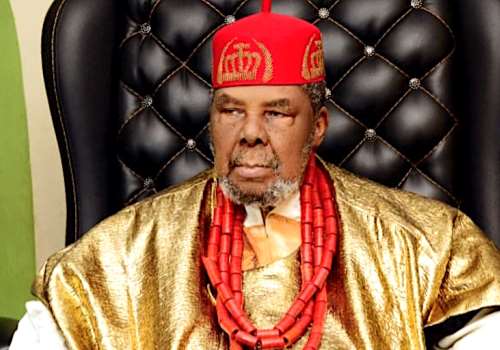
Veteran Nollywood actor, Pete Edochie has declared Chinua Achebe’s 1958 novel ‘Things Fall Apart’ as the greatest African book of all-time.
Speaking in a recent interview with TV3, Edochie explained that ‘Things Fall Apart’ is the greatest African book ever written because it tells the African story.
He stated that the book wouldn’t have been as popular as it is if it were telling the story of the colonisers.
He pointed out that many other African authors have also made efforts in telling African stories since ‘Things Fall Apart’ but none is as “strong” as it.
“The reason why ‘Things Fall Apart’ is the greatest book ever written on the African continent is because it is telling our own story.
“If it had been telling the story of the White man, it won’t be that popular. Many others have made efforts since then but not as strong as ‘Things Fall Apart’,” he said.
He urged African writers and creatives to focus on telling African stories, stressing that it would be their unique strength on the global stage.
The movie star, however, lamented that Africans were allowing their talents to be submerged by embracing foreign influences.
“We Africans permitted our talents to be submerged by overseas influences. I remember once upon a time I was being called Elvis Presley and John Wayne.
“I actually enjoyed answering those names but at some point I had to discard them and pick a name that’s culturally relevant to me. Then I went back to the root and started answering Uwadiegwu,” he added.
Source: DailyPost