Business
FirstBank Sustains Positive Impact, Welcomes Back Customers

- /home/rhoncare/pointblank.ng/wp-content/plugins/mvp-social-buttons/mvp-social-buttons.php on line 27
https://pointblank.ng/wp-content/uploads/2019/10/FirstBank_Logo-1-1000x511.jpg&description=FirstBank Sustains Positive Impact, Welcomes Back Customers', 'pinterestShare', 'width=750,height=350'); return false;" title="Pin This Post">
- Share
- Tweet /home/rhoncare/pointblank.ng/wp-content/plugins/mvp-social-buttons/mvp-social-buttons.php on line 69
https://pointblank.ng/wp-content/uploads/2019/10/FirstBank_Logo-1-1000x511.jpg&description=FirstBank Sustains Positive Impact, Welcomes Back Customers', 'pinterestShare', 'width=750,height=350'); return false;" title="Pin This Post">
FirstBank, Nigeria’s leading financial institution and Africa’s Bank of Choice has expressed its appreciation to the public – especially its customers – for their continued patronage of its services during the COVID 19 lockdown, whilst assuring the public that stringent measures have been implemented to ensure its branches and locations across the country operate in line with the health and safety guidelines issued by the Nigeria Centre for Disease Control to mitigate the spread of coronavirus.
Expressing the Bank’s delight at welcoming customers to its branches and locations from Monday, 4 May 2020, Dr. Adesola Adeduntan, the Bank’s CEO noted that these safety measures include ensuring personal protection, as wearing face masks is now mandatory; maintaining social distancing by reducing physical contact by at least one meter from the next person and queue guides and markings are in place to guide customers; as well as enhancing the practice of personal hygiene as hand washing stations and hand sanitisers have been provided.
Speaking on the impact made by the Bank across its sub-Saharan business Dr. Adeduntan said “We are glad that our investment in technology over the years has really borne fruit as many of our staff were able to work remotely during the lock down with effective IT support to hand. We were therefore able to actively support our customers, their families and businesses through these challenging times.
We ensured business continuity across eight countries – Nigeria, Ghana; Democratic Republic of Congo; Sierra-Leone; the Gambia, Guinea; Senegal and United Kingdom. We recognize that this has truly been a trying period and are poised to continue to provide as much support as we can to our customers and communities we operate in”.
Coming back home, the Bank’s Chief explained that during this period it proactively reviewed products and services to support customers better and expressed his appreciation to Nigerians for the whole hearted adoption and patronage of its electronic services, as these indeed demonstrated the trust which the public repose in the Bank and in return the Bank commits to always live by its resolve on being true to its mantra – You First.
He said “It is for this reason; putting our customers first, that our Bank working to regulatory, Federal and State Government directives worked assiduously to keep over 50 percent of our branches open across all nooks and crannies of the country.
At the same time the call centre was restaffed in the most efficient manner and retooled as we provided even more opportunities for our customers to reach us for their banking needs”.
He further provided a snapshot of transactions carried out across FirstBank’s e-banking channels during the five-week lockdown in various parts of the country:
• We recorded approximately 12.6 million withdrawals amounting to about N156bn across our ATMs well placed across the country.
• Nigerians with FirstBank cards used them 105 million times to make payments or withdrawals worth about N1.18 Trillion as they relied on us to settle their banking needs
• Our customers made transfers over 106 million times with a total value of about N8.18 Trillion across our digital channels.
• During this period, our 53,000 plus agents have processed over N512bn worth of transactions
• We have also recorded over 275,000 new sign-ups to alternative channels covering our Firstmobile; USSD and First-Online platforms.
As one of the leading SME banks in the country, with a drive to ensure SMEs are supported, Dr. Adeduntan, also stated that FirstBank has enhanced palliatives such as introduction of special waivers on repayment fees on its credit cards, and a 90-day loan moratorium on selected products across markets, to help cushion the impact of the toll on employment and livelihoods.
Our Wholesale business was also not left out as advisory services and a range of financial needs were met to the delight of our Corporate and Commercial customers.
On community impact, the Bank partnered with other organisations in the private sector to collectively help those most impacted by this pandemic. It has contributed N1billion and several volunteer staff towards the efforts of the Nigerian Private Sector Coalition Against COVID-19 (CACOVID) to meet the intervention objectives in the key areas of health; testing, provision of much needed health infrastructure, isolation units and raising public awareness and where needed providing food to the most vulnerable.
This is a time when we all must step up and do our bit by our people and our communities.
In addition FirstBank in keeping with its long standing tradition and focus on educational support and talent development has partnered with several organisations in a bid to help 1 million students access e learning.
“It is important in all this not to forget the children whose needs can so easily be overlooked at a time such as this”.
“As the lock down is lifted nationwide, we will continue to provide seamless service to our customers ensuring the highest levels of support whilst operating as efficiently as possible, ensuring safety of all is paramount and empowering our staff to drive these goals. We will do these with three things in mind: ensuring you are staying safe; supporting your business; and safeguarding our future’’ Dr, Adeduntan said.


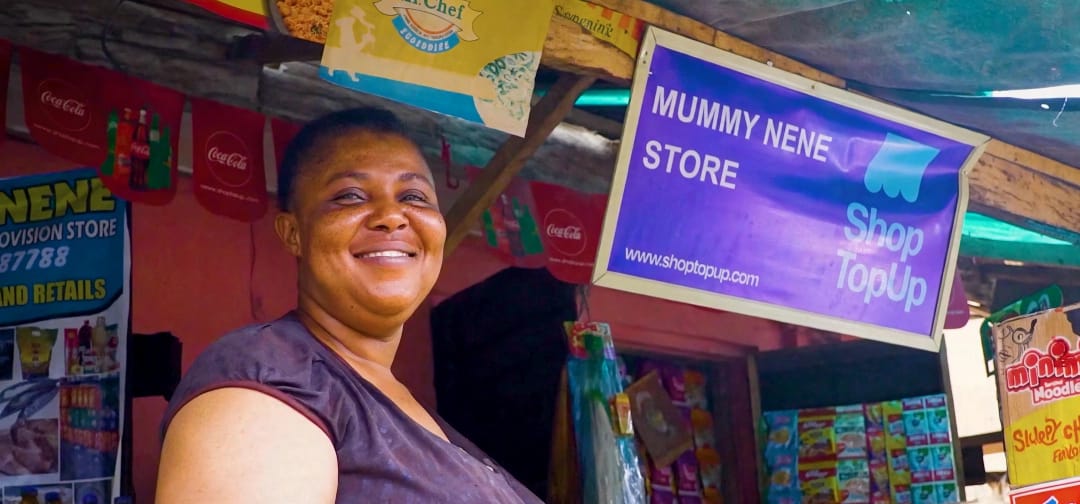
While conversations about the future of retail increasingly focus on supermarkets, shopping malls and online shopping platforms, millions of African consumers continue to rely on a more familiar and accessible business: the neighbourhood shop.
From small provision stores and corner shops to kiosks and informal retailers, these businesses remain an important part of everyday commerce, connecting communities to essential household products. However, behind their convenience lies a supply chain challenge that often limits their growth.
For many small retailers, sourcing products, managing inventory and securing enough working capital to keep their shelves stocked can be difficult. Fragmented distribution networks, multiple intermediaries and limited access to financing often make it harder for them to compete and expand.
Technology is beginning to offer a different possibility.
Digital platforms can simplify the way neighbourhood retailers purchase goods by connecting them more directly with manufacturers and distributors. They can streamline ordering, improve product availability and make inventory management more efficient.
Access to financial technology can further strengthen these businesses by helping eligible retailers secure the working capital required to replenish stock, respond to customer demand and grow sustainably.
One Nigerian technology company working to address these challenges is TradeDepot, which is using digital innovation to connect small retailers with manufacturers and distributors.
By making product sourcing and distribution more efficient, the company is helping to address some of the longstanding barriers facing small businesses in Africa’s retail sector.
However, scaling technology-driven solutions across a fragmented retail market requires more than innovation. It also demands significant investment.
This is where development finance and venture capital become important.
Through Boost Africa, the European Investment Bank (EIB) invested in Partech Africa Fund, a venture capital fund that subsequently backed TradeDepot. The investment illustrates how development finance can reach innovative African businesses through investment funds, providing capital to companies working to solve real economic challenges.
Boost Africa is a joint initiative of the European Investment Bank and the African Development Bank, with support from the European Union. The initiative supports African businesses and strengthens the continent’s entrepreneurial ecosystem by improving access to finance and opportunities for growth.
The wider significance of this investment goes beyond the technology platform itself. Strengthening neighbourhood retailers can contribute to more efficient supply chains, support small business growth and improve access to everyday consumer goods across communities.
For Africa, where small retailers remain central to local economies, the opportunity is substantial.
The future of retail may not necessarily involve replacing traditional neighbourhood shops with large supermarkets or online marketplaces. Instead, it could depend on equipping these existing businesses with better technology, stronger distribution networks and improved access to finance.
Ultimately, transforming retail may begin with something as familiar as the shop around the corner.
Boost Africa: From Capital to Impact.
Watch how TradeDepot is bringing commerce closer to communities through technology and investment
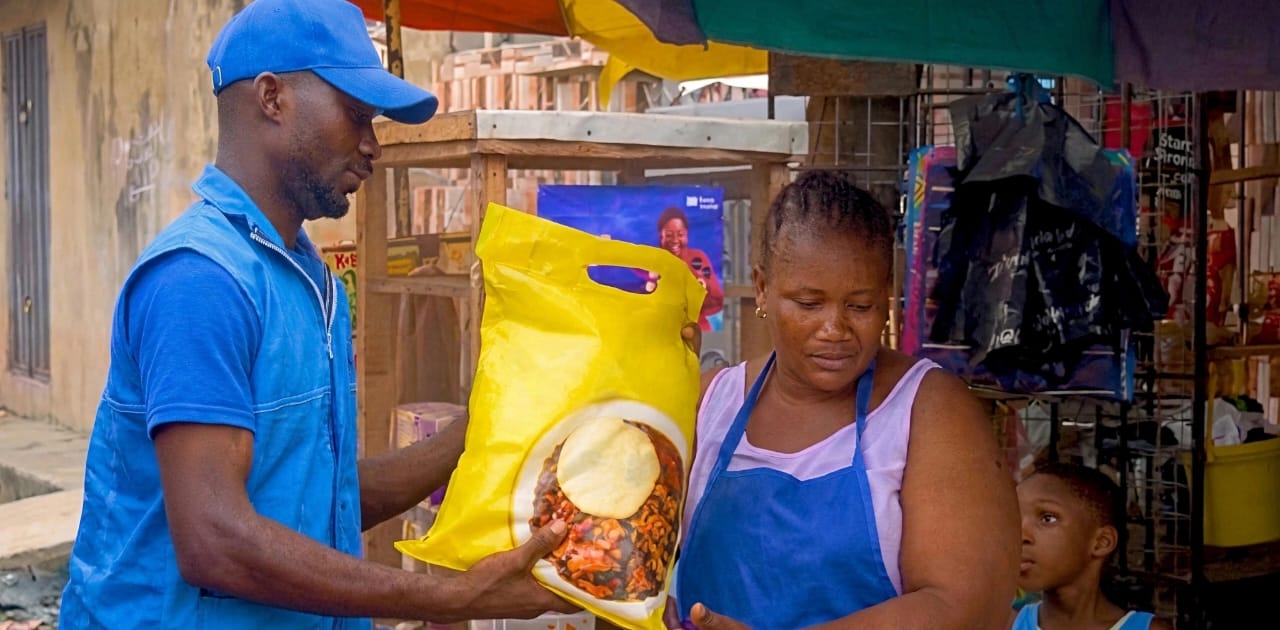
Ever wondered how the products on your neighbourhood shop shelves get there? Behind everyday purchases is a supply chain that can be costly, complex and inefficient, particularly for small retailers.
Nigerian technology company TradeDepot is changing this process by using technology to connect small retailers with manufacturers and distributors, making it easier for shop owners to order and receive the goods they need.
But transforming retail distribution takes more than an innovative idea. It requires investment to build, expand and scale.
Through Boost Africa, the European Investment Bank (EIB), alongside the African Development Bank and with support from the European Union, is helping strengthen the financing ecosystem for innovative African businesses.
One example is the EIB’s investment in Partech Africa Fund, which subsequently backed TradeDepot, helping channel capital into a Nigerian business working to improve how goods move from suppliers to neighbourhood shops.
The impact goes beyond technology. More efficient distribution can help small retailers access inventory, strengthen connections between manufacturers and suppliers, and bring commerce closer to the communities they serve.
Ultimately, TradeDepot’s story demonstrates how investment can go beyond funding to support stronger businesses, more efficient markets and opportunities for small retailers.
Boost Africa: From Capital to Impact.
Watch how TradeDepot is bringing commerce closer to communities.
▶ https://www.youtube.com/watch?v=zw9t2asF9Pc
Business
Beyond University Degrees: How ChipMango is Preparing African Engineers for Global Tech Industry

A university degree is a starting point, but practical industry experience can make all the difference.
Nigerian technology company ChipMango is bridging the gap through specialised semiconductor training and real-world chip design and verification projects, preparing African engineers for opportunities in the global technology industry.
Through Boost Africa, the EIB, AfDB and EU are strengthening the investment ecosystem supporting innovative African businesses.
Watch the video to discover how ChipMango is connecting engineering talent to real industry opportunities.
Watch the video: