
Opinion
Food for Living: Never Lose Hope

- Share
- Tweet /home/rhoncare/pointblank.ng/wp-content/plugins/mvp-social-buttons/mvp-social-buttons.php on line 69
https://pointblank.ng/wp-content/uploads/2019/04/download.jpeg&description=Food for Living: Never Lose Hope', 'pinterestShare', 'width=750,height=350'); return false;" title="Pin This Post">
By Henry Ukazu
Dear Destiny Friends,
Globally, the world is at a loss as to what the future holds for businesses, relationships, governance and life in generally. One of the questions that is on the lips of everyone is, will life ever return to normal again? in fact, so many questions begging for answers. Even as government officials, doctors, scientists and lab technicians are working tooth and nail to find the cure for Coronavirus, the world remains at standstill not knowing what the new order, with respect to business and life, will be. It is therefore, with great joy I bring you the good news of a better tomorrow – hope. Hope is everything we need to change our mindset. Without hope, it will be difficult to behold the foreseeable future.
As Christians, we were taught to have hope because Christ was raised from the dead, otherwise our preaching and believing in Christ will be in vain. As motivational and inspiration life coach teachers, we teach business leaders, government officials, technocrats, academicians and students to plan for a better tomorrow by securing knowledge and skill. It is because of the hope that great minds were able to live their dreams.
We all go through one life situation or another which makes us lose our passions, reduces our attitude and make us react differently. It is possible that you are contending with a particular situation now, I got information for you; don’t get defeated, stay afloat because what you think is the valley of dissatisfaction and disappointment can still turn out to be a blessing and breakthrough.
Patience is the harbinger of hope, and one must have loads of it. When you face though time , don’t lose hope; face the fear and rise. Always see every tough time as the opportunity to break through and break even. Be rest assured that you have the capacity to think out of the box.
There’s always a blessing in every valley. The experience of today will definitely make meaning to you in another 10 years time or less. You need to learn the experience in order to move to the next stage of life. Don’t complain about your problem. Trouble is inevitable, but misery is optional. Don’t be limited in you thought process. Be proactive and positive towards life.
Hope has no limit if you truly believe in your dreams and passion. Hope fuels passion in life. Some people feel they are too old to go to school, start a business, or get married; that’s a huge fallacy. It only becomes true when you believe in them. Let me share some insightful examples of five great individuals who chose not to give up. They chose to keep pushing forward despite imminent hardships and failures, and ultimately found great success in their lives:
1. Henry Ford – He had five major business failures before founding Ford Motor Company.
2. Lucille Ball – Early in her career, she was considered a failure as an actress, unable to land anything but B movie roles. She went on to win four Emmys and a lifetime achievement award.
3. Soichiro Honda – After being turned down for a job with Toyota, he decided to make scooters from his own home until his neighbors talked him into starting his own company, Honda.
4. Bill Gates – He dropped out of Harvard and started a business called Traf-O-Data which failed. Instead of giving up, he decided to start a little company called Microsoft .
5. Walt Disney – He was fired from his job with a newspaper company. He was told he lacked imagination and didn’t have any good ideas. He went on to create Disney’s empire.
These five people learnt a valuable lesson, and that is, “You have to fight through some bad days to earn the best days of your life.” I truly believe we can accomplish just about anything if we are willing to do what it takes to work for it and if we stay determined in our resolve. And when hard times come, as they most assuredly will, we must never allow ourselves to lose hope, knowing that the best is yet to come.
According to Martin Luther king Jr. “We must accept finite disappointment, but we must never lose infinite hope.”
When you have hope, you are not concerned about the wave and wind that is blowing outside. When you have internal hope, you’ll be less distracted about the noise outside. Hope is what keeps our dream alive. When you have hope, though you may feel the pain of the moment, you’ll not really be concerned about the brief pain because of the greater tomorrow. According to an African proverb, a hunger that has hope won’t kill someone. As a student going to school you have a hope for a better future if you do the needful. As a parent, you have hope that if you train your children very well they will take care of you in your old age. As a businessman/woman, you have hope in spite of the lockdown and ups and down of life; your business will rise again for a greater success. The list is endless.
Hope is one of the greatest virtues any productive mind must have in order to succeed. This is because no matter how life treats you, tomorrow always look good and promising. I don’t really know what you are experiencing at the moment. Are you looking for financial stability, are you looking/hoping for the right partner? Are you looking for a job? Are you currently going through a situation? I don’t know what your situation is at the moment, but I will strongly advise you to be patient while learning all the experiences inherent. In the journey of life, even if you lose all options, never lose hope.
History is replete of stories about people who came into hard times, lost hope, and gave up. We rarely come to learn what would have happened with these individuals if they had not given up. We are left to wonder what great successes these people might have achieved if they had chosen to hold on to hope. And how they might have gone on to shape our world for the better?
The truth is life can be unfair, think of life as a white piece of paper that’s divided into individual portions for each chapter of our lives, that these portions are just waiting for us to colour them with our adventures, our journeys and our experiences, both the good and the bad. The different colours represent the various happenings, our feelings and the emotions we experience. So, go out and live your life, dance through the storms, embrace whatever happens and lies ahead.
How to Avoid Losing Hope
1. Be Grateful For What You Still Have
It doesn’t matter how you choose to be grateful. You can write out ten things right now you’re grateful for. You can sing to the heavens all the beautiful aspects of your life. You can take a big, giant breath, hold it for ten seconds, give it a powerful exhale and yell, “I’m grateful for this breath of life life because a lot of people are gasping for breath via ventilators”. There’s always something to be grateful about you if you’re honest with yourself. I’m specially gratueful to God for the ability to write and speak creatively.
Before I published my book, I was afraid how will the world receive it. Will it make sense? Is what I’m writing worthwhile, or is it hogwash? The list of insecure questions goes on and on. The point I’m wanting to make is: Keep your head up, believe in yourself, and take life head on.
2. Embrace Tough Times and Explore Options to Recreate
During tough times you can’t give up, ever. Even during the toughest times you must keep your hopes alive by pushing through. Work on what needs to get done, try and build some momentum, and then build on it further. Moral: Hold on pain endures
That last thing you should be doing is quitting, which I slightly hesitate to say because there are some very good reasons to quit sometimes. If you’re passionate about what you want to do, then don’t quit.
3. Know Your Why
Because, when we set goals or we have some hope or dream that we’re driving towards, we have to ensure that we addressed the three W’s of Goal setting. What, Why, and When. If we didn’t have a strong enough reason why we wanted to achieve something, then we might have subconsciously given up on that goal long before we consciously realized it.
4. Be Honest with Yourself
When you can change your approach along the way, you can move towards your goals much quicker because you won’t find yourself surprised suddenly if things don’t end up working out. Always be honest in all situations. it will breed a much happier and healthier path towards your goals.
5. Get Support from Your Base
Sometimes, the best way to take stock of the positives that we can gain from a situation that might seem bleak, is through the support of others. Whether it’s friends, family members, religious denominations, or support groups, other people can help us to look at things in perspective and offer us a guiding light towards the shores of hope.
6. Have Faith
No matter what you believe in: God, Allah, Buda, or the Singular. No situation, no matter how dire or bleak, can defeat you if you don’t let it. We are all a product of the lens of focus from our mind’s eyes.
In conclusion, remember, Rome wasn’t built in a day, and countless people have failed more times than they’ve succeeded. So don’t loose hope. And finally, remember, if you loose all options, don’t loose hope.
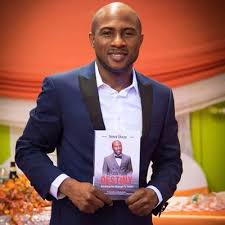
Henry Ukazu writes from New York. He works with the New York City Department of Correction as the Legal Coordinator. He’s the author of the acclaimed book Design Your Destiny – Actualizing Your Birthright To Success. He can be reached via henrous@gmail.com


By Henry Ukazu
Dear Destiny Friends,
Greatness is something we all should aspire to attain as we explore what life has in store for us. To attain greatness is no joke. It takes a lot of sacrifice, patience, knowledge, wisdom, understanding, perseverance, and dedication. Isn’t it true that nothing good comes easy? According to my late dad, Chief Lazarus Anthony Ukazu, “If you want to bear a bear name, one must work hard to earn it”
That means success is not attained on a platter of gold. One must strategically work hard to attain any height or title one desires to have. If one desires to be a President, one must be intentional in the way they live their life. If a student desires to have a perfect Grade Point Average (GPA), the student must begin from their first year of college to have good grades; if an employee desires to rise up to a managerial position, the employee must put in the work by ensuring that they are punctual and their work ethic is top-notch. I can go on, but as the sage will say, a word is enough for the wise.
Aspiring for greatness can be difficult, no doubt, but it’s doable. One of the easiest ways of attaining greatness is by knowing yourself. Knowing who you are is a critical and fundamental tool necessary for success because it helps to speed up the process. One may be wondering why I said knowing oneself is the easiest and fastest way to succeed in life. Well, the answer is not far-fetched. According to Oscar Wilde, “Be yourself because others are taken”. This simply means one must focus on what they are naturally good at. It makes no sense to struggle to be what you are not. Like, I always say, you can copy my style, but you can’t imitate my creativity.
That said, it’s important for one to ask oneself: what’s that one thing they are good at; what’s that one thing one doesn’t struggle to do; what’s that one thing most people compliment about them; what’s that one thing you can do and you won’t be stressed; what’s that thing you can do for free and you’ll care less whether you are paid or not; what’s that one thing you can do with relative ease if you are woken from the sleep and you’ll do it well? If you were able to answer any of these questions, then you are fifty percent nearer to greatness. The other fifty percent is for one to develop that inherent talent or gift in them.
The interesting thing about self-discovery is that it helps one to spend less time and energy on a project that won’t add value to their life. For instance, if you know you are good at a particular project or subject, or have expertise or creativity in a particular skill, you’ll stand a better chance of succeeding faster in life when you hone it than learning a new skill that you’ll have to develop. That’s why it’s good to know oneself.
During my formative years in the USA, I engaged in many activities trying to figure out my path. I began by studying taxation law at New York Law School, a major I didn’t like. I worked in a tax firm, hoping I would find joy in the money I made. That turned out to be an illusion. I worked in a small boutique law firm; I worked in a Not-for-profit organization; I worked in a private corporation as a Case Manager; I also worked as an entrepreneur at one point, and now I am currently in the public sector. I did all this just to figure out my path.
In all of these, I was still confused, trying many things. My clarity began when I got a job as a Case Manager; that job gave me clarity, focus, and purpose to know what I should be focusing on.
Again, my writing skills gave me a better understanding of who I am because it projected my image. Today, some people look at me and say I am great simply because I have three books to my name; I have written hundreds of articles in addition to meeting great people the world has celebrated. But the truth is that I discovered what I love, what I am doing and building, and the universe conspired to connect me to the right people, in addition to attracting opportunities to me.
I can say for a fact that, assuming I worked in a tax firm as advised just because of the associated money I might make, I would be feeling frustrated and depressed, even though I might have made money, which is not even guaranteed.
The same principle is applicable to anyone who studies a major or works in an establishment they don’t like. They might make money, but not in the major. I have seen nurses, doctors, engineers, lawyers, etc. who are making good money but are not happy, and I have seen people who didn’t study professional courses, some didn’t even have a college degree, yet are extremely successful and happy.
What does that tell you? They have either discovered what makes them unique, or they are happy with their major. Alternatively, it can be a combination of both.
The message here is to focus on what you are good at and develop it. The world will come to seek your services wherever you may be on planet Earth.
Furthermore, according to John Maxwell’s father, if you want to be great, you need three things: Value people, believe in people, and unconditionally love people for who they are. These are great ways to succeed in life, especially if one desires to make a fortune out of life.
For me, when I write, I think about valuing people, believing in people, and unconditionally loving people. Also, when I speak, I value people, I believe in people, and unconditionally love them. Why? Because people do well when people think well of them. It’s wonderful when a person believes in the leader, but it’s powerful and wonderful when the leader believes in the people.
Do you know that when you value people, it brings out the best in them? People love to be appreciated; people love to get approval, people love to get attention; people love to be accepted for who they are; and people love to be valued and respected. The simple truth about value is that when I value people, it brings out the best in me.
Today, I will ask you: are you aspiring for greatness in your family, school, workplace, community, etc. If yes, your task will be to focus on developing what you are naturally good at.
Henry Ukazu writes from New York. He works with the New York City Department of Correction as the Legal Coordinator. He’s the founder of Gloemi. He’s a Transformative Human Capacity and Mindset coach. He is also a public speaker, youth advocate, creative writer, and author of Design Your Destiny- Actualizing Your Birthright to Success, Unleash Your Destiny, and The Six Pillars of Success. He can be reached via info@gloemi.com

By Tolulope A. Adegoke
“When the ground trembles beneath the feet of the unprepared, those who have built upon the rock of foresight shall not only stand but flourish. Goshen was not a place of escape—it was a place of productivity amidst plagues, light amidst darkness, and life amidst death. Prepare not to survive, but to live.” – Tolulope A. Adegoke, PhD
The year 2030 isn’t the end of the world—but it may be the end of the world as you know it. Here’s how to prepare, not just to survive, but to thrive.“
Introduction: Why 2030 Matters More Than You Think
The year 2030 isn’t just another date on the calendar. It’s a convergence point where multiple global forces collide—artificial intelligence reaching mass deployment, climate impacts intensifying, economic systems restructuring, and the United Nations Sustainable Development Goals reaching their target year.
The question isn’t whether these changes will happen. It’s whether you’ll be positioned to flourish when they do.
Goshen wasn’t merely a place of survival—it was a place of productivity, light, and life amidst surrounding darkness. GOSHENOMICS applies that same principle to today’s realities: productive preparation that builds assets, communities, and systems designed to thrive when others merely endure.
This isn’t about fear. It’s about faith, purpose, and proactive action. Let’s explore how.
Part One: Agribusinesses—Food Production as the Foundation
Why Food Security Matters Now More Than Ever
Agriculture remains the bedrock of civilization. Yet smallholder farmers across the globe face systemic barriers—limited irrigation, climate vulnerability, and inadequate access to technology. When these farmers struggle, everyone feels the impact.
“Build skills, understand food, and build redundancy.” This isn’t survivalist rhetoric—it’s strategic foresight.
The GOSHENOMICS Solution: Precision Agriculture
Precision Agriculture at Scale: Integrating machine learning and drone technology transforms smallholder farming from subsistence to surplus. Field research demonstrates significant increases in crop yields alongside substantial reductions in water usage when IoT sensors, weather forecasting platforms, and autonomous drones work together.
Autonomous Irrigation Systems: Collaborative multi-drone systems with swarm intelligence enable real-time, localized irrigation decisions. These systems adapt to changing conditions, conserve water, and optimize crop health continuously.
Software for Forecasting: Build platforms that analyze weather patterns, soil conditions, and market data to inform planting, harvesting, and distribution decisions. This moves agriculture from gambling on climate to managing climate as a calculated variable.
How Drones Are Revolutionizing Agriculture
Drones equipped with multispectral and thermal cameras detect stress from pests, diseases, nutrient deficiencies, and water shortages before problems spread. Drone-based spraying systems apply pesticides and fertilizers with exceptional precision, reducing chemical usage by up to ninety percent while improving efficacy. Drones also track livestock movement, detect illness, and monitor herd health in extensive grazing systems. They generate detailed topographic maps that inform planting patterns, drainage planning, and water management decisions.
The Implementation Roadmap
Start now by identifying local food production gaps and designing scalable interventions. Build redundancy by developing multiple production sites, diverse crop portfolios, and storage systems. Finally, integrate by connecting production to processing, storage, and distribution networks that keep value within communities.
Part Two: Community—The Commonwealth of an Ecosystem
Why Community Matters
Resilience isn’t individual—it’s communal. The Commonwealth of an Ecosystem recognizes that no farm, business, or household is an island. Survival and flourishing depend on interconnected systems of mutual support, shared resources, and collective capability.
Strong communities are the essential social infrastructure that enables individuals and families to weather crises and seize opportunities.
The Evidence
International development programs have demonstrated that grassroots initiatives generate measurable returns. Climate adaptation investments at the community level have restored hundreds of thousands of hectares of degraded land, reached millions of people, and moved communities toward sustainable revenue generation.
The lesson is clear: communities aren’t passive recipients of aid—they’re agents of change.
The GOSHENOMICS Approach
Build local institutions that formalize community governance structures to manage resources, make decisions, and allocate investments transparently. Create resilient networks because social capital—connectedness, trust, networks, and collective capacity—is the infrastructure of community resilience. Self-organizing communities with agency and shared responsibility weather crises more effectively.
Integrate indigenous knowledge with technology because the most sustainable solutions anchor technology in local wisdom and practice. Context-adapted systems demonstrate higher adoption rates and better outcomes. Finally, build capacity and skills by investing in agricultural capabilities, technical competencies, business acumen, and leadership development.
Part Three: Technology—Building the Infrastructure of the Future
Solar Electrification
Solar energy offers a reliable, sustainable, and increasingly cost-effective solution for electricity access. Off-grid standalone solar systems eliminate dependence on fragile grid infrastructure. Solar microgrids provide community-scale power to multiple users through local distribution networks. Solar water pumping delivers water for agriculture without grid electricity or diesel. Solar refrigeration enables cold storage for agricultural products, vaccines, and other temperature-sensitive goods.
The economic benefits are substantial. Solar systems eliminate ongoing fuel costs, reducing operating expenses. Energy independence reduces dependence on imported fuels and vulnerable infrastructure. Reliable electricity enables productive enterprises that create employment and income. Quality of life improves through lighting, communication, education, and health services.
Boreholes and Water Infrastructure
Sustainable groundwater extraction through properly designed boreholes with solar-powered pumps delivers water efficiently without ongoing fuel costs or emissions. Smart irrigation systems—including drip irrigation, automated scheduling, and remote monitoring—optimize water use and improve yields. Water storage through tanks and systems buffers against variable extraction rates and ensures availability during dry periods.
Software and Digital Platforms
Agricultural software includes farm management systems, weather forecasting, yield prediction, and market intelligence. Community software encompasses information sharing platforms, resource management systems, and emergency alert networks. Economic software covers supply chain management, financial services, and market platforms. Forecasting and planning tools include scenario planning, risk assessment, and decision support.
Part Four: The Daniel Principle—Integration Without Compromise
Strategic Engagement and Boundary Setting
Integration isn’t compromise unless you eat the king’s meal. The Daniel Principle—named for the biblical figure who maintained his identity and integrity while serving in a foreign empire—is central to GOSHENOMICS.
Know What to Say No To
Not all technology serves human flourishing. Not all partnerships align with community values. Not all innovations are worth adopting. Discernment is essential.
Build Productive Assets, Not Speculative Ones
Don’t spend the next four years predicting catastrophe while building nothing. When AI is “in vogue,” invest in what endures: skills that enable productive work, community that provides mutual support, food systems that ensure nourishment, energy independence that provides security, and water security that sustains life.
Work Yourself Out of Your Job
True resilience means you’re not irreplaceable—it means the community continues functioning without you. Train successors who can perform your roles. Document knowledge so it can be transferred. Build systems that function with limited supervision. Create redundancy so no single point of failure exists.
Part Five: What to Expect Toward 2030
Artificial Intelligence Deployment
Artificial intelligence will achieve mass adoption across all sectors of economy and society. Labor markets will experience significant shifts as some jobs are eliminated and others transform. Productivity gains will create opportunities and disruption. Energy demand will increase, placing pressure on infrastructure. Governance challenges will require regulation, ethics, and social adaptation.
Climate Impacts
Climate change will bring increasing extremes with more frequent and severe weather events. Agricultural impacts will include shifting growing conditions and production zones. Water scarcity will intensify pressure on resources. Population movements will increase as climate-induced migration grows. Infrastructure will face pressure, requiring investment in resilience.
Economic Shifts
Markets will restructure as some transform or disappear. Investment patterns will shift toward climate adaptation and technology. Value chains will change toward greater resilience and sustainability. Financial systems will adapt to new risks and opportunities.
Healthcare and Demographics
Medical breakthroughs will extend lifespans and improve quality of life. Demographic shifts will create different challenges across regions. Health systems will face increasing pressure as demand grows.
Part Six: The GOSHENOMICS Preparation Strategy
Build with the Ground Beneath Your Feet
Build on local foundations using local resources, knowledge, and capabilities. Invest in physical infrastructure including land, buildings, equipment, water, and energy. Build strong community institutions with robust governance and management systems. Invest in relationships and networks that provide mutual support.
Have Food Growing Around You
Prioritize local food production for local consumption. Build food redundancy through multiple production sources, storage options, and supply channels. Produce nutritious, diverse food that supports health and wellbeing. Ensure food sovereignty so communities have control over their food systems.
Have Technology in Your Palm
Deploy appropriate technology that meets community needs and capabilities. Develop digital literacy skills to use technology effectively. Build technology redundancy through multiple options and backup systems. Maintain data sovereignty so communities control their data and information.
Have Community Beside You
Cultivate strong social networks through connected communities that support one another. Develop shared purpose around common values, vision, and goals. Build capacity for collective action to act together effectively. Establish mutual support systems for community members.
Have Purpose Inside You
Maintain a clear vision of desired future and pathway to achieve it. Sustain commitment and dedication to realizing the vision. Embrace adaptability and willingness to adjust approaches while maintaining purpose. Develop resilience and ability to persevere through challenges.
Part Seven: Your Four-Year Deployment Agenda
Year One: Assessment and Foundation
During the first year, conduct a comprehensive assessment of current conditions, resources, and capabilities. Develop detailed plans for each GOSHENOMICS dimension. Build community awareness, commitment, and participation. Secure necessary resources—financial, technical, and human. Launch demonstration projects in critical areas.
Year Two: Implementation and Learning
In year two, launch full implementation of priority initiatives. Develop necessary skills and capabilities through training. Track progress and learn from experience. Adjust approaches based on emerging insights. Build strategic partnerships with external organizations.
Year Three: Scaling and Integration
Year three focuses on expanding successful initiatives to wider areas. Connect different dimensions into coherent systems. Create backup systems and multiple options. Ensure ongoing operation and maintenance. Prepare for leadership and management transitions.
Year Four: Optimization and Readiness
The final year involves refining systems based on operational experience. Conduct comprehensive evaluation of outcomes and impact. Address remaining gaps and vulnerabilities. Confirm readiness for 2030 challenges. Implement leadership and management transitions.
Conclusion: Deploy GOSHENOMICS—Not for Survival, but for Living
2030 may not be the end of the world, but it may be the end of the world as you know it. When the bubble bursts—and it will—some markets, some systems, some assumptions will change and become strange realities.
It will be negligent if this happens and catches you by surprise with the ground above your feet.
The GOSHENOMICS framework is practical, actionable, and grounded in proven principles while projecting toward future realities. It emphasizes tangible assets, skills, and relationships over speculation and fear.
Don’t spend the next years predicting catastrophe while building nothing. Build productive assets. Build skills. Build community. Build redundancy. Build GOSHEN.
With the ground beneath your feet, with food growing around you, with technology in your palm, and community beside you, and purpose inside you—you’re ready.
Don’t fail in 2030—build for it.
Key Takeaways for Action
Food: Build local, diversified, resilient food systems with precision agriculture.
Community: Strengthen social capital, institutions, and mutual support networks.
Economy: Build productive assets, community-based enterprises, and diversified income.
Technology: Deploy solar, smart irrigation, drones, and digital platforms strategically.
Integration: Engage with external systems without compromising core values.
Redundancy: Build multiple options, backups, and alternatives for critical functions.
Skills: Develop agricultural, technical, business, and leadership capabilities.
Purpose: Maintain clear vision, commitment, adaptability, and resilience.
GOSHENOMICS is not about fear—it’s about faith, purpose, and proactive action.
Build for 2030. Build for flourishing. Build GOSHEN.
“Deploy GOSHENOMICS—not for survival, but for living.”
Dr. Tolulope A. Adegoke, AMBP-UN, is a globally recognized scholar-practitioner and thought leader at the nexus of security, governance, and strategic leadership. His mission is dedicated to advancing ethical governance, strategic human capital development, resilient nation-building, and global peace. He bridges the worlds of academic rigor and practical application, contributing to leadership discourse at the highest levels of policy and practice. He can be reached via: tolulopeadegoke01@gmail.com, globalstageimpacts@gmail.com
By Henry Ukazu
Dear Destiny Friends,
Wing means different things to different entities. To a bird, it means the ability to fly; to an angel, it means a medium of delivering goodwill messages; to a bat, it’s seen as a form of movement from one spot to another, and many more. The million dollar question, therefore, is what’s the purpose of a wing to you as an individual? To fly, to jump, or have fun with?
We all have wings, no doubt, but most people are not in the habit of using their wings well. Some even use their wings for the wrong reasons. But your wings can serve as an asset to your personal and professional development if properly activated.
To drive home how wings can serve as a tool for enhancement, I will explain using a bird. As we all know, a bird’s wing is for flying. The eagle is considered the king of the sky or king of the air because its ability to fly far above the earth and reach great altitudes represents untethered freedom, liberation from bondage, and a perspective that rises above worldly troubles.
The reason the eagle can fly is simply because of its wings. The wing does not depend on the eyes to fly; no, the eye serves a unique purpose that enables the eagle to see what other birds can’t see. The eagle’s eye gives it clarity, hyper-focus, heightened awareness, and the ability to see the bigger picture beyond immediate distractions.
The birds are not an exception. Do you know that if a bird lands on a branch, the branch does not break; even if it breaks, the bird is not scared of falling because it trusts its ability to fly because of its wings. Let me ask you a question: when a bird lands on a branch of a tree, does it trust the branch not to break, or does it trust its ability to fly? One may say both to an extent; however, I will say the bird will trust its wings more because the bird ought to have common sense to know what can protect and sustain it, and that is its wings.
The main reason the bird won’t be scared is simply because of its wings. The bird knows that even if the branch breaks or falls apart, it won’t fall; rather, it will fly away to safety. This is how simple life works: most times, we depend on people, money, and other things to succeed, but the main person we ought to depend on is God, as well as believe in ourselves. And to believe in ourselves, we must have self-confidence.
One of the greatest limiting factors preventing us from succeeding in life is lack of confidence. Many people don’t believe in themselves; even those who believe in themselves sometimes have doubts. In some cases, they lack the confidence to take the bold step. If you have confidence like a bird, you won’t be scared if anyone leaves you. Even if you are fired from your job or experience challenges in life, you will know it’s for a short period of time and that you can bounce back.
Still on the story of the bird, the birds trust their wings to fly and not the branch. The birds know that anything can happen to the branch. For instance, a hunter may try to shoot the tree, and the force can affect the branch; a big animal with weight may try to attack the bird, and the weight may break the branch. It could be any reason.
So, in real life, we’ll be tested; life is going to test the branches we are relying on or standing on. These branches can be our friends, family members, our health, religion, business, money, relationship, academics, jobs, etc. All these branches will shake; some will disappear without warning. Question: What will you do when your “branch” falls apart? Do you cry over spilt milk, or will you activate your wings of perseverance? Let me tell you, your wings belong to you. Your wings are your power. They cannot be taken away from you no matter what, unless you give them up.
As mentioned earlier, your wings can be your confidence, perseverance, character, knowledge, skill, or even gift/talent. All these virtues don’t come from what you are standing on. They should come from inside of you. So, don’t give up that inherent power in you. Remember, if the whole world is telling you you can do something, and you know you can’t do it, you will fail, but if the whole world is telling you you can’t do something, and you know you can do it, you will succeed because 1 John 4:4 says, he that is in you is greater and strong than he that is in the world.
In my journey through life, I discovered that many people trust their branch for approval, comfort, and sustenance; they forget that they are born to fly.
It’s instructive to note that life doesn’t offer us a straight road. Life is not tested when everything is stable around us; rather, it is tested when there’s chaos and when everything around us begins to shake. And, as such, it does not punish you when your branch breaks; rather, it reminds you who you are, and it instructs you to remember what’s always yours from the start. All you need is the key to activate your wings so you can fly. Don’t allow failure to define you. Do you see why it’s important to trust your wings?
I need you to understand that if you learn to trust yourself by trusting your wings, you won’t be afraid of failing. Trust me, your wings are not safe because the world is safe. The world is not safe and will never be safe, so trust your wings because you can overcome any storm or challenges that come to you when everything falls apart
As I begin to wrap up, I need you to look into yourself and ask yourself, what’s the wing inside of me? What’s the wing I’m yet to activate? If you find it, please activate it and trust it. Remember, you’ll experience challenges and setbacks, but that’s part of the process of trusting your wings. So, my final message to you today is: Stop trying to fix the branch when it’s time to fly. Fly, because it’s your heritage.
Henry Ukazu writes from New York. He works with the New York City Department of Correction as the Legal Coordinator. He’s the founder of Gloemi. He’s a Transformative Human Capacity and Mindset coach. He is also a public speaker, youth advocate, creative writer, and author of Design Your Destiny- Actualizing Your Birthright to Success, Unleash Your Destiny, and The Six Pillars of Success. He can be reached via info@gloemi.com


