
Metro
Food for Living: Time to Leave Your Comfort Zone

- /home/rhoncare/pointblank.ng/wp-content/plugins/mvp-social-buttons/mvp-social-buttons.php on line 27
https://pointblank.ng/wp-content/uploads/2019/04/download.jpeg&description=Food for Living: Time to Leave Your Comfort Zone', 'pinterestShare', 'width=750,height=350'); return false;" title="Pin This Post">
- Share
- Tweet /home/rhoncare/pointblank.ng/wp-content/plugins/mvp-social-buttons/mvp-social-buttons.php on line 69
https://pointblank.ng/wp-content/uploads/2019/04/download.jpeg&description=Food for Living: Time to Leave Your Comfort Zone', 'pinterestShare', 'width=750,height=350'); return false;" title="Pin This Post">
By Henry Ukazu
Greetings Friends,
If we are truly honest to ourselves, we will admit that we like to be comfortable with all the good things life can offer. There’s hardly anyone who doesn’t like comfort. No, no one. We like to be financially stable/independent; we like our business to boom; and not forgetting the fact that we like our family and friends to be comfortable. We always like it when things go our way. In general, we like our path to be comfortable. Nobody likes to be stressed. Stress itself is toxic to human nature. This comfort has left a dent in the minds of some lazy beings which made them remain in their comfort zone. However, it should be noted that being comfortable in this context is relative. We are not concerned with the literal, denotative or connotative meaning of being comfortable, like being complacent and docile. Our focus here is how to go over and beyond by appreciating yourself, your business and being true to whatever you are doing as opposed to looking and wishing you have what other people have.
In order for you to move on in life, you need to leave your comfort zone. Becoming the best version of yourself means that you’re going to move away from where you are, so you must be willing to shred your old self. When you’re raising your own bar, you’re essentially creating a gap between you and people around you. As usual, your old self is going to resist, but it’s up to you to reject by not allowing the resistance to have its way.
Human beings by nature, are insatiable. We always have the urge to get the good things of life even if it means going the extra mile just to satisfy our appetite. For example, we always look for title in order to appear successful in the sight of men or approved. We believe if we become a partner in a major law firm we’ll be happy and successful; we believe if we have hundreds of thousands of dollars or even millions of dollars in our bank accounts, we’ll literally be happy; we believe, if we become a lead supervisor in a reputable company or organization or even attain a particular position in life, we’ll feel fulfilled. In reality, it doesn’t work that way.
We all have what it takes to succeed in life, all you have to do is look internally and figure out one of the problem/challenges facing the world and then use your creative skill, knowledge, talent, etc. to solve it. We all have the potentials of succeeding in life. I call it the seeds of greatness living in us. All we need to do is to activate it and watch it grow. Don’t look down on your gift, talent or the little work of your hands, it might be the secret to your turnaround in life. You might even be solving one of the greatest problems/challenges facing the world today if you stay committed to your purpose. As a word of advice and encouragement, start small and build, but always have the big picture in your mind.
There’s always an underlying pressure to be the number one in the world. Nobody wants to play the second fiddle. We all want our business to top the brand/market, we all want to be seen as the most talented, successful, best entertainer, student, worker, writer, etc. Sometimes, we need these affirmations to feel good about ourselves, otherwise, we won’t feel good about ourselves. But we fail to realize that every case is different and each and every one of us is running a different race. Most times as human beings, we seem to forget who we are and the power we have in our possession. If only we can work on ourselves by striving to be a better person than what we were yesterday we’ll literally out stand ourselves. Sometimes, we even wish to imitate our friends or colleagues who go on vacation, gain promotion, etc. This attitude makes us to wish we have what other people have, and if this habit is not controlled, we might begin to breed jealousy in our hearts. But if you can stay true to your lane by appreciating yourself, your business in addition to looking internally and hearing the inner still voice speaking to you, you’ll succeed. Just play by the rules, work hard and do what you have to do.
The journey of life is not a competition, though a healthy competition is good. Let me share a little story with you; it was said that two labourers Mr. A and Mr. B were digging the ground to get gold. Both of them spent a considerable amount of time but all to no avail. They had the hope and believe that they will eventually find gold. In fact, at a stage, they were almost giving up hope because they didn’t see any hope/chance of finding gold. While one of the men felt all hope was gone, the other continued to strike the wall and luckily for him, he was able to find gold and he happily went home feeling good. When Mr. B saw his colleague had found gold, he left his spot to concentrate on his partner’s spot with hope luck will favor him, he didn’t know there were piles of gold in front of him. In fact, all he needed was little patience to reap the fruits of the labour. That’s how life works, most times, we are always busy focusing on other people’s work not knowing that we can spend the same considerable amount of time building ourselves and our empire. The moral of this post is that it’s better to concentrate on your craft than believing its green on the side of the lawn. Mr. B was too myopic to find out that he was merely surrounded by gold.
Be informed, in the journey of life, you are not running anybody’s race, you’re runing your race, and don’t make the mistake of competing with anyone, otherwise, you might be frustrated. Quit driving to outperform someone. Be comfortable with who you are, your business, and whom God has called you to be. It takes a secure person to say I’m comfortable with what I am, who I am and what I am doing or building. Don’t be concerned with another person’s story, rather, write your own story and chart your path. Don’t compare the sun and the moon, they shine when it is their time. Your race is made up of no other person but you.
Let’s share some ways on how we can be the best version of ourselves.
1. Amplify your strengths. You can be anything, but you can’t be everything. Concentrate your energy on what makes you happy. Always maximize your strength and minimize your energy. You can do this by majoring on your strength and working on your weakness. One of the best ways to figure out what you can do well is doing any positive work whenever you are called. It doesn’t matter if you are just waking up or you are not paid to do it.
2. Live your every day to the fullest by doing what’s necessary. Learn to differentiate what’s within and beyond your circle of control. Once you’ve done your best, what happens, happens for a reason. Be patient and keep grinding.
As long as you’re working in the right direction, things will work out. The most important of all, enjoy the journey — even if it sucks sometimes. In summary, let me give you a rule of thumb, don’t compare yourself, celebrate yourself. It is only by so doing, we’ll be comfortable with our lives and business.
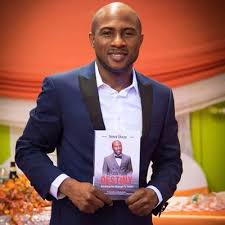
Henry Ukazu writes from New York. He works with the New York City Department of Correction as the Legal Coordinator. He’s the author of the acclaimed book Design Your Destiny – Actualizing Your Birthright To Success. He can be reached via henrous@gmail.com


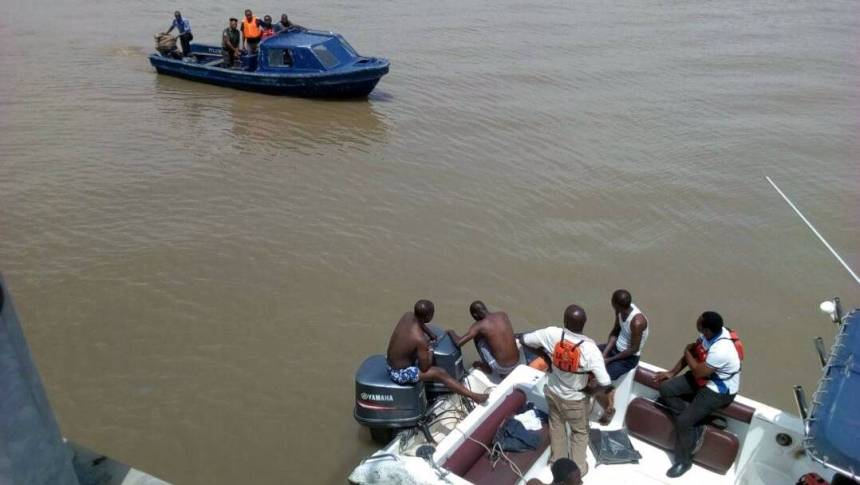
Several persons have so far been missing after a wooden boat carrying more than 70 mourners and over 30 motorcycles overturned while crossing the River Katsina-Ala in Buruku Local Government Area of Benue State.
The incident reportedly occurred around 11am on Saturday, October 3, 2026, at the Buruku River crossing point.
The passengers, most of whom were said to be from Mbayon in Gboko Local Government Area, were returning after attending the burial of a relative on the opposite side of the river when the boat capsized.
Several occupants were reportedly rescued from the water, while search and rescue personnel continued efforts to locate those who remained unaccounted for as of Saturday afternoon.
Reports said the wooden boat was severely overloaded with passengers and motorcycles before its engine reportedly developed a fault during the journey.
“The boat was overloaded with many people and over 30 motorcycles, and they were coming from the Logo LGA side of the River at about 11am when the incident happened.
“Many persons have been rescued, but as we speak, I cannot tell you the actual number of persons that have not been seen or rescued from the river because the search is still ongoing. But many persons have not been seen as we speak,” an eyewitness said.
The Chairman of Buruku Local Government Area, Raymond Zege, confirmed the mishap, explaining that the passengers were mourners from Gboko who had travelled across the river for a burial ceremony.
Zege said the boat was carrying more than 70 people when its engine stopped working in the middle of the return trip, causing panic among those on board.
“The victims were mourners from Gboko who went for a burial on the other side of the river.
“They boarded a boat which was overloaded with over 70 persons. In the middle of the journey the engine of the boat failed, and they became panicky.
“And they also ran into a heavy wave, and the boat capsized before the boat that was sent to rescue them got to them,” he said.
The council chairman said authorities had yet to determine the precise number of missing persons, although more than 60 passengers had reportedly been rescued.
“At the time we speak, we do not know the number of persons missing. So far we have not seen about six persons, but we have rescued over 60. Search and rescue operations are ongoing,” he said.
Zege urged passengers using the waterway to observe maritime safety guidelines, particularly by wearing life jackets during crossings.
He disclosed that the local government had supplied life jackets for people using the route, but said enforcement had sometimes been difficult because some commuters declined to use the safety equipment.
“People can be very difficult. There is a law, and we have provided life jackets for every commuter crossing that route. When they come and the maritime workers try to enforce the law, some commuters complain that they have health issues or that they do not want to share life jackets used by other people.
“We have provided the jackets, and the state government is also supporting efforts to ensure that maritime safety regulations are enforced,” he said.
The chairman further said maritime officials regularly conduct enforcement operations and urged commuters to cooperate with them.
“Sometimes the maritime officials come for enforcement, including at night. People should cooperate with them because the safety measures are meant to protect lives,” he said.
Meanwhile, the Benue State Commissioner for Marine and Blue Economy, Denis Iyaghigba, also confirmed the incident in a statement issued on Saturday.
Iyaghigba said his ministry had received preliminary information about the accident and appealed to relatives of the passengers and members of the public to remain calm while rescue teams worked to establish the number of people involved.
“I have received preliminary reports of an unfortunate boat mishap at the Buruku crossing point this morning, Saturday, 3rd October, 2026,” Iyaghigba said.
“I wish to assure members of the public, particularly families of those who may have been aboard the boat, to remain calm and await verified information from the appropriate authorities. No effort will be spared to ensure their safety.”
The commissioner said he had instructed boat operators and their union downstream to join the ongoing rescue operation.
“I have directed the boat operators and their union downstream to mobilise and assist in the ongoing search and rescue operation,” he said.
He assured that “further details will be communicated as the rescue operation progresses.”
As of the time of filing this report, rescue operations were still underway, with authorities yet to provide a final account of the total number of people aboard the boat or the confirmed number of those still missing.

By Tolulope A. Adegoke
“Sixty-six lanterns lit, and not one flame asked permission of the wind. That is the arithmetic of this land—where the storm arrives first and the light arrives anyway. We were not handed a smooth road; we were handed feet, and feet have always been enough. What others call odds, we call the weight that gives our stride its meaning. So let the doubter keep his ledger of our failures; we keep a different record—one written in the stubborn grammar of a people who wake up, try again, and refuse to hand their tomorrow to anyone else. This soil does not owe a blessing to the mouth that curses it. Speak well of her, then, not because she is finished, but because she is still becoming—and becoming is the holiest thing a nation can do. We rise. We shine. Not after the storm—inside it.” – Tolulope A. Adegoke, PhD
Introduction: The Audacity of a Nation’s Hope
There is a peculiar kind of strength that is born not in the absence of hardship, but in the furnace of it. It is the strength that refuses to be extinguished by the storms of adversity, the strength that looks at towering mountains and dares to imagine a path over them. This is the strength that defines Nigeria. As we mark sixty-six years of nationhood, we do not gather merely to recount the ease of our journey, for the road has been anything but smooth. Rather, we gather to celebrate a profound and unyielding resolve: the decision to rise, and in rising, to shine.
The story of Nigeria is not a fairy tale of uninterrupted triumph. It is a complex, textured narrative of a people learning to govern themselves, of a federation of over two hundred and fifty ethnic nationalities striving to forge a common destiny. It is a story punctuated by growing pains, by moments of national introspection, and by challenges that have tested the very fabric of our unity. Yet, it is precisely within this crucible that the Nigerian spirit has been refined. We rise, not because we are oblivious to our challenges, but because we have made a conscious, collective decision to be resilient—to confront our difficulties head-on and to overcome them.
The Anatomy of Nigerian Resilience
Resilience is a word often used lightly, but in the Nigerian context, it is a lived reality. It is the trader in Onitsha who, despite economic fluctuations, opens her stall at dawn with a smile and a prayer. It is the tech entrepreneur in Yaba who, against the backdrop of infrastructural deficits, codes the next solution for a global market. It is the teacher in a rural community who, with limited resources, inspires a generation to dream beyond their immediate horizons. It is the farmer in the Middle Belt who, season after season, plants seeds of hope in a land that has known both bounty and bloodshed.
This resilience is not a passive endurance; it is an active, creative force. It is the ingenuity that birthed the mobile money revolution, the Afrobeats genre that has taken the world by storm, and the Nollywood industry that tells our stories to a global audience. It is the intellectual prowess of our scholars, the indomitable spirit of our athletes, and the creative genius of our artists. When we say “We Rise,” we are acknowledging this irrepressible energy. We are affirming that no challenge—be it economic recession, security concerns, or social unrest—can permanently dim the light of a people determined to succeed.
The Certainty of Our Arrival
We are a nation in a hurry, yet we must also be a nation with the patience of a farmer. The journey to national greatness is not a sprint; it is a marathon. We may stumble. We may take a wrong turn. We may even, at times, feel like we are moving in circles. But the crucial thing is that we are moving. We are learning. We are evolving. The mistakes of yesterday become the lessons that inform the policies of today and the vision of tomorrow.
It may take a while, but it is certain that we will get it right. This certainty is not borne of arrogance, but of an unshakeable faith in the Nigerian project. It is rooted in the knowledge that a nation of such immense human and natural potential cannot be permanently held back. Our youth, our greatest asset, are increasingly innovative, globally connected, and fiercely patriotic. They are not waiting for a perfect Nigeria; they are actively building it, one startup, one social movement, one creative work at a time. The trajectory may be zigzag, but the destination—a prosperous, united, and equitable Nigeria—is non-negotiable.
Nigeria Shines Against All Odds
To shine against all odds is the quintessential Nigerian story. It is to excel on the global stage when the home front is fraught with difficulties. It is the Nigerian doctor performing groundbreaking surgeries abroad, the Nigerian professor leading research at top universities, the Nigerian artist headlining international festivals. These individual and collective successes are not anomalies; they are reflections of a national character that is intrinsically brilliant.
The Nigerian diaspora is a testament to this. From Houston to London, from Toronto to Dubai, Nigerians are making their mark, contributing to economies, cultures, and knowledge systems. They are not just surviving; they are thriving. And in their success, they carry a piece of home with them—a resilience, a vibrancy, a hustler’s spirit that is uniquely Nigerian. This is the light that shines, a beacon of what is possible when the Nigerian spirit is given room to flourish.
A Word on Cursing the Land
There is an ancient wisdom that is deeply relevant to our national conversation: the land that you curse may not be empowered or capable enough to bless you in return. To constantly disparage one’s country, to speak of it only in terms of its failures and to ignore its immense potential, is to poison the well from which one must drink. Patriotism is not blind allegiance; it is loyal, constructive criticism married to a deep and abiding love. It is the difference between a prophet of doom and a partner in progress.
We must be careful with our words. Our words shape our reality. If we speak of Nigeria only as a cursed land, we sow the seeds of despair in our own hearts and in the hearts of the next generation. Instead, we must speak of a land of promise, a land of resilient people, a land that is worthy of our best efforts and our most profound hopes. The same land that some dismiss is the land that has produced some of the world’s most remarkable minds and most vibrant cultures. To bless Nigeria is to bless ourselves, for our fate is inextricably linked to that of the nation.
Sixty-Six Years: A Commemoration of Hope
Sixty-six years is a significant milestone. It is a period that allows for reflection on how far we have come from the hopeful dawn of independence in 1960. We have weathered civil war, military dictatorships, and the turbulent transition to democracy. We have seen our economy rise and fall with the vagaries of oil prices. We have faced the scourge of terrorism and the challenges of internal security. Through it all, the Nigerian state has remained, and the Nigerian spirit has endured.
As we celebrate, we are not celebrating a finished product. We are celebrating a work in progress. We are celebrating the audacity of a people who, despite their differences, have chosen to remain together. We are celebrating the promise of a future that we can build together. We are celebrating the fact that, in the words of our national anthem, “the labours of our heroes past shall never be in vain.”
Conclusion: A Blessing for the Journey Ahead
God bless Nigeria. This is not just a phrase; it is a prayer. It is a petition for divine guidance, wisdom, and protection over our land and our leaders. It is a prayer for the healing of our divisions and the strengthening of our unity. It is a prayer that we may be wise stewards of the resources and talents with which we have been so abundantly endowed.
As we step into the next chapter of our national story, let us recommit ourselves to the principles of resilience, hope, and hard work. Let us be a generation that builds bridges rather than walls, that plants trees under whose shade we may never sit, and that speaks life into our nation rather than death.
We rise because we must. We shine because our light is too bright to be hidden. We overcome because our collective will is stronger than any challenge. It may take a while, but the destination is sure.
God bless the Federal Republic of Nigeria.
Happy 66th Independence Anniversary!
Dr. Tolulope A. Adegoke, AMBP-UN, is a globally recognized scholar-practitioner and thought leader at the nexus of security, governance, and strategic leadership. His mission is dedicated to advancing ethical governance, strategic human capital development, resilient nation-building, and global peace. He bridges the worlds of academic rigor and practical application, contributing to leadership discourse at the highest levels of policy and practice. He can be reached via: tolulopeadegoke01@gmail.com, globalstageimpacts@gmail.com

The Edo State Special Criminal Court has sentenced four men to death for their involvement in the kidnapping of a woman at the Vegetable Market along Airport Road in Benin City.
Justice Aigbona Momodu handed down the sentences after finding the defendants guilty on multiple counts connected to the kidnapping case.
The convicts are Marvellous Isaac, Wisdom Michael, Rufus Emete Michael and Gift Raphael.
Isaac and Michael were sentenced to death on counts two through nine. They also received separate prison terms on other counts, including seven years on count one, while Isaac was sentenced to 10 years on count 10 and life imprisonment on count 11.
Rufus Emete Michael was sentenced to death on counts two, three, four, six and seven, in addition to a seven-year prison term on count one.
The fourth defendant, Gift Raphael, was sentenced to death on counts two, four, six and eight and received seven years imprisonment on count one.
Delivering the sentences, Justice Momodu ordered that the death sentences be carried out by hanging or lethal injection, in accordance with the court’s judgment.
The court also ordered the forfeiture of a JoJef pump-action firearm and ammunition tendered as exhibits during the trial.
The firearm, identified as Exhibit M, along with two unused cartridges and two spent cartridges listed as Exhibits E and E1, was ordered to be handed over to the Edo State Police Armourer at the State Criminal Investigation Department for destruction.
Justice Momodu directed that the exhibits be transferred to the police through the Deputy Director of the Criminal Division and destroyed within 30 days.
The convictions bring to an end the trial arising from the abduction of the woman at the Vegetable Market along Airport Road, an incident that added to concerns over kidnapping and armed crime in Benin City.


