
Opinion
Food for Living: True Success Lies More on the Journey Than the Destination

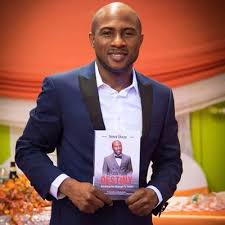
By Henry Ukazu
Greetings my good friends!
It is a great pleasure to be here once again. Please pardon my inability for not being able to write last week. I know some of you might be a little disappointed, honestly, it was due to circumstances beyond my control. I received so many several calls, emails and messages. I promise to do better next time. In whatever in life, I always look at the end in mind, in that way I will be properly guided on where my aim and vision in life lies. This is the more reason why I take my time in writing every week even when I am stressed up because I am addicted to sharing motivational and inspiring articles. As you all may know success in life has to do more with the journey rather than the destination.
Today, I chose to write on the relativity of journey and destination as facilitators of success. Just like any other aspect of life, life is indeed a process. You may heard of the saying success is more of a journey, rather than destination. Some other rational minds opine that the end justifies the means. These assertions are relatively true, however, it all depends on the angle you are looking at it from. We shall be comparing on both factors today but we shall be concentrating more energy on the process (journey).
It is an indisputable fact that in life the journey of a thousand miles begins with a step in the right direction. It is also a fact that little drops of water makes an ocean. Just like a leader needs a team to achieve success, same way success needs to be processed in order for it to be truly justified. With my little knowledge and understanding of mathematics, the process of arriving at the answer via the formula generates more point more that the actual answer itself. True success doesn’t work in isolation. It works in harmony and unison with other component parts and characteristics which I call siblings and friends.
As human beings, sometimes we seem to neglect how far we have come in life. We are always eager to see what we lack as opposed to appreciating what we have. Human beings by nature can be ungrateful. The same analogy is applicable to the journey of success. Let’s take the example of an accomplished author who is now a bestseller. The journey to the top wasn’t easy. He/she had mentors who inspired him/her to write the book, publishers, family members, friends and associates who contributed in one way or the other to the work a great success. To me, they are the real MVP’s as far as I am concerned. They are the people who deserve the main accolades and should be appreciated, but sometimes some irrational beings tend to forget those people who contracted to their success. Also, if a student excels in life to an enviable position in the world (President, CEO, Governor) etc. It will be nice for such person to remember his/her teacher who groomed him/her. It is on this context we shall be discussing about journey and destination to success.
It is interest to note that Edmund Hillary and Tenzing Norgay literally went where no other human had been when they became the first people to reach the peak of Mount Everest. Can you imagine what they must have felt? Pride, accomplishment, fulfillment. Question, did they achieve it alone? No, I guess. Think about the most important achievement in your life. Remember that feeling when you finally reached the summit of your academic career, political ambition, financial status and professional career. If you will agree with me, you didn’t do it alone, there were people behind it and it was truly a journey and process.
Last week I was listening to Joyce Meyers – a charismatic preacher. She was speaking on everyday life. In that message, she said true success lies in the little deeds and things you do daily as opposed to one major task you do. According to her you need to do small task nor matter how little it is in your daily routine which will add up to the goal you have in mind.
To understand how the journey of success really works, imagine yourself being a man or lady who needs a particular shape, it is expected that you’ll hit the gym at least three times a week and do some work out. You’ll follow up the also the process with a good hygiene. In fact, I personally feel the highest gym is in your kitchen. Let’s face it, it’s common to feel resistance when undertaking a new exercise habit. This is because there are several steps required. You have to pack your gym bag, travel to the gym, change into your workout clothes, warm up, exercise, warm down, shower, and change back into your normal clothes before traveling back home. This is the attitude and mindset which a rational mind desirous of making an impact should have. It is the process that defines the destination. Isn’t it true that you can easily spot a dedicated and discipline student or athletic. who is doing what he or she needs to be do in order to succeed in life? It’s always important to take note of the journey or inventory of all stocks.
It is quite unfortunate that many people regard the destination more than the journey. In as much I agree that the outcome/ finished product is very important, it is worthy to mention the sacrifice, challenges, failures, people and the experience that came it with it.
Let’s discuss some worthy points that will assist us in appreciating the role of process and journey to our dream destination.
Get specific
Having the end in mind is very important. Being specific helps your overall goal and road map in order to get to your destination. When you are specific, you will know what to focus on. One quality of every great man or woman is that they are very focused and specific in whatever they plan to achieve. Employers’ are always looking for specific beings to solve specific problems. The more specific you are, the easier it is for people to assist or work with you.
Break it down and start small
If you have a goal to accomplish, it is always better to start small and grown. You can do this by breaking it down and taking it bit and bits. Try to do little things every day nor matter how little and stressful, it gives some level of satisfaction. Breaking the journey in pieces helps you to appreciate the journey.
Celebrate the progress and enjoy the journey
When it’s not all about the goal, you can take it all in (and take what you’ve learned with you).
When you have a big goal, it’s tempting to think you haven’t succeeded until you’ve achieved it. Otherwise, you might think you have failed forgetting that the set backs propels you to appreciate the progress and accomplishments that awaits you. According to Tomas Chamorro-Premuzic, professor of Business Psychology at University College London, he observed that small milestones are powerful for seeing a change in the positive direction, noting that “the point is not to get better than others, it’s to get better than the old version of yourself.” Keep track of what you’ve accomplished with a done list, which is a log of the tasks you’ve completed. Seeing your progress boosts motivation, heightens positive emotions, and sustains your productivity. A Harvard study found that we spend almost 50 percent of our time thinking about the past and future, instead of focusing on the present, which leads to increased unhappiness
Reflect daily
Actively thinking and reflecting about your business, idea, product, academic major etc. Reflecting daily can help you plan very well. As a rule of thumb, it’s always helpful to set a sizable amount of time during the day to reflect on the activities of the day before you sleep and also spending at least fifteen minutes of the day to mediate and think when you wake up every morning. By so doing you can motivate and inspire yourself when you think the lines are not adding up. You can do this by asking yourself “What is one step I can take today to get closer to my goal?” “What did I learn today?” You can also check in on a weekly or monthly basis to assess what you’ve gotten out of your journey thus far.
Whenever you are tempted to give up in life, always remember the words of Brian Tracy, “It doesn’t matter where you are coming from, all that maters is where you are going. The past is in the past for a reason, the present is here for a reason which is a gift to work with for tomorrow which is not guaranteed.
In conclusion, always bear in mind “Success is never final. Failure is never fatal. In the end it’s the courage to continue that counts.”
Henry Ukazu writes from New York. He works with New York City Department of Correction as the legal Coordinator. He’s the author of the acclaimed book Design Your Destiny – Actualizing Your Birthright To Success.
.



By Tolulope A. Adegoke, PhD
“Strategy in the twenty-first century is not about predicting tomorrow with precision, but about building the capacity to thrive within it. The future belongs not to those with the most detailed plans, but to those most prepared to learn, adapt, and grow as tomorrow unfolds” – Tolulope A. Adegoke, PhD
Abstract
The concept of strategy has undergone a fundamental transformation in the twenty-first century. Where once it meant rigid long-term planning, today strategy demands adaptability, continuous learning, and the capacity to navigate uncertainty. This publication examines how individuals, corporations, and nations can harness this evolved understanding of strategy to create extraordinary possibilities. It argues that success in the current era depends not on predicting the future but on building the capacity to thrive within it.
Introduction: The New Strategic Paradigm
There was a time when strategy meant creating a detailed plan and adhering to it rigidly for years. Organizations would map every step, follow predetermined pathways, and expect success to follow predictably. That world has vanished.
Contemporary reality is defined by velocity and volatility. Industries transform overnight. Skills that commanded premiums become obsolete within months. Global events ripple through local economies in unprecedented ways. In this environment, strategy has evolved into something fundamentally different—less about prediction and more about preparedness, less about control and more about navigation.
This new strategic paradigm rests on several foundational principles:
Adaptability over rigidity. Plans must remain living documents, continuously revised as circumstances change.
Learning over knowing. The capacity to acquire new knowledge matters more than the knowledge one already possesses.
Resilience over optimization. Systems designed to withstand shocks outperform those designed only for peak efficiency.
Connection over isolation. No entity succeeds alone; ecosystems matter more than individual actors.
These principles apply across every level of human endeavour. For the individual charting a career, the corporation navigating competitive pressures, and the nation securing its citizens’ prosperity, the strategic mindset required is remarkably similar.
Part One: Strategic Imperatives for Individuals
The Collapse of the Old Contract
For much of the twentieth century, a clear social contract governed individual advancement. Education led to credentials. Credentials led to employment. Employment led to security. This linear progression provided predictability for generations.
That contract has dissolved. Educational attainment no longer guarantees professional opportunity. Credentials that once opened doors now barely secure attention. The relationship between learning and earning has become uncertain and contested.
This dissolution is not temporary. It reflects structural changes in how value is created and exchanged in modern economies. Automation displaces routine work. Artificial intelligence augments cognitive tasks. Global talent pools compete across borders. The individual who waits for someone else to provide opportunity will wait indefinitely.
Reframing Personal Identity
The most fundamental strategic shift available to any individual involves reframing how they understand themselves. Moving from the mindset of a job seeker to that of a value creator transforms every subsequent decision.
The job seeker asks: Who will employ me? What positions are available? How can I meet someone else’s requirements?
The value creator asks: What problems can I solve? Where can my skills make a difference? How can I contribute meaningfully?
This distinction is not semantic. It determines where attention goes, how effort is invested, and what opportunities become visible. In economies characterised by rapid change, those who focus on creating value consistently outperform those who focus on securing positions.
Essential Capabilities for Contemporary Success
While specific skills vary across fields and contexts, certain capabilities prove consistently valuable regardless of circumstance.
Problem-solving stands paramount. Every organization, community, and family faces challenges. Individuals who can analyze complex situations, identify viable pathways forward, and execute solutions are perpetually needed. This capability develops through practice—through confronting difficulties, reflecting on outcomes, and refining approaches over time.
Communication determines whether ideas translate into action. The ability to articulate thoughts clearly, listen attentively, persuade ethically, and write simply separates effective contributors from those whose potential remains unrealized. Communication is not a soft skill; it is the mechanism through which thought influences the world.
Digital literacy has become foundational rather than specialized. Using digital tools fluently, understanding data, navigating online platforms, and adapting to technological change are now baseline requirements for meaningful participation in modern economies. Those lacking these capabilities face progressive exclusion from opportunity.
Adaptability may ultimately prove most important. The willingness to learn continuously, acknowledge ignorance, experiment with unfamiliar approaches, and pivot when circumstances change distinguishes those who remain relevant across decades from those whose effectiveness diminishes over time.
Contemporary Approaches to Learning
Traditional education assumed a sequential model: learn first, then work, then retire. This model collapses when knowledge evolves faster than curricula can update.
Micro-credentials have emerged as a practical response. Short, focused programs teaching specific, demonstrable skills allow individuals to build capabilities incrementally. A certificate in data analysis, project management, digital marketing, or renewable energy installation signals clearly what an individual can accomplish. These credentials stack over time, creating portfolios of capability that often prove more valuable than general degrees.
This approach enables flexibility. Learning occurs alongside working. New skills accumulate as old ones become less relevant. Pivoting between fields becomes possible without restarting entirely. Lifelong learning ceases to be an abstract ideal and becomes a practical strategy for remaining valuable.
Financial Autonomy as Strategic Foundation
Technology has democratized access to financial tools previously available only to the wealthy. Applications enabling automated saving, low-cost investing, and personalized guidance allow individuals to build financial foundations regardless of starting point.
The strategic principle is straightforward: begin early, remain consistent. Small amounts invested regularly, diversified appropriately, and left to compound create options over time. The individual with savings can take calculated risks. The individual with investments can weather economic storms. Financial capability translates directly into freedom—freedom to choose, to wait, to pursue meaningful work rather than merely necessary work.
Part Two: Strategic Imperatives for Corporations
The Obsolescence of Fixed Planning
Corporate strategy once meant five-year plans executed faithfully. Those plans assumed environments stable enough to predict, competitors predictable enough to model, and technologies static enough to anticipate. None of these assumptions hold today.
Contemporary corporate strategy operates differently. Direction remains essential, but rigidity proves fatal. Planning matters, but pivoting matters more. Strategy becomes continuous conversation rather than periodic document—a framework for making decisions as new information emerges, not a cage constraining response to changing circumstances.
Successful organizations treat strategy as learning. They sense market shifts rapidly, experiment with responses, amplify what works, and abandon what does not. They balance short-term performance with long-term reinvention, managing the present while preparing for futures that may differ radically from expectations.
Digital Transformation in Context
Digital transformation has become mandatory for organizations across sectors. Yet its meaning varies dramatically by context.
In environments with reliable infrastructure, digital transformation may mean moving entirely online. In environments where infrastructure remains inconsistent, successful approaches differ. Organizations must build hybrid models—digital at core but supplemented by physical touch points where needed. Online ordering paired with offline delivery. Digital payments alongside cash acceptance. Technology enhancing relationships rather than replacing them.
This is not compromise but sophistication. Organizations achieving genuine digital maturity build systems that function despite infrastructure limitations. They train people to use tools effectively. They integrate technology throughout operations rather than adding it superficially. They understand digital as means, not end.
Trust as Competitive Advantage
Many environments suffer trust deficits. Historical disappointments, institutional failures, and economic volatility leave stakeholders cautious. Consumers hesitate to believe claims. Employees hesitate to commit fully. Partners hesitate to collaborate deeply.
For organizations, this presents both challenge and opportunity. Those earning trust stand apart. They build loyal customer bases. They attract committed employees. They form partnerships enduring enough to accomplish meaningful work.
Building trust requires consistency over time. Delivering promised outcomes repeatedly. Communicating transparently when difficulties arise. Treating all stakeholders with respect rather than instrumentally. Showing up reliably even when circumstances make showing up difficult.
In low-trust environments, reliability becomes competitive advantage. Organizations people count on outperform those people merely watch.
Collaboration Over Isolation
Twentieth-century competitive models emphasised isolation. Organizations protected proprietary knowledge, fought for market share, and pursued individual advantage.
Twenty-first-century reality demands different approaches. Challenges confronting any single organisation often exceed its capacity to address alone. Skills gaps require industry-wide responses. Infrastructure deficits require collective action. Climate change affects everyone regardless of sector.
Forward-thinking Organizations embrace collaboration. They share data to build industry standards. They partner with government on systemic challenges. They work with educational institutions to develop future talent. They recognize that ecosystem health enables individual success.
This is enlightened self-interest, not charity. Organizations investing in broader environments create conditions for their own prosperity.
Artificial Intelligence: Strategic Adoption
Artificial intelligence dominates contemporary business discourse. Hype exceeds understanding. Fear of obsolescence drives hasty adoption.
Strategic Organizations approach AI differently. They begin with problems, not technology. What specific challenges resist current solutions? Where might better information improve decisions? What processes consume disproportionate time without adding proportionate value? These questions reveal where AI might contribute meaningfully.
Data governance precedes AI capability. Systems learning from data require data worth learning from—accurate, comprehensive, appropriately protected. Building strong data practices is not technical detail but strategic foundation. Organizations neglecting this foundation build on sand.
Most valuable applications address genuine needs rather than following trends. Credit assessment for previously excluded populations. Yield prediction for smallholder farmers. Learning personalization for students with varied needs. Applications solving real problems, designed for specific contexts, prove more valuable than imported solutions seeking problems to address.
Talent as Ultimate Constraint
Every organizational leader eventually acknowledges the same truth: finding and keeping capable people limits everything else. Talent scarcity constrains growth. Competition for capable individuals intensifies continuously. Those most valuable often face opportunities elsewhere.
Effective talent strategy recognizes that people seek more than compensation. They seek growth—opportunity to develop capabilities and advance meaningfully. They seek value—recognition that their contributions matter. They seek connection—relationships with colleagues and leaders who respect them.
Organizations providing these things attract and retain talent even without premium compensation. They invest in development through training, mentorship, and clear advancement pathways. They build cultures where people feel supported and trusted. They give autonomy while maintaining accountability.
Some Organizations create internal universities—systematic development programs building capabilities continuously. Others partner with learning platforms providing access to courses. Others establish mentorship connecting experienced leaders with emerging talent. These investments compound through loyalty, productivity, and innovation.
Part Three: Strategic Imperatives for Nations
Transcending Electoral Cycles
Governance traditionally operates on electoral timelines. Each administration brings new priorities, new language, and new approaches. Programs start and stop. Momentum fragments. Progress proves difficult to sustain.
Strategic nations transcend this pattern. They build frameworks extending beyond any single government. Long-term visions spanning decades provide direction. Medium-term plans translate vision into actionable priorities. Annual budgets align with both.
This continuity matters because development requires persistence. Human capital accumulates over generations. Infrastructure serves across decades. Institutions strengthen through consistent attention. Nations thinking only in electoral cycles cannot accomplish what nations thinking in generational cycles achieve.
Nigeria’s Agenda 2050 exemplifies this approach. Looking three decades ahead, it provides direction transcending political transitions. The Renewed Hope Development Plan (2026-2030) translates that direction into concrete action. These frameworks create discipline—enabling evaluation of short-term choices against long-term priorities.
Strategic Procurement as Industrial Policy
Government procurement represents enormous economic leverage. Public spending constitutes significant share of most economies—in some cases approaching one-third of GDP. How these resources flow shapes economic structure.
When procurement flows abroad, it creates employment elsewhere. When procurement stays home, it builds domestic industry. Directing public spending toward local producers can unlock employment, stimulate manufacturing, and develop capabilities serving multiple purposes.
This is not protectionism but strategic procurement. It recognizes that government resources carry developmental potential beyond immediate purposes. Purchasing decisions become industrial policy instruments. Investment choices shape capability accumulation.
Implementation requires more than preference. It requires supplier development—helping local producers meet quality standards, scale appropriately, and compete effectively. It requires procurement systems capable of evaluating local options fairly. It requires patience for capabilities developing over time rather than emerging instantly.
Digital Sovereignty
Digital infrastructure has become foundational to modern sovereignty. Data centers, fiber networks, cloud platforms—these constitute twenty-first-century equivalents of roads and ports. Nations controlling their digital infrastructure possess genuine sovereignty. Nations depending on others face genuine vulnerability.
Building digital sovereignty requires investment in infrastructure—fiber reaching broadly, data centers meeting international standards, networks providing reliable connectivity. It requires developing capability to manage and secure digital systems. It requires policies protecting privacy while enabling innovation.
Data sovereignty accompanies infrastructure sovereignty. Information flowing through digital networks constitutes strategic asset. Control over that information—where it resides, who accesses it, how it gets used—determines whether nations benefit from digital transformation or merely participate in it.
For some nations, digital infrastructure enables regional role. Serving neighbouring countries, attracting investment, creating technology employment—these possibilities emerge when digital foundations are solid.
Human Capital: The Fundamental Investment
Demographic structure shapes national possibility. Young populations can drive decades of growth—if productively engaged. If not, they become sources of instability rather than prosperity.
This makes human capital development fundamental. Every child receiving quality education adds to future capacity. Every young person acquiring valuable skill becomes potential contributor. Every life improved through better healthcare strengthens whole society.
Scale challenges are immense. Education systems serving millions require massive investment. Healthcare reaching all citizens demands complex organization. Skills training matching economic need requires coordination across sectors. Building systems capable of these things takes generations.
Yet progress accumulates. Technology enables educational delivery at unprecedented scale. Community health workers extend care to remote populations. Apprenticeship models train young people practically. Building blocks exist; assembling them into functioning systems is the work.
Governance as Enabling Environment
None of this functions without governance capable of implementation. Vision without execution accomplishes nothing. Plans disconnected from administrative reality produce only disappointment.
Governance challenges are well documented across contexts. Implementation gaps separate intention from outcome. Coordination failures produce contradictory efforts. Capacity constraints limit what committed officials can achieve. Trust deficits complicate collaboration.
Addressing these challenges requires its own strategy. Investing in public administration—training, supporting, motivating those operating government day to day. Using technology for transparency and accountability—making failure harder to hide and success easier to recognize. Creating platforms for dialogue between government, business, and civil society—ensuring policies reflect genuine needs and actual constraints.
Governance improvement is slow work. Institutions strengthen through consistent attention. Trust accumulates through demonstrated reliability. Capacity develops through sustained practice. The goal is not perfection but progress—steady, cumulative improvement in how things get accomplished.
Conclusion: Compounding Progress
Strategy in the twenty-first century differs fundamentally from its predecessors. It emphasizes adaptation over prediction, learning over knowing, and resilience over optimization. It recognizes uncertainty as permanent rather than temporary. It seeks not to control the future but to navigate it successfully.
This understanding applies across levels. Individuals building careers, corporations navigating competition, nations securing prosperity—all face similar strategic imperatives. All must develop capability to thrive amid change rather than waiting for stability to return.
Progress compounds. Each skilled individual adds to collective capability. Each reliable organization builds trust enabling further exchange. Each functioning programme demonstrates what governance can accomplish. These gains accumulate across generations, transforming what becomes possible.
Strategy provides framework for this work—way of thinking that helps choose wisely amid uncertainty. It does not guarantee success. Nothing does. But it improves odds, clarifies vision, and maintains direction even when path grows unclear.
That is the power of twenty-first-century strategy. Not predicting the future, but preparing for it. Not controlling events, but navigating them. Not waiting for possibilities to arrive, but working to make them real.
Dr. Tolulope A. Adegoke, AMBP-UN is a globally recognized scholar-practitioner and thought leader at the nexus of security, governance, and strategic leadership. His mission is dedicated to advancing ethical governance, strategic human capital development, and resilient nation-building, and global peace. He can be reached via: tolulopeadegoke01@gmail.com, globalstageimpacts@gmail.com
By Henry Ukazu
Dear Destiny Friends,
If you are asked, what your foundation is, what would be your response? In case, you are wondering the kind of foundation meant, consider the following. Foundation means different things to different people and even different organizations. A student’s foundation may be linked to how their parents trained them, through elementary, High school and college. A Christian foundation might be linked to their knowledge of the Bible and encounter with God. The formidability of a house or structure is traceable to its foundation just as an employee’s or Chief Executive Officer’s work ethic can be linked to their foundational years in service.
Foundations are very critical in life. When the foundation is not right, there is bound to be a problem. It is rightly said the journey of a thousand miles begins with a step in the right direction. Did you know that foundation can affect one’s business, education, faith, career, development if success, if not properly aligned.
Let’s take a case study of an entrepreneur who is trying to develop or market a product. Initially, there will be challenge, especially when he has not been able to do his background check very well in addition to adding value to his life. But when he finally gets it right, it will be easy for him to sell the product. Even at that, most people will be concerned to know what inspired the person to develop the product and their trajectory in life, and that’s where foundation comes in.
Furthermore, if anyone wants to contest for an elective position, the electorate will be concerned about what their track record in leadership is, and emphasis will be placed on the relative professional experience that will make anyone vote for them. The same principle is applicable to anyone interested in furthering their education.
Let’s take another case study of anyone interested in earning a Ph.D. The student would have had a background in bachelor’s and master’s degrees, which is relative to the Ph.D. Failure to do this might pose a challenge to the admission process. When a student lacks the requisite educational training, they will be advised to get a post graduate diploma.
When it relates to friends, family and business associates, the ability to select the right people will set the right tone for success. For example, if you have a business, your ability to hire the right people who are more knowledgeable in addition to having expertise will be a great asset to your business. When you hire the wrong people, you are setting yourself up for failure.
It’s instructive to note that every family has a secret they are built on. Yes, every family has a secret which only the family knows. These family secrets serve as the nucleus and foundation upon which the family is built. A family built with a strong value system like prayer, love, patience, and respect stands stronger than families without a value system. That alone is a recipe for disaster in the society.
For married couples to work together, they must share similar values, interests, goals, values, religion, in addition to other related alignments to make the marriage work. Amidst all these interests, it’s instructive to note that what binds them together is more than what separates them. One may be wondering what that means. Well, one of the hallmarks that has sustained a good marriage/relationship is friendship. When two good friends marry, the union is literally blissful because what binds them together is more than what separates them. Imagine, where two friends dated for about three or five years, they would have understood each other very well, and that would be a strong basis for both to always look back on how they started when friction arises.
Every business has an ideology, value, mission and values they hold in high esteem. These ideologies serve as the foundation and inspiration for the business. In some cases, these foundations serve as the stories of why the organization or founding fathers established the organization. The same principle is applicable when it comes to picking a business partner. Both parties must share similar interests and alignments in the business.
Do you have a foundation? If yes, what is it? On a personal note, I am bold to tell anyone who cares to know, God is my foundation. I am very unapologetic about it. Most people believe in other powers, humans or even themselves, but that’s not me. My help comes from God who made the Heaven and earth. I can’t take the glory of God.
Sometimes, when I look at the trajectory of my life, and how far I have come in life, all I can say is glory be to God because I literally know my foundation, strength and limitations. To have reached this stage in life can be attributed to nothing else but God. Yes, I worked hard, I networked well with the right people in addition to being in the right places at the right times because of strategic relationships. I can go on and on, but I know there are people who have done hundred times more than me and yet can’t get the level of result I have produced overtime.
If not for the grace and mercy of God, I don’t know what I would say. For the sake of clarity let me share a few instances. I have been humbled to be interviewed by New York Times, interviewed at least three times on the television by News12, published two books with the third one in view, partnered with United Nations Development Programme in addition to having one of the best talented minds on earth to work with in my organization. I can go on and on. But as a sage will say, a word is enough for the wise.
What’s interesting about these achievements is that none is a result of human factors. They all happened in a way one will attribute the feat to God. So, why will I be ashamed of giving God the glory?
Some may not have the right foundation in life, but that is not a problem. Foundation can be learned. When you meet people or work in a certain environment, please pay attention to their values, lifestyle and more importantly the culture, and pick the right information.
In conclusion, as your journey through life, please note that foundations are critical in life. They can either mar or make you. So, please pay attention to the foundation you are laying down because at the end of the day, the way you make your bed is the way you will lie on it.

By Ayo Oyoze Baje
“Nigeria politicians have over the years become more desperate and daring in taking and retaining power; more reckless and greedy in their use and abuse of power; and more intolerant of opposition, criticism and efforts at replacing them” (Electoral Reform Committee Report, 2008, Vol. 1: 19)
The recent public outrage triggered by the Senator Godswill Akpabio-led Red Chamber, which literally crossed the red line by the obnoxious, initial rejection of the electronic transmission of election results, real-time after the Green Chamber had given us the green light to do so should be a warning signal to those who believe that political might is right, that their days in authority are numbered. As yours truly stated on February 12,2014: “Nigerians do not need bombs and bullets but dividends of democracy. We have suffered long enough and not a single citizen should be killed to pave way for any politician to get into position of authority.”
Also, as a concerned citizen who has taken active part in election observation in Lagos ( for Daily Times,2003, 2007 and for GPAAN and INEC in 2023 ) as well as Osun state ( for the Dr. Joe Okei Odumakin-led Women Arise for Change Initiative in 2018 ) one should understand the issues at hand. In addition yours truly was the Guest Lecturer at the 2018 Independence Anniversary Lecture organized by Nigeria Peace Group(NPG), at Le Paris Hotel, Lekki, Lagos. The topic was:.’ Panacea for Peaceful Elections in Nigeria- Evaluating the roles of Politicians, Citizens, Security personnel, INEC and the Civil Society”.
In fact, we are aware that free, fair, credible and peaceful elections remain the solid foundation and bedrock on which to build the house of democracy. According to renowned authors, Anthony Egobueze and Callistus Ojirika, writing on the topic: “Electoral Violence in Nigeria’s Fourth Republic: Implications for Political Stability” ‘elections are key pillars of democracy and have become the commonly accepted means of legitimizing government. Once elections are flawed, it is an invitation to violence in the state which may snowball into political instability’.
One must admit that it is not as if electoral violence in Nigeria began in recent times. No! We recall that Justice Sowemimo in his judgment in the treasonable felony against Obafemi Awolowo and his ‘accomplices’ observed that: “On the evidence before me, it would appear that politics generally in Nigeria has been conducted with a certain amount of bitterness. Political parties are equivalent to warring camps- elections are conducted with party thugs”. That was decades ago.
Is it not a crying shame therefore, that the nagging issue of prebendal politics, in which political office is sought primarily for the aggrandizement of self, family members, associates and cronies as rightly observed by Professor Billy Dudley, a Nigerian political scientist still persists in the 21st Century Nigeria?
To move against the insidious and self-decimating culture of violent politicking we have to employ the Root Cause Analytical Approach, RCAA. There are some fundamental issues bedeviling the polity which we must resolve. For instance, our concept of political leadership is that of serving the self instead of the state. There is little or no sense of allegiance for nationhood, or a patriotic fervour to propel our vision for the larger picture of the ‘we’ and ‘us’. Instead, it is the ‘me’ and ‘I’. It is imperative therefore, that leadership issues and our rich history be taught and imbibed as a way of life; right from our homes, through our schools, religious institutions, to our places of work.
Another factor militating against credible polls is mass ignorance on the part of the largely illiterate electorate on their rights and responsibilities. Many of them do not know that power belongs to the people in a democracy. They see their elected or selected leaders as the favoured ones to be feared and worshipped instead of servant-leaders, as former president, Umar Yar,dua (of blessed memory) once canvassed and indeed, admonished. This odious trend has enthroned the culture of king-slave mentality.
We must demonitize the polity! The high cost of accessing political power, with the greatly attractive perquisites of office, including jumbo pay for politicians is at the heart of our do-or-die politics. In a situation whereby a candidate pays between N40 million and N100 million for his nomination form, has that system not been compromised by corruption?
If such candidates got their money from some rotten-rich political godfathers their allegiance will first go to that person rather than the state or country he is angling to serve, if he eventually wins.
In our prevailing circumstance where politics is arguably the most lucrative ‘business,’ people would be tempted to steal, cheat or pander to political perverts just to see their dreams to the dawn of fruition. We must therefore, reduce the pay package of politicians to be in tune with civil service salary structure and law making as part time. This perhaps, why yours truly has been canvassing for Volunteers in Government ( ViG ) as a project on radio, television and in newspapers; to be adopted for decades. But who is listening to me?
In fact, one of the most annoying aspects of our political dysfunction is the type of federalism we practice here. In which other country that goes by the dictates of the presidential system do we have an all-powerful centre controlling 52 per cent of the so called federal allocation? Which country practices the odious and anomalous economic structure that has the state governors going cap-in-hand to the federal capital every month end to get the crumbs from the master’s table? Simply put, we must restructure the current polity to diffuse and devolve power to the federating units and weaken the centre.
Furthermore, campaigns by politicians should focus on critical issues on how to find lasting solutions to the people’s persisting socio-economic woes. They should be devoid of character assassination, mud-slinging, muck-raking, innuendoes and insults to people and places. We have to also battle the base sentiments of religion and the North-South divide, do away with hate speeches and the born-to-rule mentality. Much as we pretend to the contrary, the lines that separate us are getting deeper and wider by the day!
Since INEC is at the heart of the conduct of elections there should be integrity test for all its members of staff, so that only those who are patriotic, selfless and live above board are employed there to serve the country. INEC must be an unbiased umpire like a committed, objective and dispassionate referee in a World Cup, or League Match game, or any for that matter.
Security personnel must not only be neutral but all hands must be on deck to do away with arms proliferation across the country.
Above all, having suffered enough at the hands of self-serving political gladiators now is the time to rise up and say “no” to making ourselves slaves to our unrelenting political desperados. We must stop snatching ballot boxes, bullying and killing fellow citizens to get our enemies into political power. We must stop
selling our votes for peanuts. It is better we endure hunger for a day than having to suffer preventable poverty for another four years in a land God has abundantly blessed with milk and honey. Enough,is indeed enough!


