
Opinion
Food for Living: True Success Lies More on the Journey Than the Destination

- /home/rhoncare/pointblank.ng/wp-content/plugins/mvp-social-buttons/mvp-social-buttons.php on line 27
https://pointblank.ng/wp-content/uploads/2019/04/download.jpeg&description=Food for Living: True Success Lies More on the Journey Than the Destination', 'pinterestShare', 'width=750,height=350'); return false;" title="Pin This Post">
- Share
- Tweet /home/rhoncare/pointblank.ng/wp-content/plugins/mvp-social-buttons/mvp-social-buttons.php on line 69
https://pointblank.ng/wp-content/uploads/2019/04/download.jpeg&description=Food for Living: True Success Lies More on the Journey Than the Destination', 'pinterestShare', 'width=750,height=350'); return false;" title="Pin This Post">
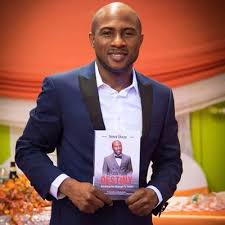
By Henry Ukazu
Greetings my good friends!
It is a great pleasure to be here once again. Please pardon my inability for not being able to write last week. I know some of you might be a little disappointed, honestly, it was due to circumstances beyond my control. I received so many several calls, emails and messages. I promise to do better next time. In whatever in life, I always look at the end in mind, in that way I will be properly guided on where my aim and vision in life lies. This is the more reason why I take my time in writing every week even when I am stressed up because I am addicted to sharing motivational and inspiring articles. As you all may know success in life has to do more with the journey rather than the destination.
Today, I chose to write on the relativity of journey and destination as facilitators of success. Just like any other aspect of life, life is indeed a process. You may heard of the saying success is more of a journey, rather than destination. Some other rational minds opine that the end justifies the means. These assertions are relatively true, however, it all depends on the angle you are looking at it from. We shall be comparing on both factors today but we shall be concentrating more energy on the process (journey).
It is an indisputable fact that in life the journey of a thousand miles begins with a step in the right direction. It is also a fact that little drops of water makes an ocean. Just like a leader needs a team to achieve success, same way success needs to be processed in order for it to be truly justified. With my little knowledge and understanding of mathematics, the process of arriving at the answer via the formula generates more point more that the actual answer itself. True success doesn’t work in isolation. It works in harmony and unison with other component parts and characteristics which I call siblings and friends.
As human beings, sometimes we seem to neglect how far we have come in life. We are always eager to see what we lack as opposed to appreciating what we have. Human beings by nature can be ungrateful. The same analogy is applicable to the journey of success. Let’s take the example of an accomplished author who is now a bestseller. The journey to the top wasn’t easy. He/she had mentors who inspired him/her to write the book, publishers, family members, friends and associates who contributed in one way or the other to the work a great success. To me, they are the real MVP’s as far as I am concerned. They are the people who deserve the main accolades and should be appreciated, but sometimes some irrational beings tend to forget those people who contracted to their success. Also, if a student excels in life to an enviable position in the world (President, CEO, Governor) etc. It will be nice for such person to remember his/her teacher who groomed him/her. It is on this context we shall be discussing about journey and destination to success.
It is interest to note that Edmund Hillary and Tenzing Norgay literally went where no other human had been when they became the first people to reach the peak of Mount Everest. Can you imagine what they must have felt? Pride, accomplishment, fulfillment. Question, did they achieve it alone? No, I guess. Think about the most important achievement in your life. Remember that feeling when you finally reached the summit of your academic career, political ambition, financial status and professional career. If you will agree with me, you didn’t do it alone, there were people behind it and it was truly a journey and process.
Last week I was listening to Joyce Meyers – a charismatic preacher. She was speaking on everyday life. In that message, she said true success lies in the little deeds and things you do daily as opposed to one major task you do. According to her you need to do small task nor matter how little it is in your daily routine which will add up to the goal you have in mind.
To understand how the journey of success really works, imagine yourself being a man or lady who needs a particular shape, it is expected that you’ll hit the gym at least three times a week and do some work out. You’ll follow up the also the process with a good hygiene. In fact, I personally feel the highest gym is in your kitchen. Let’s face it, it’s common to feel resistance when undertaking a new exercise habit. This is because there are several steps required. You have to pack your gym bag, travel to the gym, change into your workout clothes, warm up, exercise, warm down, shower, and change back into your normal clothes before traveling back home. This is the attitude and mindset which a rational mind desirous of making an impact should have. It is the process that defines the destination. Isn’t it true that you can easily spot a dedicated and discipline student or athletic. who is doing what he or she needs to be do in order to succeed in life? It’s always important to take note of the journey or inventory of all stocks.
It is quite unfortunate that many people regard the destination more than the journey. In as much I agree that the outcome/ finished product is very important, it is worthy to mention the sacrifice, challenges, failures, people and the experience that came it with it.
Let’s discuss some worthy points that will assist us in appreciating the role of process and journey to our dream destination.
Get specific
Having the end in mind is very important. Being specific helps your overall goal and road map in order to get to your destination. When you are specific, you will know what to focus on. One quality of every great man or woman is that they are very focused and specific in whatever they plan to achieve. Employers’ are always looking for specific beings to solve specific problems. The more specific you are, the easier it is for people to assist or work with you.
Break it down and start small
If you have a goal to accomplish, it is always better to start small and grown. You can do this by breaking it down and taking it bit and bits. Try to do little things every day nor matter how little and stressful, it gives some level of satisfaction. Breaking the journey in pieces helps you to appreciate the journey.
Celebrate the progress and enjoy the journey
When it’s not all about the goal, you can take it all in (and take what you’ve learned with you).
When you have a big goal, it’s tempting to think you haven’t succeeded until you’ve achieved it. Otherwise, you might think you have failed forgetting that the set backs propels you to appreciate the progress and accomplishments that awaits you. According to Tomas Chamorro-Premuzic, professor of Business Psychology at University College London, he observed that small milestones are powerful for seeing a change in the positive direction, noting that “the point is not to get better than others, it’s to get better than the old version of yourself.” Keep track of what you’ve accomplished with a done list, which is a log of the tasks you’ve completed. Seeing your progress boosts motivation, heightens positive emotions, and sustains your productivity. A Harvard study found that we spend almost 50 percent of our time thinking about the past and future, instead of focusing on the present, which leads to increased unhappiness
Reflect daily
Actively thinking and reflecting about your business, idea, product, academic major etc. Reflecting daily can help you plan very well. As a rule of thumb, it’s always helpful to set a sizable amount of time during the day to reflect on the activities of the day before you sleep and also spending at least fifteen minutes of the day to mediate and think when you wake up every morning. By so doing you can motivate and inspire yourself when you think the lines are not adding up. You can do this by asking yourself “What is one step I can take today to get closer to my goal?” “What did I learn today?” You can also check in on a weekly or monthly basis to assess what you’ve gotten out of your journey thus far.
Whenever you are tempted to give up in life, always remember the words of Brian Tracy, “It doesn’t matter where you are coming from, all that maters is where you are going. The past is in the past for a reason, the present is here for a reason which is a gift to work with for tomorrow which is not guaranteed.
In conclusion, always bear in mind “Success is never final. Failure is never fatal. In the end it’s the courage to continue that counts.”
Henry Ukazu writes from New York. He works with New York City Department of Correction as the legal Coordinator. He’s the author of the acclaimed book Design Your Destiny – Actualizing Your Birthright To Success.
.


By Henry Ukazu
Dear Destiny Friends,
We cannot underestimate money’s importance. Money is good. Money is a blessing. Money is a leverage. Money is a therapy. It’s worthy of note that most people, who claim sick aren’t really sick; they are just in need of money. When a certain amount of money hits their account, they bounce back to life.
To show you how powerful money is, somebody once jokingly said, “Money can bring a dead man back to life”. There’s no doubt, money is good. Whoever tells you money is not good is from the pit of hell. Even the Book of Life says in Jeremiah 29:11, “My plan for you is to prosper in be in good health”. God, in his infinite wisdom, knowledge, and understanding, wants us to prosper because when we prosper, it helps to spread the gospel of the kingdom of God.
Think about it for a minute: if one does not have money, how can one do good? Even the good Samaritan had to provide money for the traveler who was attacked by robbers and left stranded on the roadside. It’s instructive to note that at that point in time, what the traveler needed was support and not words. Assuming the good Samaritan didn’t have money, he wouldn’t have been able to assist.
So, we all can agree that money is good and not evil, like some naysayers do to justify whatever narrative they have in mind. Even the scripture says in 1 Timothy 6:10, “Money itself is not evil; rather, the love of money is identified as ‘a root of all kinds of evil ‘” The word we need to focus on is the love of money. This is where lots of people get it wrong: loving money is not a crime; rather, the process of acquiring the money. Some people have literally sold their conscience to the devil, and as such, they are careless about the process of getting the money. These people don’t care if they engage in fraudulent and inhuman activities just to acquire money, instead of diligently working hard and smart.
The Book of Life further states in Proverbs 22:7, “The rich rule over the poor, and the borrower is slave to the lender”. Do you see why we all must make money legitimately to avoid being slaves to unbelievers?
For the sake of clarity, this is not a gospel article; I had to use the Bible scriptures to pass on a message about the importance of money.
The focus of this article is to show you how we can make money. It should be noted that money is everywhere, and as such, we don’t have to struggle to make money. Just like sand and air are everywhere, money is also everywhere. The only difference is that money must be earned before we can get it.
To understand the theory behind money being everywhere, just look at every industry; you’ll see that some people are making money, while some people are not making money. Some people might be wondering why some people are making money, while others are struggling. Well, there are many reasons for it. Some may have developed themselves; some may be called to work in that industry as opposed to doing it for money, or it could be a case of someone who has understood the skill of doing the business.
Every profession has the capacity to attract wealth, whether you are a lawyer, doctor, engineer, mechanic, accountant, pastor, teacher, politician, entertainer, artisan, or even one who works for a non-profit.
It’s sad to see some people jumping ships because they feel it’s greener on the other side instead of maintaining their life and focusing on their craft. After all, just like our fingerprints differ, our destiny differs.
Let me share a practical example. When I arrived in the United States of America, the economy was in shambles. There were no jobs. My late dad counseled me to read taxation law because, according to his friends, that’s the major that can secure me a job at the end of the day because human beings and corporations will always file taxes. My personal research also confirmed this to some extent.
It’s instructive to note that my late dad didn’t just love taxation because of the job security it may provide; his interest was primarily the monetary benefit he saw in one of my uncles, who is a tax practitioner. For the record, it was my uncle who convinced my dad to encourage me to study tax law, and that upon graduation I would make more money because I have a legal background as opposed to him, who has a finance background.
At the end of the day, I graduated, and the major began to irritate me because I wasn’t wired for numbers. It was only when I ventured into the social service and human capacity development space that I began to see great results in my work.
The moral of this analysis is to point out the importance of maintaining one’s lane because I have seen rich and struggling doctors, lawyers, engineers, entertainers, and artisans.
Furthermore, one can be in any state in Nigeria, Canada, the United Kingdom, the USA, and still make good money. While some people think they need to seek greener pastures in a foreign land, it’s important to note that while Canada, the United States of America, the United Kingdom, and Sweden, etc., have good economies, what works for one country might not work in another country.
Another point we should note is whether it is wise to travel abroad, because traveling is not for everyone. Some people might be better at staying in their home countries to develop or serve in different capacities, which they might be offered if they travel to developed countries. Moral: It’s better to be a king in your country than to be a servant in a different country.
Don’t get me wrong, Third World countries can’t be compared to developed countries; however, it should be stated that whatever has advantages also has its own disadvantages. When some people travel out, they might break even; some might regret why they traveled out because of the lifestyle, racism, and the associated rat race, while others may remain indifferent.
For me, the United States has been a blessing to me because it has afforded me the opportunity to publish three amazing trailblazers’ books, appear on television several times, meet globally respected people, and start a thriving human capacity development business.
So, it doesn’t matter where you are; what matters is for you to discover your path and the associated problems people are facing, then see how you can solve their problems. By doing this, money will locate you.
Furthermore, to make money, one doesn’t have to go to school. There are many professors who are struggling. Mr. Cosmas Maduka, a Nigerian businessman, philanthropist, and evangelist, who is the founder and chairman of the Coscharis Group, didn’t have a formal education. Today, he has employed professors and scholars to manage his wealth.
Also, there’s this group of people who pray their lives out in church, some trying to connect with a revered man of God for deliverance and prayer, instead of working on themselves and believing God for opportunities because, just like God is everywhere, money is everywhere. So, stay where you are and develop your craft and yourself.
In conclusion, as we all prepare to make wealth, it’s important to note we cannot make money on our own. I know we all love to make money; it’s instructive to note that despite all our efforts, knowledge, wisdom, connection, skills, capacity, competency, and capabilities, it’s imperatively important for us to look up to God and focus on him as the author and finisher of our life. We need divine intervention and support because it’s only God and him alone who has the power and capacity to grant us wealth, because he has the capacity, as stated in Sirach 11:29 (God can make a poor man to be suddenly and instantly rich). So, therefore, I will leave you with Deuteronomy 8:18, which says, “Remember then the LORD, your God, for he is the one who gives you the power to get wealth, by fulfilling, as he has now done, the covenant he swore to your ancestors”.
Henry Ukazu writes from New York. He works with the New York City Department of Correction as the Legal Coordinator. He’s the founder of Gloemi. He’s a Transformative Human Capacity and Mindset coach. He is also a public speaker, youth advocate, creative writer, and author of Design Your Destiny- Actualizing Your Birthright to Success, Unleash Your Destiny, and The Six Pillars of Success. He can be reached via info@gloemi.com
By Henry Ukazu
Dear Destiny Friends,
In the last two editions, we discussed passion and profit, and identified the relativity of the two. Today, however, the sensitive issue of love will be our target.
As powerful as love is, it can also be controversial. This is because there are many angles to it. Some people believe in love in contrast to the views of some others, however. While some think love is blind, others are of the opinion that love might not be blind afterall. The latter school of thought believes that one must love with common sense as opposed to being foolishly in love.
But while love is often described as a verb because it’s action-oriented functions, one cannot say they love someone or something without investing time and resources in them. As a matter of fact, a school of thought says that if you want to know a person, look at how the person spends their time.
Regardless of the aisle one belongs to, I strongly believe that true love exists. The only challenge most people have is that they love the wrong people, and they haven’t found people who truly love them for who they are. Today, I pray that what we love, loves us back.
I also believe that no one is too busy to do the needful. If anyone wants to check on you or be with you, they will make an intentional effort to reach out. I say this because no one is too busy to pick your call or even reply your message. If you reach out to anyone, and they are not available to pick up your call, they will surely make out time to revert to you, if for any reason, you are relevant to them.
To understand this message, imagine US President Donald Trump, Elon Musk, or even an idol whom you rever calling you; would you give them an excuse for not picking or returning their call? If my thinking is right, one will make a conscious effort to return the call at the earliest possible time.
One may wonder why I took time to explain love in this context; well, the answer is not far-fetched: love is the centerpiece of everything we do in life. If you love your job, your business, your academics, your relationship, your God, and your life, you’ll be intentional in harnessing it. You won’t want to lose it. According to Myles Munroe, whatsoever you mismanage, you’ll lose it. So, love is not an exception.
As mentioned earlier, when you love something, you’ll invest time and resources into it. To understand the concept of let love lead, we shall be discussing love as it relates to career, business, academics, relationships, God, and personal life.
Love and Career:
To understand one’s interests, look at what they spend their time on. It’s sad to see people who work in roles they are not passionate about just because they want to pay their bills. When you love your career, trust me, you won’t feel like you are working. As a matter of fact, one will not feel the stress of waking up every day to go to work. One can tell who loves their job by the way they do their work.
Love and Business
This is another interesting area of life. Most people engage in business that pays the bills; however, I believe if one has discovered who they are, they can make a living by focusing on their God-given talent to develop a business. For instance, I’m passionate about counselling, youth development, mentoring, and public speaking. Instead of working in roles in big industries that can pay me big money, I started my company, Global Empowerment and Mentoring Initiative, which is focused on Human Capacity Development to enable me to fulfil my heart desire and passion. I believe anyone passionate about something can creatively find a way to turn it into a business, and people will be paid for it.
Love and Academic
Another interesting area where we can allow love to lead is our academics. Just like love starts in the family, fulfillment in a career starts from the major one studies in college. This is simply because when we choose a major we love, it will lead us to an industry that’s befitting for our major. One of the reasons why a lot of people feel stressed, frustrated, depressed, and have suicidal thoughts is simply because they don’t like their major and where they work.
Trust me, if one loves their major and their work, they won’t think of taking their life. We have seen cases where they have money but are not happy with their job.
Love and Relationship
This is one of the most interesting areas of life to know if one truly loves. In our contemporary society, it’s almost impossible to find genuine love. However, it’s still possible for one to find true love, but it will be very rare. Most people will love you for what they will gain from you. Love ought to be symbiotic as opposed to being parasitic. When there’s love between two people, many of the fights that exist in relationships won’t exist.
For instance, one of the most debatable and controversial issues in marriage is the 50- 50 contributions. Some men support the idea of 50-50 because they also contribute to cooking, taking care of children, and other household chores which traditionally belong to women. Women, on the other hand, differ.
According to them, it’s the duty of the man to provide for the family. According to them, it makes no sense for them to contribute and also give men the respect they deserve. This set of women goes as far as saying that bathing a child and doing household chores are all part of being a responsible man. The narrative seems to be changing.
Here is my position. Where there’s love and understanding in a relationship or marriage, who provides and who manages won’t really bother. A man who loves his family (wife and children) won’t see cooking, bathing his children, and still gives his wife money as work. And a woman who truly loves her husband won’t see paying the bills as work when the man is incapacitated; neither will it make her disrespect her husband because he’s not financially stable to support the family, because they are committed to the relationship.
I can go on and on about love, but the fact and truth remains: when true love is at the center of the marriage or relationship, partners won’t even discuss if it is his money or her money, because both parties are one.
Love and God
This is another interesting area to know the mindset of someone. As Christians, we are advised to love God as we love ourselves. We can’t claim to love God and do things that are contrary to what God loves. In the same way, we can’t claim to love someone and hurt them. When we love, people can see it without us speaking. A typical example is the parable of the good Samaritan.
Love and Life:
Life is love and love is life. The summary of our life can be seen in how we live our life. Whether we are talking about education, career, business, health, personal development, family, relationship/marriage, entertainment, vocation, skill, finance, spiritual, etc. Love can be understood through how we live and love because everything rises and falls in life.
In summary, I know there are many twists to life; I suggest that, in whatever we do, let’s allow love to lead.
Henry Ukazu writes from New York. He works with the New York City Department of Correction as the Legal Coordinator. He’s the founder of Gloemi. He’s a Transformative Human Capacity and Mindset coach. He is also a public speaker, youth advocate, creative writer, and author of Design Your Destiny: Actualizing Your Birthright to Success, Unleash Your Destiny, and The Six Pillars of Success. He can be reached via info@gloemi.com

By Tolulope A. Adegoke
“Sixty-six lanterns lit, and not one flame asked permission of the wind. That is the arithmetic of this land—where the storm arrives first and the light arrives anyway. We were not handed a smooth road; we were handed feet, and feet have always been enough. What others call odds, we call the weight that gives our stride its meaning. So let the doubter keep his ledger of our failures; we keep a different record—one written in the stubborn grammar of a people who wake up, try again, and refuse to hand their tomorrow to anyone else. This soil does not owe a blessing to the mouth that curses it. Speak well of her, then, not because she is finished, but because she is still becoming—and becoming is the holiest thing a nation can do. We rise. We shine. Not after the storm—inside it.” – Tolulope A. Adegoke, PhD
Introduction: The Audacity of a Nation’s Hope
There is a peculiar kind of strength that is born not in the absence of hardship, but in the furnace of it. It is the strength that refuses to be extinguished by the storms of adversity, the strength that looks at towering mountains and dares to imagine a path over them. This is the strength that defines Nigeria. As we mark sixty-six years of nationhood, we do not gather merely to recount the ease of our journey, for the road has been anything but smooth. Rather, we gather to celebrate a profound and unyielding resolve: the decision to rise, and in rising, to shine.
The story of Nigeria is not a fairy tale of uninterrupted triumph. It is a complex, textured narrative of a people learning to govern themselves, of a federation of over two hundred and fifty ethnic nationalities striving to forge a common destiny. It is a story punctuated by growing pains, by moments of national introspection, and by challenges that have tested the very fabric of our unity. Yet, it is precisely within this crucible that the Nigerian spirit has been refined. We rise, not because we are oblivious to our challenges, but because we have made a conscious, collective decision to be resilient—to confront our difficulties head-on and to overcome them.
The Anatomy of Nigerian Resilience
Resilience is a word often used lightly, but in the Nigerian context, it is a lived reality. It is the trader in Onitsha who, despite economic fluctuations, opens her stall at dawn with a smile and a prayer. It is the tech entrepreneur in Yaba who, against the backdrop of infrastructural deficits, codes the next solution for a global market. It is the teacher in a rural community who, with limited resources, inspires a generation to dream beyond their immediate horizons. It is the farmer in the Middle Belt who, season after season, plants seeds of hope in a land that has known both bounty and bloodshed.
This resilience is not a passive endurance; it is an active, creative force. It is the ingenuity that birthed the mobile money revolution, the Afrobeats genre that has taken the world by storm, and the Nollywood industry that tells our stories to a global audience. It is the intellectual prowess of our scholars, the indomitable spirit of our athletes, and the creative genius of our artists. When we say “We Rise,” we are acknowledging this irrepressible energy. We are affirming that no challenge—be it economic recession, security concerns, or social unrest—can permanently dim the light of a people determined to succeed.
The Certainty of Our Arrival
We are a nation in a hurry, yet we must also be a nation with the patience of a farmer. The journey to national greatness is not a sprint; it is a marathon. We may stumble. We may take a wrong turn. We may even, at times, feel like we are moving in circles. But the crucial thing is that we are moving. We are learning. We are evolving. The mistakes of yesterday become the lessons that inform the policies of today and the vision of tomorrow.
It may take a while, but it is certain that we will get it right. This certainty is not borne of arrogance, but of an unshakeable faith in the Nigerian project. It is rooted in the knowledge that a nation of such immense human and natural potential cannot be permanently held back. Our youth, our greatest asset, are increasingly innovative, globally connected, and fiercely patriotic. They are not waiting for a perfect Nigeria; they are actively building it, one startup, one social movement, one creative work at a time. The trajectory may be zigzag, but the destination—a prosperous, united, and equitable Nigeria—is non-negotiable.
Nigeria Shines Against All Odds
To shine against all odds is the quintessential Nigerian story. It is to excel on the global stage when the home front is fraught with difficulties. It is the Nigerian doctor performing groundbreaking surgeries abroad, the Nigerian professor leading research at top universities, the Nigerian artist headlining international festivals. These individual and collective successes are not anomalies; they are reflections of a national character that is intrinsically brilliant.
The Nigerian diaspora is a testament to this. From Houston to London, from Toronto to Dubai, Nigerians are making their mark, contributing to economies, cultures, and knowledge systems. They are not just surviving; they are thriving. And in their success, they carry a piece of home with them—a resilience, a vibrancy, a hustler’s spirit that is uniquely Nigerian. This is the light that shines, a beacon of what is possible when the Nigerian spirit is given room to flourish.
A Word on Cursing the Land
There is an ancient wisdom that is deeply relevant to our national conversation: the land that you curse may not be empowered or capable enough to bless you in return. To constantly disparage one’s country, to speak of it only in terms of its failures and to ignore its immense potential, is to poison the well from which one must drink. Patriotism is not blind allegiance; it is loyal, constructive criticism married to a deep and abiding love. It is the difference between a prophet of doom and a partner in progress.
We must be careful with our words. Our words shape our reality. If we speak of Nigeria only as a cursed land, we sow the seeds of despair in our own hearts and in the hearts of the next generation. Instead, we must speak of a land of promise, a land of resilient people, a land that is worthy of our best efforts and our most profound hopes. The same land that some dismiss is the land that has produced some of the world’s most remarkable minds and most vibrant cultures. To bless Nigeria is to bless ourselves, for our fate is inextricably linked to that of the nation.
Sixty-Six Years: A Commemoration of Hope
Sixty-six years is a significant milestone. It is a period that allows for reflection on how far we have come from the hopeful dawn of independence in 1960. We have weathered civil war, military dictatorships, and the turbulent transition to democracy. We have seen our economy rise and fall with the vagaries of oil prices. We have faced the scourge of terrorism and the challenges of internal security. Through it all, the Nigerian state has remained, and the Nigerian spirit has endured.
As we celebrate, we are not celebrating a finished product. We are celebrating a work in progress. We are celebrating the audacity of a people who, despite their differences, have chosen to remain together. We are celebrating the promise of a future that we can build together. We are celebrating the fact that, in the words of our national anthem, “the labours of our heroes past shall never be in vain.”
Conclusion: A Blessing for the Journey Ahead
God bless Nigeria. This is not just a phrase; it is a prayer. It is a petition for divine guidance, wisdom, and protection over our land and our leaders. It is a prayer for the healing of our divisions and the strengthening of our unity. It is a prayer that we may be wise stewards of the resources and talents with which we have been so abundantly endowed.
As we step into the next chapter of our national story, let us recommit ourselves to the principles of resilience, hope, and hard work. Let us be a generation that builds bridges rather than walls, that plants trees under whose shade we may never sit, and that speaks life into our nation rather than death.
We rise because we must. We shine because our light is too bright to be hidden. We overcome because our collective will is stronger than any challenge. It may take a while, but the destination is sure.
God bless the Federal Republic of Nigeria.
Happy 66th Independence Anniversary!
Dr. Tolulope A. Adegoke, AMBP-UN, is a globally recognized scholar-practitioner and thought leader at the nexus of security, governance, and strategic leadership. His mission is dedicated to advancing ethical governance, strategic human capital development, resilient nation-building, and global peace. He bridges the worlds of academic rigor and practical application, contributing to leadership discourse at the highest levels of policy and practice. He can be reached via: tolulopeadegoke01@gmail.com, globalstageimpacts@gmail.com


