
Personality in Focus
Former FPRO, Frank Mba Completes NIPSS Course, Inducted


The immediate past Force Public Relations Officer, CP Frank Mba, has been inducted as a Fellow of the Chartered Institute of Local Government Public Administration, having concluded the Senior Executive Course (SEC) 44 of the National Institute of Strategic Studies (NIPSS), Kuru, Jos.
The National Association of Online Security News Publishers (NAOSNP) learnt that the induction ceremony took place at the NIPSS auditorium on Sunday.
CP Mba, noted as one the best spokespersons to have emanated from the Nigerian Police Force, undertook the study about three months ago, and excelled, graduating with honours, and being inducted in an elaborate ceremony.
Mba, alongside five other senior police officers were nominated by the Inspector -General of Police, IGP Usman Alkali Baba, in February 2022, for the course. The others are: AIG Aisha Abubakar Baju , who was Head of Police Veterinary & Force Animal Branch; former Director, Peace Keeping Operations Department, CP Sadiq Abubakar; former Commissioner of Police, Yobe State Police Command, CP Abubakar Sahabo; CP Ebong E. Ebong of the Department of Operations, Force Headquarters and CP Arungwa of the Department of Logistics & Supply.
The officer, who is touted as a thoroughbred professional, accepted to go for the course, amid pressure to reject it. He however, remains till date, the longest serving FPRO in Nigeria.
A native of Udenu Local Government Area in Enugu State, the intelligent officer had his basic secular education before proceeding to the Nigeria Police Academy, Kano where he graduated from the academy as the best cadet inspector in academics in 1993.
A graduate of the University of Lagos (UNILAG), Mba also bagged a Master’s Degree in Law at the University of Dundee, Scotland. He was the FPRO to former Inspector-General of Police, Mohammed Abubakar, between 2012 and 2014. He was also the FPRO during the administration of former IGP Mohammed Adamu, between 2019 to 2021 and from 2021, to when he proceeded to NIPSS, he was the FPRO to IGP Baba.
He is a National and International Security certificate holder from Harvard University, USA, and a graduate of the Federal Bureau of Investigation (FBI) National Academy, Quantico, USA.
Prior to his promotion to the rank of CP on December 30, 2020, Frank Mba had served with the Nigerian Police force since 1993 when he graduated as Cadet Inspector. He had occupied different positions, earning his promotions with due diligence.
In addition to his FCPA, MBA can conveniently add mni to his name, having successful been inducted.
We, at NAOSNP, wish the super cop the best of career endeavours.


Personality in Focus
Commander Adesoji Speaks on Forest Guard’s Relevance to Nigeria’s Security Strategy

Across Nigeria’s vast forest belts, ungoverned spaces have increasingly become theatres for violent crime, farmer–herder conflicts, illegal grazing, banditry, arms movement, and environmental crimes. These forests are not isolated wildernesses; they are living corridors linking farms, rural settlements, trade routes, sacred sites, and border communities. As conventional security agencies face mounting pressure, Forest Guards are emerging as a critical but often under-examined layer of Nigeria’s internal security architecture, tasked with early warning, terrain control, community intelligence, and conflict prevention in spaces where insecurity often incubates unseen, National Association of Online Security News Publishers, NAOSNP can report.
Forest Guards operate closest to these fault lines. Their effectiveness, however, depends less on force and more on legitimacy. As was repeatedly emphasised at a recent national training in Osun State, forest security succeeds only when authority is exercised lawfully, professionally, and with the consent of the communities that live and work around forest spaces. Without this foundation, security operations risk collapsing into resistance, intelligence failure, and avoidable violence.
It was against this backdrop that the National Forest Guard Training Camp (“Forest Camp”) in Ila-Orangun, Osun State, hosted a set of strategic lectures in January 2026 aimed at redefining how forest security should be practiced in Nigeria. The sessions brought together recruits, rank-and-file operatives, and ward and sector formations from across the country to interrogate a central operational question: how can Forest Guards enforce the law effectively without becoming a source of fear in already vulnerable rural spaces?
The answer, according to the training, lies in a unified doctrine that places lawful authority, disciplined conduct, and community legitimacy at the heart of forest operations.
Delivered in an intensive 2–3 hour integrated format combining classroom instruction, guided discussion, and field-based application, the lectures focused on Ethics and Professional Conduct in Forest Security Operations and Community Engagement, Conflict Resolution, and Trust-Building in Contemporary Forest Policing.
Ethics as Law, Not Preference
Delivering the lectures, the Commander of the Enugu State Forest Guard (ESFG), Dr. Akinbayo O. Olasoji, Deputy Commissioner of Police (Rtd.), framed ethics as a legal obligation rather than a personal choice. He stressed that forest security authority is derived entirely from law and governance frameworks, not from uniforms, weapons, or discretion.
“Ethics in forest security is not a personal value judgment or discretionary behaviour,” he told participants. “It is a binding statutory obligation.”
He anchored this position in existing legal instruments guiding Forest Guard operations, including the Enugu State Forest Guard Law, 2020, the 1999 Constitution (as amended), the Enugu State Prohibition of Open Grazing and Regulation of Cattle Ranching Law, 2021, the Firearms Act, the Administration of Criminal Justice Act, and the Evidence Act, 2011, alongside public service rules and recognised law-enforcement ethics standards. Reinforcing a core operational doctrine of the ESFG, he declared: “Authority exists only within the law.”
BUILDING SECURITY THROUGH TRUST, NOT FEAR
Beyond legality, the lectures placed strong emphasis on community legitimacy as the foundation of effective forest security. Dr. Olasoji reminded operatives that forests are not empty spaces, but environments connected to daily human activity and livelihoods.
“Forests are not isolated zones,” he explained. “They are linked to farms, settlements, markets, footpaths, and sacred sites. That reality makes community partnership a decisive operational factor.”
According to him, the consequences of poor community engagement are immediate and severe. He warned that mistrust leads to intelligence breakdowns, delayed early warning, increased hostility toward operatives, and the escalation of minor disputes into violent confrontations, outcomes that ultimately endanger officers themselves.
In contrast, he argued, trust transforms communities into security partners. As he put it:
“Community engagement is not weakness; it is operational strength. Trust is a force multiplier. When you win the community, you win the forest.”
NON-NEGOTIABLE STANDARDS OF CONDUCT
The sessions translated ethical principles into concrete operational standards applicable to patrols, checkpoints, arrest support, intelligence handling, and inter-agency cooperation. Participants were reminded that public confidence and mission success rise or fall with officer conduct.
Among the non-negotiable standards reinforced were universal human-rights compliance, lawful and proportionate use of force, zero tolerance for torture, brutality, corruption, extortion, or record falsification, strict confidentiality of operational information and informant protection, and political neutrality.
Human-rights compliance, Dr. Olasoji stressed, “applies to everyone, always,” while the use of force must satisfy “lawfulness, necessity, and proportionality.”
Mandatory reporting of misconduct, supported by whistle-protection safeguards, was also emphasised as an institutional duty rather than an individual risk.
DECISION-MAKING UNDER PRESSURE
To strengthen field judgment, the lectures adopted a practical ethical decision model consistent with international enforcement doctrine: L-N-P-A — Legality, Necessity, Proportionality, Accountability.
Operatives were trained to ask four questions before acting: Is it lawful? Is it genuinely required? Is it the minimum reasonable response? Can it be defended openly, in writing, and before lawful authority?
The guiding rule, as repeatedly emphasised, was uncompromising:
“If you cannot defend it, don’t do it.”
EARLY WARNING AND CONFLICT PREVENTION
A major focus of the engagement lecture was early warning and early response. Participants were trained to identify indicators such as rumour patterns, unusual movement along forest corridors, resource-pressure signals linked to farmer–herder tensions, and enforcement-related triggers capable of igniting rapid conflict.
Forest Guards, Dr. Olasoji explained, are not merely enforcers but stabilisers.
“Forest Guards are peace managers,” he noted, “but they must operate strictly within legal limits.”
A standard dispute-management workflow was reinforced: Assess, Stabilise, Separate, Dialogue, Decide (Enforce or Refer), Document, Report, and Follow-up, with clear thresholds for referral to the Police, DSS, courts, and civil authorities.
HIGH-SENSITIVITY ENFORCEMENT: OPEN GRAZING
Given the sensitivity of open-grazing enforcement nationwide, the lectures stressed that operations must remain calm, law-based, non-discriminatory, and free of harassment, extortion, ethnic profiling, or improper impoundment. Ethical professionalism, participants were told, is central to preventing rural instability and escalation in mixed-use forest zones.
TRAINING, ACCOUNTABILITY, AND INSTITUTIONAL RESPONSIBILITY
The sessions employed scenario-based learning, decision drills, and misconduct case studies to ensure practical understanding. Ethics and community-engagement competence were presented as mandatory core requirements, forming part of refresher training and promotion criteria, with completion formally recorded in personnel files.
Responsibility for trust-building was distributed across the command structure, from state and zonal commands to sector, ward, and frontline formations, embedding accountability into institutional culture.
A BROADER NATIONAL LESSON
In one of the most quoted moments of the lectures, Dr. Olasoji told participants:
“A Forest Guard is a trust-bearer, not a power-holder. Uniform and equipment do not create authority; character does. Without integrity, authority collapses.”
Security analysts say the Ila-Orangun engagement underscores a broader national lesson: that sustainable forest security in Nigeria depends less on coercion and more on professionalism, legality, and partnership with communities.
As Nigeria continues to grapple with insecurity across rural and forested regions, the lessons from Ila-Orangun point to a clear conclusion—when Forest Guards operate within the law and with the people, forests shift from being security liabilities to strategic assets in national security management.
Personality in Focus
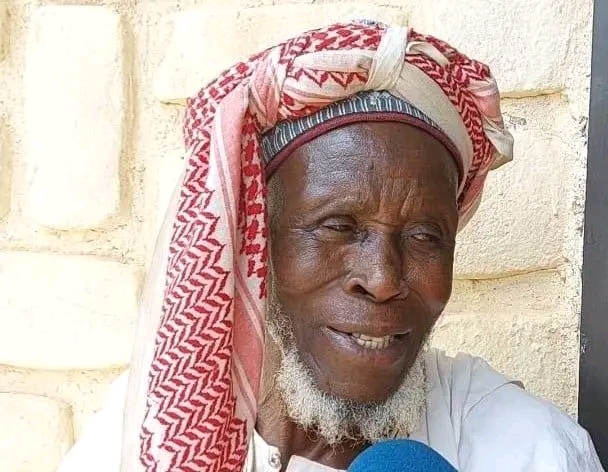
Nigeria Mourns As Imam Abubakar Abdullahi, Who Sheltered Multiple Christians, Dies at 90
By Eric Elezuo
Nigerians are mourning celebrated Muslim cleric, Imam Abdullahi Abubakar, who is reputed for sheltering 262 Christians during the 2018 sectarian attacks in Plateau State.
Abubakar, who held the post of the Chief Imam of Nghar village in the Barkin Ladi local government area of the state, passed away after a brief illness at the age of 92
Confirming his death, one of his sons, Saleh Abubakar, said his father died on Thursday night at the Plateau Specialist Hospital, Jos, 10 days after he was admitted.
Imam Abubakar, who was also a herder, left behind 19 children including 12 boys and 7 girls.
The late Islamic cleric rose to prominence following his extraordinary act of courage on June 23, 2018, when armed assailants attacked several communities in Barkin Ladi LGA, leaving dozens dead.
Following the announcement of his death, Nigerians from all walks of life including Christians, have risen stoutly to eulogise his life and times, crediting greatness, humanity and purposeful living to the nonagenarian.
Leading the long list of mourners, President Bola Tinubu expressed sorrow over the death of the Chief Imam of Nghar village in Barkin Ladi Local Government Area of Plateau State just as Former Vice President Atiku Abubakar and the 2023 presidential candidate of the Labour Party, Peter Obi, have also expressed sadness over his death, describing him as a true hero of humanity.
Tinubu, in a condolence message shared on X by his Special Adviser on Information and Strategy, Bayo Onanuga, described the cleric as an extraordinary religious leader whose life was a powerful testament to faith, courage, and the sanctity of human life.
“At such a time when tribal and religious tendencies seemed to overwhelm reason, Imam Abubakar stood firmly on the side of peace, benevolence, and conscience,” the President said.
He noted that despite the grave danger to his own life, the cleric chose compassion over division and love over hatred.
“Mindless of the enormous risk to his own life, the noble cleric chose humanity over division, love as opposed to hatred, and embrace rather than rejection. His heroic feat underlines the essence of true faith, resonating louder than sermons in a salient message to the world at large,” Tinubu added.
Tinubu urged religious and community leaders across the country to emulate the late Imam’s example by promoting tolerance, mutual respect, and peaceful coexistence.
Atiku, in his message which was also shared on X, said the cleric lived a life that transcended religious divides and affirmed our shared humanity. The former vice president urged Nigerians, particularly religious leaders, to recommit to the ideals the late cleric embodied in inter-faith harmony, mutual respect, and an unwavering defence of the sanctity of every human life.
On his part, Obi described the late Imam as a beacon of light, “reminding us that the core of Islam is peace and the protection of the vulnerable.” He called on Nigerians to embrace love, unity, and peaceful coexistence in honour of the late Islamic cleric, adding that what Imam Abubakar did was exactly the expectations of citizens from their leaders; protect life and property.
In a condolence message, Plateau State Governor, Caleb Mutfwang, said Imam Abubakar’s commitment to interfaith harmony and protection of the vulnerable earned him the respect of Nigerians and the global community.
Mutfwang added that Abubakar’s passing “has left a significant void in Barkin Ladi,” urging residents to uphold the values of compassion, tolerance, and unity that he embodied.
“On behalf of my family, the government, and the people of Plateau State, I extend my deepest condolences to the family and all those mourning the loss,” the governor said. “May Almighty God grant them comfort and strength to bear this painful loss.”
Also expressing heartfelt sympathies, Chairman of the Plateau State chapter of the Miyetti Allah Cattle Breeders Association (MACBAN), Yusuf Babayo, described the death of Imam Abdullahi as painful and a significant loss to the Muslim Ummah.
“It is difficult to get a leader like Imam Abdullahi. He was an elder statesman whose valuable contribution to peace in the state will be greatly missed,” Babayo said.
“He did not discriminate and treated everybody as his own, irrespective of religious differences. The vacuum created by his death cannot be filled by anyone in the state.”
In his reaction on behalf of the Christian Association of Nigeria (CAN), Plateau State Secretary Rev. Simon Julius, described the late Imam as a rare figure whose courage and legacy transcended religious boundaries.
“In every religion, there are good and bad. For us, the late Imam will be remembered for his courage and for saving human lives,” Rev. Julius said. He also sympathised with the Muslim Ummah over the loss and urged individuals to emulate the lifestyle of Imam Abdullahi for the betterment of Plateau State and Nigeria at large.
The Jama’atu Nasril Islam (JNI) Plateau State chapter also expressed shock at his passing, while submitting to the will of Allah SWT. In a statement signed by its Secretary, Dr. Salim Musa Umar, JNI described the late Imam as an exceptional leader who demonstrated compassion during a trying period for his community.
“He was credited with hiding over 200 Christians in his mosque during one of the most devastating ethno-religious conflicts in Plateau State, the statement read.
“On behalf of the chairman and Emir of Wase, JNI extends its condolences to his family, Plateau State, and Nigeria. No doubt, we have lost a rare gem. Humanity will never forget his sacrifices, and history will remember him positively.”
Late Imam Abubakar Abdullahi has since been buried in Nghar village, Barkin Ladi LGA, the Jumma’at Prayer in his honour.
IMAM ABDULLAHI ABUBAKAR IN BRIEF
The Imam was able to save the lives of 262 people, predominantly Christians from the Birom tribe, by sheltering them in his mosque as attackers roamed the villages.
In July 2019, Imam Abdullahi Abubakar received the International Religious Freedom Award from the United States government, which is granted to supporters of religious freedom, together with four other religious leaders from Sudan, Iraq, Brazil, and Cyprus.
In August 2019, President Buhari authorized the inclusion of Imam Abdullahi Abubakar in the membership of the national Ulama committee and was part of an 80-man Ulama committee charged with the responsibility of educating Nigerian pilgrims in Mina during the 2019 Hajj.
Imam Abubakar received many other awards during his lifetime, including US International Religious Freedom Award (2019), Member of the Order of the Federal Republic (MFR) and an Award of Excellence.
He died on January 15, 2026 after a brief illness.

Badagry, a historic coastal town renowned for its rich cultural heritage, was on Monday enveloped in a sombre and brooding mood following the passing of its 89-year-old monarch, De Wheno Aholu Menu-Toyi I, the Akran of Badagry.
The revered monarch, who reigned for 48 years, was a towering figure in the history and development of the ancient coastal town.
He was a journalist before ascending the throne of his forefathers on April 23, 1977.
His long reign was marked by peace, unity and steady community development across Badagry and its environs.
As Permanent Vice-Chairman of the Lagos State Council of Obas and Chiefs, his counsel and leadership carried significant influence within traditional institutions across the State.
He was widely respected as a devoted custodian of Ogu culture and tradition, as well as a passionate advocate for the welfare of his people.
From the early hours of Monday, an unusual calm descended on the ancient kingdom as residents struggled to come to terms with the loss of their traditional ruler.
Markets that normally buzz with activities witnessed low patronage, while groups of residents gathered sparsely in streets and compounds, exchanging restrained conversations.
At the Akran’s palace, it was learnt that the atmosphere was pensive as chiefs and community leaders’ showed grief.
There were restrictions on vehicular movements around the palace vicinity with some sections of the road leading to the place barricaded. Commuters were said to be directed to take alternative routes.
Sources said the traditional worshippers may have started observing rites necessitated by the demise of the monarch. Security and palace officials were seen restricting movement in the immediate vicinity.
Residents said the rites would affect social and commercial activities around the palace and may force many residents especially those working outside Badagry to return home early.
Many residents described the late Akran as a symbol of unity, stability and cultural pride for Badagry. They recalled his role in preserving the town’s customs and mediating communal disputes, while youths spoke of a monarch who encouraged peace and respect for tradition amid modern challenges.
According to the News Agency of Nigeria (NAN), some sons and daughters of the late king were at the palace, with some seen openly weeping.
A traditional chief, who spoke on condition of anonymity, said the Akran passed on at about 1:30 am, but confirmation of his death was made at about 5:30 am.
“The Chairman of Badagry Local Government Area, Babatunde Hunpe, has been informed, and we hope he will relay the information to Governor Babajide Sanwo-Olu for an official announcement.
“That is why many of us are seated here at the palace to receive visitors. The Akran has gone to rest with his great ancestors,” he said.


