
News
From Zero to HERO: A Noble Transitional Reminder!


- /home/rhoncare/pointblank.ng/wp-content/plugins/mvp-social-buttons/mvp-social-buttons.php on line 27
https://pointblank.ng/wp-content/uploads/2019/09/Adegoke-1000x600.jpg&description=From Zero to HERO: A Noble Transitional Reminder!', 'pinterestShare', 'width=750,height=350'); return false;" title="Pin This Post">
- Share
- Tweet /home/rhoncare/pointblank.ng/wp-content/plugins/mvp-social-buttons/mvp-social-buttons.php on line 69
https://pointblank.ng/wp-content/uploads/2019/09/Adegoke-1000x600.jpg&description=From Zero to HERO: A Noble Transitional Reminder!', 'pinterestShare', 'width=750,height=350'); return false;" title="Pin This Post">
By Tolulope A. Adegoke
“I need to reiterate here that, when it comes to this noble task, nothing is impossible! Only change is constant in life. Everyone can improve at anything and at whatever level, provided that he or she is willing enough to undergo the required processes of development. My point is that, your life can experience a revolutionary change, as long as you are ready to learn, follow the footsteps of champions and apply other essential life-changing principles from the Holy Scriptures and other relevant and sane sources. Self-sufficiency is an attitude of the mind. Until there is a radical change of attitude on the part of the government and the governed, no nation can attain Self-sufficiency in any significant manner. Both must respond to the abilities within their means. Put in a clearer word, they must be responsible, and void of corruption which erupts all-round ruptures and insanities, both within and without. Therefore, self-sufficiency is the path to a dependable nationhood and adulthood.” – Tolulope A. Adegoke, PhD., MNIM, FIMC, CMC, CMS
The example of Japan is pertinent here. In the aftermath of the Second World War, Japan’s two largest economic cities, Hiroshima and Nagasaki, were bombed to the ground. Several lives and properties were lost. To put it simply, Japan was reduced to nearly nothing, economically and politically. Yet, because the Japanese believe so much in their individual and national potentials, they have rebuilt their economy to be one of the best in the world. In fact, in the early 2000s, a Prime Minister of the country, while speaking at the anniversary of the Hiroshima and Nagasaki bombing, said that even if Japan were to be placed in a desert, the Japanese would rebuild their nation to become the second largest economy in the world in a short time.
The truth of that statement can be seen all around – especially with the quality and quantity of products manufactured in Japan. In fact, even though Japan currently does not have enough steel to produce vehicle bonnets, nor does it have enough silicon to produce side-mirrors or even enough rubber to produce steering-wheels, yet the country is the highest exporter of cars in the world.
My point is that Japan rose to be an economic giant from being reduced to zero. Despite the odds and pains, it ascended the ladder of greatness among the nations of the world. This teaches us the power of resilience. Every zero status can be reversed if dutifully worked upon.
The wealth of any individual or nation is not found under the feet but in-between the “ears” – that is, the contents of their brain and character. Let’s apply this to Nigeria as a nation, especially to re-orientate its leaders and citizens, the young ones in particular. The real wealth of Nigeria is not in the creeks of the Niger-Delta or anywhere else in the country. It is neither in the abundance of crude oil nor in the vast mineral resources all over the country. The real wealth lies in the country’s heterogeneous population. Yes, let me repeat it – It is the very citizens of the Nigerian nation that are usually considered the least of its resources (the zero resources) that are its hope and future. This is because right in them lie the ability, acumen and determination to harness and utilise the various natural, mineral and petroleum resources of the nation in line with God’s purpose for its existence.
In truth, the so-called valuable resources that people often jostle and sometimes tussle to get from the ground are not the real resources of any nation; the true resources are the citizens – the often overlooked treasures who have several divinely-endowed potentials in them. Sadly, many of these die daily, before their time, and go the grave with their potentials in them. No wonder the late Myles Munroe said that the richest place on earth is the cemetery!
Pertinent Reassurance
Before proceeding to the next phase in which we shall be exploring detailed principles on positively empowering our zeroes, I need to reiterate here that, when it comes to this noble task, nothing is impossible! Only change is constant in life. Everyone can improve at anything and at whatever level, provided that he or she is willing enough to undergo the required processes of development. My point is that your life can experience a revolutionary change, as long as you are ready to learn, follow the footsteps of champions and apply other essential life-changing principles from the Scripture and other relevant sources.
Let me illustrate this truth with the experience of D.W Ghent who was said to have participated in Dale Carnegie’s public speaking programme in Philadelphia. Shortly after the opening session, Ghent had invited Carnegie to lunch with him in the manufacturers’ club. Ghent was a middle-aged man and had always led an active life; he was head of his own manufacturing establishment and a leader in church work and civic activities. While they were having lunch that day, he leaned across the table and said: “I have been asked many times to talk before various gatherings, but I have never been able to do so: I get so fussed, my mind becomes an utter blank: So I have side-stepped it all my life. But I am now on a board of college trustees. I must preside at their meetings. I simply have to do some talking…Do you think that is possible for me to learn at this late date in my life?”
“Do I think, Mr Ghent?” Carnegie replied. “It is not a question of my thinking. I know you can, and I know you will if you only practise and follow the directions and instructions.”
Mr. Ghent wanted to believe what Carnegie had said, but it seemed too rosy, too optimistic. So he said, “I am afraid you are you are just being kind; you are merely trying to encourage me.”
After Mr Ghent had completed his training, he and Dale Carnegie lost touch with each other for a while.
Some years later, however, they met again and lunched together at the Manufacturers’ Club. They sat in the same corner and occupied the same table that they had on the first occasion. Reminding Ghent of their former conversation, Carnegie asked him if he really had been too optimistic then. Ghent took a little red-backed notebook out of his pocket and showed him a list of talks and dates for which he had been booked. “And the ability to make these,” he confessed, “the pleasure I get in doing it, the additional service I can render to the community – these are among the most gratifying things in my life. Not only have I given countless public speeches, but just recently I was chosen from all the community leaders in this city to give the introduction when David Lloyd George (then the Prime minister of Great Britain) addresses a mass meeting in Philadelphia.”
Yet, this was the same man who had sat at the same table less than three years before and solemnly asked Carnegie if he would ever be able to talk in public!
We find another amazing proof that nothing is impossible when it comes to transiting from a zero to a hero in the case of the biblical David. The inspiring story of his rise from a despised shepherd boy to a renowned warrior and revered king begins from I Samuel 16. Here, we are told how God, who had seen his commitment to duty and passion for service in the loneliness of the mountains and valleys where he cared for his father’s sheep, sent Samuel to anoint him Israel’s next king, following the rejection of Saul. Being the family’s zero, however, nobody had initially considered presenting David as one of the sons of Jesse – yet the Almighty God who rewards enthusiasm for greatness found him out and he was anointed. It was after this that he killed Goliath before the Philistines and the Israelites. He became a military general of Israel at the very tender age of 17.
David eventually ascended the throne, despite various attempts by Saul to kill him. He started as a zero but eventually emerged a hero! He diligently went through the rough but refining and toughening process of his transition through his strength of character, fear of God, unwavering courage and undaunted self-belief.
I tell you, friend, you too can rise from your present level to an exceedingly glorious and influential one. This is the will of God for you.
Thank you for reading. Faithfully share.
Dr. Tolulope A. Adegoke is an accredited ISO 20700 Effective Leadership Management Trainer


News
ADC Unveils Presidential Campaign Council, Names Ibrahim-Imam As Chairman, Dele Momodu As Head, Media/Publicity
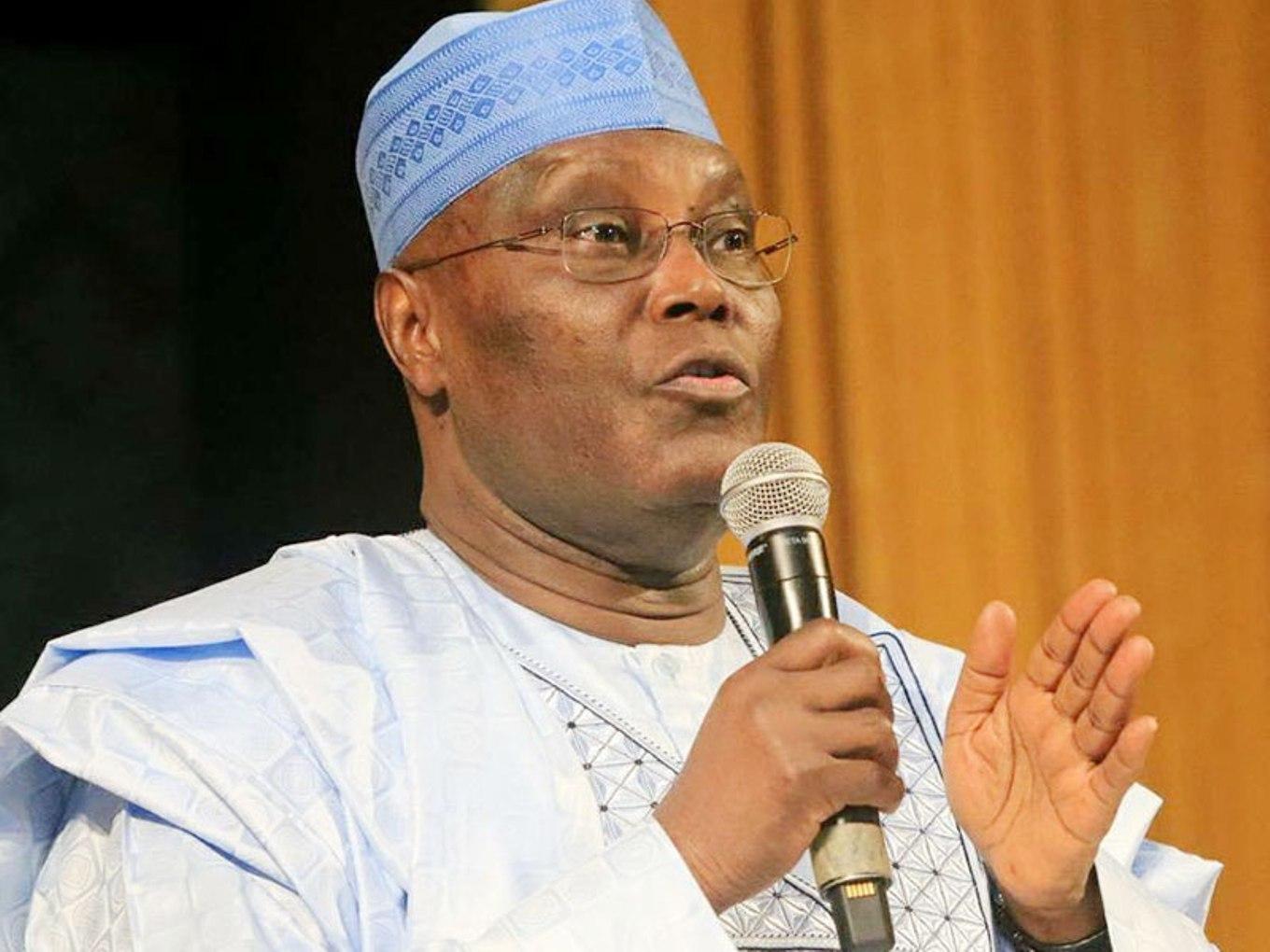
The African Democratic Congress (ADC), has unveiled its Presidential Campaign Council for the 2027 election, describing the structure as “lean” in response to the economic realities facing Nigerians.
The council, approved by the party’s presidential candidate, former Vice President Atiku Abubakar, will be chaired by Kashim Ibrahim-Imam, with former Kaduna State Governor, Nasir El-Rufai, serving as Deputy Chairman.
Senator Austin Akobundu will serve as Director-General and Campaign Manager, with responsibility for translating the campaign’s strategy into coordinated action.
The council will have six Deputy Directors-General overseeing various operational directorates, while 30 directors have been assigned specific responsibilities.
In a statement on Thursday, Phrank Shaibu, Director of Strategic Communication of the ADC Presidential Campaign Council and Senior Special Assistant on Public Communication to Atiku, said the structure was deliberately kept “lean” to reflect the economic circumstances confronting Nigerians.
“When families are struggling with food prices, transport costs and shrinking incomes, a campaign asking for their trust must show discipline in how it operates,” Shaibu said.
Dele Momodu will head the Media and Communications Directorate, while Dino Melaye will lead Contact and Mobilisation.
Mohammed Hayatudeen will chair the Policy Team, working with Professor Mohammed Sagagi and other members, including Professor Kingsley Moghalu, while Chief John Oyegun will chair the Campaign Advisory Board.
Shaibu said the campaign structure was designed to be focused on work, with clearly defined responsibilities for every directorate and assignment for every director.
“Our measure of success will be how clearly we address the cost of living, unemployment, insecurity and declining purchasing power—and how effectively we organise to make Nigeria affordable again,” he said.
The council is expected to coordinate the ADC’s presidential campaign activities ahead of the 2027 general election.
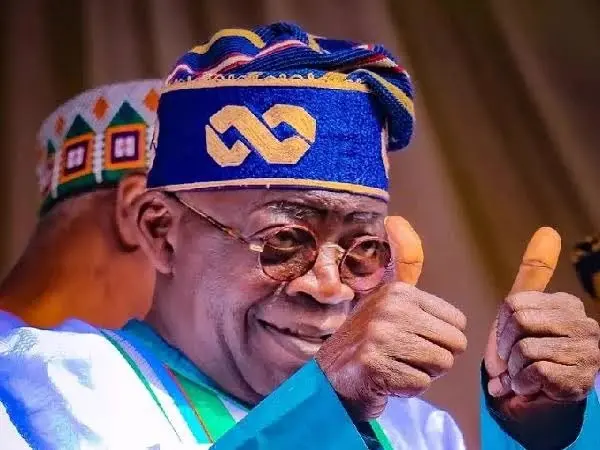
President Bola Tinubu has extended his “working vacation” in Europe by a few days and is expected to return to Nigeria at the weekend, the Presidency said on Monday.
The announcement came as Vice President Kashim Shettima represents the President at the 81st United Nations General Assembly in New York, where he is scheduled to deliver Nigeria’s national statement.
Tinubu departed Nigeria on August 30 to begin his working vacation in London. After spending one week in the United Kingdom, he proceeded to Paris, France, where he held meetings with French President Emmanuel Macron and businessman Vincent Bolloré.
Bolloré’s media interests include Canal+, MultiChoice and Universal Music Group.
A statement signed on Monday by Bayo Onanuga, Special Adviser to the President on Information and Strategy, said Tinubu has remains in touch with developments at home and continued to direct the affairs of government despite being away from Nigeria.
One of the major decisions taken by the President during the period was his directive for an independent investigation into the deaths of 37 suspected illegal miners in Minna following their detention by the Nigeria Security and Civil Defence Corps.
The deaths had raised concerns over the circumstances surrounding the detention and treatment of the miners, prompting the President to order an independent probe.
Tinubu’s decision to extend his stay abroad means he will not personally attend the opening of the high-level segment of the UN General Assembly in New York. Shettima, who departed Abuja on September 20, is representing the President at the global gathering and will present Nigeria’s national statement.
The Presidency said the Vice President’s representation was part of the arrangements for Tinubu’s absence from the country.
With Shettima now in New York, the Secretary to the Government of the Federation, Senator George Akume, will continue to represent the President at some official functions.
The Presidency said Tinubu had also delegated the Vice President to represent him at official functions while he was away, while Akume had similarly stepped in at other engagements.
The President’s extended stay in Europe also comes amid increased political activities at home ahead of the 2027 general elections.
According to the Presidency, the Director-General of the Presidential Campaign Council, Senator Abubakar Yari, has been leading notable leaders of the ruling party in consultations with prominent traditional rulers across the country.
The consultations form part of ongoing political engagements as the administration moves towards the next electoral cycle.
The Presidency also reacted strongly to criticism over Tinubu’s decision not to attend the UN General Assembly personally.
It described as irresponsible what it called a “baseless insinuation” by former Vice President Atiku Abubakar and a United States-based lobbying firm headed by an ex-convict regarding the President’s non-attendance at the global gathering.
The Presidency maintained that Nigeria would be adequately represented by Shettima, who will deliver the country’s national statement.
Tinubu’s latest trip began as an official working vacation, during which the President combined his leave with selected diplomatic, business and governmental engagements.
His meeting with Macron in Paris provided an opportunity for discussions on bilateral relations, while his engagement with Bolloré focused on business and investment interests involving Nigeria.
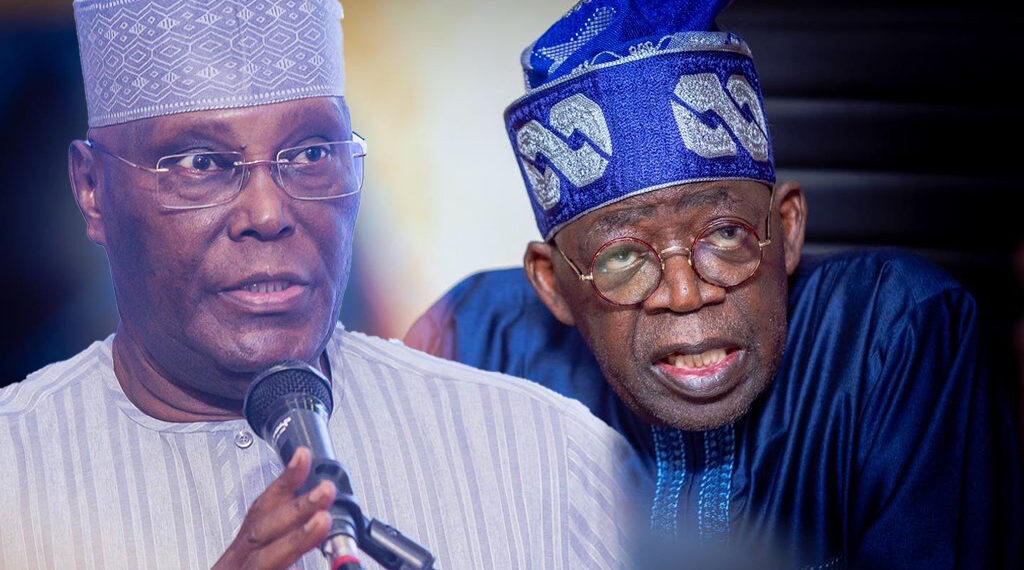
Former Vice President Atiku Abubakar has urged President Bola Tinubu to take immediate steps to reduce the cost of petrol, saying Nigerians are struggling with the combined impact of high energy, transportation and food prices.
Atiku made the call on Friday in Abuja during a press briefing on fuel prices, palliatives and the rising cost of living. His comments came amid renewed concerns over the effect of higher petrol prices on households and businesses.
The African Democratic Congress (ADC) presidential candidate said the removal of petrol subsidy in May 2023 placed additional pressure on families, workers, farmers and businesses.
He said the effect of higher petrol prices was not limited to motorists, as increased transportation and logistics costs had also pushed up the prices of food and other essential goods.
“When government makes energy expensive, it makes life expensive,” Atiku said.
The former vice president recalled that he had previously called for government intervention to reduce petrol prices, but said Tinubu had dismissed the proposal as showing “serious ignorance” of governance and the economy.
Atiku questioned whether the Nigeria Labour Congress (NLC), petroleum marketers, manufacturers and ordinary Nigerians who had raised concerns about rising costs could all be described as ignorant.
“When workers, producers, marketers and ordinary families are all raising the alarm, government must listen,” he said.
He said the government should be prepared to review its policies when their consequences become difficult for citizens to bear, adding that rising production costs were putting further pressure on manufacturers while families were finding it harder to afford basic goods.
Atiku also argued that government revenue and GDP figures did not necessarily reflect the economic reality facing ordinary Nigerians.
“If government receives more Naira while the citizen’s naira buys less food, less fuel, less electricity and less transportation, then bigger government revenues mean little to the family struggling to survive,” he said.
The ADC candidate urged Tinubu to use the remaining eight months of his first term to reduce the burden on Nigerians and consider any measure capable of lowering petrol prices, even if the proposal came from a political opponent.
“What matters to me is that Nigerians pay less,” Atiku said. “A sensible idea does not become a bad idea because it came from your opponent.”
He also offered to make his policy framework available to the Tinubu administration, saying Nigerians should not have to wait for a new government before benefiting from policies that could provide relief.
“If you need the framework, I will provide it. Implement it under your government. Give it whatever name you choose. Take the credit,” he said.
“I ask for only one thing: Let Nigerians breathe.”


