
News
From Zero to Hero: A Noble Transitional Reminder!


- /home/rhoncare/pointblank.ng/wp-content/plugins/mvp-social-buttons/mvp-social-buttons.php on line 27
https://pointblank.ng/wp-content/uploads/2019/09/Adegoke-1000x600.jpg&description=From Zero to Hero: A Noble Transitional Reminder!', 'pinterestShare', 'width=750,height=350'); return false;" title="Pin This Post">
- Share
- Tweet /home/rhoncare/pointblank.ng/wp-content/plugins/mvp-social-buttons/mvp-social-buttons.php on line 69
https://pointblank.ng/wp-content/uploads/2019/09/Adegoke-1000x600.jpg&description=From Zero to Hero: A Noble Transitional Reminder!', 'pinterestShare', 'width=750,height=350'); return false;" title="Pin This Post">
By Tolulope A. Adegoke
“I need to reiterate here that, when it comes to this noble task, nothing is impossible! Only change is constant in life. Everyone can improve at anything and at whatever level, provided that he or she is willing enough to undergo the required processes of development. My point is that your life can experience a revolutionary change, as long as you are ready to learn, follow the footsteps of champions and apply other essential life-changing principles from the Holy Scriptures and other relevant sources.” – Tolulope A. Adegoke
The example of Japan is pertinent here. In the aftermath of the Second World War, Japan’s two largest economic cities, Hiroshima and Nagasaki, were bombed to the ground. Several lives and properties were lost. To put it simply, Japan was reduced to nearly nothing, economically and politically.
Yet, because the Japanese believe so much in their individual and national potentials, they have rebuilt their economy to be one of the best in the world. In fact, in the early 2000s, a Prime Minister of the country, while speaking at the anniversary of the Hiroshima and Nagasaki bombing, said that even if Japan were to be placed in a desert, the Japanese would rebuild their nation to become the second largest economy in the world in a short time.
The truth of that statement can be seen all around – especially with the quality and quantity of products manufactured in Japan. In fact, even though Japan currently does not have enough steel to produce vehicle bonnets, nor does it have enough silicon to produce side-mirrors or even enough rubber to produce steering-wheels, yet the country is the highest exporter of cars in the world.
My point is that Japan rose to be an economic giant from being reduced to zero. Despite the odds and pains, it ascended the ladder of greatness among the nations of the world. This teaches us the power of resilience. Every zero status can be reversed if dutifully worked upon.
The wealth of any individual or nation is not found under the feet but in-between the “ears” – that is, the contents of their brain and character. Let’s apply this to Nigeria as a nation, especially to re-orientate its leaders and citizens, the young ones in particular. The real wealth of Nigeria is not in the creeks of the Niger-Delta or anywhere else in the country. It is neither in the abundance of crude oil nor in the vast mineral resources all over the country. The real wealth lies in the country’s heterogeneous population. Yes, let me repeat it – It is the very citizens of the Nigerian nation that are usually considered the least of its resources (the zero resources) that are its hope and future. This is because right in them lie the ability, acumen and determination to harness and utilise the various natural, mineral and petroleum resources of the nation in line with God’s purpose for its existence.
In truth, the so-called valuable resources that people often jostle and sometimes tussle to get from the ground are not the real resources of any nation; the true resources are the citizens – the often overlooked treasures who have several divinely-endowed potentials in them. Sadly, many of these die daily, before their time, and go the grave with their potentials in them. No wonder the late Myles Munroe said that the richest place on earth is the cemetery!
Pertinent Reassurance
Before proceeding to the next phase in which we shall be exploring detailed principles on positively empowering our zeroes, I need to reiterate here that, when it comes to this noble task, nothing is impossible! Only change is constant in life. Everyone can improve at anything and at whatever level, provided that he or she is willing enough to undergo the required processes of development.
My point is that your life can experience a revolutionary change, as long as you are ready to learn, follow the footsteps of champions and apply other essential life-changing principles from the Scripture and other relevant sources.
Let me illustrate this truth with the experience of D.W Ghent who was said to have participated in Dale Carnegie’s public speaking programme in Philadelphia. Shortly after the opening session, Ghent had invited Carnegie to lunch with him in the manufacturers’ club. Ghent was a middle-aged man and had always led an active life; he was head of his own manufacturing establishment and a leader in church work and civic activities. While they were having lunch that day, he leaned across the table and said: “I have been asked many times to talk before various gatherings, but I have never been able to do so: I get so fussed, my mind becomes an utter blank: So I have side-stepped it all my life. But I am now on a board of college trustees. I must preside at their meetings. I simply have to do some talking…Do you think that is possible for me to learn at this late date in my life?”
“Do I think, Mr Ghent?” Carnegie replied. “It is not a question of my thinking. I know you can, and I know you will if you only practise and follow the directions and instructions.”
Mr Ghent wanted to believe what Carnegie had said, but it seemed too rosy, too optimistic. So he said, “I am afraid you are you are just being kind; you are merely trying to encourage me.”
After Mr Ghent had completed his training, he and Dale Carnegie lost touch with each other for a while.
Some years later, however, they met again and lunched together at the Manufacturers’ Club. They sat in the same corner and occupied the same table that they had on the first occasion. Reminding Ghent of their former conversation, Carnegie asked him if he really had been too optimistic then. Ghent took a little red-backed notebook out of his pocket and showed him a list of talks and dates for which he had been booked. “And the ability to make these,” he confessed, “the pleasure I get in doing it, the additional service I can render to the community – these are among the most gratifying things in my life. Not only have I given countless public speeches, but just recently I was chosen from all the community leaders in this city to give the introduction when David Lloyd George (then the Prime minister of Great Britain) addresses a mass meeting in Philadelphia.”
Yet, this was the same man who had sat at the same table less than three years before and solemnly asked Carnegie if he would ever be able to talk in public!
We find another amazing proof that nothing is impossible when it comes to transiting from a zero to a hero in the case of the biblical David. The inspiring story of his rise from a despised shepherd boy to a renowned warrior and revered king begins from I Samuel 16. Here, we are told how God, who had seen his commitment to duty and passion for service in the loneliness of the mountains and valleys where he cared for his father’s sheep, sent Samuel to anoint him Israel’s next king, following the rejection of Saul. Being the family’s zero, however, nobody had initially considered presenting David as one of the sons of Jesse – yet the Almighty God who rewards enthusiasm for greatness found him out and he was anointed. It was after this that he killed Goliath before the Philistines and the Israelites. He became a military general of Israel at the very tender age of 17.
David eventually ascended the throne, despite various attempts by Saul to kill him. He started as a zero but eventually emerged a hero! He diligently went through the rough but refining and toughening process of his transition through his strength of character, fear of God, unwavering courage and undaunted self-belief.
I tell you, friend, you too can rise from your present level to an exceedingly glorious and influential one. This is the will of God for you.


National Chairman of the African Democratic Congress (ADC), Davis Mark, has said the party will adhere to electoral rules during the 2027 elections but will resist any attempt to manipulate the process.
Mark spoke on Wednesday in Abuja when the governing council of the Savannah Centre for Diplomacy, Democracy and Development, led by Olukayode Ariwoola, former chief justice of Nigeria, visited him at the ADC headquarters.
“We hold ourselves to the highest standards of good conduct as a political party. We will play by the rules,” Mark said.
The centre’s governing council, known as the council of the wise, was reconstituted in June to engage relevant institutions and political stakeholders towards fostering peaceful, free and credible elections.
The meeting with the ADC chairman was part of the centre’s ongoing engagement with political parties ahead of the elections.
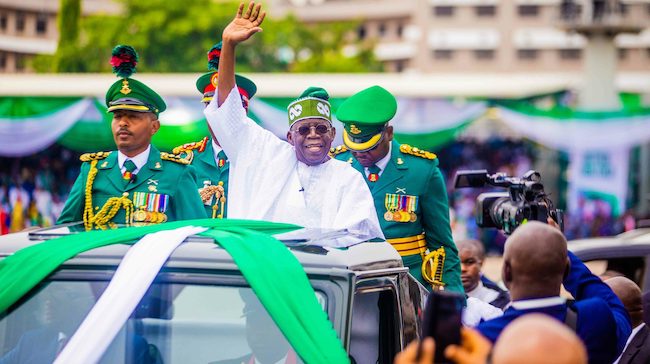
The Presidency has expressed confidence that the growing number of governors backing President Bola Tinubu gives him a stronger political structure and an advantage over opposition candidates ahead of the 2027 presidential election.
The Special Adviser to the President on Policy Communication, Daniel Bwala, said this on Channels Television’s Politics Today, arguing that the political landscape has changed considerably since the 2023 election.
Bwala said the support of governors is significant because they control political structures in their respective states and could translate their backing for Tinubu into grassroots mobilisation ahead of the election.
“Since then, President Bola Tinubu has got how many governors on his side? The governors are the Chief Executive Officers of their respective states. They coordinate the structures of the State. These people say, ‘We are putting our goodwill, our resources, our structure, and our support to the President,’” he said.
He argued that the President’s political position has also been strengthened by people who have benefited from his administration’s policies, including beneficiaries of the Nigerian Education Loan Fund (NELFund), agricultural programmes, manufacturing incentives, CrediCorp and infrastructure projects.
Bwala said the developments constitute “facts, verifiable data” which, in his view, showed that Tinubu had made progress since assuming office in 2023.
He also dismissed suggestions that the administration’s confidence ahead of 2027 is based solely on divisions within the opposition, saying its record in office would form an important part of its campaign.
His comments came amid renewed debate over Tinubu’s popularity and the ability of the opposition to challenge his bid for a second term.
Bwala dismissed an assessment by The Economist that Nigerians may re-elect Tinubu despite disapproval of his administration, arguing that claims about the President’s popularity should be backed by representative opinion surveys.
“When you make a claim that Nigerians don’t like him, without saying, also, that there are a lot of people… one million families that the children have benefited from NELFund, you think they hate him?” he asked.
He similarly cited beneficiaries of agricultural interventions, support for manufacturers and CrediCorp, arguing that such groups should be considered when assessing public sentiment towards the administration.
On concerns over rising poverty and hunger, Bwala acknowledged that more Nigerians had fallen into poverty but attributed the hardship partly to the economic reforms undertaken by the Tinubu administration.
“More people went down to poverty, I acknowledge, I’m not doubting it. But there is a ‘but’ to it. Since when the reform started to today, we have made marked progress,” he insisted.
According to him, the reforms are necessary to address longstanding economic problems, despite the short-term discomfort experienced by Nigerians.
Bwala also defended Tinubu’s statement that Nigeria has moved from the “doldrums” towards prosperity, saying the President is not suggesting that Nigerians would suddenly begin experiencing prosperity from October 1.
He cited NELFund beneficiaries, subsidised healthcare, infrastructure projects and support for small and medium-sized businesses as examples of what he described as prosperity already reaching Nigerians.
“One million families whose children have benefited from the NELFUND programme, what they are benefiting is called prosperity,” he said.
“If you go to an environment or a place where there have been no roads or any form of infrastructure, and we have established infrastructure there, what has come to them is prosperity.”
Bwala further claimed that the opposition has lost several influential political figures who played key roles in their 2023 campaigns.
He said former Vice President Atiku Abubakar no longer has the support of governors who worked for his 2023 campaign, while Peter Obi has also lost some critical political allies.
“In terms of the other candidates who say he will not win, Atiku Abubakar lost close to 25 per cent of key people that you know around him. All the governors that worked for him that time are no longer with him,” Bwala said.
“Peter Obi lost 55 per cent of the critical people that carried his campaign; they’ve all disappeared. And some of them went to Atiku, some of them went wherever they could go to.”
He consequently expressed confidence in Tinubu’s prospects in the 2027 contest, saying the political support around the President was considerably different from what existed before the 2023 election.
News
Globacom Unveils Sponsorship of 2026 Ofala Festival, Promises ‘Never Settle for Less’ Celebration

Globacom has once again demonstrated its commitment to Nigeria’s rich cultural heritage by supporting the 2026 Ofala Festival in Onitsha as the official sponsor.
The partnership, which has continued for over 15 years, highlights Globacom’s dedication to celebrating and sustaining cultural traditions that preserve identity, strengthen communities and contribute to the nation’s social and cultural development.
The 2026 edition, which marks the 25th Ofala of the reign of the Obi of Onitsha, Igwe Nnaemeka Alfred Achebe, is themed “Igba Mbo, Iga N’Iru – Strive and Advance: From Resilience to Progress.” The theme resonates strongly with the history and character of Ndi Onicha, whose story is one of resilience, enterprise, adaptability and an enduring determination to advance.
According to Globacom, its continued association with Ofala reflects the Company’s belief that cultural heritage and national development are complementary forces. “For Globacom, Ofala is more than an annual cultural celebration. It is a living expression of identity, continuity and collective aspiration. Our sustained partnership reflects our belief that preserving heritage and advancing society are not competing imperatives, but mutually reinforcing pillars of a progressive nation,” the Company stated.
The telecommunications giant added that the partnership also aligns with its “Never Settle for Less” philosophy, which encourages Nigerians to honour their foundations while continually pursuing greater possibilities. “Never Settle for Less is a philosophy of progress: to respect the foundations upon which we stand, while seeking to broaden possibilities, deepen impact and move the nation forward. We are proud to support a cultural institution that honours its roots while engaging the future,” Globacom said.
Over the years, Ofala has evolved from a sacred royal rite of renewal into a major platform for cultural affirmation, community engagement and social development. The 2026 programme features the Obi’s sacred period of seclusion and ceremonial emergence, the Medical, Health and Wellbeing Community Outreach, the international Oreze Art Exhibition, the Youth Carnival, and the grand finale of Iru Ofala and Azu Ofala.
For Globacom, supporting Ofala therefore goes beyond conventional sponsorship to represent corporate citizenship and cultural stewardship — an investment in preserving the memory, meaning and continuity of a people. The Company noted that the festival’s ability to draw strength from its ancestral foundations while embracing the future mirrors its own commitment to innovation, connectivity and digital inclusion.
As the people of Onitsha gather to celebrate another chapter in the history of the revered institution, Globacom remains proud to stand alongside them in honouring a heritage that continues to inspire generations.


