
Headlines
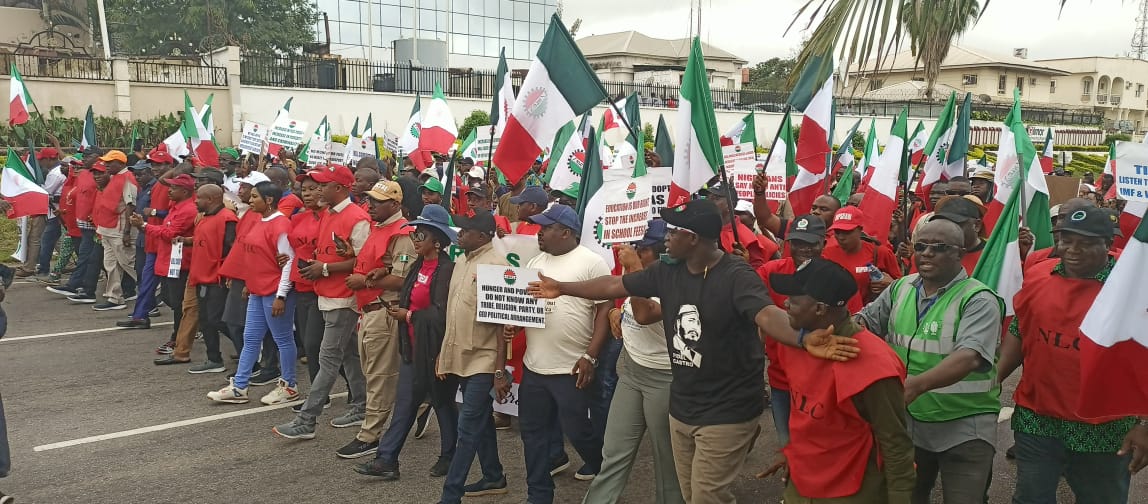
Hardship, Petrol Price Hike: FG Gradually Pushing Nigerians to Revolt, Labour Warns

- /home/rhoncare/pointblank.ng/wp-content/plugins/mvp-social-buttons/mvp-social-buttons.php on line 27
https://pointblank.ng/wp-content/uploads/2023/11/nlc-1000x504.jpg&description=Hardship, Petrol Price Hike: FG Gradually Pushing Nigerians to Revolt, Labour Warns', 'pinterestShare', 'width=750,height=350'); return false;" title="Pin This Post">
- Share
- Tweet /home/rhoncare/pointblank.ng/wp-content/plugins/mvp-social-buttons/mvp-social-buttons.php on line 69
https://pointblank.ng/wp-content/uploads/2023/11/nlc-1000x504.jpg&description=Hardship, Petrol Price Hike: FG Gradually Pushing Nigerians to Revolt, Labour Warns', 'pinterestShare', 'width=750,height=350'); return false;" title="Pin This Post">
The Organised Labour has warned that the latest hike in petrol pump price is pushing Nigerians to the limit.
It also warned the Federal Government against what it described as a surprised and unexpected reaction of the people to the frequent hike in the price of the product.
Labour equally advised the government to be wary of the silence of Nigerians in the midst of excruciating hardship and misery being inflicted on them, saying even a goat can bite when pushed to the wall.
In the same vein, an employer group – Chemical and Non-Metallic Products Employer’s Federation (CANMPEF) – said the petrol price increases, occasioned by subsidy removal, has led to an increase in transportation/logistics, production costs, the decline in household income and purchasing power.
Labour’s warning came on a day the Independent Petroleum Marketers Association of Nigeria (IPMAN) said its members wait for days to load petrol from Dangote Refinery in Lagos, despite paying N40 billion to the Nigerian National Petroleum Company Limited (NNPCL).
It also said Nigerians can pay less for the product if marketers are allowed to buy directly from the refinery.
One of the labour leaders, who attended the October 16 meeting with the Federal government at the office of the Secretary to the Government of Federation (SGF), reportedly said that government officials are gradually pushing the masses to revolt against the establishment.
He said: “We had thought that the Federal government will halt the incessant increase in the pump price of petrol after our October 16 meeting, where we made the government representatives, led by the Secretary to the Government of the Federation understand the level of frustration, hunger, misery and general restiveness across the country.
‘’Sincerely, we thought the government would give the people a breathing space and suspend the increases. The government is testing the patience of Nigerians. I can tell you that government is pushing the citizens to a boiling point.
“This latest increase of Tuesday, October 29 is one increase too many and a bitter pill to swallow. The increases are pushing the citizens to the limit.
“Government should not be surprised if the people of Nigeria decide to react in an unexpected way that will shock those in government. The people are really angry, frustrated, hopeless and are moving to a point where they may vent their anger in an unusual way that may be difficult to curtail.
‘’You cannot continue to flog a child and tell him not to cry. Hunger is everywhere, apart from the people in power or their friends and relations.
“The frustration and suffering in the country were also highlighted a few days ago during the meeting of the 19 Northern governors, alongside traditional rulers, among others. Across the country, people are just waiting for something to ignite the fire.
“Increasingly, the government is providing the fuel that will ignite the fire. What is probably left is someone to light the matches. We (Labour) have been urging the government to jettison the anti-people policies and lessen the pain, suffering, hunger, poverty and frustration to no avail.
“We have been cautious, thinking the government will allow common sense, empathy and the reality of the mass suffering of the citizens to drive its actions and inactions. Unfortunately, the reverse has been the case. It is getting to the time when the bubble will burst. Even a goat can bite when pushed to the wall.
“Today, the nation’s macro-economic indices are all heading down south without any letting.
Electricity tariffs have gone up, making power almost inaccessible to a greater number of our citizens.
“Petrol prices have gone through the roof and are nearly impossible for an average Nigerian to afford.
Transportation has become difficult, leading to levels of food scarcity and hunger never seen in the country before now.
‘’That unfortunately, has become our lot and that has become what majority of Nigerians look up to us to ameliorate.
“We need your unity and your strength if we are to creatively engage these forces and make governance work for the greater number of workers and people. As it is today, our choices are very limited. It is either we find a way to collectively overcome the forces that are bent on keeping us down as a people or we completely surrender to them and wallow in hopelessness.
“The forces of neo-liberalism must be challenged and the trade union movement remains the only viable force in Nigeria and in the world that can creatively engage it and mitigate its stranglehold on our nation.
“We must offer strong counterpoise to their prebendal logic and proffer newer arguments to triumph over their quest for profit at the detriment of the social will. It is only by remaining strong and united that we can hope to achieve that.
“It is sad but we cannot afford to keep our public refineries shut while still importing refined petroleum products. We demand a review of our salaries instead of its eroded values. We must together demand the re-commissioning of Port Harcourt, Warri and Kaduna refineries in keeping with the agreement we had with the Federal Government on October 15, 2023.”
Employers’ group laments
Speaking in a similar vein, the Chemical and Non-Metallic Products Employer’s Federation (CANMPEF), an employer group, said the petrol price increases occasioned by subsidy removal had led to an increase in transportation/logistics and production costs and a decline in household income and purchasing power.
Addressing members and guests at the 45th Annual General Meeting, AGM, of CANMPEF in Lagos yesterday, the President of the employers’ federation, Mr. Devakumar Edwin, lamented: “Following the liberalization of the foreign exchange (FX) market, PMS importers are embattled with looming scarcity and sourcing challenges of FX which continues to increase the selling cost of PMS.
‘’The price adjustments led to an increase in transportation/logistics, production costs, decline in household income and purchasing power.
“There is optimism surrounding the possibility of an energy transition that will reduce the industry’s dependence on expensive diesel and PMS. However, significant investments are required to make renewable energy viable for manufacturing operations.’’
According to him, the spillover of the increases in the petrol price, and floating of the naira has worsened the crises facing the manufacturing sector of the nation’s economy.
“For the manufacturing sector to reach its full potential, government’s intervention is critical. If priority attention is given to manufacturing as a strategic value-adding sector, capable of driving economic transformation, then the country can earn its position among industrialized nations.
“To unlock the potential of Nigeria’s manufacturing sector, the government must commit to the following investments: History has shown that protectionist policies can have a profound impact on local industries.
“A notable example is Nigeria’s 2007 cement policy, which restricted imports by companies without local manufacturing investments.
“In just 15 years following the policy, cement production in Nigeria grew from 7 million metric tonnes to over 60 million metric tonnes per annum. Expanding such policies to sectors like agriculture, petrochemicals, basic chemicals, electronics, and tools manufacturing could set Nigeria on the path to becoming an industrial giant.
“Declare a state of emergency in the manufacturing sector: The sector requires immediate attention, and this can be achieved through policies that promote growth, investment, and innovation. A clear declaration of urgency by the government would demonstrate its commitment to revitalizing the sector.
“Subsidise consumption through manufacturing: By offering tax reliefs and removing tariffs on key agricultural and manufacturing inputs, the government can reduce operational costs and encourage growth.
“These subsidies will also have a profound impact on job creation, especially for Nigeria’s youth, who will be gainfully employed in productive industries. The social and security benefits of such a move are immeasurable and far reaching.
“Create a favorable business environment: Ensuring ease of doing business is essential for long-term sustainability in the manufacturing sector. This requires a combination of administrative and legal reforms to eradicate bureaucratic barriers and other inefficiencies that hinder industrial growth.”


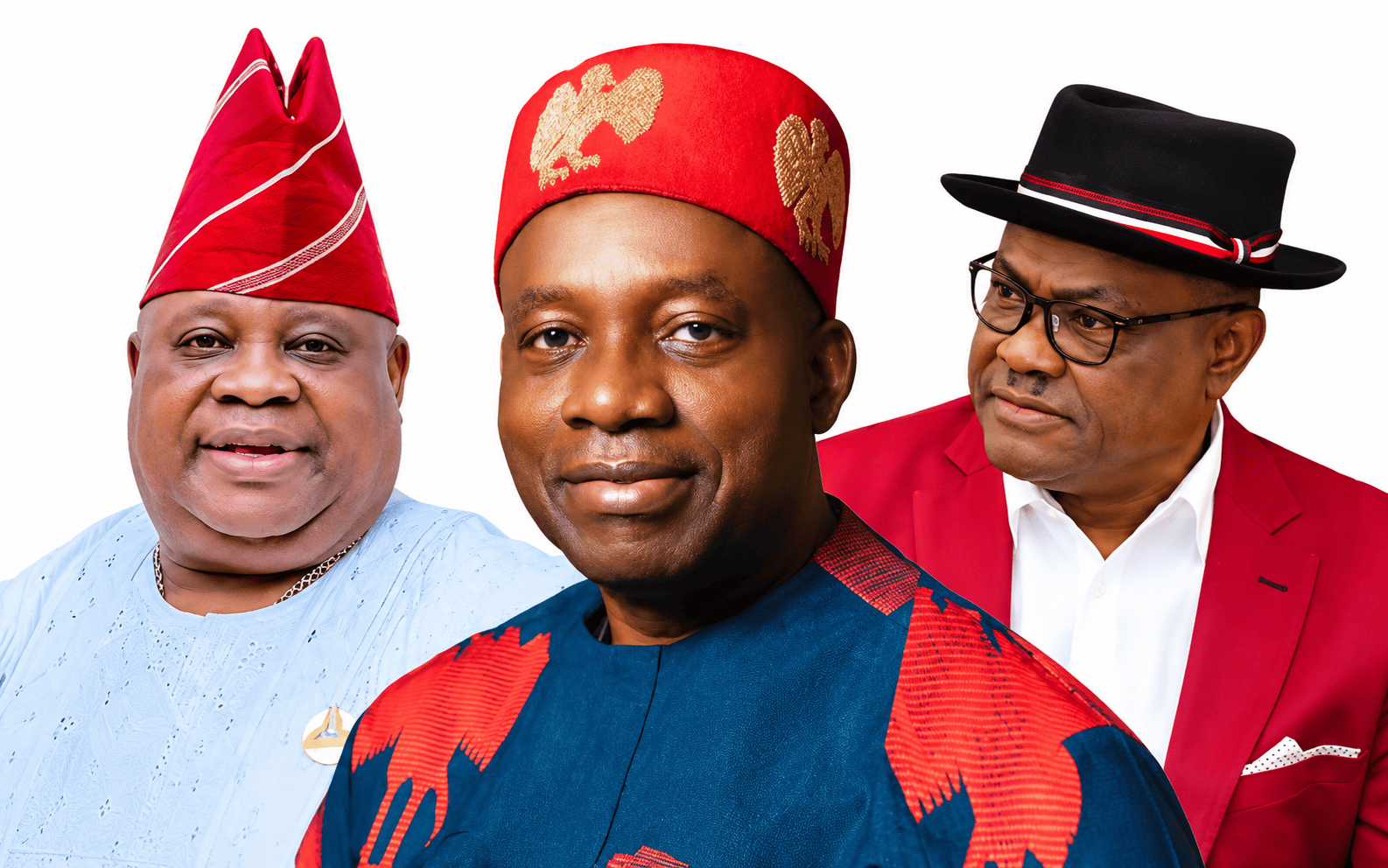
The All Progressives Congress (APC) has named Nyesom Wike, Minister of the Federal Capital Territory (FCT); Ademola Adeleke, Osun State governor; and Chukwuma Soludo, Anambra State governor, as campaign coordinators in its expanded presidential campaign council for the 2027 general election, despite their affiliations with other political parties.
Wike belongs to the Peoples’ Democratic Party (PDP), Soludo is a member of the All Progressives Grand Alliance (APGA), while Adeleke won re-election as Osun governor in 2026 under the Accord Party.
Under the new arrangement, Wike will coordinate the APC campaign in Rivers State and the FCT, Soludo will oversee Anambra, while Adeleke will coordinate the campaign in Osun.
The expanded list is scheduled for inauguration by President Bola Tinubu at the Presidential Villa in Abuja on Wednesday.
The APC initially released its campaign council list on August 22, naming Abdulaziz Yari, former Zamfara governor, as director-general. Senate President Godswill Akpabio, House of Representatives Speaker Tajudeen Abbas and Yobe Governor Mai Mala Buni were appointed deputy director-generals.
In the revised list, Akpabio, Abbas and Kwara Governor AbdulRahman AbdulRazaq are deputy vice-chairmen I, II and III, respectively, while Buni becomes deputy director-general I for the North.
The council also includes former governors and party chieftains as advisers, which include former APC national chairmen Adebisi Akande and Abdullahi Adamu; former Ogun State Governor Ibikunle Amosun; former Osun State Governor Iyiola Omisore; Senator Ibrahim Dankwambo; Senator George Akume; former Ogun State Governor Segun Osoba; and Wale Edun. Obafemi George is listed as an adviser on media.
The Directorate of Election Planning, Coordination, Monitoring and Mobilisation, established ahead of the 2027 general election, has Faleke as Deputy Director-General, with Stella Okotete and Engr. Abdullahi Garba Ramat serving as Secretary I and Secretary II, respectively. Audu Maikori is also listed as a secretary.
Other members of the directorate include Soares Omotola, Bashir Dabo, Sheriff Mohammed Usman, Jibrin Bancir, Ayoola Peter Olajolo, Abubakar Sadiq Sada and Princess Folasade Ogunbiyi.
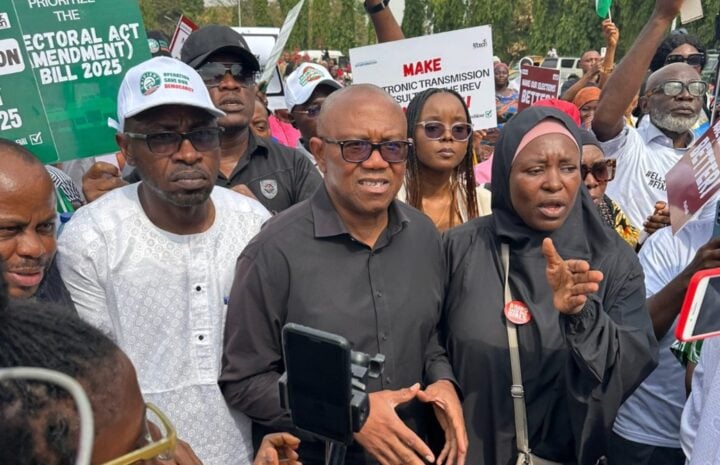
The Nigeria Democratic Congress (NDC) presidential candidate, Peter Obi, has questioned how the Federal government’s 30-day petrol price discount would reduce poverty, unemployment, insecurity and inequality in the country.
Obi raised the questions in a statement posted on his X platform on Sunday, describing the initiative as a reactive policy that substitutes political optics for sound economic planning.
He argued that the discount, which he said amounts to less than five per cent of petrol costs, is unlikely to address the wider economic challenges facing Nigerians.
“The announcement by the APC-led Federal government offering a 30-day discount on price of petrol to relieve the acute hardship and hunger caused Nigerians by its unplanned removal of subsidy can only be described as another very reactive and confused approach to governance that is now the culture of the Tinubu government,” he said.
Obi said he had delayed commenting on the policy to allow time to assess its outcome, but maintains that the measure has not demonstrated a sustainable approach to addressing the country’s economic difficulties.
He recalled that President Bola Tinubu removed the petrol subsidy on May 29, 2023, arguing that the decision was taken without adequate consultation or a proper assessment of its likely effects on the economy and the livelihoods of ordinary Nigerians.
According to Obi, the subsidy removal was followed by other policies, including the floating of the Naira and tax reforms, which he argued are being implemented without proper sequencing and coordination.
He also criticised the government’s handling of multiple budgets, arguing that the combined effect of the policies has contributed to inflation and rising costs of goods and services.
Obi attributed what he described as increasing multidimensional poverty, business closures, unemployment, insecurity, widening inequality and youth migration to the economic pressures arising from the policies.
He also said the policies had weakened the general well-being of Nigerians, insisting that the government should assess their impact before introducing temporary relief measures.
The former Anambra State governor called for a detailed and publicly available regulatory impact assessment of government policies, arguing that such an exercise would help identify their effects and guide necessary adjustments.
He said a government committed to sustainable economic growth should engage stakeholders and ordinary citizens in consultations to develop inclusive policies that improve living conditions and expand economic opportunities.
Questioning the objectives of the petrol discount, Obi asked whether it would increase productivity and exports or whether it was intended to determine if the subsidy should be restored.
“Will it reduce poverty, unemployment, insecurity, and inequality? Will it increase productivity and exports? Is it a test to ascertain if subsidy should be restored? Is it another political gambit in the face of threats of electoral loss in the 2027 election?” he asked.
“Too many questions, no answer!” the former Governor of Anambra State added.
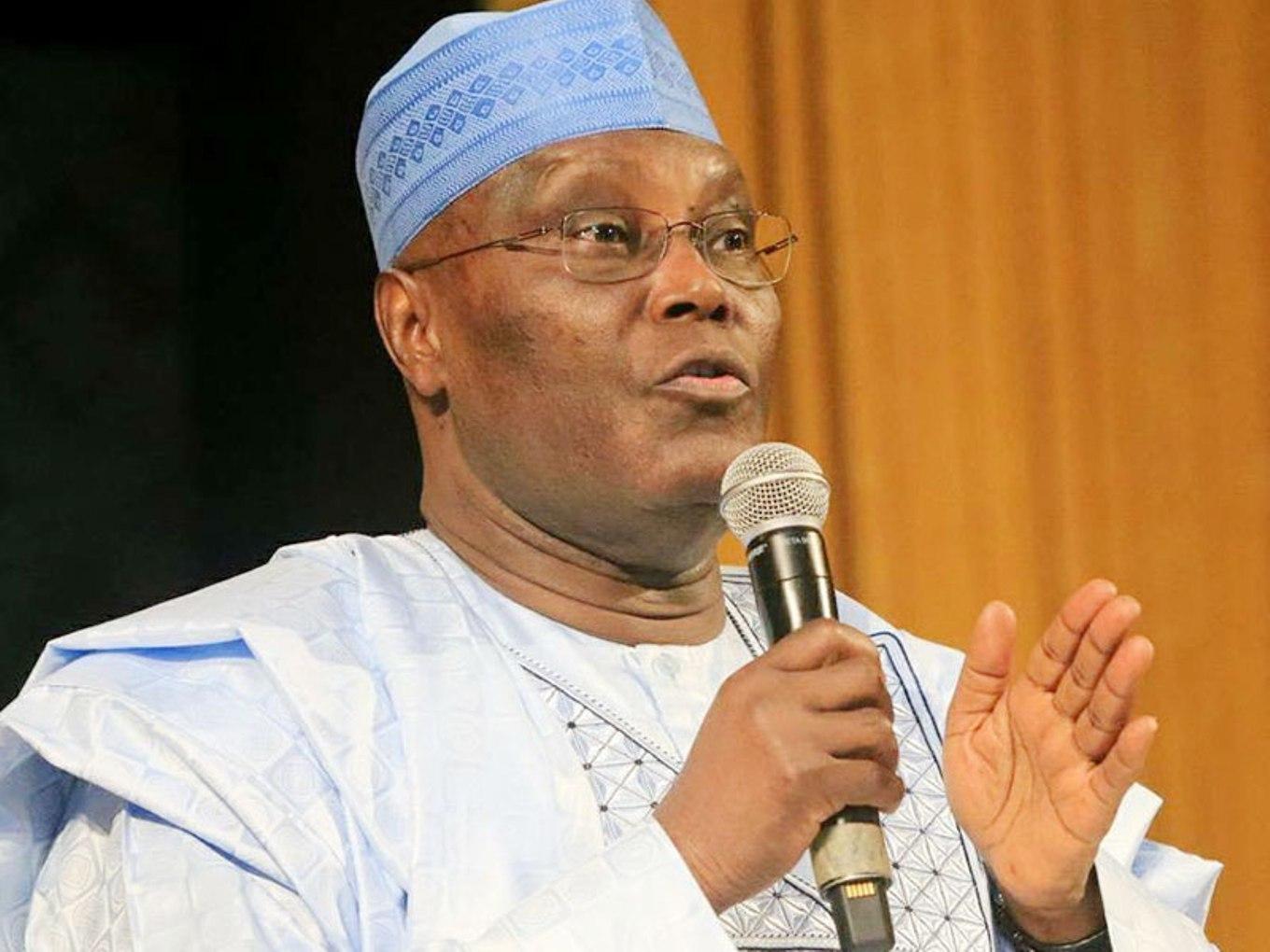
The African Democratic Congress (ADC) presidential candidate, Atiku Abubakar, has raised concerns over the lack of transparency surrounding the production of sensitive materials for the 2027 general elections, urging the Independent National Electoral Commission (INEC) to disclose the companies handling the printing.
Atiku warned that keeping details of the contracts and the process of selecting contractors from the public could weaken confidence in the electoral process.
In a statement issued by his Director of Strategic Communication, Phrank Shaibu, on behalf of the ADC Presidential Campaign Council, the former vice-president also called on INEC to explain recent changes involving officials in key departments responsible for election operations and information technology.
Reports said that Director Isa Magaji Gum has been moved from the Electoral Operations Department to the Voter Registry Department, while Mrs. Oluyemi Titilayo Adeyemi-Showunmi has been appointed to head Electoral Operations.
Dr. Lawrence Bayode was also identified as head of Information and Communication Technology.
Atiku said the commission has a responsibility to explain the reasons for the changes, and demonstrate that the decisions followed due process.
“These departments are at the heart of election administration. INEC must explain these decisions, publish the criteria applied and show that every appointment and redeployment followed due process, was based on merit and was free from political interference,” he said.
He also asked INEC to confirm or deny reports that Hitech, or a company linked to it, had secured a contract to print sensitive election materials for 2027.
“We are concerned by reports that more than half of the sensitive election materials, including presidential ballot materials, may have been allocated to an undisclosed company reportedly based in France. There are also questions about reports that the Nigerian Security Printing and Minting Plc is handling materials for only 15 to 17 states, while private companies are responsible for the remaining states.”
The former vice-president said Nigerians deserve to know which companies are producing their ballots and how the contracts were awarded.
“Nigerians should not have to depend on unnamed sources to discover who is producing their ballots,” he said.
The statement called for the publication of the names of the contractors, contract allocations, procurement procedures and security arrangements.
Atiku further argued that any contract awarded to Hitech or an associated company would raise questions about the commission’s neutrality.
He cited publicly reported business ties between the Chagoury family, which owns Hitech, and the Tinubu family.
He also referred to controversies surrounding major Hitech contracts under President Tinubu’s administration, including the Lagos-Calabar Coastal Highway project.
However, Atiku said INEC should clearly address the matter if neither Hitech nor any company linked to it has been selected to print election materials.
He also called on the Central Bank of Nigeria to disclose allocations for banknote printing and explain the roles of local and foreign contractors.
“We urge INEC to maximise the capacity of local security-printing firms and ensure that all ballot papers and result sheets are properly secured and accounted for at every stage of the electoral process. Any attempt to manipulate the 2027 elections will be resisted through the ballot, lawful civic action and other democratic means available to Nigerians,” he said.


