
Headlines
Herders/Farmers Clashes: US Report Reveals 7,000 Lives Lost in Benue, Nasarawa in Five Years

- /home/rhoncare/pointblank.ng/wp-content/plugins/mvp-social-buttons/mvp-social-buttons.php on line 27
https://pointblank.ng/wp-content/uploads/2019/05/Farmers.jpg&description=Herders/Farmers Clashes: US Report Reveals 7,000 Lives Lost in Benue, Nasarawa in Five Years', 'pinterestShare', 'width=750,height=350'); return false;" title="Pin This Post">
- Share
- Tweet /home/rhoncare/pointblank.ng/wp-content/plugins/mvp-social-buttons/mvp-social-buttons.php on line 69
https://pointblank.ng/wp-content/uploads/2019/05/Farmers.jpg&description=Herders/Farmers Clashes: US Report Reveals 7,000 Lives Lost in Benue, Nasarawa in Five Years', 'pinterestShare', 'width=750,height=350'); return false;" title="Pin This Post">
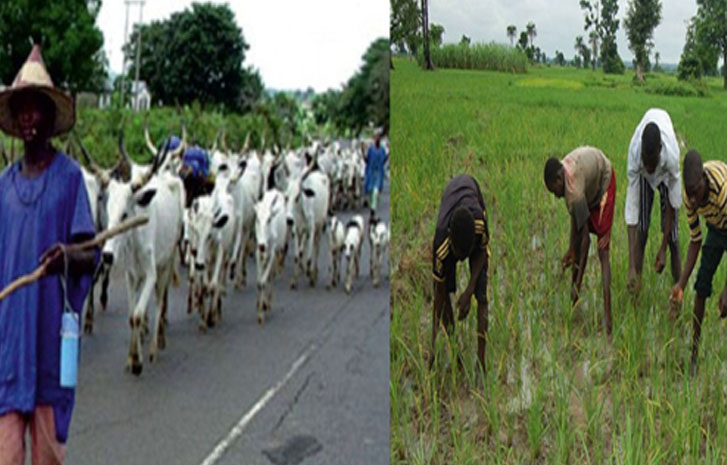
An estimated 7,000 Nigerians died between 2015 and 2019 in the persistent violence between farmers and pastoralists in the middle belt states of Benue and Nasarawa, a report funded by the United States Agency for International Development (USAID) has said.
Titled ”Engaging Communities for Peace in Nigeria (ECPN),” the report also said the violence has cost the Nigerian economy $13 billion a year over the past five years.
An international non-governmental organisation, Mercy Corps, conducted the study across the states and wrote the report.
The group said the study was aimed at preventing violent conflict between farmer and herders in the middle belt states. The report was presented at Bon Elvis Hotels On Thursday in Abuja.
The presentation was witnessed by the paramount ruler of the Tiv, Tor Tiv James Ayatse; the Country Director, Mercy Corps, Darius Radcliffe; USAID Mission Director, Stephen Haykin, represented by USAID country Democracy Officer, Beatrice Reaud , and other community leaders from Benue and Nasarawa states.
The report said a programme of interventions in the middle belt states by Mercy Corps had helped to reduce conflict in the area by 13 per cent.
The report said trained participants in the programme succeeded in resolving1932 inter and the intra-community disputes.
According to the report, over 600 disputes over grazing routes, seasonal access to water points, crop damage, cutting down of economic trees, water pollution by animals, and commerce were addressed peacefully in the communities where ECPN worked.
Event snippet
“Peace and reconciliation lie at the heart of USAID’s global approach to promoting stability and security in conflict-affected areas,” Mrs Reaud, said at the closing event.
“The United States and Nigeria share the objective of reducing violence in the Middle Belt states by peacefully preventing and resolving farmer-pastoralist conflicts.
“We must look beyond the help that Mercy Corps through USAID has given us,” she said.
“We are grateful for the assistance, but [its ideas] must be repackaged an implemented under another name.
“If we don’t change our ways, these problems will continue to hurt us, and it is the poor and downtrodden who suffer most. If you engage in fighting, even if you win, you lose something.”
The Madakin of Lafia in Nasarawa State, Ishaku Dauda, said the USAID Mercy corp initiative had brought peace into their communities.
“We appreciate what they have done. They did not just help face the problem, they helped solve it.
”For instance, if it was a stream that was the cause of the conflict, they dug a borehole as a surplus for water usage for both the herders and farmers.”
“We thank God for Mercy Corp and USAID for what they have done. Some of us never had the idea of coming together, but through their initiative, I began to understand we need to come together to stop the surge,” a member of Zango community in Benue State, Zaki Timbee, said.
In his remarks, the country director of Mercy Corp, Darius Radcliffe, said: ”There has been a tremendous amount of learning as a result of the research that has been embedded into the findings.
”We were able to look at the causes and address the causes of the conflicts without scratching the surface. Also in the engagement with the communities we also decided to choose only Nasarawa and Benue states because they were the states that were most affected by the farmer/herders clashes. They were the likely choices four years ago as they were the states with the most critical cases of violence, in terms of farmer/herders clashes.”
Premium Times


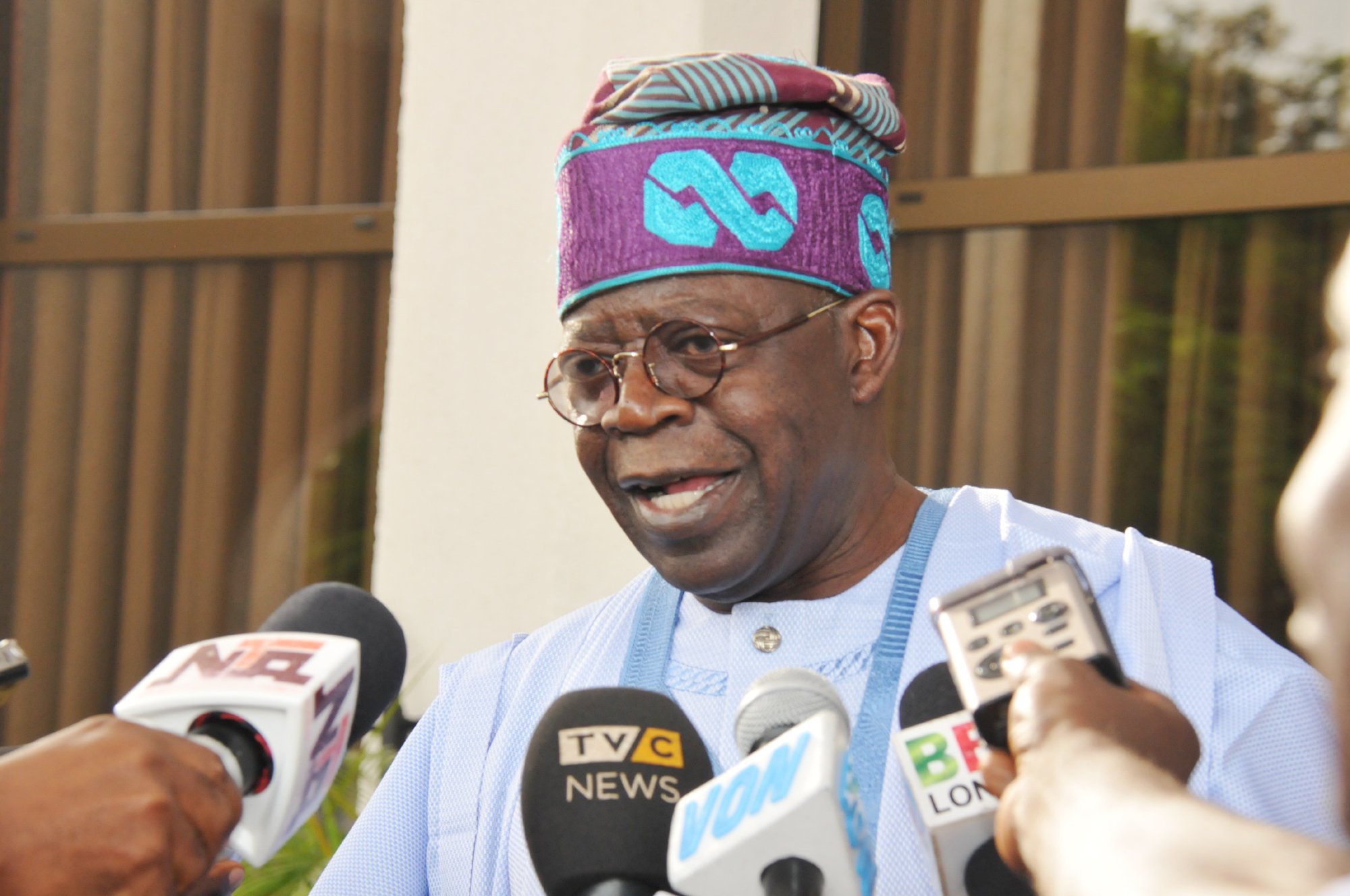
President Bola Tinubu says he has no regrets over the removal of petrol subsidy and other economic reforms introduced by his administration, insisting that Nigeria could not borrow its way to greatness.
Meanwhile, Minister of Finance and Coordinating Minister of the Economy, Taiwo Oyedele, has warned Nigerians against returning to petrol subsidy. He said the backtrack could trigger capital flight, undermining investor confidence and pushing the Naira to N3,000, N3,500 or even N4,000 per dollar.
But the Director of Media and Publicity of the African Democratic Congress (ADC) Presidential Campaign Council (PCC), Kola Ologbondiyan, challenged Oyedele to publish the economic model behind his warning that a return to fuel subsidy could push the naira to N4,000 per dollar.
The President spoke on Monday during the City Boys Movement retreat in Abuja, where he charged members of the group to mobilise support for his administration ahead of the 2027 general elections, insisting that the country’s future mattered more than the ambition of any individual candidate.
“No regrets,” Tinubu said, insisting that his administration would not be pushed back from its reform agenda.
He took a swipe at his political opponents, promising to restore the petrol subsidy, saying Nigeria could no longer afford to pay the fuel subsidy, and warning that reversing the policy would take the country back to an unsustainable economic path.
Defending his decision to remove the subsidy on his first day in office, Tinubu said the country was on the verge of financial collapse and could no longer afford the policy’s cost.
Tinubu also sought to reassure Nigerians about the direction of the economy, arguing that growth was steady and that the sacrifices associated with his reforms would ultimately offer citizens a future worth believing in.
Oyedele disclosed during a press briefing of the International Monetary Fund (IMF) and World Bank Annual Meetings in Bangkok, Thailand, yesterday, that investors had repeatedly questioned whether the government would abandon its reforms ahead of the next election cycle.
Ruling out the reversal of the government’s economic reforms, he maintained that any signal that Tinubu’s administration was contemplating or reinstating the subsidy would immediately affect financial markets, raise borrowing costs and worsen economic pressures on households.
“In all the meetings I have had, I came to a conclusion that the markets, including the domestic market, which you can read from the capital market, and the international market, have largely written off the opposition in Nigeria as unserious.
“If, for any reason, the President were to say we are merely considering the return of fuel subsidy, capital would react immediately, airfares would struggle, the naira would come under severe pressure, potentially moving towards 3,000, 3,500 or even 4,000.
The very fuel people want subsidised would become far more expensive in Naira terms,” Oyedele warned.
However, Ologbondiyan accused the Federal government of using fear to discourage debate on fuel subsidy, insisting that Nigerians deserve evidence, not alarming projections, on the potential economic consequences of restoring the policy.
Speaking to journalists, he described the minister’s warning as scaremongering and demanded that the government explain how it arrived at the projected exchange rate.
“The Minister of Finance is merely scaremongering. He cannot claim that a return to fuel subsidy will cause the naira to depreciate to N4,000 to the dollar without showing Nigerians the model behind that projection,” he said.
He questioned the reliance on investors’ concerns to oppose a subsidy’s return, challenging the government to identify the sources of the projections and disclose their calculations.

President Bola Tinubu has expressed sadness over the death of Ambassador Patrick Dele Cole, describing him as a distinguished diplomat, journalist, politician and public servant.
Cole died at 86.
In a statement on Saturday, Tinubu said Cole devoted his life to national service and brought distinction to his work in diplomacy, journalism and politics.
“His career reflected the enduring value of dialogue, tact, mutual respect and the pursuit of shared interests in advancing national development and international cooperation,” the President said.
Tinubu noted Cole’s contributions to Nigeria’s media landscape, particularly as Managing Director of the Daily Times, where he upheld the role of the press in holding public officials accountable, speaking truth to power and strengthening democratic governance.
“His legacy in journalism and public life remains an enduring part of our national story,” he said.
The President said at 86, Cole witnessed defining moments in Nigeria’s history and contributed to national development, adding that his life stands as a testament to experience, principled engagement and commitment to public good.
Tinubu extended condolences to Cole’s family, friends, professional associates and all whose lives he touched, praying that memories of his remarkable life will bring comfort and strength.
“May Almighty God grant Ambassador Cole eternal rest and give his family and all who mourn him the fortitude to bear this profound loss,” he said.

Director-General of the World Trade Organisation (WTO), Mrs. Ngozi Okonjo-Iweala, has said that her probe of an alleged $2.4bn subsidy fraud led to the abduction of her mother.
It would be recalled that the former Finance Minister’s mother, Kamene Okonjo, was kidnapped from her home in Ogwashi-Uku, Delta State, in December 2012.
In a recent interview with Bloomberg, Okonjo-Iweala said the abductors demanded that she resign as minister of finance and leave the country.
The WTO director-general served as Nigeria’s finance minister between 2011 and 2015 under former President Goodluck Jonathan.
She said the subsidy investigation began after her office noticed a sharp increase in claims submitted by petrol importers.
“So I went to the president and said, look, something is going on here. Could we audit the accounts? And he said, yes, go ahead. And we found about $2.4 billion worth of fraud. So, we refused to pay,” she recounted.
She said her mother was abducted shortly after the decision was announced, adding that her captors demanded her resignation as a condition for her release.
“I was told (by the kidnappers) that for her to be released, I should resign and leave the country,” she said.
The former minister described the incident as one of the most traumatic experiences of her life, saying her mother was held in a forest before escaping.
“She was held in the middle of a forest, and one night she escaped. She’s still alive. She’s 96 now,” Okonjo-Iweala said.
“It was a terrible, terrible five-day ordeal. I think the worst in my life.”
“I never dreamt my parents could ever be touched in this way, that people would be that evil,” she added.
Okonjo-Iweala said she considered resigning before her mother regained her freedom, but her father warned her against giving in to the abductors’ demands.
“He said, ‘We don’t give in to blackmail’. And he said, ‘You’ve got to carry on. You’ve got to go to work’,” she recalled.


