
News
How COVID-19 is Helping to Entrench Cashless Economy


- /home/rhoncare/pointblank.ng/wp-content/plugins/mvp-social-buttons/mvp-social-buttons.php on line 27
https://pointblank.ng/wp-content/uploads/2020/03/COVID-19.jpg&description=How COVID-19 is Helping to Entrench Cashless Economy', 'pinterestShare', 'width=750,height=350'); return false;" title="Pin This Post">
- Share
- Tweet /home/rhoncare/pointblank.ng/wp-content/plugins/mvp-social-buttons/mvp-social-buttons.php on line 69
https://pointblank.ng/wp-content/uploads/2020/03/COVID-19.jpg&description=How COVID-19 is Helping to Entrench Cashless Economy', 'pinterestShare', 'width=750,height=350'); return false;" title="Pin This Post">
By Joel Popoola
Nigeria is Africa’s largest economy, but we are pretty old-fashioned when it comes to money.
Although many Nigerians are used to receiving money electronically from relatives overseas, at home the vast majority of people prefer physical money to digital payments and would rather queue up at a kiosk for cash than pay for something using their phone.
It’s not smart. And in the time of COVID-19, it’s not safe.
By 2025, almost two-thirds of Nigerians will own a smartphone, but right now only 6% of us use digital technology to make financial transactions.
In Kenya, meanwhile, the number is 73%
Digital payments save businesses and consumers time and money: think of the time and effort it would save Nigerians in remote rural communities from not having to travel to go to the bank!
More importantly for digital democracy campaigners like me, electronic money is much easier to keep track of, increasing accountability and transparency and reducing corruption and theft.
So why don’t we work towards becoming the first nation on earth to abolish cash?
This might sound like a ludicrous dream, but in the time of the coronavirus, it might not be as far-fetched as you think.
Reducing the handling of cash to a simple way of slowing the spread of this and other viruses – and social distancing is almost impossible in a kiosk or bank queue.
And Nigerians are getting used to the idea of digital payments. During the COVID-19 lockdown, many Nigerians had no choice but to switch to digital banking when bank branches were closed. And they liked it. There were even reports of shops refusing to take money.
Making the change to a cashless Nigeria would require intensive effort, but the chances such a move could pay for itself. When Mexico made state worker salary payments, social welfare and pensions electronic, it saved the equivalent of 491 billion Naira.
Then, there is also the informal economy.
According to the IMF, the Nigerian informal sector accounted for 65% of Nigeria’s 2017 GDP. A move away from a cash-in-hand culture could lead to a very helpful increase in the government’s tax revenue.
Nigeria is already making more progress towards becoming a cashless society than you might think.
The COVID-19 crisis also saw the government utilise digital-payment platforms to distribute financial support for those affected by the lockdown.
This followed on from earlier efforts to establish payment service banks, which see telecom companies permitted to provide financial services.
Other government targets could be achieved too. The payment service banks were one of the initiatives aimed at meeting targets set in 2012, for 80% of Nigerian adults to have a bank account by 2020. These ambitious targets have been missed (the figure is currently around 60%) but a 2015 report prepared for the G20, the world’s largest 20 economies, highlighted the potential of digitised payments to rapidly increase access to financial services.
The journey towards a cashless Nigeria would require significant government commitment and investment. But the government could start tomorrow by aiming to making all government payments, such as Conditional Cash Transfer, digital by default.
And doing so would be hugely beneficial for our democracy.
Physical cash is dirty money in more ways than one indeed.
Transparency and accountability are almost impossible to achieve with cash payments which are anonymous and untraceable. And this has huge implications when it comes to making sure public money is spent were it is supposed to be spent.
When the Indian government started making pension payments through digitally instead of using cash bribe demands almost halved. I’m sure almost every Nigerian would dearly love to see that here.
At the digital democracy campaign we are determined to improve accountability and transparency in Nigerian politics.
We have created a free app called Rate Your Leader, which allows voters to contact directly with their local elected representatives. The Rate Your Leader app helps politicians engage directly with people who elected them, helping them understand what matters most to the people who elect them, get important information directly to them and build relationships of trust with the electorate.
We did this because in 2020, democracy is digital. Communication is digital. Commerce is digital.
Our money should be digital too – not least in the interests of public health.
Far from being a fantasy, perhaps a cashless Nigeria is an idea whose time has arrived.
Joel Popoola is a Nigerian technology entrepreneur, digital democracy campaigner and is the creator of the Rate Your Leader app. He can be reached via @JOPopoola



Remo Secondary School (RSS) has made history with the graduation of its 2026 class in what is being described as a groundbreaking academic ceremony, as the prestigious public secondary school celebrated its graduating students in a university-themed graduation style.
The historic valedictory service, which brought together students, parents, teachers, school administrators, old students and distinguished guests, was marked by pomp, pageantry and an atmosphere of academic excellence, as graduating students appeared in full academic graduation gowns, caps and other traditional graduation regalia.
In a striking departure from conventional valedictory ceremonies typically held in public secondary schools, the school’s principals and teachers, as well as the National Executives of the Remo Secondary School Old Students’ Association (RSSOSA), also donned academic gowns, creating the atmosphere and grandeur of a university convocation.
The remarkable initiative transformed the valedictory service into a memorable graduation experience for the students and marked a significant milestone in the history of Remo Secondary School, Ogun State, and potentially, the Nigerian public school system.
The ceremony was not only a celebration of the completion of secondary education, but also a deliberate effort to instil in the graduating students a sense of pride, achievement and responsibility as they prepare to transition into higher education and the next phase of their lives.
Another major highlight of the ceremony was the presentation of awards to deserving students in recognition of outstanding morals, good character and exemplary conduct. The awards, which cut across various categories, celebrated students who distinguished themselves not only through academic pursuits, but also through positive character traits, discipline, responsibility and good morals.
In a further demonstration of its commitment to the future of the graduating students and the advancement of education, Hope Bridge Social Impact Foundation awarded full higher education scholarships to about 25 deserving students. The scholarship awards will support the beneficiaries in pursuing their tertiary education, providing them with an opportunity to further their academic aspirations and achieve their full potential.
Speaking at the ceremony, the President of the Remo Secondary School Old Students’ Association (RSSOSA), Sir Aare Adetola Emmanuelking KOF, congratulated the graduating class and commended the school management, teachers and parents for their roles in nurturing and guiding the students throughout their academic journey.
He further expressed appreciation to the Ogun State Government, ably led by the Executive Governor, His Excellency, Prince Dapo Abiodun, MFR, CON, for his administration’s commitment to transforming the education sector in the state.
He specifically acknowledged the Governor’s Yellow Revolution initiative, describing it as one of the notable interventions that has positively impacted the education sector and contributed to creating a more conducive environment for learning across public schools in Ogun State.
According to him, the Governor’s keen attention to education and the deliberate interventions of his administration have had a positive ripple effect that has extended to institutions such as Remo Secondary School, contributing to the school’s continued growth and development and helping to position it as a great institution.
Aare Adetola Emmanuelking also extended his appreciation to the Ogun State Commissioner for Education, Science and Technology, Prof. Abayomi Arigbabu, for his leadership and evident contributions to the advancement of education in the state.
The event further highlighted the strong bond between the school and its old students, with the presence and participation of the old students, demonstrating the association’s continued commitment to the development and advancement of the institution.
The innovative university-style graduation ceremony is expected to remain one of the most memorable moments in the history of the school, and could set a new standard for how graduating students are celebrated in public secondary schools across Ogun State and beyond.
For the graduating class of 2026, the occasion was a day of pride, gratitude and celebration, a day when they were not only bid farewell from secondary school, but were honoured and celebrated as graduates stepping confidently into the future.
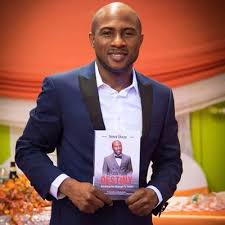
By Henry Ukazu
Dear Destiny Friends,
The sayings that success is a result of every little thing we do every day and that the journey of a thousand miles begins with a little step are no jokes. They are facts because the journey of greatness begins with one good step in the right direction.
In the journey of life, one must be intentional in how they live their lives. Attention must be paid to what they eat, what they say, how they dress and communicate among others. In doing this they have to pay close attention to every single step or action they take because in the grand scheme of things, they’ll ultimately play a role in the big picture.
The principle of every drop matter is powerful. This principle is applicable to family, academic, sports and entertainment, spiritual, financial, health and even personal lives especially as it relates to personal development.
Anybody that wants to succeed in life must be intentional in applying the principle of every drop. Let’s explain how this principle works in our daily and professional lives.
Family
Family is the most important element in any society. To have a beautiful family, parents must be intentional in how they live their lives and how they train their children. Little acts like showing random and intentional love which entails sacrifice, kindness, empathy, tolerance, patience, forgiveness and understanding are critical. It’s important to state that when children learn love in the family, they tend to show love in society, but when they learn about hatred in the family, they tend to exhibit chaos in society.
So, every single action of parents speaks volumes. Children learn faster from actions than words. Isn’t it true that action speaks louder than voice? So, if a man or woman wants to imbibe a particular training, culture, or lifestyle to the kids, it’s imperative they must be intentional about their life and what information and exposure they bring to their children.
Academy
The principle of every drop also plays a crucial factor in the life of a progressive student who’s interested in succeeding in school. This principle of every drop works for students who are intentional in reading every day, attending classes, doing assignments, networking with the right people and organizations. All these will play a huge role in making the student succeed academically because they are gradually laying the stones of success.
Sports and entertainment
There’s no successful athlete or entertainer that didn’t take time to build his craft. These sets of people spend time training themselves every day. According to Usain Bolt, “I train for four years to run 9 seconds”. Let’s take a minute to digest that statement. Work is indeed behind the scenes. Most people don’t see the work that is done every day, all they see is the result. The joggings, exercise, food, doctors’ appointments, etc., just to mention a little, are some of the things behind the scenes they engage in to be successful. That’s the principle of every drop. The same principle is applicable to entertainers. They make mistakes, they invest their time and resources in learning the craft. A great man once stated that someone needs to practice a skill for 10,000 hours to become an expert in it. This statement is so profound that I concur because as a successful writer and author of three trailblazers’ books, I have developed some level of mastery in writing while still leaving room for improvement.
Spiritual
The spiritual life of anyone is the most important part of any living creature. This is simply because the spiritual controls the physical. Any Christian who is intentional in living a life that’s pleasing to God must practice the principle of little drops, and that entails, avoiding ungodly acts like engaging in sexual immorality with the opposite or same sex, stealing, going to clubs, drinking to stupor, killing, stealing, etc., and replacing them love, kindness, charity, forgiveness, patience, empathy, etc. All these are acts of little drops to live upright.
Financial
To be successful in life, one needs to save no matter how small, and this saving entails discipline. Financial advisors have advised progressive minds to save at least 1/10th of their income. By the time one saves, one will understand the meaning of saving money and money will save you.
Health
Apart from one’s spiritual life, our health is the most important part of our life. It’s instructive to note that if you lose your money, you can get it back, if you lose your time, you can even buy it back all things all things being equal especially if you have money, if you lose your friends, you can get them back, but if you lose your health, it might take divine intervention to get them back. To have good health, it’s imperative for one to drink at least two little of water every day, exercise, sleep at least 8 hours and eat healthy amongst taking other hygienic measures like eating fruit and visiting your doctor.
Personal Development
This is another important aspect of a progressive mind. The hallmark of this principle can be seen in personal development because it shows how intentional one is elevating one’s life. As a small business owner, author, creative writer and human capacity development expert, I can’t emphasize the importance of personal development. My ability to publish three trailblazers’ books, publish creative articles consistently for the last eight years was not because I was smart or intelligent, no, it was simply because I was determined to do it. That’s personal development.
It’s one thing for people to inspire you from outside, but it’s another thing for the inspiration to come from inside. As a matter of fact, internal inspiration is the highest form of inspiration because if the whole is telling you can do something and you know you can’t do it, you’ll fail if you attempt to do it, but if the whole is telling you cannot do it, and you know you can do it, you’ll succeed because the Book of life states in 1 John 4:4 states, he that is in you is greater and stronger than he that is in the world.
Question: Do you want to succeed in life? If yes, pay attention to the principle of little things.
Henry Ukazu writes from New York. He works with the New York City Department of Correction as the Legal Coordinator. He’s the founder of Gloemi. He’s a Transformative Human Capacity and Mindset coach. He is also a public speaker, youth advocate, creative writer and author of Design Your Destiny Design, Unleash Your Destiny and The Six Pillars of Succes . He can be reached via info@gloemi.com
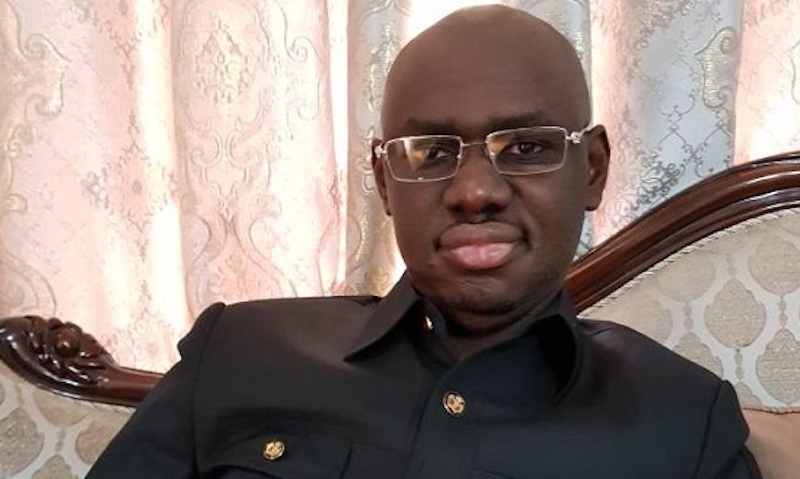
Former Deputy National Publicity Secretary of the All Progressives Congress (APC), Comrade Timi Frank, has dismissed claims that a reported letter from United States President Donald Trump amounts to an endorsement of President Bola Tinubu’s administration, describing it as a routine diplomatic correspondence acknowledging security cooperation between Nigeria and the United States.
In a statement issued in Abuja, Frank challenged the Presidency to publish the purported letter, insisting that any authentic communication from the American President should bear the official White House seal and President Trump’s signature.
“The letter is not from the White House. If it doesn’t have the White House seal and the signature of the President of the United States, it appears dubious at best,” Frank said, questioning the authenticity of the document being celebrated by the Federal Government.
He maintained that, even if such a letter exists, it should not be interpreted as political support for Tinubu or his administration.
Frank, who is the United Liberation Movement for West Papua (ULMWP) Ambassador to East Africa and the Middle East, alleged that the publicity surrounding the reported correspondence was intended to divert public attention from ongoing discussions about the release and circulation of court documents relating to President Tinubu’s alleged past drug-related matters.
He noted that the letter was reportedly dated July 6 but only surfaced publicly weeks later. According to him, if it truly represented a significant political endorsement by President Trump, it would have been made public immediately rather than emerging much later.
According to him, the Federal Government’s celebration of the reported letter suggests it is seeking international legitimacy and credibility rather than highlighting any extraordinary diplomatic achievement.
“By celebrating this ‘letter’, the government is showing that it is looking for legitimacy and credibility before the international community. If it had confidence in its credibility, it would not make so much of an ordinary diplomatic letter,” he stated.
Frank recalled that former President Muhammadu Buhari was invited to the White House during President Trump’s first term, arguing that such direct engagement carried greater diplomatic significance than a reported letter.
“President Trump invited Buhari when he was President. They stood together and addressed the world. If Tinubu believes President Trump is impressed with his administration, then he should visit Trump and stand side by side with him so the world can hear directly what he has achieved,” he said.
The former APC spokesman also questioned reports that the Federal Government had spent millions of dollars on lobbyists in the United States to improve its international image, arguing that a government with genuine international credibility would have little need for expensive reputation management abroad.
He further maintained that the United States has consistently projected itself as a defender of democracy, the rule of law, electoral integrity and the protection of human rights.
“The United States will never support a government that is corrupt, cannot protect the lives of its citizens or is tyrannical. America will always stand for democracy, election integrity and the protection of lives. Nigerians should not be deceived by the celebration of this ‘letter’.
“The United States remains committed to supporting efforts to address insecurity, protect election integrity and promote democratic values in Nigeria. That should not be mistaken for an endorsement of the Tinubu administration,” he said.


