
News
IPOB: Nnamdi Kanu Allegedly Bars Brother from Issuing Statements


- /home/rhoncare/pointblank.ng/wp-content/plugins/mvp-social-buttons/mvp-social-buttons.php on line 27
https://pointblank.ng/wp-content/uploads/2022/01/IPOB.jpg&description=IPOB: Nnamdi Kanu Allegedly Bars Brother from Issuing Statements', 'pinterestShare', 'width=750,height=350'); return false;" title="Pin This Post">
- Share
- Tweet /home/rhoncare/pointblank.ng/wp-content/plugins/mvp-social-buttons/mvp-social-buttons.php on line 69
https://pointblank.ng/wp-content/uploads/2022/01/IPOB.jpg&description=IPOB: Nnamdi Kanu Allegedly Bars Brother from Issuing Statements', 'pinterestShare', 'width=750,height=350'); return false;" title="Pin This Post">
The leader of the proscribed Indigenous People of Biafra (IPOB), Nnamdi Kanu, has reportedly ordered his brother, Prince Emmanuel, to stop making public statements on behalf of himself or the family.
Emmanuel, in January, urged the public to disregard a voice note that had gone viral, alleging that the IPOB Leader was poisoned in detention.
He claimed that he met with the IPOB Leader at the Abuja headquarters of the Department of State Services, DSS, where he is currently detained.
Reliable sources told POLITICS NIGERIA that the statement issued by Prince Emmanuel has degenerated into controversies among top members of the group.
Many believed Emmanuel’s statement downplayed the health challenges of the leader and the concerns for his safety.
They noted that the leader of the group was miffed by the statement released by his brother and has ordered that he should stop making public statements.
POLITICS NIGERIA also obtained a series of correspondences between the IPOB leader and members of the group.
A member of the group who pleaded anonymity confirmed this saying: “It is true that Emmanuel has been ordered to stop making statements. This came from Mazi himself. We are working on settling the issue,”.
As of the time of filing this report, the outlawed group’s lawyer, Ifeanyi Ejiofor, and spokesperson, Emma Powerful, could not be reached for comments.
Inside IPOB’s multiple crises
This comes at a time the IPOB is facing crises in different countries including Germany and South Africa, which has led to the expulsion and suspension of members.
Another Kanu’s sibling, Kingsley Ezebuiro, who is also known as ‘Kanunta’, was suspended from the IPOB branch in Germany late January.
Kingsley’s suspension was announced in a statement signed by the National Coordinator of the group in Germany, Collins Chinedu.
“The lPOB leadership in Germany unanimously suspends him (Kingsley) indefinitely from the family of IPOB in Germany led by Mazi Nnamdi Kanu with effect from today, the 21st of January 2023,” the statement read.
Kingsley was also accused of engaging in activities that bring disrepute to the IPOB globally.
The group said Kingsley is just an ordinary member of IPOB in Landsberg am Lech, Germany, but has been using his affiliation to the detained IPOB leader, Mr Kanu to gain “unmerited super advantage” and has been placing himself above every IPOB rule.
But Kingsley, in a series of tweets, has debunked news of his suspension, stating that it was masterminded by Chinedu, who he claimed has been expelled.
“I am born for a day like this, Kanunta Kanu is very much around”bThis is to inform the general public that Mr Collins Chinedu, was officially expelled from #IpobfamilyGermany by #MaziNnamdiKanu on 28:11:2022 through @AloyEjimakor . And his successor is Mazi OGBONNA ABRAHAM,” he wrote on Twitter.
In another codified tweet, the IPOB leader’s brother challenged Chinedu for not wanting to relinquish his position.
“After all, I am not being paid for serving IPOB – yes you are right. But why do you put up a fight when you’re asked to leave your position?” Kingsley asked.
Like Germany, Like South Africa
Also in January, the South African branch of the group suspended some members for anti-IPOB activities.
This, POLITICS NIGERIA gathered, led to the creation of a parallel organisation within the South African branch.
The suspended members have registered another IPOB branch in Western Cape under which they operate.
But the South African national coordinator, Ogechukwu Isu, has countered the creation of the parallel group.
He reiterated that all communication and requests for marches or any public gathering will only be made through the official Head Office in South Africa based in Johannesburg, Braamfontein.
“It has come to our attention that certain members in various provinces who have been suspended for not abiding by the constitution and code of conduct of the organisation (POB), are going around masquerading and presenting themselves and holding, marches, protests or events in the name of IPOB This is most regrettable and unfortunate because unsuspecting people have been caught unawares and misled by these acts of the imposters concerned.
There is only one IPOB registered with the CIPC with the registration numbers 2019/593089/08 or further with registration number 2022/618519/08, which is the NPC registration and Welfare registration but to all intents and purposes referring to the same organisation,” he stated.
A Family Business?
Furthermore, It was gathered that Kanu, who is very unhappy with the crisis in the group, also instructed his brother, Emmanuel to confirm the status of some foreign bank accounts owned by the group from Kingsley adding that they should also give feedback on the amount of funds held in them.
This newspaper gathered that the crisis in Germany which led to Kingsley’s suspension was also partly caused by the discovery of over 700,000 Euros stockpiled in one of the organisation’s account managed by him.
Source: Politics Nigeria


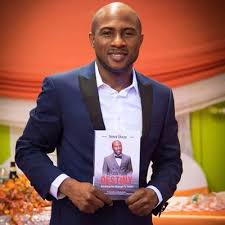
By Henry Ukazu
Dear Destiny Friends,
One of life’s most misunderstood concepts is the relationship between process and failure. When some people fail, they think they have done something wrong, but it could be that the person is experiencing the process, or their season has not yet come.
To understand this concept, let’s explain the two terms. A process is a series of structured actions, steps, or decisions taken in a specific order to transform input into a desired output or goal. Here are the key elements of a process
- Inputs: The raw materials, data, or starting requirements (such as ingredients, customer requests, or raw code).
- Activities/Steps: The specific tasks or decisions performed by people, tools, or machines.
- Trigger: An event or demand that kicks off the process (like submitting an order or launching an app).
- Output: The result, product, or delivered service.
- Owner: The person or role accountable for the outcome.
Failure, on the other hand, is the state or condition of not meeting a desirable, required, or intended objective. According to the Cambridge Dictionary, failure can result from any of the following:
- Omission or Neglect: Failing to perform an action that was promised, owed, or expected (such as a failure to pay on time or submit a report).
- System or Organ Malfunction: A situation where a machine, computer, engine, or bodily organ stops working properly (such as engine failure or kidney failure).
- Insolvency: A financial state of bankruptcy, such as the failure of a business or bank.
Having stated the above terms, one can decipher that process is a necessary tool for success. When a process is lacking, failure is inevitable.
I recently listened to a sermon by a Nigerian Pastor. According to the pastor, there’s something that looks like failure, but in a real sense, it is not failure; it is process. Sometimes in life, when we fail in business, examinations, careers, marriage, or even when our health fails us, the reason why they all happen is that we have failed to do the needful, or we need to go through a process.
Let me explain. Let’s say one has a business; if one has not taken the time to learn the trade very well, the person might fail for not learning a necessary skill required for the business, acquiring formal or informal education, or having a form of apprenticeship from a mentor, which might be all that’s necessary for the entrepreneur to succeed. This is what is called a process.
Also, a student will need to read, research, and do assignments to pass an examination. An employee will have to learn a job as an entry-level employee and work his way through to become the Chief Executive Officer. All this involves a process.
Marriage is not an exception. There’s no successful marriage without a form of mentoring or training. A man/woman must undergo a process of marriage counseling to learn about how to win in marriage. In this training, they will learn about communication in marriage, money in marriage, sex in marriage, money in marriage, and personalities in marriage
I strongly believe that there’s time for everything. There is an appointed time for everything. When something is not in its season, don’t expect to deliver. When one puts pressure, it’s bound to fail.
I can vividly remember what my most revered mentor, Dr. Yomi Garnett, counseled me on the importance of patience. A little background about the case: at that time, I had no job. I was working as a security officer. I tried to use my connections to secure a decent job, but it was very challenging. I reached out to Dr. Yomi, whom I call the sage because of his scintillating and rational wisdom. After ranting to him about my litany of problems, he said to me, “Henry, if you like, meet President Obama, Trump, etc.; if God is not ready to give you a job, you won’t get a job”. He went further to say, you can’t rush God. When the time is ready, God will align everything for you.
According to my mentors, there’s something God and the universe want me to learn. I must go through some process of refining for the task ahead. These refining processes might be preparing for the greater task by learning what needs to be learned, or it could be a case of God teaching me wisdom or something of value that will be useful to me in the near future which I may not be able to see now.
When I look back in retrospect, I can authoritatively say my mentor was right.
Sometimes in life, we prepare for the opportunities, while sometimes, we don’t prepare. We just learn on the job. But I honestly think it’s good to prepare before one embarks on any journey. That preparation is called a process.
To understand how the process works, do you know that if you plant corn in the season that is not the rainy season, you will believe it’s a bad seed, but no, that’s not the case because you planted the corn in the wrong season. Even the bible says there’s a time for everything.
Also, someone might finish university and become frustrated because he doesn’t have a job. What the person might not know is that their season is yet to manifest. It could also be that the student might need refinement, which comes with the process.
It’s instructive to note that when your season comes, nothing can stop it; there will be alignment, and the universe will work for you. What you did many years ago that failed to attract attention will begin to attract attention and draw you in.
Today, I pray, may you command attention in your season, not after your season.
Henry Ukazu writes from New York. He works with the New York City Department of Correction as the Legal Coordinator. He’s the founder of Gloemi. He’s a Transformative Human Capacity and Mindset coach. He is also a public speaker, youth advocate, creative writer and author of Design Your Destiny- Actualizing Your Birthright to Success, Unleash Your Destiny and The Six Pillars of Success . He can be reached via info@gloemi.com
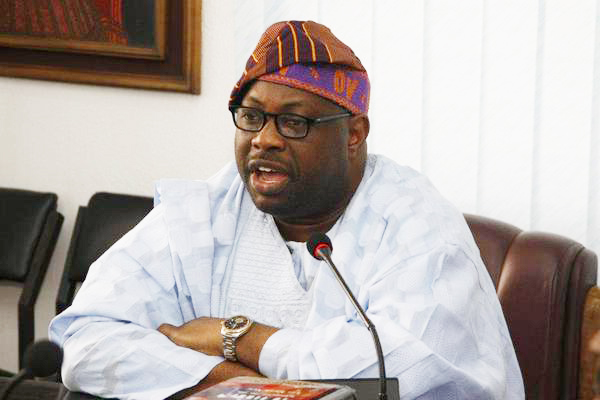
Accomplished media entrepreneur and chieftain of the African Democratic Congress (ADC), Chief Dele Momodu, has said that nobody trusts President Bola Tinubu to conduct a free and fair election, including the President’s own supporters.
Momodu also noted that there is a belief that if the President does not win in 2027, he will not want to relinquish power.
He added that if Tinubu refuses to step down, he would be chased out of the Presidential Villa.
Momodu made the revelations while speaking on Arise News Prime Time belt.
“If you ask an average Nigerian today about Tinubu, ‘Do you trust Tinubu to conduct a free and fair election?’ I can tell you, 90 per cent of them will say no.
“Look, nobody trusts Tinubu to run a free and fair election, including his own supporters. They will tell you, ‘Oh, we are going to win. There is no way we won’t win.’ Ask them why, and they will say, ‘Oh, you know our oga now.’
“In fact, some people are even suggesting that if Tinubu loses the election, he will not agree to step down. I say, why won’t he agree? We will chase him away.
“Look, you do not know the determination of Nigerians. And now, I’m not resting my confidence on just my party. I’m talking about the ordinary man on the street who cannot imagine Tinubu coming back again. They just can’t.
“I can’t tell you our strategy in public. What we know is that, once upon a time, Tinubu fought for himself to secure a second term as governor of Lagos State.
“So, others are also working very hard behind the scenes. We are not going to come out in public and say this, but we know what to do to make sure that he does not get that second term. We also know that some of the people pretending to support him today—and I’m not trying to trivialise this thing.
“I know some of them. They are praying fervently that they will not have to go through this situation where governors become like houseboys. Governors are scared. Judges are scared. Legislators are scared.
“So, Tinubu has become a god whom nobody is ready to confront and say, ‘Oga, you’ve done your best. Please, go home.’”
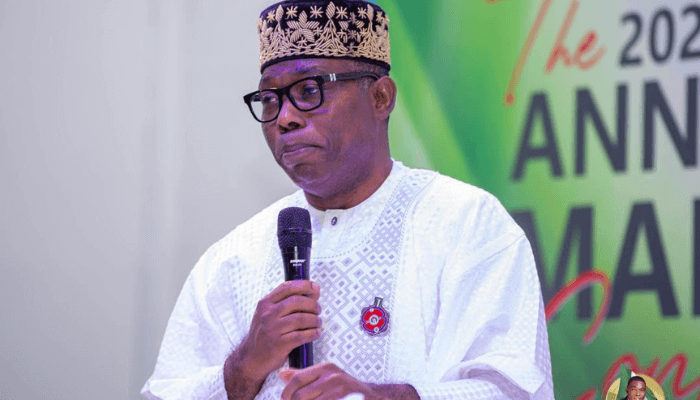
The Social Democratic Party (SDP) presidential candidate, Prince Adewole Adebayo, has urged President Bola Tinubu to go home and let Nigeria breathe.
Adebayo said this in a statement in Abuja on Wednesday.
He was responding to the President’s plan to excuse himself from the rigors of physical campaigns in some states ahead of the presidential polls.
Tinubu spoke at the inauguration of the APC Presidential Campaign Council in Abuja, urging members to take the party’s message to Nigerians across the states and local government areas while he continues to attend to matters of governance.
In response, Adebayo argued that, if Tinubu is too tired to campaign, he is too weak to govern.
In a statement signed by his Presidential Campaign’s Chief Communications Adviser, Comrade Mark Adebayo, the SDP standard bearer described Tinubu as a “president in absentia” at a time Nigeria needs hands-on leadership.
Adebayo said: “Nigeria is too complex, too dynamic, and currently too distressed to be governed by remote control.”
He cited what he called repeated instances of the President governing from a distance, including prolonged medical vacations disguised as working visits, absence during national emergencies and reliance on proxies to announce State policies.
Adebayo further said: “We have seen repeated instances when the President was visibly missing when the country needed reassurance.
“From unannounced foreign trips during critical economic decisions to his complete silence during widespread regional protests, he has consistently acted like a president in absentia. If you are too tired to campaign, you are too weak to govern.”
Adebayo alleged that the decision to stay off the campaign trail was not about strategy but fear.
“The excuse of bowing out of the 2027 campaign is a cowardly smokescreen. The truth is that the President is terrified of the Nigerian people,” he argued.
According to him, the administration’s economic policies – fuel subsidy removal fallout, skyrocketing inflation and currency instability -have made the President unpopular.
“He knows the pain his bad policies have inflicted on families. He is hiding because he cannot face public anger, and he knows any appearance on a campaign trail will be met with collective booing of a betrayed populace.”
Adebayo also said: “It is time to face reality: step aside, go home, and let this country breathe.”
He called on the administration to prioritise national interest over political survival and be transparent about the President’s capacity to lead for the remainder of his term.


