
News
IWD: Immigration Officers Wives Association Empowers Members

- /home/rhoncare/pointblank.ng/wp-content/plugins/mvp-social-buttons/mvp-social-buttons.php on line 27
https://pointblank.ng/wp-content/uploads/2022/03/IMG-20220309-WA0057-1000x600.jpg&description=IWD: Immigration Officers Wives Association Empowers Members', 'pinterestShare', 'width=750,height=350'); return false;" title="Pin This Post">
- Share
- Tweet /home/rhoncare/pointblank.ng/wp-content/plugins/mvp-social-buttons/mvp-social-buttons.php on line 69
https://pointblank.ng/wp-content/uploads/2022/03/IMG-20220309-WA0057-1000x600.jpg&description=IWD: Immigration Officers Wives Association Empowers Members', 'pinterestShare', 'width=750,height=350'); return false;" title="Pin This Post">
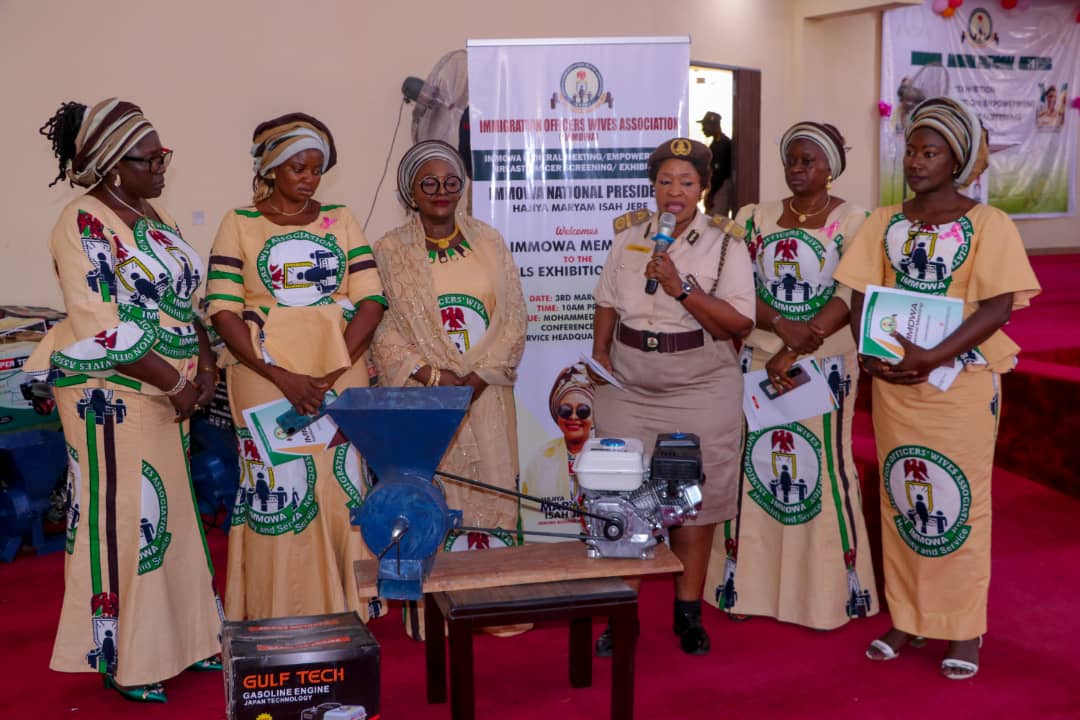
The Immigration Officers’ Wives Association (IMMOWA) has held a special national meeting of its members at the Service Headquarters Abuja to roll out some economic empowerment programmes for members.
A statement by the Public Relations Officer, Assistant Comptroller of Immigration, Amos Okpu, on behalf of the Acting Comptroller of Immigration, revealed that the event which was attended by representatives from all the Chapters of the association across the country, was targeted at improving the welfare conditions of vulnerable members of the association as part of activities to commemorate the International Women’s Day.
Speaking at the occasion, the chairperson of the association and wife of the acting Comptroller General Mrs Maryam Isah Jere stated that the association’s Welfare Scheme is to complement the welfare agenda of her husband with special focus on widows and children whose husbands and loved ones passed on while in active Service.
In his remark at the event the acting Comptroller General Isah Jere Idris represented by the Assistant Comptroller General of Immigration in-charge of Passport, ACG Saddat Hassan noted that beyond making the home front peaceful, the association has shown capacity to make impact on the general welfare of the Immigration family. He thanked the leadership of the association for identifying with the staff welfare programmme of his administration while assuring of his renewed commitment to improved motivation and welfare packages for the entire workforce.
Major highlights of the event include cash donations to families of some vulnerable members, payment of tuition fees for two children of deceased Personnel as well as distribution of 40 grinding machines to some women as part of economic empowerment exercise.
Meanwhile, 120 women including non-members who attended the event benefitted from the free Breast Cancer screening programme organized by the association.
6. The leadership of the association has pledged commitment to sustaining more economic alleviating programmes for its members as part of its poverty reduction activities.


By Henry Ukazu
Dear Destiny Friends,
Greatness is something we all should aspire to attain as we explore what life has in store for us. To attain greatness is no joke. It takes a lot of sacrifice, patience, knowledge, wisdom, understanding, perseverance, and dedication. Isn’t it true that nothing good comes easy? According to my late dad, Chief Lazarus Anthony Ukazu, “If you want to bear a bear name, one must work hard to earn it”
That means success is not attained on a platter of gold. One must strategically work hard to attain any height or title one desires to have. If one desires to be a President, one must be intentional in the way they live their life. If a student desires to have a perfect Grade Point Average (GPA), the student must begin from their first year of college to have good grades; if an employee desires to rise up to a managerial position, the employee must put in the work by ensuring that they are punctual and their work ethic is top-notch. I can go on, but as the sage will say, a word is enough for the wise.
Aspiring for greatness can be difficult, no doubt, but it’s doable. One of the easiest ways of attaining greatness is by knowing yourself. Knowing who you are is a critical and fundamental tool necessary for success because it helps to speed up the process. One may be wondering why I said knowing oneself is the easiest and fastest way to succeed in life. Well, the answer is not far-fetched. According to Oscar Wilde, “Be yourself because others are taken”. This simply means one must focus on what they are naturally good at. It makes no sense to struggle to be what you are not. Like, I always say, you can copy my style, but you can’t imitate my creativity.
That said, it’s important for one to ask oneself: what’s that one thing they are good at; what’s that one thing one doesn’t struggle to do; what’s that one thing most people compliment about them; what’s that one thing you can do and you won’t be stressed; what’s that thing you can do for free and you’ll care less whether you are paid or not; what’s that one thing you can do with relative ease if you are woken from the sleep and you’ll do it well? If you were able to answer any of these questions, then you are fifty percent nearer to greatness. The other fifty percent is for one to develop that inherent talent or gift in them.
The interesting thing about self-discovery is that it helps one to spend less time and energy on a project that won’t add value to their life. For instance, if you know you are good at a particular project or subject, or have expertise or creativity in a particular skill, you’ll stand a better chance of succeeding faster in life when you hone it than learning a new skill that you’ll have to develop. That’s why it’s good to know oneself.
During my formative years in the USA, I engaged in many activities trying to figure out my path. I began by studying taxation law at New York Law School, a major I didn’t like. I worked in a tax firm, hoping I would find joy in the money I made. That turned out to be an illusion. I worked in a small boutique law firm; I worked in a Not-for-profit organization; I worked in a private corporation as a Case Manager; I also worked as an entrepreneur at one point, and now I am currently in the public sector. I did all this just to figure out my path.
In all of these, I was still confused, trying many things. My clarity began when I got a job as a Case Manager; that job gave me clarity, focus, and purpose to know what I should be focusing on.
Again, my writing skills gave me a better understanding of who I am because it projected my image. Today, some people look at me and say I am great simply because I have three books to my name; I have written hundreds of articles in addition to meeting great people the world has celebrated. But the truth is that I discovered what I love, what I am doing and building, and the universe conspired to connect me to the right people, in addition to attracting opportunities to me.
I can say for a fact that, assuming I worked in a tax firm as advised just because of the associated money I might make, I would be feeling frustrated and depressed, even though I might have made money, which is not even guaranteed.
The same principle is applicable to anyone who studies a major or works in an establishment they don’t like. They might make money, but not in the major. I have seen nurses, doctors, engineers, lawyers, etc. who are making good money but are not happy, and I have seen people who didn’t study professional courses, some didn’t even have a college degree, yet are extremely successful and happy.
What does that tell you? They have either discovered what makes them unique, or they are happy with their major. Alternatively, it can be a combination of both.
The message here is to focus on what you are good at and develop it. The world will come to seek your services wherever you may be on planet Earth.
Furthermore, according to John Maxwell’s father, if you want to be great, you need three things: Value people, believe in people, and unconditionally love people for who they are. These are great ways to succeed in life, especially if one desires to make a fortune out of life.
For me, when I write, I think about valuing people, believing in people, and unconditionally loving people. Also, when I speak, I value people, I believe in people, and unconditionally love them. Why? Because people do well when people think well of them. It’s wonderful when a person believes in the leader, but it’s powerful and wonderful when the leader believes in the people.
Do you know that when you value people, it brings out the best in them? People love to be appreciated; people love to get approval, people love to get attention; people love to be accepted for who they are; and people love to be valued and respected. The simple truth about value is that when I value people, it brings out the best in me.
Today, I will ask you: are you aspiring for greatness in your family, school, workplace, community, etc. If yes, your task will be to focus on developing what you are naturally good at.
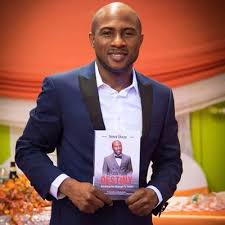
Henry Ukazu writes from New York. He works with the New York City Department of Correction as the Legal Coordinator. He’s the founder of Gloemi. He’s a Transformative Human Capacity and Mindset coach. He is also a public speaker, youth advocate, creative writer, and author of Design Your Destiny- Actualizing Your Birthright to Success, Unleash Your Destiny, and The Six Pillars of Success. He can be reached via info@gloemi.com

The United States has delivered military equipment to the Nigerian Air Force as part of efforts to strengthen the country’s fight against terrorism, banditry, and kidnapping.
The supplies, which were disclosed in an X post by the US African Command (AFRICOM) on Thursday, were part of a foreign military sales agreement between Abuja and Washington.
“PARTNERSHIP IN ACTION: A U.S. Air Force C-17 delivers equipment to the Nigerian Air Force this weekend. The equipment is part of a foreign military sales agreement that furthers the U.S.-Nigerian partnership and will aid in Nigeria’s efforts to counter terrorism in the region.” U.S. Africa Command (AFRICOM) posted on X.
The development comes after US troops left Nigeria amid diplomatic engagement between Washington and Abuja over security challenges, particularly the activities of jihadist groups operating in parts of Nigeria.
The Nigeria’s Defence Headquarters (DHQ) clarified that the reported withdrawal of about 200 United States personnel from Nigeria will not affect the country’s security cooperation with the US.
The Director of Defence Information, Maj. Gen. S. Uba, made the clarification on Tuesday during the joint security spokespersons’ briefing.
Uba described the development as a routine, mission-specific adjustment linked to particular operational and counterterrorism objectives, stressing that it should not be interpreted as a breakdown or termination of the longstanding Nigeria-US security partnership.
“The Armed Forces of Nigeria wishes to clarify that the reported withdrawal of about 200 United States personnel should not be interpreted as a breakdown or termination of the Nigeria-United States security partnership,” he said.
He said the relationship between both countries remained “strong, enduring, and mutually beneficial”, adding that intelligence cooperation, training and information sharing would continue.
According to him, Nigeria remained primarily responsible for defending its territory and protecting its citizens, while US support was aimed at strengthening the capabilities of the Nigerian military.
“Our cooperation with the United States is designed to strengthen our capabilities through intelligence sharing, training, technical assistance, and other forms of professional military cooperation,” he said.

The tales of woe over the deplorable state of roads in Edo are not limited to commuters in transit on the linking highways in the State, as residents of Benin City, the capital, also groan as most intra-city roads have become deplorable.
Most hit are roads within the Government Reserved Areas (GRA), which were constructed decades ago without any visible rehabilitation work done by successive governments in the state.
But more appalling is the condition of the Oba Ovoranmen Square, otherwise known as Ring Road, which, in recent months, has become an eyesore with potholes and deep craters, with the residents of the metropolitan city calling on Governor Monday Okpebholo to rescue the city centre.
From the Mission Road, Oba Market Road and Plymouth Road entries to the Ring Road, it has become a herculean task for commuters using the square as they meander through the numerous potholes that have almost rendered the city centre impassable.
The situation is indescribable, especially in the early hours of the day when workers struggle to get to work and late in the evening, when the workers and traders close for the day.
Besides, commercial drivers that were previously barred from dropping and picking up passengers at the Kings Square have turned the place into a motor park, just as the rains have not helped matters either, as vehicles break down in the potholes that are usually covered by erosion.
In the GRA, Ihama Road by the House of Assembly Quarters remains impassable whenever it rains, while the Boundary Road towards Airport Road and Adesuwa Grammar School Road suffers the same fate whenever the rain falls.
Giwa Amu, Gapiona and other adjoining roads are also at the mercy of erosion as there are no drainages to take the overflow of water out of the GRA.
Gardens built around the King’s Square by former Governor Adams Oshiomhole have overgrown with weeds, even as hawkers are seen all over the place, turning all the walkways into extensions of their stores.
The National Museum, which used to be a point of attraction from any point of the King’s Square, has now become unkempt, overgrown with grass.
Some residents, who spoke with journalists over the deplorable state of the Ring Road, described its current state as a bad tale ahead of the Oba of Benin’s 10th coronation anniversary.
A resident, Mr. Osaro Idemudia, said: “We are not happy with the way the Ring Road is looking. Bus drivers are supposed to take passengers at the Central Park. Look at dirt everywhere.”
Another motorist, James Igie, said that “Kings Square represents the image of the State, and called on the government to attend to the situation promptly.
“It is sad that the Oba Ovoranmen Square is allowed to look dirty. This is not good, and we hope the government will address the situation.
For Solomon Aibangbee, a businessman, “in the last two weeks, the state of the roads in Edo State has been in the news all over the world. Passengers and motorists spend days passing through Edo State because of bad roads.
“As if that is not enough, you now add the roads within Benin City to the problems. Is Ring Road also a federal Road? I ask because that is the usual excuse we hear.” Aibangbee bemoaned
The Managing Director of Edo State Road Maintenance Agency, Engr. Felix Ibhade, said there are plans to fix the Ring Road.
Ibhade added that Governor Okpebholo had said that he would not want to do palliative work on the road but a full-scale asphalting rehabilitation.
“So we are on it. Our constraint is the rain because the majority of the roads we have given amelioration, the rain washed them up. So we are waiting for the rain to subside. That is the beauty of the town, and we don’t do it and after one month it will wear out. We will work in collaboration with the Ministry of Works because it is not going to be an easy job,” Ibhade admitted.
On his part, the Managing Director, Edo State Parks and Gardens Agency, Pastor Stanley Ighodaro, assured that Governor Okpebholo has shown commitment to beautify Benin City centre and other parts of the State.


