
News
Many Rendered Homeless As Petrol Tanker Explodes in Lagos Filling Station


- /home/rhoncare/pointblank.ng/wp-content/plugins/mvp-social-buttons/mvp-social-buttons.php on line 27
https://pointblank.ng/wp-content/uploads/2020/04/Fire.jpeg&description=Many Rendered Homeless As Petrol Tanker Explodes in Lagos Filling Station', 'pinterestShare', 'width=750,height=350'); return false;" title="Pin This Post">
- Share
- Tweet /home/rhoncare/pointblank.ng/wp-content/plugins/mvp-social-buttons/mvp-social-buttons.php on line 69
https://pointblank.ng/wp-content/uploads/2020/04/Fire.jpeg&description=Many Rendered Homeless As Petrol Tanker Explodes in Lagos Filling Station', 'pinterestShare', 'width=750,height=350'); return false;" title="Pin This Post">
There was pandemonium at Idi-Oro, in the Mushin area of Lagos State, on Wednesday, when a tanker loaded with Premium Motor Spirit (petrol) exploded at a Mobil Filling Station in the community.
The fire was said to have spread to an adjoining three-storey building, burning down the property.
PUNCH Metro gathered that the fire started around 1pm when the tanker, laden with 33,000 litres of petrol, was discharging its content at the filling station on Agege Motor Road.
The fire also destroyed property worth millions of naira and rendered many occupants of the building homeless.
Our correspondent observed as some residents tried in vain to salvage their property while firefighters battled the inferno.
A tenant, Sowemimo Oluwaseyi, blamed the filling station for the incident.
He said, “I was at work when my brother called me that fire from Mobil gutted our house. The filling station does a lot of things that we don’t like. We complained to the former DPO at the Alakara Police Station and he said things would be done properly, but this new DPO does not care.
“This particular tanker that caused this fire today (Wednesday) has been there since yesterday. What was it doing there? It ought to have discharged its content and leave the premises. We have been complaining about this act for more than five years, but nobody did anything.
“We were unable to salvage anything. The clothes on me now are what I have left; even my mum, who is a caterer, her property is in the building and we could not salvage anything. All her plates, coolers, burners, everything is gone. Where do we start from?
“I recently bought some appliances because I was planning to move out of this place. But now, everything is gone. Even all my credentials are gone.”
Among the emergency responders at the scene were the Lagos State Emergency Management Agency, National Emergency Management Agency, Lagos State Fire Service, Federal Fire Service, University of Lagos Fire Service, Disaster Management Unit of the Lagos State Police Command, Federal Road Safety Corps and the Nigeria Security and Civil Defence Corps.
The filling station was cordoned off by the Lagos State Safety Commission.
The management of the Mobil Filling Station, in a statement on Wednesday, said it was investigating the cause of the incident, adding that measures would be put in place to forestall a recurrence.
The statement read, “11 Plc management (operator of Mobil Service Station) would like to bring to the attention of the general public that there was a fire incident at one of our retail service stations (filling station) at Idi-Oro, Mushin, this afternoon during the product discharge operation.
“Thankfully, with the help of the Lagos State Fire Service, our in-house fire team and other operators’ fire logistics, the fire has been properly contained. We are now entering the phase of investigating the cause of the incident as well as taking stock to ascertain the level of damage and to put corrective processes in place to forestall any future recurrence.”
The Director of the Lagos State Fire Service, Mrs Margaret Adeseye, in a statement, said the agency got a call to the incident around 1.17pm.
She explained that the agency mobilised other responders in combating the inferno.
“Preliminary investigation revealed that it was a 33,000 tanker that was fully laden with Premium Motor Spirit, otherwise known as petrol, that was on fire.
“Although the cause of the disaster had yet to be ascertained, officials of the Lagos State Fire and Rescue Service remain on top of the situation and would provide necessary updates as situation demands,” she added.
The Head of Public Education, Lagos State Fire Service, Amodu Shakiru, stated that the Ilupeju, Alausa and Isolo fire stations responded to the emergency.
He said, “Nobody died in the incident; the driver sustained some injuries. He had third-degree burns treated by LASAMBUS at the scene of the incident.”
The Director-General of LASEMA, Femi Oke-Osanyintolu, confirmed that there was no casualty.
The Punch


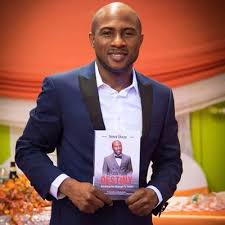
By Henry Ukazu
Dear Destiny Friends,
We are all stars, but sometimes we act like the moon and sun. Don’t get me wrong, the moon and sun are all God’s creatures, but in this context, I’m referring to the star as it relates to being a standard, an exceptional being and a leader that will set the pace for others to follow.
Being a star gives you an identity and opportunity to showcase the world what you are made of. Your star will shine when you are working on purpose. At creation, we were all created with a unique purpose which will be manifested on earth. So, it’s fair to say our purpose was made in heaven, but our assignment is on earth.
It’s instructive to note that our start is the embodiment of what makes us to be identifiable, recognizable and traceable. When our star is shining, the world stands still and observes. Isn’t it true that the world sets apart for the man who knows where he’s going.
Everyone loves a star. Imagine being the best in your class, team, or even in the family, you will be the envy of everyone. Stars attract jealousy. To understand how a star works, imagine playing soccer, despite each team having captains and star players, it’s whoever that has the ball the attention of the players, spectators and the world will be focused on because at that moment, whoever has the ball is the star, hence the reason why the person is being tackled.
Stars attract favor, blessings, opportunities, and blessings just because they are fulfilling their purpose of manifestation. As a self-discovery coach, I propounded the concept of STAR. S stands for shining, T represents Target, the A represents Action and R represents Recognition.
A brief analysis of the concept of STAR will give a proper perspective. When one is a star, one will be a shining star, and when one is a shining star, they’ll definitely be a target because the sugar will always attract ants. Because one is a star, they’ll be action oriented. A star can’t be hidden. It is the work they do that makes them noticeable which ultimately gives them recognition.
If I may ask you, are you a star? If yes, what makes you a star? Stars are a unique set of people who excel more than their counterparts or contemporaries. Stars defy human logic and understanding, especially when there is a spiritual element attached to it. While humans go to school to acquire knowledge and information, stars have inherent and intuitive knowledge which is revealed to them from God.
A little insight into the inherent and intuitive knowledge of how stars work. One’s profession is what one is trained to do in school or even taught in practice, one’s vocation is what one is paid to do like skilled work or a regular 9-5 work, while one’s ministry is where one’s talent/gift manifests their God given potential. When one is a star, both their profession, vocation and ministry will be working in alignment. They won’t have to do much to excel. Their light will gradually shine effortlessly with little or no support. A little effort by them will magnify their work.
It’s unfortunate that many stars can’t shine because many people are afraid of stepping out of their comfort zone. Some of us are afraid of what the world will say, how their message will be received, and how one can overcome these challenges if their star is not shining as it ought to. This is one of the major challenges why most people fail to activate their star. Trust me, I get it. The fears and concerns are valid. As humans we are bound to have fears, however, our desire for success should outweigh our fear for failure.
Do you know that the grave is considered the richest place on planet earth? Yes, because many talents are buried inside the grave simply because some people failed to unleash their talents, gifts and God given potentials. Here is what I will say, may we not die with what God has given to us.
Do you want to be a star? If yes, ask yourself, what makes you unique? If you discover it, say to yourself, I am a star, I am blessed. I am a child of destiny. I will fulfill my purpose. I will not die with what God has given to me. I will shine and I will possess my possession because I am a star.
Henry Ukazu writes from New York. He works with the New York City Department of Correction as the Legal Coordinator. He’s the founder of Gloemi. He’s a Transformative Human Capacity and Mindset coach. He is also a public speaker, youth advocate, creative writer and author of Design Your Destiny- Actualizing Your Birthright to Success, Unleash Your Destiny and The Six Pillars of Success . He can be reached via info@gloemi.com

Music star, David Adeleke, popularly known as Davido, was the target of the attack on the convoy of Osun State governor, according to the police.
Daily Trust had reported how security escorts of the governor engaged some unidentified men in a gun duel during the governor’s visit to the palace of the Ataoja of Osogbo, earlier on Wednesday.
The governor had visited the monarch shortly after receiving his certificate of return from the Independent National Electoral Commission (INEC).
His nephew, Davido, who was actively involved in the election, alongside his children, accompanied the governor to INEC office and the palace.
Some residents of Oja Oba Osogbo said gunshots caused panic for over 15 minutes as the men kept shooting sporadically while the governor’s security detail returned fire.
Commenting on the incident, Police Public Relations Officer in Osun, Abiodun Ojelabi, said preliminary investigation revealed that members of Eye Confraternity were after Davido.
“One Adebayo Taoreed, popularly known as “Small Rugged”, an ex convict, a suspected notorious thug and a member of eye confraternity allegedly attempted to gain access to Davido but was resisted by members of his security Team.
“The ensuing confrontation reportedly attracted other suspected gang members in the vicinity, who temporarily blocked the entrance to the palace and obstructed the movement of the convoy of the Governor.”
Ojelabi said a 60-year-old man identified as Tajudeen Yusuf was shot dead during the gun duel.
“Shortly afterwards, the suspected gang members reportedly departed the vicinity and, however on their way, they allegedly shot Tajudeen Yusuf at Itaolokan area of Osogbo.
“Upon receiving the information, the police immediately mobilised a patrol team to the scene, where the victim was found lying in a pool of blood. He was promptly rushed to the University Teaching Hospital, Osogbo, for medical attention. Unfortunately, he was pronounced dead by the doctors on duty.”
“The Command has commenced a full-scale investigation into the incident and intensified efforts to identify, apprehend and bring the fleeing suspects to justice.
“The Commissioner of Police (Election), Osun State Command, CP Samuel Etaifo, strongly condemns the dastardly act and assures members of the public that the Command will deploy all available resources to apprehend those responsible.
“The Command therefore urges anyone with useful information that could assist the investigation to promptly approach the nearest police station or contact the Command through its official channels. Members of the public are also advised to remain calm and refrain from taking the law into their own hands.”
The PPRO said the Police Command has commenced a full-scale investigation into the shooting incident.
Ojelabi said further updates on the incident would be provided as the investigation progresses.
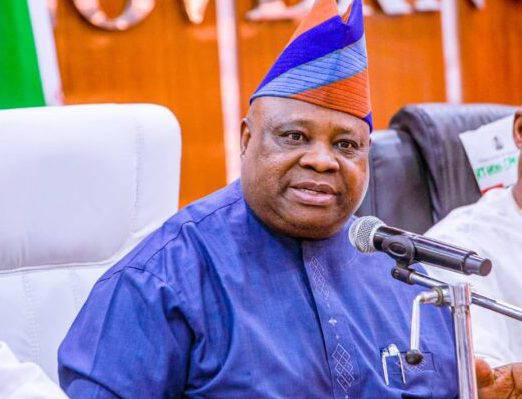
Governor Ademola Adeleke said he has forgiven all those who may have offended him during the state elections and declared that he bears no grudge against political adversaries and opponents.
The governor who spoke while receiving a certificate of return from the electoral commission said “God has fought my battles for me and so I hold unto God throughout the duration of the political war and now that I have been re-elected”
While announcing a Five Hundred Million naira (N500m) education scholarship for victims of political violence, the governor commended the electoral body for acting professionally and within the dictates of the electoral act.
“I commend the electoral commission for doing a good job. You stood for democracy. I commend the security agencies, especially the Commissioner of Police for Election, the DSS. I would have loved the police to do more but we thank God the election day went violent free”, the governor submitted.
The INEC National Commissioner for Osun election, Prof Kunle Ajayi in his address commended the passion, the commitment and the activism of Osun voters whom he said defied electoral violence and trooped out to exercise their voting rights.
“Osun people are the heroes of the Saturday election. Active citizenry always makes a difference in the conduct of credible elections. Osun people proved to the world that democracy can work when the people are involved”, the INEC chief said
At a massively attended rally organised by the joint labour movement at Osogbo, the governor commiserated with families of the deceased and the injured, lamenting that “we remember Ezekiel Olapade, Aderogba Ajayi, Remi Abass, Kolade Eluyera, and the many other victims whose lives were cut short or permanently affected by electoral violence. To their families, I say: your pain has not been forgotten, and your loved ones will never be reduced to statistics.
“As part of our commitment to supporting affected families, the Adeleke family, through the Springtime Development Foundation, will provide automatic scholarships up to university level for the children and dependents of those who lost their lives”, the governor declared at a separate celebration rally organised by Osun labour movement.
“Today is not merely a day for the presentation of a Certificate of Return. It is a day of gratitude, reflection and, above all, appreciation for the people of Osun State who stood firm for democracy.
“This certificate does not belong to Ademola Adeleke alone. It belongs to the people of Osun State, the market men and women, workers, youths, traditional and religious leaders, and every citizen who demonstrates that our democracy cannot be intimidated, purchased or suppressed. I am deeply humbled by your courage and by the confidence you have renewed in me.
“But as we celebrate, we must remember those who paid a painful price during the electoral process. Citizens were injured, properties were destroyed, livelihoods disrupted and, most painfully, lives were lost.
“In addition, the Osun State Government will establish a ₦500 million Election Violence Victims Endowment Fund to provide relief and support to verified victims and families affected by the violence.
“A Verification and Relief Committee, chaired by the Speaker of the Osun State House of Assembly, Rt. Hon. Adewale Olumide Egbedun, will oversee the transparent identification and assessment of victims and the equitable distribution of relief.
“This is not a political fund. It is a humanitarian intervention. No eligible victim will be discriminated against on the basis of political affiliation, religion, ethnicity, gender or social status”, the governor told the thousands of public workers at the State Secretariat.
The Chairman of the Nigerian Labour Congress (NLC), Osun state chapter, Dr Christopher Arapasopo praised the labour movement on the re-election of Governor Adeleke and announced that in future legislative elections, Osun workers will still vote for Accord candidates.
“We defied attacks and intimidation to support the re-election of Governor Adeleke. We will never bow to those who want to enslave us. We will still vote Accord in future legislative elections”, the labour chief vowed.
Governor Adeleke later visited the Ataoja of Osogbo, the Timi of Ede and Senator Oluwole Alabi to present his certificate of returns for royal blessings.


