
Headlines
JUSUN Strike: Governors, Speakers, Buhari’s CoS Meet

- /home/rhoncare/pointblank.ng/wp-content/plugins/mvp-social-buttons/mvp-social-buttons.php on line 27
https://pointblank.ng/wp-content/uploads/2020/10/Court.jpg&description=JUSUN Strike: Governors, Speakers, Buhari’s CoS Meet', 'pinterestShare', 'width=750,height=350'); return false;" title="Pin This Post">
- Share
- Tweet /home/rhoncare/pointblank.ng/wp-content/plugins/mvp-social-buttons/mvp-social-buttons.php on line 69
https://pointblank.ng/wp-content/uploads/2020/10/Court.jpg&description=JUSUN Strike: Governors, Speakers, Buhari’s CoS Meet', 'pinterestShare', 'width=750,height=350'); return false;" title="Pin This Post">
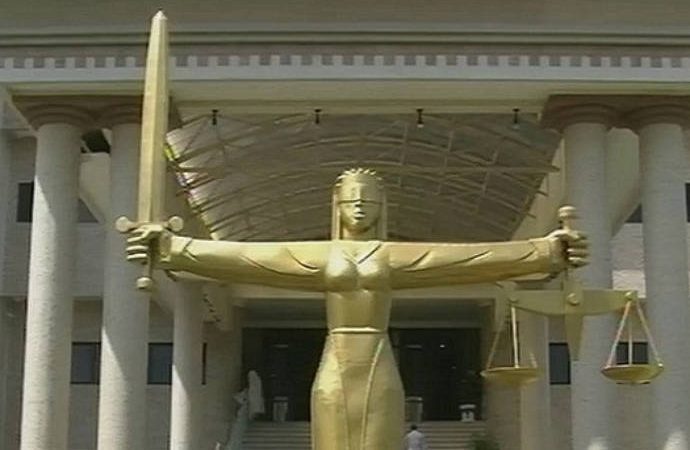
Representatives of the Nigerian Governors’ Forum (NGF) and the Conference of Speakers of State Assemblies, on Thursday, met with President Muhammadu Buhari’s Chief of Staff, Ibrahim Gambari, in Abuja, over the ongoing nationwide strike of judiciary workers.
Speaking with State House reporters at the end of the meeting which held at Mr Gambari’s office at the Presidential Villa in Abuja, Governor Aminu Tambuwal of Sokoto State, who is also the Deputy Chair of the NGF, appealed to the striking workers to call off their strike in the interest of the nation.
The governors along with the Labour Minister, Chris Ngige, had earlier postponed a meeting scheduled to be held with the leadership of the striking workers indefinitely on Thursday.
Judiciary workers had embarked on the indefinite nationwide strike on April 6 in protest against the denial of the judiciary of financial autonomy especially by state level.
The News Agency of Nigeria (NAN) reports that Mr Tambuwal told reporters that the governors had met with the speakers and the Chief Judges of various states, and would continue to engage the leadership of the Judiciary Staff Union of Nigeria over the strike
“We’ve just finished talking to the Speakers, and indeed the State Chief Judges, and the Judiciary, to continue to engage and the Minister of Labour is also engaging with the striking bodies to appeal to them, to appreciate the fact that we have made progress.
“We’re appealing to them in the interest of this country, they should call off the strike”, he said.
According to the governor, a lot of progress had been made in the negotiations and hopefully the matter would be put to rest by next week.
“We’re here with the chairman and leadership of the Speakers’ Conference. The Solicitor General of the Federation, and SSA to Mr President on Niger Delta, who has been a member of the Technical Committee on the implementation of the autonomy of state legislatures and the judiciary.
“Together with the Chief of Staff to the President, we have just finished a meeting on how to put finishing touches and dotting the I’s and crossing the T’s, on the final implementation of the financial autonomy of the state legislatures and the judiciary.
“We have made reasonable progress and we have agreed, after receiving the final report of the technical committee, to meet on Monday, because of the urgency of the matter and finally, resolve whatever issues are there,” he said.
He also expressed the commitment of those in leadership positions to build viable institutions for the country.
“Well, I can assure you that all of us are committed to building institutions, particularly our parliaments and the judiciary in our respective states, as democratically elected governors, and we are doing whatever it takes to make sure that the issues are resolved.
“As I told you before, some of the issues are constitutional and when matters have to do with the constitution, you have to be sure of what you’re doing that you’re actually following the Constitution,” he said.
Mr Tambuwal said the governors had always been in support of the autonomy of state legislature and judiciary.
He added, “From the very beginning, during the 8th Assembly, under the leadership of Senate President Bukola Saraki and Speaker Dogara, the NGF under Abdulaziz Yari then, met with them and supported the financial autonomy for the state legislatures and the judiciary.
“And that is why with that support, we were able to achieve the passage of this amendment by the National Assembly and the state legislatures across the country.
“So, the governors are unequivocally in support of the autonomy of these institutions.’’
JUSUN had scaled up its battle for financial autonomy after it obtained a court judgment affirming the constitutional provisions granting financial autonomy to the judiciary in January 2014.
In their bid to ensure compliance with the judgment, the workers embarked on a protracted three weeks nationwide strike in January 2015.
They had called off the strike after governors and other stakeholders made commitments to meet workers’ demands, pledges that were largely jettisoned.
(NAN)


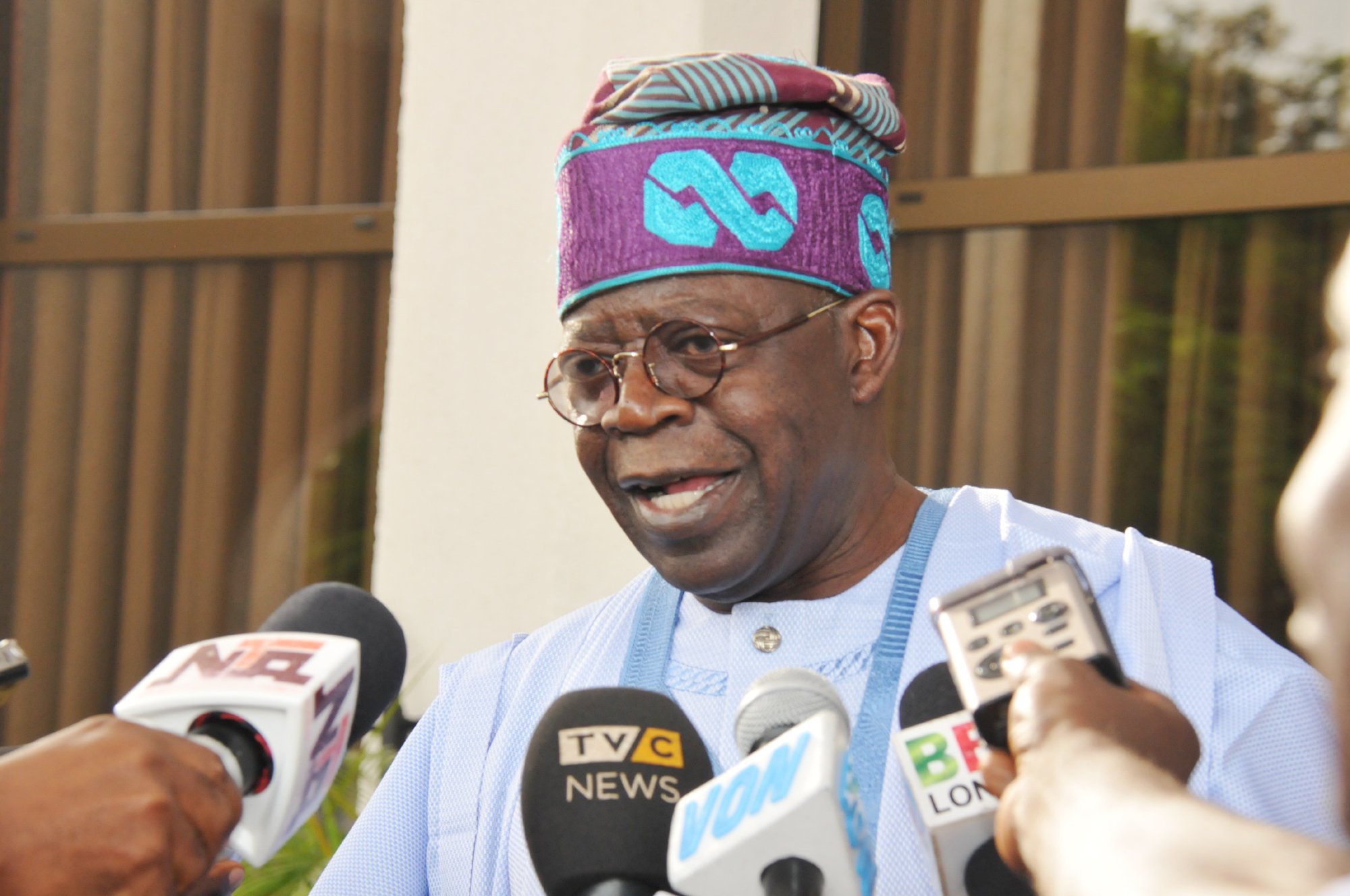
President Bola Tinubu says he has no regrets over the removal of petrol subsidy and other economic reforms introduced by his administration, insisting that Nigeria could not borrow its way to greatness.
Meanwhile, Minister of Finance and Coordinating Minister of the Economy, Taiwo Oyedele, has warned Nigerians against returning to petrol subsidy. He said the backtrack could trigger capital flight, undermining investor confidence and pushing the Naira to N3,000, N3,500 or even N4,000 per dollar.
But the Director of Media and Publicity of the African Democratic Congress (ADC) Presidential Campaign Council (PCC), Kola Ologbondiyan, challenged Oyedele to publish the economic model behind his warning that a return to fuel subsidy could push the naira to N4,000 per dollar.
The President spoke on Monday during the City Boys Movement retreat in Abuja, where he charged members of the group to mobilise support for his administration ahead of the 2027 general elections, insisting that the country’s future mattered more than the ambition of any individual candidate.
“No regrets,” Tinubu said, insisting that his administration would not be pushed back from its reform agenda.
He took a swipe at his political opponents, promising to restore the petrol subsidy, saying Nigeria could no longer afford to pay the fuel subsidy, and warning that reversing the policy would take the country back to an unsustainable economic path.
Defending his decision to remove the subsidy on his first day in office, Tinubu said the country was on the verge of financial collapse and could no longer afford the policy’s cost.
Tinubu also sought to reassure Nigerians about the direction of the economy, arguing that growth was steady and that the sacrifices associated with his reforms would ultimately offer citizens a future worth believing in.
Oyedele disclosed during a press briefing of the International Monetary Fund (IMF) and World Bank Annual Meetings in Bangkok, Thailand, yesterday, that investors had repeatedly questioned whether the government would abandon its reforms ahead of the next election cycle.
Ruling out the reversal of the government’s economic reforms, he maintained that any signal that Tinubu’s administration was contemplating or reinstating the subsidy would immediately affect financial markets, raise borrowing costs and worsen economic pressures on households.
“In all the meetings I have had, I came to a conclusion that the markets, including the domestic market, which you can read from the capital market, and the international market, have largely written off the opposition in Nigeria as unserious.
“If, for any reason, the President were to say we are merely considering the return of fuel subsidy, capital would react immediately, airfares would struggle, the naira would come under severe pressure, potentially moving towards 3,000, 3,500 or even 4,000.
The very fuel people want subsidised would become far more expensive in Naira terms,” Oyedele warned.
However, Ologbondiyan accused the Federal government of using fear to discourage debate on fuel subsidy, insisting that Nigerians deserve evidence, not alarming projections, on the potential economic consequences of restoring the policy.
Speaking to journalists, he described the minister’s warning as scaremongering and demanded that the government explain how it arrived at the projected exchange rate.
“The Minister of Finance is merely scaremongering. He cannot claim that a return to fuel subsidy will cause the naira to depreciate to N4,000 to the dollar without showing Nigerians the model behind that projection,” he said.
He questioned the reliance on investors’ concerns to oppose a subsidy’s return, challenging the government to identify the sources of the projections and disclose their calculations.
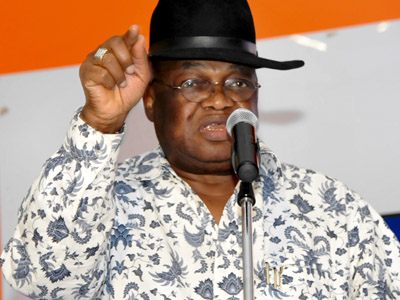
President Bola Tinubu has expressed sadness over the death of Ambassador Patrick Dele Cole, describing him as a distinguished diplomat, journalist, politician and public servant.
Cole died at 86.
In a statement on Saturday, Tinubu said Cole devoted his life to national service and brought distinction to his work in diplomacy, journalism and politics.
“His career reflected the enduring value of dialogue, tact, mutual respect and the pursuit of shared interests in advancing national development and international cooperation,” the President said.
Tinubu noted Cole’s contributions to Nigeria’s media landscape, particularly as Managing Director of the Daily Times, where he upheld the role of the press in holding public officials accountable, speaking truth to power and strengthening democratic governance.
“His legacy in journalism and public life remains an enduring part of our national story,” he said.
The President said at 86, Cole witnessed defining moments in Nigeria’s history and contributed to national development, adding that his life stands as a testament to experience, principled engagement and commitment to public good.
Tinubu extended condolences to Cole’s family, friends, professional associates and all whose lives he touched, praying that memories of his remarkable life will bring comfort and strength.
“May Almighty God grant Ambassador Cole eternal rest and give his family and all who mourn him the fortitude to bear this profound loss,” he said.
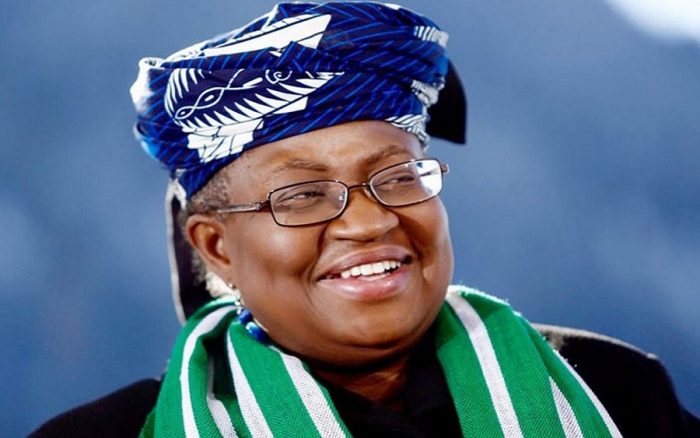
Director-General of the World Trade Organisation (WTO), Mrs. Ngozi Okonjo-Iweala, has said that her probe of an alleged $2.4bn subsidy fraud led to the abduction of her mother.
It would be recalled that the former Finance Minister’s mother, Kamene Okonjo, was kidnapped from her home in Ogwashi-Uku, Delta State, in December 2012.
In a recent interview with Bloomberg, Okonjo-Iweala said the abductors demanded that she resign as minister of finance and leave the country.
The WTO director-general served as Nigeria’s finance minister between 2011 and 2015 under former President Goodluck Jonathan.
She said the subsidy investigation began after her office noticed a sharp increase in claims submitted by petrol importers.
“So I went to the president and said, look, something is going on here. Could we audit the accounts? And he said, yes, go ahead. And we found about $2.4 billion worth of fraud. So, we refused to pay,” she recounted.
She said her mother was abducted shortly after the decision was announced, adding that her captors demanded her resignation as a condition for her release.
“I was told (by the kidnappers) that for her to be released, I should resign and leave the country,” she said.
The former minister described the incident as one of the most traumatic experiences of her life, saying her mother was held in a forest before escaping.
“She was held in the middle of a forest, and one night she escaped. She’s still alive. She’s 96 now,” Okonjo-Iweala said.
“It was a terrible, terrible five-day ordeal. I think the worst in my life.”
“I never dreamt my parents could ever be touched in this way, that people would be that evil,” she added.
Okonjo-Iweala said she considered resigning before her mother regained her freedom, but her father warned her against giving in to the abductors’ demands.
“He said, ‘We don’t give in to blackmail’. And he said, ‘You’ve got to carry on. You’ve got to go to work’,” she recalled.


