
Metro
Kidnapping, Killings of Kinsmen by Herdsmen, Edo Community Bans Sale, Consumption of Beef

- /home/rhoncare/pointblank.ng/wp-content/plugins/mvp-social-buttons/mvp-social-buttons.php on line 27
https://pointblank.ng/wp-content/uploads/2020/01/Herdsmen.jpg&description=Kidnapping, Killings of Kinsmen by Herdsmen, Edo Community Bans Sale, Consumption of Beef', 'pinterestShare', 'width=750,height=350'); return false;" title="Pin This Post">
- Share
- Tweet /home/rhoncare/pointblank.ng/wp-content/plugins/mvp-social-buttons/mvp-social-buttons.php on line 69
https://pointblank.ng/wp-content/uploads/2020/01/Herdsmen.jpg&description=Kidnapping, Killings of Kinsmen by Herdsmen, Edo Community Bans Sale, Consumption of Beef', 'pinterestShare', 'width=750,height=350'); return false;" title="Pin This Post">
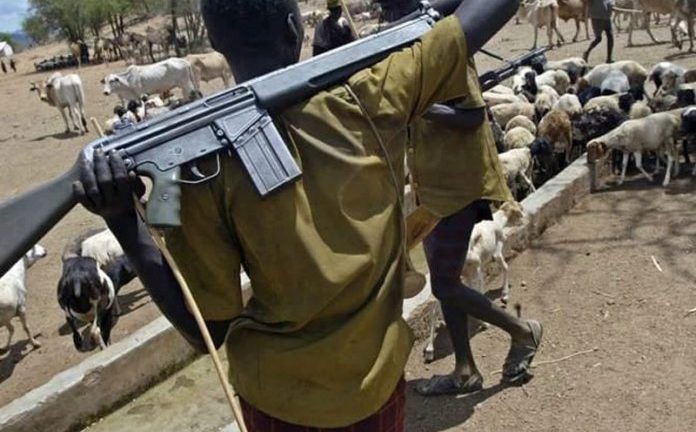
Residents of Elelu village in Erah community in Owan East Local Government Area of Edo State have banned the sale and consumption of beef following the alleged incessant kidnapping and killings of their kinsmen by suspected herdsmen.
The residents disclosed this during a protest at the community at the weekend.
The protesters made up of both young and old, also threatened to relocate to Edo State Government House for alternative shelter if the State government does not urgently come to their aid as the community is no longer inhabitable.
The residents in their large numbers with belongings on their heads, however, called on the state government to come to their rescue from the hands of suspected herdsmen who have continuously invaded their farmlands and kidnapped their fathers, husbands and children.
They alleged that in the last two weeks, about seven persons in the community have been kidnapped and killed.
Speaking, the concerned community leaders, youth representatives and vigilante leaders said the protest was also to mourn and honour the lives of their fallen heroes killed by suspected kidnappers.
The spokesperson of the group, Fred Enaikhe Aleburu gave the names of the fallen heroes such as Edekin Ighalo, Abdullahi and Victor Ogedengbe, a Vigilante commander.
Aleburu said the deceased lost their lives defending the community.
According to him, these courageous men stood against armed herdsmen who brought terror to the peaceful land.
“They shielded our mothers, our children, and our farmlands and for their sacrifice, they were murdered in cold blood.
“As we speak, the body of Victor Ogedengbe still lies in the mortuary. Yet the violence continues.
“In just the past two weeks, seven of our children have been kidnapped, with one still in captivity as we speak.
“Our forests have been turned into den of terror, criminal strongholds where ransom is demanded and innocent victims are kept under inhumane conditions.
“Our mothers can no longer go to the farm. Our youth are hunted. Our elderly live in fear. The lands that once sustained us now lie in waste and silence.
“This is not just insecurity, this is a deliberate war on our survival. This is a slow genocide.
“We are also here to protest hunger. Our people now suffer because they cannot farm. Our markets are empty. Our homes are filled with helplessness.
“What was once a self-sufficient and productive community is now battling starvation and fear.
“And so, today, we rise to say with one voice that ‘Enough Is Enough,’” he lamented.
He, however, called on the government to fulfil its constitutional duty to protect its citizens.
Aleburu said the community demanded immediate establishment of permanent security checkpoints on all roads and entry points leading into and out of Erah.
They also demanded a full-scale investigation and comprehensive flushing of forests to root out and eliminate all alleged terrorist elements hiding within the community.
“A sustained and visible security presence across our villages, to ensure long-term peace and protection.
“Emergency intervention to address food insecurity, including support for displaced farmers and restoration of safe farming activities.
“If our villages are no longer safe, we will sleep at the doorstep of leadership until we are heard and protected. Our lives are not negotiable.
“Furthermore, as a solemn response to our collective suffering and to honor our fallen defenders, the people of Erah hereby declare a permanent ban on the consumption and the sale of beef in our community.
“The killer herdsmen who hide behind cattle have taken too much from us. Our lives, our food, our peace. We will not continue to support a system built on our blood and tears,” he stated.
Also speaking, Chief Julius Unuigbe alleged that herdsmen have invaded their bushes looking for people to kidnap or kill.
Unuigbe said the people no longer sleep with their eyes closed.On his part, Joseph Edairu, one of the protesters lamented that one of his senior brothers, his friend’s two sisters and a Taraba man living in the community were recently kidnapped by suspected herdsmen.
Edairu, added that uptil now the abducted Taraba man is nowhere to be found.
“This is the reason why we came out to cry to the Edo State Government that they should come and us drive those kidnappers away from our bush,” he said.
On her part, Mrs Eunice Ighalo, added that ,”we can no longer go to the farm or river and we are now seriously living in hunger and poverty, that is why we decided that we will go to Edo State Government House to protest there.
Blessing Ogedegbe, wife to Victor Ogedenge, one of the deceased, while lamenting that the corpse of her husband killed in February 2025 is still at the mortuary, appealed to the state government to provide her with a job to enable her cater for her children.


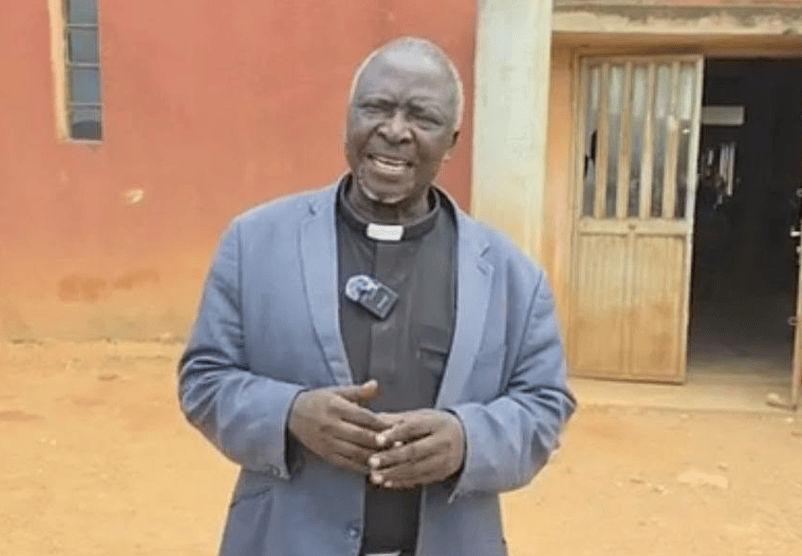
The Regional Chairman of Church of Christ in Nations (COCIN), Barkin Ladi Local Government Area of Plateau State, Rev. Ezekiel Dachomo, has denied reports that he prayed for the re-election of President Bola Tinubu and Vice President Kashim Shettima in the 2027 presidential election.
Dachomo, who is currently in Israel on what he described as his first International Christian Advocacy Tour, said his visit was aimed at drawing the attention of world leaders to the plight of Christians in Plateau.
The cleric made the clarification in a social media post on Monday night following reports that he had prayed for the success of the All Progressives Congress (APC) presidential ticket and expressed support for the Muslim-Muslim ticket.
Dachomo said his earlier post, in which he prayed for Nigeria, had been misconstrued as an endorsement of Tinubu and Shettima ahead of the 2027 election.
According to him, there was nowhere in the post where he prayed for the President and Vice-President to win the election.
“People are trying to frame me, saying I prayed for a Muslim-Muslim ticket. But I did not, and I will never pray for a Muslim-Muslim ticket because Nigeria belongs to both Muslims and Christians,” he said.
Dachomo said his prayers were for the well-being and success of Nigeria and its citizens, irrespective of their religious affiliations.
“I pray for both Muslims and Christians in Nigeria. I pray for Nigeria to succeed. If you truly want to come to God, come with a clean heart,” he added.
The cleric further stated, “I did not pray for President Tinubu and Vice President Shettima to win in 2027. My prayers have always been for Nigeria to succeed.”
Dachomo’s clarification came amid reactions to his ongoing advocacy tour in Israel, where he is seeking international attention to security challenges and what he described as the persecution of Christians in Plateau.

Ahead of the 2027 election, the House of Representatives Committee on Electoral Matters has urged the Independent National Electoral Commission (INEC) to disqualify candidates whose names are not contained in political party registers, as stipulated by the Electoral Act 2026.
In a statement on Tuesday, the Chairman of the committee, Bayo Balogun, drew the commission’s attention to a Supreme Court ruling on Sections 77(5), 77(6) and 77(7) and called for their full enforcement across all political parties.
Balogun, a member of the All Progressives Congress, APC, said that pending legal proceedings concerning the interpretation, constitutionality and enforceability of the sections had been resolved by virtue of the Supreme Court judgment.
The lawmaker recalled that the Supreme Court, on September 24, 2026, restored the provisions after setting aside the Court of Appeal judgment that had declared them unconstitutional.
According to him, the apex court held that the provisions were not inconsistent with the 1999 Constitution.
Balogun explained that Section 77(5) provides that only members whose names are contained in the membership register submitted to INEC are eligible to vote or be voted for at party primaries, congresses and conventions.
He said that Section 77(6) requires political parties to use the register submitted to the electoral umpire for such exercises.
Balogun urged INEC to proceed without further delay to enforce Sections 77(4) to 77(6) in the administration and monitoring of political parties and their electoral activities.
He further urged the commission to audit the membership registers and candidates submitted by political parties to establish whether the names of the candidates are contained in the registers earlier submitted to INEC in compliance with Section 77(5).
“This will be a litmus test for the commission – any culpable political party and candidates should be disqualified.
“Diligent enforcement of the provision would help prevent disputes and reduce the volume of litigation that could arise from alleged irregularities or non-compliance with Sections 77(4) to 77(6) of the Electoral Act,” Balogun said.
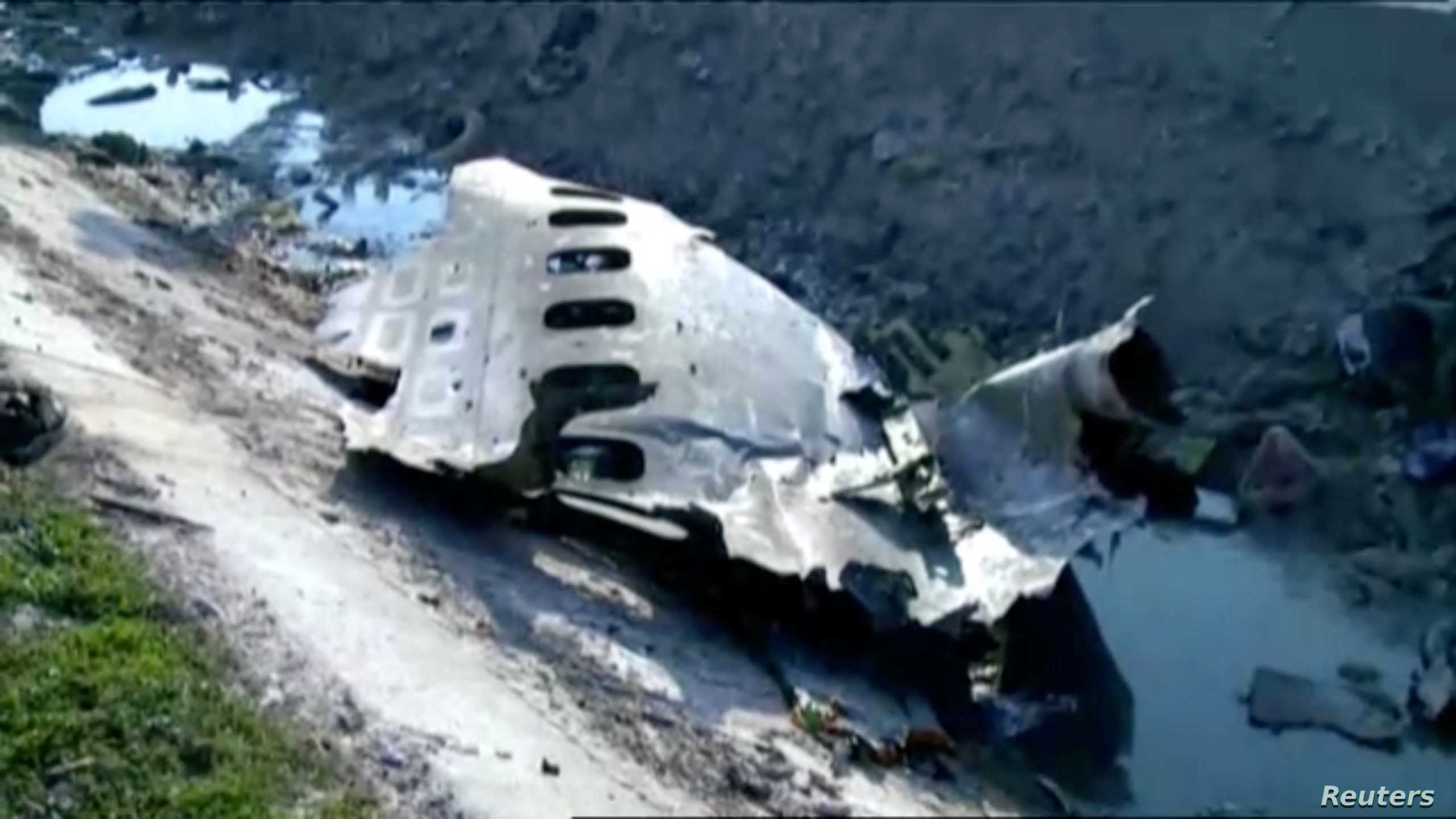
An helicopter crashed into a swamp near Naval Base in Igbokoda, the headquarters of Ilaje Local Government Area of Ondo State, on Monday.
The incident occurred at about 11.00a.m during heavy down pour, throwing the coastal community into panic.
The number of people on board of the helicopter was yet to be officially confirmed, while the condition of possible survivors cannot be confirmed.
Confirming the incident, Maurice Oripenaiye, the Chairman of the local government, told the News Agency of Nigeria (NAN) in a telephone interview that he could not ascertain the number of the victims.
Oripenaye also said he was yet to ascertain the identity of the crashed helicopter and the passengers.
“It happened during the heavy rainfall at about 11.00a.m. I cannot confirm the number of the people on board. I have deployed some youths to the area for rescue purpose,” he told NAN.
Similarly, the Police Command in Ondo State while confirming the crash, said details surrounding the incident were still emerging.
The command in a statement by its spokesperson, Abayomi Jimoh, a deputy superintendent of police, in Akure, said efforts were ongoing to establish the full circumstances surrounding the crash.
“The command urges members of the public, particularly residents of Igbokoda and adjoining communities, to remain calm and refrain from circulating unverified information.
“The public will be duly informed as soon as further credible information becomes available,” it stated.
(NAN)


