
Metro
Makinde Ignores Oyomesi’s Rejection, Presents Staff of Office to New Alaafin of Oyo


- /home/rhoncare/pointblank.ng/wp-content/plugins/mvp-social-buttons/mvp-social-buttons.php on line 27
https://pointblank.ng/wp-content/uploads/2025/01/Governor-Seyi-Makinde-R-presents-staff-of-office-to-the-new-Alaafin-of-Oyo-Abimbola-Akeem-Owoade.jpg&description=Makinde Ignores Oyomesi’s Rejection, Presents Staff of Office to New Alaafin of Oyo', 'pinterestShare', 'width=750,height=350'); return false;" title="Pin This Post">
- Share
- Tweet /home/rhoncare/pointblank.ng/wp-content/plugins/mvp-social-buttons/mvp-social-buttons.php on line 69
https://pointblank.ng/wp-content/uploads/2025/01/Governor-Seyi-Makinde-R-presents-staff-of-office-to-the-new-Alaafin-of-Oyo-Abimbola-Akeem-Owoade.jpg&description=Makinde Ignores Oyomesi’s Rejection, Presents Staff of Office to New Alaafin of Oyo', 'pinterestShare', 'width=750,height=350'); return false;" title="Pin This Post">
Governor of Oyo, Mr. Seyi Makinde, on Monday, presented the staff of office to Abimbola Owoade, the new Alaafin of Oyo.
The presentation of the staff and certificate of recognition took place at the Oyo government house in Ibadan.
The governor presented the official instrument legitimising the reign of a king to the new monarch at the Exco Chamber of the Governor’s Office in Ibadan, the state capital.
The symbolic event was performed nearly three years after the death of the former Alaafin, Lamidi Adeyemi III.
On January 10, Makinde announced Owoade as the new Alaafin of Oyo in a statement by the Oyo commissioner for information and orientation, Dotun Oyelade, quoting the governor as approving Owoade as Alaafin following the recommendations by the Oyomesi (kingmakers).
However, some members of the Oyomesi, a few hours later, rejected the appointment of Owoade as the new Alaafin.
They argued that the occupant of the stool is chosen in compliance with the registered Alaafin of Oyo Chieftaincy Declaration of 1967, not by consultation or divination as stated by Makinde.
The kingmakers in the faction include Yusuf Akinade (Basorun), Wakeel Akindele (Lagunna), Hamzat Yusuf (Akinniku), Wahab Oyetunji, warrant chief standing in for the (Asipa), and Gbadebo Mufutau, warrant chief standing in for (Alapinni).
They added that only the Bashorun, head of the Oyomesi, can convene a meeting to elect an Alaafin, arguing that any meeting convened by Makinde was null and void.
Speaking at the event, the governor said the Alaafin’s stool is important not just to Oyo town but to the Yoruba race as a whole.
The governor maintained that he decided not to meddle in the appointment of the new Alaafin because of his administration’s belief in openness and transparency.
He said, “The Alaafin stool is very important not just to Oyo Town or Oyo State but the entire Yoruba race. So, under my watch, I made it very clear that the stool would not be for sale. It is not a stool for us to toil with.
“I met Prince Owoade for the first time in my life yesterday. I never spoke to him in my entire life until yesterday. I did not know his profile or the profile of any of the princes vying for the stool and it was deliberate, because I did not want my opinion to influence the process.
“Let me say this clearly; when we came in 2019, we had challenges with the traditional institution in Ibadanland and it has been resolved to everybody’s satisfaction.
“When it was time for us to approve the selection of Okere, some people came to me and said ‘This is our friend’. They said one person is APC and I said it does not mean anything to me whether you are PDP or APC. Why should my decision be based on political consideration? So, I approved the selection of the Saki kingmakers.
“I always tell people not to kill themselves over politicians, because we see ourselves in the night. We go to each other’s houses. Politics, electioneering is a game. It’s only when you have been elected, then governance becomes a serious business because you will take decisions that will affect millions of people. So, we will not play politics with governance.
“The Alaafin stool became vacant in 2022. We were moving towards election and people said, you have to approve the appointment of Alaafin, otherwise, Oyo people would not vote for you. I said the people should not vote for me but that I would do what was right and Oyo voted for me massively. Oyo will continue to support me.
“Let me also say briefly that those that are still hell-bent on destabilising the traditional institution in Oyo, the government is not letting down. We will prosecute them. The money they collected; they will still be prosecuted except they go to Kabiyesi. If he forgives them, I will also forgive them.”
While congratulating the new monarch, Governor Makinde prayed that his reign would bring peace and progress to Oyo Town, Oyo State and the Yoruba race.
“The coronation would be in four weeks. From today, we have an Alaafin. I congratulate the Alaafin of Oyoland, His Imperial Majesty, Oba Akeem Abimbola Owoade. I pray that your reign shall bring unity to Yoruba race wherever they may be around the world.
“I pray it would also bring progress and development to Oyoland, Oyo State as well as Yoruba race in general,” Governor Makinde added.
In his response, Alaafin Owoade promised to work for the progress of Oyo Town, Oyo State and Nigeria as well as the development of the people.
He thanked the Governor, the Oyomesi and everyone that worked for his selection and assumption of office as the 46th Alaafin of Oyo.
Earlier in his speech, the Commissioner for Local Government and Chieftaincy Matters, Hon Demola Ojo, lauded the Governor for his determination to ensure that the right processes were followed in the selection of the new Alaafin.
He also thanked those involved in the selection process.
In attendance at the event were the Deputy Governor of Oyo State, Barr. Abdulraheem Bayo Lawal; a former Speaker, Oyo State House of Assembly, Senator Monsurat Sunmonu; member representing Oyo East/Oyo West House of Assembly, Hon. Rahman Olorunpoto; Awise Awo Agbaye, Professor Wande Abimbola and his wife, Iyanifa Ajisebo Abimbola; some members of the Oyomesi as well as traditional rulers in Oyo Kingdom.
Top government functionaries in attendance included the Secretary to the State Government, Prof. Olanike Adeyemo; Chief of Staff to the Governor, Otunba Segun Ogunwuyi; Head of Service, Mrs Olubunmi Oni, mni, and the Permanent Secretary, Ministry of Local Government and Chieftaincy Matters, Mr Joel Ajagbe.
Sources: TheCable and Channels TV


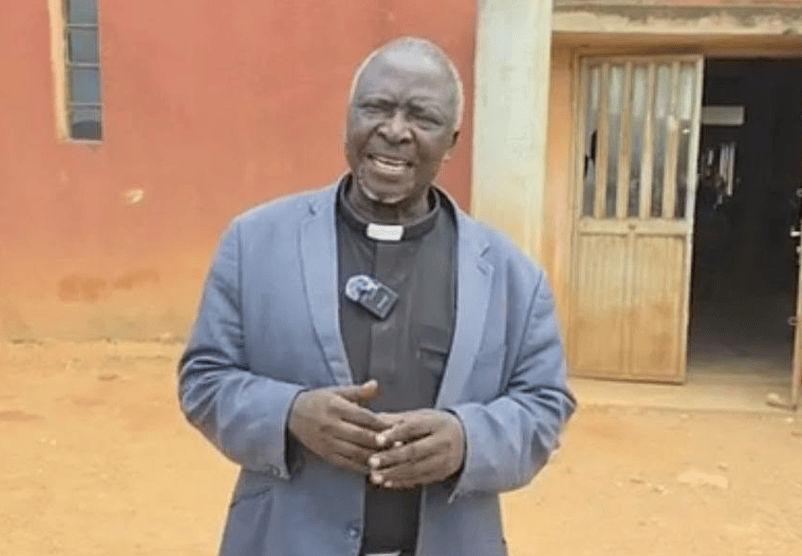
The Regional Chairman of Church of Christ in Nations (COCIN), Barkin Ladi Local Government Area of Plateau State, Rev. Ezekiel Dachomo, has denied reports that he prayed for the re-election of President Bola Tinubu and Vice President Kashim Shettima in the 2027 presidential election.
Dachomo, who is currently in Israel on what he described as his first International Christian Advocacy Tour, said his visit was aimed at drawing the attention of world leaders to the plight of Christians in Plateau.
The cleric made the clarification in a social media post on Monday night following reports that he had prayed for the success of the All Progressives Congress (APC) presidential ticket and expressed support for the Muslim-Muslim ticket.
Dachomo said his earlier post, in which he prayed for Nigeria, had been misconstrued as an endorsement of Tinubu and Shettima ahead of the 2027 election.
According to him, there was nowhere in the post where he prayed for the President and Vice-President to win the election.
“People are trying to frame me, saying I prayed for a Muslim-Muslim ticket. But I did not, and I will never pray for a Muslim-Muslim ticket because Nigeria belongs to both Muslims and Christians,” he said.
Dachomo said his prayers were for the well-being and success of Nigeria and its citizens, irrespective of their religious affiliations.
“I pray for both Muslims and Christians in Nigeria. I pray for Nigeria to succeed. If you truly want to come to God, come with a clean heart,” he added.
The cleric further stated, “I did not pray for President Tinubu and Vice President Shettima to win in 2027. My prayers have always been for Nigeria to succeed.”
Dachomo’s clarification came amid reactions to his ongoing advocacy tour in Israel, where he is seeking international attention to security challenges and what he described as the persecution of Christians in Plateau.
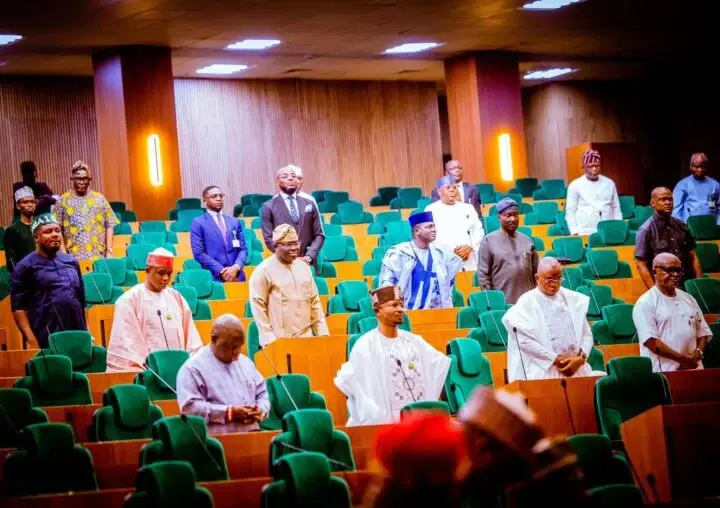
Ahead of the 2027 election, the House of Representatives Committee on Electoral Matters has urged the Independent National Electoral Commission (INEC) to disqualify candidates whose names are not contained in political party registers, as stipulated by the Electoral Act 2026.
In a statement on Tuesday, the Chairman of the committee, Bayo Balogun, drew the commission’s attention to a Supreme Court ruling on Sections 77(5), 77(6) and 77(7) and called for their full enforcement across all political parties.
Balogun, a member of the All Progressives Congress, APC, said that pending legal proceedings concerning the interpretation, constitutionality and enforceability of the sections had been resolved by virtue of the Supreme Court judgment.
The lawmaker recalled that the Supreme Court, on September 24, 2026, restored the provisions after setting aside the Court of Appeal judgment that had declared them unconstitutional.
According to him, the apex court held that the provisions were not inconsistent with the 1999 Constitution.
Balogun explained that Section 77(5) provides that only members whose names are contained in the membership register submitted to INEC are eligible to vote or be voted for at party primaries, congresses and conventions.
He said that Section 77(6) requires political parties to use the register submitted to the electoral umpire for such exercises.
Balogun urged INEC to proceed without further delay to enforce Sections 77(4) to 77(6) in the administration and monitoring of political parties and their electoral activities.
He further urged the commission to audit the membership registers and candidates submitted by political parties to establish whether the names of the candidates are contained in the registers earlier submitted to INEC in compliance with Section 77(5).
“This will be a litmus test for the commission – any culpable political party and candidates should be disqualified.
“Diligent enforcement of the provision would help prevent disputes and reduce the volume of litigation that could arise from alleged irregularities or non-compliance with Sections 77(4) to 77(6) of the Electoral Act,” Balogun said.
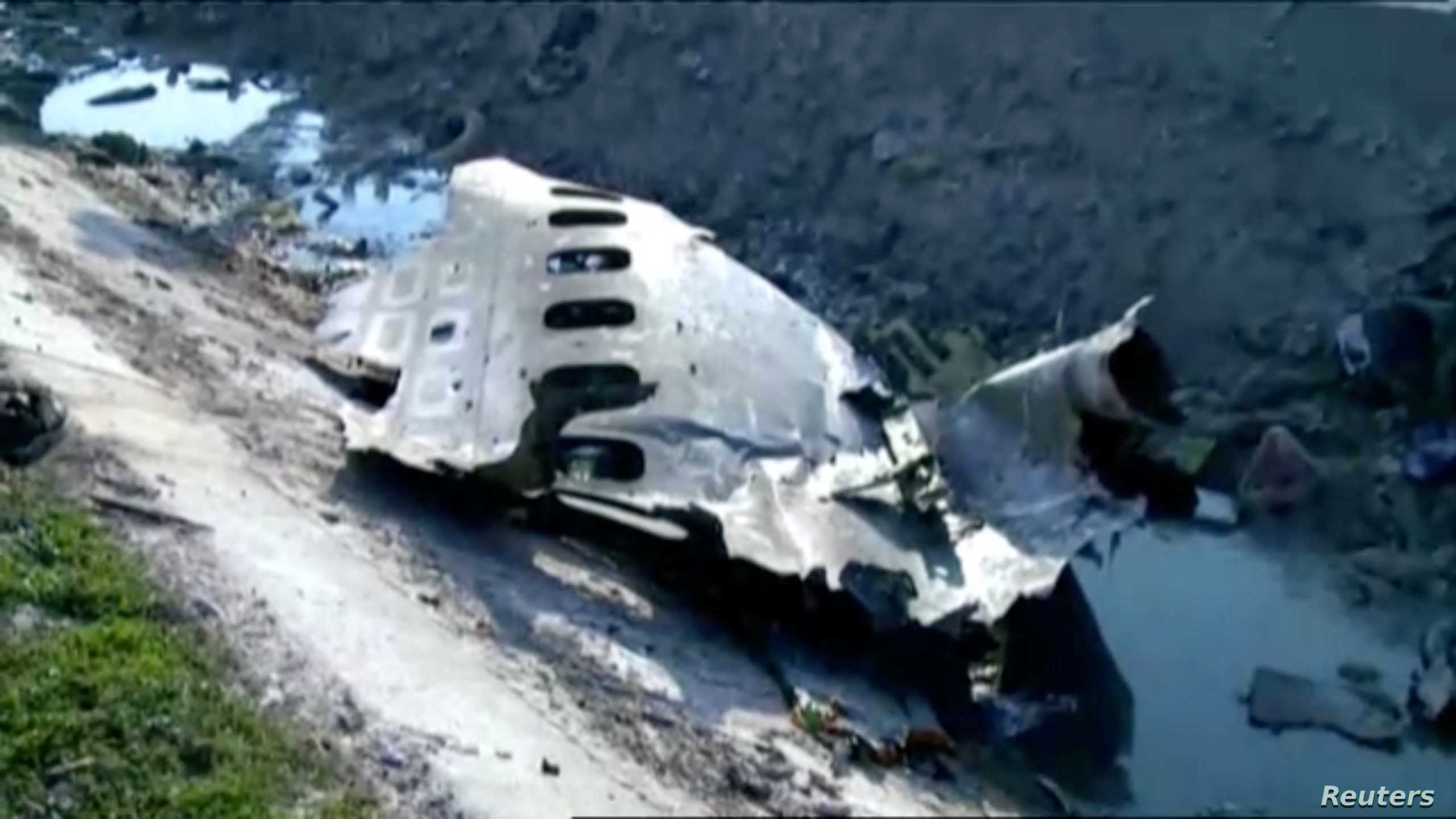
An helicopter crashed into a swamp near Naval Base in Igbokoda, the headquarters of Ilaje Local Government Area of Ondo State, on Monday.
The incident occurred at about 11.00a.m during heavy down pour, throwing the coastal community into panic.
The number of people on board of the helicopter was yet to be officially confirmed, while the condition of possible survivors cannot be confirmed.
Confirming the incident, Maurice Oripenaiye, the Chairman of the local government, told the News Agency of Nigeria (NAN) in a telephone interview that he could not ascertain the number of the victims.
Oripenaye also said he was yet to ascertain the identity of the crashed helicopter and the passengers.
“It happened during the heavy rainfall at about 11.00a.m. I cannot confirm the number of the people on board. I have deployed some youths to the area for rescue purpose,” he told NAN.
Similarly, the Police Command in Ondo State while confirming the crash, said details surrounding the incident were still emerging.
The command in a statement by its spokesperson, Abayomi Jimoh, a deputy superintendent of police, in Akure, said efforts were ongoing to establish the full circumstances surrounding the crash.
“The command urges members of the public, particularly residents of Igbokoda and adjoining communities, to remain calm and refrain from circulating unverified information.
“The public will be duly informed as soon as further credible information becomes available,” it stated.
(NAN)


