
Personality in Focus
MNJTF Achieving Stability in Lake Chad Basin, Ten Months into Major General Ibrahim Sallau Ali’s Command


- /home/rhoncare/pointblank.ng/wp-content/plugins/mvp-social-buttons/mvp-social-buttons.php on line 27
https://pointblank.ng/wp-content/uploads/2024/05/IMG-20240506-WA0024-1000x600.jpg&description=MNJTF Achieving Stability in Lake Chad Basin, Ten Months into Major General Ibrahim Sallau Ali’s Command', 'pinterestShare', 'width=750,height=350'); return false;" title="Pin This Post">
- Share
- Tweet /home/rhoncare/pointblank.ng/wp-content/plugins/mvp-social-buttons/mvp-social-buttons.php on line 69
https://pointblank.ng/wp-content/uploads/2024/05/IMG-20240506-WA0024-1000x600.jpg&description=MNJTF Achieving Stability in Lake Chad Basin, Ten Months into Major General Ibrahim Sallau Ali’s Command', 'pinterestShare', 'width=750,height=350'); return false;" title="Pin This Post">
By Abubakar Abdullahi
In the heart of Africa, the Lake Chad Basin serves as lifeblood for tens of millions, a unique ecological sanctuary, and a linchpin in regional stability. This expansive area, touching Nigeria, Chad, Cameroon, and Niger, is more than a geographical feature; it’s the cradle of biodiversity, agriculture, and cultures that have thrived for centuries. Amidst its abundant resources, however, the region has faced its share of turmoil, exacerbated by the shadow of Boko Haram and other insurgent groups. Yet, hope glimmers on the horizon, significantly attributed to the efforts and successes of the Multinational Joint Task Force (MNJTF) over the past ten months.
The importance of the Lake Chad Basin cannot be overstated. It underpins the livelihoods of over 30 million people, offering water, fish, livestock grazing, and irrigation for agriculture. But beyond its economic significance, Lake Chad is a vital ecological habitat, home to diverse species and acting as a buffer against desertification. This multifaceted utility of the Lake Chad Basin underscores the imperative of preserving its stability and prosperity. However, the specter of insecurity, primarily due to the insurgent activities of Boko Haram and its offshoots, has cast a long shadow over the region. The resulting humanitarian crisis, with millions displaced and at risk of starvation, has necessitated a robust response. Enter the MNJTF, a coalition of forces from Cameroon, Chad, Niger, Nigeria and Benin Republic, established with the purpose of counteracting the threat posed by these insurgent groups.
In the last ten months, the MNJTF under the command of Major General Ibrahim Sallau Ali has made commendable strides in restoring peace and security to the Lake Chad Basin. Its multifaceted approach, combining kinetic and non-kinetic efforts, has proven effective. Notable successes include the dislodgement of insurgents from its strongholds, rescue of hostages, and reductions in the frequency and severity of attacks in the region. These military victories have been complemented by efforts to secure returnees and facilitate humanitarian assistance, reflecting a comprehensive strategy towards lasting peace. Moreover, the MNJTF has played a major role in facilitating the return of displaced persons and the rehabilitation and reconstruction of the affected areas by other state actors. Infrastructure, once devastated by years of conflict, is being rehabilitated, and community resilience initiatives are being introduced, aiming at not just recovery but a sustainable improvement in quality of life. These efforts signify a beacon of hope for the basin’s future, symbolizing a turn towards stability and prosperity.
The MNJTF has achieved considerable success in kinetic operations aimed at eliminating remnants of Boko Haram and other terrorist factions in the Lake Chad Basin. Between July 2023 and April 2024, a significant victory was achieved with 299 terrorists being neutralized, 273 surrendering and 337 arrested for further investigation across different sectors. The operations also led to the recovery of various arms and ammunition, including 20 AK-47 rifles, 4 machine guns, 5 hand grenades, and 35 magazines, among various personal items. Additionally, the troops recovered 1,416 rounds of ammunition of different calibers. These operations, carried out within their national territories by the sectors, have significantly degraded the terrorists’ ability to launch large-scale attacks on the Lake, forcing them instead to resort to hit-and-run tactics against isolated civilian targets.
Likewise, the MNJTF has conducted Operation NASHRUL SALAM, a non-kinetic approach to break the cycle of terror. This psychological operation was tailored to foster surrender and disrupt unity among the terrorist factions. Operation NASHRUL SALAM disseminated messages across the Lake Chad region in 5 languages: Kanuri, Hausa, Arabic, French, and English, to ensure widespread comprehension. These tailored messages were air-dropped over specific islands known to harbour terrorists, targeting them directly in their hideouts. The operation’s impact was profound, culminating in a significant number of terrorists surrendering. This wave of capitulation not only weakened the terrorists’ resolve but also led to the recovery of a variety of arms and ammunition, which were surrendered to the troops.
The success of Operation NASHRUL SALAM underscores the effectiveness of psychological operations in counter-terrorism efforts, showcasing the power of communication in undermining terror networks and encouraging peace.
Operation NASHRUL SALAM is not the sole non-kinetic initiative aimed at enhancing stability in the Lake Chad region. Supported by its partner, the European Union, the MNJTF has executed Quick Impact Projects throughout the four sectors of the MNJTF. In particular, after successful kinetic operations, over 3,200 residents of the Bagatelerom community in Chad have returned to their ancestral homes, with MNJTF personnel assisting their resettlement in partnership with relevant agencies. Additionally, the revival of fishing activities, previously hindered by security concerns in the region, marks a significant turnaround. Moreover, within the year, farmers in the Baga community have received agricultural tools and benefited from the installation of more than ten irrigation boreholes to bolster food security in the area. These efforts underscore our modest yet impactful contributions toward enhancing the socio-economic conditions within the Lake Chad Basin Region. Over the last ten months, we have carried out 95 Quick Impact Projects in 31 communities around Lake Chad, spanning water and sanitation, health, and education sectors.
None of these accomplishments would have been possible without the support provided by the Lake Chad Basin Commission. The Commission took a lead role in convening a meeting of the Council of Chiefs of Defence Staff and Ministers of Defence from the Troop Contributing Countries in N’Djamena, Chad, from 11 to 15 March 2024. This council acknowledged the need to initiate Operation LAKE SANITY 2 to thwart any terrorist attempts to regroup and to capitalize on the progress already achieved. This strategic deliberation paved the way for the launch of Operation LAKE SANITY 2 on 23 April 2024. Since the operation’s commencement, the troops have exhibited a high level of dedication to achieving the mission’s objectives, showcasing their commitment to maintaining peace and security in the region.
Operation LAKE SANITY 2 is poised to significantly compliment various national operations and solidify the multinational joint efforts of the MNJTF. The troops have demonstrated unparalleled dedication to achieving their mission, a sentiment warmly echoed by the local communities, who have greeted the forces with open arms and cheers—a clear sign of their support. This local backing aligns with the Force Commander’s repeated calls for community engagement across different sectors within the MNJTF Area of operations, highlighting the operation’s importance and the critical role of local support in its success.
This collaborative success story of MNJTF under Maj Gen IS Ali serves as a testament to what can be accomplished when nations unite against a common threat. As we look forward, it’s imperative that the successes of the MNJTF are built upon. Continued international support, coupled with sustained commitment from the member states, is indispensable. The Lake Chad Basin, with its profound importance to ecological balance, economic sustenance, and cultural heritage, deserves no less. The strides made by the MNJTF in restoring stability are but the first steps on the long road to comprehensive recovery and development. The future of the Lake Chad Basin hinges on the continuation of these concerted efforts to ensure that this vital region can fully realize its potential as a cradle of prosperity and peace.
Abubakar Abdullahi is a Lieutenant Colonel, and the Chief Public Information Officer, Headquarters Multinational Joint Task Force, Ndjamena, Chad Republic.


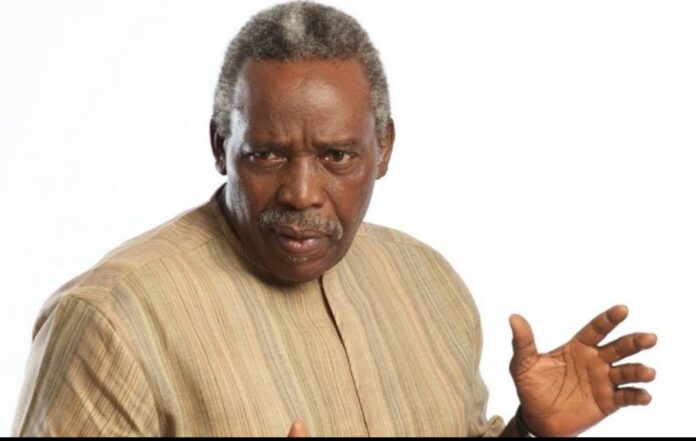
Veteran Nigerian actor and elder statesman, Oludotun Baiyewu Jacobs, popularly known as Olu Jacobs, has died at the age of 84.
The actor’s death was announced by his son, Olusoji Jacobs, on Instagram on Wednesday.
Olu Jacobs was one of Nigeria’s most respected actors and a towering figure in the country’s theatre, television and film industries.
For more than five decades, Jacobs built a career that took him from the stage in Britain to international films and, ultimately, to becoming one of the most recognisable faces of Nollywood.
Born on July 11, 1942, in Kano, Jacobs had his roots in the Egba Alake community of Abeokuta, Ogun State. He grew up in Kano, where he developed an early interest in acting through school drama, debating activities, and church programmes.
His passion for the performing arts was strengthened after he watched a performance by legendary Nigerian theatre practitioner Hubert Ogunde. The experience inspired him to pursue acting professionally.

Michael Dell, on Tuesday, overtook Jeff Bezos in Forbes’ billionaire rankings, edging past the Amazon co-founder as shares of Dell Technologies reached an all-time high, extending a six-month rally.Dell’s estimated net worth rose $4.6 billion to reach $267.7 billion at market close Tuesday afternoon, making him the third-wealthiest person in the world for the first time ever.
Dell trails Alphabet co-founder Larry Page ($277.9 billion) and Tesla chief Elon Musk ($942 billion).
Shares of Dell Technologies rose 1.9% to close at an all-time high of $533.88 on Tuesday, and traded as high as $538.47 earlier in the day.
Bezos’ estimated net worth dropped $1.4 billion to $265.2 billion as Amazon shares fell 0.6%.
Dell’s net worth has more than doubled since last year as his company has benefited from booming demand for artificial intelligence hardware.
327%. That is how much Dell’s stock has rocketed since the start of the year, when shares were priced around the $128 mark. Michael Dell holds a roughly 40% stake in his company and has much of his fortune wrapped up in his private investment firm DFO Management, which invests in hotels and liquid corporate credit. Dell’s net worth has soared alongside his company’s earnings, allowing him to surpass Meta co-founder Mark Zuckerberg and Oracle co-founder Larry Ellison in recent months.
Dell Technologies is a week removed from its second-quarter earnings report in which it logged $47 billion in revenue, a 58% jump year-over-year, and adjusted earnings per share of $7.04, a threefold increase from the same period last year. The company’s AI server business logged a record $60.9 billion in orders and accounted for $16.4 billion in revenue. The growth, and what chief financial officer David Kennedy called “AI momentum,” resulted in Dell Technologies raising its full-year revenue guidance $25 billion to an anticipated $192 billion.
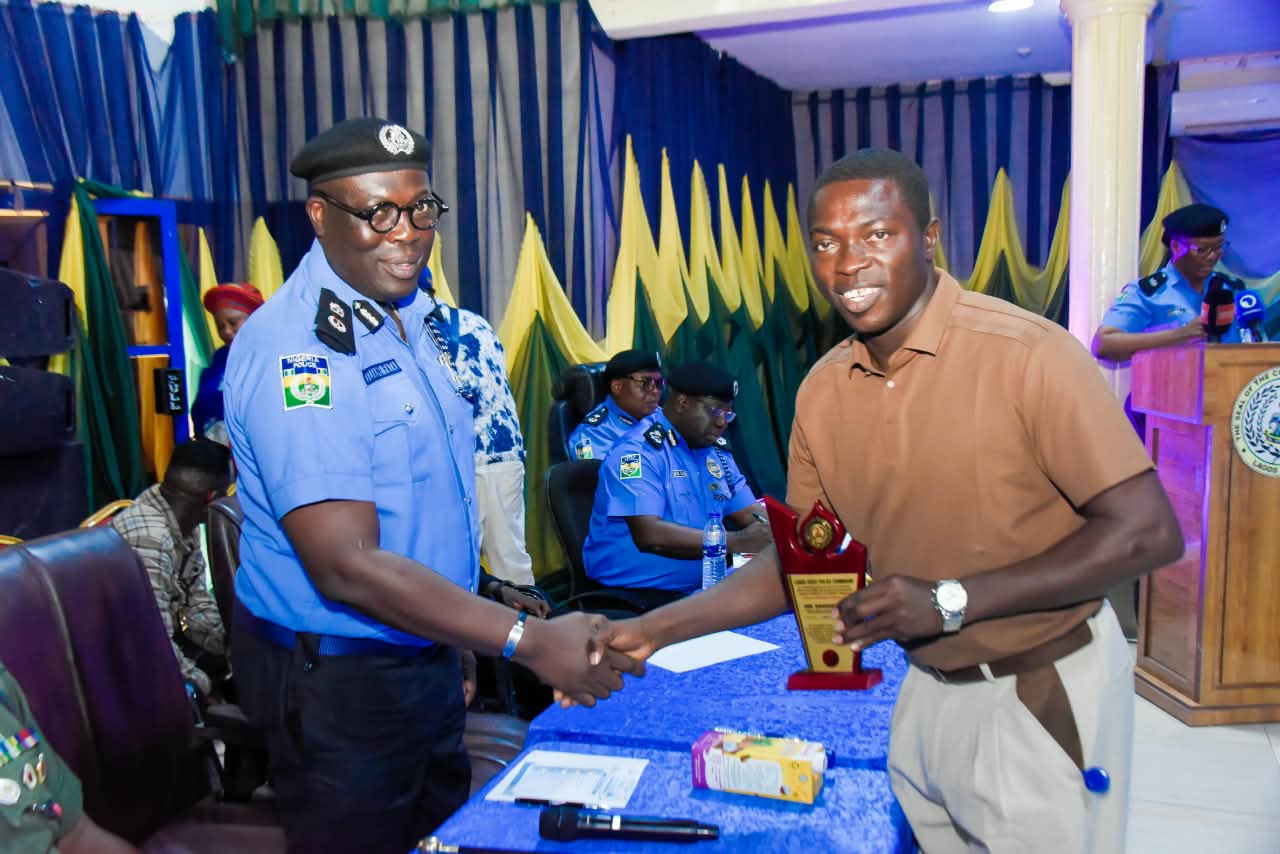
The Lagos State Police Command under the leadership of the Commissioner of Police, CP Fatai Tijani, on Thursday, honoured the President of the National Association of Online Security News Publishers (NAOSNP), Mayor Oki Olatunji Samson, as a Police-Youth Advocate for his contribution to youth engagement and advocacy, responsible security journalism and community safety.
The recognition came during the Command’s commemoration of International Youth Day 2026, themed “Different Contexts, Common Aspirations,” held at the Police Officers’ Wives Association (POWA) Secretariat, Oduduwa Street, Lagos.
The event also featured the launch of the National Campaign Against Political and Digital Thuggery and a Police-Youth Dialogue designed to build stronger partnerships between law enforcement and young Nigerians. The initiative, in line with the vision of Inspector-General of Police, IGP Olatunji Rilwan Disu, placed youth participation, responsible citizenship and peacebuilding at the centre of contemporary security discourse.
In his address at the event, the NAOSNP President, a respected security journalist, stressed that youth advocacy must move beyond rhetoric to deliberate investment in the values, opportunities and relationships that enable young people to become agents of stability. He argued that the youth should not be viewed simply as potential victims or perpetrators of insecurity, but as indispensable stakeholders in preventing it. According to him, the digital space has become an extension of society and therefore requires the same standards of responsibility expected in the physical world.
The NAOSNP President urged young Nigerians to recognise the power of their voices, particularly on social media, and deploy that influence constructively. “Your phone is powerful. Your social media account is powerful. Your voice is powerful. Please use that power to build, not destroy.” He further challenged young people to resist political manipulation, stressing that no temporary political reward could justify sacrificing one’s future.
“Do not allow anyone to use your future to settle their present disagreement.”
He advocated a culture in which political differences could be expressed without becoming personal hostility, urging youths to verify information before sharing it and to understand that digital actions can have real-world consequences.
The intervention resonated strongly with the message of the Commissioner of Police, Lagos State Command, CP Tijani Fatai, who warned young people against allowing politicians to exploit them for electoral violence as the country approaches another election cycle. Fatai said youths must look beyond immediate gratification and recognise the importance of preserving their future.
“Tomorrow is there for us. We should not think of today. We should always think of tomorrow. That tomorrow is more important than what we are today.”
The CP also delivered a particularly strong message against the recruitment of young Nigerians into political thuggery, noting that political actors rarely expose their own children to the dangers of electoral violence. “None of these politicians will use any of their children for electioneering, thuggery, violence or what have you.”
He urged youths to reject attempts to use them for ballot-box snatching, intimidation, destruction of property and other forms of electoral violence, while stressing that political participation remained a legitimate right when exercised responsibly.
The Commissioner equally identified the digital environment as an emerging frontier of security, urging young Nigerians to think carefully before posting, sharing or reacting to provocative content. His message was clear: political participation must never become political violence, whether offline or online.
In his goodwill message, Commander, 9 Brigade, Nigerian Army, Brigadier General Ayokunle Owolabi, described the campaign as timely and commended the Police for strengthening engagement with young Nigerians. Owolabi noted that the energy, creativity and resilience of young people remained indispensable to Nigeria’s peace, security and development. He emphasised that national security could no longer be regarded as the exclusive responsibility of security agencies, but required a whole-of-society approach in which young Nigerians become active partners. He particularly warned against the misuse of digital platforms and physical spaces for violence, intimidation, misinformation and destructive engagement, while calling for stronger trust and communication between young people and security institutions.
Also speaking, the Lagos State Coordinator of the Police Campaign Against Cultism and Other Vices (POCACOV), SP Olivia Amarachi Ugochukwu, urged young people to become the change they desire in their communities.
“Policing is everybody’s business. If you see something, say something.”
She also charged the media to ensure that only verified information was disseminated, noting that responsible information management was essential to preventing fear, confusion and conflict.
The well attended event attracted representatives of the Nigerian Army, Nigerian Air Force, Nigerian Navy, NDLEA, FRSC and NSCDC, alongside NYSC, POCACOV, PCRC, NYCN, NANS, NURTW, RTEAN, CRAN, NAOSNP, POWA and youths from Police Barracks across Lagos. The programme featured an extensive Police-Youth Dialogue on security, political participation, social media, cultism, thuggery and emerging threats.
The recognition of Mayor Oki Samson as Police-Youth Advocate therefore represented more than an individual honour. It underscored the growing importance of credible voices capable of connecting young people, the media and security institutions around a shared commitment to peace.
In a society where insecurity can be amplified by a rumour, a provocative post or a manipulated young mind, youth advocacy has become a frontline security intervention. The future of Nigeria cannot be secured merely by policing the streets; it must also be secured by winning the minds, trust and participation of its young people.
The challenge before advocates such as Mayor Oki Samson and institutions such as the Police is to ensure that the message does not end with an award or a commemorative event. It must travel into schools, communities, newsrooms, transport parks and digital spaces—until peace becomes not merely a campaign slogan, but a conscious choice made by a generation whose future is ultimately at stake.


