
Personality in Focus
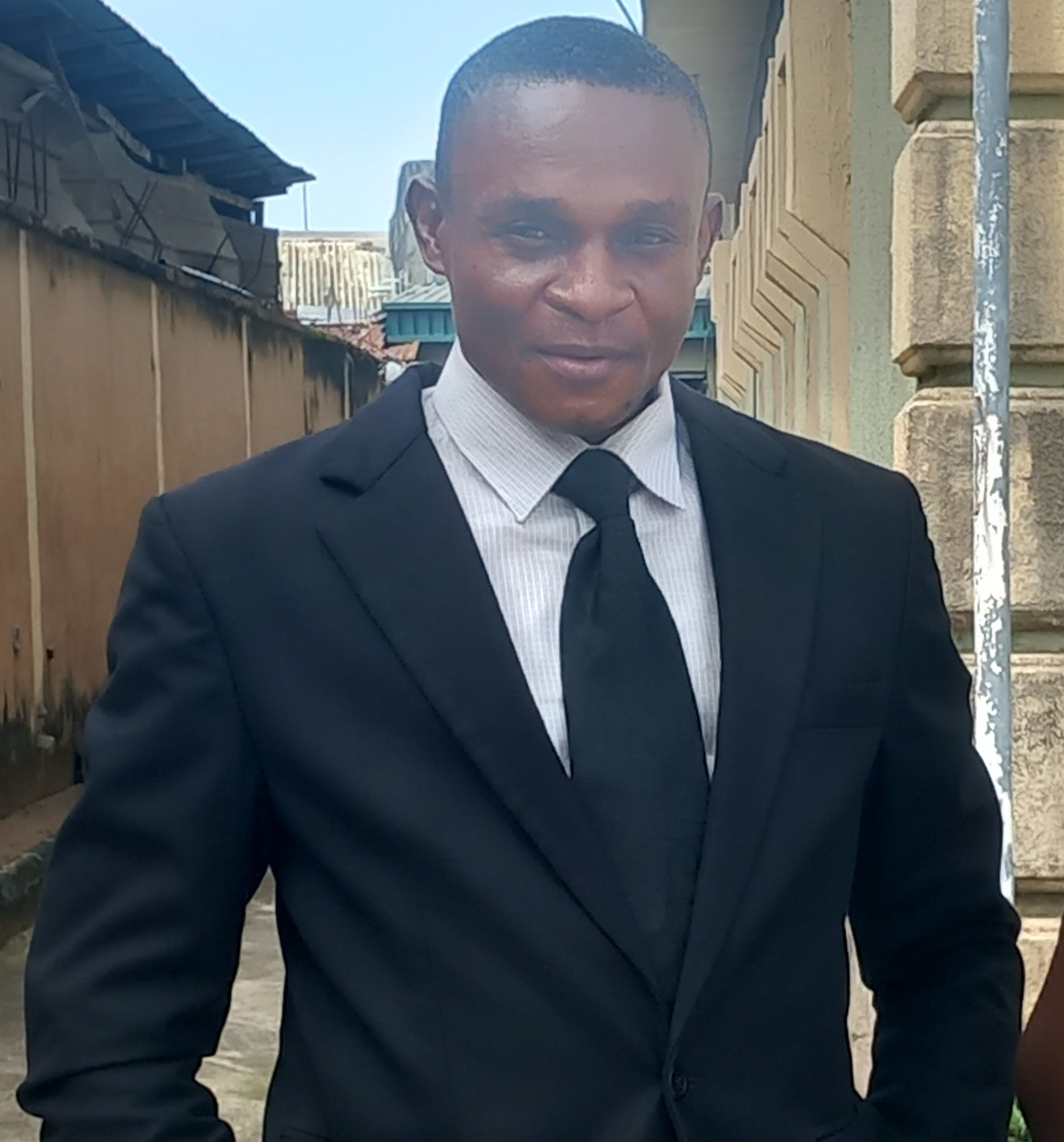
My Memoir: How I Survived Nigeria/South Africa Match by Eric Elezuo

- /home/rhoncare/pointblank.ng/wp-content/plugins/mvp-social-buttons/mvp-social-buttons.php on line 27
https://pointblank.ng/wp-content/uploads/2024/02/20230820_110022-1000x600.jpg&description=My Memoir: How I Survived Nigeria/South Africa Match by Eric Elezuo', 'pinterestShare', 'width=750,height=350'); return false;" title="Pin This Post">
- Share
- Tweet /home/rhoncare/pointblank.ng/wp-content/plugins/mvp-social-buttons/mvp-social-buttons.php on line 69
https://pointblank.ng/wp-content/uploads/2024/02/20230820_110022-1000x600.jpg&description=My Memoir: How I Survived Nigeria/South Africa Match by Eric Elezuo', 'pinterestShare', 'width=750,height=350'); return false;" title="Pin This Post">
If the term ‘final before final’ ever had any real meaning; this was it; the semifinal clash between the Nigeria Super Eagles and the Bafana Bafana of South Africa. It was a game that lived to its billing in terms of rivalry, tension, emotion, fate, and sadly enough, not forgetting tragedy.
There’s hardly any Nigerian, and to an extent, South African (if feelers before and after the game is anything to go by), who did not die many times before their deaths (apologies to William Shakespeare) as the game progressed and lasted. The death here has nothing to do with cowardice as in the case of Shakespeare, but of barefaced patriotism, seething pride and desire to dominate. The tension was palpable, shaking every nerve, irrespective of whether one is healthy or not.
The game went beyond the quest to qualify for the African Cup of Nations final match. Yes, while the players played to emerged winners and finalists, Nigerians cheered to retain pride and remain atop the rivalry echelon between both countries in every aspect of existence. Remember that the South African singer, Tyla, had unexpectedly beaten the combined strength of Burna Boy, Davido, Arya Star, Olamide, to cart away the Grammy just few days back. This is even as the Nigerians had led in music, entertainment and many more.
The match was therefore beyond the quest to play in the finals; it was a war front for superiority challenge where the winner takes all. Nigeria wanted to maintain their hundred percent invincibility against the South Africans in football while the South Africans seek to dismantle the monopoly.
It is worthy of note that the last time South Africa won the AFCON was in 1996 when they hosted. Nigeria was absent. In fact, Nigeria boycotted the tournament because of the rofo rofo fight between then President Nelson Mandela and General Sani Abacha (that’s a story for another day).
The stage was therefore set for the extraordinary.
Like many Nigerians, I had prepared for the 2023 AFCON with less enthusiasm following some lackluster performances the Super Eagles had exhibited in recent past, especially after the game against Equatorial Guinea, where they struggled to force their tiny neighbours to a one all draw. I knew there was nothing in store for us with ‘these crop of players’. So watching their matches was by chance, that is if NEPA, PHCN, DISCO or whatever name they are known by various individuals gives ‘light’. I had sworn that I was not going to waste the little money I have to buy fuel to watch a game that will end up disappointing me.
But all that changed as the tournament progressed with the Eagles against all odds making it to the semi-finals, and to meet South Africa, of all the nations that participated in the competition.
I decided to buy fuel. I decided to watch the match, and give it full attention. I’m sure not a few Nigerians made the same decision.
The D-day was Wednesday, February 7, 2024, and 6pm was the time. I made it home on time. I wanted to see the beginning and end of it all.
I have already comforted myself with the fact that I made a decision many years ago never to allow football outcomes affect my health. I didn’t die in 1994 after Nigeria lost to Italy in the Second Round of the World Cup in the United States, was just divine. I was distraught and my whole being was revolving 360 degrees every 10seconds. Since then, I’ve told myself that never again will I watch any game no matter the team playing, with my heart or even head. I resolved to watch with my photocopy while leaving my original well laid at the bottom of my box like a Christmas cloth. That I have managed to do for a while, even surviving Arsenal’s e remain small agenda for years.
But how wrong I was! This was different!
Football is a spirit, and when it possesses you, there’s no going back. Surely, it heals, it also destroys, depending on the side of divide one is. On this day, it possessed everybody, yours sincerely inclusive.
Finally, it was 6pm Nigerian time, and like all international games, kick off was right on time. I watched with the free mind I, a few minutes ago, cautioned my friends through whatsapp status post to do. Was it easy? The tension from that point. The South Africans were businesslike, taking the game to us, and putting our goalkeeper, Stanley Nwabali to great test. Thank goodness, he lived up to expectation. Both teams were out for victory, praying to the same God, but in my own estimation, I knew that God was going to sit this one out. It was a battle of brothers; let them sort it out through their individual strengths, abilities and wisdom. God did sat out.
Then the goal via penalty through Captain William Troost-Ekong came, after Nigeria’s playmaker, Victor Osimhen, was fouled in the 18 yard box. It was hope rising, and at the same time the beginning of the artificial heart palpitation that later proved disastrous for some.
When the second half started, it was obvious that not many can match the tempo any longer. I was one of them, unfortunately.
How could it be? I asked, knowing that I made a pact long never to allow this kinda matter bother me. But the more I stayed glued to the television, the more I can feel my heart panting, especially when the South Africans get closer to our goal area, which was more frequent than rare. I tried to prove the strong man. In our palance, we say try to prove jagaban. E no work!
I re-invented the philosophy of ‘Que Sera Sera’ that had helped me in times of this sort of situation, but it failed to work. My heart was not at ease. It was there and then, I decided. I no watch again!
But what would I be doing? I decided to go and fetch water. But there was water in the house. I emptied some into the toilet, and went downstairs to fetch from the well. Nobody sent me. I was coming in from my second trip when my little daughter said, ‘daddy, they scored’. My heart missed a skip. I said, who? She answered, ‘Osimhen’. I said, thank God.
As I entered the sitting room, my older son narrated how Osimhen scored the ‘clean goal’. It was 2-0. I concluded that no matter what the South Africans want to play from that 85th minute till when the game ends, they can’t score two goals. Meanwhile, my television had disconnected. We joked about it that the owners of DStv and GOtv have suddenly become angry with our two goals, and disconnected us from watching. I checked from my phone, and Google recorded 2-0. I concluded that all was well while we strive to restore viewing. Then I checked my phone again for update. That was when I thought I was watching a scene from Harry Porter. It read 1-1. I refreshed, thinking I entered the wrong site, but 1-1 continued to stare at me like a Lonely Londoner. Then my reconnection restored, and so was the shock of my life. The goal has been disallowed, and a penalty awarded to South Africa for an infringement that happened at the other end, which led to the goal.
Damn!!!
We were already under pressure, and with another 10 minutes of added time and 30 minutes of extra time, I reasoned it will be strictly difficult for us to win the match. But patriotism will not allow me abandon the match. Everybody was shouting in my house. My daughter will scream and fall to the ground when Nigeria try to score and miss, as well as when South Africa make dangerous incursions. It was pure bedlam.
After the 90 minutes finally ended, I told myself, this is it…no more watching. I saw what the South African goalkeeper did to Cape Verde during their penalty shootout. Williams, as he is called, was much better by prematch rating.
We agreed to watch Netflix, and follow scores on the net or screams from the neighbours. Of course, persuaded my family. If they scream in excitement, I will know Nigeria has scored, but if they scream in agony, of course, Nigeria has been scored. I again reasoned that Netflix will be serious, and our minds may still be very much in the game. We changed to YouTube to watch Broda Shaggy and Brainjotter. At least, we will be laughing, no matter what the case is.
My brother, na so we no even no when the 30 minutes extra time ended and penalty kicks ensued.
By the time I switched back to the match, Kelechi Iheanacho was standing behind the ball, and I could hear the commentator saying ‘will Iheanacho win it for Nigeria?’
Waooo…the match was almost over. The scoresheet read 3-1 to Nigeria’s advantage with both teams having only one kick left.
Kelechi scored, and my heart returned from its journey to wonderland. The shout of victory was deafening, echoing both from the stadium and the immediate surroundings. I looked from my balcony, and could see a crowd of supporters surging forward and backward in ecstacy. The last time we witnessed such celebration was in 1996 when Nigeria came from 3-1 down to defeat Brazil 4-3 in the Olympics. Kanu Nwankwo had sent the entire country into a frenzy with his superlative extra time goal. It was the era of golden goal rule. Nigeria went on to win the gold medal, beating Argentina 3-2 in the final.
It was however, early the next day that news began filtering in about our countrymen, who gave up the ghost in the heat of the tension. As at the last count, five brave supporters paid the ultimate price. May their souls rest in peace.
They said that whatever doesn’t kill us, makes us strong. There’s still one more adventure, one more world to conquer according to Ulysses.
I will watch again on Sunday, as the final unfolds, this time against the host country, Cote d’Ivoire. The tension this time, I’m sure, will be turbocharged. No doubt. But I have learnt to survive just like many others, so that I can join the victory party afterwards.


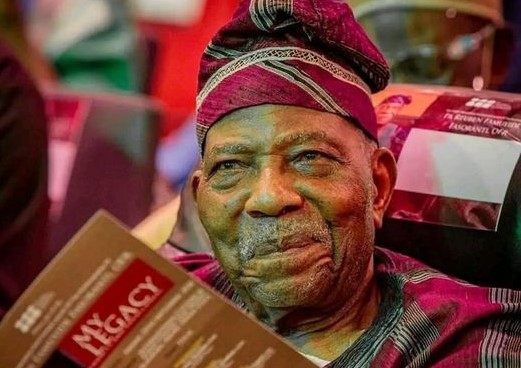
The national leader of the Pan Yoruba social-political organisation, Pa Reuben Famuyide Fasoranti, is dead.
The revered elder statesman and Afenifere chieftain passed away at the age of 100, which he celebrated May 11, 2026.
Born on May 11, 1926, in Uso, Ondo State, Pa Fasoranti was one of the major twines holding together the Yoruba nation and a bridge linking the politics of the First Republic to the present democratic order in the South West and in the country.
His political trajectory was rooted in progressivism and Yoruba ideals, having imbibed the political philosophy of Chief Obafemi Awolowo through th Action Group and later the Unity Party of Nigeria.
During the Second Republic, he served as Commissioner of Finance in the old Ondo State between 1979 and 1983. He later rose to become the leader of Afenifere following the death of Chief Abraham Adesanya, his predecessor.
A foremost Yoruba leader, Pa Fasoranti was one of the NADECO leaders whom the regime of the late General Sani Abacha attempted to assassinate in 1996.
He is regarded as symbol of the never-dying spirit of resistance against forces of tyranny and oppression with his politics never about himself but the advancement of his people, philosophy upheld by his resilience in the face of visible danger and personal losses, including the killing of his daughter by herders on the Benin-Ore road some years ago.
A teacher by training, he attended Ondo Boys’ High School, Yaba Higher College in Lagos, and the University College, Ibadan, where he bagged a higher degree in English/Geography.
He taught at his alma mater, Ondo Boys’ High School, and later served as Principal of Oyemekun Grammar School and Iju-Itaogbolu Grammar School. His dedication to education persisted after retirement, as evidenced by his establishment of Omolere Nursery and Primary School and Akure High School.
“His counsel, fatherly guidance and principled stand on issues of justice and good governance will be sorely missed. He lived a fulfilled life and left indelible footprints of honour and legacy for generations to come,” the Governor stated.
Meanwhile, Governor Lucky Aiyedatiwa, has described the late patriarch as a beacon of wisdom, integrity and selfless service whose century-long life was marked by uncommon commitment to the development of Ondo State, Yorubaland and Nigeria at large.
He said, “On behalf of the Government and the good people of Ondo State, I commiserate with the Fasoranti family, the people of Akure Kingdom and the entire State over this great loss. May his gentle soul rest in perfect peace.”
Until his death, Pa Fasoranti remained a towering figure in Yoruba politics and a strong advocate for the unity of the Yoruba people, the supremacy of Yoruba ideals and the betterment of the lot of his people.
He is survived by his children and grandchildren, as well as a legacy of service, integrity and leadership.
The Guardian
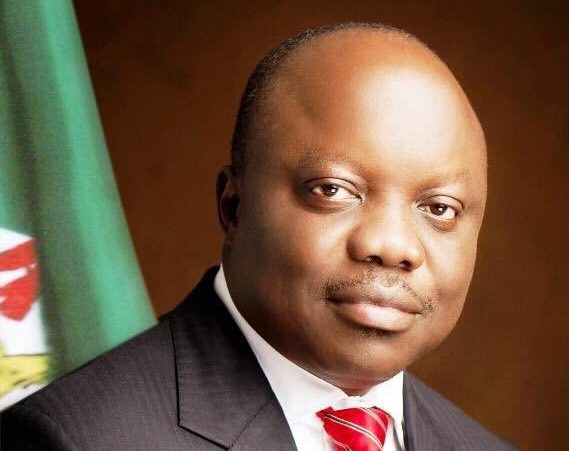
A former Governor of Delta State, Dr. Emmanuel Uduaghan is dead.
He died after a brief illness at the age of 71.
The Uduaghan family announced his death in a statement signed by Toju Andre Uduaghan, on Monday.
The statement, titled, ‘ANNOUNCEMENT OF THE PASSING OF HIS EXCELLENCY, DR. CHIEF EMMANUEL EWETA UDUAGHAN’, read:
“It is with hearts weighed down by immeasurable grief and profound sorrow that we announce the passing to glory of our beloved Father, Brother, Uncle, and Patriarch, His Excellency, Dr. Chief Emmanuel Eweta Uduaghan, former Governor of Delta State, who departed this world on the morning of 19th October 2026.
“His passing has left us devastated. Words can hardly express the depth of our sorrow at the loss of a man who meant so much to our family and whose life and service touched countless others across Delta State and Nigeria.
“He was a source of strength, a father figure, a beloved brother and uncle, and a respected elder. We will deeply miss his presence and forever cherish the memories and legacy he leaves behind.
“He served as Commissioner for Health from 1999 to 2003, Secretary to the Delta State Government from 2003 to 2007, and Governor of Delta State from 2007 to 2015. Throughout his years in public service, he demonstrated a commitment to the human and infrastructural development of Delta State.
“His passing is a profound loss to our family, the people of Delta State, and Nigeria at large. We are grateful to Almighty God for his life, his service, and the legacy he leaves behind.
“We pray that Almighty God, in His infinite mercy, will grant his soul eternal rest and comfort our family, friends, associates, former colleagues, and all who mourn this painful loss.
“Rest well, our beloved Father, Brother, and Uncle. Your memory will forever remain in our hearts, and your legacy will endure in the lives of those you touched.
“May your gentle soul rest in perfect peace. Amen.”
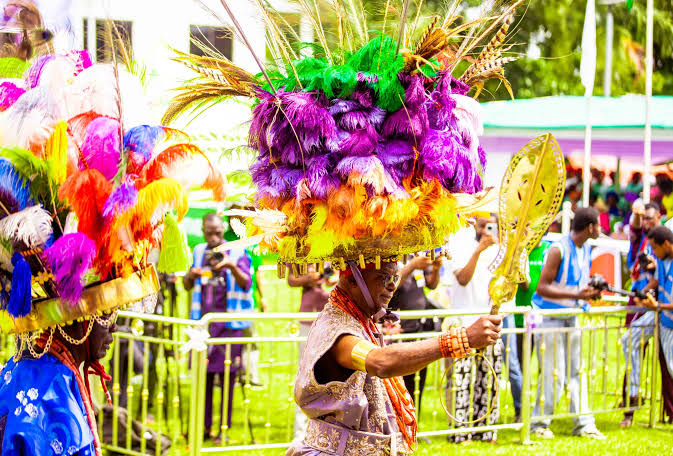
The Obi of Onitsha, His Majesty Igwe Alfred Nnaemeka Achebe, has commended Globacom for its unwavering commitment to the preservation and promotion of Nigeria’s cultural heritage, noting that the telecommunications company’s sustained support has helped transform the Ofala Festival into a world-renowned cultural celebration.
Speaking on the 2026 edition of the festival, held at Ime Obi, Onitsha, Anambra State, on Friday, the monarch paid a glowing tribute to Globacom for its longstanding role as the principal sponsor of the festival, a partnership that has spanned fifteen consecutive years since 2011.
According to the monarch, “Their partnership has transformed the festival from a palace ritual to a world-renowned cultural festival owes a great deal to purposeful partnership. Since 2011, Globacom has stood with us as our principal partner – now fifteen consecutive years of unwavering commitment.” He added that “In good times and challenging times, Globacom has helped us preserve the authenticity of Ofala while enhancing its presentation, documentation, broadcast and global reach. They have helped take a living heritage to the global stage”.
Igwe Achebe also applauded the vision of Globacom’s Chairman, Dr Mike Adenuga Jr., whose commitment to cultural preservation, he noted, reflects a profound appreciation of the role of indigenous traditions in strengthening national identity and social cohesion.
“I thank Globacom and its Chairman, Otunba (Dr) Mike Adenuga Jr., GCON, a true man of culture, for his vision and belief that culture is not a luxury but a foundation for unity,” the monarch said.
Commenting on the theme of this year’s festival, “Igba Mbo, Iga N’Iru” — Strive and Advance — Igwe Achebe described it as a compelling call to diligence, excellence, self-improvement and collective progress. He explained that the theme embodied the enduring spirit of the forebears who built the Onitsha kingdom on the banks of the Niger, while challenging younger generations to preserve that legacy through enterprise, purposeful endeavour and a commitment to progress.
In his goodwill message to the monarch and the people of Onitsha, Dr Adenuga described Globacom’s association with the Ofala Festival “since 2011 has been much more than a corporate partnership. It has been a relationship which we cherish deeply and regard as a privilege”. He expressed profound appreciation to Igwe Achebe for the opportunity afforded Globacom to contribute to the preservation, celebration and wider projection of the community’s priceless cultural heritage.
He noted that the annual festival provides a valuable platform for showcasing the rich cultural traditions, dignity and enduring values of the Onitsha people to audiences across Nigeria, Africa and the wider world.
Through its longstanding partnership with Ofala, Globacom continues to demonstrate that corporate citizenship extends beyond commercial enterprise to the preservation of the cultural foundations that give communities their identity, strengthen their unity and connect generations.


