
Metro
Nestlé Nigeria Celebrates 15 Years of Impact with 20 Graduates from Flowergate TTC

- /home/rhoncare/pointblank.ng/wp-content/plugins/mvp-social-buttons/mvp-social-buttons.php on line 27
https://pointblank.ng/wp-content/uploads/2026/04/NTTC-362-3-1170x780-1-1000x600.jpg&description=Nestlé Nigeria Celebrates 15 Years of Impact with 20 Graduates from Flowergate TTC', 'pinterestShare', 'width=750,height=350'); return false;" title="Pin This Post">
- Share
- Tweet /home/rhoncare/pointblank.ng/wp-content/plugins/mvp-social-buttons/mvp-social-buttons.php on line 69
https://pointblank.ng/wp-content/uploads/2026/04/NTTC-362-3-1170x780-1-1000x600.jpg&description=Nestlé Nigeria Celebrates 15 Years of Impact with 20 Graduates from Flowergate TTC', 'pinterestShare', 'width=750,height=350'); return false;" title="Pin This Post">
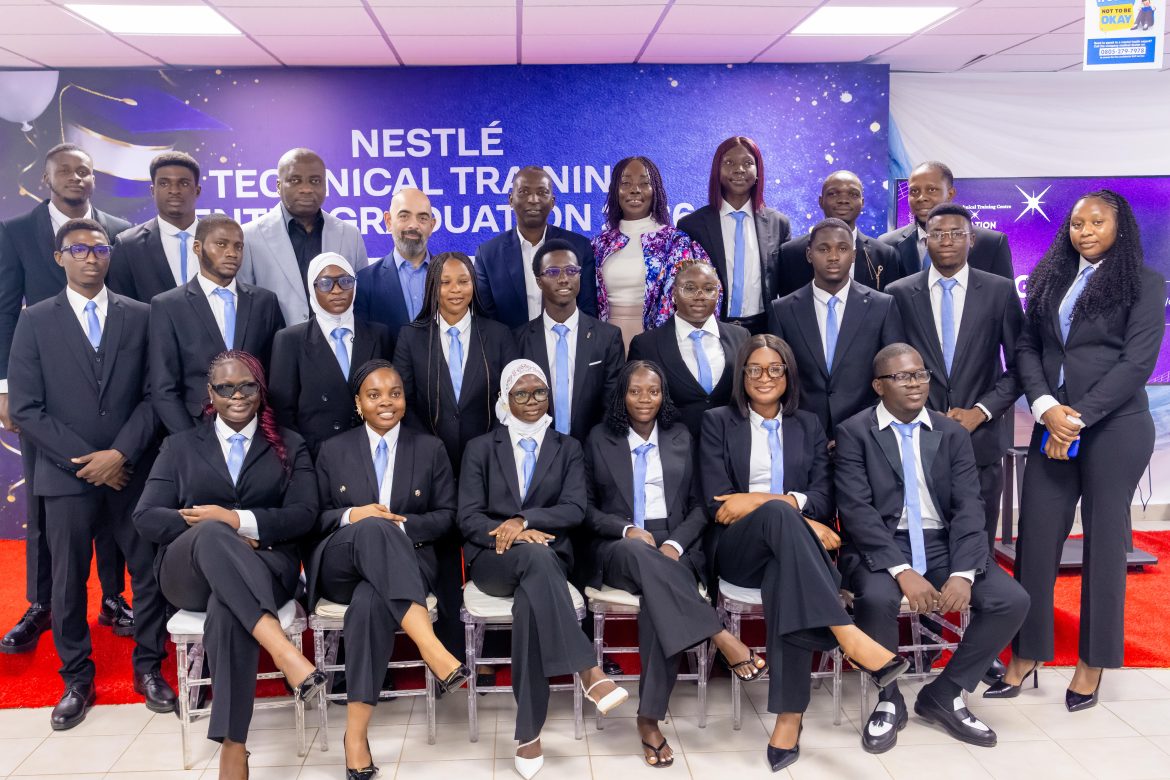
Nestlé Nigeria is celebrating 15 years of impact with the graduation of twenty young trainees from the Flowergate Technical Training Centre. This milestone reinforces the company’s long-standing commitment to youth empowerment through the development of technical and vocational skills among young Nigerians.
The Nestlé Technical Training Centre is part of Nestlé Needs YOUth, Nestlé’s global youth initiative launched in 2013 to equip young people with skills, experience, and opportunities to access meaningful employment, with a goal of reaching 10 million youths worldwide by 2030.
Since its establishment in 2011 at Agbara Factory, the Nestlé Technical Training Centre has equipped 309 young Nigeri ans with hands-on technical and vocational skills across its three locations in Agbara, Flowergate, and Abaji. With an investment of over ₦6 billion, the programme delivers an intensive 18-month curriculum that combines theoretical learning with practical engineering training.
The curriculum provides comprehensive instruction in food technology, engineering, and manufacturing operations, equipping trainees with the technical expertise required to thrive in today’s industrial environment. This culminates in the internationally recognized City and Guilds of London Technicians’ Certification, significantly enhancing participants’ employability within Nigeria and beyond.
Speaking at the graduation ceremony, Mr. Wassim Elhusseini, Managing Director and Chief Executive Officer of Nestlé Nigeria, emphasized the alignment of the initiative with Nestlé’s core purpose “At Nestlé, our purpose is to unlock the power of food to enhance quality of life for everyone today and for generations to come. It is this purpose that drives initiatives such as this. Through the Nestlé Technical Training Centre, we are investing in the future of our industry, our communities, and the thousands of talented young Nigerians ready to grow and excel. Over the past 15 years, we have seen firsthand how this pipeline of talent has strengthened our operations, built critical capabilities within the industry, and created meaningful pathways for young people to thrive. We remain firmly committed to continuing this journey, expanding opportunities, deepening impact, and empowering the next generation of skilled professionals who will shape the future of our industry and our nation’’
The Country Human Resource Manager Shakiru Lawal, highlighted Nestle’s broader impact of the Nestlé Needs YOUth initiative under “At Nestlé, our youth development work across Central and West Africa is guided by a simple belief: unlocking potential through skills, opportunity, and real pathways to work. Through structured training, apprenticeships, and strong industry partnerships, we are helping young people build the skills they need to succeed in today’s workforce while also strengthening the future of our industry. In Nigeria, this commitment comes to life through the Nestlé Technical Training Centres. With an impressive 98% of graduates moving into employment within Nestlé, the programme has become a key talent pipeline for the business. Most importantly, it reflects our purpose of creating shared value through industry knowledge, practical skills, and meaningful job opportunities.
In his speech, the valedictorian of the graduating set, Mr. Samuel Oladokun, spoke on behalf of his fellow graduates, sharing a powerful testimony of the programme’s impact “This training has gone far beyond building our technical skills. It has shaped our discipline, strengthened our confidence, and prepared us in a real and practical way for for us to perform in demanding industrial environments. As graduates, we are leaving this Centre not only with technical competence, but also with a stronger sense of responsibility, teamwork, and professionalism. We are grateful for the opportunity we have been given, and we step forward with confidence, ready to contribute meaningfully, grow in our careers, and make a positive impact wherever we find ourselves.”
His Royal Majesty, Oba Babatunde Adewale Ajayi, the Akarigbo and Paramount Ruler of Remo Land, who was ably represented at the event commended the initiative for its positive impact on local communities and reaffirmed the support of the community in sustaining such developmental programmes.
Professor Abayomi Adelaja Arigbabu, Commissioner for Education, Science and Technology, Ogun State, also commended Nestlé Nigeria for its continued support of government efforts in youth empowerment and skills development.
Other distinguished guests present at the ceremony included Regional Human Resource Manager, Nestlé Nigeria, Antoinette Arkoh, Hon Wasiu Isiaka
Honourable Commissioner for Youth and Sports, Ogun State, Ms. Conny Camenzind, Consul General of Switzerland as well as representatives from the Ministry of Trade, Industry and Investment, the Nigerian Employers’ Consultative Association (NECA), and the Alliance for Youth initiative. They commended the progress of the programme and reaffirmed their continued support for its success.
The Nestlé Technical Training Initiative remains a key pillar of Nestlé Needs YOUth in Nigeria, a global initiative focused on capacity building for young people. Other programmes under this umbrella include the Nestlé Nigeria Youth Development Programme, Nesternship, and the Alliance for YOUth, all aimed at improving employability and creating opportunities for young Nigerians to thrive.


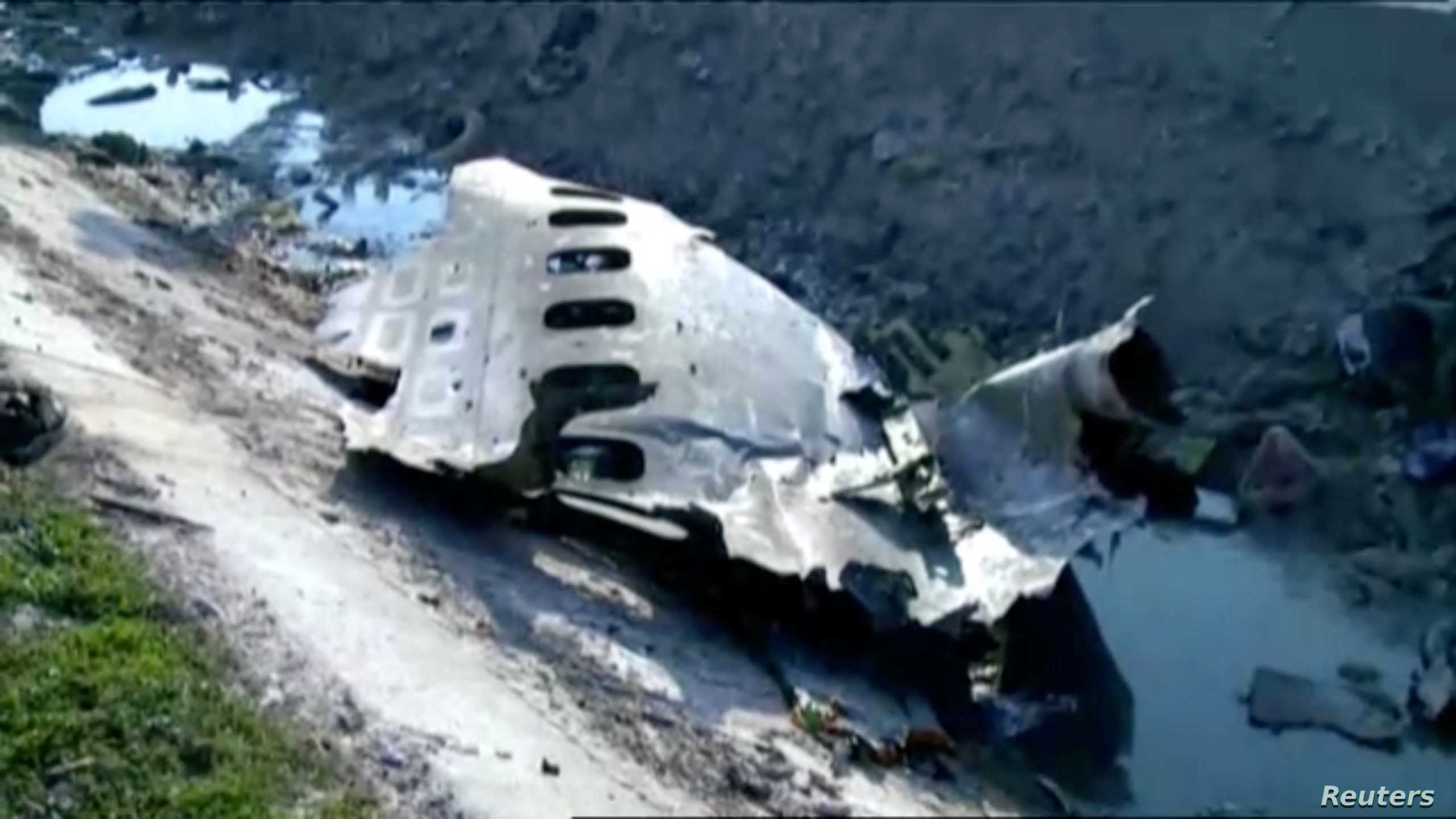
An helicopter crashed into a swamp near Naval Base in Igbokoda, the headquarters of Ilaje Local Government Area of Ondo State, on Monday.
The incident occurred at about 11.00a.m during heavy down pour, throwing the coastal community into panic.
The number of people on board of the helicopter was yet to be officially confirmed, while the condition of possible survivors cannot be confirmed.
Confirming the incident, Maurice Oripenaiye, the Chairman of the local government, told the News Agency of Nigeria (NAN) in a telephone interview that he could not ascertain the number of the victims.
Oripenaye also said he was yet to ascertain the identity of the crashed helicopter and the passengers.
“It happened during the heavy rainfall at about 11.00a.m. I cannot confirm the number of the people on board. I have deployed some youths to the area for rescue purpose,” he told NAN.
Similarly, the Police Command in Ondo State while confirming the crash, said details surrounding the incident were still emerging.
The command in a statement by its spokesperson, Abayomi Jimoh, a deputy superintendent of police, in Akure, said efforts were ongoing to establish the full circumstances surrounding the crash.
“The command urges members of the public, particularly residents of Igbokoda and adjoining communities, to remain calm and refrain from circulating unverified information.
“The public will be duly informed as soon as further credible information becomes available,” it stated.
(NAN)
By Eric Elezuo
All Lagos State-owned universities through their Joint Action Committee (JAC) of staff unions have embarked on an immediate and indefinite strike in fulfilment of their threat to do same last Friday.
The institutions are downing tools over the non-Implementation of the renogotiated ASSU/FGN agreement of 2026 as involves the Lago State government.
The affected universities include Lagos State University, Ojo, the Lagos State University of Education, the Lagos State University of Science and Technology and the Lagos State University College of Medicine.
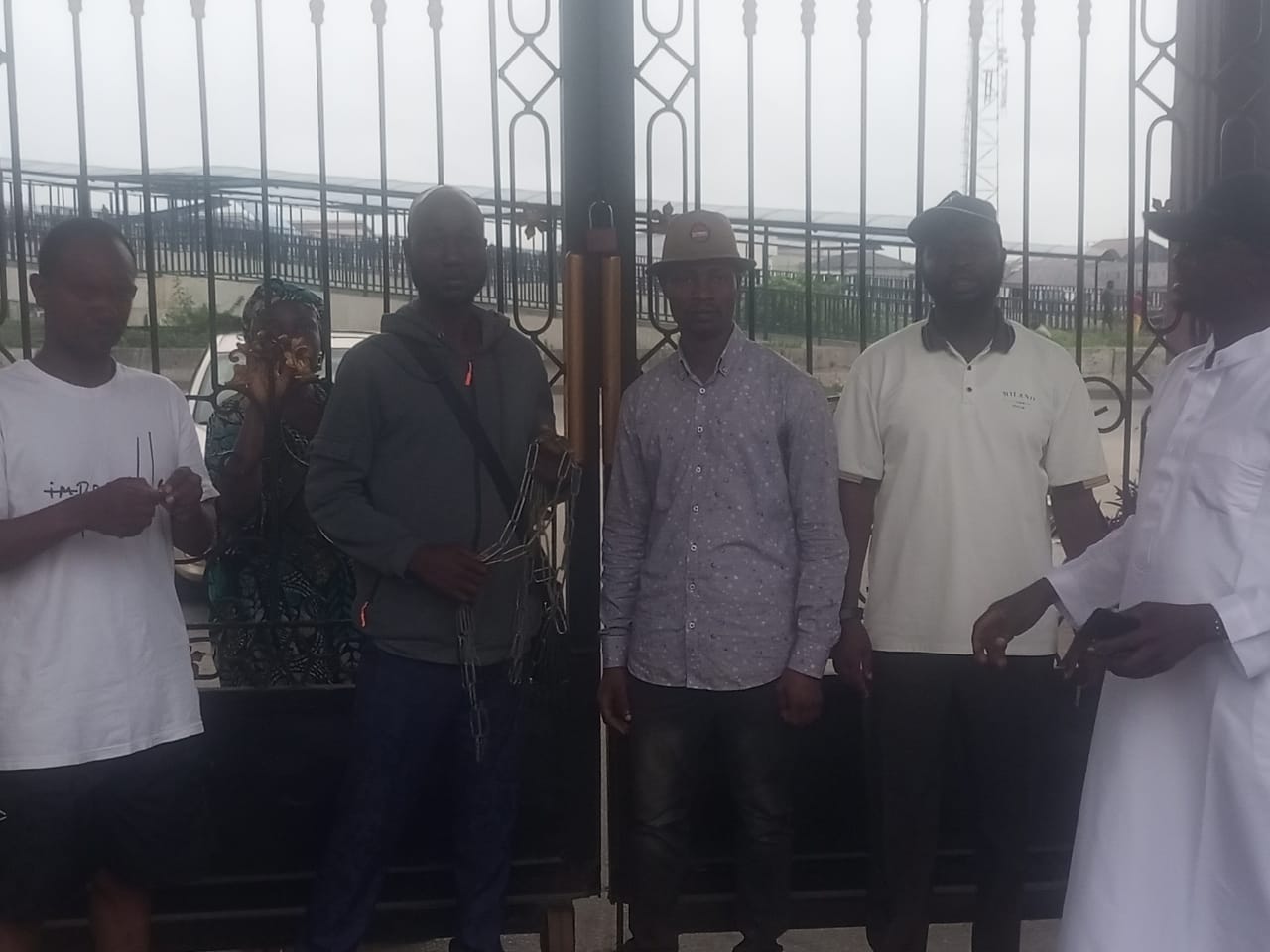
Our correspondent reports that major entrances of the institutions have been put unde lock and key with restrictions to entry into the campuses.
At LASU, members of the JAC were seen in their numbers locking up gates, and enforcing the strike action.
Recall that the unions issued a threat on Friday during a press conference held at the Lagos State University (LASU), Ojo Campus.
The conference was addressed by the Chairman of JAC and Academic Staff Union of University (ASUU-LASU), Prof. Ibrahim Bakare.
JAC comprises the Academic Staff Union of Universities (ASUU), the Senior Staff Association of Nigerian Universities (SSANU), the National Association of Academic Technologists and the Non-Academic Staff Union of Educational and Allied Institutions (NASU).
In his address during the briefing, Bakare said the unions’ final seven-day ultimatum to the Lagos State Government expired at midnight of Friday.
He said the unions had exhausted all avenues of dialogue over the implementation of the 2026 Federal Government and staff unions’ agreements.
“We have exhausted every possible means to avert declaration of industrial action across state-owned universities in Lagos State,” Bakare said.
He said the crisis resulted from bureaucratic delays, shifting goalposts and a lack of executive action on the agreements.
According to him, JAC had engaged relevant government ministries since July 30 to resolve the issues through dialogue.
He said a technical committee comprising government and JAC representatives reached consensus on the implementation of various allowances on Aug. 18.
Bakare said the agreed terms included 40 per cent Consolidated Academic Tools Allowance for ASUU and 35 per cent allowances for SSANU and NASU.
He said the parties subsequently signed a communiqué on Aug. 31, committing to implementation from September 2026 and payment of eight months’ arrears.
“September salaries were paid without the implementation of the agreed rates and the outstanding arrears,” he said.
Bakare said the non-implementation had increased the outstanding arrears to nine months, covering January to September 2026.
He said JAC was demanding immediate executive approval and implementation of the signed 2026 agreements without further alteration or delay.
Bakare said the unions also demanded payment of nine months’ arrears, non-taxation of applicable allowances and implementation of the 15 per cent Lagos factor.
He added that the unions demanded fulfilment of outstanding commitments, including a 20 per cent salary increment and release of five Marcopolo buses promised to state-owned universities.
Bakare said the unions had demonstrated restraint and repeatedly chosen dialogue in spite of the challenges, instead of disrupting academic activities.
“However, our patience has been pushed to the absolute limit,” he said.
He had warned that failure of the state government to act before midnight of Friday would trigger “an immediate, total and indefinite strike” across Lagos State-owned universities.
Bakare had also appealed to traditional rulers, religious leaders, parents and students to urge the government to resolve the matter before the deadline.
Much as the unions maintained open channel for further negotiations and interventions, the Lagos State government nor any other body was not forthcoming before the final shutdown of the universities on Monday.
The Lagos State government is yet to issue a statement in response as at press time.
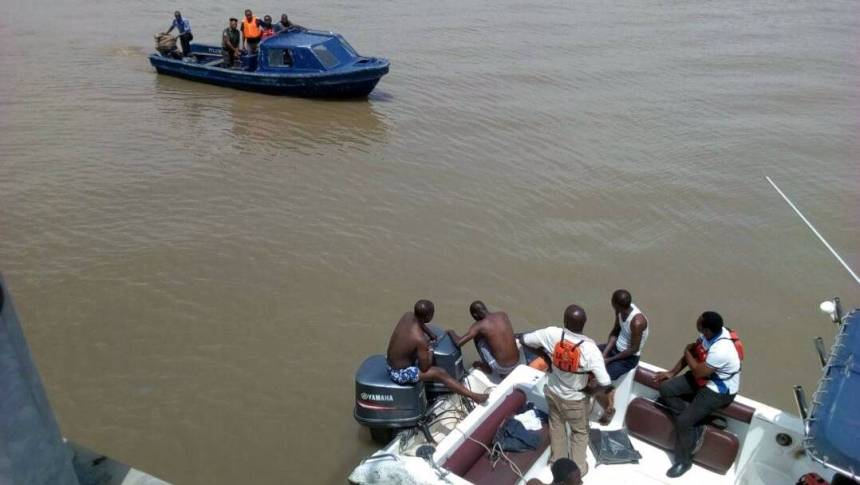
Several persons have so far been missing after a wooden boat carrying more than 70 mourners and over 30 motorcycles overturned while crossing the River Katsina-Ala in Buruku Local Government Area of Benue State.
The incident reportedly occurred around 11am on Saturday, October 3, 2026, at the Buruku River crossing point.
The passengers, most of whom were said to be from Mbayon in Gboko Local Government Area, were returning after attending the burial of a relative on the opposite side of the river when the boat capsized.
Several occupants were reportedly rescued from the water, while search and rescue personnel continued efforts to locate those who remained unaccounted for as of Saturday afternoon.
Reports said the wooden boat was severely overloaded with passengers and motorcycles before its engine reportedly developed a fault during the journey.
“The boat was overloaded with many people and over 30 motorcycles, and they were coming from the Logo LGA side of the River at about 11am when the incident happened.
“Many persons have been rescued, but as we speak, I cannot tell you the actual number of persons that have not been seen or rescued from the river because the search is still ongoing. But many persons have not been seen as we speak,” an eyewitness said.
The Chairman of Buruku Local Government Area, Raymond Zege, confirmed the mishap, explaining that the passengers were mourners from Gboko who had travelled across the river for a burial ceremony.
Zege said the boat was carrying more than 70 people when its engine stopped working in the middle of the return trip, causing panic among those on board.
“The victims were mourners from Gboko who went for a burial on the other side of the river.
“They boarded a boat which was overloaded with over 70 persons. In the middle of the journey the engine of the boat failed, and they became panicky.
“And they also ran into a heavy wave, and the boat capsized before the boat that was sent to rescue them got to them,” he said.
The council chairman said authorities had yet to determine the precise number of missing persons, although more than 60 passengers had reportedly been rescued.
“At the time we speak, we do not know the number of persons missing. So far we have not seen about six persons, but we have rescued over 60. Search and rescue operations are ongoing,” he said.
Zege urged passengers using the waterway to observe maritime safety guidelines, particularly by wearing life jackets during crossings.
He disclosed that the local government had supplied life jackets for people using the route, but said enforcement had sometimes been difficult because some commuters declined to use the safety equipment.
“People can be very difficult. There is a law, and we have provided life jackets for every commuter crossing that route. When they come and the maritime workers try to enforce the law, some commuters complain that they have health issues or that they do not want to share life jackets used by other people.
“We have provided the jackets, and the state government is also supporting efforts to ensure that maritime safety regulations are enforced,” he said.
The chairman further said maritime officials regularly conduct enforcement operations and urged commuters to cooperate with them.
“Sometimes the maritime officials come for enforcement, including at night. People should cooperate with them because the safety measures are meant to protect lives,” he said.
Meanwhile, the Benue State Commissioner for Marine and Blue Economy, Denis Iyaghigba, also confirmed the incident in a statement issued on Saturday.
Iyaghigba said his ministry had received preliminary information about the accident and appealed to relatives of the passengers and members of the public to remain calm while rescue teams worked to establish the number of people involved.
“I have received preliminary reports of an unfortunate boat mishap at the Buruku crossing point this morning, Saturday, 3rd October, 2026,” Iyaghigba said.
“I wish to assure members of the public, particularly families of those who may have been aboard the boat, to remain calm and await verified information from the appropriate authorities. No effort will be spared to ensure their safety.”
The commissioner said he had instructed boat operators and their union downstream to join the ongoing rescue operation.
“I have directed the boat operators and their union downstream to mobilise and assist in the ongoing search and rescue operation,” he said.
He assured that “further details will be communicated as the rescue operation progresses.”
As of the time of filing this report, rescue operations were still underway, with authorities yet to provide a final account of the total number of people aboard the boat or the confirmed number of those still missing.


