
Personality in Focus
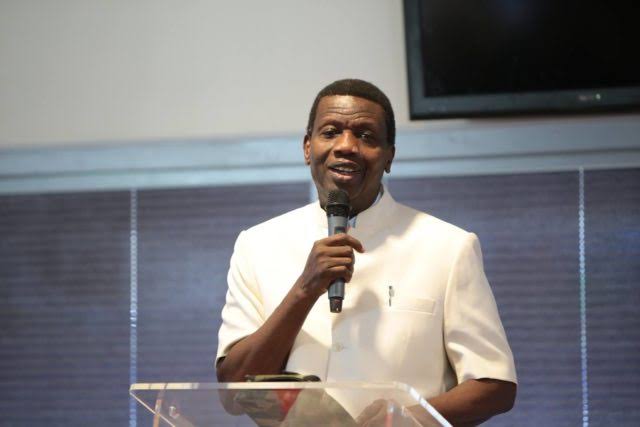
Nigeria: A Country of Many Nations: A Text Delivered by AfDB President, Akinwumi Adesina on Pastor Adeboye’s 80th Birthday

- /home/rhoncare/pointblank.ng/wp-content/plugins/mvp-social-buttons/mvp-social-buttons.php on line 27
https://pointblank.ng/wp-content/uploads/2020/01/Adeboye.jpeg&description=Nigeria: A Country of Many Nations: A Text Delivered by AfDB President, Akinwumi Adesina on Pastor Adeboye’s 80th Birthday', 'pinterestShare', 'width=750,height=350'); return false;" title="Pin This Post">
- Share
- Tweet /home/rhoncare/pointblank.ng/wp-content/plugins/mvp-social-buttons/mvp-social-buttons.php on line 69
https://pointblank.ng/wp-content/uploads/2020/01/Adeboye.jpeg&description=Nigeria: A Country of Many Nations: A Text Delivered by AfDB President, Akinwumi Adesina on Pastor Adeboye’s 80th Birthday', 'pinterestShare', 'width=750,height=350'); return false;" title="Pin This Post">
Nigeria, A Country of Many Nations:
A Quest for National Integration
Lecture Delivered by Dr. Akinwumi A. Adesina
President, African Development Bank
For the 80th Birthday Celebration of Pastor E.A. Adeboye ,
General Overseer of the Redeemed Christian Church of God
It is such a great honour to be asked to deliver the 80th birthday lecture for Pastor Enoch Adejare Adeboye, the General Overseer of the Redeemed Christian Church of God. I wish to start by congratulating you Daddy G.O on your 80th birthday today. The joy of today is shared by millions all around the world, starting with your sweetheart, Mummy G.O. Congratulations Ma.
Daddy G.O’s life is like the morning sun, shinning ever brighter till the full light of day (Proverbs 4:18, NIV).
Your life is a continuing journey of the grace, faithfulness of God, and His special divine hands on you to be a shepherd and source of blessing to humanity.
I know everyone calls you Daddy G.O. I know that G.O. means General Overseer. But I wonder how many have ever thought what else the G.O means? For me, G.O. also means “Godly Oversight” – chosen to provide Godly Oversight.
Daddy G.O. I have watched several of your programs. I have watched you pray. You provide Godly Oversight.
I have watched you minister. You pray for nations. You pray for leaders. You pray for people of all faiths and religions. You pray for people of all cultures. Even today, as you are all seated to celebrate with Daddy G.O. you are all from different nations, different religions, different cultures, different States of Nigeria.
From Christians to Muslims, you have all gathered to celebrate 80 years of the life of a man whose heart is for humanity and the God he serves. A man who like the good Samaritan in the Bible, does not discriminate, for he knows that God is for all, and works in all.
I love diversity.
That is why I am delighted to have been asked to speak to you today about “Nigeria, a Country of Many Nations: A Quest for National Integration”.
I speak to you today as a Nigerian – a product of a nation with rich diversity. I love Nigeria. I love our diversity. Nigeria is not a mistake.
It is how we have been managing it that has been a mistake.
As I have quite often said, I will live as a Nigerian, die as a Nigerian, and on the resurrection morning, if it were possible at all, I would ask God for permission to rise as a Nigerian, with the green-white-green flag in my hand!
When God created the heavens and the earth, he had diversity in mind. The plants are all different from each other, yet each has a unique role to play in the rich biodiversity we enjoy. The oceans are filled with all manner of fish and sea animals, sea weeds, while the coral reefs reflect the splendour of richness that come from diversity. How would you feel if you went to a botanical garden and were to be told that all the plants are the same?
Diversity is more than colour and beauty, diversity is about uniqueness of individuals, cultures, peoples and societies.
Unfortunately, human beings do not appreciate diversity. Rather than see diversity as strength, it is seen as weakness. Yet, it is in the tapestry of diverse resources, culture, identities, religions, and peoples, that we see God’s splendour of creation.
Nigeria, our nation, is blessed with incredibly rich diversity: of people, of cultures, of religions, of mineral resources, oil, and gas, an amazingly rich biodiversity, that should make us the envy of the world. We are blessed with abundantly diverse agro-ecologies, that should also make us a land of bountiful harvests with the capacity to feed Africa.
We are a religious nation, so we should understand that God loves diversity. Therefore, our diversity is not our problem. Diversity is our strength. But when mismanaged, diversity becomes divergence. Rather than unite, we become splintered, with each entity believing that, somehow, it is better without the other.
We must manage diversity for collective good.
Take Singapore as a case in point.
It is a very diverse, multi-ethnic, multi-cultural, multi-religious society, made up of Chinese, Malay, Indian and Eurasians. Singapore is a nation of diverse people and national origins.
Yet, this nation was able to forge a unified identity that has powered its extraordinary economic progress and development.
Think of it: Chinese represent 74%; Malay 13.4%; Indian, 9.0%; and others, 3.2%.
Think of their religious diversity: Buddhism ((33%); Taoism and folk religion (10%); Christianity (18%); Catholicism (6.7%); Protestants and non-Catholics (12%); Not religious (18.5%); Muslims (14%); and Hinduism (5%).
There is religious harmony, not religious supremacy, or polarization.
The people see themselves first as Singaporeans!
At its independence in 1965, Singapore’s per capita income was just $517 compared to $1,400 for Nigeria at its independence in 1960.
Today, the story is different. The per capita income of Singapore is now $60,000. Today, the per capita income for Nigeria is $2,250.
This highly diverse nation now ranks 4th in the world in terms of GDP per capita, with massive wealth and prosperity for its people.
The evidence is clear.
Singapore managed its diversity to create wealth — shared wealth.
By better managing its diversity, Singapore has been able to forge an incredible economic growth, which benefits all in the country.
They have 100% access to electricity and 98% access to water and sanitation. Their schools rank among the best in the world.
Today, Singapore is a AAA-rated economy by the global credit rating agencies.
But Singapore did not have it easy either.
They faced challenges, just like we are facing in Nigeria today. They had very divisive ethnic and race riots in the 1960s that almost pulled the nation apart. But they overcame this by getting some things right.
They focused on fusion of national purpose and identity.
They put in place cultural policies that ensured no one ethnic group or the other dominates or assimilates others, but rather, promotes multiculturalism.
They put in place a constitution that reinforced national fusion. Article 12 of the constitution forbids discrimination based on race, descent or place of birth. It reads, “We the citizens of Singapore, pledge ourselves as one united people, regardless of race, language and religion, to build a democratic society based on justice and equality”.
It goes on to say, “there shall be no discrimination against citizens of Singapore on the grounds only of religion, race, descent or place of birth in any law or in the appointment to any office or employment under a public authority or in the administration of any law relating to the acquisition, holding or disposition of property or the establishing or carrying on of any trade, business, profession, vocation or employment”.
What is the lesson here?
The Singaporean society is based on meritocracy, not aristocracy or ethnocracy or religiocracy.
Any society where meritocracy is subjugated to aristocracy, ethnocracy or religiocracy eventually tends towards mediocrity.
Nigeria must learn from this experience and forge a new way of engaging among its diverse ethnic groups and religions.
Nigeria must start managing its diversity for prosperity.
We must drive for national cohesion, not ethnic nationalities.
We must address the fundamental reasons for agitations, by listening, understanding, removing prejudices, and allowing for open, national dialogues, without preconditions, but with one goal: build one cohesive, united, fair, just and equitable nation for all, not for a few or for any section of the nation or religion.
A nation, unified by a sense of common wealth, not a collage of ethnic nationalism. A nation driven my meritocracy, not ethnocracy, religiocracy or aristocracy.
One of the things that Singapore did well was to have four national languages: English, Malay, Mandarin and Tamil. Nigeria needs to put in place the compulsory teaching of its major languages in schools, from primary through universities, to ensure multilingualism, cross-cultural understanding, and to build a strong socio-cultural capital that unifies.
The National Youth Service Corps (NYSC) was a very good idea: it allowed graduates from tertiary institutions to have one year of national service, largely (ideally) outside of their places of origin.
The real test, however, of “national service” is that it often revealed the lack of inclusiveness. After one year of service the NYSC graduates are often not able to gain employment in governments where they served, simply because they are not indigenes of those States.
That in itself, is an irony!
The young graduates are often strangers in their own country. A country they pledged to serve. Opportunity is denied just because they were not born in those states! Even if they were born in those states, they are told to return to the States of their origin.
Yet, their origin is Nigeria, not their States!
In almost all of Nigeria, regardless of how long you have resided in any place, you cannot run for political offices in those states or locations, just because you were not born there. State governments, therefore, largely reflect nativism not residency, which further sends a message to non-indigenes that they do not belong.
Over time, this has created greater insularism, splintering, a lack of inclusiveness, the promotion of ethnic and religious chauvinism, instead of promoting national cohesion, trust and inclusiveness.
This needs to change.
Governments must be open to representation based on nationality not on ethnicity, to build a society of mutual trust, where diversity is well managed.
Unless someone can live in any part of the nation, work within the laws and not be discriminated against, based on religion, race or culture, or place of birth, they will always be strangers in the nation.
I love the Nigerian National Anthem. My favourite stanza is the one that says, “to build a nation, where peace and justice shall reign”.
I get emotional whenever I sing it. I remember when I was a Federal Minister, each time we gathered at the Federal Executive Council and had to sing, or at any other function strong emotions would well up within me, for a nation I love, serve, and will always serve, selflessly.
I know that we can be better than we are. We have everything and every reason to be.
For Nigeria to be all that it can be, the youth of Nigeria must be all they can be.
The future of Nigeria depends on what it does today with its dynamic youth population. This demographic advantage must be turned into a first rate and well-trained work force, for Nigeria, for the region and for the world.
But close to 40% of Nigeria’s youth are unemployed. Lacking skills, economic opportunities, they are discouraged, angry and restless, as they look at a future that does not give them hope.
We should prioritize investments in the youth: in upskilling them for the jobs of the future, not the jobs of the past; by moving away from so called youth empowerment to youth investment; to opening up the social and political space to the youth to air their views and become a positive force for national development; and for ensuring that that we create youth-based wealth.
From the East to the West, from the North to the South, there must be a sea change in economic, financial, and business opportunities for young Nigerians.
The old must give way to the new. And there must be a corresponding generational transfer of power and wealth to the youth. The popular folk talk should no longer be “the young shall grow”, it should, rather, be: “the young have arrived”.
The young shoots are springing up in Nigeria. Today, Nigeria’s youth are leading in the FinTech Industry. Two companies – PayPal Interswitch are both valued at $1 billion. A third company, Flutterwave more than tripled its valuation in less than a year to over $3 billion What does this tell us? The future is here and young entrepreneurs are central to it.
The African Development Bank approved $170 million in December of last year for Nigeria to support its program to expand digital and creative industries, by unleashing the incredible entrepreneurship of Nigeria’s youth.
The African Development Bank is also exploring the establishment of Youth Entrepreneurship Investment Banks — financial institutions for young people, run by first-rate young bankers and financial experts, to drive youth-wealth creation.
Nigerians deserve wealth, not poverty.
There cannot and should not be a Nigeria for the rich, and another Nigeria for the poor.
We must build one Nigeria, where every citizen has the right to a decent life.
We must build a better nation.
We must start building again, not splintering again.
We must re-build trust, equity, and social justice, to propel strong cohesiveness as a nation.
The tides are high, I know, and our boat rocks from time to time. Yet, I have hope. Hope for a better Nigeria … a renewed nation. Hope for a nation helped and healed by God. A nation, where the sacrifices of Nigerians past and present shall not be in vain.
I pray and long for a better Nigeria.
For a nation, built not on the division of its past, or the foundations of ethnicity, but on a new foundation, the foundation of equity, fairness, justice and unity, one Nigerian to the other.
For a new Nigeria, where one from the north shall be at home in the east; where one from the east shall break bread with one in the north; one where the one in the west shall eat from the same plate with one in the north; and wash hands in the same basin as one in the east.
They shall be one.
They shall not raise alarms against their neighbors, for we shall once again be renewed with a spirit of nationhood.
Our nation, buffeted on every side, flowing with the blood of the innocent, shall one day arise. The lion will lie with the lamb.
Our youth will once again rejoice in the hope of their future. A better future built on better days where governments work for them, not against them; when they shall stay in their lands, and none shall make them afraid; when they shall once again be the best they can be in the nation of their birth.
A nation where dreams are realized.
The youth — healthy, with decent incomes, and powered by policies to unleash their potential — shall be the strength of that nation.
They shall unite and work for a better future, their own future, not of those that have gone before them, nor of those who use them, instead of building them.
So today, I ask that you arise and build the nation we desire and deserve. A nation built by all, shared by all, prospering for all.
I see right here today, leaders of such a nation.
Do not learn the ways of the past. Renew your minds and work for the better future, your future, for a new Nigeria.
Correct the mistakes of our past.
Breakdown barriers of suspicion! Pull down walls that have divided us and caused us to war against each other. Pull down walls of fear and instead embrace and accept one another.
In the process, we will build together.
We will build a new Nigeria, where one will be respected and accepted, not according to the village of one’s birth, the state of one’s nativity, or one’s religion, but by the dignity within … the simple dignity of being a Nigerian.
The sufferings of the present cannot and should not dampen our hope in the future.
So today, turn to your right and whosoever you see say to them “I am Nigerian”.
Far from the title of this lecture – “A country of many nations”, we are not a not a country of many nations. We are a nation of diverse peoples. But one nation.
Yes, you are “Nigerian”!
Wherever you find yourself, in your own little sphere, let the change begin with you!
Build bridges that connect, not walls that separate!
Together, in a better and just society, we will thrive.
And thrive we must, and thrive we will, as one united Nigeria.
To thrive, the constituent States in Nigeria must be more financially autonomous through greater fiscal prudence. If States focus on unlocking the huge resources they have, based on areas of comparative advantage, they will rapidly expand wealth for their people. With their increased wealth they will be able to access capital markets to secure long-term financing to fast-track their growth and development.
States that adopt this strategy would have less of a need for monthly trips to Abuja for grants. Instead, part of their federal revenue allocations can be saved as internal ‘state sovereign wealth funds’. This can then be used as guarantees against borrowings from capital markets. They would be free from needing to exclusively rely on the federal government.
As a way out of the economic quagmire, much has been said about the need for restructuring. I know the discussions are often emotive. Restructuring should not be driven by political expediency, but by economic and financial viability – the necessary and sufficient conditions for political viability.
Surgeries are tough. They are better done well, the first time.
The resources found in each state or state groupings should belong to them. The constituent entities should pay federal taxes or royalties for those resources. The achievement of economically viable entities and the viability of the national entity requires constitutional changes to devolve more economic and fiscal powers to the states or regions.
The stronger the states, or regions, the stronger the federated units. In the process, our union would be renewed. Our union would be stronger. Our union would be equitable. Our union would be fully participatory.
We must be audacious!
We must change the relational mindset between the states and Abuja: the fulcrum would be the states, while the center would provide support to them, not lord over them. With good governance, better accountability systems, and a zero tolerance for corruption, more economically stronger constituent states would emerge!
We would unleash massive wealth across the states.
It would be a commonwealth. Wealth for all, not wealth for a few.
A New Nigeria would arise!
We will need all of us — not some of us.
From the flickering longings of forgotten rural villages, to our boisterous and dynamic urban areas;
From the sparks of desire in the eyes of our children, to the heartbeat of hope of our youth;
From the yearnings of our women and mothers, to the pride in the heart of fathers for a better tomorrow, and the desires of the old that our end would be better than our past;
From the hardworking street vendors and small businesses to the largest business conglomerates — we must create a movement of hope.
Hope for a better Nigeria!
Not a Muslim Nigeria.
Not a Christian Nigeria.
Not Eastern Nigeria, South-South Nigeria, Western Nigeria, or Northern Nigeria.
But one Nigeria – a New Nigeria, created by a renewed commitment to use our diversity as our strength.
A New Nigeria, powered by torrents of hope, trust, equity, fairness, and wealth at every level, in every state … by all and for all.
We have the capacity to do this and make it happen.
We must rise above mistrust and divisions and make history.
Not the history that is written about us, about Northern Nigeria, Southern Nigeria, Eastern Nigeria, and Western Nigeria;
Not the history of divisive political parties; but a new history that we commit to write for ourselves – the history of a New Nigeria.
We are the history makers and we stand now at a pivotal moment for Nigeria’s future.
So, let us make history for a New Nigeria!
For the darkness of today will soon fade. It will not be long before our star shines brighter as a nation.
A nation where majority prosper, not just a privileged few.
A nation that provides real opportunities for the youth.
A nation where equality of opportunities for women is a reality, not a dream.
A nation where hope is ignited, and dreams are realized.
A nation known for wealth, not poverty.
A nation set on a hill whose light will never be hidden.
A New Nigeria, and better integrated Nigeria, that we all are proud to call home.
So, help us God!
Thank you very much.
God bless you all


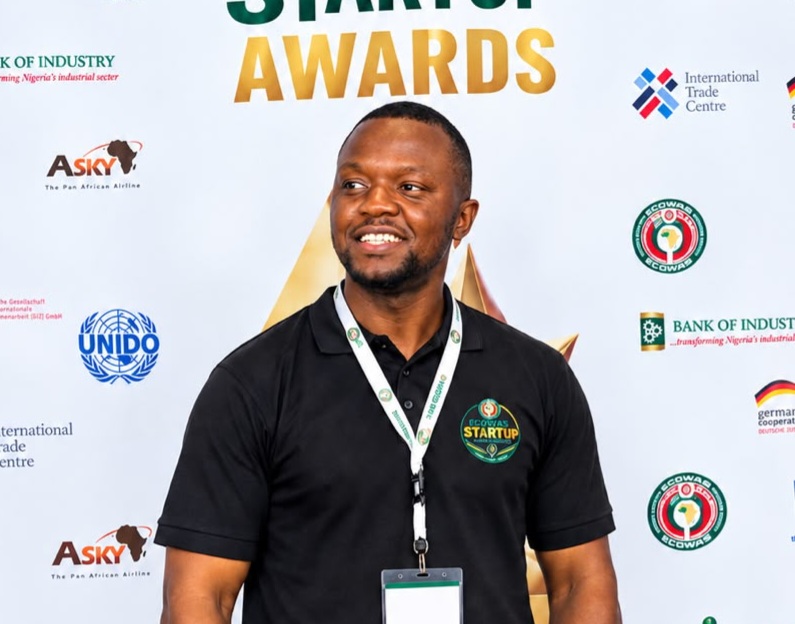
Kardinal Business Travel, a travel technology company with African and global focus, was among 60 startups that pitched at the 2nd edition of the Economic Community of West African States (ECOWAS) Startup Awards, held at the ECOWAS Commission headquarters in Abuja recently.
The company’s Chief Executive Officer and Founder, Cornelius Ugwunwa, presented the company’s case at the three-day event. The awards was part of an ECOWAS initiative to help West African businesses and startups scale through digital transformation, regional integration and sustainable value chains, with the aim of widening access to global markets.
Temitope Kareem, founder of Nigerian healthtech firm HubPharm Africa, won the top prize of $30,000. Senegal’s Gaynako took home $20,000 as first runner-up, while Steve Bah Blesson’s MyOpinion from Côte d’Ivoire won $15,000 as second runner-up.
Speaking during his pitch, Ugwunwa said Africa needs a new system for business travel. He cited a market with $75 billion in inbound travel spending and a strong business travel component in 2025, while travel and tourism as a whole contributed $228 billion to the regional economy.
“When a company sends its employees across Africa for a business engagement, we at Kardinal noticed the challenges of countless inboxes, spreadsheets and emails, mostly after the trip.
Businesses keep asking: How much did we spend? Who did we spend it on? Was it above or below budget? Can we reconcile everything on one platform?” he said.
He described African business travel as a $30 billion market that is largely fragmented and overly dependent on manual processes.
According to him, many businesses lose over $1 billion to manual travel processing and cannot track spending in real time. “That is why Kardinal exists: to solve this entrenched problem,” he said.
Ugwunwa said GoKardinal is an artificial intelligence-driven platform built to track expenses for African businesses. It brings the entire business travel lifecycle (planning, budgeting, booking, financing and expense tracking) onto one platform, in real time.
“GoKardinal is not another travel platform. It is an infrastructure for business travel, powered by AI for expense management,” he said, adding that the idea is to help businesses move without delay from one location to another to do their best work, expand and make profit.
On the company’s performance, he said the platform serves over 51 businesses in Nigeria and across Africa, with estimated weekly profit of $10,000 and gross merchandise value of over $1 million, growing at 65 per cent annually. he added.
He noted that about 80 per cent of African businesses still run their business travel manually, without any form of expense tracking, in a market worth over $30 billion annually. “African business travel is not just travelling for the fun of it.
It is an ecosystem with the potential to generate over $70 billion when digitalised,” Ugwunwa said.
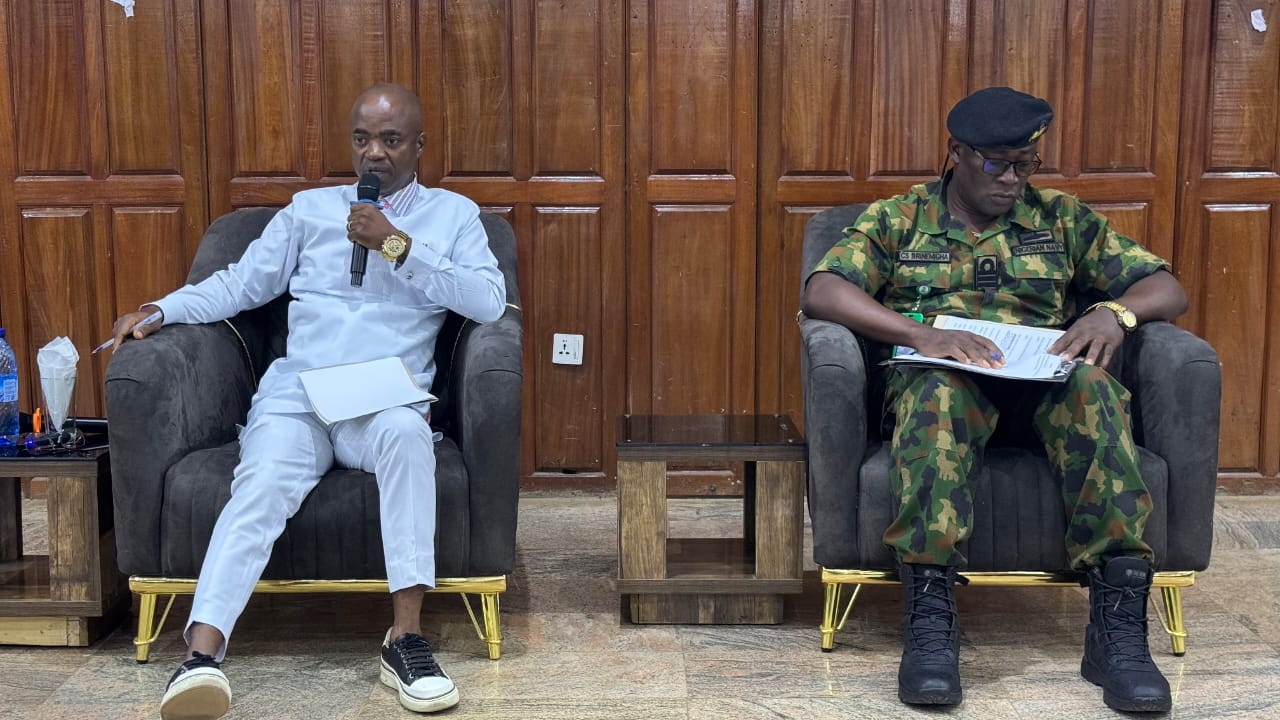
The President of Security Resources & Risk Management Academy, Lagos, Mr. Matthew Ibadin, has charged officers of the Nigerian Armed Forces and allied nations to practice emotional discipline, warning that unmanaged anger remains a greater threat to a Staff Officer than the enemy.
Ibadin, who is also a doctoral researcher at the Nigerian Defence Academy (NDA) and University of Abuja, stated this on Monday while delivering a lecture on “Emotional Discipline Under Pressure and Anger Management for Staff Officers” to participants of Senior Course 48 at the Armed Forces Command and Staff College (AFCSC), Jaji, Kaduna.
The lecture was attended by 436 officers comprising the Nigerian Army, Nigerian Navy, Nigerian Air Force and officers from eight friendly nations.
Describing anger as “a temporary madness that leaves a permanent record,” Ibadin warned officers that “the line between a respected officer and an inmate is thinner than you can imagine.”
“Anger may enter the room, but must never take command,” he said.
The Lion Principle
Illustrating his point with the parable of the lions, Ibadin noted that while both male and female lions roar, the female roars only when necessary and lives 15-18 years compared to 10-12 years for the male.
“She lives longer not because she is weaker, but because she is more disciplined. Many of us have become male lions in uniform – fighting juniors, spouses, traffic, minor disagreements even when no real threat exists. That constant agitation slowly destroys what you have built,” he said.
He therefore charged officers to “be a female lion in strategy and a male lion only when tactically necessary.”
Five Battlefields Where Anger Destroys
Ibadin identified five battlefields where undisciplined anger destroys officers: Health, Home Front, Office and Command, Career and Prison, and Relationships.
On health, he described anger as a silent killer that triggers hypertension, stroke and cardiac arrest, noting that many officers survive the war front but do not survive peacetime.
“At Jaji, your rank commands respect, but at home your rank is irrelevant. If you win at the office and lose at home, you have lost. An officer whose home is under emotional fire cannot think clearly at the command post,” he cautioned.
He warned that signatures appended in anger to operational orders, procurement papers and personnel assessments could lead to Boards of Inquiry, career ruin and mission failure.
He added that 70 percent of inmates in correctional centres for murder never planned to kill, but acted in a moment of unmanaged anger.
Practical Tools
Ibadin introduced practical tools including the 90-Second Rule and the S.T.O.P Protocol – Stop, Take a Breath (4-4-4), Observe, and Proceed with Discipline – for decisions under pressure.
He adopted Aristotle’s five tests for disciplining anger: Right Person, Right Reason, Right Time, Right Degree, and Right Manner.
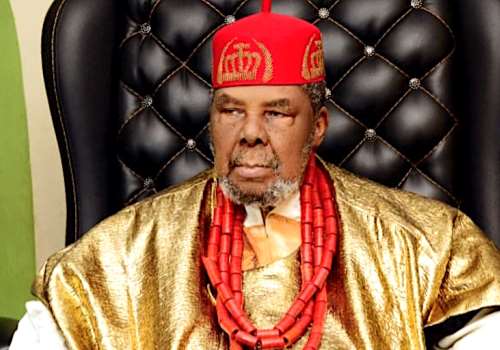
Veteran Nollywood actor, Pete Edochie has declared Chinua Achebe’s 1958 novel ‘Things Fall Apart’ as the greatest African book of all-time.
Speaking in a recent interview with TV3, Edochie explained that ‘Things Fall Apart’ is the greatest African book ever written because it tells the African story.
He stated that the book wouldn’t have been as popular as it is if it were telling the story of the colonisers.
He pointed out that many other African authors have also made efforts in telling African stories since ‘Things Fall Apart’ but none is as “strong” as it.
“The reason why ‘Things Fall Apart’ is the greatest book ever written on the African continent is because it is telling our own story.
“If it had been telling the story of the White man, it won’t be that popular. Many others have made efforts since then but not as strong as ‘Things Fall Apart’,” he said.
He urged African writers and creatives to focus on telling African stories, stressing that it would be their unique strength on the global stage.
The movie star, however, lamented that Africans were allowing their talents to be submerged by embracing foreign influences.
“We Africans permitted our talents to be submerged by overseas influences. I remember once upon a time I was being called Elvis Presley and John Wayne.
“I actually enjoyed answering those names but at some point I had to discard them and pick a name that’s culturally relevant to me. Then I went back to the root and started answering Uwadiegwu,” he added.
Source: DailyPost


