
Opinion
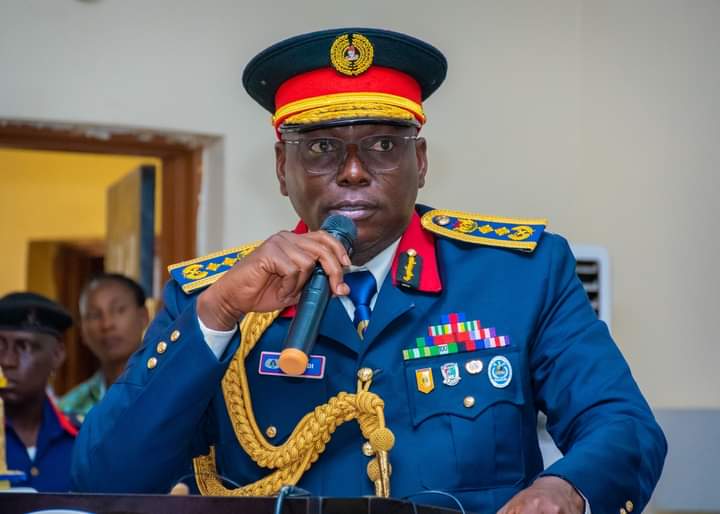
Why NSCDC Must Not Be Scrapped by DCC Olusola Odumosu

- /home/rhoncare/pointblank.ng/wp-content/plugins/mvp-social-buttons/mvp-social-buttons.php on line 27
https://pointblank.ng/wp-content/uploads/2022/03/IMG-20220303-WA0047.jpg&description=Why NSCDC Must Not Be Scrapped by DCC Olusola Odumosu', 'pinterestShare', 'width=750,height=350'); return false;" title="Pin This Post">
- Share
- Tweet /home/rhoncare/pointblank.ng/wp-content/plugins/mvp-social-buttons/mvp-social-buttons.php on line 69
https://pointblank.ng/wp-content/uploads/2022/03/IMG-20220303-WA0047.jpg&description=Why NSCDC Must Not Be Scrapped by DCC Olusola Odumosu', 'pinterestShare', 'width=750,height=350'); return false;" title="Pin This Post">
Contrary to the bill in the Federal House of Representatives praying that the National Security and Civil Defence Corps (NSCDC) should be scrapped, the Director of Public Affairs, NSCDC, DCC Olusola Odumosu has boldly affirmed the unique functions that the paramilitary agency plays in national development. These roles are clearly distinct from those of Nigeria Police, Nigeria Immigration Service, Nigeria Correctional Service among others. They are, more importantly, pivotal to the security and prosperity of the country. Thus, NSCDC should neither be scrapped nor joined to another security agency.
Definitively speaking, DCC Olusola Odumosu said: ‘Nigeria Security and Civil Defence Corps performs very unique functions different from the Nigeria Police in clear terms’ in reaction to the bill which called for NSCDC to be merged with the Nigeria Police.
He espoused further, ‘We are the lead agency in the protection of critical national assets and infrastructure. Secondly, NSCDC regulates, monitor, supervise and license the Private guard companies as approved by the Honorable Minister of Interior.’
DCC Odumosu added: ‘The Corps is a front agency in disaster management, rescue, rehabilitation and reintegration of natural or manmade disasters among other ad hoc assignments such as the Agro Rangers which was established to protect all Agro allied investments and to avert farmers/herders clashes and settle disputes amongst them amicably through the use of alternative dispute resolution’ during a virtual Twitter chat monitored by Media Team from the National Association of Online Security News Publishers, NAOSNP yesterday.
‘The NSCDC is a grassroot organization with offices in 774 Local Government Areas of the country and the youth forms the bulk of entire staff strength’, he told the global audience during the special edition of Reminisense the TweetChat series hosted by the Editor of Trek Africa Newspaper, Abayomi Oyelami. The Twitter chat regularly holds every Tuesday.
On how youths can join the excellent Corps, the Director of Public Affairs said that volunteerism is no longer allowed. ‘The NSCDC ACT 2003 which was accented to by Former President Olusegun Obasanjo thereby turning the Corps into a full fledged paramilitary organization ended the era of volunteerism. Any Nigerian youth willing to join the Corps should apply anytime the recruitment portal is opened again and follow the necessary guidelines.’
‘Besides, our amiable Commandant General Dr Ahmed Abubakar Audi, mni, is a lover of youth. He’s just concluding the 2019 recruitment exercise to pave way for more youths to come into the Corps through a transparent precess.’
Applauding the grand achievements of Commandant-General Dr. Abubakar Ahmed Audi, mni who was appointed by President Muhammadu Buhari GCFR on World Civil Defence Day 2021, DCC Odumosu recounted: ‘Between year 2021 when he came on board and now, the Corps has made several arrests and prosecutions while a lot of convictions have been recorded especially in our renewed onslaught on vandals, oil thieves etc to stamp out nefarious activities of criminal elements involved.’
‘In less than a year, the Private Guard Company Department of the Corps has renewed 752 licences, sealed 81 erring companies, trained about 4,653 guards and generated about N587,923,000.00 to the coffers of Government’, he added.
On staff welfare, Odumosu added: ‘Under one year Dr Ahmed Abubakar Audi has rejiged, revamp, rejuvenate, restructure and reposition the NSCDC by boosting the morale of personnel through a robust staff welfare scheme. He sanitized the promotion process and dismantled all road blocks by ensuring that officers and men stagnated for many years are promoted.’
‘Dr Audi ensured payment of backlog of Group Life Insurance benefits acruable since 2013 for personnel who sustained different degrees of accident in the cause of their job and death benefits for families of dead officers and men.’
‘Only yesterday, the CG handed over keys of two bedroom houses of the NSCDC Cooperative society to officers and men of the Corps and laid the foundation for another phase of 3 bedroom houses. The achievements are too numerous to mention’, the NSCDC Director of Public Affairs concluded the special edition of Reminisense the TweetChat series which held in commemoration of World Civil Defence Day 2022.



By Tolulope A. Adegoke
“A truce can be signed in an afternoon; peace must be lived for a lifetime. Between the silence of guns and the awakening of memory lies the only ground on which nations may learn to stand together—not because they have forgotten, but because they have finally chosen to remember honestly.” – Tolulope A. Adegoke, PhD
Introduction: The Gap Between Two Kinds of “Ending”
On the stage of contemporary international politics, one recurring phenomenon deserves deep reflection: conflicting parties frequently announce “ceasefires,” “truces,” or “peace agreements,” yet lasting peace often remains elusive. This gap between “ending” and “peace” constitutes one of the most profound political paradoxes of our time. A truce is the silence of guns, while truth is the awakening of memory. The former can be achieved by a single declaration within hours; the latter requires years, even generations, of honest reckoning. The choices contemporary leaders make in navigating this paradox not only determine whether a conflict truly ends, but also shape whether future generations move toward reconciliation or slide back into a new cycle of violence.
This essay seeks to examine, from an unbiased perspective, the tension between “truce” and “truth” in contemporary world political leadership, to analyze its structural dilemmas, and to explore a way forward that does not inflict further harm.
I. The Nature of Truce: From “Pause” to “Transaction”
To understand the limitations of contemporary truces, one must first clarify their legal and political character. In international diplomatic practice, there is an essential distinction between a “joint statement” and a “peace agreement.” A joint statement typically expresses a common position or intention; its content is broad and flexible, without enforcement mechanisms or punitive provisions. A peace agreement, by contrast, is a formally binding document that stipulates clear rights and obligations and includes verification and implementation mechanisms. The border ceasefire document signed by Thailand and Cambodia in Malaysia in 2025 was a “joint statement” rather than a “peace agreement”—it was a “first step,” not the end of the conflict.
This distinction is crucial because it reveals a core feature of contemporary truces: a truce is often a “transaction,” not a “resolution.” Take the 2025 ceasefire in Gaza as an example. The core of the agreement was “hostages for prisoners” and the withdrawal of Israeli forces to a line that had not yet been clearly delineated. The ceasefire took effect on paper, but the postwar governance structure of Gaza, the armed status of Hamas, and the prospect of Palestinian statehood—these fundamental questions “remained to be decided.” As analysts have pointed out, this was more like “yet another temporary pause in a war that began in 1948.”
The Trump administration’s diplomatic maneuvers in the Middle East and on Ukraine pushed this “transactional truce” to its extreme. Its pattern can be summarized as follows: escalate threats to an “apocalyptic” level, force the other side to negotiate under pressure, and then accept a narrow exchange at the last moment—safe passage through the Strait of Hormuz for a two-week ceasefire, mutual non-attack on energy infrastructure for verbal assurances. The efficiency of this approach is real, but its costs are equally real: when every crisis is framed as a moment of “civilizational survival,” credibility gradually erodes. The next threat no longer sounds like a warning, but rather like a rerun.
II. The Absence of Truth: Why Truces Fail to Endure
If a truce is merely a pause in violence, why is it so difficult to transform into lasting peace? The answer lies in an insight that has been repeatedly verified yet repeatedly ignored: peace does not reside in documents; it resides in people.
In statements before the Security Council, the United Nations Secretary-General has pointed out clearly that conflicting parties can agree to cease hostilities, can initiate reconstruction processes, and can even form joint governments. But “without including a broad and diverse range of voices in every step of this process—without bringing everyone along—any peace will be short-lived.” Long-accumulated grievances, inequalities, distrust, and social divisions do not automatically disappear when the fighting stops. They can easily reignite, and may worsen if the people and groups yearning for change do not see their needs and visions addressed.
This judgment is supported by empirical research. Studies of transitional justice processes in Uganda, Haiti, and other countries show that formal transitional justice mechanisms established without a foundation of “mutual recognition” often fail to bridge social fractures—partly because their agendas are hijacked by divisive politics, and partly because such “false starts” are in fact more harmful than doing nothing at all. In other words, a truce without preparation for truth may be worse than no truce at all.
The ceasefire experience along the Lebanon-Israel border offers another sobering case. When the ceasefire agreement took effect, the parties held vastly different understandings of its content: Trump claimed the agreement covered Israel and Hezbollah, while Netanyahu insisted that the Lebanon front was not within its scope. This “each side telling its own story” meant that the ceasefire was “flawed from the outset.” Even if the agreement holds, it merely freezes the conflict rather than resolving it.
III. The Tension Between Truth and Justice: A Difficult Balance
If truth is a necessary condition for lasting peace, then the relationship between truth and justice constitutes one of the most intractable problems in contemporary peace-building. Human rights advocates argue that perpetrators of war crimes and serious human rights violations must be held accountable and punished to prevent further violence. Conflict resolution practitioners, meanwhile, worry that condemning perpetrators of violence may reinforce social divisions and make the healing process more difficult.
This tension exists at every stage of conflict, not only after a peace agreement is signed. South Africa’s Truth and Reconciliation Commission provides a widely studied example. The Commission was mandated to investigate human rights violations committed under apartheid and—this was its most controversial aspect—to grant amnesty to perpetrators who fully disclosed their crimes. For many South Africans, this was a high price paid in the name of truth. Critics pointed out that the focus on individual acts of violence obscured the structural evils of the apartheid system, while the government’s lack of willingness to prosecute after amnesty further aggravated perceptions of impunity.
The South African experience reveals a deeper dilemma: truth itself is not neutral. Who defines truth? Whose suffering is recorded, and whose is forgotten? The narrative of reconciliation is often dominated by political elites, while the everyday experiences of ordinary victims may be marginalized. In Kenya, the Truth, Justice and Reconciliation Commission established after the 2007 election violence was itself led by figures accused of involvement in political violence, and its recommendations have largely been ignored by those in power. This failure gave rise to alternative civil society efforts: a widows’ dialogue group led by a Kenyan woman brought together women from different ethnic communities to share their experiences of losing partners in the violence. The husbands of these men had once fought and even killed one another, yet these women, through sustained, safe, and context-sensitive dialogue spaces, slowly rebuilt trust between communities.
This grassroots experience points toward a different politics of truth: not grand-national narratives, but everyday, relational, and slow mutual recognition.
IV. Thin Sympathy: A Realist Way Forward
Faced with the tension between truth and justice, and between truce and lasting peace, what path is feasible? Joanna R. Quinn, in her book Thin Sympathy, proposes an approach that deserves serious consideration.
Quinn’s central argument is this: in divided multi-ethnic societies, most citizens know very little about the suffering of other groups, while politicians deliberately deepen the information and emotional divide to exploit social fractures. Under such conditions, demanding “thick sympathy”—that is, deep emotional resonance and active empathetic engagement—is unrealistic. But “thin sympathy” is possible: it means learning about and acknowledging the experiences of others, without requiring deep emotional investment.
Thin sympathy can be cultivated through various means: unstructured contact at the level of daily life; cross-community cultural diplomacy (including art, exhibitions, educational programs, literature, language teaching, broadcasting, and listening with respect); and the creative use of local and national media. The goal of these practices is not to achieve “reconciliation” or “forgiveness” immediately, but to gradually accumulate a foundation of mutual recognition, so that formal transitional justice mechanisms can operate on more solid social ground.
The core insight of this approach is that the success of formal mechanisms depends on informal, everyday-level preparation. Truth commissions, amnesties, and reparations programs can produce only limited results on their own; if there is no basic mutual understanding among members of society, these mechanisms may be politically manipulated or even prove counterproductive.
V. The Colombian Lesson: The Possibility of an Integrated Path
If South Africa represents one attempt to resolve the tension between truth and justice, Colombia offers a more integrated and long-term example.
Colombia’s conflict involved the government, paramilitary groups, guerrillas, organized crime, and drug trafficking cartels, and it lasted for decades. Its peace process did not begin with the signing of the 2016 Havana Agreement; it can be traced back to the 2005 Justice and Peace Law, which dismantled paramilitary groups through reparations, amnesties, and demobilization. Subsequently, the Santos government pushed forward negotiations with the Revolutionary Armed Forces of Colombia (FARC) and established an integrated system comprising a Special Jurisdiction for Peace, a truth commission, a unit for the search for missing persons, land restitution programs, and a victims’ affairs department.
A notable feature of this system is that it sought to balance local concerns with international legal standards (particularly regarding amnesties), while maintaining “genuine local ownership.” International input and expertise proved valuable, but ultimately the driving force of the process came from within Colombia. Through long-term cooperation—often amid serious disagreements—Colombians developed a shared conception of “transformative reconciliation,” including common positions on key justice issues such as amnesty and reparations.
The Colombian experience shows that an integrated path is possible, but it requires time, patience, and institutionalized commitment. It also shows that the balance between truth and justice is not decided once and for all, but is continuously adjusted through ongoing negotiation and adaptation.
VI. Conflict Sensitivity and “Do No Harm”: A Methodology
In discussions of peace-building, one methodological principle that is often overlooked but crucially important is “conflict sensitivity” and the “do no harm” principle. Conflict sensitivity means recognizing the two-way interaction between aid interventions and the conflict context: any action—however well-intentioned—may inadvertently exacerbate conflict dynamics. The goal is to minimize negative impacts and maximize positive contributions.
This principle applies to all contexts and all stages of conflict, regardless of the level of violence, and to all types of humanitarian, conflict resolution, peace-building, and recovery work. Conflict sensitivity requires three key steps: understanding the context (a nuanced grasp of peace and conflict dynamics), identifying interactions (recognizing how interventions may affect or be affected by the conflict context), and adjusting activities (making changes based on that understanding to avoid exacerbating conflict and to enhance peace opportunities).
The significance of this methodology lies in its transformation of “do no harm” from an abstract principle into actionable practice. In the field of peace-building, this means conducting rigorous conflict impact assessments for every intervention—whether diplomatic mediation, humanitarian assistance, or transitional justice mechanisms. A truth commission whose design ignores local social fractures may inadvertently reinforce divisions; a reparations program perceived as favoring one group may provoke new resentment.
VII. The Way Forward: A Long Journey from Truce to Living Together
What, then, should a path toward lasting peace that does not cause further harm look like?
First, face the nature of truce honestly. A truce is necessary, but it is not peace. Confusing a truce with peace is not merely a conceptual muddle; it is a political danger, because it can obscure fundamental problems and allow conflict to ferment in a deeper silence. The Gaza experience shows that a “ceasefire” can simultaneously be a “diplomatic breakthrough” and a state in which “fighting continues.” Acknowledging this complexity is the first step toward genuine resolution.
Second, place truth at the core of the truce, but understand truth in a realistic way. Truth is not a single, state-led narrative, but a multi-layered, relational process that requires time to cultivate. The lesson of South Africa’s Truth and Reconciliation Commission lies both in its success—bringing systemic violence into public view—and in its limitations—failing to adequately address structural injustice. The experiences of Kenya and Colombia point toward alternative paths: grassroots, community-led, slow mutual recognition.
Third, adopt “thin sympathy” as a feasible starting point. Do not expect people in divided societies to develop deep emotional resonance immediately. Instead, create opportunities for different groups to encounter one another in daily life, and accumulate a foundation of mutual recognition through culture, education, media, and dialogue. This “thin” starting point is precisely the preparation required for “thick” reconciliation.
Fourth, institutionalize conflict sensitivity. Any peace-building intervention—from diplomatic agreements to community projects—should undergo rigorous conflict impact assessment. This is not a demand for perfection, but a demand for honesty: acknowledging that even the most well-intentioned actions can produce unintended negative consequences, and establishing mechanisms to identify, monitor, and adjust for those consequences.
Fifth, embrace a long time horizon. Colombia’s integrated path was the product of decades of evolution, not the outcome of a single summit. South Africa’s truth and reconciliation process, though concentrated in 1996–1998, continues to shape and provoke debate to this day. Lasting peace is the work of a generation, not the achievement of a single administration.
Conclusion
The gap between “truce” and “truth” in contemporary world political leadership cannot be bridged by smarter diplomatic or greater coercive power. It is rooted in a deeper recognition: peace is not the silence of guns, but the willingness of people to decide to live together. That willingness cannot be imposed; it can only be cultivated.
For those who lead amid conflict—whether heads of state, international organization officials, or ordinary citizens in communities—the most important quality may not be negotiating skill or mobilizing capacity, but patience: the patience to listen to uncomfortable truths, the patience to wait for trust to grow slowly, and the patience to accept that peace is not a single arrival but a continuous practice.
The call issued by Pope Leo XIV during his 2026 visit to France may be the best summary of this quality: do not yield to the view that war is “inevitable,” but instead “unceasingly promote dialogue and diplomacy to preserve a peaceful society.” This “unarmed, disarmed peace” is precisely where truce and truth ultimately meet.
Dr. Tolulope A. Adegoke, AMBP-UN, is a globally recognized scholar-practitioner and thought leader at the nexus of security, governance, and strategic leadership. His mission is dedicated to advancing ethical governance, strategic human capital development, resilient nation-building, and global peace. He bridges the worlds of academic rigor and practical application, contributing to leadership discourse at the highest levels of policy and practice. He can be reached via: tolulopeadegoke01@gmail.com, globalstageimpacts@gmail.com
By Henry Ukazu
Dear Destiny Friends,
Last week, we began discussing a grey and near-controversial topic, “pursue passion more than profit”. The topic cannot be exhaustive. Depending on who one is speaking to, different answers and understanding will be received because different things work for different people, and as they say, ‘different strokes for different people’.
It I worthy of note that a family man who is passionate about teaching or working in the non-profit space will be tempted to engage in business to feed his family. But someone with a stable financial background can afford to follow his passion and work as a teacher or in the non-profit space where the pay is not lucrative.
From a practical perspective, I currently work for the New York City Department of Correction as the Legal Coordinator. This is an agency that pays a good salary to the uniformed officers after they work for 51/2 years. In addition to the money they receive, there are countless hours of overtime, which doubles their income depending on how many hours they work. Some call it blood money because they can hardly get the same money in other institutions.
Why am I sharing this information? According to most of the officers; they basically work in the agency because of the money. Most of the officers are of the opinion that they can hardly make such money working in other private or public enterprises. The majority of these officers are not passionate about the job; they are just there to take care of their pressing bills. Some of them even have a timeline: they can work and then resign to start up their business or work in their areas of interest. This goes to tell you that they are trading their passion for profit, which is kind of work if looked at from a particular point of view, but then they are trading their joy and peace.
Let me share another example. In Nigeria, a popular artist, David Adeleke, aka Davido, is one man who followed his passion. This young man came from a wealthy background. He literally left generational wealth to sing. Many thought he was crazy. Davido’s father, billionaire businessman Adedeji Adeleke, initially opposed his music career, but he eventually became fully supportive. Davido’s father went as far as having police shut down shows or arresting people involved when Davido left school in the US to pursue music in Nigeria. Due to his passion for singing, Davido had to fund his early career secretly and rebel against his family’s wishes before breaking through.
Once Davido achieved massive success and proved he could be successful in the industry, his father accepted his path and gave him his blessing. Davido once stated that despite making his own fortune, his billionaire father still surprises him with huge financial gifts, such as wiring him $300,000 after a major performance at the State Farm Arena in Atlanta.
I doubt that Davido would have become this famous if he didn’t follow his passion. Davido can be described as a man whose passion is stronger than power.
I had to share these two perspectives to give clarity on the relativity of passion and profit.
Let’s analyze the concept of passion and profit. If I may ask you, what is passion? What is profit? And what does passion and profit mean to you? According to Cambridge University, passion was defined as a very strong feeling, emotion, or deep enthusiasm for a person, activity, or cause. For example, someone can have a strong emotion or a powerful state of feeling like intense love, excitement, anger, or hatred for something or somebody.
Passion can also be a deep interest or hobby which gives someone a strong liking or enthusiasm for an activity, such as cooking, music, or sports. In romantic cases, it can be a romantic or sexual desire: An intense physical or emotional attraction toward someone. In the spiritual context, it can be understood as the Sufferings of Jesus: Historically and in a religious context, it refers to the suffering and death of Jesus Christ between the Last Supper and the crucifixion (the Passion of Christ).
Profit, on the other hand, is the financial gain that remains when total revenue from an activity or business exceeds the total expenses and costs incurred, according to Investopedia. There are different types of profit:
- Gross Profit: Revenue minus the direct cost of producing goods or services (COGS).
- Operating Profit: Gross profit minus day-to-day operating expenses, excluding interest and taxes.
- Net Profit: The final “bottom line” earnings left after all expenses, taxes, and interest are deducted.
Having given an overview of what passion and profit entail, let’s take a minute to understand the thin line between passion and profit. Just like authority is respected more than power, passion has more influence and is generally respected more than profit. No doubt, it’s good to make a profit in business, but in this context, I am referring to the human resource space or human capacity development
On the surface, people may respect someone for the money one has, but they will value a person who is more passionate about a cause than one who has money but does not believe in the message they are preaching. There’s a saying: human beings are more than money. Just like, it’s better to have a good name than to have money.
People generally follow a leader or someone who they can relate to rather than someone who gives them money but is careless about their feelings. One message I heard countless times from one of my revered mentors regarding my career was to pursue passion over profits. According to him, passion is stronger than power. He likened passion to a scenario where a woman loves a man who has less money compared to a man who has money but does not have the values and vision she represents. According to these sets of ladies, money is good, but love conquers everything because if tomorrow the money travels, the marriage is bound to hit a rock, compared to a scene where a lady loves a man for who he is and what he represents. Even when the money is out, the friendship will still thrive.
According to the opposing schools of thought, while passion is good, it is they also believe that hard work beats talent, especially when talent is not put to good use. So, even if one is passionate about a cause or has a talent that is yet to be developed, if one does not intentionally develop it, it will lie fallow. So, invariably, even if one is passionate about a cause, if they don’t have the strength to work on their passion, it’s advisable for them to focus on making money.
Here is my opinion: even though I subscribe to the position of focusing on or working for passion rather than for money, one must apply wisdom in navigating this tough terrain. One can decide to work for money and gather enough money to fund their passion because, at the end of the day, we all want to be happy, because happiness and fulfilment mean everything
In summary, while it is good to do what works for one and what is readily available, it’s imperatively important for one to strive for excellence and perfection, which can be found in passion.
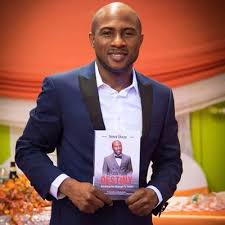
Henry Ukazu writes from New York. He works with the New York City Department of Correction as the Legal Coordinator. He’s the founder of Gloemi. He’s a Transformative Human Capacity and Mindset coach. He is also a public speaker, youth advocate, creative writer and author of Design Your Destiny- Actualizing Your Birthright to Success, Unleash Your Destiny and The Six Pillars of Success . He can be reached via info@gloemi.com
By Tolulope A. Adegoke
“A refuge is not a destiny. It is a threshold. The land that once sheltered others must now learn to shelter itself—not from famine or flood, but from the quieter, more corrosive hunger of dependence. For the true measure of Goshen was never what it gave, but what it became.”
– Tolulope A. Adegoke, PhD.
This is the second part of a two-part series examining Africa’s role in global sustainable development. Part I, “Goshen Reimagined: Africa as the Crucible of Global Sustainability and the Silent Architect of a Post-Fossil World,” established the continent’s material endowments and diagnosed the structural paradox at the heart of its global position. Part II turns inward—to the institutions, capabilities, and governance systems that will determine whether Africa’s promise becomes prosperity.
The Question That Endowments Cannot Answer
Africa holds approximately 65 percent of the world’s uncultivated arable land (B20 South Africa, 2025). It possesses nearly one-third of the critical minerals required for the global energy transition. Its population is the youngest of any continent, with a median age of nineteen (African Development Bank, 2025).
These facts are frequently recited as evidence of Africa’s inevitability. They are not. They are stocks, not flows. They become prosperity only when combined with the institutions, capabilities, and governance systems that transform raw potential into productive activity.
That transformation is the subject of this write-up. The question is not whether Africa can become the crucible of global sustainability. The question is whether the continent’s institutional architecture is being rebuilt at the speed and scale the moment demands.
The answer will determine not only Africa’s destiny but the future of the entire world.
Part One: The Demographic Promise and Its Conditions
A Youthful Continent—and a Narrow Window
Africa’s population reached approximately 1.54 billion at the end of 2025, making it the fastest-growing region and home to nearly 19 percent of the world’s population (Ghana Parliament, 2025). The continent’s median age is nineteen, compared with forty-five in Europe (African Development Bank, 2025).
The African Development Bank describes this youthfulness as “the continent’s and the world’s greatest asset,” positioning Africa as “the next destination for affordable labor supply” (African Development Bank, 2025).
But the transition from youthful population to productive workforce is neither automatic nor assured. Each year, between 12 and 15 million young Africans enter the labor market, yet only around 3 million formal jobs are created annually (United Nations Economic Commission for Africa, 2026). The arithmetic is stark: millions of young people enter adulthood each year with no prospect of formal employment.
Rene Tapsoba, the International Monetary Fund’s resident representative in Congo, has captured the stakes with unusual clarity: “Having a young and dynamic population can be an asset. But if this population is not well trained and well educated, it can become a handicap for social cohesion and public policies, and make the process of economic development even more challenging” (Bloomberg, 2025).
The demographic dividend, in other words, is a learning dividend before it is anything else.
The Learning Crisis
The data on learning outcomes in Africa reveal a gap between enrollment and achievement that constitutes both a scandal and an opportunity. UNESCO Institute for Statistics data indicate that in sub-Saharan Africa, 88 percent of children and adolescents of school age do not reach minimum proficiency levels in reading, and 87 percent do not reach minimum proficiency in mathematics (UNESCO Institute for Statistics, 2017).
This is not a measure of failure by any particular student. It is a structural indicator that systems expanding access must now focus on ensuring learning.
The distinction between Mean Years of Schooling (MYS) —the standard measure of educational attainment—and the Skills-in-Literacy Adjusted Mean Years of Schooling (SLAMYS) is critical. SLAMYS adjusts years of schooling by a skill factor derived from direct assessments of adult literacy. The findings indicate that in 2023, sub-Saharan Africa’s SLAMYS level was roughly comparable to that of Latin America in 1970—a benchmark that highlights both the progress achieved and the distance remaining.
The lesson is that how education is delivered matters as much as how much education is delivered. Curriculum relevance, teacher quality, language of instruction, and pedagogical methods are the mechanisms through which schooling becomes capability.
Gender, Education, and the Fertility Transition
The relationship between female education and fertility decline is among the most robust findings in development demography. As girls remain in school longer, they tend to marry later, gain greater autonomy in reproductive decision-making, and have improved access to information and services related to sexual and reproductive health.
Sub-Saharan Africa’s fertility rate has declined from an average of 6.2 children per woman in the period between the 1950s and 1990 to 4.2 children per woman today (Bloomberg, 2025). Yet in more than 20 nations the fertility rate exceeds that number, with Congo among the highest, averaging 5.9 children (Bloomberg, 2025). The rate needed to maintain a stable population is 2.1 children.
The institutional implication is unambiguous. Fertility decline is not a public health intervention alone; it is an education intervention. The most effective population policy is a girl who completes secondary school with measurable literacy and numeracy skills.
Part Two: The Employment Architecture
The Informal Economy as Structural Reality
The single most defining feature of Africa’s labor market is not unemployment as conventionally measured. It is informality. The majority of employment in most African countries occurs outside the formal sector—in enterprises that are unregistered, unregulated, and unprotected (United Nations Economic Commission for Africa, 2026).
This is not a residual category or a temporary condition. It is the structural reality of how most Africans earn their livelihoods.
The consequences are profound. Informal workers often lack access to social protection, credit, legal recourse, and the productivity-enhancing benefits of formalization. Enterprises remain small, undercapitalized, and unable to invest in the technologies or skills that would raise productivity. The tax base remains narrow, limiting the state’s capacity to provide public goods. And the statistical invisibility of informal work renders much economic activity invisible to policymakers.
The gap between labor market entrants and formal job creation is stark: between 12 and 15 million young Africans enter the labor market each year, yet only around 3 million formal jobs are created annually (United Nations Economic Commission for Africa, 2026).
Integrating the informal sector into the formal economy is therefore not a matter of tidying up the margins. It is the central structural challenge of African economic policy.
The pathways are known: reducing the costs of formalization, extending social protection to informal workers, improving access to finance for micro and small enterprises, and building digital infrastructure that lowers the transaction costs of formal participation. What is frequently absent is the political will to implement these reforms at scale—because formalization disrupts existing patron-client networks and threatens the rents that flow from informality.
The Skills Mismatch
Even among those who secure formal employment, a persistent mismatch between educational outcomes and labor market demands limits productivity and earning potential. Employers across the continent report difficulty finding workers with the technical skills their operations require, even as educated young people remain unemployed or underemployed.
This is not solely a matter of education systems. It reflects a deeper structural disconnect between the worlds of learning and work. Curricula are designed without systematic input from employers. Training institutions operate without labor market information systems that would allow them to adjust programs in response to demand. Apprenticeship systems, where they exist, are often disconnected from formal certification and upward mobility.
The response must be systemic. Dual education systems that combine classroom instruction with structured workplace learning—adapted to African contexts—offer one pathway. Sectoral training partnerships that bring employers, training providers, and government together to design and deliver programs responsive to actual demand offer another. Digital credentialing systems that make skills visible and portable, independent of where they were acquired, offer a third.
The “Power Skills” Deficit
As technology reshapes industrial landscapes, the demand for what are sometimes called “power skills” —critical thinking, creativity, adaptability, ethical judgment, and collaboration—is growing relative to the demand for narrow technical competencies.
These are the skills that enable workers to learn new tasks, navigate ambiguity, and contribute to innovation. They are also the skills that education systems focused on examination performance and knowledge transmission are least equipped to develop.
The implication is that Africa’s human capital agenda cannot be reduced to expanding enrollment or even to improving literacy and numeracy. It must include a fundamental reorientation of pedagogy toward capability cultivation—the development of the ability to apply knowledge, to solve novel problems, and to work productively with others. This is a more ambitious agenda than improving test scores, and it requires deeper investment in teacher training, curriculum development, and assessment methods that measure what matters.
Part Three: Governance as the Missing Keystone
The Fragmentation Problem
Africa comprises fifty-four countries, each with its own legal system, regulatory framework, and business environment. This fragmentation imposes significant costs: duplicated regulatory compliance, incompatible standards, barriers to cross-border investment, and the inability to achieve economies of scale in infrastructure or industrial policy.
The African Continental Free Trade Area (AfCFTA) was designed to address this fragmentation. As of September 2026, 50 of the 54 signatories have deposited their instruments of ratification, marking significant progress toward continental integration (tralac Trade Law Centre, 2026).
Yet the gap between agreement and implementation remains vast. The World Bank has estimated that deeper liberalization of transport, telecommunications, financial, and professional services could raise services trade within the AfCFTA area by about 60 to 64 percent by 2035 (World Bank, 2026).
Realizing that potential requires not only the removal of formal barriers but the harmonization of regulatory regimes, the development of cross-border payment systems, and the construction of the physical infrastructure—transport corridors, power grids, digital networks—that connect producers to markets.
The Rule-of-Law Foundation
Underlying the fragmentation challenge is a more fundamental governance deficit: the uneven strength of the rule of law across African jurisdictions. Property rights are insecure in some contexts. Contract enforcement can be slow and unpredictable. Regulatory discretion creates opportunities for corruption and rent-seeking. These conditions raise the risk premium on investment and depress the long-term planning that productive enterprise requires.
This is a matter of institutional design and political incentives. The countries that have achieved sustained growth—Botswana, Mauritius, Rwanda in recent decades—are those that have built credible commitments to property rights, contract enforcement, and predictable regulation. The challenge is to scale these successes and to prevent the backsliding that has occurred in countries where institutional gains have been reversed by political capture or conflict.
Conflict as an Institutional Destroyer
No governance analysis of Africa can avoid the fact that conflict remains the single most destructive force undermining institutional development.
An estimated 167 million Africans faced acute food insecurity in 2025—the sixth consecutive annual increase—and 130 million (approximately 78 percent) of those facing acute food insecurity live in countries experiencing conflict (Africa Center for Strategic Studies, 2025).
The five countries with the largest numbers of acutely food-insecure people—Nigeria, the Democratic Republic of the Congo, Sudan, Ethiopia, and South Sudan—are all in conflict, collectively accounting for almost two-thirds of Africa’s acute food insecurity (Africa Center for Strategic Studies, 2025).
The institutional consequences of conflict extend far beyond the immediate humanitarian crisis. Conflict destroys physical infrastructure, erodes social trust, displaces populations, disrupts education, and diverts public resources from productive investment to military expenditure. It also creates the conditions for famine, which the Africa Center for Strategic Studies correctly describes as a “man-made disaster” (Africa Center for Strategic Studies, 2025).
The implication is unavoidable. No amount of resource endowment, demographic dividend, or policy reform can overcome the institutional destruction wrought by armed conflict. Peace is not a precondition for development in some abstract sense; it is the most basic institutional foundation upon which everything else rests.
Part Four: Food Security and the Architecture of Resilience
The Paradox of Hunger Amid Plenty
Africa holds approximately 65 percent of the world’s uncultivated arable land while remaining the region with the highest burden of hunger (B20 South Africa, 2025).
In 2025, approximately 309 million Africans were undernourished—the highest absolute number of any region (Africa Center for Strategic Studies, 2025). More than half of Africa’s population experienced moderate or severe food insecurity, and nearly two-thirds could not afford a healthy diet (Africa Center for Strategic Studies, 2025).
These are not the statistics of a continent that lacks the capacity to feed itself. They are the statistics of agricultural and food systems that are failing to connect production potential to nutritional outcomes.
The Conflict-Food Nexus
The primary driver of acute food insecurity in Africa is not drought, although climate shocks play a significant role. It is conflict (Africa Center for Strategic Studies, 2025).
The concentration of acute food insecurity in conflict zones reveals how thoroughly violence disrupts food systems: farmers are displaced from their land, markets are destroyed, transport routes are cut, and humanitarian access is blocked.
This nexus between conflict and food insecurity has profound implications for policy. Food security cannot be addressed solely through agricultural interventions. It requires peacebuilding, governance reform, and protection of civilian infrastructure—the very institutional foundations discussed in the preceding section.
From Subsistence to Surplus
For the majority of African farmers, agriculture remains a subsistence activity—producing enough to feed the household with little surplus for market. This reflects the enabling environment—access to improved inputs, credit, extension services, storage infrastructure, and reliable markets—which remains underdeveloped in many contexts.
The transformation required is not merely technical. It is institutional and infrastructural. Farmers need access to affordable credit and insurance. They need extension systems that deliver relevant, timely advice. They need storage facilities that reduce post-harvest losses. They need roads and transport systems that connect them to markets. They need price information and market intelligence. And they need legal frameworks that protect their land rights and enable them to invest with confidence.
The B20 Sustainable Food Systems and Agriculture Task Force has estimated that unlocking intra-African agricultural trade could generate approximately US$180 billion in revenue (B20 South Africa, 2025). The task force has further estimated that fixing supply chain bottlenecks could recover 1 to 2 percent of GDP annually (B20 South Africa, 2025).
These figures capture only a portion of the potential. The deeper transformation—from subsistence to commercial agriculture, from low-yield to high-yield production, from isolated farmers to integrated value chains—is a multi-decade endeavor that requires sustained investment and institutional development.
Nutrition as the End Goal
Food security is not merely about calories. It is about nutrition—the quality and diversity of diets that enable human development.
The statistic that only one in five African children aged 6 to 23 months achieves a minimally diverse diet is a measure of systemic opportunity (Africa Center for Strategic Studies, 2025). It predicts not only immediate health outcomes but future cognitive development, educational attainment, and economic productivity.
Addressing this requires a food systems approach that integrates agricultural production, food processing, market development, consumer education, and social protection. It requires attention to the specific nutritional needs of women, infants, and young children. And it requires recognizing that the cheapest calories are often the least nutritious—that food systems optimized for quantity rather than quality are failing the populations they are meant to serve.
Part Five: The Interior Frontier
Beyond the Resource Narrative
The Goshen metaphor, in its first iteration, emphasized Africa’s material endowments: minerals, land, and demographic weight. These are real and consequential. But they are stocks, not flows. They become prosperity only when combined with the capabilities, institutions, and governance systems that transform them into productive activity.
This is the interior frontier: the domain of human capability, institutional quality, and governance effectiveness. It is less dramatic than the discovery of a major mineral deposit or the announcement of a new free trade agreement. It is slower, more difficult, and less visible. But it is the domain in which the difference between a resource-rich country and a developed one is determined.
The Capability Approach
Amartya Sen’s capability approach provides a useful framework for thinking about this interior frontier. Development, in Sen’s formulation, is not primarily about increasing GDP or resource extraction. It is about expanding the substantive freedoms that people have to live lives they have reason to value. These freedoms include the ability to be healthy, to be educated, to participate in political life, and to pursue economic opportunities.
Applying this framework to Africa’s transformation yields a different set of priorities than those suggested by the resource narrative alone. The question becomes not “how do we extract more minerals?” but “how do we build the capabilities that enable Africans to convert mineral wealth into improved lives?” The answer involves education quality, health systems, political participation, and the rule of law—the essential foundations of human development.
The Time Horizon
One of the most significant obstacles to Africa’s transformation is the mismatch between political time horizons and development time horizons. Elected officials operate on cycles of four or five years. Institution-building operates on cycles of decades.
The incentives for short-term resource extraction or political patronage are strong; the incentives for long-term investment in education, infrastructure, and governance are weaker.
Addressing this mismatch requires institutional mechanisms that insulate long-term development priorities from short-term political pressures. Sovereign wealth funds, independent development agencies, and constitutional provisions that protect certain categories of investment from political interference all offer partial solutions. None is a panacea, but together they represent the kind of institutional innovation that successful developers have employed.
The Agency Question
Ultimately, the interior frontier is about agency—the capacity of Africans, individually and collectively, to shape their own development.
The Goshen metaphor, in its original biblical context, involved a people who were initially dependent on the goodwill of a foreign ruler. Their eventual enslavement came about because they lacked the political and institutional power to protect their own interests.
The contemporary lesson is direct. Africa’s transformation will be shaped primarily by the collective agency of African peoples—their capacity to build institutions, to demand accountability, to invest in their own capabilities, and to negotiate the terms of their integration into the global economy.
This is not a counsel of isolation. External investment, technology transfer, and trade can play constructive roles. But the terms of that engagement—the distribution of benefits, the protection of sovereignty, the alignment of external involvement with domestic development priorities—depend on the strength of African institutions and the clarity of African agency.
Conclusion: The Architecture and the Archive
Part I of this inquiry described the Goshen that Africa might become: a refuge and a resource for a world in transition. Part II has described the architecture that must be built if that vision is to be realized: human capital systems that convert demography into productivity; employment structures that integrate the informal economy; governance frameworks that make fragmentation a source of synergy rather than weakness; food systems that deliver nutrition rather than merely calories; and, above all, institutions that embody the agency of African peoples.
The Goshen metaphor carries a final lesson. In the biblical narrative, the generation that entered Goshen was not the generation that left it. The Israelites who departed for the Promised Land were the descendants of those who had arrived, shaped by centuries of sojourn. Their identity was forged not in the abundance of arrival but in the adversity of enslavement—and in the resilience that adversity demanded.
Africa’s transformation will similarly be a multi-generational endeavor. The institutions built today will shape outcomes for decades to come. The capabilities cultivated in this generation of African youth will determine the productivity of the workforce in 2050 and beyond. The governance frameworks established now—or the failure to establish them—will determine whether Africa’s material promise becomes prosperity or remains a resource frontier for others.
The question is not whether Africa will shape the future of global sustainable development. It will, by the sheer weight of its demography, resources, and geography. The question is whether Africans will shape that future on their own terms—or whether the pattern of Goshen’s original inhabitants will repeat itself, with abundance becoming dependence and dependence becoming servitude.
The answer lies in the architecture described here: the unglamorous, slow, difficult work of building capabilities, institutions, and governance systems that enable agency. It is not a work of prophecy. It is a work of construction. And it is the most consequential work that this generation of Africans, and those who support them, can undertake.
Dr. Tolulope A. Adegoke, AMBP-UN, is a globally recognized scholar-practitioner and thought leader at the nexus of security, governance, and strategic leadership. His mission is dedicated to advancing ethical governance, strategic human capital development, resilient nation-building, and global peace. He bridges the worlds of academic rigor and practical application, contributing to leadership discourse at the highest levels of policy and practice. He can be reached via: tolulopeadegoke01@gmail.com, globalstageimpacts@gmail.com


