
Headlines
Nigeria: One Week of Untold Sorrow, Tears and Blood

- /home/rhoncare/pointblank.ng/wp-content/plugins/mvp-social-buttons/mvp-social-buttons.php on line 27
https://pointblank.ng/wp-content/uploads/2019/05/Boko-Haram.jpg&description=Nigeria: One Week of Untold Sorrow, Tears and Blood', 'pinterestShare', 'width=750,height=350'); return false;" title="Pin This Post">
- Share
- Tweet /home/rhoncare/pointblank.ng/wp-content/plugins/mvp-social-buttons/mvp-social-buttons.php on line 69
https://pointblank.ng/wp-content/uploads/2019/05/Boko-Haram.jpg&description=Nigeria: One Week of Untold Sorrow, Tears and Blood', 'pinterestShare', 'width=750,height=350'); return false;" title="Pin This Post">
By Eric Elezuo
Much as the month, November, has so far harbored uncertainty and uncanny happenings in Nigeria, the last one week has proved to be a period of untold occurrences that have prevented laughter and cheers among citizens, but sent chill, terror and blatant display of evil rooted in man’s inhumanity to man across borders.
In just one week, a lot has happened to reduce the country to a den of criminals, and justifiably bear the tag ‘disgrace’ as labeled by the United States President Donald Trump. In one week, civilians and men in uniform have been slaughtered, school children have been abducted from their schools, worshippers have been sacked, killed and taken from the place of worship, and not forgetting supposed freedom fighters have been found guilty by a court of law, and sentenced to life in jail. It has been a week of sorrow, tears and blood as afrobeat king, Fela Anikulakpo Kuti of blessed memory, would rightly say.
The resurgence of the terrorism activities is in the wake of U.S. President Donald Trump’s claims of targeted killings against Christians in the country. Much as attacks in Nigeria have affected both Christians and Muslims, the Christians have cried out loudly, claiming a genocide against the religion by Muslim iridentists, especially in Benue and Plateau states.
This is also even as a delegate led by the National Security Adviser, Nuhu Ribadu, was visiting the United States, where they met Defense Secretary Pete Hegseth among others.
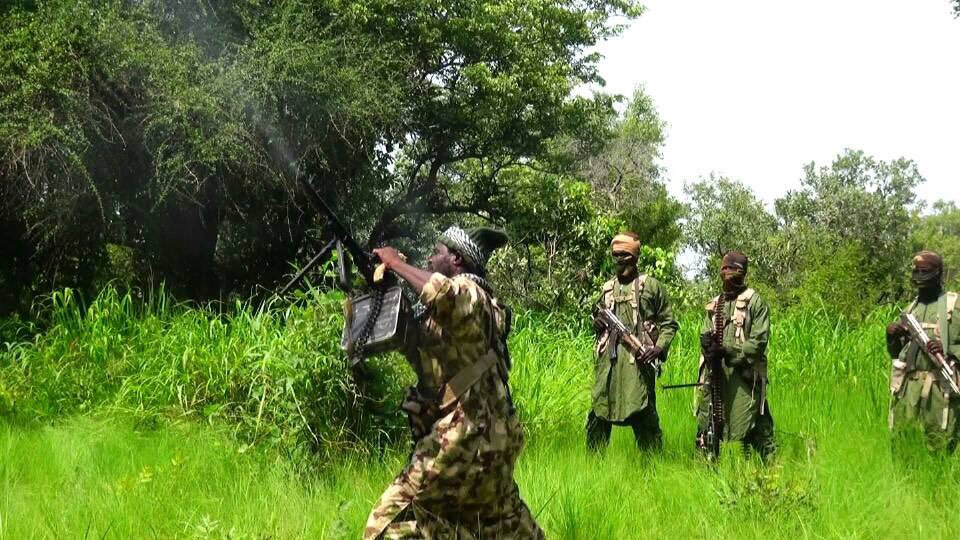
To begin the week of inanities, what started like a mere rumour finally ended up as a real story confirming the killing of a senior military officer, Brigadier-General Musa Uba of the 25 Task Force Brigade, with four of his soldiers after an ambush by the Boko Haram terrorists. The general, who led a convoy, was returning from a patrol near Wajiroko village in northeastern Borno, when it came under sustained gunfire, according to the Nigerian Army. Uba was captured alive after what appeared to be an act of betrayed by insiders. He was murdered, and the video released in the media space.
The killing of Uba brought to five the number of senior military officers, who have fallen of the almost 16 years battle with insurgents in the North.
Recall that Lieutenant Colonel Muhammad Abu Ali, the Command of the 272 Task Force Battalion, specializing in the operation of war tanks, was killed in November 2016 in the heat of battle. He was noted for daredevil bravery, which helped in the recapture of Baga from the terrorists. Ali’s death ce just one year after his promotion from Major to Lieutenant Colonel.
Lieutenant Colonel Ibrahim Sakaba, who commanded 157 Task Force Battalion, Metele, was the next. He was killed November 2018. His wife however, alleged that he was killed by fellow soldiers, who accused him of not joining them in corrupt practices. The army denied the allegation.
There was also the killing in September 2020 by Boko Haram terrorists through ambush of Colonel Dahiru Chiroma Bako near Wajiroko town
Brigadier General Dzarma Zirkusu was killed in November 2021. He was the first general before Uba, to fall to the bullets of the insurgents.
The killings of these senior officers have one recurring decimal; they were all killed in November except for Colonel Chiroma.
A day after, bandits attacked Fegin Baza village in the Tsafe Local Government Area of Zamfara State, killing three persons and abducting at least, 64 others.
The day following, bandits also launched a fresh assault on Tsohuwar Tasha village in the Ruwan Doruwa Ward of Maru Local Government, abducting 14 people, including 11 women and three children. This is not including reported skirmishes in past weeks communities in Zurmi, Shinkafi, Maradun, Tsafe and Bungudu LGAs of Zamfara, leading to displacement and the imposition of levies and ransoms by armed groups.
A day later, in the early hours of a Monday, armed men stormed the Government Girls Comprehensive Secondary School, Maga, in Danko/Wasagu Local Government Area of Kebbi State, abducting 25 female students, the principal, killing the vice principal and injuring the security guard.
The Kebbi Police Command, in a statement, confirmed the incident, noting that police tactical units deployed within the school engaged the attackers but the gunmen escaped with the abducted students.
The police said additional tactical teams, in collaboration with the military and vigilantes, have been deployed to comb suspected bandit routes and nearby forests in a bid to rescue the victims and arrest the perpetrators.
“On November 17, 2025, at about 0400hrs, a gang of armed bandits with sophisticated weapons stormed the school, shooting sporadically.
“The police tactical units engaged them in a gun duel, but the bandits had already scaled the fence and abducted 25 students. One Hassan Makuku was shot dead, while Ali Shehu sustained an injury to his right hand, “ the statement partly read.
But the governor of the state however lamented that the military withdrew from the scene 44 minutes before the attack, raising concerns that someone prearranged the abduction of the students, creating more more room for suspicion of complicity of the security agencies.
As usual, the Federal Government has expressed deep concern over the abduction of the female students from Government Girls Secondary School, vowing to ensure their safe return.
Two days after the Kebbi incident, at least 16 vigilante members were killed and 42 residents kidnapped in seperate attacks by bandits in the Mashegu Local Government Area of Niger State.
Speaking for the federal government, Minister of Information and National Orientation, Mohammed Idris, condemned the attack on the school, describing it as “reprehensible” and decried the killing of school officials who were carrying out their duties.
He added, “Our security and intelligence agencies have been issued clear directives to locate, rescue, and safely return the students, and to ensure that the perpetrators face justice.
“The Federal Government will not relent until this objective is achieved.
“We assure Nigerians that strengthening internal security remains a top priority. The Federal Government is recalibrating the nation’s military, policing, and intelligence capabilities to more effectively prevent these attacks and respond with greater speed and precision whenever threats arise.”
As if Nigerians have not had a enough, Gunmen kidnapped 38 worshippers of the Christ Apostolic Church (CAC), Eruku in Ekiti Local Government Area of Kwara State, during a live service. The terrorists demanded a ransom of 100 million naira (roughly $69,000) per worshipper, according to information from a church official, reported by Reuters.
Reports say that about five persons were also shot dead, while several of the worshippers were injured in the tragic incident. The kidnappers are contacting the individuals’ families to demand ransom.
It was also reported during the week that suspected Islamic State West African Province (ISWAP) members attacked a Police formation in Geidam Local Government Area of Yobe State, killing one officer and setting operation vans on fire among other atrocities.
Also within the period under review, suspected members of Boko Haram insurgents killed eight people during an attack in Warabe, a village in the Gwoza Local Government Area of Borno State, and abducted three. It was reported that the victims were members of the Civilian Task Force. In the same vein, 15 persons were abducted, including 4 nursing mothers and babies, and two killed in Sabon Birni, Sokoto state by same Islamist terrorists., who in another development killed four rice farmers in an attack in Edu, Kwara State.
To cap up the week of blood and tears, and just four days of the Kebbi school attack, heavily armed terrorists invaded the Saint Mary’s Private School, in Papiri, Niger State, a Catholic institution comprising nursery, primary and secondary sections, and abducted a total of 303 schoolchildren and 12 teachers were abducted. Earlier reports say 52 pupils were taken. The number was updated to 215 before finally arriving at 315.
The tally was changed “after a verification exercise and a final census was carried out,” according to a statement issued by the Most. Rev. Bulus Dauwa Yohanna, chairman of the Niger state chapter of CAN, who visited the school on Friday.
He said 88 other students “were also captured after they tried to escape” during the attack. The students were both male and female and ranged in age from 10 to 18, according to a report by CNN.
CNN also reported that no group has yet claimed responsibility for the abductions just as authorities have deployed tactical squads alongside local hunters to rescue the children.
The Niger State government had blamed the school for the attack, saying that an advisory was issued for the closure of schools, which the school disobeyed.
But Yohanna dismissed the claim as false, noting that “We did not receive any circular. It must be an afterthought and a way to shift blame,” he said, calling on families “to remain calm and prayerful.”
Meanwhile, the Niger State government has now shut down all schools as a measure to forestall other kidnappings.
According to Gov Umar Bago while addressing the media during a meeting with security stakeholders, the decision was in a bid to protect lives and property.
“It is the decision of stakeholders today to close all schools in Niger state. All schools are closed till further notice. So we have declared Christmas holiday for all schools in Niger State,” the governor said.
In the meantime, report says about 50 of the abducted Catholic students have escaped, and returned home safely.
This is contained in a statement on Sunday by the state Chairman of the Christian Association of Nigeria (CAN) Rev. Bulus Dauwa Yohanna, who is also the Proprietor of the school and Catholic Bishop of Kontagora Diocese, and issued by his Media Aide, Daniel Atori in Minna.
President Bola Tinubu has also promised to decisively dealt with insurgents, and bring peace to the north, and the nation at large.
In another development, Justice James Omotosho sentenced the leader of the Indigenous People of Biafra (IPOB), Nnamdi Kanu, who he labeled an ‘international terrorist’ to live in jail.
The nation awaits the response of the Nigerian government to the myriad of security challenges, plaguing the country, the designation of the country as CPC and the threat of Trump to invade the country with ‘guns blazing’.
It would also be taken into consideration that the US Congress, who accused Tinubu of ‘sitting back’ and doing nothing, has unanimously voted to grant Trump powers to attend to the Nigerian challenge anyhow he deem fit.


The Nigerian Air Force (NAF) has released the identities of the people who died in the crash involving an NAF ATR 42 aircraft in the Igbokoda area of Ondo State, on Monday.
The aircraft, NAF 931, was carrying five crew members and 20 passengers when it crashed during a routine mission from Benin to Lagos.
In a statement, Air Commodore Ehimen Ejodame, NAF spokesperson, said no survivor had been found following the accident, which prompted the immediate activation of search-and-rescue operations in coordination with relevant authorities.
Those killed include five crew members: Squadron Leader MI Aburime, the flight captain; Squadron Leader AP Man-Ugwueje, co-pilot; Flight Lieutenant IS Bako, co-pilot; Warrant Officer Abubakar A, aircraft technician; and Corporal Uguru HC, aircraft technician.
The 20 passengers were identified as Flight Lieutenant TL Lazarus; Flight Lieutenant M Akinloye; Flying Officer IM Adeshina; Master Warrant Officer Onwuka F; Master Warrant Officer Matini BA; Warrant Officer Nuhu FS; Flight Sergeant James RB; Flight Sergeant Mohammed AI; Sergeant Ani AE; Sergeant Izibenikien SI; Sergeant Alafuka C; Sergeant Mbadugha AN; Lance Corporal Ugwuba FC; Lance Corporal Eledan GE; Mrs Ezeh Nneka; Godstmine Tarabina; Joy Micheal; Sunday Micheal; Ukeme David; and Gideon Omotola.
The Chief of the Air Staff, Air Marshal Sunday Kelvin Aneke, expressed profound condolences to the families, loved ones and colleagues of those who lost their lives in the crash.
Aneke described the incident as a deeply painful moment for the Nigerian Air Force and the country, while assuring the bereaved families of the Service’s full support during the difficult period.
He has also directed a comprehensive investigation to establish the circumstances surrounding the crash.
Meanwhile, a condolence register has been opened at the Headquarters of the Nigerian Air Force in Abuja for senior government officials, members of the diplomatic corps, heads of security agencies and other well-wishers wishing to pay their respects and sympathise with the families of the deceased and the NAF.
The statement was signed by the Director of Public Relations and Information, Headquarters Nigerian Air Force.
Daily Trust
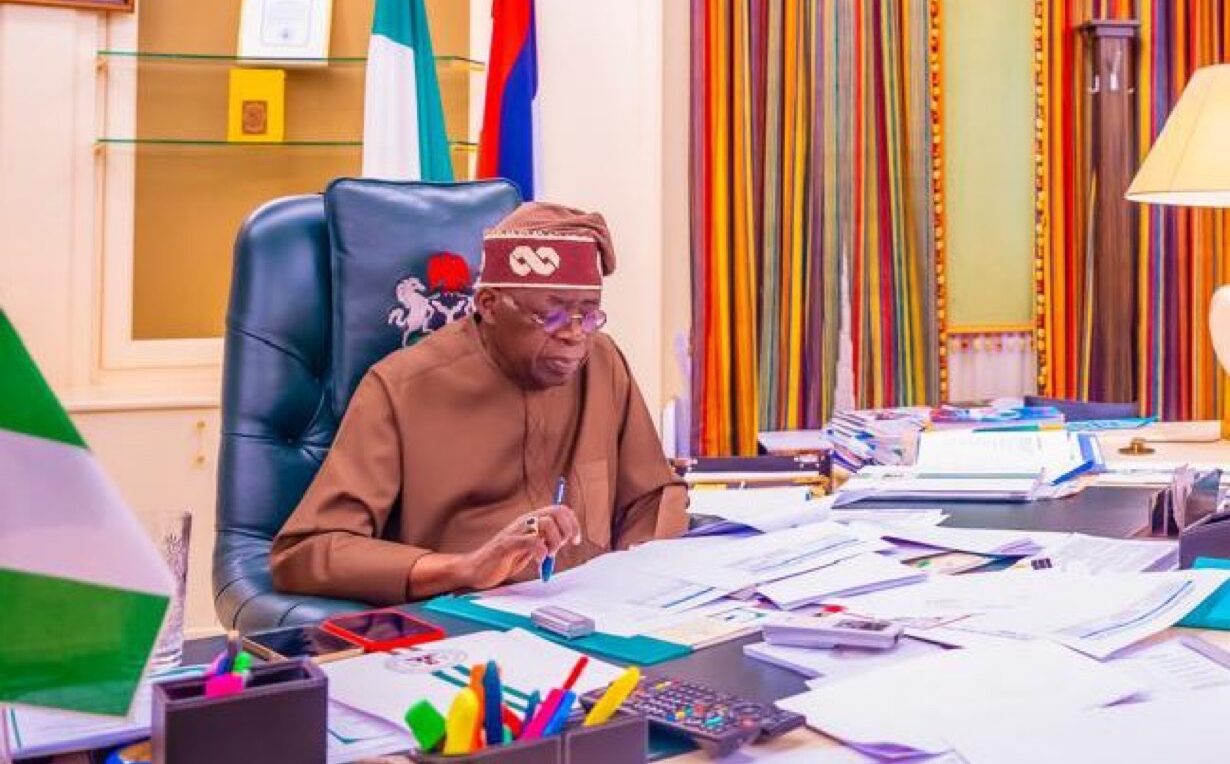
President Bola Tinubu has declared a three-day national mourning over the Ondo military aircraft crash and is also calling for a probe into the incident.
He also directed that flags should be flown at half-mast throughout the country as a mark of respect to the officers.
In a statement on Monday, presidential spokesman Bayo Onanuga said Tinubu “extends his deepest condolences to the family of the 25 passengers and seven crew members involved, the Chief of the Air Staff, Air Marshal Sunday Kelvin Aneke, and all officers, airmen and airwomen of the Nigerian Air Force.”
A military source confirmed to Channels Television that all 32 persons on board the aircraft died in the crash.
The passenger aircraft was on a “routine mission” from Benin City in southern Nigeria to the economic hub of Lagos when it went down at Igbokoda in Ondo State shortly after 9:00 am (0800 GMT), the President and the Air Force said.
“This is a painful moment for our Armed Forces and for the entire nation. Our Air Force personnel put their lives on the line every day to secure Nigeria. Their sacrifice will never be forgotten,” Tinubu was quoted as saying.
“I commend the Nigerian Air Force for activating an immediate Search and Rescue operation following the accident. I pray for the repose of the souls of the gallant officers and for Almighty God to grant their families and the Nigerian Air Force the fortitude to bear the unfortunate loss.
“I assure the Nigerian Air Force of the continued support of our administration as they continue their vital role in securing our nation. I also commend the swift response of first responders and the Ondo State Government at the crash site,” the president said.

The Confederation of African Football (CAF) has confirmed that the 2026 edition of its annual awards ceremony will take place in Lagos, Nigeria, on December 7.
The decision was reached at a virtual meeting of the CAF Executive Committee (EXCO), chaired by the organisation’s president, Patrice Motsepe, on Friday, 2 October.
The meeting also approved the CAF Competitions Calendar for 2026–2030, alongside amendments to the regulations governing the continent’s interclub competitions.
Nigeria will host another major CAF event, the organisation’s Ordinary General Assembly, on 21 November.
The 2026 CAF Awards will bring together leading footballers, coaches, clubs and administrators to celebrate outstanding performances in African football.
The ceremony recognises achievements across men’s and women’s football, including the Player of the Year, Coach of the Year, Goalkeeper of the Year, Young Player of the Year and Club of the Year categories.
Nigeria has enjoyed considerable success at the awards, particularly in the men’s and women’s Player of the Year categories.
Ademola Lookman won the men’s award in 2024, following Victor Osimhen’s triumph in 2023, making them the first Nigerian pair to secure consecutive victories in the category since Nwankwo Kanu and Victor Ikpeba achieved the feat in 1996 and 1997, respectively.
The 2024 ceremony, held in Marrakech, Morocco, also saw Nigeria’s Super Falcons named Women’s National Team of the Year, while goalkeeper Chiamaka Nnadozie received the Women’s Goalkeeper of the Year award.
At the 2025 edition held in Rabat, Morocco dominated the ceremony during a historic night in Rabat, with Achraf Hakimi (Morocco/Paris Saint-Germain) and Ghizlane Chebbak (Morocco/Al Hilal) winning the Men’s and Women’s Player of the Year awards, respectively.
Yassine Bounou (Morocco/Al Hilal) and Nigeria’s Chiamaka Nnadozie (Brighton & Hove Albion) claimed the Men’s and Women’s Goalkeeper of the Year honours, and Othmane Maamma (Morocco/Watford) and Doha El Madani (Morocco/AS FAR) were named Men’s and Women’s Young Players of the Year, respectively.
Beyond the awards announcement, the EXCO approved significant changes to the regulations governing the CAF Champions League and CAF Confederation Cup.
Under the revised rules, players will be permitted to represent more than one club during a single CAF interclub season, a change that could provide clubs with greater flexibility in managing their squads.
The committee also approved an increase in the number of players clubs can register, setting the maximum at 40 players at any point during the season.
Clubs will additionally be allowed to replace four players during the final registration window, provided those players have not featured in any CAF interclub match during the season.
Another significant amendment concerns disciplinary proceedings. All disciplinary matters will now be referred to the CAF Disciplinary Board, removing that responsibility from the Interclub Committee.
The changes are expected to influence how clubs approach player recruitment, registration and squad management in continental competitions.
The EXCO also approved the dates for the 2026 CAF Women’s Champions League, with the final tournament scheduled to run from 1 to 15 November.
The competition, which brings together the leading women’s club sides from across Africa, has become a major platform for the development and visibility of women’s football on the continent.
Nigeria’s Edo Queen’s participation in this year’s competition is presently being challenged following the annulment of their victory at the WAFU B tournament after a protest by Ampem Dakoa.
In another decision, CAF confirmed that Senegal will host the 2026 Beach Soccer Africa Cup of Nations from 28 November to 6 December.
The West African country, which won the previous edition, will host the tournament as it seeks to defend its continental title.


