Headlines
Nnamdi Kanu: Alleged Order to Bomb US, Uk Embassies, Omotosho’s ‘Manufactured Lie’ – Group

- /home/rhoncare/pointblank.ng/wp-content/plugins/mvp-social-buttons/mvp-social-buttons.php on line 27
https://pointblank.ng/wp-content/uploads/2025/11/InCollage_20251104_184344479-scaled-1-1000x600.jpg&description=Nnamdi Kanu: Alleged Order to Bomb US, Uk Embassies, Omotosho’s ‘Manufactured Lie’ – Group', 'pinterestShare', 'width=750,height=350'); return false;" title="Pin This Post">
- Share
- Tweet /home/rhoncare/pointblank.ng/wp-content/plugins/mvp-social-buttons/mvp-social-buttons.php on line 69
https://pointblank.ng/wp-content/uploads/2025/11/InCollage_20251104_184344479-scaled-1-1000x600.jpg&description=Nnamdi Kanu: Alleged Order to Bomb US, Uk Embassies, Omotosho’s ‘Manufactured Lie’ – Group', 'pinterestShare', 'width=750,height=350'); return false;" title="Pin This Post">
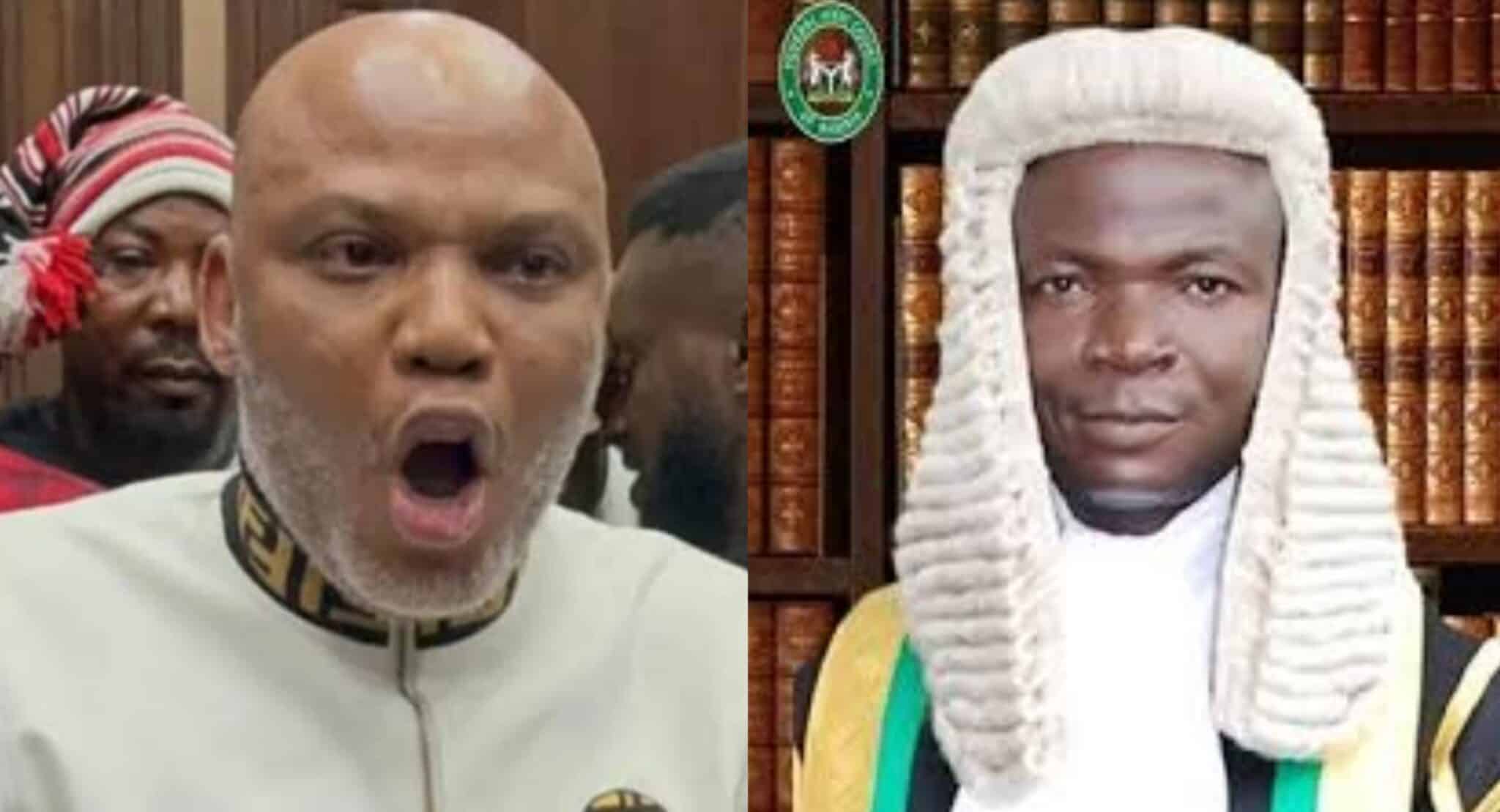
A coalition of rights activists has faulted the verdict delivered by Justice James Omotosho of the Abuja Federal High Court in the trial of the leader of the Indigenous People of Biafra, Nnamdi Kanu.
Justice Omotosho had on Thursday convicted Kanu on terrorism charges brought against him by the Nigerian government and subsequently sentenced him to life imprisonment.
However, a coalition of rights activists, comprising the American Veterans of Igbo Descent, Ambassadors for Self Determination, and the Rising Sun Foundation, in a joint statement on Thursday evening pointed out what they described as a major flaw in the judgment.
While delivering the judgment, Justice Omotosho described Kanu as an international terrorist, stating that he ordered attacks on the United States and United Kingdom embassies in Nigeria.
Reacting to the judgment, the activists coalition said the allegation that Kanu ordered attacks on the US and UK embassies was never raised in the charges filed against him, and was also not brought up throughout the proceedings of the trial.
Wondering how the judge arrived at the allegation, the activists described the claim as a manufactured lie that collapsed the judgment against Kanu.
Parts of the statement titled ‘Justice Omotosho’s fictional “bomb plot” against US and UK missions’ read, “We address you today on one central, shocking point in the judgment delivered by Justice James Omotosho against Mazi Nnamdi Kanu — the claim that Mazi Nnamdi Kanu planned to bomb the British and United States missions in Nigeria.
“We state openly and without fear of contradiction: This allegation was never charged, never testified to, never tendered in evidence, and never mentioned by any witness in the entire trial. It is a pure invention of the judge, inserted into the judgment to demonise Mazi Nnamdi Kanu before the world and to drive a wedge between him and the governments of the United States and the United Kingdom.”
Stressing that “no witness ever spoke of any bombing plot,” the statement added, “Throughout the proceedings before Justice Omotosho: No charge alleged any plan to bomb US or UK embassies. No prosecution witness testified about any such plot. No document, exhibit, audio, video, or intelligence report was tendered to support such a claim. The defence had no opportunity to cross-examine any witness on this issue, because it never arose in court. Yet, in his judgment, Justice Omotosho casually wrote in this wild story of a supposed plan to bomb the British and American missions. This is not a mistake. It is a fabrication.
“In any criminal justice system worthy of the name, a judge cannot convict an accused person on the basis of stories invented in chambers and not proven in court.”
The activists insisted that the official transcripts of the trial will prove the ‘fabrication.’
The activists added that, to remove any doubt, they have resolved to release to the world the full certified transcripts of everything that transpired in Justice Omotosho’s court.
“Those transcripts will show clearly that no prosecutor, no witness, and no document ever mentioned any threat to US or UK missions. The only people who testified against Mazi Nnamdi Kanu were hired storytellers, and even they did not tell this particular story. The so-called ‘bomb plot’ exists only in the judgment, not in the evidence,” the statement added.
The activists called on the media, members of the diplomatic community, and human rights organisations to read the record themselves “and see how far a Federal High Court judge was prepared to go to justify a conviction without evidence.”
Further faulting the judge’s assertion, the activists noted that the alleged directive to attack the US and UK embassies makes no sense considering Kanu’s pro-US and UK record.
The statement said, “This invented ‘bomb plot’ is not only unsupported, it is absurd on its face. In 2017, Mazi Nnamdi Kanu organised the first and only Trump Solidarity Rally in Igweocha (Port Harcourt), where thousands peacefully marched in open support of the then-US President. In 2020, he personally attended a Trump campaign rally in Des Moines, Iowa, openly identifying with the American democratic process. These are not the actions of a man plotting to bomb US or UK missions. They are the actions of a man who, rightly or wrongly, sees the United States and the West as allies in the struggle for justice and self-determination.
“For a Nigerian judge to twist this history into a phantom ‘terror plot’ is not only dishonest; it is dangerous. It sends a message to the world that Nigerian courts are willing to weaponise lies against political defendants.”
The statement declared that the judge’s “fabrication” has destroyed the entire judgment.
“Under the Nigerian Constitution and basic common sense, a person can only be convicted on evidence given in court. The offence must be clearly written in a valid law, and the accused must have a fair chance to challenge any allegation. By importing a serious accusation that was never charged, was never proved, and was never put to the accused, Justice Omotosho violated Mazi Nnamdi Kanu’s right to fair hearing; turned himself from an impartial judge into a prosecution witness and propagandist; built his judgment on facts that do not exist in the record.
“Once a judge bases a criminal conviction on fabricated, extraneous material, the entire judgment is poisoned. It is legally unsafe, morally bankrupt, and constitutionally void. This single act of fabrication is enough, on its own, to nullify the judgment, justify its reversal on appeal, and trigger serious disciplinary action by the National Judicial Council (NJC),” the statement added.
Stating what the alleged fabrication means for the judiciary, the activists noted that when a judge in a criminal trial descends into the arena of fabrication and lies, the judiciary itself is in trouble.
“This is no longer about one man, Mazi Nnamdi Kanu. It is about whether any Nigerian can trust that our courts will decide cases on evidence, not on scripts; judges will respect the record, not rewrite it, and the bench will not be used as a tool to destroy political opponents.
“Justice Omotosho’s conduct sends the worst possible signal, both domestically and internationally. It tells the world that Nigeria’s courts can be used to manufacture ‘terrorists’ on paper while ignoring the actual evidence.”
Vowing that they will not allow the matter to pass quietly, the American Veterans of Igbo Descent, Ambassadors for Self Determination, and the Rising Sun Foundation outlined their next steps.
The next steps include “immediate publication of the full transcripts of proceedings before Justice Omotosho, for Nigerians and the international community to read before they falsify it,” and filing of appropriate appeals challenging the judgment on the ground that it is based on fabricated facts not supported by evidence.
They also plan to petition the National Judicial Council and relevant bodies, “asking them to investigate how such a grave falsehood found its way into a Federal High Court judgment,” and direct engagement with US and UK authorities, providing them with the record of proceedings to show that this alleged ‘bomb plot’ exists only in Justice Omotosho’s imagination.
The activists stressed that “the attempt to paint Mazi Nnamdi Kanu as a man who planned to bomb US and UK missions is a fallacy from the pit of propaganda, not from a court of law.”
“It is a stain on the judgment. It is a stain on the court. And unless it is decisively rejected, it will remain a stain on the Nigerian judiciary. We are determined to expose this fabrication in a way Justice Omotosho never imagined possible, with documents, with transcripts, and with the cold, hard truth,” the statement added.
DailyPost


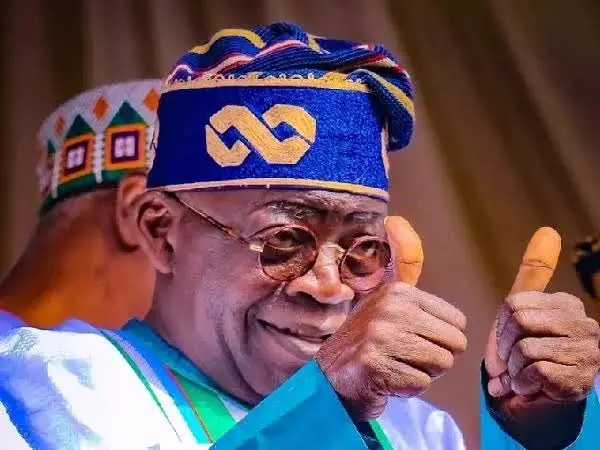
President Bola Tinubu, on Tuesday, unveiled an ambitious economic and development agenda to be implemented between 2027–2031 if re-elected at next year’s election.
Key highlights of the president’s new promises to Nigerians include an economy worth more than $1 trillion by 2030, electricity generation exceeding 10,000 megawatts, one million export-linked jobs and accelerated economic growth of six per cent annually.
These were contained in the All Progressives Congress (APC) 2027-2023 presidential campaign manifesto unveiled on in Abuja on Tuesday by Dr. Jumoke Oduwole, Minister of Industry, Trade and Investment and Deputy Director of Manifesto and Policy Development of the APC 2027 Presidential Campaign Council
The manifesto, according to the Oduwole, seeks to move Nigeria from the period of economic reforms to an era of shared prosperity, improved living standards and expanded opportunities for citizens.
Speaking at the event attended by Chief of Staff to the President, Femi Gbajabiamila, ministers and advisers, Oduwole outlined the manifesto’s major policy direction, achievements of the Tinubu administration and specific commitments for the proposed second term.
She explained that the manifesto is designed around the administration’s ambition to translate the economic reforms introduced over the last three and a half years into tangible benefits for Nigerians.
According to her, President Tinubu believes the country has reached an important turning point and is now positioned to move from reforms to shared prosperity underpinned by economic growth.
She said the President’s vision is to build a country that works for every Nigerian, irrespective of social or economic background.
“The promise is that Nigeria is moving from reforms to prosperity,” Oduwole said, explaining that the President thanked Nigerians for their patience and resilience during the reform period, promising a new phase of shared prosperity.
Four pillars of Tinubu’s 2027–2031 agenda
Oduwole said the manifesto is structured around four strategic pillars designed to address the country’s most pressing challenges and deliver measurable improvements in the lives of Nigerians.
They are a secure and resilient nation; better quality of life and a more affordable existence for Nigerians; energy, infrastructure and economic growth; and effective and accountable governance.
She explained that the four pillars were developed after consultations with a broad range of stakeholders, including members of the Federal Executive Council, the National Assembly, State governments, heads of government agencies, development partners, social groups, APC officials, women, persons with disabilities and the Nigerian media.
According to her, the consultations lasted approximately six weeks and were intended to ensure that the manifesto reflects the expectations and aspirations of Nigerians rather than the assumptions of government officials.
Oduwole said the document also drew from the eight priority areas of the Renewed Hope Agenda unveiled by Tinubu in 2023.
She listed the original priorities as economic reforms for sustained and inclusive growth; strengthening national security; boosting agriculture and food security; unlocking energy and natural resources; expanding infrastructure and transportation; investing in education, healthcare and social development; diversifying the economy through industry, digital technology, creative industries and manufacturing; and improving governance and public service delivery.
She disclosed that the administration’s performance against the 2023 promises has been tracked by the Central Results Coordinating and Delivery Unit (CRCDU), led by Hadiza Bala Usman.
Oduwole said the campaign council also made efforts to ensure that the claims and achievements contained in the manifesto could be independently examined and fact-checked.
She described the document as non-exhaustive, despite running into 109 pages, adding that there are several other achievements of the administration that could not be accommodated in the presentation.
Security: Stronger protection against terrorism, banditry
Under the first pillar, Oduwole said the Tinubu administration would prioritise safer communities, stronger protection against terrorism, banditry and kidnapping, more responsive policing and improved border security.
She described security as the fundamental covenant between a nation and its citizens, arguing that Nigerians must be able to live, work, learn, farm, trade and travel without fear.
She said the administration’s objective is to create safer citizens, more resilient communities and secure borders, allowing Nigerians to pursue their livelihoods and ambitions with greater confidence.
Among the commitments for 2027–2031 are stronger protection against security threats, improved police response and enhanced security for communities across the country.
She also highlighted existing interventions, including rescued hostages, farmer-herder dispute resolution through mediation and the training of community policing officers.
Food security, healthcare and affordable housing
Under the second pillar, the APC manifesto promises improved living standards through investments in education, healthcare, affordable food and housing.
Oduwole said the administration would intensify efforts to reduce the cost of living, expand domestic food production, improve storage and processing facilities, and reduce post-harvest losses.
She disclosed that the government intends to halve post-harvest losses while improving the movement of goods between states to make food and other essential commodities more affordable.
According to her, the administration also plans to establish a monthly food price tracker to provide families and farmers with reliable information about changing food prices.
On education, she announced plans to halve the number of out-of-school children by 2031 and recruit and train an additional 20,000 teachers.
She said the administration would also expand access to healthcare, targeting health insurance coverage for 40 per cent of Nigerians by 2031.
Highlighting existing interventions, Oduwole disclosed that the number of Nigerians covered by health insurance had increased from 16.7 million to 23 million.
She also cited government support for 7.1 million girls through the AGIA programme and interventions for expectant mothers.
The minister further referenced the Nigeria Education Loan Fund (NELFUND), which has provided financial support to students pursuing higher education.
She said the administration would sustain interventions aimed at improving access to education and healthcare while expanding opportunities for vulnerable groups.
Tinubu targets over 10,000mw electricity generation
A major component of the manifesto is the commitment to improve electricity supply as a foundation for industrialisation, business expansion and economic prosperity.
Oduwole said the administration plans to scale available electricity generation beyond 10,000 megawatts, alongside efforts by State governments to increase power supply.
She said the government would expand electricity metering towards full coverage while reinforcing transmission and distribution networks.
The manifesto also promises to extend access to clean energy in underserved communities.
According to her, reliable electricity is essential to the administration’s ambition of transforming Nigeria into a productive economy where businesses can operate efficiently, industries can expand and households enjoy better living conditions.
She stressed that economic prosperity would depend on the ability of Nigerian businesses to produce goods, access markets, attract investment and compete internationally.
“Power that works, infrastructure that connects, farms and factories that produce, businesses that grow, jobs that pay, and an economy that creates opportunity for every Nigerian,” she said in describing the administration’s vision.
One million export-linked jobs, stronger manufacturing
Oduwole said the third pillar would focus on energy, infrastructure and economic growth, with particular emphasis on industrialisation, trade, investment and economic diversification.
She disclosed that the administration plans to generate one million export-linked jobs for Nigerians by 2030 through talent and services exports.
The manifesto also targets annual economic growth of six per cent, increased manufacturing output and stronger participation of Nigerian businesses in African and international markets.
According to her, the government intends to establish at least one anchor industrial cluster in each of Nigeria’s six geopolitical zones.
The clusters are expected to strengthen manufacturing capacity, stimulate investment, create employment and promote the production of goods for domestic consumption and export.
She said the administration is also targeting manufacturing contributions of at least 12 per cent of the country’s Gross Domestic Product (GDP).
On non-oil exports, Oduwole announced plans to increase annual earnings to at least $15 billion.
She described the expansion of non-oil exports as an important achievement of the Tinubu administration, claiming that the growth rate of non-oil exports has exceeded that of total exports for the first time in Nigeria’s history under the current administration.
She also disclosed that more than 350,000 first-time borrowers have gained access to structured credit, with women accounting for 59 per cent of the beneficiaries.
The initiative, she said, is part of efforts to expand financial inclusion and provide more Nigerians with opportunities to participate in productive economic activities.
Oduwole further cited improvements in rail transportation, direct agricultural inputs to farmers and a reduction in estimated electricity billing as examples of interventions already undertaken by the administration.
The manifesto also promises stronger trade and investment facilitation, with the government committed to ensuring that investment pledges translate into actual business operations.
She said more Nigerian products would be manufactured locally and purchased by Nigerians, while non-oil exports would gain greater access to African and international markets.
Youth unemployment to be halved
Another major commitment in the manifesto is the creation of more employment opportunities and improvements in real incomes.
Oduwole said the administration intends to accelerate annual economic growth to six per cent and halve youth unemployment.
The manifesto also promises to expand access to equitable credit, with the target of reaching half of all economically active Nigerians.
She explained that the strategy is to link economic growth directly to employment generation and improved household incomes.
According to her, the government wants to establish a production-driven economy in which investments in infrastructure, energy, agriculture and manufacturing translate into better-paying jobs.
She said the administration’s economic philosophy was to transform stability into production, production into markets, markets into jobs and jobs into sustainable prosperity.
Affordable housing and land security
The APC manifesto also promises expanded access to affordable housing and secure land ownership.
Oduwole identified housing as an important component of improving the quality of life of Nigerians, alongside food security, education and healthcare.
The government intends to improve access to affordable homes while addressing issues surrounding land administration and security of tenure.
The manifesto’s broader social development objectives also include improving access to basic services and ensuring that economic growth benefits ordinary citizens.
Accountability, judicial reforms and local government autonomy
On the fourth pillar, Oduwole said the Tinubu administration would strengthen governance institutions, improve public service delivery and promote accountability at all levels of government.
She disclosed that the manifesto included plans to publish service standards and response times to make government agencies more accountable to citizens.
The administration also intends to expand digital case management across the country and automate consular services.
On access to justice, she said Nigerians unable to afford legal representation would benefit from indigent legal aid, while alternative dispute resolution mechanisms would be expanded to enable parties to resolve disputes without necessarily going through lengthy court proceedings.
She also highlighted plans to improve the national identity database and strengthen financial autonomy across the country.
On local government administration, Oduwole said allocations to every council would be published alongside clear performance and accountability standards.
The commitment is expected to strengthen transparency in the management of local government resources and improve service delivery at the grassroots.
Beyond $1 trillion economy by 2030
Oduwole reiterated Tinubu’s ambition to build a $1 trillion economy by 2030, saying the administration intended to exceed the target.
She, however, stressed that the more important objective was to ensure that economic expansion translated into quality employment and improved living conditions across the country.
She said the four pillars and eight priority areas were designed to provide a clear roadmap for achieving that objective.
According to her, the manifesto represents a continuation of the Renewed Hope Agenda, with greater emphasis on translating economic reforms into measurable prosperity.
She said the administration wanted Nigerians to experience the benefits of economic growth through reliable electricity, affordable food, better infrastructure, stronger industries, quality jobs and improved public services.
Oduwole said the manifesto was ultimately guided by the aspirations expressed in Nigeria’s national prayer.
Quoting the national prayer, she said: “Help us to build a nation where no one is oppressed, and so with peace and plenty, Nigeria may be blessed.”
She described the statement as the central ethos of the manifesto, adding that the four pillars, eight priorities and commitments for 2027–2031 were developed around a single national purpose.
The central message of Tinubu’s proposed second-term agenda, as presented by Oduwole, is that the period of difficult economic adjustments should give way to a phase in which economic growth produces jobs, stronger purchasing power, improved public services and shared prosperity.
Headlines
Wike Begins Money-for-Vote Campaign, Dangles N10m Bounty for Abuja Councillors to Reelect Tinubu

Minister of the Federal Capital Territory, Nyesom Wike, has introduced what observers view as a novel dimension to Nigeria’s electoral process as he sensationally promised a N10 million cash reward to every councillor who “delivers” his ward for President Bola Tinubu and All Progressives Congress candidates at the 2027 general election.
Wike made the declaration at a Rainbow Coalition stakeholders’ meeting in Kwali Area Council, attended by traditional rulers, political stakeholders and residents.
The minister, according to Channels TV, urged councillors to mobilise residents and community groups to guarantee victory for the APC in their wards, attaching a price tag to electoral success.
“Any councillor that delivers his ward will get N10 million reward. Therefore, go and meet your leaders, go and meet your youth groups, go and consult with associations. Let’s deliver our ward to Mr President,” Wike reportedly announced.
The statement has triggered concerns over vote-buying, inducement of grassroots officials and the weaponisation of public office to compromise the 2027 polls.
Critics argue that dangling N10 million per ward to elected councillors blurs the line between legitimate mobilisation and financial inducement, reducing the election to a transactional contest where delivery is rewarded in cash.
With months to the general elections, the promise raises fresh questions about whether the will of voters will count, or whether wards will be delivered through coercion, compromise and cash.
Observers warn that when councillors – the closest elected officials to the people – are placed on a bounty, the stage is set for intimidation of opponents, manipulation of results and rigging at the polling unit level.
The development is being seen as part of a growing pattern of desperation within the political class to secure victory at all costs, even if it means monetising the electoral process and compromising its integrity before the first ballot is cast.
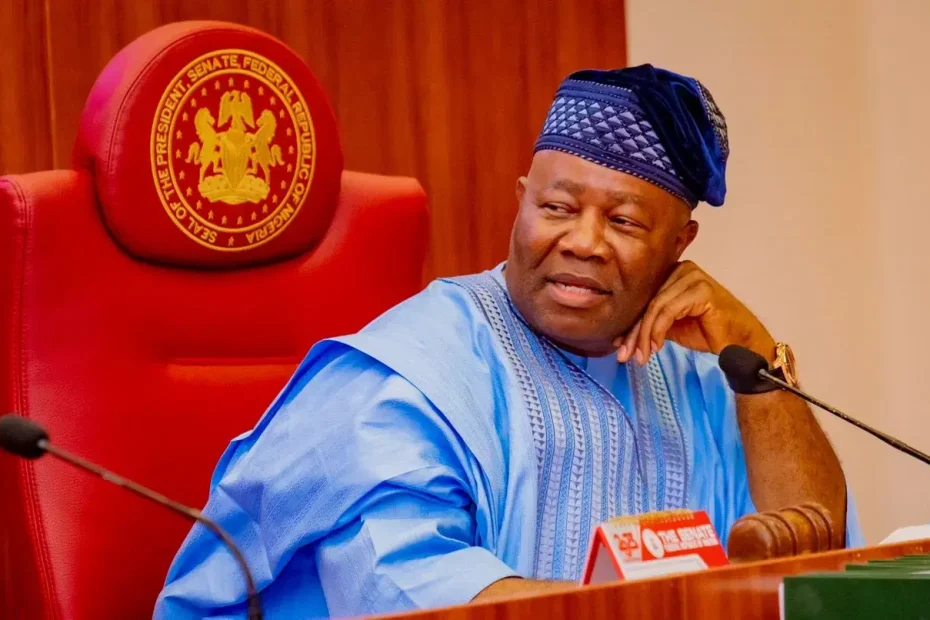
The National Chairman of All Progressives Congress (APC), Professor Nentawe Yilwatda, has declined to endorse Senate President, Godswill Akpabio, for another term as head of the National Assembly ahead of the 2027 general elections.
Yilwadta said he has no preferred candidate for the position, insisting that the decision would rest entirely with senators elected into the next National Assembly.
He made the remarks on Monday during an appearance on Channels Television’s Politics Today programme.
Asked whether the APC would return Akpabio as Senate President if he wins re-election, Yilwatda responded: “Let’s wait for the election first. I don’t have anybody in mind. The Senate will determine who they want to make the Senate President.”
His response comes despite growing support for Akpabio’s bid to retain the position beyond the current legislative term.
In October, senators publicly backed Akpabio’s return as President of the 11th Senate, with some lawmakers declaring that there would be no vacancy in the position.
Akpabio, who has led the Senate since June 2023, is seeking another term in the National Assembly.
However, Yilwatda’s remarks suggest that the APC leadership is not publicly committing itself to any candidate for the Senate presidency before the elections.
The Senate President is elected by members of the upper legislative chamber, meaning Akpabio would still need the support of his colleagues to retain the position even if he wins re-election.
During the same interview, Yilwatda also defended President Bola Tinubu’s physical fitness ahead of the 2027 presidential election and accused opposition parties of relying on blackmail during political campaigns.