
Headlines
Nigeria’s Loss of $9.6bn: Who’s Responsible?


- /home/rhoncare/pointblank.ng/wp-content/plugins/mvp-social-buttons/mvp-social-buttons.php on line 27
https://pointblank.ng/wp-content/uploads/2019/05/Malami-800x600.jpg&description=Nigeria’s Loss of $9.6bn: Who’s Responsible?', 'pinterestShare', 'width=750,height=350'); return false;" title="Pin This Post">
- Share
- Tweet /home/rhoncare/pointblank.ng/wp-content/plugins/mvp-social-buttons/mvp-social-buttons.php on line 69
https://pointblank.ng/wp-content/uploads/2019/05/Malami-800x600.jpg&description=Nigeria’s Loss of $9.6bn: Who’s Responsible?', 'pinterestShare', 'width=750,height=350'); return false;" title="Pin This Post">
By Eric Elezuo
On August 16, 2019, the Nigerian government received the greatest shock of its administration when a British Court awarded over $9 billion damages against it for failing to honour a contract in a landmark judgement.
The judgment, which was delivered by Justice Butcher of The High Court of Justice, Business and Property Courts of England and Wales, ruled against Nigeria’s objection to arbitration which in 2017 settled that the Nigerian government should pay $6.6 billion as damages to a company, Process & Industrial Development Limited (P&ID). The damages and interest add up to a figure above $9 billion.
Nigeria’s former Attorney-General, Mr. Bayo Ojo, was among the three member arbitration panel that gave judgement in favour of P&ID against the Nigerian government and at the same time secured the monetary award. While Mr. Ojo tried his best to ensure that Nigeria escaped with a paltry $250 million, the majority opinion of Lord Hoffmann and Anthony Evans, the two other members of the panel, ensured that Nigeria lost the case.
Hoffmann and Evans held that P&ID’s expenditure and income should have been about $6.597 billion if the agreement was duly performed by the government. They also insisted that the award should be paid together with interest at the rate of 7 per cent from March 20, 2013.
Ever since the judgement, blames have been traded between the present All Progressives Congress (APC) administration led by Muhammadu Buhari, and previous administrations dating back to the late Umaru Musa Yar’dua era.
Leading the blame game is the returnee Minister of Justice and Attorney General of Nigeria, Mallam Abubakar Malami. The Minister, who was reappointed by President Muhammadu Buhari, few days after the judgement described the ruling as the “consequences of the underhand dealings of the past administration”.
He said: “Sadly, in spite of the spirited and concerted efforts of the current administration to combat corrupt practices and rent-seeking in all its forms, Nigerians woke up on Friday, August 16, 2019, to the rudest consequences of the underhand dealings of the past administration that has resulted in the award of $9 billion against the Federal Republic of Nigeria, by a British court which ruled that Process and Industrial Development Limited had the right to seize $9 billion in Nigerian assets.”
The lawyer went ahead and specifically fingered the administration of former President Goodluck Jonathan as the culprit, saying he connived “with local and International conspirators in a bid to inflict grave economic adversity on the Federal Republic of Nigeria and the good people of Nigeria.”
Malami concluded his blame with a threat, stressing that the federal government would punish any government official whose action or inaction led to the award of $9 billion damages against Nigeria. He also promised that the government “will vigorously defend its rights to protect its people’s assets around the world against the enforcement of the judgement.”
It is worth knowing that the value of the penalty represents approximately a fifth of the country’s foreign reserves of $45bn. the fact of the case is itemised as follows:
- The agreement, which set the basis for the current legal action, was a Gas Supply and Processing Agreement signed in January 2010.
- If concluded, the deal would have offset a significant percentage of Nigeria’s energy deficit (Africa’s largest oil and gas producer has a notoriously epileptic power supply).
- P&ID claims about $40m were expended on the project, but Nigeria did not meet its obligations and cost the company billions in damages representing future profits it had lost.
- In 2013, after the deal failed, P&ID dragged the government to court and won a $6.6bn arbitration case against the Federal Government.
- Four years later, the firm was awarded $6.6bn, with an additional $2.4bn included as accrued interest.
- Nigeria for years resisted P&ID’s attempts to begin enforcement proceedings of the rulings in the US and the UK; the judgement by the British court now allows the firm to begin seizing Nigerian assets.
- Under the Jonathan administration, Nigeria negotiated an out-of-court settlement with P&ID for a far smaller sum of $850m. However, the president left the payment to the incoming Buhari administration, which set aside the settlement and asked its lawyers to return to litigation.
Undaunted by the threats and name calling of the Buhari government, the Jonathan camp responded, throwing the blame to the feet of the present administration. It alleged that the administration failed to pay the $850million out of court settlement with P&ID just to spite the previous administration. The government has however, denied that it did not handle the case diligently.
In a statement, signed by a former aide of Jonathan, Mr. Reno Omokri, the Jonathan camp noted as follows:
“Former President Jonathan was not president in January 2010. During that time, he was completely shut out of power by an unelected cabal that ran Nigeria during the period of the ill health of the late President Yar’Adua, before the National Assembly courageously intervened on February 9, 2010.”
Jonathan assumed office in February 2010 and, according to Omokri, the deal had by then already been set in motion by Rilwanu Lukman, Umaru Musa Yar’Adua’s Petroleum Minister. The cabinet and close allies of the late president had refused to turn over sensitive documents to his deputy because Yar’Adua hadn’t handed over to him as constitutionally stipulated.
“That same cabal has resurrected and has now coalesced around President Muhammadu Buhari, with some of them being made either ministers, or formal and informal advisers. As a matter of fact, the main man behind that cabal is now one of the closest persons to General Buhari.”
It is okay that the Attorney General has sworn to prosecute and punish everyone involved and responsible for the loss, if it is eventually executed, one thing must be established, will he also prosecute himself if given the afore-mentioned, he also had a role to play.


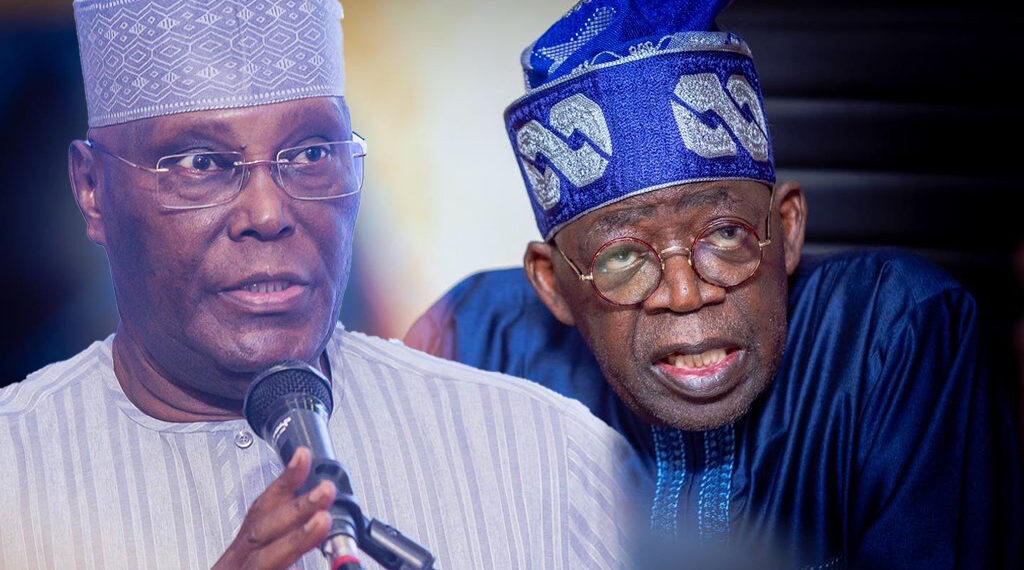
Former Vice President Abubakar has asked President Bola Tinubu to give a full account of Nigeria’s borrowing and debt profile and address the hardship faced by Nigerians following the removal of the fuel subsidy.
Atiku said this in a statement issued by Phrank Shaibu, Director of Strategic Communications of the African Democratic Congress (ADC) Presidential Campaign Council.
He said after more than three years of reforms, Nigerians are facing higher food, transport and energy bills, with public debt recorded at N166.79 trillion as at June 30, 2026, according to the Debt Management Office (DMO, compared to N49.85 trillion in March 2023.
“A government that says more money is coming in must explain why it keeps borrowing and why the people paying for its policies cannot see the promised gains,” Atiku said.
The ADC presidential candidate asked the President to identify old debt newly recorded, foreign debt whose naira value rose with the exchange rate, and every new loan contracted since assumption of office, as well as what has been repaid and outstanding.
Atiku said the debt question cannot be separated from the lived reality of ordinary Nigerians, noting that while government reports improving macroeconomic outcomes, many citizens struggle with the cost of living.
He said the true test of economic policy is whether Nigerians can afford food, transportation, housing, education, healthcare and electricity.
He cited an IMF assessment in June 2026, which said reforms improved macroeconomic outcomes but acknowledged conditions remained difficult, estimating poverty at 63 per cent under the national poverty line and saying 27 million Nigerians faced food insecurity in the latter part of 2025, with a warning that higher fuel, food and transport costs could worsen poverty.
He also cited recent fuel price pressures, with petrol selling around N1,400 per litre in Lagos and Abuja and as high as N1,500 in parts of northern Nigeria in September, while diesel exceeded N2,000 per litre.
Atiku said the cost of servicing debt has become a major concern, citing BudgIT report that quarter of 2025, debt service reached N12.52 trillion against N18.63 trillion revenue — 67.2 per cent.
He noted the 2026 fiscal framework provides for about N68.32 trillion expenditure against projected revenue of N36.87 trillion, leaving deficit of roughly N31.45 trillion.
He recalled President Tinubu’s remarks at Africa Forward Summit in Nairobi in May that Nigeria expected to spend about $11.6 billion on debt service in 2026, describing the amount as nearly half of projected revenue.
Atiku also demanded disclosure concerning DMO’s external debt-service schedule for second quarter of 2026, where $39.25 million was recorded as ‘other charges’ between April and June 2026, including $22.5 million against First Abu Dhabi Bank Total Return Swap and about $8.97 million against Deutsche Bank AG.
He asked for clarification on what the $22.5 million charge was for, which agreement authorised it, original facility, how much was drawn and obligations outstanding.
He also asked for reconciliation of Treasury Bill borrowing, noting DMO reported N19.48 trillion outstanding Nigerian Treasury Bills at 30 June 2026, and urged the government to publish what subsequently matured, redeemed, rolled over and what constituted new borrowing.
Atiku said the administration should apologise to families facing hardship and account for revenues and borrowing.
“An apology is not too much to ask from a government under whose watch many Nigerians have been pushed into deeper economic distress,” he said.
“Good economics must ultimately improve human life. If government revenue rises while families become poorer, Nigerians have right to demand full account.”
- He urged the Federal government to reconcile borrowing, explain charges, show what sacrifice has produced and focus on making life affordable.

Nigeria’s President, Bola Ahmed Tinubu, has reportedly postponed his return to the country.
TheCable reports that the president’s travel plans changed at the last minute.
Tinubu was expected to return to Nigeria today after spending weeks in Europe on a working vacation.
He was expected to arrive in Lagos, where he would remain for up to a week before proceeding to Abuja, the nation’s capital.
However, the president’s itinerary has been revised, with his return to Nigeria now expected on Tuesday.
Tinubu left Nigeria on August 30 for London, where he began what the presidency described as a three-week working vacation as part of his annual leave.
After spending about a week in the United Kingdom, the president travelled to Paris, France.
During his stay in Paris, Tinubu met with French President Emmanuel Macron and businessman Vincent Bolloré.
The presidency announced on September 21 that the president had extended his stay abroad by a few days and was expected to return to Nigeria at the weekend.
According to the presidency, Tinubu remained in touch with officials at home and continued to oversee government affairs while abroad.
Vice-President Kashim Shettima represented him at some official functions during his absence.
However, Shettima travelled to New York on September 20 to represent Nigeria at the 81st United Nations General Assembly.
The latest change to Tinubu’s return schedule comes amid questions over his prolonged absence from the country.
His extended stay abroad has led to a constitutional debate, with some opposition figures questioning whether presidential powers should have been transferred to Shettima after 21 days.
Section 145 of the 1999 Constitution states that a president proceeding on vacation shall transmit a written declaration to the Senate President and the Speaker of the House of Representatives, after which the vice-president assumes the functions of the president in an acting capacity.
Senate President, Godswill Akpabio, said on Tuesday that there was no vacancy in Aso Rock, adding that Tinubu remained in charge of the country’s affairs despite being outside Nigeria.
President Bola Tinubu says his administration had identified mistakes made by previous governments, appealing to Nigerians for more time to address those lapses
Tinubu made the appeal on Friday through the Speaker of the House of Representatives, Tajudeen Abbas, during a special prayer session at the National Mosque in Abuja to mark Nigeria’s 66th Independence Anniversary.
Tinubu said peace and development are gradually returning to the country.
“This anniversary—the 66th—by all accounts signifies Nigeria has come of age,” he said.
“The person of 66 years cannot be called a child anymore. Nigeria has become mature, even though when we reflect on the journey from independence to date, we may say it was a mixed journey.
“Nigeria was bedeviled with a lot of issues in the past and opportunities as well. But we thank Almighty Allah for granting us the life and the peace for us to witness this very historic event today.
“My message to the country on behalf of the Mr. President, the Senate President and all members of the National Assembly is that the citizens should not lose hope. Peace is coming back to this country. Development is coming back to this country. Things will get better as we progress in this democracy.
“More importantly, citizens should look at the focus of the government of today, that the mistakes of the past—the cumulative mistakes and the missed opportunities of the past—are being corrected in this particular administration.
“And I want to categorically make it clear that Nigeria is on the right path; that there is light at the end of the tunnel, and that Nigerians have finished making sacrifices for this country to be great again.
“We should give this government more opportunity for it to come back and finish the good work [it has started].”
Senior government officials, including Barau Jibrin, Deputy Senate President; State governors; National Assembly members; ministers; George Akume, Secretary to the Government of the Federation; and military chiefs, attended the event.


