
Headlines
Buhari, Not Jonathan to Be Blamed for $9bn Judgement Debt, Says P&ID


- /home/rhoncare/pointblank.ng/wp-content/plugins/mvp-social-buttons/mvp-social-buttons.php on line 27
https://pointblank.ng/wp-content/uploads/2019/05/Buhari-4-1000x600.jpg&description=Buhari, Not Jonathan to Be Blamed for $9bn Judgement Debt, Says P&ID', 'pinterestShare', 'width=750,height=350'); return false;" title="Pin This Post">
- Share
- Tweet /home/rhoncare/pointblank.ng/wp-content/plugins/mvp-social-buttons/mvp-social-buttons.php on line 69
https://pointblank.ng/wp-content/uploads/2019/05/Buhari-4-1000x600.jpg&description=Buhari, Not Jonathan to Be Blamed for $9bn Judgement Debt, Says P&ID', 'pinterestShare', 'width=750,height=350'); return false;" title="Pin This Post">
The attempt by President Muhammadu Buhari to pin the $9billion British court’s judgement debt on former President, Goodluck Jonathan, has been dismissed by the Process and Industrial Developments Limited (P&ID), the very Irish company, that is in the thick of the entire saga.
P&ID in a clear statement, on Friday, completely absolved the former President of culpability and blamed both Buhari and the Attorney General, Abubakar Malami responsible for the development.
The company, in attempt to set the record straight, P&ID, detailed how the Buhari government, practically slept on the issue and accused Malami particularly of trying to revise history and introduce allegations of contract fraud.
Read the full statement:
Malami’s Revisionist History
It is another day, and with it comes another attempt from the Nigerian Government to create a fictional history of the P&ID case.
This week’s series of desperate conspiracy theories point to something deeper: the Buhari Administration is refusing to admit its own role in the P&ID case from 2015-2019 after it came into office.
Appearing on CNBC Africa, Attorney General Abubakar Malami sought to wipe his hands and the hands of the Buhari Administration clean when he stated, “[t]he government as a unit was delicately involved. And that was the government in 2010, the award was in 2012, and then three years thereafter the current administration under the leadership of Muhammadu Buhari came into place. So the time when this administration came to place in 2015, the award was over three years, there was no appeal, no application for execution, no application to set the award aside.”
Attorney General Malami seems to have a case of amnesia.
Let’s set the record straight:
May 3, 2015: P&ID offers to settle the dispute with the Nigerian Government for $850mm. President Goodluck Jonathan indicates they are handing over the negotiations to the incoming Buhari Administration.
May 29, 2015: Muhammadu Buhari is sworn in as the 15th President of Nigeria, but fails to appoint a cabinet for five months.
July 17, 2015: The Arbitration Tribunal found in favor of P&ID (i.e. – the Liability Award). The new Buhari Administration did not make any attempts at settling or negotiating with P&ID, and did not make any effort to challenge the decision.
November 11, 2015: Attorney General Malami was sworn in November 11, 2015, just under three months after the Liability Award.
May 27, 2016: The Arbitration Tribunal wrote to the Nigeria Government confirming that: “As the parties will be aware from Procedural Order No 12, the Tribunal has decided that the seat of the arbitration is England. It follows that the Federal Court of Nigeria had no jurisdiction to set aside its Award.” Neither Attorney General Malami, nor any representative of the Buhari Administration did anything in response other than continue with the proceedings, thereby tacitly accepting the analysis of the Arbitration Tribunal.
June 24, 2016: Having failed to set aside the Liability Award by falsely claiming the seat of arbitration was in Nigeria; not England, Attorney General Malami wrote personally to the arbitrators to say “my office has taken over the handling of the above arbitration on behalf of the Ministry of Petroleum Resources.” He asked for and obtained an extension of time to file a defence to quantum, and appointed his own legal team in place of the Ministry of Petroleum Resource’s legal team.
August 30-31, 2016: The Quantum Hearing (i.e. – amount of damages payable) takes place in London. Attorney General Malami’s legal team conducted Nigeria’s defence at the quantum hearing. Expert witnesses as to quantum were called to give evidence and were cross-examined.
After the Quantum Hearing, Attorney General Malami instructed his lawyers to request a standstill agreement, which would take effect from the date of the Award.
This fact has never been publicly reported until today.
January 31, 2017: The Arbitral Tribunal issued a final award, ordering Nigeria to pay P&ID $6.5 billion plus $2.3 billion in uncollected interest as of March 2018.
February 17, 2017: The Award on Quantum was delivered to the parties on February 17, 2017. Despite the 60-day standstill having been agreed by P&ID, Attorney General Malami made no attempt to negotiate with P&ID during the 60 days following the handing down of the Quantum Award.
April 28, 2017: After the 60 days had expired, Attorney General Malami instructed his lawyers to write to P&ID’s lawyers and explained that “The delay was occasioned by the bureaucracy of the Federal Government in a bid to determine a reasonable strategy after receipt of the Arbitral award.” The Attorney General’s lawyers added: “we now have the authority of the Vice President of the Federal Republic of Nigeria to meet with the Claimant to negotiate the Terms of the Arbitral award.”
Today: In the lead up to the judgment by the English Commercial Court, Attorney General Malami allowed the time for acknowledging service in both the United States and London to lapse without filing any response. In both jurisdictions, Nigeria’s lawyers Curtis Mallet had to apply for ex post facto extensions of time and make the necessary apologies and explanations to the court.
In London, a senior Curtis Mallet partner explained that the Claim Form was “immediately filed and not passed up the chain of command” at the Ministry of Justice. The partner pleaded that “the delay was neither deliberate nor intended to be disrespectful to the Court.”
In the US, Curtis Mallet explained that the deadline was missed because they were in the process of being formally retained by the Nigerian Government and had been instructed to enquire about the potential for a settlement
The Attorney General’s pronouncements in the Nigerian press are a clear attempt to cover up his own incompetence and that of the Buhari Administration. This is a matter, which could have been settled shortly after he took office in November 2015 for $850 million. Instead, he personally took the decision to gamble on the arbitration and turned an $850 million liability into a $9.6 billion liability.
And at no time since has Attorney General Malami assumed responsibility has he raised any allegation of fraud or scam, either in the arbitration or in the subsequent enforcement proceedings. The reason for this is that there was no fraud. All of this raises serious concerns for foreign investors in Nigeria, whether you are investing in a commercial enterprise or buying Eurobonds. Not only will Nigeria deliberately refuse to pay an international arbitration award backed by an English Court, but they are prepared to launch sham investigations and character assassinations when all else fails.
This is a serious assault on the Rule of Law by a demonstrably dishonest administration.
Meanwhile, P&ID is now focused on vigorously enforcing its legal rights in the UK, including seizing Nigerian assets to satisfy the award. This will begin as soon as possible.
Source: whirlwindnews


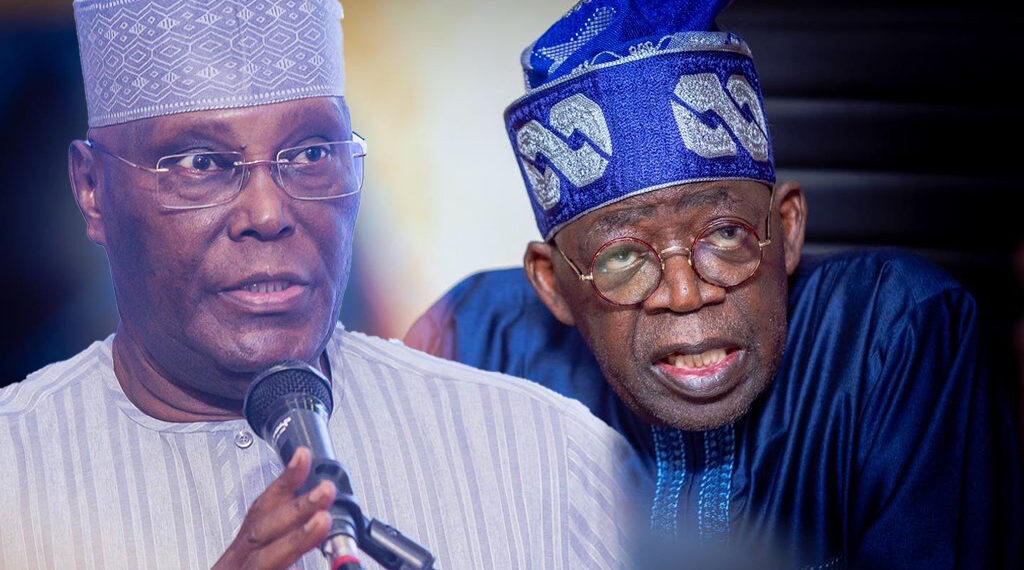
Former Vice President Abubakar has asked President Bola Tinubu to give a full account of Nigeria’s borrowing and debt profile and address the hardship faced by Nigerians following the removal of the fuel subsidy.
Atiku said this in a statement issued by Phrank Shaibu, Director of Strategic Communications of the African Democratic Congress (ADC) Presidential Campaign Council.
He said after more than three years of reforms, Nigerians are facing higher food, transport and energy bills, with public debt recorded at N166.79 trillion as at June 30, 2026, according to the Debt Management Office (DMO, compared to N49.85 trillion in March 2023.
“A government that says more money is coming in must explain why it keeps borrowing and why the people paying for its policies cannot see the promised gains,” Atiku said.
The ADC presidential candidate asked the President to identify old debt newly recorded, foreign debt whose naira value rose with the exchange rate, and every new loan contracted since assumption of office, as well as what has been repaid and outstanding.
Atiku said the debt question cannot be separated from the lived reality of ordinary Nigerians, noting that while government reports improving macroeconomic outcomes, many citizens struggle with the cost of living.
He said the true test of economic policy is whether Nigerians can afford food, transportation, housing, education, healthcare and electricity.
He cited an IMF assessment in June 2026, which said reforms improved macroeconomic outcomes but acknowledged conditions remained difficult, estimating poverty at 63 per cent under the national poverty line and saying 27 million Nigerians faced food insecurity in the latter part of 2025, with a warning that higher fuel, food and transport costs could worsen poverty.
He also cited recent fuel price pressures, with petrol selling around N1,400 per litre in Lagos and Abuja and as high as N1,500 in parts of northern Nigeria in September, while diesel exceeded N2,000 per litre.
Atiku said the cost of servicing debt has become a major concern, citing BudgIT report that quarter of 2025, debt service reached N12.52 trillion against N18.63 trillion revenue — 67.2 per cent.
He noted the 2026 fiscal framework provides for about N68.32 trillion expenditure against projected revenue of N36.87 trillion, leaving deficit of roughly N31.45 trillion.
He recalled President Tinubu’s remarks at Africa Forward Summit in Nairobi in May that Nigeria expected to spend about $11.6 billion on debt service in 2026, describing the amount as nearly half of projected revenue.
Atiku also demanded disclosure concerning DMO’s external debt-service schedule for second quarter of 2026, where $39.25 million was recorded as ‘other charges’ between April and June 2026, including $22.5 million against First Abu Dhabi Bank Total Return Swap and about $8.97 million against Deutsche Bank AG.
He asked for clarification on what the $22.5 million charge was for, which agreement authorised it, original facility, how much was drawn and obligations outstanding.
He also asked for reconciliation of Treasury Bill borrowing, noting DMO reported N19.48 trillion outstanding Nigerian Treasury Bills at 30 June 2026, and urged the government to publish what subsequently matured, redeemed, rolled over and what constituted new borrowing.
Atiku said the administration should apologise to families facing hardship and account for revenues and borrowing.
“An apology is not too much to ask from a government under whose watch many Nigerians have been pushed into deeper economic distress,” he said.
“Good economics must ultimately improve human life. If government revenue rises while families become poorer, Nigerians have right to demand full account.”
- He urged the Federal government to reconcile borrowing, explain charges, show what sacrifice has produced and focus on making life affordable.

Nigeria’s President, Bola Ahmed Tinubu, has reportedly postponed his return to the country.
TheCable reports that the president’s travel plans changed at the last minute.
Tinubu was expected to return to Nigeria today after spending weeks in Europe on a working vacation.
He was expected to arrive in Lagos, where he would remain for up to a week before proceeding to Abuja, the nation’s capital.
However, the president’s itinerary has been revised, with his return to Nigeria now expected on Tuesday.
Tinubu left Nigeria on August 30 for London, where he began what the presidency described as a three-week working vacation as part of his annual leave.
After spending about a week in the United Kingdom, the president travelled to Paris, France.
During his stay in Paris, Tinubu met with French President Emmanuel Macron and businessman Vincent Bolloré.
The presidency announced on September 21 that the president had extended his stay abroad by a few days and was expected to return to Nigeria at the weekend.
According to the presidency, Tinubu remained in touch with officials at home and continued to oversee government affairs while abroad.
Vice-President Kashim Shettima represented him at some official functions during his absence.
However, Shettima travelled to New York on September 20 to represent Nigeria at the 81st United Nations General Assembly.
The latest change to Tinubu’s return schedule comes amid questions over his prolonged absence from the country.
His extended stay abroad has led to a constitutional debate, with some opposition figures questioning whether presidential powers should have been transferred to Shettima after 21 days.
Section 145 of the 1999 Constitution states that a president proceeding on vacation shall transmit a written declaration to the Senate President and the Speaker of the House of Representatives, after which the vice-president assumes the functions of the president in an acting capacity.
Senate President, Godswill Akpabio, said on Tuesday that there was no vacancy in Aso Rock, adding that Tinubu remained in charge of the country’s affairs despite being outside Nigeria.
President Bola Tinubu says his administration had identified mistakes made by previous governments, appealing to Nigerians for more time to address those lapses
Tinubu made the appeal on Friday through the Speaker of the House of Representatives, Tajudeen Abbas, during a special prayer session at the National Mosque in Abuja to mark Nigeria’s 66th Independence Anniversary.
Tinubu said peace and development are gradually returning to the country.
“This anniversary—the 66th—by all accounts signifies Nigeria has come of age,” he said.
“The person of 66 years cannot be called a child anymore. Nigeria has become mature, even though when we reflect on the journey from independence to date, we may say it was a mixed journey.
“Nigeria was bedeviled with a lot of issues in the past and opportunities as well. But we thank Almighty Allah for granting us the life and the peace for us to witness this very historic event today.
“My message to the country on behalf of the Mr. President, the Senate President and all members of the National Assembly is that the citizens should not lose hope. Peace is coming back to this country. Development is coming back to this country. Things will get better as we progress in this democracy.
“More importantly, citizens should look at the focus of the government of today, that the mistakes of the past—the cumulative mistakes and the missed opportunities of the past—are being corrected in this particular administration.
“And I want to categorically make it clear that Nigeria is on the right path; that there is light at the end of the tunnel, and that Nigerians have finished making sacrifices for this country to be great again.
“We should give this government more opportunity for it to come back and finish the good work [it has started].”
Senior government officials, including Barau Jibrin, Deputy Senate President; State governors; National Assembly members; ministers; George Akume, Secretary to the Government of the Federation; and military chiefs, attended the event.


