
Headlines
Is Murtala Mohammed Int’l Airport Truly International


- /home/rhoncare/pointblank.ng/wp-content/plugins/mvp-social-buttons/mvp-social-buttons.php on line 27
https://pointblank.ng/wp-content/uploads/2019/08/WhatsApp-Image-2019-08-30-at-1.28.58-PM1-1000x540.jpeg&description=Is Murtala Mohammed Int’l Airport Truly International', 'pinterestShare', 'width=750,height=350'); return false;" title="Pin This Post">
- Share
- Tweet /home/rhoncare/pointblank.ng/wp-content/plugins/mvp-social-buttons/mvp-social-buttons.php on line 69
https://pointblank.ng/wp-content/uploads/2019/08/WhatsApp-Image-2019-08-30-at-1.28.58-PM1-1000x540.jpeg&description=Is Murtala Mohammed Int’l Airport Truly International', 'pinterestShare', 'width=750,height=350'); return false;" title="Pin This Post">
By Eric Elezuo
The Murtala Mohammed international Airport located in the heart of Ikeja, Lagos, is probably Nigeria’s most important airport. Not only that; it is Nigeria’s pioneer airport, and has played the big brother role ever since it was officially public in 1979 by the General Olusegun Obasanjo administration. But many years after, the airport is still struggling to find its feet among the league of prolific international airports across the world.
Originally known as Lagos International Airport, it was renamed in the mid 1970s, during construction of the new international terminal, after a former military head of state Murtala Mohammed. The international terminal was modelled after Amsterdam Airport Schipol. The new terminal opened officially on 15 March 1979.
The airport which occupies a massive land space could be described as just a massive edifice that is just there, a typical example of a whited sepulcher which somehow presents an atmosphere of activity from the outside while the inside of full of rot and smelly flesh.
The MMA as it is popularly known has had its fair share of notoriety. From 1992 through 2000, the US Federal Aviation Administration posted warning signs in all US international airports advising travelers that security conditions at Lagos Airport did not meet ICAO minimum standards. In 1993, the FAA suspended air service between Lagos and the United States.

The FAA ended its suspension of direct flights to Nigeria in 2001 in recognition of certain security improvements. By 2010, the FAA granted the airport its highest safety rating. These were laudable achievements, but how far have they sustained.
The frustrations of a would-be passenger or a visitor to the airport is developed once he decides his trip, and is heightened as he embarks on the trip to the large expanse of land. The feeling becomes real as he makes a gradual entry into space.

Dilapidated walkway
If you are driving your own car, you are inundated with the depression that comes with moving up to the arrival or departure section depending on whether you are boarding or coming to ‘pick up’. On the other hand, if you are chauffeured in a public transport, the driver transfers the aggression to the passenger as his constant sighing and complaints get to the nerve. He follows it up with the hike of the fares with the excuse that ‘shebi you don see how much time I don waste here’.
At the garage, one is face with the fact that only one shuttle bus is functional among the lot, consequently, it is either you excruciating time waiting or take the inglorious option of trekking the distance. More often than not, the later had been the most preferred the loads one is carrying not withstanding.

The walkway to and fro the halls of the airport are quite a sight to behold. It appears clean but not neat. It can be compared to a footpath connecting two remote villages with the green-netted fence like heaps of unkempt and overgrown grass. The roof of the walkway has carved in, leaving people at the mercy of the elements even as they are supposedly under a shade. A handful of cleaners are also sighted attempting to do a job, but they more the brushes and brooms touch the floor, the more discomfort everyone around becomes. This is because each contact the broom makes with the ground raises lots of sandy dust, constituting serious health hazard.
At the entrances, one is confronted by the presence of agile, able looking security operatives, but you will be surprised to discover that they are just on duty but never alert. Their routine is just ordinary as there is no gadget to ascertain the eligibility of the one entering the airport halls. You are checked for identification, your baggage thrown into the electronic roller, and you are good to go.
Inside, there is a plethora of forlorn looking faces, either at the departure hall where they are checking in to jet out or at the arrival hall where the returnees are making an entry into the Nigerian world. Passengers complained of long hours of queuing before any activity is initiated. While most of them said there is a marked improvement irrespective of the shabby treatment, ‘considering how it used to be in the past’ others agreed that ‘we are just going round and round a circle’.

Non functioning lifts
If you would want to move upstairs, you had better be strong enough to climb the staircase, as the lift ‘is not working’. It has been closed for sometime, and little effort is being made to put them to work again. However, to the average Nigerian, who has little knowledge of the airport facilities, especially as they are in countries in Europe, America and other parts of the world, the toilets look clean. But the Murtala Mohammed toilets are actually far from clean
A passenger, Friday Omorogbe, who was traveling to Belgium recounted nasty experiences he had with security guards at the airport concluding that they were selective in the search, and only needed someone to give them money.
“When I was coming to Nigeria from Belgium, I was hushed to a rude stop by the guards. The surprising fact was that a lot of white folks had passed before me and were still passing; but none of them was disturbed until it got to my turn. They rudely set me apart, asked silly questions about what I was carrying and even searched. All they wanted me to do was give them money. Why did they have to single us out, blacks, for such harsh treatment and accord the whites free passage? Not even in Belgium, but here in Nigeria,” he said.

Interior floors
Omorogbe noted that the ‘only thing that makes this place an airport is the fact that planes land and take off here’, stressing that facilities have greatly decayed and services half-heartedly given.
“The last time I was here, the whole roof was leaking, and the cleaners were packing water from the floor. Imagine, international airport. In Europe, the floors of their airport are a beauty to behold, but look at these ones here, “he added.
Another lady, who was traveling to the United States with her family frowned at the infrastructural decay of the airport, saying ‘it is not up to standard; I don’t even want to talk about it, but I would get there one day’.
For Anthony Raphael, who was traveling to Dubai, his message is simple; ‘we will get there one day’. He wants the authorities to look into the issues of flight delays and rehabilitation of infrastructures to actually have an international status and outlook.
With the return of Haji Srika as the Minister of Aviation and the unbundling of the aviation sector to be become a separate ministry away from transportation, stakeholders believe that the Murtala Mohammed International Airport and other international airports around the country will begin to experience a turn around that will eventually elevate it to really international status.


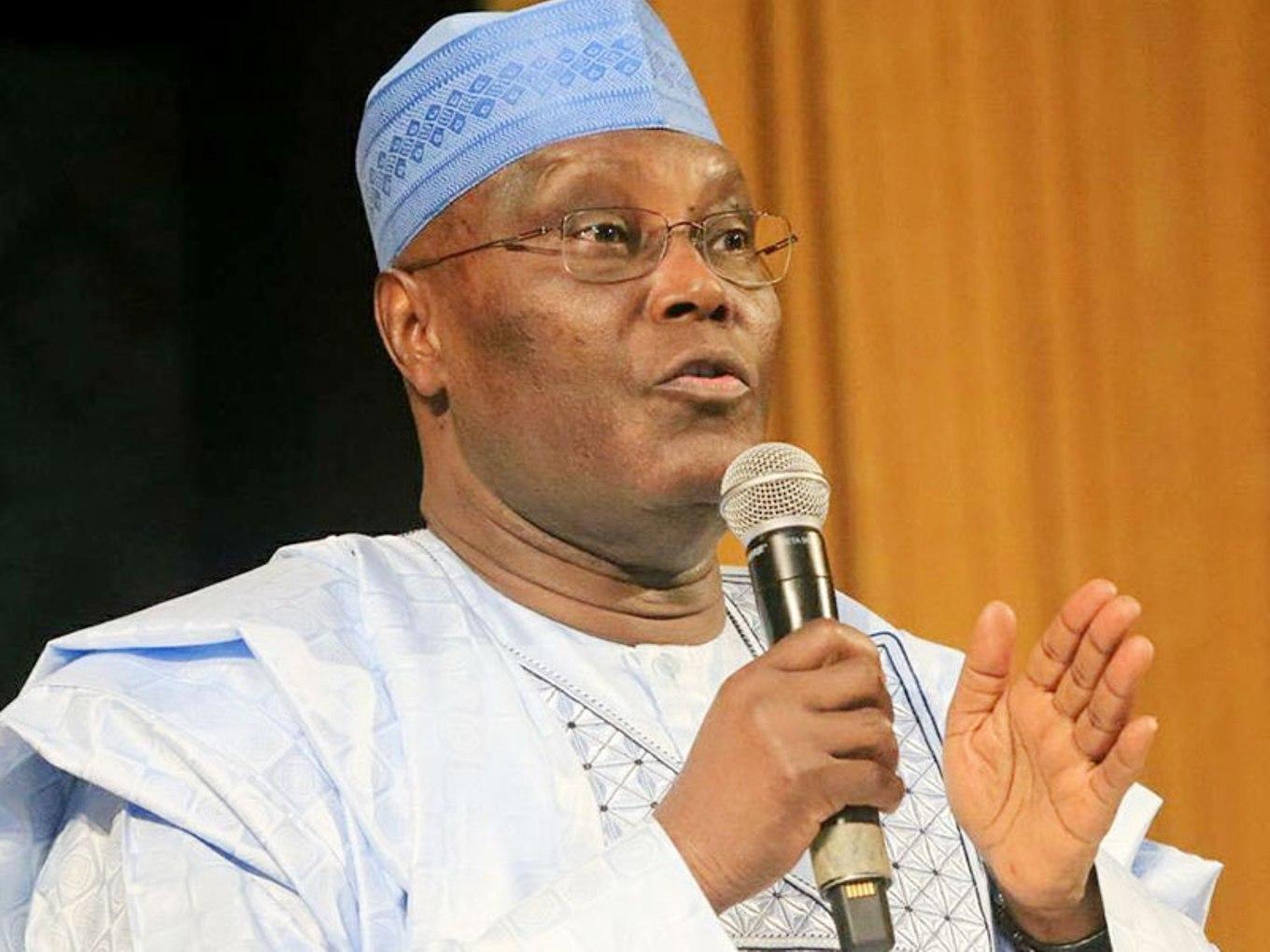
Former Vice President and African Democratic Congress presidential candidate, Atiku Abubakar, has said President Bola Tinubu’s request for approval to borrow $20.52 billion and €1.045 billion vindicates his October 12 warning about a loan plan of up to $20 billion.
Atiku said the President’s failure to identify the specific projects the loans would fund raises serious concerns that borrowed public money could be channelled through the Lagos–Calabar Coastal Highway, now rerouted inland, to political campaigners and favoured contractors.
In a statement issued by Phrank Shaibu, Director of Strategic Communication of the ADC Presidential Campaign Council, Atiku said:
“On October 12, I warned Nigerians that President Tinubu was reportedly preparing to borrow up to $20 billion in connection with the Lagos–Calabar Coastal Highway. I asked him to confirm or deny the plan and publish the accounts. He did neither. Today, he has asked the Senate to approve $20.52 billion and €1.045 billion in external loans. My warning has been vindicated.
“The President has listed broad sectors but has not provided a project by project account of what this enormous borrowing will fund. Nigerians have not been given clear project details, costs, locations or contractors to scrutinise.
“That silence is especially troubling given the highway’s inland rerouting. Nigerians have every right to ask whether it is becoming a pipeline for borrowed money to reach Tinubu’s campaigners and favoured contractors. Barely 12 weeks before an election, how can the President ask lawmakers to saddle Nigerians with more than $20 billion and €1 billion in debt without identifying the projects and their costs? Is this a development plan for Nigerians or a campaign financing scheme dressed up as infrastructure?
“You cannot continue taking frivolous loans on the eve of your departure from office. Let it be on record that one of the first responsibilities I will undertake as President is to scrutinise and investigate every kobo borrowed, especially loans taken in the final year of your tenure. Nigerians will ask questions, and we will find the answers by every lawful means.
“I put local and international lenders on notice: any loan granted to this winding down administration must meet all constitutional, statutory and due process requirements. Upon assumption of office, I will scrutinise every such loan. Any borrowing found to have been obtained without proper authorisation or process will be challenged and will not be allowed to stand.
“The National Assembly must not approve a single dollar until the President publishes every project, contract, cost, contractor, loan term and repayment obligation. No public money should be borrowed in the dark, and no lawmaker should sign a blank cheque against Nigeria’s future.”
Atiku said the burden was on Tinubu to prove that the borrowing would serve the country, not his political interests. He urged lawmakers to publish the proposal and supporting documents and subject them to rigorous scrutiny before any decision.
He added that families already struggling with a cost of living crisis should not be made to carry debts they did not approve. The woman fighting to keep her business alive and the worker spending their income just to feed deserve to know where the money is going, who will benefit and who will pay. At the ballot box, Nigerians will have the chance to reject a government that borrows against their future while taking their sacrifices for granted.
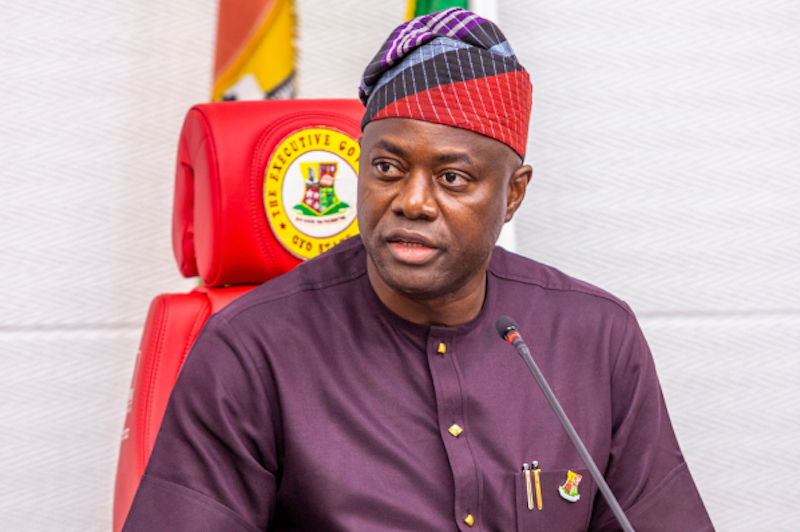
The Allied Peoples Movement (APM) presidential candidate, Seyi Makinde, on Thursday, criticised President Bola Tinubu’s “Emi Lokan” slogan ahead of the 2027 presidential election.
Makinde said Nigerians do not need “turn-by-turn nepotism”, arguing that voters should be free to decide who becomes the country’s next president in 2027.
The Oyo State governor spoke during the APM’s town hall meeting in Akure, Ondo State.
Makinde asked: “How can someone say ‘Eemi lokan’ in a country like Nigeria? You were given the opportunity. If you recall the 1999 presidential election, the South-West voted massively for Baba Olu Falae, but the rest of Nigerians voted for Baba Obasanjo. So, this is not an issue that only the South-West can resolve; it is an issue we must address collectively as Nigerians.
“We do not want ‘turn-by-turn nepotism’, nor do we want a situation where people say, ‘I will vote for projects because it is my turn’. You will not finish those projects, and when it becomes someone else’s turn, they will do the same thing. We will end up with a Nigeria where we cannot get value for the resources belonging to Nigerians.
“The Reset Nigeria agenda is about building a country where infrastructure development supports economic growth and addresses the concerns of young people and women.
“Once we fix our economy, no zone will be left behind, and no demographic group will be left behind.”
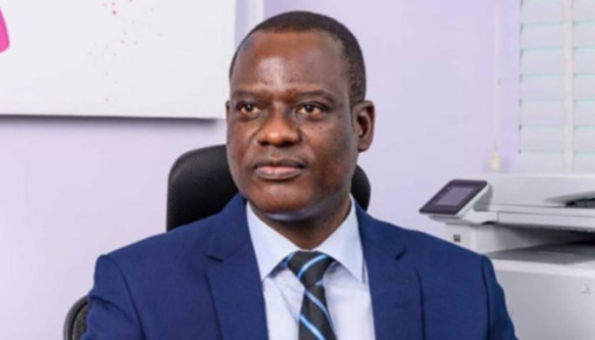
Minister of Finance and Coordinating Minister of the Economy, Taiwo Oyedele, has denied saying the Federal government will introduce a fuel tax when the economy stabilises and income levels improve.
In a post on X on Tuesday, Oyedele said his remarks during an interview with ARISE News was misrepresented, insisting that a “fuel tax is not on the table.”
However, during the interview with Rotus Odiri, ARISE News Business Correspondent, on the sidelines of the 2026 International Monetary Fund and World Bank annual meetings in Bangkok, Thailand, Oyedele said the tax would come when income levels improve enough for Nigerians to accommodate it.
He said taxes account for between 20 and 80 percent of pump prices in some countries, while many African countries impose between six and 10 different taxes on fuel products.
He said introducing fuel tax while petrol was still subsidised would have been counterproductive because government would effectively be paying the tax itself.
According to him, imposing the tax immediately after removal of petrol subsidy would be insensitive to Nigerians.
“The objective should be that instead of trying to suppress prices, which hasn’t worked for us, it hasn’t worked for any country in the world, not one. Instead of trying to suppress prices, think about how to grow income faster than prices rise,” Oyedele said.
“That’s how you bring prosperity and grow the middle class and that is exactly what we are doing as led by Mr. President himself.
“At the appropriate time, when the economy has stabilizes and income level will be able to accommodate it, those taxes will come. Not because we want to impose taxes,” he added.
In his Tuesday post, the minister reiterated that introducing a fuel tax at this time would be insensitive following removal of petrol subsidy, describing reports that government will introduce the levy when the economy stabilises as “fake news.”


