
News
Nigeria’s Use of Digital Technology to Improve its Politics Rated as “Improving”

- /home/rhoncare/pointblank.ng/wp-content/plugins/mvp-social-buttons/mvp-social-buttons.php on line 27
https://pointblank.ng/wp-content/uploads/2019/04/Popoola.jpg&description=Nigeria’s Use of Digital Technology to Improve its Politics Rated as “Improving”', 'pinterestShare', 'width=750,height=350'); return false;" title="Pin This Post">
- Share
- Tweet /home/rhoncare/pointblank.ng/wp-content/plugins/mvp-social-buttons/mvp-social-buttons.php on line 69
https://pointblank.ng/wp-content/uploads/2019/04/Popoola.jpg&description=Nigeria’s Use of Digital Technology to Improve its Politics Rated as “Improving”', 'pinterestShare', 'width=750,height=350'); return false;" title="Pin This Post">
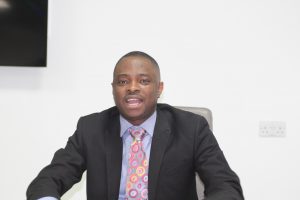
By Joel Popoola
A study into Nigeria’s progress towards becoming Africa’s first digital democracy has ranked our nation’s use of digital technology to enhance our political system as “improving”.
The first Digital Democracy Dashboard, conducted by the campaign I lead, analyses African nation’s efforts in using information and communication technology to improve their political and governance processes.
The dashboard gives nations scores out of five in four categories, leading to an overall score out of 20, corresponding to the following rankings.
Emerging – 0-7
Improving 7-15
Arriving 15-20
As 2020 draws to a close Nigeria has been given a score of 11/20 and rated as “Improving”.
The study rates nations against four benchmarks – digital transparency, equal access to the internet, political engagement and modern and robust electoral systems.
Nigeria has been evaluated as follows.
Digital transparency – 3
During the Covid-19 lockdown the Ministry of Humanitarian Affairs, Disaster Management and Social Development, piloted digital payments to get money to people who needed it.
Using digital technology to distribute these funds isn’t just faster and safer in a time of social distancing it also makes it much easier to see where it has gone, make sure it has arrived, and ensure that it doesn’t fall into the wrong hands.
It is clear that good progress is being made towards achieving this benchmark.
Equal access to the internet – 2
Nigeria has still to achieve significant 4G penetration. Government projections state that by 2025 only 70% of Nigerians will have any sort of internet.
The Nigerian government was also unwilling to respond to calls to give Nigerian children data free access to educational resources to help them catch up on education lost as a result of COVID-19.
Minister of Communications and Digital Economy Dr Isa Ibrahim Pantami has announced government ambitions for a 40% cut in data prices by 2025.
Progress continues to be slow towards achieving equal access to the internet for all Nigerians.
Political Engagement – 2
Nigerian citizens have led the world in using social media to build relationships, build trust and to communicate internationally, as demonstrated in the #EndSARS protests.
Nigerian politicians however continue to fail to seize the potential of social media to truly engage with voters as equals, treating social media as a purely broadcast medium instead of using the platforms to reach out to voters on a personal basis.
Much online political dialogue remains antagonistic in nature.
It is unclear how much progress is being made on achieving this benchmark.
Modern and robust voting systems – 2
The Independent National Electoral Commission has announced that it intends to “pilot the use of Electronic Voting Machines at the earliest possible time… (and) work towards the full introduction of electronic voting in major elections starting from 2021.”
Using electronic voting machines, Nigerian voters can have much more confidence that the vote really was cast for their candidate they intended to vote for – or has been counted at all. Ballot-stuffing could also become a thing of the past under a truly transparent system where every vote can be electronically accounted for.
It is clear that some progress is being made towards achieving this benchmark.
At the digital democracy campaign I lead, we are aiming to harness the potential of digital technology to improve political engagement and processes across Africa.
We have developed a free app called Rate Your Leader to help local leaders engage directly, on a one-to-one basis, with verified local voters, letting decision makers show themselves to be accessible, accountable and responsive to the people who decide whether or not they’ll have a job after the next election. Rate Your Leader also allows local representatives to get a real-time insight into the things that matter most to the people who elect them – and how to address them.
Rate Your Leader also lets local people get their voices heard by putting them in direct contact with local decision makers.
Our app is also abuse-proof, making uncivil or aggressive communication impossible.
Communication between the authorities and the public has never been more critical. We are a nation in recession, with many months – or years – before vaccination against the coronavirus becomes widespread.
Positive progress had been made in 2020 – in spite of everything – to make Nigeria Africa’s first truly digital democracy. But this work will have to accelerate in 2021 if our nation if to achieve its colossal potential.
Joel Popoola is a Nigerian tech entrepreneur, digital democracy campaigner and creator of the free Rate Your Leader mobile app. You can follow Joel on Twitter @JOPopoola


By Henry Ukazu
Dear Destiny Friends,
We cannot underestimate money’s importance. Money is good. Money is a blessing. Money is a leverage. Money is a therapy. It’s worthy of note that most people, who claim sick aren’t really sick; they are just in need of money. When a certain amount of money hits their account, they bounce back to life.
To show you how powerful money is, somebody once jokingly said, “Money can bring a dead man back to life”. There’s no doubt, money is good. Whoever tells you money is not good is from the pit of hell. Even the Book of Life says in Jeremiah 29:11, “My plan for you is to prosper in be in good health”. God, in his infinite wisdom, knowledge, and understanding, wants us to prosper because when we prosper, it helps to spread the gospel of the kingdom of God.
Think about it for a minute: if one does not have money, how can one do good? Even the good Samaritan had to provide money for the traveler who was attacked by robbers and left stranded on the roadside. It’s instructive to note that at that point in time, what the traveler needed was support and not words. Assuming the good Samaritan didn’t have money, he wouldn’t have been able to assist.
So, we all can agree that money is good and not evil, like some naysayers do to justify whatever narrative they have in mind. Even the scripture says in 1 Timothy 6:10, “Money itself is not evil; rather, the love of money is identified as ‘a root of all kinds of evil ‘” The word we need to focus on is the love of money. This is where lots of people get it wrong: loving money is not a crime; rather, the process of acquiring the money. Some people have literally sold their conscience to the devil, and as such, they are careless about the process of getting the money. These people don’t care if they engage in fraudulent and inhuman activities just to acquire money, instead of diligently working hard and smart.
The Book of Life further states in Proverbs 22:7, “The rich rule over the poor, and the borrower is slave to the lender”. Do you see why we all must make money legitimately to avoid being slaves to unbelievers?
For the sake of clarity, this is not a gospel article; I had to use the Bible scriptures to pass on a message about the importance of money.
The focus of this article is to show you how we can make money. It should be noted that money is everywhere, and as such, we don’t have to struggle to make money. Just like sand and air are everywhere, money is also everywhere. The only difference is that money must be earned before we can get it.
To understand the theory behind money being everywhere, just look at every industry; you’ll see that some people are making money, while some people are not making money. Some people might be wondering why some people are making money, while others are struggling. Well, there are many reasons for it. Some may have developed themselves; some may be called to work in that industry as opposed to doing it for money, or it could be a case of someone who has understood the skill of doing the business.
Every profession has the capacity to attract wealth, whether you are a lawyer, doctor, engineer, mechanic, accountant, pastor, teacher, politician, entertainer, artisan, or even one who works for a non-profit.
It’s sad to see some people jumping ships because they feel it’s greener on the other side instead of maintaining their life and focusing on their craft. After all, just like our fingerprints differ, our destiny differs.
Let me share a practical example. When I arrived in the United States of America, the economy was in shambles. There were no jobs. My late dad counseled me to read taxation law because, according to his friends, that’s the major that can secure me a job at the end of the day because human beings and corporations will always file taxes. My personal research also confirmed this to some extent.
It’s instructive to note that my late dad didn’t just love taxation because of the job security it may provide; his interest was primarily the monetary benefit he saw in one of my uncles, who is a tax practitioner. For the record, it was my uncle who convinced my dad to encourage me to study tax law, and that upon graduation I would make more money because I have a legal background as opposed to him, who has a finance background.
At the end of the day, I graduated, and the major began to irritate me because I wasn’t wired for numbers. It was only when I ventured into the social service and human capacity development space that I began to see great results in my work.
The moral of this analysis is to point out the importance of maintaining one’s lane because I have seen rich and struggling doctors, lawyers, engineers, entertainers, and artisans.
Furthermore, one can be in any state in Nigeria, Canada, the United Kingdom, the USA, and still make good money. While some people think they need to seek greener pastures in a foreign land, it’s important to note that while Canada, the United States of America, the United Kingdom, and Sweden, etc., have good economies, what works for one country might not work in another country.
Another point we should note is whether it is wise to travel abroad, because traveling is not for everyone. Some people might be better at staying in their home countries to develop or serve in different capacities, which they might be offered if they travel to developed countries. Moral: It’s better to be a king in your country than to be a servant in a different country.
Don’t get me wrong, Third World countries can’t be compared to developed countries; however, it should be stated that whatever has advantages also has its own disadvantages. When some people travel out, they might break even; some might regret why they traveled out because of the lifestyle, racism, and the associated rat race, while others may remain indifferent.
For me, the United States has been a blessing to me because it has afforded me the opportunity to publish three amazing trailblazers’ books, appear on television several times, meet globally respected people, and start a thriving human capacity development business.
So, it doesn’t matter where you are; what matters is for you to discover your path and the associated problems people are facing, then see how you can solve their problems. By doing this, money will locate you.
Furthermore, to make money, one doesn’t have to go to school. There are many professors who are struggling. Mr. Cosmas Maduka, a Nigerian businessman, philanthropist, and evangelist, who is the founder and chairman of the Coscharis Group, didn’t have a formal education. Today, he has employed professors and scholars to manage his wealth.
Also, there’s this group of people who pray their lives out in church, some trying to connect with a revered man of God for deliverance and prayer, instead of working on themselves and believing God for opportunities because, just like God is everywhere, money is everywhere. So, stay where you are and develop your craft and yourself.
In conclusion, as we all prepare to make wealth, it’s important to note we cannot make money on our own. I know we all love to make money; it’s instructive to note that despite all our efforts, knowledge, wisdom, connection, skills, capacity, competency, and capabilities, it’s imperatively important for us to look up to God and focus on him as the author and finisher of our life. We need divine intervention and support because it’s only God and him alone who has the power and capacity to grant us wealth, because he has the capacity, as stated in Sirach 11:29 (God can make a poor man to be suddenly and instantly rich). So, therefore, I will leave you with Deuteronomy 8:18, which says, “Remember then the LORD, your God, for he is the one who gives you the power to get wealth, by fulfilling, as he has now done, the covenant he swore to your ancestors”.
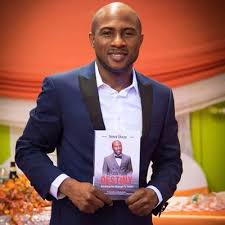
Henry Ukazu writes from New York. He works with the New York City Department of Correction as the Legal Coordinator. He’s the founder of Gloemi. He’s a Transformative Human Capacity and Mindset coach. He is also a public speaker, youth advocate, creative writer, and author of Design Your Destiny- Actualizing Your Birthright to Success, Unleash Your Destiny, and The Six Pillars of Success. He can be reached via info@gloemi.com

National Chairman of the African Democratic Congress (ADC), Davis Mark, has said the party will adhere to electoral rules during the 2027 elections but will resist any attempt to manipulate the process.
Mark spoke on Wednesday in Abuja when the governing council of the Savannah Centre for Diplomacy, Democracy and Development, led by Olukayode Ariwoola, former chief justice of Nigeria, visited him at the ADC headquarters.
“We hold ourselves to the highest standards of good conduct as a political party. We will play by the rules,” Mark said.
The centre’s governing council, known as the council of the wise, was reconstituted in June to engage relevant institutions and political stakeholders towards fostering peaceful, free and credible elections.
The meeting with the ADC chairman was part of the centre’s ongoing engagement with political parties ahead of the elections.
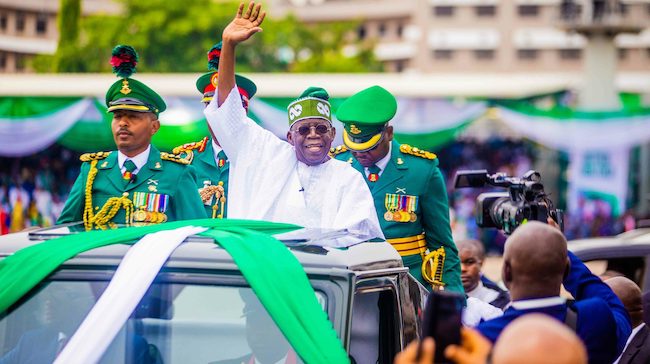
The Presidency has expressed confidence that the growing number of governors backing President Bola Tinubu gives him a stronger political structure and an advantage over opposition candidates ahead of the 2027 presidential election.
The Special Adviser to the President on Policy Communication, Daniel Bwala, said this on Channels Television’s Politics Today, arguing that the political landscape has changed considerably since the 2023 election.
Bwala said the support of governors is significant because they control political structures in their respective states and could translate their backing for Tinubu into grassroots mobilisation ahead of the election.
“Since then, President Bola Tinubu has got how many governors on his side? The governors are the Chief Executive Officers of their respective states. They coordinate the structures of the State. These people say, ‘We are putting our goodwill, our resources, our structure, and our support to the President,’” he said.
He argued that the President’s political position has also been strengthened by people who have benefited from his administration’s policies, including beneficiaries of the Nigerian Education Loan Fund (NELFund), agricultural programmes, manufacturing incentives, CrediCorp and infrastructure projects.
Bwala said the developments constitute “facts, verifiable data” which, in his view, showed that Tinubu had made progress since assuming office in 2023.
He also dismissed suggestions that the administration’s confidence ahead of 2027 is based solely on divisions within the opposition, saying its record in office would form an important part of its campaign.
His comments came amid renewed debate over Tinubu’s popularity and the ability of the opposition to challenge his bid for a second term.
Bwala dismissed an assessment by The Economist that Nigerians may re-elect Tinubu despite disapproval of his administration, arguing that claims about the President’s popularity should be backed by representative opinion surveys.
“When you make a claim that Nigerians don’t like him, without saying, also, that there are a lot of people… one million families that the children have benefited from NELFund, you think they hate him?” he asked.
He similarly cited beneficiaries of agricultural interventions, support for manufacturers and CrediCorp, arguing that such groups should be considered when assessing public sentiment towards the administration.
On concerns over rising poverty and hunger, Bwala acknowledged that more Nigerians had fallen into poverty but attributed the hardship partly to the economic reforms undertaken by the Tinubu administration.
“More people went down to poverty, I acknowledge, I’m not doubting it. But there is a ‘but’ to it. Since when the reform started to today, we have made marked progress,” he insisted.
According to him, the reforms are necessary to address longstanding economic problems, despite the short-term discomfort experienced by Nigerians.
Bwala also defended Tinubu’s statement that Nigeria has moved from the “doldrums” towards prosperity, saying the President is not suggesting that Nigerians would suddenly begin experiencing prosperity from October 1.
He cited NELFund beneficiaries, subsidised healthcare, infrastructure projects and support for small and medium-sized businesses as examples of what he described as prosperity already reaching Nigerians.
“One million families whose children have benefited from the NELFUND programme, what they are benefiting is called prosperity,” he said.
“If you go to an environment or a place where there have been no roads or any form of infrastructure, and we have established infrastructure there, what has come to them is prosperity.”
Bwala further claimed that the opposition has lost several influential political figures who played key roles in their 2023 campaigns.
He said former Vice President Atiku Abubakar no longer has the support of governors who worked for his 2023 campaign, while Peter Obi has also lost some critical political allies.
“In terms of the other candidates who say he will not win, Atiku Abubakar lost close to 25 per cent of key people that you know around him. All the governors that worked for him that time are no longer with him,” Bwala said.
“Peter Obi lost 55 per cent of the critical people that carried his campaign; they’ve all disappeared. And some of them went to Atiku, some of them went wherever they could go to.”
He consequently expressed confidence in Tinubu’s prospects in the 2027 contest, saying the political support around the President was considerably different from what existed before the 2023 election.


