
Metro
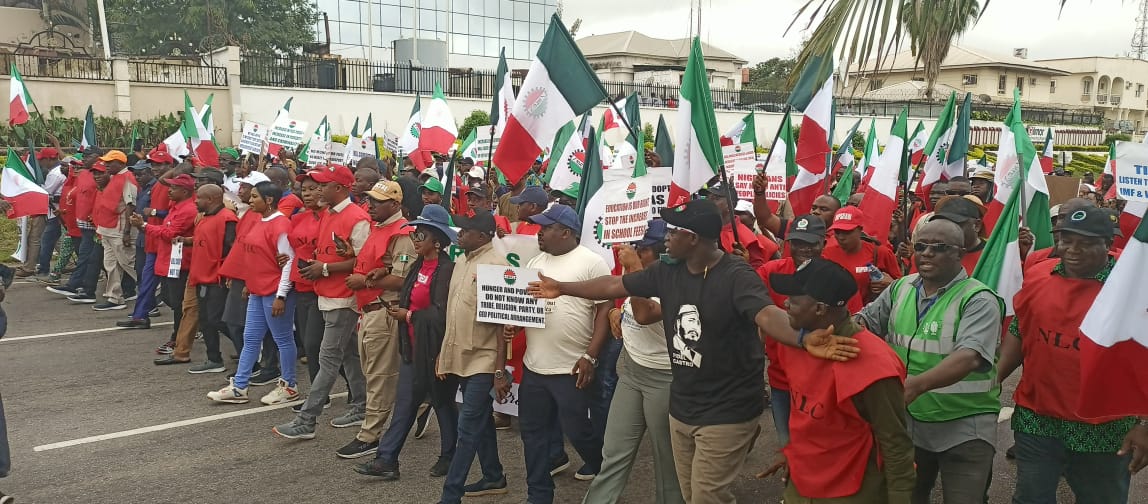
NLC Blasts FG over Incessant Grid Collapse after Power Sector Privatisation

- /home/rhoncare/pointblank.ng/wp-content/plugins/mvp-social-buttons/mvp-social-buttons.php on line 27
https://pointblank.ng/wp-content/uploads/2023/11/nlc-1000x504.jpg&description=NLC Blasts FG over Incessant Grid Collapse after Power Sector Privatisation', 'pinterestShare', 'width=750,height=350'); return false;" title="Pin This Post">
- Share
- Tweet /home/rhoncare/pointblank.ng/wp-content/plugins/mvp-social-buttons/mvp-social-buttons.php on line 69
https://pointblank.ng/wp-content/uploads/2023/11/nlc-1000x504.jpg&description=NLC Blasts FG over Incessant Grid Collapse after Power Sector Privatisation', 'pinterestShare', 'width=750,height=350'); return false;" title="Pin This Post">
The Nigeria Labour Congress (NLC) has blasted the Federal government over Wednesday’s total collapse of the national electricity grid, accusing it of deliberately engineering the power sector to fail while Nigerians are forced to pay exorbitant tariffs for darkness.
In a statement signed by NLC President Joe Ajaero, the congress said it observed “with utter disgust—though not with surprise — the total collapse of the national electricity grid today.”
The statement continued: “This recurrent catastrophe is not an accident; it is the direct and inevitable result of a capitalist ruling class that has deliberately engineered the power sector to fail, to loot, and to keep the Nigerian people in a state of perpetual underdevelopment and exploitation. It is part of the consequences of refusing to listen to citizens and civic actors, while kowtowing to the peddlers of neoliberal policies.
“This latest collapse is a stark indictment of this administration and the entire neoliberal, pro-market charade that has defined the power sector since its so-called privatization. The government, hiding behind compromised agencies, has once again demonstrated that it has neither the political will nor the ideological clarity to deliver stable electricity to the masses.
“We state categorically that the problem is not a technical one; it is a problem of predatory power sector governance and a kwashiorkor economic model.
“The sector is crippled because it is run by a cabal of the wrong individuals—unqualified political cronies and economic buccaneers who see our national infrastructure not as a tool for development, but as a trough from which to siphon public wealth.
“How else does one explain the scandalous appointment of a former local government chairman, with no known expertise in energy economics or engineering, to the pivotal position of Chairman of the Nigerian Electricity Regulatory Commission (NERC)? This is not an appointment based on competence; it is a political settlement, a reward for loyalty in a system that thrives on patronage at the expense of merit.
“It is an insult to the intelligence of every Nigerian and a clear signal that the regulatory body is designed to be a toothless bulldog—a mere rubber stamp for the profiteering of the DisCos and GenCos.
“The NLC has been made aware of a proposed N4 trillion government payment to these same failed operators. We reject this outright! To sink another kobo of public money into the pockets of these private entities is an act of economic betrayal against the Nigerian people.
“This colossal sum is not meant to ‘fix’ anything; it is a grand scheme to indemnify failure. That N4 trillion is more than enough to begin a radical, state-driven process of building a new, democratically controlled power sector from the ground up—a sector owned by the people and run for the people.
“We are trapped in a vicious cycle where a comprador bourgeoisie, in cahoots with their international finance capital allies, has structured the economy to serve foreign interests and a tiny local elite.
“The continued collapse of the grid is a direct attack on our national productivity. It kills small businesses, stifles industrialization, creates mass unemployment, and inflicts untold hardship on millions of households forced to pay exorbitant tariffs for darkness.
“The NLC, therefore, suggests that if the government is truly interested in fixing the power sector, it must first address the nature, character, and capacity of its appointees. Appointing the right individual to head NERC and replacing all key leadership in the sector with proven, experienced, and patriotic technocrats—not political jobbers—would be key to reviving it.
“Since government claims to have N4 trillion to invest in the sector, we demand that these funds be redirected towards a public-led initiative to build new generation capacity and revitalize transmission infrastructure, rather than handing them over to the DisCos and GenCos.
“Once again, we call for a comprehensive public audit of the entire power sector since the failed privatization, and for a fundamental review of the privatization model itself with a view to reviving this critical sector. This has become an urgent imperative.
“The working class and the suffering masses of Nigeria will no longer tolerate this darkness. We will no longer accept excuses for a crisis that is manifestly man-made. The fact that government continues on this path of deliberate failure demonstrates its lack of seriousness in fixing the sector.
“This is not a plea; it is a declaration of intent. The light must come on, by any means necessary,” the Labour leader declared.


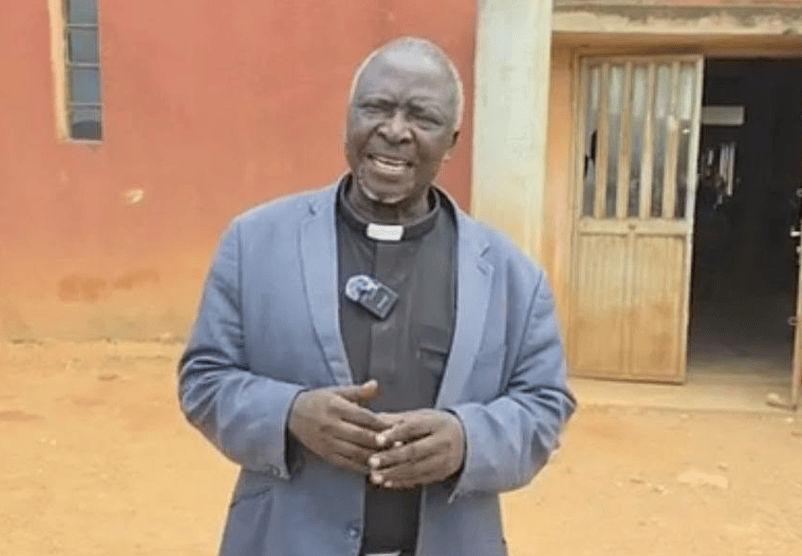
The Regional Chairman of Church of Christ in Nations (COCIN), Barkin Ladi Local Government Area of Plateau State, Rev. Ezekiel Dachomo, has denied reports that he prayed for the re-election of President Bola Tinubu and Vice President Kashim Shettima in the 2027 presidential election.
Dachomo, who is currently in Israel on what he described as his first International Christian Advocacy Tour, said his visit was aimed at drawing the attention of world leaders to the plight of Christians in Plateau.
The cleric made the clarification in a social media post on Monday night following reports that he had prayed for the success of the All Progressives Congress (APC) presidential ticket and expressed support for the Muslim-Muslim ticket.
Dachomo said his earlier post, in which he prayed for Nigeria, had been misconstrued as an endorsement of Tinubu and Shettima ahead of the 2027 election.
According to him, there was nowhere in the post where he prayed for the President and Vice-President to win the election.
“People are trying to frame me, saying I prayed for a Muslim-Muslim ticket. But I did not, and I will never pray for a Muslim-Muslim ticket because Nigeria belongs to both Muslims and Christians,” he said.
Dachomo said his prayers were for the well-being and success of Nigeria and its citizens, irrespective of their religious affiliations.
“I pray for both Muslims and Christians in Nigeria. I pray for Nigeria to succeed. If you truly want to come to God, come with a clean heart,” he added.
The cleric further stated, “I did not pray for President Tinubu and Vice President Shettima to win in 2027. My prayers have always been for Nigeria to succeed.”
Dachomo’s clarification came amid reactions to his ongoing advocacy tour in Israel, where he is seeking international attention to security challenges and what he described as the persecution of Christians in Plateau.
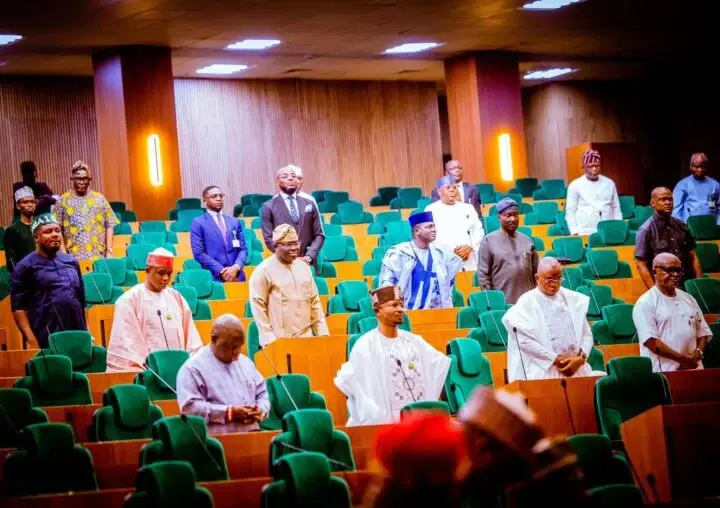
Ahead of the 2027 election, the House of Representatives Committee on Electoral Matters has urged the Independent National Electoral Commission (INEC) to disqualify candidates whose names are not contained in political party registers, as stipulated by the Electoral Act 2026.
In a statement on Tuesday, the Chairman of the committee, Bayo Balogun, drew the commission’s attention to a Supreme Court ruling on Sections 77(5), 77(6) and 77(7) and called for their full enforcement across all political parties.
Balogun, a member of the All Progressives Congress, APC, said that pending legal proceedings concerning the interpretation, constitutionality and enforceability of the sections had been resolved by virtue of the Supreme Court judgment.
The lawmaker recalled that the Supreme Court, on September 24, 2026, restored the provisions after setting aside the Court of Appeal judgment that had declared them unconstitutional.
According to him, the apex court held that the provisions were not inconsistent with the 1999 Constitution.
Balogun explained that Section 77(5) provides that only members whose names are contained in the membership register submitted to INEC are eligible to vote or be voted for at party primaries, congresses and conventions.
He said that Section 77(6) requires political parties to use the register submitted to the electoral umpire for such exercises.
Balogun urged INEC to proceed without further delay to enforce Sections 77(4) to 77(6) in the administration and monitoring of political parties and their electoral activities.
He further urged the commission to audit the membership registers and candidates submitted by political parties to establish whether the names of the candidates are contained in the registers earlier submitted to INEC in compliance with Section 77(5).
“This will be a litmus test for the commission – any culpable political party and candidates should be disqualified.
“Diligent enforcement of the provision would help prevent disputes and reduce the volume of litigation that could arise from alleged irregularities or non-compliance with Sections 77(4) to 77(6) of the Electoral Act,” Balogun said.
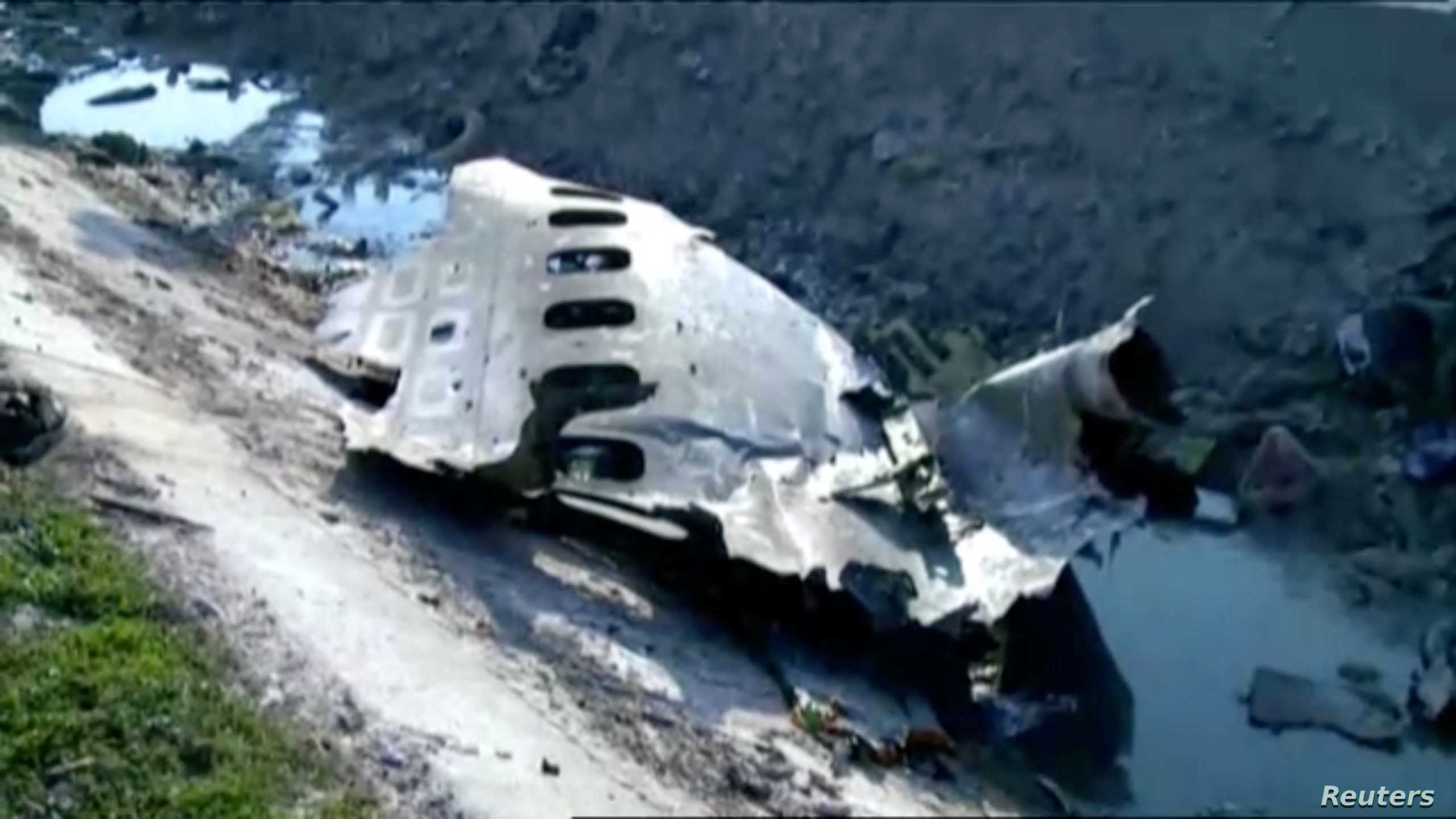
An helicopter crashed into a swamp near Naval Base in Igbokoda, the headquarters of Ilaje Local Government Area of Ondo State, on Monday.
The incident occurred at about 11.00a.m during heavy down pour, throwing the coastal community into panic.
The number of people on board of the helicopter was yet to be officially confirmed, while the condition of possible survivors cannot be confirmed.
Confirming the incident, Maurice Oripenaiye, the Chairman of the local government, told the News Agency of Nigeria (NAN) in a telephone interview that he could not ascertain the number of the victims.
Oripenaye also said he was yet to ascertain the identity of the crashed helicopter and the passengers.
“It happened during the heavy rainfall at about 11.00a.m. I cannot confirm the number of the people on board. I have deployed some youths to the area for rescue purpose,” he told NAN.
Similarly, the Police Command in Ondo State while confirming the crash, said details surrounding the incident were still emerging.
The command in a statement by its spokesperson, Abayomi Jimoh, a deputy superintendent of police, in Akure, said efforts were ongoing to establish the full circumstances surrounding the crash.
“The command urges members of the public, particularly residents of Igbokoda and adjoining communities, to remain calm and refrain from circulating unverified information.
“The public will be duly informed as soon as further credible information becomes available,” it stated.
(NAN)


