
Metro
NSCDC Seeks Collaboration with Lagos Fire Service on Disaster Management

- /home/rhoncare/pointblank.ng/wp-content/plugins/mvp-social-buttons/mvp-social-buttons.php on line 27
https://pointblank.ng/wp-content/uploads/2023/05/NSCDC-LSFS-1000x600.jpg&description=NSCDC Seeks Collaboration with Lagos Fire Service on Disaster Management', 'pinterestShare', 'width=750,height=350'); return false;" title="Pin This Post">
- Share
- Tweet /home/rhoncare/pointblank.ng/wp-content/plugins/mvp-social-buttons/mvp-social-buttons.php on line 69
https://pointblank.ng/wp-content/uploads/2023/05/NSCDC-LSFS-1000x600.jpg&description=NSCDC Seeks Collaboration with Lagos Fire Service on Disaster Management', 'pinterestShare', 'width=750,height=350'); return false;" title="Pin This Post">
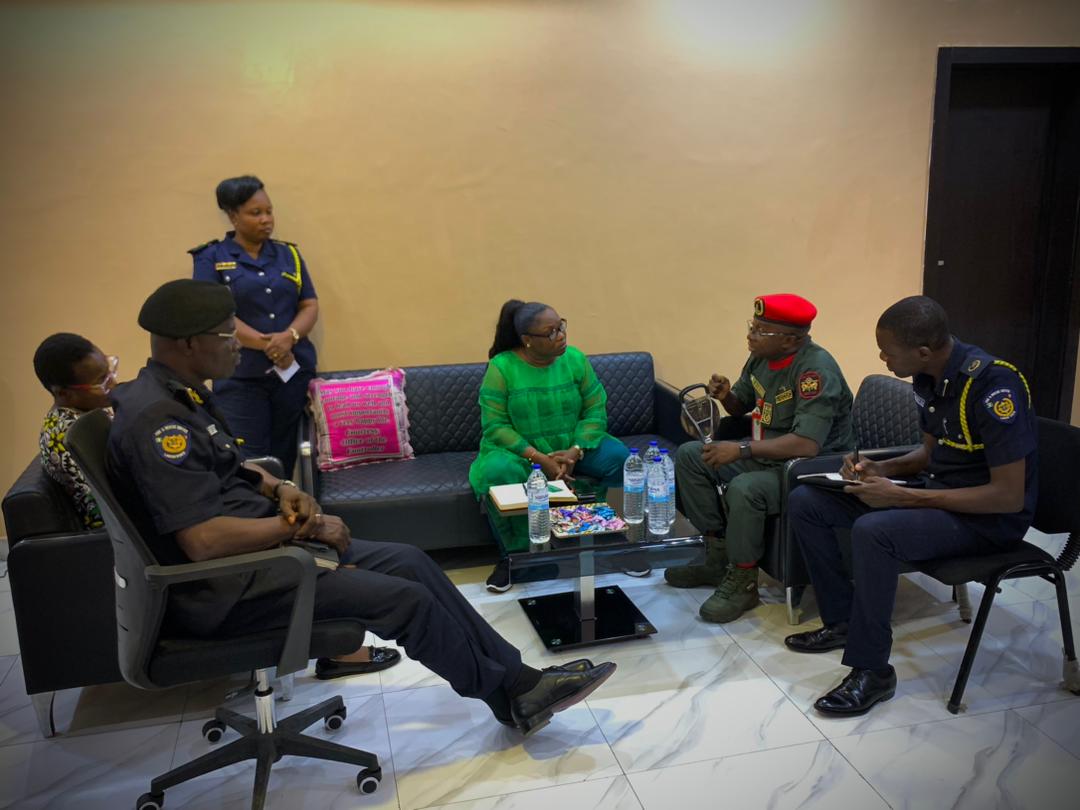
The Commandant, Nigeria Security and Civil Defence Corps (NSCDC), Lagos State Command, Usman Ishaq Alfadarai, has paid a working visit to the management of the Lagos State Fire Service, in a bid to further streamline collaboration in the effective management of disasters in the state.
A statement by the Command’s Public Relations Officer, DSC Abolurin Oluwaseun, made available to the National Association of Online Security News Publishers (NAOSNP), revealed that while on the visit, Alfadarai praised the management and staff of the Lagos State Fire Service (LSFS) for excellent performances egged in timely intervention to disasters and proactive measures aimed at nipping fire outbreaks and other forms of disaster in the bud.
The Commandant specially appreciated the Director of the outfit, Mrs. Margaret Abimbola Adeseye, for leading a team of very active men and women, with special of the reaction of the agency in putting off the fire that erupted at a section of the Command’s storage facility over the weekend, saying the synergy calls for more collaboration.
“Considering the uniqueness of the jobs we do, there’s the was need for improved collaboration between our agencies to enhance sharing of experiences, in other to jointly respond and timely overcome emerging and unforeseen disaster cases in the state. I can’t help but also appreciate the Babajide Sanwo-Olu-led Lagos State government for their unwavering efforts in equipping the Fire Service for maximum performance,” Alfadarai pointed out.
He added: “The improved synergy between our agencies is needed as crisis and disaster management remain one of the integral mandates of the Corps, and the command would be more than ready to synergize with the LSFS, in the area of rescue operations, dispatch of armed personnel to fire incident sites to preempt attacks on fire officer on duty among other related duties.”
In her response, Mrs. Adeseye, appreciated, the Commandant and his team for the team, saying it shows the level of regard agencies in Lagos State have for one another.
“With this kind of collaboration, some of the challenges and operational hazards encountered by our agency such as false distress calls from citizens and attacks on our men in the field and elsewhere can be curbed,” Adeyeye said.
The Commandant was accompanied on the visit by Deputy Commandant of Corps Marian Mbakwe; Head of Crisis and Disaster Management, Assistant Commandant of Corps Musa Abdullahi Jibrin; Head of Anti-Vandal Unit and Assistant Superintendent of Corps I Olufemi Irinoye.



The Dangote Petroleum Refinery has increased its Premium Motor Spirit (PMS) aka petrol, gantry price by 6.7 per cent to N1,350 per litre from N1,265 per litre, effective September 12, 2026.
The refinery also raised its coastal price to N1,783,530 from N1,669,543, representing an increase of N113,987, or 6.8 per cent.
In a memo to customers, Dangote Petroleum Refinery announced the revised prices, saying:
“Dear valued customer, please find below the revised DPRP PMS gantry and coastal price which is effective 12th September 2026.”
The refinery also directed customers with existing loading arrangements to return their Automated Truck Certificates, ATCs, for repricing.
It said: “You are advised to return all ATCs for repricing and a new volume contract will be issued for immediate loading resumption.”
The latest adjustment is expected to increase the acquisition cost of petrol for marketers sourcing supplies from the refinery and could put upward pressure on pump prices.
The increase comes amid renewed volatility in the international crude oil market, with Brent crude recently trading above $100 per barrel.
Nigeria’s downstream petroleum market operates under deregulation, with petrol prices influenced by crude oil costs, refining expenses, foreign exchange, logistics and market forces.
Consequently, the new Dangote price is expected to trigger reviews by marketers, although the extent of any adjustment at filling stations will depend on transportation, distribution costs, competition and prevailing market conditions.
The Dangote refinery has emerged as a major supplier of locally refined petrol as Nigeria seeks to reduce its dependence on imported petroleum products.
The latest increase could therefore have implications for consumers and businesses if marketers pass the higher acquisition cost through to retail prices.
Marketers are now expected to adjust their purchase and selling prices in response to the new Dangote petrol rates.

The Osun State Police Command has arrested a woman after a vigilante member, identified as Sunday and popularly known as Apetu, died shortly after having a sexual encounter with her in Ile-Ife, Osun State.
A video circulated on social media showed the man in severe distress at Ooni Ilare Street, where he was heard pleading with the woman to give him urine.
The incident occurred on Sunday around 2:30pm in the Odi-Olokun area of Ile-Ife, after which the woman was taken into custody at the Moore Police Division.
According to a situation report attributed to the Nigeria Security and Civil Defence Corps, Apetu was found gasping, screaming and pleading with the woman while showing signs of severe physical distress after the encounter.
The report said the man eventually died from the incident, while his remains were deposited at the morgue of the Obafemi Awolowo University Teaching Hospitals Complex, Ile-Ife.
The cause of Apetu’s death has not been officially established, despite claims by some residents that he died from what they described as a “thunderbolt.”
Authorities have not confirmed the claim or established any link between the traditional belief and the man’s death.
The belief centres on a traditional claim that a person affected by a supposed “thunderbolt” spell could harm another person through sexual contact. However, the claim has not been established as a medical or scientific explanation for the death.
A senior officer of the Osun State Police Command said the command was aware of the reports circulating on social media but warned members of the public against spreading unverified information.
The incident has drawn attention in Ile-Ife because of the conflicting accounts surrounding the sudden death.
Authorities have urged residents to remain calm and allow the police and relevant medical authorities to establish the actual cause of death.
The Lagos State Police Command has confirmed a mob action which allegedly led to the death of one Basit Kolade.
The victim was allegedly attacked by a group of individuals following a road traffic incident at Freeman Street, Lagos Island, on Wednesday, 2nd September 2026, at about 10:40 p.m, a statement signed by the Public Relations Officer, SP Adebisi Abimbola, and made available to the National Association of Online Security News Publishers (NAOSNP), said.
The Police noted in the stateent as follows:
Preliminary investigation revealed that Basit Kolade was travelling with his spouse, from Ebute Metta towards Lagos Island in a black Lexus Jeep, with registration number KSF 115 JZ, when a motorcycle allegedly collided with the vehicle from behind.
An argument reportedly ensued between both of them. In the course of the incident, the vehicle allegedly reversed and hit the motorcycle, causing the rider and the motorcycle to fall. This reportedly attracted a group of individuals in the area, who allegedly attacked Basit with dangerous weapons. His spouse was rescued by some women in the vicinity, while Kolade was rushed to the Lagos Island General Hospital, where he was subsequently confirmed dead. The motorcycle rider who was allegedly hit in the incident is, however, alive and currently receiving medical treatment in a hospital.
Four (4) suspects have so far been arrested in connection with the attack. They are Khalid Rafiq ‘m’ 20 years; Gafar Rahim ‘m’ 21 years; Ibrahim Azeez ‘m’ 33 years; and Samos Momoh ‘m’ 21 years. Efforts are ongoing to identify and arrest other persons who allegedly participated in the attack.
The Command has commenced an investigation into the incident, which is being treated as a homicide case, and the matter has been transferred to the State Criminal Investigation Department (SCID), Panti, for further investigation and appropriate legal action.
The Command wishes to reiterate that the 1999 Constitution of the Federal Republic of Nigeria, as amended, guarantees every person the fundamental right to life under Section 33. The Constitution permits deprivation of life only in circumstances specifically recognised by law.
Similarly, under the Criminal Law of Lagos State, unlawful killing constitutes an offence of homicide. The law provides that unlawful killing may amount to murder or manslaughter depending on the circumstances. In particular, the provisions on murder cover unlawful killing with the intention to kill or cause grievous harm, with the law prescribing severe punishment upon conviction.
The Command therefore warns members of the public against mob action, jungle justice, and the resort to self-help under any circumstance. No individual or group has the legal authority to arrest, try, convict, or execute another person.
The warning is consistent with the directive of the Inspector-General of Police, IGP Olatunji Rilwan Disu, psc(+), NPM, who has directed Police Commands to treat cases involving mob action resulting in death as homicide and warned that persons who participate in, organise, incite, or support such attacks will face the full weight of the law.
The Command reiterates that suspicion or an allegation of wrongdoing does not confer on anyone the right to take the law into their own hands. Members of the public are urged to promptly report criminal incidents to the Police and allow the law to take its course.
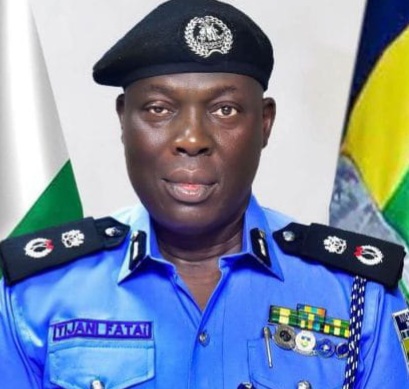
The Commissioner of Police, Lagos State Command, CP Tijani Fatai, psc, mnips, has directed that all persons found culpable in the incident be identified, arrested, and prosecuted in accordance with the law. He assures members of the public that the investigation will be thorough and professional, and that all persons found to have participated in the attack or otherwise contributed to the death will be made to face the law.


