
Opinion
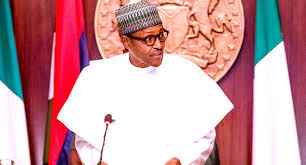
Opinion: Interrogating President Muhammadu Buhari’s Oversized Integrity

By Raymond Nkannebe
It has become a pastime of sorts for the APC crowd to inundate anybody who wants to listen, how the so called Integrity of President Muhammadu Buhari is the best thing to have happened to post-colonial Nigeria. They do this with a certain air of arrogance elevating Buhari to something of a Saint without a single foible.
As the 2019 general elections draw near, the craze has reached even new proportions, and the latest scheme (but which is bound to fail), is to make “personal integrity” ( or the lack of it), a defining factor in the forthcoming elections as against the score card of the administration and it’s impact on the welfare of the generality of Nigerians. The target, understandably of this defeatist campaign strategy is candidate Atiku Abubakar, who have forced a disquiet in the camp of the ruling APC on account of his towering popularity which looks certain to guarantee his victory by the 16th of February, 2019 so as to Get Nigeria Working Again. The modus operandi of the strategy is simple: emphasize Buhari’s so called integrity, and contrast same with Atiku’s.
At the official launch of the APC Presidential campaign in Uyo, Akwa-Ibom state last Friday, this chorus of integrity was chanted with reckless abandon by the numerous party members who mounted the rostrum reiterating the vaunted integrity of candidate Buhari, and why that is a quality enough to earn him a hard-sought re-election. From the Director General of the Campaign Organization-Rotimi Amaechi to Adams Oshiomole amongst others, the so-called Integrity of President Muhammadu Buhari was adumbrated notwithstanding the fact that many of them sounded like a broken record.
Controversial party chairman, Comrade Adams Oshiomole in an interview with The Daily Sun Newspapers some three weeks ago put it in black and white thus, “I believe the president will be re-elected on the basis of his personal integrity”. Even the president himself seem to be playing the part. At a religious function in Kano a fortnight ago, he told his audience to elect only candidates with credibility and integrity in 2019. Making a veiled reference to his overrated integrity.
When the spokesman of the Buhari Campaign Organization, Mr. Festus Keyamo played host to a political programme on Channels TV the other day, he was also seen singing this swan song. Ditto Garba Shehu, Femi Adesina and the numerous other image makers of this president. With the manner in which they go about it, it gives away the impression of a well rehearsed plot behind the scene namely, to present president Muhammadu Buhari to Nigerians once again, as the only chief priest before whom divination to the ifa Oracle is possible, as they did in the run up to the 2015 polls.
The reason for this however is not hard to seek. There is nothing the government of the day has to show for its stewardship three and a half years after it promised Nigerians a Change that has proven to be a mirage. Whereas it campaigned at the time on the three pillars of Fighting Corruption, Improving the Economy and Enhancing our National Security, a one-off look at these heads of campaign thrust shows that we have only progressed in retrogression under its watch. And the facts out there bear us out that they need no demonstration in this intervention.
Having come to this realisation, the only alternative is to latch on to the time worn “mai gaskiya” narrative, and re-present him as the last of the ‘saints’ without who the survival of Nigeria will be forgotten. Hence why Nigerians are inundated every other day with rhetorics around an overpriced integrity that is not supported by verifiable facts. I shall return to this soon.
Now, it is not that this writer discounts “integrity” as an integral quality of leadership. No serious person should be heard advancing such proposition. Indeed ancient scientist and Greek philosopher, Aristotle underscored the importance of same in leadership when he intsructively observed, “because rulers have power, they’ll be tempted to use it for personal gain. It is important that politicians withstand this temptation, and that requires integrity”. He concluded by delimiting it’s fundamentals thus, “integrity is about having the right ethical values that become visible in a pattern of behaviour”. Our own professor Chunua Achebe (May he rest well), weighed in on the matter in latter years, and defined the truest test of integrity as the blunt refusal to compromise, writing on the subject in his pamphletter, The Trouble with Nigeria.
A common denominator to be seen in the quality of integrity as laid down by the two great men, is that it is not a feat attained by undue repetition informed by prejudice of political party megaphones. On the contrary it is a serious character-trait whose visibility must flesh out from a consistent pattern of behaviour to paraphrase Aristotle. A deeper insight into the matter would also reveal that it is not synonyms with ascetism, or the ability to hold extreme religious views. Quite to the contrary it is the quality of being honest and having strong moral values.
But how has president Muhammadu Buhari fared in his much vaunted claim to being the very paragon of integrity? A closer look at the behavioural pattern of the Daura born septuagenerian since he found himself as a democratically elected president, shows that he is anything but a man of high integrity as the APC crowd tries to force down our throats. There is nothing in the behavioural pattern of this president three and a half years since after he took on the “Babar Riga”, that suggests he has a distaste for suspicious, nay “improper behaviour”. Up until today, even the most ardent APC supporter cannot point to a peculiar and distinctive conduct of this president that supports these outlandish claims to integrity. Unlike as was seen in the leadership choices of say, Burkina Faso’s Thomas Sankara who typifies integrity, President Muhammadu Buhari’s claim to integrity have been more of an exercise in cosmeticism. And the indications are there for all to see.
First of, any keen observer would notice that this president has observed in the breach the sort of lifestyle he promised to lead if elected into power pre-2015. From maintaining the number of jets in the presidential fleet, to traveling abroad to treat headache and sore throat, and what not, president Muhammadu Buhari has proven to be a turn coat, whose word is not his bond. A character trait which should not be seen in a man that lays so much claim to having integrity. But that is not all.
If compromise as pointed out by Achebe is the yardstick for measuring integrity, then president Muhammadu Buhari should not be decorated as a man of integrity by Keyamo and friends. This is because we have seen him condone corrupt behaviour right under his nose, and even received into his party, persons who are flagged for corruption by the anti-graft agency, EFCC. In this connection, the particular case of the former SGF, Babachir Lawal sticks out like the proverbial sore thumb. While he was reluctantly shoved aside for the infamous grass cutting scandal, he remains until today un-prosecuted and was even rumoured to have single-handedly nominated his successor. In the wake of the scandal rocking the Kano State governor, who promised to deliver some 2 million votes towards his re-election, President Muhammadu Buhari told a stunned world, that Governor Abdullahi Umar Ganduje was the best thing to have happened to governance. Long before this time, he had absolved late General Sani Abacha of any financial impropriety. Referring to him as a good man. But up until today, continues to purportedly recover the Abacha loots from every corner of the world.
Through and through, he has been a typical party man condoning the rot from within his party and calling out those outside his party. As at today, at least three of his appointees are alleged to have been involved in a certificate forgery scandal. Yet this Mr. “integrity” has not summoned the balls to ask them to take a walk from his government pending when they are able to clear their names with the appropriate authorities. Here, we speak of Mr. Okoi- Obono Obla and the minister of communications, Abdur-raheem Adebayo Shittu. If the former minister of finance, Kemi Adeosun resigned, it is widely believed that it was on her honour and not informed by signals from the presidential quarters.
In the context of financial prudence and management, president Muhammadu Buhari’s “integrity” have also been caught flat footed. Beyond the fact that no one has told Nigerians how much was expended in the campaign that brought PMB to power in 2015, the much talked about recovered Abacha loot, have been enmeshed in secrecy that it is only rational to conclude that they have been re-looted as pointed out by critics. Ditto the recoveries made by the EFCC and other anti graft agencies.
Even inside PMB’s “Oza Room”, we have heard tales from his wife of a certain cabal that runs the show from behind the scene. Buhari’s closest attempt at debunking same was to ask his detractors to point out the cabals. Describing his wife’s remonstrations as “her business”. Such an easy and simplistic obfuscation of the real issue. But we know that it will be fool hardy for anybody to dismiss Aisha’s consistent criticisms with a wave of the hand given the position she occupies in Buhari’s life.
While chewing with that, consider the sudden and alarming rate at which old friends, relatives and acquaintances of this president have risen into stupendous wealth since he came to power! Of course we have the fire eating Buba Galadima to thank for this earth shaking revelations. At a Channels TV program last week, the veteran politician (and an old acquaintance of Buhari), called out the president specifically and put his much vaunted “integrity” in the ‘dock’ before eventually passing a vote of “Zero Integrity” on him on account of how he has corruptly enriched his old friends and associates who are today living in eye popping mansions scattered in and about Daura-GRA.
While it may be contested that these are mere allegations, the fact that the Presidency have not officially reacted to Galadima’s allegations suggests their truism. Nobody knows if Buhari’s handlers are afraid of being sent to the “market square” as Alhaji Buba Galadima threatened at that program.
One could go on and on to chronicle the different behavioural pattern of this president that robs him of any claim to integrity. Upon a further look, one notices that this has been so since in his days as the military head of state. And the particular episode of the 53 notorious suit cases, and General Muhammadu Buhari’s role in same bear us out here. If one might also add, the unresolved case of $2.8 billion allegedly looted while he served as petroleum minister in 1977 further casts a doubt on this vaunted integrity.
If President Muhammadu Buhari has anything, it is a cult following in his North Western political base pre-2015. A followership which it must be mentioned, was not anchored on any proven integrity, but on ideological/religious sentiments.
Assuming, but without conceding however that this president has the wealth of integrity that have been arrogated to him, it is submitted that integrity as a leadership quality is not of itself, determinative of performance. Nations become great not on the dry bones of a leader’s integrity, but their ability to make core decisions and choices that impact the overall well-being of the state. What is more, while it is good for a leader to have personal integrity, there are no guarantees that members of his administration will also be of equal integrity. Hence the need for leadership not to be based on the moral credentials of one man, but through the building and sustenance of strong institutions that will deliver, independent of the driver of the process. In essence therefore, nations do not need SAINTS. They need PERFORMERS to grow and become developed. Adams Oshiomole was therefore in the wrong when he professed that Buhari’s “personal integrity” is enough to earn him another slice of the pie. If indeed Buhari has integrity, it is however not in doubt that he has failed to transform same into any meaningful developmental impact on Nigeria and Nigerians.
Which brings us finally to the forthcoming elections. Assuming Buhari has all the integrity as credited to him, we have seen the limits of what could be achieved with that: the annexation of towns and communities in Borno state by Boko Haram; the overbloated debt profile of the nation running into a staggering 22 Trillion Naira; the high rate of unemployment that has reached an all-time-high of 23%; double digit inflation at the rate of 18.8%; the shut down of our tertiary institutions for upwards of two months due to strike action by academic staff; the threatened shut down of the economy by the organised labour; the mindless killings from Zamfara to Benue, Plateau and elsewhere; a wobbling stock market and an economy headed for the rocks from the analysis of financial experts.
With this score card, no leader should merit a second bite at the cherry. Including President Muhammadu Buhari. His so called integrity is a fraud, a wool over the eyes to further hoodwink Nigerians to repeat the mistake of 2015. This is more so when the facts out there suggests that this over priced “integrity” cannot withstand any serious stricture as Alhaji Buba Galadima demonstrated the other day.
Raymond Nkannebe is a legal practitioner and public affairs commentator based in Lagos. Comments and reactions to raymondnkannebe@gmail.com.


By Henry Ukazu
Dear Destiny Friends,
Complaining is part of human nature. We complain about our health, school, family, friends, work, finances, government, and life in general. Human beings literally complain about everything and anything.
Over time, I have come to discover something about life: complaining doesn’t solve a problem; it adds to it. According to the Book of Life, why worry when you can pray? The moral of this statement is that instead of worrying, why not look for solutions? When you worry, it only accumulates the problems, but when you explore avenues to solve a problem, you’re literally praying.
Complaining is like having a problem and apportioning blame to another person instead of fixing it. One of the hallmarks of great minds is the ability to solve problems, while little minds complain.
In the world of visionary leaders, they don’t complain; rather, they see complaints as challenges of life, while lesser minds see complaints as problems of life. Again, while great leaders see problems as a gateway to make money and succeed by proffering solutions, little minds see problems as obstacles limiting their growth to succeed. Same action but different results and consequences.
As human beings, we tend to focus on what we don’t have instead of focusing on what we have. It’s only when we appreciate what we have that we give room for opportunities and favors to come to us. It’s unfortunate some of fucus on what we are going through instead of what we are becoming.
It’s instructive to note that complaints don’t lead us anywhere, rather it hinders our progress. Nobody likes complainers; complainers are usually seen as energy suckers because all they do is take without giving. Instead of complaining, why not practice gratitude? Gratitude helps to draw and attract opportunities.
In the world of human relations, the ability to manage people is an uncommon skill. One must learn to nurture relationships. Human beings can be difficult to manage. While some exhibit meekness, gratitude, cheerfulness, and loyalty, some exhibit bitterness, frustration, depression, sadness, and sorrow. What most people don’t know is that we have the ability to change how we manage our lives and how we react to what life throws at us through our attitude.
Don’t get me wrong, I’m not insinuating that complaining is wrong; rather, I’m insinuating it’s not healthy for our mental health. The only time we can complain about something is when we are proffering a solution; by so doing, we have highlighted the problems and proffered the solution.
Complaints make us blind to see the good in others. As a word of advice, if you focus exclusively on the shortcomings of the people with whom you have to relate and forget that they have a good point, it will be difficult to see the good in them.
According to Yomi Garnett, focus on the good side of people and be intentional in learning about their mindset and inquire what made them who they are. Also, focusing on the good side of people despite their bad or weak side makes them feel valuable as human beings, and by so doing, we show our empathic personality.
In conclusion, resolve today to stop complaining and start appreciating the challenges of life with gratitude.
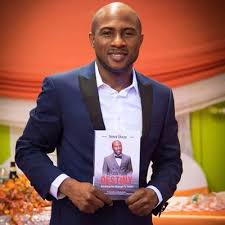
Henry Ukazu writes from New York. He works with the New York City Department of Correction as the Legal Coordinator. He’s the founder of Gloemi. He’s a Transformative Human Capacity and Mindset coach. He is also a public speaker, youth advocate, creative writer and author of Design Your Destiny Design and Unleash Your Destiny . He can be reached via info@gloemi.com
Metro
Ubuntu As Africa’s Moral Compass: Healing Xenophobia, Restoring Dignity and Rebuilding Continental Unity

By Tolulope A. Adegoke
The recent surge in xenophobic attacks against Nigerians and other African nationals in South Africa has once again exposed painful fractures in the ideal of African brotherhood. These incidents — marked by violence, looting, destruction of businesses, and loss of innocent lives — represent not only a humanitarian crisis but a profound moral failure that contradicts the very essence of what it means to be African. In the face of such division, the ancient African philosophy of Ubuntu offers a powerful, practical, and deeply human framework for healing, reconciliation, and sustainable unity.
Ubuntu, often translated as “I am because we are,” is more than a cultural expression. It is a complete worldview that affirms the interconnectedness of all people. It teaches that a person’s humanity is realised through their relationships with others, and that harming another ultimately diminishes oneself. In the context of xenophobia targeting Nigerians and other Africans, Ubuntu directly challenges the “us versus them” mentality and calls for a return to shared identity, dignity, and mutual responsibility.
Core Principles of Ubuntu in Relation to Xenophobia
- Interconnectedness: No African exists in isolation. The suffering of Nigerians in South Africa affects the dignity of all Africans. Ubuntu reminds us that an attack on one community is an attack on the collective African family.
- Human Dignity: Every individual, regardless of nationality, deserves respect and protection. Xenophobia violates this fundamental principle by dehumanising fellow Africans.
- Communal Responsibility: Success and security are collective. South Africans and other African nationals share common struggles — unemployment, inequality, and poverty. Ubuntu urges joint solutions rather than scapegoating.
- Reconciliation and Restoration: Harm must be acknowledged, justice served, and relationships restored. Healing requires both accountability for perpetrators and systemic reforms that address root causes.
- Harmony and Shared Destiny: True progress emerges when communities live in balance, recognising that Africa’s strength lies in unity, not fragmentation.
How ECOWAS, AU, SADC and Other Bodies Can Intervene
Regional and continental institutions have a critical role to play in providing structured, legitimate, and sustainable responses to xenophobia.
ECOWAS (Economic Community of West African States) As the primary regional body for West Africa, ECOWAS should:
- Establish a standing Joint Task Force on Migration and Social Cohesion with South Africa to facilitate dialogue and monitor tensions.
- Develop and enforce a Regional Migration Management Protocol that protects the rights of legal migrants while addressing irregular migration.
- Support skills-transfer and joint investment projects between member states and South Africa to reduce “push” factors of migration and demonstrate mutual economic benefit.
African Union (AU) The AU should elevate xenophobia as a continental concern by:
- Convening emergency sessions of the Peace and Security Council to treat xenophobia as a threat to African unity.
- Developing an African Citizenship and Mobility Charter that promotes legal, rights-based migration and integration.
- Strengthening the Continental Early Warning System to detect rising xenophobic sentiments and enable timely diplomatic intervention.
- Facilitating high-level mediation missions and reparative dialogue between affected countries.
SADC (Southern African Development Community) As the immediate regional bloc:
- Lead internal dialogue and mediation within Southern Africa to address cross-border tensions.
- Promote harmonised border management and labour mobility policies.
- Invest in joint infrastructure and human development projects that visibly demonstrate the benefits of regional solidarity.
Other Relevant Bodies
- The United Nations (through UNHCR and IOM) can provide technical support for humane migration management and protection of victims.
- The African Development Bank can fund large-scale regional projects that create shared prosperity and reduce migration pressure.
- Civil society, faith-based organisations, and the African diaspora should lead grassroots reconciliation and awareness campaigns.
Practical Solutions Aligned with Ubuntu
To transform Ubuntu from philosophy into action, the following multi-sectoral solutions are recommended:
Education Sector
- Integrate Pan-African history, shared heritage, and migration studies into school curricula across South Africa and the continent.
- Establish joint South African–Nigerian cultural and academic exchange programmes to build personal connections from a young age.
Economic Sector
- Develop joint business cooperatives and value-chain projects in agriculture, trade, and small enterprises involving both South Africans and migrants.
- Create government-backed township entrepreneurship funds that prioritise inclusive models benefiting legal foreign nationals and locals alike.
Governance and Leadership
- Publicly and consistently condemn xenophobia while addressing legitimate local grievances through transparent dialogue.
- Create national integration councils with representatives from South African communities and African diaspora groups.
Media and Public Communication
- Highlight positive stories of African cooperation, migrant contributions, and shared success.
- Partner with civil society for Ubuntu-inspired awareness campaigns promoting “One Africa, One Destiny.”
Youth and Community Engagement
- Organise cross-border youth leadership and entrepreneurship summits.
- Support community sports, arts, and cultural festivals that bring South Africans and other Africans together in celebration.
Global Relevance and International Standards
The fight against xenophobia in South Africa aligns with international human rights standards, the UN Sustainable Development Goals (particularly Goal 10: Reduced Inequalities and Goal 16: Peace, Justice and Strong Institutions), and the African Union’s Agenda 2063. Solutions must therefore meet global benchmarks of human rights protection, rule of law, and inclusive development while remaining rooted in African agency and ownership.
A Balanced Conclusion: Ubuntu as Africa’s Moral Compass
Xenophobia is a betrayal of African humanity. It weakens the continent’s global standing and delays the realisation of a united, prosperous Africa. However, through the deliberate and consistent application of Ubuntu — in education, economy, governance, media, and community life — South Africa and the broader continent can heal these wounds and build something stronger.
Ubuntu does not deny legitimate grievances. It simply insists that solutions must honour the dignity of every African. When leaders model it, institutions embed it, and citizens live it, xenophobia will lose its appeal. Africa’s greatest contribution to the world may not be its resources, but this timeless philosophy that reminds us: our humanity is bound together.
The path to lasting peace does not require perfection — it requires commitment. With courage, honesty, and collective will, South Africa and Africa can move beyond xenophobia toward genuine solidarity. The world is watching, and history is waiting. The time to choose Ubuntu is now.
Dr. Tolulope A. Adegoke, AMBP-UN is a globally recognized scholar-practitioner and thought leader at the nexus of security, governance, and strategic leadership. His mission is dedicated to advancing ethical governance, strategic human capital development, resilient nation building, and global peace. He can be reached via: tolulopeadegoke01@gmail.com, globalstageimpacts@gmail.com
By Tolulope A. Adegoke PhD
Building on the foundational imperative outlined in Part 1, this discussion delves deeper into the practical pathways, persistent realities, and transformative potential of leadership in Africa. It examines how leadership can drive self-reliance, foster deeper unity, and elevate Africa’s global relevance in a rapidly changing world. The analysis remains balanced, acknowledging both remarkable progress and sobering challenges, while offering actionable solutions for Africa and, by extension, the wider world.
The Current Landscape: Progress Amid Persistent Hurdles
Africa today presents a paradox of promise and pain. On one hand, the continent has recorded notable successes. Countries like Rwanda, Ghana, Botswana, Mauritius, and Senegal have demonstrated that focused leadership can deliver stability, economic growth, and improved governance. Rwanda’s post-genocide reconstruction under President Paul Kagame has become a global reference point for visionary leadership, digital innovation, and gender-inclusive governance. Ghana has maintained relatively stable democratic transitions for decades, while Botswana has transformed diamond wealth into broad-based development through prudent leadership and strong institutions.
On the other hand, significant challenges persist. Many nations continue to grapple with high youth unemployment, infrastructure deficits, climate vulnerability, debt burdens, and recurring political instability. The recent surge in unconstitutional changes of government in parts of the Sahel highlights the fragility of democratic gains. These issues are compounded by external pressures — unfair global trade rules, debt servicing burdens, and the effects of geopolitical rivalries playing out on African soil.
This complex reality underscores a central truth: Africa’s progress is neither linear nor guaranteed. It depends critically on the calibre and orientation of its leadership.
Forging Self-Reliance Through Bold Leadership
Self-reliance is not isolationism; it is the deliberate cultivation of internal capacity to reduce harmful dependencies. Transformative African leaders recognize that true sovereignty begins with economic independence and human dignity. They invest strategically in education systems that produce critical thinkers and innovators rather than mere certificate holders. They promote local content policies that prioritize African entrepreneurs in key sectors such as agriculture, mining, technology, and creative industries.
A practical model is Ethiopia’s industrial parks initiative and agricultural modernization efforts, which, despite challenges, have shown the potential of state-led strategic planning. Similarly, Morocco’s emergence as a regional manufacturing and renewable energy hub illustrates how deliberate leadership can reposition a country within global value chains. Leaders who champion self-reliance also reform agricultural systems, support smallholder farmers with modern techniques and market access, and invest in value addition to move beyond raw commodity exports.
Advancing Unity in Diversity
Unity in Africa does not require uniformity; it requires the mature management of diversity. Effective leaders build national and continental cohesion by promoting inclusive governance, respecting cultural identities, and ensuring equitable resource distribution. They invest in symbols, narratives, and institutions that foster a shared African identity while celebrating diversity.
The African Continental Free Trade Area (AfCFTA) represents a historic opportunity in this regard. When fully implemented, it can foster economic interdependence that makes conflict more costly and cooperation more rewarding. Leaders who champion AfCFTA are not just signing agreements; they are laying the foundation for a more united and economically powerful Africa. Successful unity also requires healing historical wounds through genuine reconciliation processes, as seen in Rwanda’s Gacaca courts and South Africa’s Truth and Reconciliation Commission.
Elevating Global Relevance
Africa’s global relevance will not be granted — it must be earned through excellence and strategic engagement. Forward-looking leaders position Africa as a solutions provider rather than a problem to be managed. They leverage the continent’s youthful population, cultural creativity, and natural resources responsibly to contribute to global challenges such as climate change, public health, and sustainable development.
Countries like Kenya (through its tech ecosystem), Nigeria (through its creative industries), and South Africa (through its scientific and industrial capabilities) are already demonstrating this potential. The most effective leaders amplify these successes by investing in quality education, research and development, and global diplomatic engagement that projects African agency rather than victimhood.
Practical Solutions for Current Challenges
To translate vision into reality, African leadership must pursue the following integrated solutions:
- Human Capital Revolution: Reform education systems to emphasize critical thinking, digital literacy, entrepreneurship, and ethical leadership from primary to tertiary levels.
- Institutional Strengthening: Build strong, independent institutions that can withstand changes in government and enforce accountability.
- Economic Transformation: Implement deliberate industrial policies, support local entrepreneurs, and accelerate regional integration through AfCFTA.
- Youth and Women Inclusion: Create structured platforms for meaningful participation of young people and women in governance and economic decision-making.
- Ethical and Accountable Governance: Combat corruption through transparent systems, judicial independence, and citizen engagement.
- Climate and Environmental Leadership: Position Africa as a leader in green economy solutions, leveraging its renewable energy potential and biodiversity.
Balanced Conclusion
Africa stands at a historic crossroads. The challenges are real and significant, but so too is the continent’s potential. Leadership remains the decisive variable. When leaders rise above narrow interests to serve the collective good, Africa does not just survive — it thrives and offers the world new models of resilience and innovation.
The path forward requires a new covenant: between leaders and citizens, between nations and regions, and between Africa and the global community. This covenant must be rooted in trust, mutual accountability, and shared vision. With the right leadership — courageous, ethical, inclusive, and strategic — Africa can forge a new era of self-reliance, unity, and global relevance.
The question is not whether Africa can rise. The question is whether its leaders, supported by an awakened citizenry, will summon the will, wisdom, and courage to make that rise unstoppable. The world is watching, and history is waiting to record the choices made in this decisive decade.
Dr. Tolulope A. Adegoke, AMBP-UN is a globally recognized scholar-practitioner and thought leader at the nexus of security, governance, and strategic leadership. His mission is dedicated to advancing ethical governance, strategic human capital development, resilient nation building, and global peace. He can be reached via: tolulopeadegoke01@gmail.com, globalstageimpacts@gmail.com


