
Opinion
Opinion: Nigeria Will Not Survive the 2019 Presidential Election, By Femi Aribisala

What we witnessed in the recently concluded election was the death knell of democracy in Nigeria.
For those of us who had hoped against hope, the 2019 presidential election has proved to be the last straw. We are now convinced that Nigeria is a hopeless case. This country is not just a major disappointment; it is decidedly firmly on the trajectory of a future break up.
Today, the silence in the Nigerian political space is deafening. Just look back to 2015 and before, when there was vibrant debate about almost everything under the sun. But now it is “siddon look.” We just had an election that was no election and more like selection. It was even more a mini civil-war, characterised by killings, voter suppression and intimidation, ballot-snatching and falsification of results.
There was even a case where the electoral umpire claimed he was made to declare a false result at gunpoint. But in spite of the bogus outcome of the elections, nobody is fighting anymore. Nobody is burning tyres today or demonstrating in the streets. Instead, people are watching and waiting to see what will happen. Surely, this cannot be the end of the matter.
Phyrric Victory
The so-called victors are jubilant, reading the eerie silence as mission accomplished. However, the omen is bleak and dire. It is always better when people express their feelings freely. That way, you know exactly where they stand. But when everything is bottled up as it is now, then you know we are in for trouble. Sooner, rather than later, the dam will burst.
Only those who have been bought, or political sycophants looking for scraps of the stolen pie, are talking. They are giving back-slaps and high-fives to the phyrric victors. Meanwhile, wisdom and reason have concluded that Nigeria is a lost cause. No point waiting for another farce in 2023. Now is the time for all good people to leave the country; either physically or psychologically.
It is now clear that those who believe they have a future have no part in this failed and discredited state called Nigeria. To your tents, O Israel!
Those who make peaceful change impossible, make forcible change inevitable. But that is not to suggest military intervention is the answer. We have already done that and got the t-shirt. All the military did, in all their years in power, was to drag Nigeria through the mud. There is no point putting any hope in them again, after all, it is the same military men who hijacked the democratic system simply by taking off their uniforms and putting on agbadas.
Things Fall Apart
Seeing the template established in this fraudulent 2019 election, the inevitable conclusion, at least to me, is that this Nigeria cannot survive. The message of the 2019 election is that Nigeria is doomed to disintegration. Things have fallen apart and the centre cannot hold.
The message is that the powers-that-be are determined that we must be satisfied willy-nilly with incompetence. They say we must put up with economic failure. They insist our new status as the poverty capital of the world is to be commended. They tell us returning Nigeria to major debt status is next-level achievement. They tell us to celebrate abject failure as glorious success.
If you were to believe the lie, our leaders have resuscitated the naira. They have nullified power blackouts. They have removed the petroleum subsidy. They have reduced the pump price of petrol. They have created millions and millions of new jobs. Our hospitals are no longer consulting clinics. Life and property is now secure in Nigeria. Our agricultural sector has been suitably revamped.
So a new panoply of ambitious political mavericks came out, talking up public policy, debating the issues, offering new ideas for the renewal of the national mandate. Among these were Kingsley Moghalu, Oby Ezekwesili, Tope Fasua, Fela Durotoye and Omoyele Sowore. I shared their delusion in thinking the Nigerian political system was amenable to change.
Our leaders have achieved self-sufficiency in food production in Nigeria. They have killed corruption in the land. They have rebuilt our roads and bridges. They have defeated Boko Haram and rescued the Chibok girls. They have restored the reputation of Nigeria in the comity of nations. As a result of these glorious achievements, the current government not only won re-election, it did so with a resoundingly bigger majority than before.
Dashed Hopes
All this makes 2019 a major watershed in Nigerian political history. For some reason, hopes were rekindled during the campaigns; only to be dashed ruthlessly. The times are so bad, our situation so worrisome, that many presidential hopefuls came out of the woodwork. It was time to rescue Nigeria. It was time to change the dismal trajectory of the nation’s history.
Surely, even the blind can see that we cannot go on like this. Surely, these crop of current Nigerian leadership will be thrown out by a despondent electorate. It was time for a new page; a new departure. What we needed was our very own Mercutio proclaiming a plague on both the houses of our delinquent political establishment of the All Progressives Congress (APC) and the Peoples Democratic Party (PDP).
So a new panoply of ambitious political mavericks came out, talking up public policy, debating the issues, offering new ideas for the renewal of the national mandate. Among these were Kingsley Moghalu, Oby Ezekwesili, Tope Fasua, Fela Durotoye and Omoyele Sowore. I shared their delusion in thinking the Nigerian political system was amenable to change. I believed with them that we are all fed up with the status quo.
So they formed new parties, toured the country, pumped flesh, marshalled new agendas; only to meet their Waterloo at the discredited polls. They obtained, or were awarded, an insignificant fraction of the millions of fabricated votes. So completely were they crushed that there is even talk now of making it difficult, if not impossible, for other parties to contest in future elections apart from the tweedledee and tweedledum of the APC and the PDP.
Failed Nigeria
The message of our Caesars in Abuja is without ambiguity: there is no room for change in the politics of Nigeria. Under no legal circumstances will those who have ceased power by deception and subterfuge willingly relinquish it for the sake of some nebulous construct called democracy. To hell with power to the people, they insist in one accord. Power belongs to the professional politicians in Nigeria, and forever so shall it be.
The Nigerian electorate itself is no better inclined. God says in the scriptures about the Israel of old: “The prophets prophesy falsely, and the priests rule by their own power; and my people love to have it so.” (Jeremiah 5:31).
The 2019 elections show that a substantial number of Nigerians, especially in the North, are convinced this failed country called Nigeria is the best that Nigeria can be. Indeed, if the verdict of the doctored polls were to be believed, then most Nigerians are very much in love with this malignant Nigeria.
They love a Nigeria that is poverty-stricken, where our leaders are thieves, armed-robbers and pen-robbers, where beggars and vagabonds roam the streets, where the illiterate and the uneducated are the champions of public policy, where human life is worthless and people are massacred in numbers every day. Nigerians, according to the Independent National Electoral Commission (INEC), adore a Nigeria where truth has fallen in the streets and justice is an orphan.
Death-knell of Democracy
Never again. If there is anything to be learnt from the experience of the failed new idealists who ran for president in mushrooming parties this time around and lost their shirts, it is that Nigerian politics is a complete waste of time. The electorate has apparently never believed in the polls. They know their votes will not count. They know the only time politicians have any regard for them is during election campaigns.
The system has been rigged so that every election in Nigeria will now be determined by those who have filled the voting register with underage voters. So doing, your chances of being elected to high office are excellent if you are an incompetent, a crook, or a thief to boot. Otherwise, you don’t stand a chance.
So, if they can get a small bag of rice or garri from the charlatans running for office, or maybe even just N1,000 for their thumbprint, that will do just fine. If you can give them even more, so they can attack polling booths in opposition strongholds and make away with the ballot boxes, they are ready. If you can give them lunch, so they can incite a riot, so an election being lost is declared inconclusive, they will do it. Thereby, the victor becomes the vanquished.
As a result, we will not see the idealism of 2019 come 2023, should this misnomer we call Nigeria still exist by then. The newcomers are once bitten, twice shy. Even now, by the time we came to the gubernatorial elections, after the farce of the presidential, Nigerians had lost all interest in democracy. Most people did not even bother to come out to vote again.
Of course, this did not prevent states like Kaduna from recording more fabricated votes in the gubernatorial election than even Kano did fictitiously in the presidential election. In short, what we witnessed in the recently concluded election was the death knell of democracy in Nigeria.
So what is the answer?
Goodbye Nigeria
More and more people are going to vote with their feet. The industrious and the enterprising are going to seek greener pastures elsewhere, having concluded that Nigeria is a lost cause. They will go to Canada, to Australia, to those countries where merit is rewarded and excellence is the watchword. The smart ones who stay behind will start insisting on the dismemberment of this bogus contraption called Nigeria.
What the 2019 election tells me, in no uncertain terms, is that the future of Nigeria lies in the breakup of Nigeria. It is not what I want. It is not what I desire. But it is there in the cards.
I have written on several occassions that Nigeria should remain united. I said again and again that Nigeria cannot do without the Igbo. I have shouted in the wilderness that Nigeria cannot do without the North. But I have now reached the conclusion that, under the present circumstances, the breakup of Nigeria is inevitable. It is just a matter of time.
This is not a prediction: it is a warning. It is a call to arms. It comes from the realisation that the Nigerian political system has now been programmed so that every election will now be decided by those whose votes can be bought with 30 pieces of silver.
The system has been rigged so that every election in Nigeria will now be determined by those who have filled the voting register with underage voters. So doing, your chances of being elected to high office are excellent if you are an incompetent, a crook, or a thief to boot. Otherwise, you don’t stand a chance.
I congratulate all those who won infamous victories in the just concluded elections. But “send not to know for whom the bell tolls, it tolls for thee.”


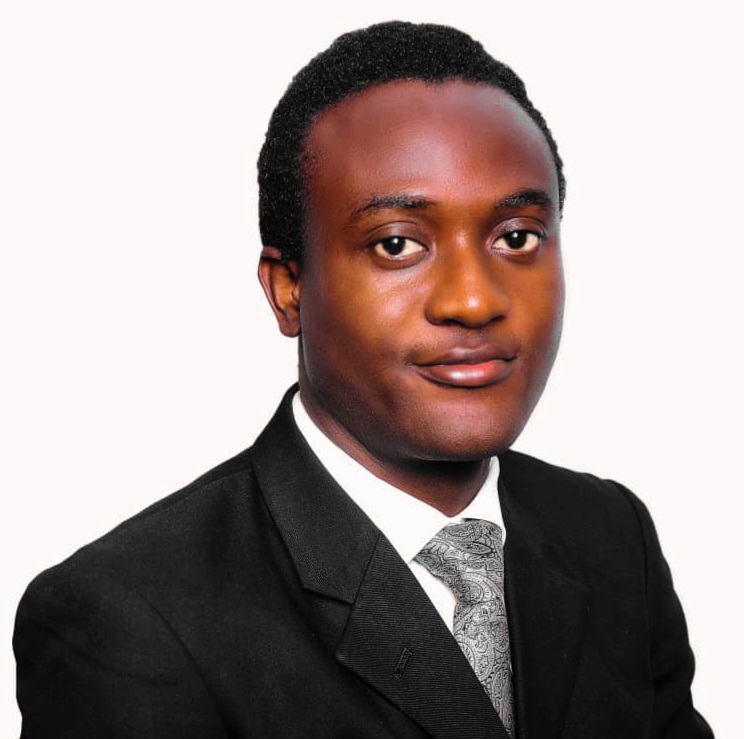
By Tolulope A. Adegoke, PhD
…Mastering Kairos for Global Transformation
“Don’t just chase the clock. Learn to read the seasons. Mastery isn’t controlling time; it’s recognizing your moment within it.” – Tolulope A. Adegoke, PhD.
Introduction: The Hidden Skill of Perfect Timing
As we turn the page into a new year, most of us are focused on time management—juggling calendars and chasing deadlines. That’s chronos: the measurable, ticking clock.
But there’s another kind of time that truly changes things. The ancient Greeks called it kairos—the opportune moment. It’s not about how fast you go, but about recognizing the exact right time to act. It’s that instant when preparation meets an open door.
History gives us a fascinating example: the ancient tribe known as the sons of Issachar. In sacred texts, they’re singled out for one remarkable skill: they “understood the times and knew what Israel should do.” They weren’t just observers; they were interpreters. They could read the political, social, and military climate and translate that understanding into decisive, timely action. They mastered kairos.
Today, that skill is more valuable than ever. Let’s explore how you, your team, and your leaders can move beyond managing minutes to mastering moments.
The Core Idea: Read the Seasons, Then Act
The lesson from Issachar is simple but profound: insight without action is just trivia. True advantage comes from connecting the dots between what’s happening and what to do about it.
· Chronos is your schedule. It asks, “Did you get it done?”
· Kairos is your timing. It asks, “Did you do the right thing at the perfect time?”
· The Issachar Mindset bridges the two. It’s the practice of discerning the season—is this a time to plant seeds quietly, or to harvest aggressively?—and having the courage to act accordingly.
The New Year is itself a shared kairos moment. It’s a cultural pause button that gives us all permission to stop, assess, and choose our direction with intention.
For You: Becoming a Modern-Day Issachar in Your Own Life
How do you develop an eye for your own pivotal moments? It starts with shifting your focus.
1. Audit Your Personal Seasons. Four times a year, take an honest look at your energy, opportunities, and challenges. Are you in a personal “winter” (a better time for planning, learning, and rest) or a “summer” (ripe for launching projects and pushing hard)? Stop fighting your season. Work with it.
2. Become a Curator of Clues. The sons of Issachar read the landscape. You can, too. Diversify your information diet. Follow smart people outside your field. Don’t just collect data; look for the one or two trends where your unique skills could suddenly become incredibly valuable. That’s where your kairos awaits.
3. Build in a “Discernment Pause.” When a big “opportunity” lands, don’t jump from reflex. Pause. Ask yourself: “Is this truly urgent, or is it actually important? Is this just a demand on my time (chronos), or is it a legitimate, one-time window (kairos) that could change my trajectory?” Issachar’s skill was knowing the difference.
4. Set “Kairos Intentions,” Not Just Goals. Frame your year around timing. Instead of “network more,” try: “In Q1, I will identify and connect with three key people in the emerging X field, before the space becomes overcrowded.” You’re not just stating a goal; you’re strategically placing it in its most effective season.
For Your Organization: Building a Culture That Sees Around Corners
The most resilient companies aren’t just fast; they’re timely. They create an environment where people can sense a shift and respond intelligently.
1. Make Foresight a Real Function. Move beyond just quarterly reports. Dedicate time (a meeting, a task force) to asking: “What are the weak signals in our world? What might they mean for us in 18 months?” The goal isn’t prediction; it’s preparation. Like Issachar’s tribe, you’re interpreting the signs.
2. Resource for Agility, Not Just Efficiency. Rigid annual budgets often miss fleeting opportunities. Create a small, flexible “opportunity fund” that empowered teams can access when they credibly say, “We see a window, and here’s our plan to seize it.”
3. Reward Discernment, Not Just Hustle. Promote and celebrate leaders who show good judgment about when to act. Sometimes, the smartest move is to wait, prepare, and strike when the moment is ripe. Analyze missed signals as learning opportunities, not failures.
4. Align with the Cultural Moment. Understand the broader season your customers are in. Launching a product that solves a newly felt pain point, or taking a genuine stand on a societal issue at the right time, shows you’re not just selling—you’re understanding.
For Leaders and Nations: Governing with a Sense of Moment
The highest stakes for understanding times and seasons lie in leadership and policy.
1. Create “Adaptive” Policies. Build frameworks that can evolve. Instead of a static law, design policies with built-in review triggers (e.g., “If renewable adoption hits X%, incentive Y adjusts”). This is governing for the kairos of technological or social tipping points.
2. Recognize Diplomatic Windows. Geopolitical opportunities are often brief—after an election, during a shared crisis. Maintaining agile, prepared diplomacy allows a nation to engage productively when the moment is right, not just when it’s convenient.
3. Invest in Foresight. Support non-partisan offices or commissions tasked with looking ahead. Their job is to ask, “What’s coming?” so the nation isn’t blindsided but can lead in the kairos moments of the future, from AI to public health.
4. Articulate the “Why Now.” Great leaders frame a compelling sense of moment. A call like “This is the decade we rebuild our infrastructure” or “This generation will close the skills gap” does more than set a goal—it creates a shared understanding of the season and mobilizes action.
A Call for the New Year: Understand, Then Do.
The legacy of the sons of Issachar isn’t a secret intelligence. It’s a method: Observe. Interpret. Act.
As we enter this New Year, let’s all commit to that practice.
· For individuals, it means looking up from your to-do list to ask if you’re doing the right things.
· For organizations, it means valuing discernment as highly as execution.
· For societies/Nations, it means having the wisdom to prepare for tomorrow while acting decisively today.
And let’s anchor our timing in ethics. Seizing the moment should make things better—for our teams, our communities, and our world. The goal isn’t just to be successful; it’s to be significant.
In the end, mastery isn’t about controlling time. It’s about recognizing your moment within it—and having the clarity and courage to step through. Here’s to a year of perfect timing.
Remember the timeless skill: to understand the times and know what to do. It’s the bridge between insight and impact.
Dr. Tolulope A. Adegoke is a globally recognized scholar-practitioner and thought leader at the nexus of security, governance, and strategic leadership. His work addresses complex institutional challenges, with a specialized focus on West African security dynamics, conflict resolution, and sustainable development.
He holds a PhD in History and International Studies and is credentialed as both a Distinguished Fellow Certified Management Consultant and a Fellow Certified Human Resource Management Professional. This dual expertise in academic rigor and high-level practice enables him to diagnose systemic failures and architect actionable, reform-oriented solutions for institutions and nations.
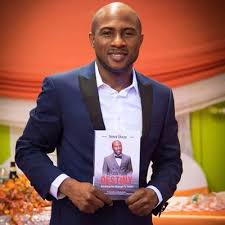
By Henry Ukazu
Dear Destiny Friends,
Experience, by every standard, is a prerequisite for any human to move to the next stage of growth and existence. Experience comes in different forms as one journeys through life, covering health, finance, relationship, marriage, family, personal development or spirituality. We gain valuable experiences that help us see life or understand it in more ways than one.
It is right to say, we are shaped by the experiences life gives to us. It is always advisable to look at life more wholistically as opposed to concentrating on its negative aspects. Sometimes, our experience can serve as the game-changer we need to move to the next phase of our life, but before that can be done, we have to appreciate the experience.
For instance, when we go through turmoil, we experience discomfort, no doubt, but the inherent lessons lie in humility, prudence, patience, and even leadership. In some cases, the experience might be for someone else whom the universe might bring our way for us to teach them how to navigate the problem.
It is generally said that a smart man learns from his mistakes, but a smarter man learns from another person’s mistakes, and this is where the experience of life comes in. As progressive minds, we need the experience of mentors and those who have gone before us to teach us what we don’t know.
In business, an apprentice needs the tutelage of their boss to understand how to succeed in a particular industry or business. A mentee needs the experience of their mentors to succeed. A newly married couple needs the experience of seasoned couples to navigate the challenges of marriage. Even adults need the experience of their parents to know how to raise their children. The list is endless.
To understand how experience works, consider the story of a young man whose car broke down along the road. All efforts to fix the car proved abortive. While he was wondering what to do, an elderly man who was driving by stopped beside him, and inquired if there was a challenge. He stated that his car broke down and he’s having a hard time trying to fix it.
The old man offered to help. Though the young man hesitated, wondering what an old man could do, he yielded on second thought, and gave the old man a chance. After all, he had done all in his capacity, and yet, no solution. The old man opened the bonnet, hit a knob, and told the young man to restart the car. To his amazement, the car buzzed into life. In excitement, he asked the old man, ‘who are you?’, and he replied, ‘I’m Mr. Ford, the owner of Ford Motors’. The young man was humbled.
Now this is what I call experience. You can’t beat a man with experience. If Henry Ford didn’t have experience with his products, he wouldn’t have been able to fix the car.
There’s another story where a mentor was teaching a mentee about the importance of experience. According to the mentor, when the man with experience meets the man with money, the man with money will have to lose his money to gain experience, and the man with experience will have to use his experience to gain money.
According to Abraham Lincoln, “If I had six hours to chop down a tree, I’d spend the first four of them sharpening my axe”. A man without experience might spend the entire six hours cutting down the tree, and that alone can be exhausting and draining. This goes to tell you the importance of mentors. Without the experience of mentors, one may work harder, but with the influence of mentors, one will work smarter.
In the course of life, many people think they can navigate life hurdles on their own. This set of people gets burned out; they fail to understand that mentors are lifesavers.
According to an African proverb, ‘if one wants to go fast, he will go alone, but if he wants to go far, he must go with a team’. Another African proverb states that “What an old man sees while sitting down on a tree, no matter how tall a child grows, he won’t see it”. These two quotes emphasize the importance of mentors in the life of a progressive mind.
One of the most uncharitable disservices I can do in life is to attribute my success to myself as a result of my hard work. My life has literally been shaped by the role of mentors and elders whom I hold in high esteem. In some cases, I seek the counsel of younger people who are knowledgeable than me in a particular area, and their suggestions have worked like magic.
Sometimes, I laugh at people who attribute their success to their personal development. In some cases, they say they are self-made. Don’t get me wrong, personal development and hard work contribute to the success of human beings because even if you have mentors and elders, who guide and support you, if you are not determined to succeed, success will definitely elude you.
Let me share a practical experience with you. I was given an opportunity to publish my weekly articles on a notable platform by one of my mentors. This mentor of mine is not responsible for writing the articles; he just gave me a platform, and each time I write, I have an editor who reviews my work before it gets published. Now, somebody reading my work will think I’m a smart man, but the truth is that I’m not just smart; rather, I am smart by association because I have a team that assists in shaping my work. Do you see that nobody is self-made?
Furthermore, there are opportunities and doors I know for a fact I wouldn’t have had the opportunity to penetrate if not for the role of mentors and elders in my life, whom I occasionally seek their advice. They serve as a strong support system to me both in my personal and professional development.
As you journey through life and experience, please don’t take it personal. Sometimes, the trials, setbacks, and challenges we go through are targeted and structured in such a way that God is positioning you to use them to counsel or assist someone in the near future. In some cases, it might be to strengthen or benefit you.
In summary, we all need the experience of life and mentors to navigate through life.
Henry Ukazu writes from New York. He works with the New York City Department of Correction as the Legal Coordinator. He’s the founder of Gloemi. He’s a Transformative Human Capacity and Mindset coach. He is also a public speaker, youth advocate, creative writer and author of Design Your Destiny Design and Unleash Your Destiny . He can be reached via info@gloemi.com
By Henry Ukazu
Dear Destiny Friends,
Ever wondered how one sleeps and wakes up? Ever wondered where the spirit goes while we sleep? The answer is hidden in mysteries because life, and by extension, existence, is full of mysteries.
On a personal note, I do believe that whenever we sleep, we are basically practicing how to die because no one knows the whereabouts of the spirit and souls. All we know is that we wake at the break of dawn, or when there’s a stirring, either naturally or artificial. That is a mystery!
Have you also ever imagined how a man will have sexual intercourse with a lady and a child is born? Have you also ever wondered about the mystery surrounding death? Have you also imagined how human beings fall in love with the opposite sex despite various variables. Again, each time I fly in the air, I begin to wonder about the invention surrounding the aeroplane. So many questions begging for answers. The mysteries surrounding life is inexhaustible.
For the benefit of hindsight, life is indeed a mystery. Sometimes, we think we understand it, and other times, it humbles us with its complexities. Life can be likened to a woman; the more you try to understand them, the more confused you become.
I had to give this introductory analysis to buttress the significance surrounding the mysteries of life. Why do I say this? Nothing is permanent in life, and as such anyone can be great and successful tomorrow. In my native Igbo (Nigerian) language, we have a saying that “nobody knows the stomach that will birth a king tomorrow”, and “tomorrow is pregnant”. These are evidence of the mysterious nature of life.
In my journey through life, I have met angels and devils in human form, who have played different roles in shaping my thoughts and outlook towards life. While I thought certain people will bring smiles to my life, they turned around to make me question their intentions and mindset. But the people I had some reservations with turned out to be some of the best things that have happened to me. For instance, I have a dear friend turned brother, whom I hold in high esteem. His name is Sodeeq Sulyman. He is the Chief Operating Officer of my company.
As a matter of fact, today is his birthday. He met me on X and reached out to me to be his mentor. I was literally humbled because that was the first time someone was making a firm request of me. I gladly accepted the request, and today our friendship, brotherhood and relationship has truly blossomed. This young man is literally one of the best things that has happened to my life. If I was told he will change the outlook of my life, business and life generally, I wouldn’t have believed it.
But as my late mother would always say, when you meet people just take the good part and leave the bad part. In all sincerity, I strongly believe our meeting was predestined, and mysterious if the circumstance of our meeting is x-rayed.
Here is the message, never look down on anyone except you are helping them to do something or pick something. Another message is don’t give up on anyone because you don’t know what tomorrow will unfold. Even the Bible book of life states in Proverbs 118:22, “the stone which the people rejected has become the cornerstone”. So, it’s instructive for one to be kind, courteous and humble in relationship with human beings because nobody knows what life will unfold tomorrow.
Imagine, if I had not treated this young man very well or even accepted him, I would probably have met other minds, who would have given me an experience of a lifetime I wouldn’t forget in a hurry.
The mystery of life can be seen in wealth creation. A man of means today can become a beggar tomorrow if the wealth is not properly managed, and the child of a certified pauper can become a man of means tomorrow. There have been stories of wealthy men whose children mismanaged their parents’ and became hungry, while slaves of wealthy men became stupendously wealthy. What does that tell you? Nothing is guaranteed in life. I often wonder how people take life very seriously thinking everything is about them. They don’t even know they can sleep and not wake up the next morning, nor are they aware of the fact that pride and ego are the two greatest enemies that can fast track the downfall of a man, while humility can jump-start their elevation.
As human beings sometimes, we wonder where our next meal will come from. Where would our next business, money, spouse, opportunity come from are some of the questions that bug our minds? One might have a business that has little or no hope of succeeding, but with determination and favour from God, the business will turn around for good.
On a personal note, I have been in a scenario where I lost hope of succeeding or moving to the next round, but I was surprised when the universe came through in ways and manners I couldn’t comprehend. I believe we all have one story or another to share as it relates to the mysteries of life. I can vividly recall when my late dad was very sick in the hospital. As a matter of fact, he was adjudged to be the sickest patient in the hospital. The doctor who was treating him said, he lost his mother to the exact sickness my late dad was facing. But with prayer, my late dad was able to survive to the amazement of everyone. He was later adjudged to be a miracle patient because he was given a slim opportunity to survive.
I don’t know what your storyline might be nor do I know what you are experiencing in your academic, business, health, career, or family life. One message I have for you is that nothing lasts forever. If you give it time, one day you’ll laugh and thank God for the experience and lessons life has offered you because life is a mystery one may not understand. It unfolds as it chooses.
Henry Ukazu writes from New York. He works with the New York City Department of Correction as the Legal Coordinator. He’s the founder of Gloemi. He’s a Transformative Human Capacity and Mindset coach. He is also a public speaker, youth advocate, creative writer and author of Design Your Destiny Design and Unleash Your Destiny . He can be reached via info@gloemi.com


